
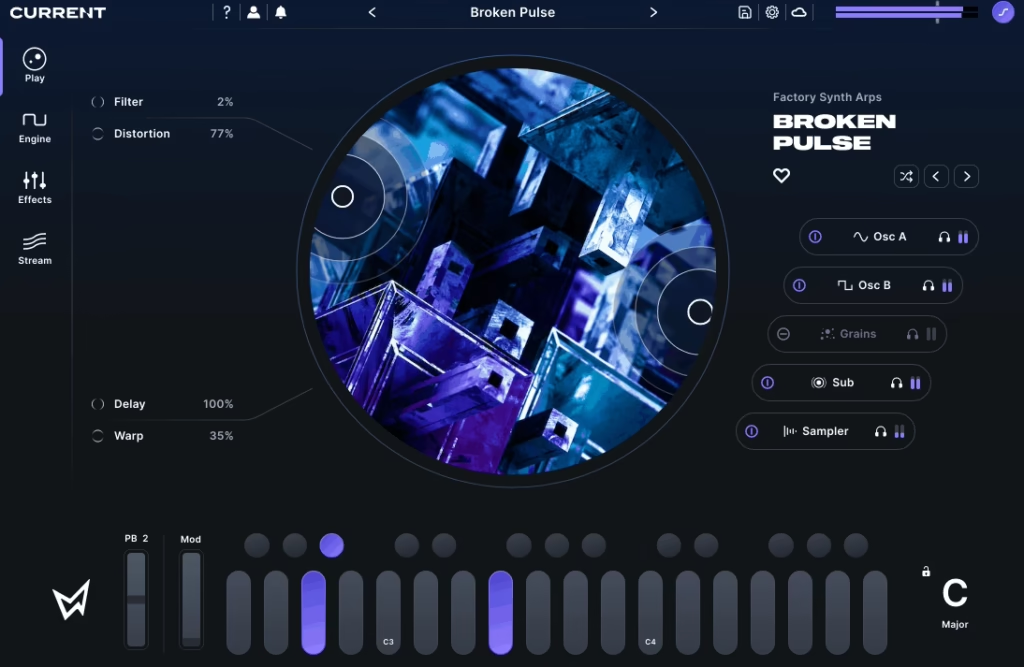
There’s a specific moment in the evolution of a synthesizer market when the established standard gets a serious challenger that doesn’t try to beat it at its own game but instead offers something different enough that the comparison is more complementary than competitive.
Minimal Audio Current 2 and Xfer Serum 2 are two genuinely excellent wavetable synthesizers that share a surface-level category but diverge almost immediately when you look at what each one actually does and what kind of producer it’s aimed at.
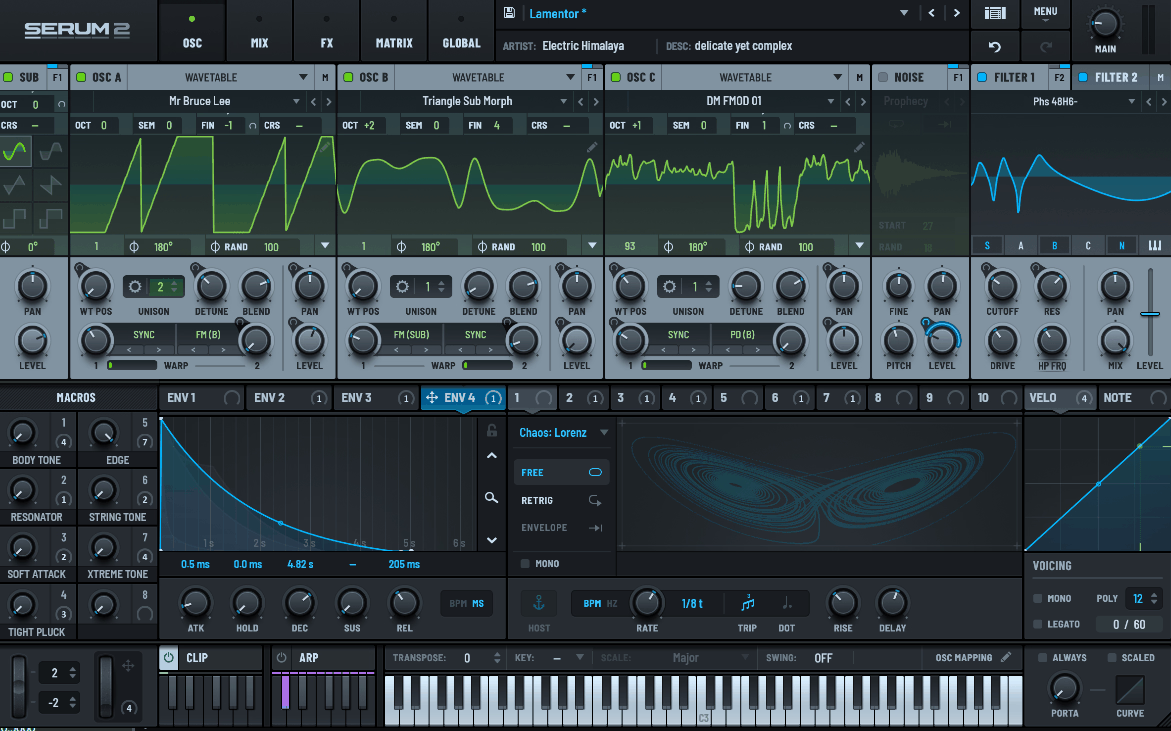
Serum 2 is the refined successor to the synthesizer that defined electronic music’s wavetable era: a decade of community presets, the most detailed wavetable editor in any commercial synth, a clean and efficient fixed signal flow, and meaningful new additions including per-voice dual filters, Chaos modulation generators, and expanded oscillator processing.
It’s the instrument that a generation of electronic producers learned synthesis on and built careers around.
Current 2 is a different kind of ambition. Minimal Audio built Current as what they describe as an “instrument and content platform”: a multi-engine synthesizer combining two spectral wavetable oscillators, a granular engine, an additive sub oscillator, and a time-stretching sampler all running simultaneously, with a cloud-connected content browser called Stream that provides ongoing access to new presets, wavetables, and samples.
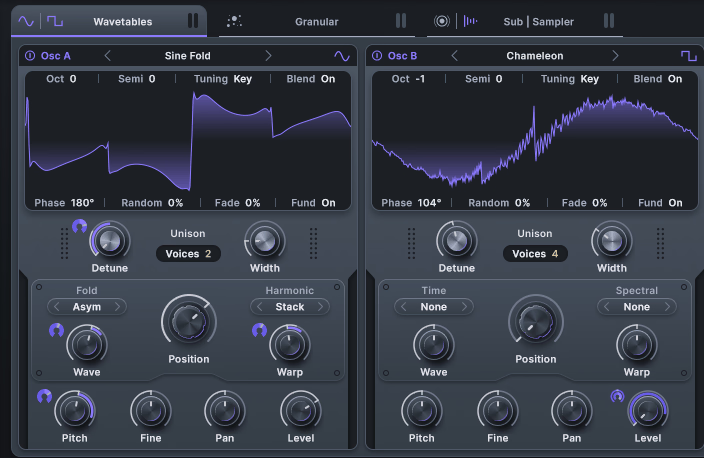
The spectral processing on the wavetable oscillators is what truly separates Current from the wavetable competition: over 40 warp effects including spectral folding, formant shifting, bit reduction, and frequency shifting that operate in the frequency domain rather than the time domain, giving the oscillator output a specific animated complexity that standard wavetable warp modes don’t produce.
Quick Comparison
| Feature | Minimal Audio Current 2 | Xfer Serum 2 |
|---|---|---|
| Developer | Minimal Audio (US-based) | Xfer Records / Steve Duda |
| Synthesis Engines | Two spectral wavetable oscillators, granular engine, additive sub oscillator, time-stretching sampler; all five running simultaneously | Two wavetable oscillators (OSC A + B), sub oscillator, noise oscillator; new oscillator processing modes in S2 |
| Spectral Processing | 40+ spectral warp effects on wavetable oscillators: frequency-domain folding, formant shifting, bit reduction, harmonic shaping, and more | New oscillator warp modes including wavefolding and FM; primarily time-domain processing |
| Filter Architecture | Dual morphing filters with 50+ modes; series or parallel routing | Two filters per voice (new in S2); 30+ filter types; serial, parallel, and split routing |
| Modulation System | Nine swappable modulator slots (each selectable from 4 modulator types); drag-and-drop; unlimited connections; modulation matrix popup; MPE support | Drag-and-drop; LFOs, envelopes, macros, MIDI, Chaos generators (new); clean and efficient assignment |
| Wavetable Editor | Import and load supported; limited in-plugin wavetable editing (no full frame editor at time of writing); 170+ factory wavetables; Stream library | Industry-leading visual editor; frame-by-frame editing; extensive import analysis; full warp mode integration |
| Effects | Nine swappable premium effect slots using Minimal Audio’s own professional effect lineup (Ripple Phase, Cluster Delay, Morph EQ, Wave Shifter, and more) | 10-slot chain: reverb, chorus, delay, distortion, EQ, filter, phaser, flanger, compressor, hyper; improved algorithms in S2 |
| MIDI Processing | Arpeggiator (40+ modes), chord generator (30+ chord presets), MPE; route chords into arpeggiator and vice versa | Arpeggiator with updated controls; MPE support (improved in S2) |
| Content Platform | Stream: cloud-connected browser with 400+ presets, 170+ wavetables, 800+ samples; ongoing new content; subscription tiers for expanded access | No integrated cloud platform; largest third-party preset ecosystem of any software synth |
| Polyphony | Up to 32 voices (added in 2.0 update) | Standard high-polyphony capable |
| Performance View | Play View: dual XY pads with up to four assignable parameters each; preset/layer mute and solo | Four macro knobs for performance control |
| Pricing | ~$199 perpetual (sometimes on sale at $99); subscription and rent-to-own options available | ~$189 full; upgrade from Serum 1 available; Splice rent-to-own ~$9.99/mo |
Get the Free Plugin Starter Kit
The genuinely useful free DAWs and plugins worth installing. No filler. Straight to your inbox.
About Current 2

Minimal Audio Current 2 is the second major version of the flagship synthesizer, released in October 2024 as a free upgrade for existing Current owners and at a discounted introductory price of $99 for new buyers.
Current launched in 2023 amid significant controversy around its initial subscription-only model, which the community pushed back against strongly enough that Minimal Audio quickly pivoted to offer perpetual, rent-to-own, and subscription options alongside each other.
That launch friction is worth knowing about historically, but it doesn’t meaningfully affect the instrument itself, which is genuinely impressive.
The instrument’s architecture centers on five simultaneous synthesis engines that all contribute to a single voice. The two spectral wavetable oscillators are the most distinct component: they process wavetable output using over 40 effects that operate primarily in the frequency domain rather than the time domain, which is what makes Current’s wavetable character different from Serum’s.
The Wave control applies one of 20+ time-domain modifications to the waveform. The Spectral control applies one of 20+ frequency-domain modifications, including spectral folding, formant effects, harmonic shaping, and filtering that operate on the frequency content of the sound rather than its waveform shape.
The granular engine in Current is a full granular synthesizer capable of processing any loaded audio file into grain-based textures, with over 250 grain controls and extensive parameter modulation available.
The additive sub oscillator generates low-frequency harmonic content designed specifically to anchor the sound in the low end with harmonic richness rather than just a simple sine wave. The time-stretching sampler uses automatic key and tempo detection to integrate loaded samples seamlessly into patches.
Current 2 also added a significant workflow feature in the Play View: a dual XY pad interface where you can assign up to four parameters to each pad, create expressive performance configurations without entering the engine page, and mute or solo individual synthesis layers.
The Stream cloud content browser, integrated directly into the instrument, provides access to new presets, wavetables, and samples that are downloaded to the local machine for offline use.
About Serum 2

Xfer Serum 2 needs comparatively little introduction given how thoroughly the original Serum shaped a decade of electronic music production.
The update from Serum 1 adds dual per-voice filters with serial, parallel, and split routing, new oscillator processing modes including wavefolding and additional FM configurations at the oscillator stage, Chaos modulation generators for organic nonlinear variation, improved Stack controls for unison, and better MPE support.
The core wavetable engine, the interface approach, the preset ecosystem compatibility, and the overall identity of the instrument remain intact.
What distinguishes Serum 2 in this comparison is the wavetable editor quality and the preset ecosystem depth: the frame-by-frame visual wavetable editor with harmonic spectrum analysis, extensive import algorithms, and new warp mode integration is the most capable in any commercial synthesizer, and the decade-long library of third-party presets and wavetables built for the original Serum transfers fully to Serum 2.
For producers who work primarily within the wavetable synthesis tradition and need both precision in design and breadth in available content, Serum 2’s position is uniquely strong.
Synthesis Engine Differences
The most fundamental difference between these instruments is what they use their wavetable oscillators for and what else they offer alongside them.
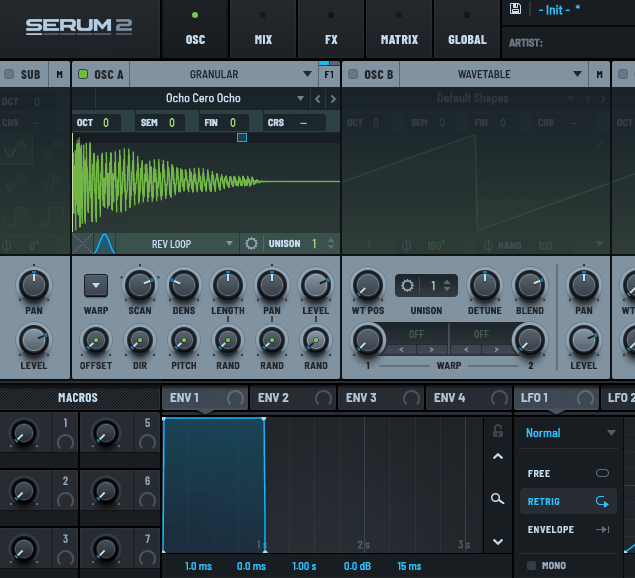
Serum 2 is a focused wavetable synthesizer where the wavetable oscillators are the primary sound sources and the sub and noise oscillators exist to supplement them.
Everything in the instrument is oriented toward getting the most out of the wavetable engine, and the instrument’s character follows directly from that focus: clean, precise wavetable oscillators processed through filters and effects, with modulation animating the parameters of those core elements.
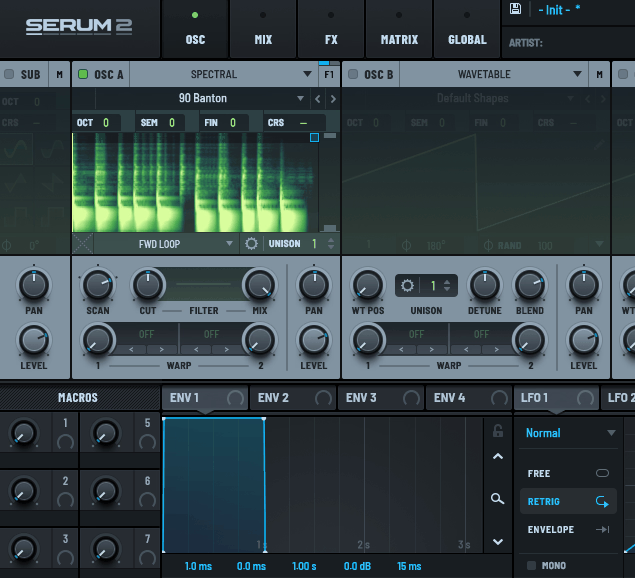
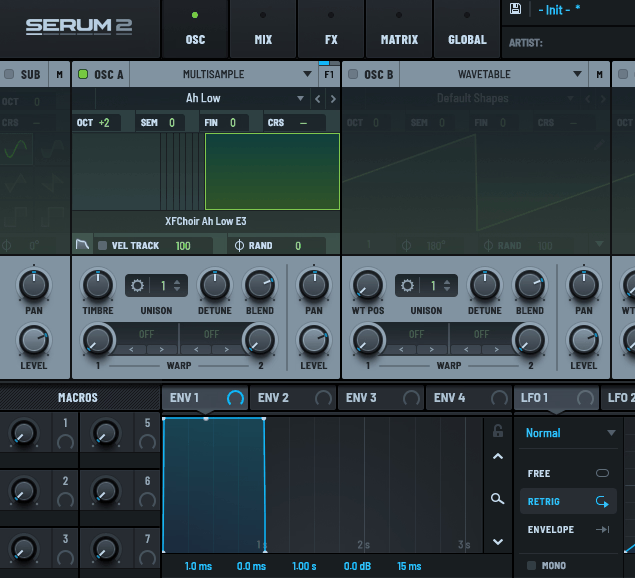
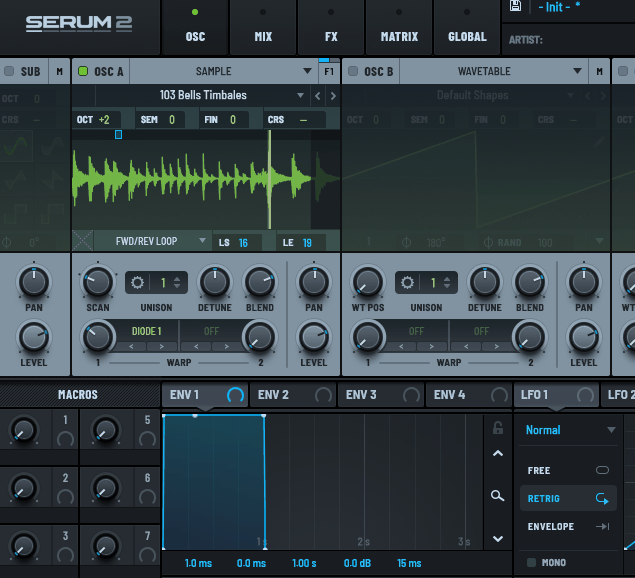
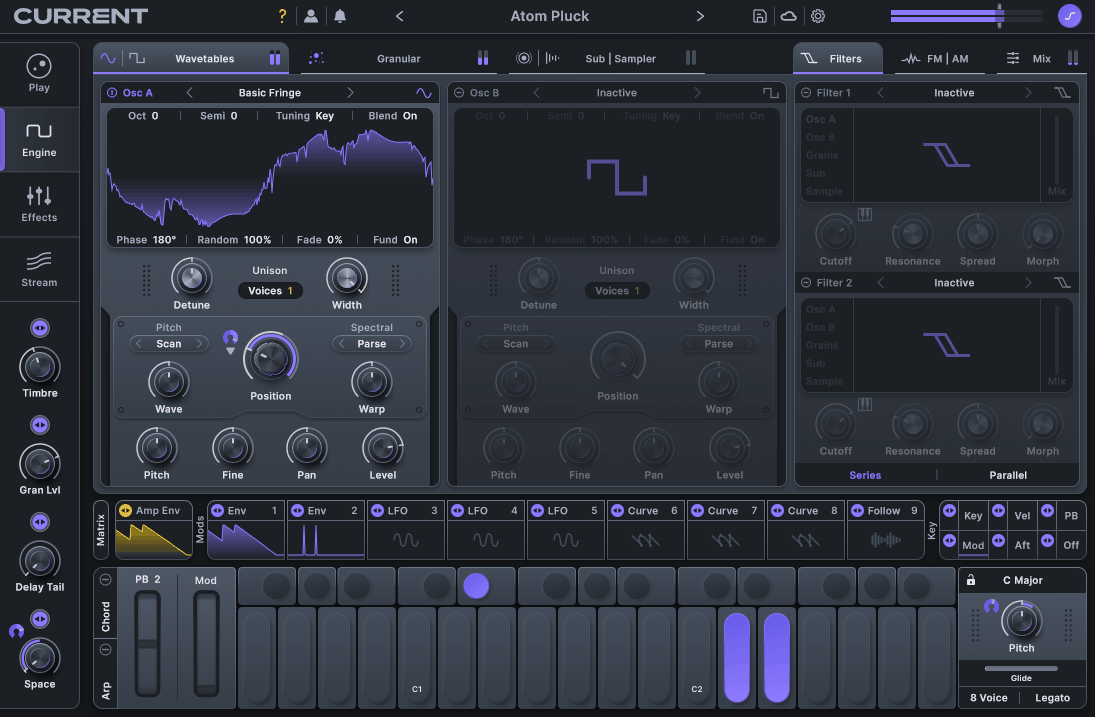
Current 2 treats its wavetable oscillators as two of five equally weighted synthesis engines that all contribute simultaneously. You’re not choosing whether to use the granular engine or the sampler: they’re all running at the same time, each contributing to the patch’s overall character from the moment you load a preset.
This “all engines active” approach means that even simple Current 2 presets have a layered complexity that comes from multiple synthesis types contributing simultaneously, and the spectral processing on the wavetable oscillators gives those layers a frequency-domain character that sits differently in the mix than standard wavetable output.
- Current 2 spectral oscillator specifics
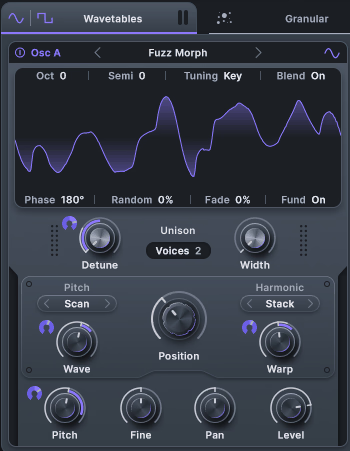
The spectral processing in Current 2’s wavetable oscillators is the most technically novel aspect of the instrument in this comparison. Standard wavetable warp modes like bend, sync, and window operate on the waveform itself in the time domain, reshaping the waveform’s shape before it reaches the filter.
Current 2’s spectral effects operate on the frequency content of the wavetable output: they analyze the harmonic spectrum and apply transformations that shift, fold, reshape, or filter the spectral content directly. The real-time spectrum display added in version 2.0 shows you exactly what the spectral effects are doing to the frequency content as you adjust the controls.
This produces a specific character: spectral folding creates harmonic mirroring effects that reflect upper harmonics back across a threshold frequency, generating rich complex timbres that sound genuinely different from equivalent time-domain processing.
Formant shifting changes the resonant peak character of the oscillator output in ways that make sounds feel more vocal, more physical, or more mechanical depending on the setting. These aren’t subtle: the spectral controls are among the most immediately audible and characterful processing options available in any commercial wavetable synthesizer.
Preset Management
- Current 2
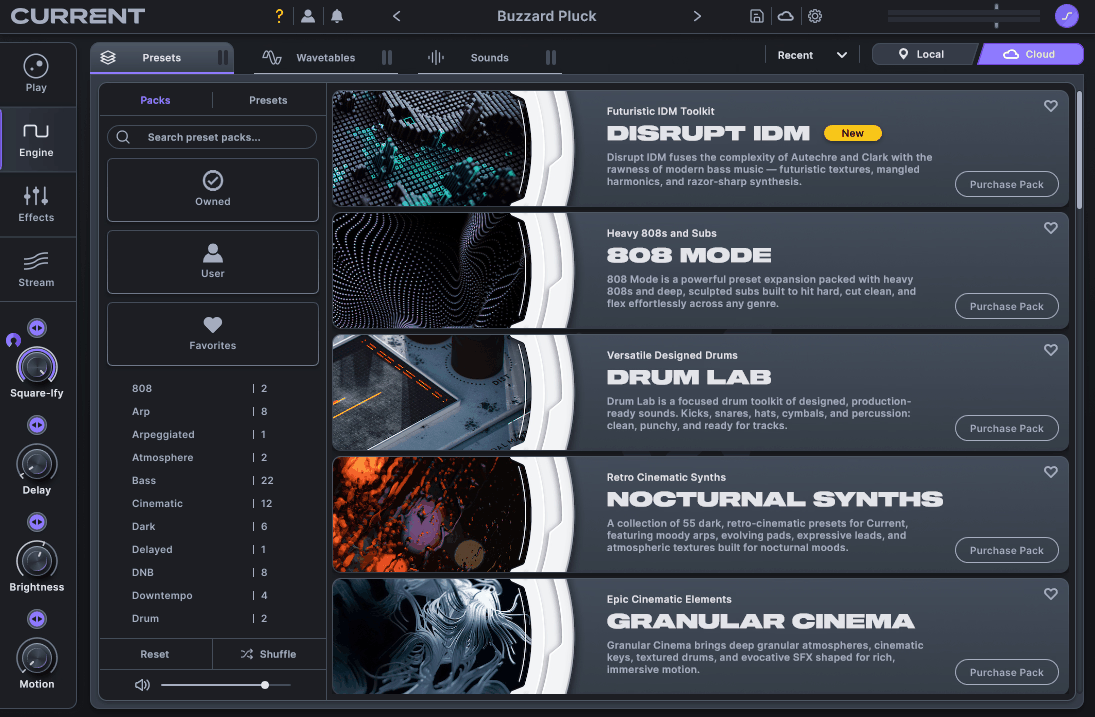
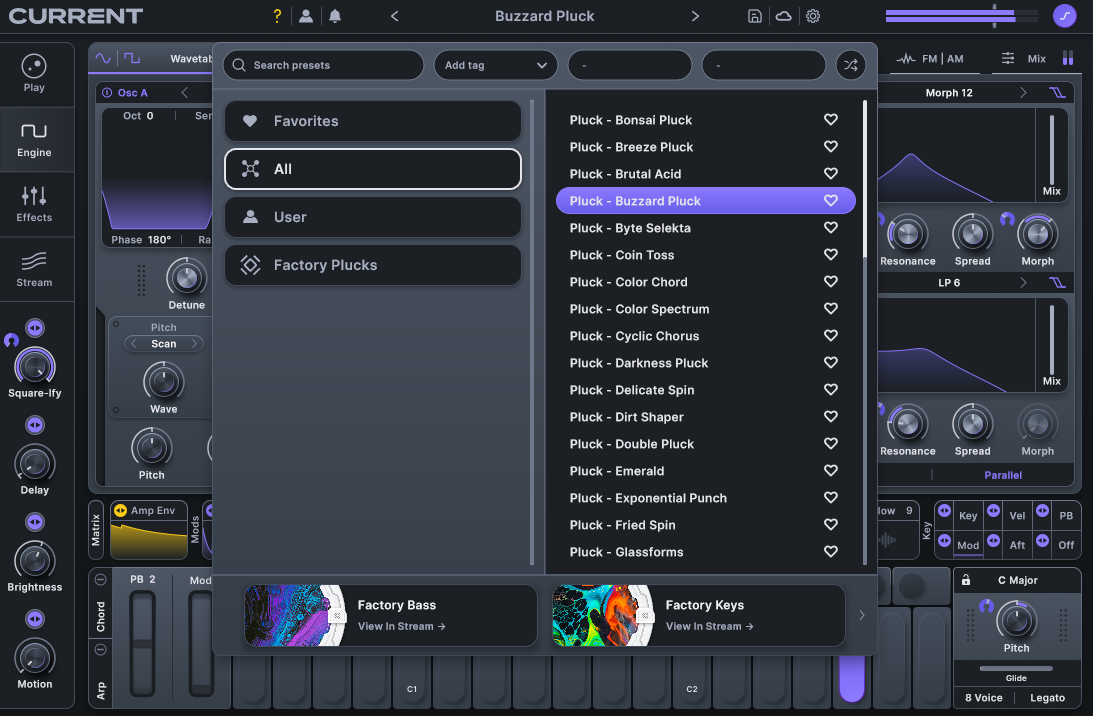
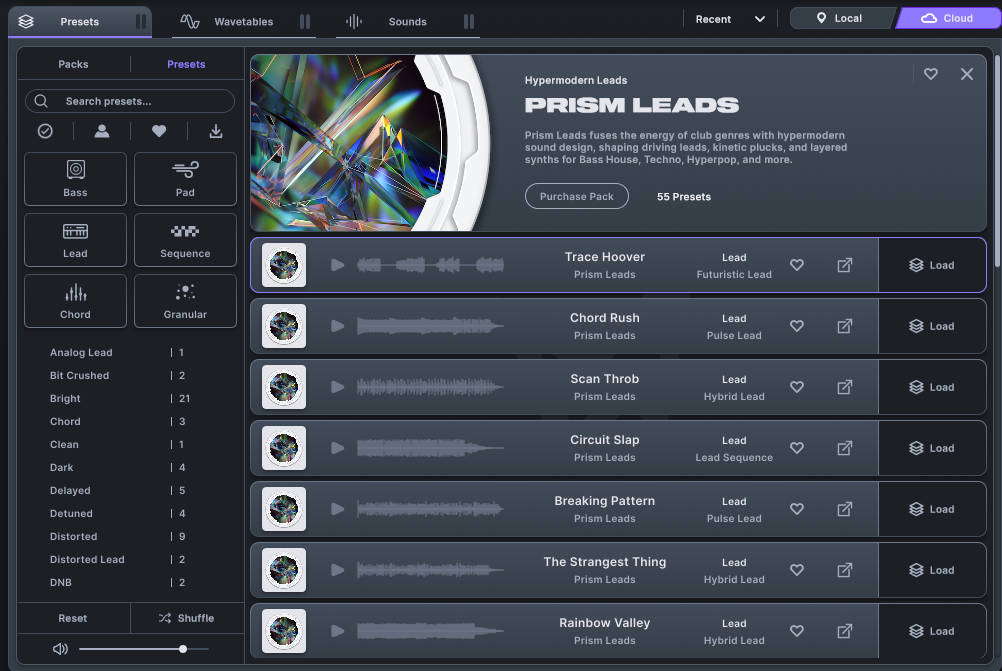
Current 2’s preset management is organized around the Stream content browser, which sits as its own page within the instrument. The Stream gives you access to the factory library of 400+ presets, 170+ wavetables, and 800+ samples with filtering, preview, and download to local storage.
The content is organized into themed packs with names that describe their sonic character (Kinetic for distorted spectral content, Form for formant-based sounds, Drift for lo-fi textures, etc.), which makes finding sounds that match a specific aesthetic faster than a generic category system.
The Stream Pack View added in version 2.0 groups content by pack, giving you more control over how you navigate the curated collections.
Presets in Current 2 are what Minimal Audio describes as “song starters”: they tend to be more fully produced-sounding than starting points, with the full five-engine architecture already engaged, which means they’re impressive as presets but require more understanding of the instrument to break down and modify significantly.
A limitation worth knowing: wavetables and samples loaded into Current 2 are only usable within the plugin. You can’t export them to other synthesizers or use the Current library content outside of the instrument, which is an important consideration if you’re building a workflow that involves moving content between synthesizers.
- Serum 2
Serum 2 inherits the largest third-party preset ecosystem in software synthesis, with ten years of commercially produced banks, free community content, and shared wavetables covering every electronic music genre. The factory preset browser uses a tag-based system with categories for sound type, character, and genre that makes finding specific types of sounds efficient.
The preset quality ranges from simple starting points to fully produced sounds depending on the bank, which gives you flexibility in how you use the preset library.
Serum’s wavetable library is open and portable: custom wavetables work in any Serum format-compatible synthesizer (Vital, Phase Plant, and others support Serum wavetable import), and the community shares wavetable packs freely across platforms. This openness is one of Serum’s practical advantages for producers who want to share content across synthesizers.
Sound Character and Design
- Current 2
Current 2’s sonic character is complex, layered, and immediately rich, in part because five engines are running simultaneously and each contributing to the patch’s overall texture from the outset.
The spectral processing on the wavetable oscillators gives patches a specific animated, evolving quality in the mid-range and upper harmonics that’s difficult to achieve through equivalent filter and effects processing: the frequency-domain transformations produce harmonic motion that sounds organic and physically resonant rather than digitally modulated.
The presets that best demonstrate Current 2’s specific character tend to be atmospheric, textural, and cinematic: evolving pads where the granular engine provides background movement, the spectral wavetables provide the harmonic interest, and the sub oscillator anchors the low end, all blending into a single sound that has more internal complexity than most single-engine synthesizers can achieve at comparable settings.
Leads and basses in Current 2 also benefit from this architecture: a bass that uses the sub oscillator for fundamental, the wavetable oscillators with spectral processing for harmonic presence, and the sampler for transient texture can have a physical density that simpler bass designs lack.
- Serum 2
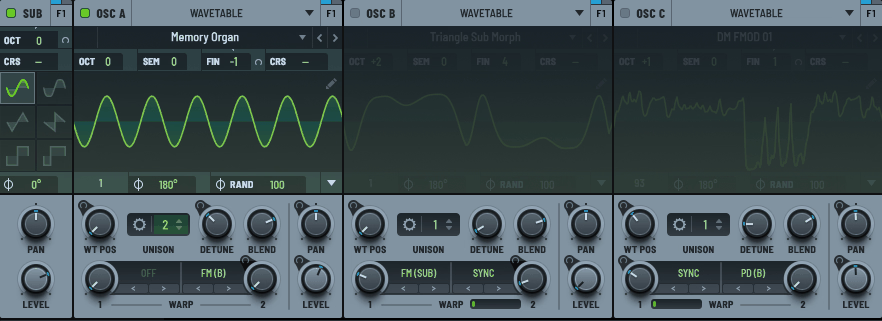
Serum 2’s character is clean, precise, and identifiable across a decade of electronic music production. The anti-aliasing and oversampling quality keep the high frequencies smooth and detailed without digital harshness, and the new oscillator processing modes in Serum 2 (wavefolding, additional FM modes) add tonal complexity and character that the original Serum’s warp modes didn’t cover.
The clarity of Serum’s character is part of what makes it so versatile: it sits in a mix with minimal friction and doesn’t impose a heavy house sound on the patches built with it.
Modulation and Motion Compared
- Current 2
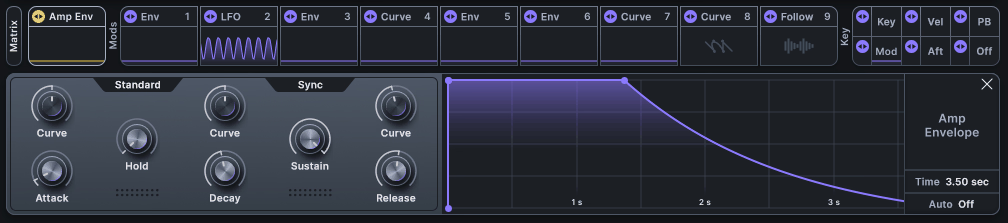
Current 2 uses a nine-slot modulator system where each slot can be configured as one of four modulator types: an LFO, an envelope, a curve sequencer (a free-form step-based pattern that generates modulation), or an envelope follower (which tracks the amplitude of a selected input to generate modulation).
This approach gives you significant variety per slot rather than just a large number of a single type: nine slots each capable of being any of four fundamentally different modulation behaviors gives you more tonal variety per slot count than a system with nine identical LFOs.
The drag-and-drop assignment works similarly to Serum’s: you drag a modulator token to any parameter and set the depth. The unlimited connections added in version 2.0 mean each modulator can target as many parameters as you want.
The pop-up modulation matrix gives you a centralized view of all active connections, depth values, and depth modulation settings in one place, which is valuable for understanding complex patches.
The curve sequencer modulation type is Current 2’s most distinctive modulation source: a free-form pattern editor where you draw the modulation shape over time using a grid, enabling complex, non-repeating modulation patterns that standard LFOs can’t produce.
Combined with the spectral oscillator processing, curve sequencer modulation that moves spectral parameters produces animated harmonic motion that has a specific character associated with Current 2 patches.
- Serum 2
Serum 2’s modulation system is clean and efficient, with the new Chaos generators as the most significant modulation addition. The drag-to-assign workflow is fast, the visual indicators on modulated parameters show depth and polarity immediately, and the four macro knobs handle performance control cleanly.
The Chaos generators produce nonlinear, evolving modulation that standard LFOs can’t approximate, which adds organic variation to patches that benefit from it.
The comparison here is that Serum 2’s modulation system is more streamlined and faster to use for standard modulation tasks, while Current 2’s nine-slot system with four selectable types per slot offers more tonal variety per modulator added, at the cost of requiring more decisions at setup time.
Built-in Effect Plugins and Processing
- Current 2
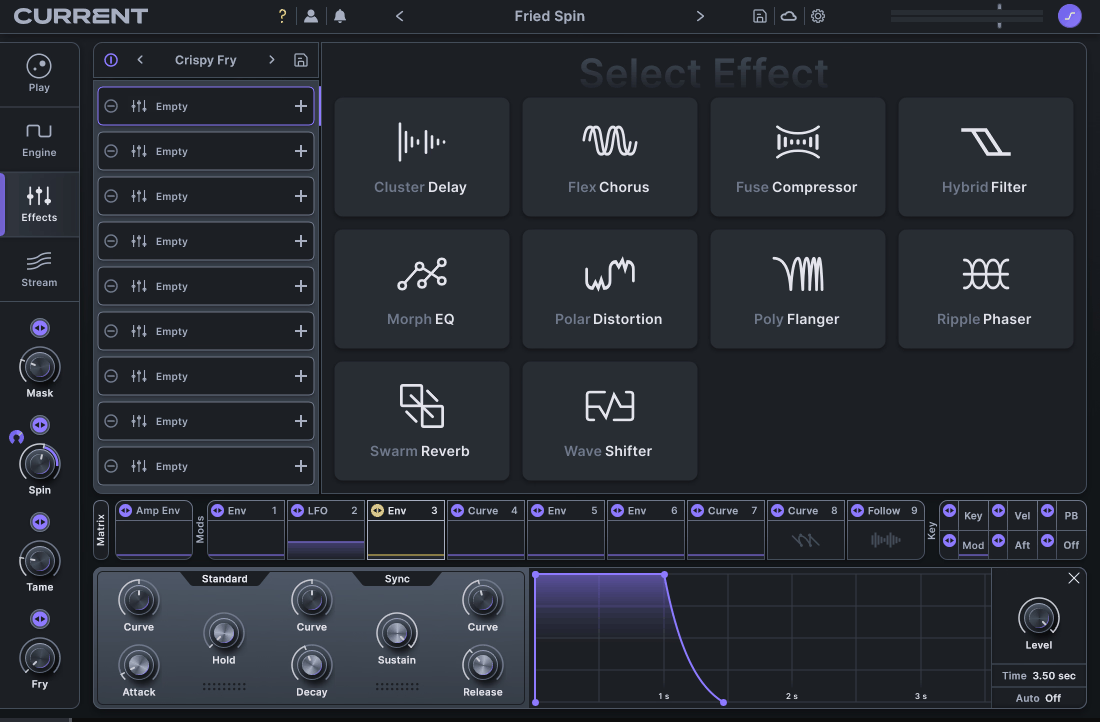
Current 2’s effects section is one of its strongest differentiators.
The nine effect slots can be loaded with any of Minimal Audio’s own professional effects, which include plugins that are also available as standalone instruments through Minimal Audio’s ecosystem: Ripple Phase (phase distortion), Cluster Delay (a multihead delay with advanced routing), Morph EQ (a morphing equalizer), Fuse Compressor, Flex Chorus, Wave Shifter (a frequency shifter and ring modulator combination with FM and soft sync), Poly Flanger (a polyphonic flanger with per-voice processing), and more.
These are not generic built-in effects at the “basic reverb and chorus” quality level common to most synthesizers: they’re the same tools Minimal Audio sells as standalone plugins and uses as the basis of their effects reputation.
The Wave Shifter in particular, which combines frequency shifting with ring modulation and adds FM and soft sync controls typically found in an oscillator, opens up effects territory that no standard synthesizer effects chain provides. Using it as a modulated effect on a sustained pad creates frequency-shifting harmonic motion that’s genuinely distinctive.
- Serum 2
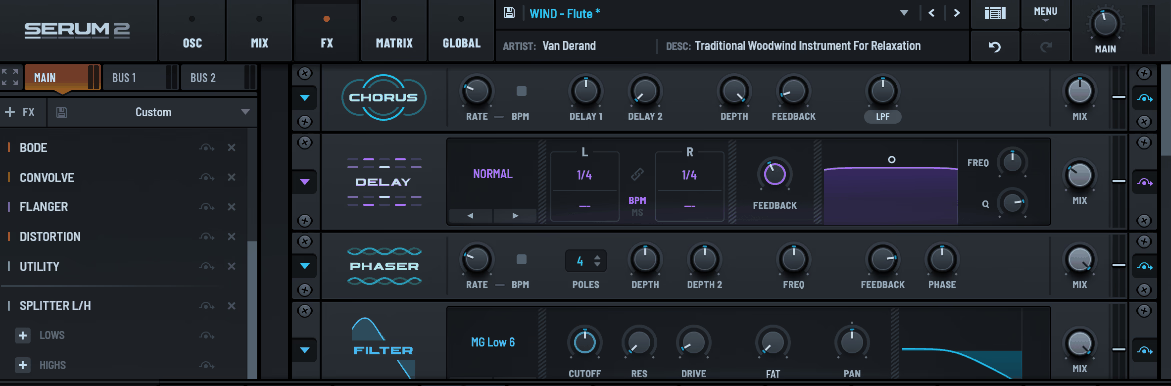
Serum 2’s effects section is solid professional quality: the reverb is dense and smooth, the distortion modes are varied enough to cover most tonal needs, and all effects parameters accept modulation from the main system.
The Hyper/Dimension effect produces the wide, detuned ensemble character associated with a specific signature sound in electronic music, and the chain covers the primary needs of most patches. The improvement in algorithm quality in Serum 2 (particularly the reverb and chorus) makes the effects section more capable than Serum 1’s for producing finished, mix-ready sounds.
The comparison is that Current 2’s effects represent a higher ceiling of effect quality and novelty, while Serum 2’s effects are more reliable and efficient for standard processing tasks across a wider range of genres.
Spectral Processing: Current Advantage
This section has no equivalent in Serum 2, and it’s the dimension of the comparison that most clearly defines why Current 2 occupies a different creative space rather than simply competing within Serum’s domain.
Spectral processing in the frequency domain operates differently from standard warp modes in a way that matters to the sound designer: instead of reshaping the waveform’s time-domain behavior (what the oscillator’s output looks like as a wave), spectral processing reshapes the distribution of energy across the harmonic series. The effects that Current 2’s spectral knob provides include:
- Spectral folding: Harmonics above a threshold frequency are reflected back downward, creating mirror-image harmonic structures that add complexity without conventional distortion character.
- Formant shifting: The resonant peaks of the oscillator output are moved independently of the fundamental pitch, creating vowel-like spectral shaping that gives sounds a more vocal or physical resonance character.
- Harmonic filtering: Frequency-domain filtering that affects specific harmonic ranges rather than the full spectrum, creating timbral shaping that’s more precise than broad-stroke filter processing.
- Spectral smearing and convolution: Blurring of the harmonic structure that adds a specific animated, evolving quality even to static wavetable positions.
The real-time spectrum display added in Current 2.0 shows you what the spectral effects are doing as you adjust the controls, which makes learning and using these tools significantly more intuitive than adjusting them by ear alone. When you sweep the spectral knob through its range, you can see exactly how the harmonic content is changing, which accelerates understanding of the relationship between parameter and result.
Serum 2’s oscillator processing modes (wavefolding, new FM configurations) add significant harmonic complexity, but they operate primarily in the time domain on the waveform itself. The specific frequency-domain character that Current 2’s spectral processing produces is genuinely different and not achievable through equivalent Serum 2 processing.
Preset Library and Sound Design Style
- Current 2
Current 2’s presets are designed around the full five-engine architecture and tend toward cinematic, complex, and genre-current electronic music aesthetics: evolving pads that use all five engines simultaneously, heavily processed wavetable leads with spectral character, granular textures that blend with pitched sub content.
The “song starter” philosophy means the presets are impressive immediately out of the browser but are more complex to understand and modify than simple single-engine presets, particularly for producers who are newer to the spectral synthesis concepts involved.
The preset packs available through Stream are organized thematically and added over time, and the XY Play View lets you perform expressively with presets without needing to understand their internal architecture, which makes Current 2’s presets more performable for musicians who focus on expression rather than sound design.
- Serum 2
Serum 2’s preset ecosystem is the deepest available for any wavetable synthesizer: ten years of commercial banks, free community content, and specialist packs for every sub-genre of electronic music. The genre coverage is genuinely comprehensive and the quality range spans from simple starting points to production-ready sounds at the highest commercial level.
For producers who work primarily in established electronic music genres and want the broadest available palette of starting points, Serum 2’s library is unmatched.
CPU Performance
- Current 2
Current 2 can be CPU-intensive, particularly with complex patches that use all five engines simultaneously at high polyphony and heavy effects.
The spectral processing on the wavetable oscillators, the granular engine at high grain counts, and multiple premium effects all contribute to CPU load that is higher than a simple wavetable synthesizer produces.
On modern hardware (Apple Silicon Macs, current-generation Windows machines), Current 2 runs without significant problems in most production contexts. On older hardware, particularly with dense arrangements and multiple Current 2 instances, performance management through track freezing becomes necessary.
The up to 32-voice polyphony added in version 2.0 is useful for pad and chord work but increases CPU demands at high voice counts.

- Serum 2
Serum 2 is slightly more demanding than Serum 1 but maintains its reputation for CPU efficiency relative to quality. The per-voice dual filter and expanded processing modes increase overhead compared to the original, but the overall performance remains predictable and manageable across most production contexts.
Multiple simultaneous Serum 2 instances at moderate settings are practical on modern hardware without the careful resource management that Current 2’s more complex architecture sometimes requires.

Genre Fit
- Current 2
Current 2’s sonic character and design philosophy align most naturally with cinematic and film scoring, contemporary R&B and pop, ambient and experimental electronic, and any production context where rich, layered, evolving textures are the primary sound design goal.
The spectral oscillator character has a specific quality that sits naturally in modern pop and hip-hop production where the goal is sounds with internal complexity and movement, and the granular engine excels at the kind of processed vocal and texture sounds that define current production trends.
Electronic music production across trap, future bass, and melodic bass music has adopted Current 2’s spectral character specifically for leads and atmospheric elements where the frequency-domain processing adds a quality that straightforward wavetable synthesis doesn’t achieve.
The instrument’s arpeggiator with 40+ modes and chord generator with 30+ chord presets make it particularly useful for melodic composition contexts where MIDI tools within the instrument accelerate creative decisions.
- Serum 2
Serum 2’s genre associations are the most comprehensive of any software synthesizer for electronic music: future bass, dubstep, trap, EDM, commercial pop, and essentially every sub-genre of electronic production.
The depth of the preset ecosystem means there are genre-specific sounds available at every level of specificity, and the wavetable character that Serum established has become part of the sonic vocabulary of an entire era of electronic music production.
Learning Curve
- Current 2
Current 2 has a moderate to high learning curve depending on how deeply you want to engage with it. The Play View makes performing with presets immediately accessible, and loading presets through the Stream browser is intuitive.
But understanding how to build patches from scratch, how the spectral controls relate to frequency-domain sound design, how to configure the granular engine’s grain parameters, and how to use the curve sequencer modulation source all require deliberate learning time that Serum 2’s more conventional architecture doesn’t demand to the same extent.
The real-time spectrum display on the wavetable oscillators helps significantly with learning the spectral controls: seeing what the frequency-domain effects do while you adjust them is considerably more educational than adjusting by ear alone.
But the overall synthesis vocabulary of Current 2 is more varied and less conventionally documented than Serum’s, which means the learning resources are sparser and require more independent exploration.
- Serum 2
Serum 2’s learning curve remains among the lowest of any professional synthesizer, with an enormous tutorial ecosystem, a logical and immediately legible signal flow, and interface conventions that existing Serum users know completely.
For new synthesizer learners, Serum 2’s combination of visual clarity, accessible workflow, and documentation depth makes it the more approachable starting point.
Trial and Demo
- Current 2
Minimal Audio offers a demo version of Current 2 through their website, and the instrument is also accessible through subscription and rent-to-own options that provide a lower-commitment entry path to evaluation than a full perpetual purchase.
The pricing history of Current 2 has been somewhat variable given the product’s controversial launch, but perpetual licenses have been available at promotional pricing ($99 at introduction) that makes the evaluation decision more accessible.
- Serum 2
Xfer provides a demo with periodic output noise that gives you unlimited session time with the full feature set before purchasing. The Splice rent-to-own at approximately $9.99/month provides an alternative entry with immediate full access and a license transferring when the total is paid.
Which Is the More Unique Tool?
Current 2 is unambiguously the more unique tool of the two, and this is the clearest single answer in the comparison.
The spectral wavetable oscillators with over 40 frequency-domain processing effects, the simultaneous five-engine architecture, the granular engine with 250+ grain controls, the additive sub oscillator, the time-stretching sampler, the curve sequencer modulation type, the Wave Shifter effect combining frequency shifting and ring modulation, the XY Play View performance interface, and the Stream cloud content platform are all capabilities that Serum 2 either doesn’t offer at all or doesn’t offer in equivalent form.
For producers who want to explore territory that most wavetable synths don’t cover, Current 2 offers more genuinely unfamiliar creative territory. For producers who need the most powerful, best-documented, most community-supported synth available, Serum 2 is the stronger answer.
The Bottom Line
Minimal Audio Current 2 and Serum 2 are both excellent synthesizers that serve different creative needs well, and the comparison between them is ultimately about which sonic territory you want to explore and which kind of production workflow matches how you work.
Choose Current 2 if the spectral wavetable oscillators’ frequency-domain processing gives you sounds you can’t make any other way; if the five-engine simultaneous architecture and its inherently layered, complex patches match the production aesthetic you’re building; if the premium effects library (Wave Shifter, Ripple Phase, Cluster Delay, Poly Flanger) inside the instrument covers territory you’d otherwise need external plugins for; or if the cinematic, contemporary, and textural sound design vocabulary of Current 2’s presets is where your productions live.
Choose Serum 2 if the depth and breadth of the third-party preset ecosystem is essential to your workflow; if the best-in-class wavetable editor is important for your custom sound design work; if clean, efficient performance for dense sessions with multiple instances is a priority; or if you’re working in established electronic genres where Serum’s decade of community knowledge and genre-specific content is an immediate practical advantage.
For many producers, both instruments have a place in the same setup: Serum 2 as the primary workhorse for wavetable synthesis across the full range of electronic production, and Current 2 as the specialist tool for when spectral complexity, granular textures, or the specific sonic vocabulary of its five-engine architecture is what the session needs. That combination covers more creative ground than either instrument does alone.
Buy Here: Minimal Audio Current 2 (Support Pluginerds)
Buy Here: Minimal Audio Current 2 (Trial Available)
Check Here: Xfer Serum 2 (Trial available)
Get the Free Plugin Starter Kit
The genuinely useful free DAWs and plugins worth installing. No filler. Straight to your inbox.

Hello, I’m Viliam, I started this audio plugin focused blog to keep you updated on the latest trends, news and everything plugin related. I’ll put the most emphasis on the topics covering best VST, AU and AAX plugins. If you find some great plugin suggestions for us to include on our site, feel free to let me know, so I can take a look!