
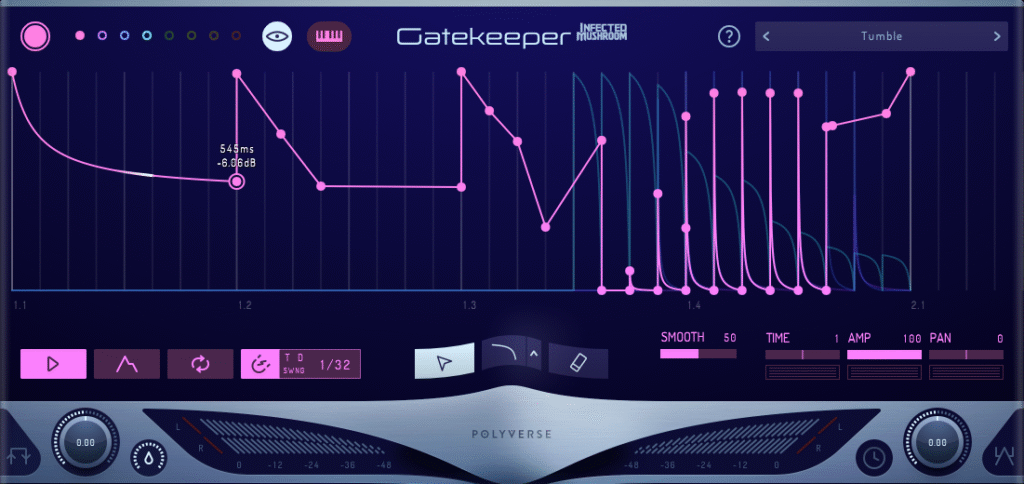
PsyTrance demands effects and instruments that can produce the kind of alien, rapidly evolving, psychedelic textures that define the genre. If you’ve ever tried to make a proper psy lead using just a basic wavetable synth and a stock phaser, you know exactly what I mean.
The good news is that some talented devs have built tools specifically for this corner of electronic music. A couple of the plugins on this list were literally co-designed by psytrance artists, which means they understand the workflow and the sonic requirements from the inside out rather than guessing at what trance producers might need.
We’ve put together eight plugins that cover the key areas of psytrance and GOA production, from the synth engines that generate those iconic spiraling leads to the effects processors that add rhythmic complexity and psychedelic character.
Whether you’re building rolling 303 style basslines, designing alien vocal textures, or creating the kind of modulated filter sweeps that make a dancefloor lose its collective mind, there’s something here that’ll help you get there.
1. DS Audio Tantra 2
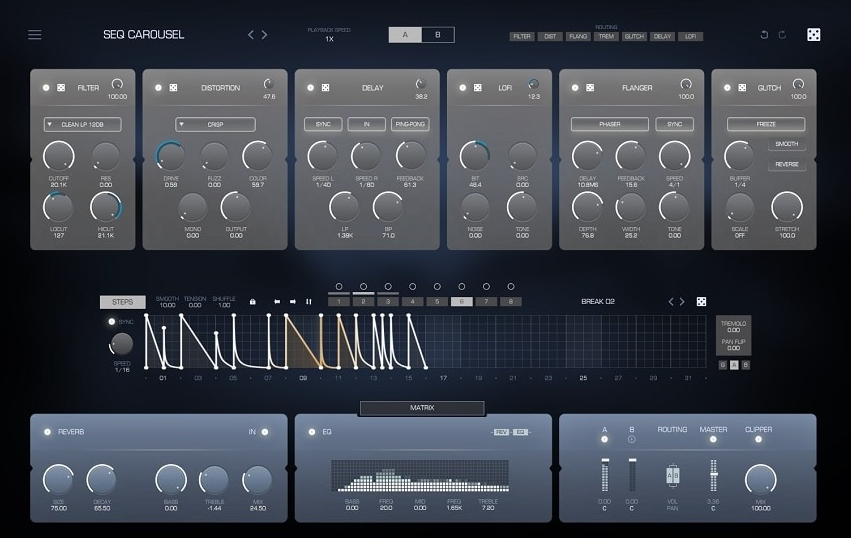
If you make psytrance and you don’t know about DS Audio Tantra 2, you’re missing out on one of the most useful creative tools in the genre.
This is a rhythmic multi effects plugin that takes any sound source, no matter how flat or boring it might be, and transforms it into a complex, moving, rhythmic progression full of filter sweeps, glitchy stutters, and layered modulation patterns. It does for your existing sounds what a good spice rack does for bland food.
What makes DS Audio Tantra 2 particularly well suited to psytrance is how it handles rhythm. Psy music lives on intricate 16th note patterns and constantly evolving textures, and Tantra 2 gives you a deep modulation system that can animate any parameter in real time.
Throw it on a pad, a synth lead, or even a simple noise layer, and within seconds you’ve got something that pulses and breathes with the kind of hypnotic energy that defines the genre.
- Dual Layer Effects
DS Audio Tantra 2 runs two independent effects layers (A and B), each containing six effect modules: Filter, Distortion, Delay, LoFi, Flanger, and Glitch. The modules within each layer can be placed in any order using drag and drop, and each module offers two internal stages that can run in series or parallel for additional depth. Layer A might run a filter into distortion into glitch while Layer B takes the opposite approach, and the two can be blended or crossfaded between.
This dual layer architecture is what separates DS Audio Tantra 2 from simpler rhythmic effects tools. You can create two completely independent rhythm patterns running simultaneously, which is exactly how you build the kind of complex, interlocking textures that psy music demands.
- Eight Curve and Step Based Modulators
The modulation system provides eight sequencers that can operate in either curve or step mode with up to 32 steps each. In step mode, you draw volume levels per step with adjustable gate times. In curve mode, you get a full envelope editor with adjustable tension, smoothing, and node placement for creating complex modulation shapes.
Each sequencer can target any parameter in the plugin through a simple drag and drop assignment system. The sequencers support tempo sync with adjustable speed divisions, and a shuffle control adds swing for grooves that aren’t perfectly quantized. You can even set different step lengths per sequencer to create polymetric modulation patterns where different effects evolve at different rates.
- Convolution Section
DS Audio Tantra 2 includes a convolution processing section loaded with impulse responses captured from unusual sources like broken microphones, antiquated speakers, and other special devices. This adds a layer of physical, real world character to the effects chain that you can’t get from standard digital processing alone.
- Intelligent Randomizer
Beyond the included preset library, DS Audio Tantra 2 features an intelligent randomization algorithm that generates new presets from scratch rather than simply randomizing parameter values. The algorithm is based on years of sound design experience and produces usable, musical results far more often than a standard randomizer would. A global EQ and reverb in the master section helps shape the final output.
Available through Plugin Alliance in VST, VST3, AU, and AAX formats for Windows and macOS.
Get the Free Plugin Starter Kit
The genuinely useful free DAWs and plugins worth installing. No filler. Straight to your inbox.
2. Polyverse Manipulator by Infected Mushroom
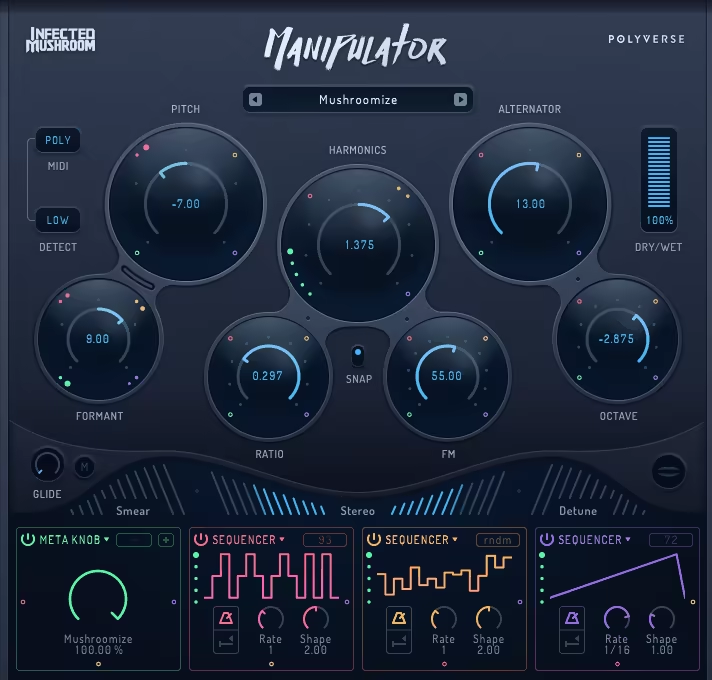
This plugin exists because of one of the most iconic psytrance acts in history. Polyverse Manipulator was co designed with Infected Mushroom, and if you’ve ever listened to their music and wondered how they create those insane, alien vocal transformations and pitch bending effects, this is literally the tool they built to do it.
It’s not a generic pitch shifter with a famous name slapped on it. The algorithms were developed specifically to handle the extreme pitch and formant manipulation that IM’s productions demand.
What I find most interesting about Polyverse Manipulator is that it’s found a massive audience well beyond psytrance. Producers in dubstep, neurofunk, experimental electronic, and even pop have adopted it because the vocal and tonal manipulation it offers simply isn’t available anywhere else. But for psy producers specifically, this is about as close to essential as a single plugin gets.
- Granular Pitch Shifting
The core engine of Polyverse Manipulator uses a granular pitch shifting algorithm that allows you to transpose your audio up or down while independently controlling the formant content.
This means you can shift a vocal down an octave without it sounding like a slowed down tape, or shift it up without the chipmunk effect that standard pitch shifters produce. The formant and pitch controls operate on completely separate axes, giving you an enormous range of tonal possibilities from a single input.
For psytrance vocal processing, this independence is everything. You can create deep, resonant alien voices that still retain intelligible formant characteristics, or push vocals into high, ethereal territory while keeping the body and weight of the original performance.
- Harmonizer
The built in harmonizer adds up to four additional pitch shifted voices to your signal, each with independent pitch, formant, pan, and level controls. The pitch tracking algorithm analyzes the input signal and adjusts the harmony voices in real time, meaning you can create evolving vocal harmonies and chord stacks from a single monophonic source.
Combined with the main pitch and formant controls, the harmonizer turns Polyverse Manipulator into a one stop vocal transformation engine where a simple vocal take can become an entire choir of alien voices. The tracking is responsive enough to follow rapid melodic passages without audible artifacts.
- Modulation System
An envelope follower responds to the dynamics of your input signal, allowing the pitch shifting and formant controls to react to how loud or quiet the source is. This creates dynamic, expressive pitch effects that follow the natural contour of a performance. A dedicated LFO with multiple waveforms provides rhythmic modulation of any parameter for pulsing, evolving textures.
- Mono and Stereo MIDI Control
Full MIDI control lets you play Polyverse Manipulator like an instrument, triggering specific pitch intervals from a keyboard or MIDI controller. This turns the plugin into a real time performance tool where you can manually play harmonies and pitch bends over your source audio, which is how Infected Mushroom uses it in their live shows. Available from Polyverse in VST, VST3, AU, and AAX formats.
3. Xfer Serum 2

You probably already know about Serum. It’s been the go to wavetable synth for electronic music producers for nearly a decade now, and its combination of incredible sound quality, intuitive workflow, and deep modulation capabilities made it the standard that everything else gets measured against. Xfer Serum 2 takes everything that made the original great and pushes it considerably further with a suite of new features that psy producers in particular will appreciate.
Now, I know what you’re thinking. Serum isn’t a “psytrance plugin” specifically. And you’re right. But here’s the thing: the vast majority of professional psy leads, basses, and textures being produced right now are coming out of either Serum or a handful of similar wavetable synths. The reason is that wavetable synthesis gives you the precise harmonic control and the aggressive modulation depth that psytrance sound design demands. Xfer Serum 2 just does it better and with more flexibility than ever.
- Enhanced Wavetable Engine
Xfer Serum 2 builds on the original’s legendary wavetable oscillator architecture with expanded capabilities for creating complex, evolving timbres. The oscillators support a variety of blending, morphing, and unison modes that produce everything from razor thin leads to massive, detuned supersaws. The wavetable editor lets you create and import custom wavetables, draw waveforms by hand, or generate them from audio files.
For psy sound design, the unison engine is particularly valuable. Stacking voices with slight detuning and stereo spread is how you create those enormous, room filling leads that define the genre, and Xfer Serum 2 handles this with remarkably low aliasing even at extreme settings.
- Massive Filter Selection and Modulation Matrix
The filter section offers an enormous selection of filter types covering everything from classic analog emulations to unusual digital modes. Multi mode, comb, phaser, and formant filters all open up creative possibilities that go well beyond standard low pass sweeping.
The drag and drop modulation system lets you route any modulation source to any parameter with a simple click and drag, making complex modulation setups fast and intuitive.
Psy producers will spend a lot of time in the modulation matrix, because the genre’s signature sound depends on constant movement and evolution. Being able to quickly assign an LFO to filter cutoff, an envelope to wavetable position, and a macro to distortion amount without navigating through submenus is a workflow advantage that adds up over hundreds of sound design sessions.
- Built In Effects Rack
Xfer Serum 2’s effects rack provides a chain of high quality processors including distortion, chorus, flanger, phaser, delay, reverb, compression, and EQ. Each effect can be reordered in the chain, and the quality is high enough that many producers skip external effects entirely and process their sounds entirely within the synth. The distortion modules in particular are excellent for adding the grit and aggression that psy leads need to cut through a dense mix.
Available from Xfer Records in VST, VST3, AU, and AAX formats for Windows and macOS, with rent to own options through Splice.
4. Polyverse Filterverse
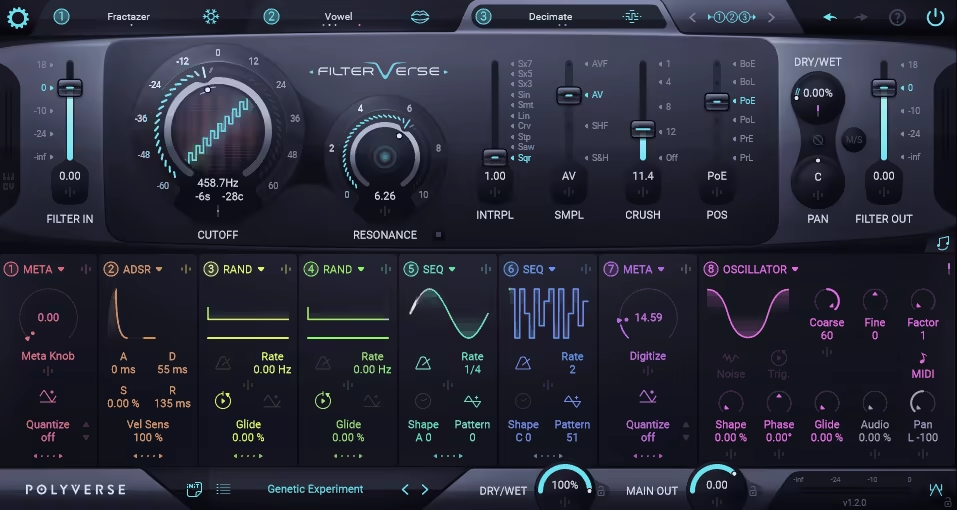
Filter plugins are a dime a dozen, but Polyverse Filterverse does things with filters that most competing products can’t even attempt. It’s not just a filter with an LFO attached. It’s a full creative filtering environment with multiple filter models, extensive modulation, and the kind of extreme resonance and feedback capabilities that produce the screeching, alien filter effects that psytrance is built on.
I think what makes Polyverse Filterverse stand out in a psy production context is how far you can push it before it falls apart.
Most filters start to sound harsh or digital when you crank them into extreme territory, but Filterverse was designed to sound musical even at settings where other filters would just produce painful noise. For a genre that lives on aggressive filter work, that matters enormously.
- Multiple Filter Models
Polyverse Filterverse provides a range of filter models spanning classic analog emulations and experimental digital designs. Each model has its own sonic personality, from warm and rounded to aggressive and metallic.
The analog models deliver the kind of thick, resonant sweeps associated with classic hardware filters, while the digital options produce cleaner, more precise results.
Switching between models on the same source material gives you dramatically different results, which is invaluable for psy production where filter character is one of the primary tools for differentiating sounds.
- Deep Modulation with Envelope Follower, LFOs, and Step Sequencer
The modulation system includes multiple LFOs, an envelope follower, and a step sequencer that can target any filter parameter. The LFOs offer standard waveforms plus more complex shapes for intricate modulation patterns. The step sequencer enables rhythmic filter patterns that lock to your DAW tempo, creating the kind of synced, evolving filter movements that define psy leads and basslines.
The envelope follower adds dynamic responsiveness to the filtering, making the effect react to the input signal’s volume for more expressive, performance like results.
- Drive, Saturation, and Feedback
Dedicated drive and saturation stages push the filter into aggressive territory, adding harmonic density and grit.
The feedback path routes the filter output back into its input, creating self oscillating resonances and squealing tones that are perfect for the more extreme end of psy sound design. Combined with modulation, the feedback can produce continuously evolving, unpredictable textures.
Available from Polyverse in VST, VST3, AU, and AAX formats for Windows and macOS.
5. Polyverse Supermodal
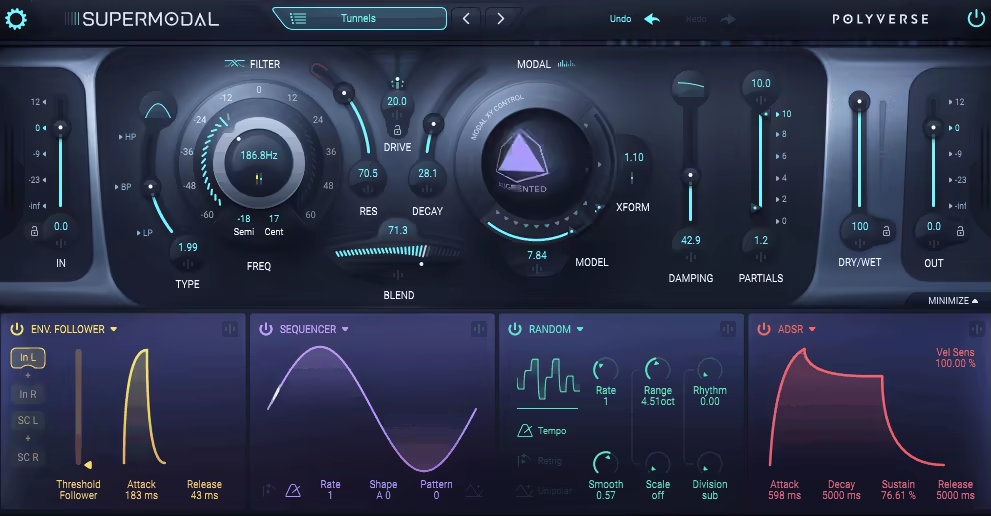
If you’ve ever wanted a filter that responds like a real physical object being struck and vibrating, that’s the territory Polyverse Supermodal operates in.
It’s a completely different approach to filtering than the standard low pass and high pass tools you’re used to, producing ringing, bell like tones and pitched resonances that no conventional filter can replicate.
For psytrance producers, it opens up a world of metallic, organic textures that sound genuinely different from anything you can make with standard synthesis tools.
The thing about modal filtering is that the resonances it produces have a complexity and a naturalness to them that synthesis based approaches struggle to achieve.
When you excite Polyverse Supermodal with a drum hit or a synth stab, the ringing harmonics decay in a way that feels real and physical rather than digital and synthetic, which gives your psy textures an unusual quality that listeners can’t quite place.
- Physical Resonance Modeling
Polyverse Supermodal uses physical modeling algorithms to simulate how real objects resonate at specific frequencies. You get control over multiple resonant modes (the individual frequencies at which the virtual object vibrates), and each mode can be individually tuned, dampened, and shaped. This means you can design the harmonic series of your resonance from scratch, creating bell like tones, metallic rings, or pitched drones that are harmonically related to your input material.
The tuning system makes it easy to pitch the resonances to musical notes, so the metallic character it adds always sits in key with your track.
- Exciter Section
A built in exciter generates its own impulses for triggering the modal resonances, meaning you can use Polyverse Supermodal as a sound generator rather than purely as an effects processor. Feed it a simple click or transient and the modal resonances turn it into pitched, ringing tones with complex harmonic content. This is how you create tuned percussion, metallic hits, and resonant drones from nearly nothing.
- Modulation and Integration
An internal modulation system provides movement for evolving resonant textures, and the plugin integrates well with external modulation from your DAW. Available from Polyverse in VST, VST3, AU, and AAX formats for Windows and macOS.
6. Polyverse Gatekeeper
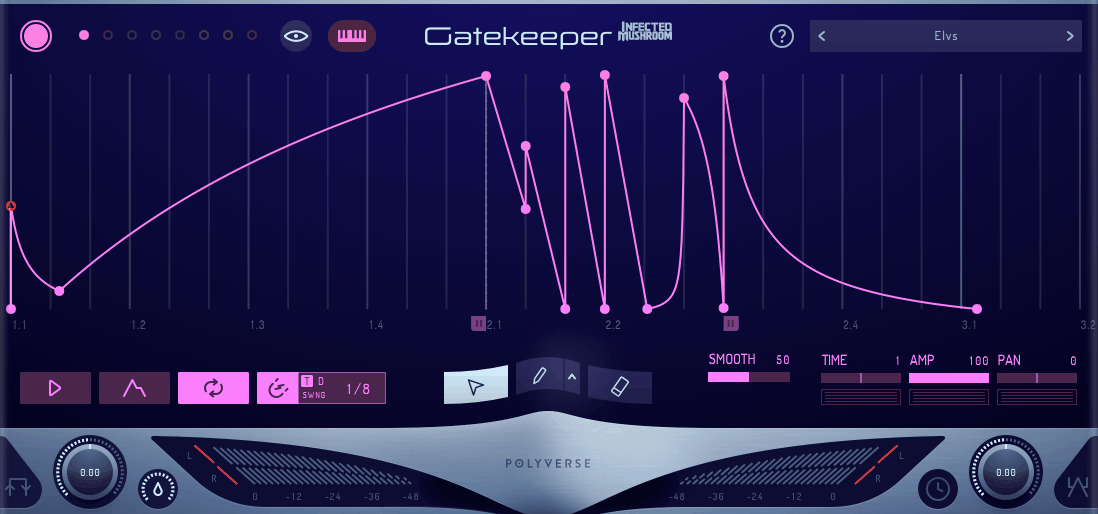
Volume gating is one of the most essential techniques in psytrance production, and Polyverse Gatekeeper handles it with more precision and creative depth than any other gating plugin I’ve used. The entire genre relies on tight, rhythmic volume patterns that chop and stutter audio in perfectly synced sequences, and Gatekeeper gives you the tools to design those patterns with surgical accuracy.
What pushes Polyverse Gatekeeper beyond a basic trance gate is the level of precision and creative control it offers over your volume patterns. You’re not limited to simple on/off patterns or preset shapes. You have complete freedom to design any volume curve you can imagine, with smooth curves, sharp transients, and everything in between, all locked precisely to your tempo grid.
- Freely Drawable Volume Curves
Polyverse Gatekeeper’s main interface is a visual curve editor where you draw your volume pattern freehand or using nodes. The resolution is high enough to create extremely detailed shapes including smooth attack ramps, sharp cuts, gentle fades, and any combination thereof. The curves sync to your DAW tempo with adjustable note divisions, so the gating pattern always stays locked to the beat.
You can create patterns that range from simple quarter note pumping to intricate 32nd note stutter sequences that would be impossible to program with standard automation.
- Multiple Modulation Lanes
Beyond the main volume lane, Polyverse Gatekeeper provides additional modulation lanes that can control other parameters like panning or an external effects send. Sidechain and MIDI triggering options let you restart the gating pattern from incoming audio transients or MIDI notes, which is essential for locking the gate pattern precisely to your kick drum or other rhythmic elements.
- Per Pattern Mix Control and Preset Library
A wet/dry mix control lets you blend between the gated and ungated signal for parallel processing effects. The included preset library covers common psytrance gating patterns plus more experimental shapes. Available from Polyverse in VST, VST3, AU, and AAX formats for Windows and macOS.
7. Polyverse I Wish
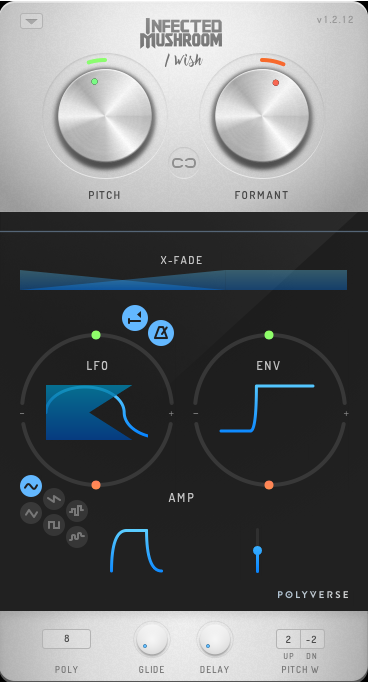
Pitch shifting in psytrance needs to be fast, precise, and capable of extreme intervals without turning into a garbled mess. Polyverse I Wish was built for exactly this kind of aggressive pitch manipulation, delivering real time pitch effects that stay surprisingly clean even when you’re bending audio by several octaves.
I find Polyverse I Wish particularly interesting because it bridges the gap between a traditional pitch tool and a creative texture generator. At subtle settings, it’s transparent and precise. Push it harder and the processing artifacts become a feature rather than a bug, producing crystalline, fragmented textures that are perfect for psy FX and transition effects.
- Granular Pitch Engine
The pitch shifting engine uses a granular algorithm that chops the incoming audio into tiny fragments and repitches them individually, allowing for real time pitch changes without time stretching artifacts. A momentary mode applies the pitch shift only while you hold the trigger, snapping back to the original pitch when released. Latched mode keeps the pitch shift engaged until you trigger it again.
This momentary behavior is perfect for performance oriented pitch drops and risers where you want the effect to happen at a specific moment and then immediately release.
- MIDI and Automation Control
Full MIDI control lets you play specific pitch intervals from a keyboard, turning Polyverse I Wish into a performance instrument for real time pitch effects. DAW automation of the pitch parameter allows you to program precise pitch curves for drops, builds, and transitions.
The response is fast enough to handle the rapid pitch sweeps that psy music relies on during breakdowns and transitions.
- Mix and Grain Controls for Texture Shaping
The mix control blends between the original and pitch shifted signal for parallel processing. Grain size and density controls let you shape the character of the granular processing, from transparent and smooth to choppy and textural.
Available from Polyverse in VST, VST3, AU, and AAX formats for Windows and macOS.
8. Waves Pusher by Infected Mushroom
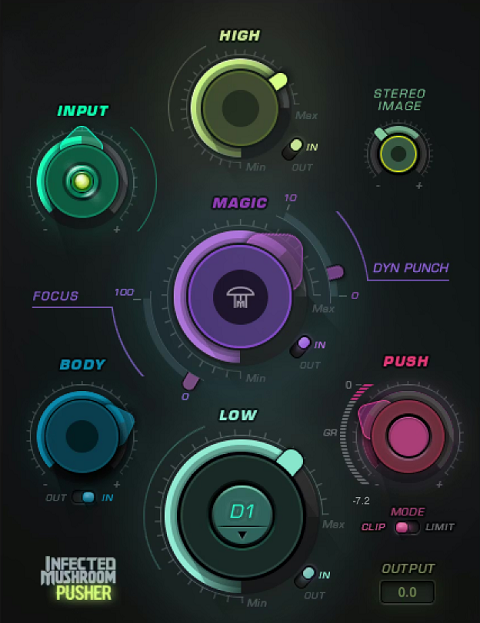
When Infected Mushroom puts their name on a plugin, psy producers pay attention. Waves Pusher is the result of a collaboration between Waves and IM, and it’s designed to solve a very specific problem that psytrance producers deal with constantly: getting sounds to be loud, punchy, and present in a mix without crushing the life out of them with heavy limiting.
Pusher is not a mastering limiter or a standard compressor. It’s more like a loudness enhancement tool that combines several processing stages to push your signal harder while retaining the dynamic detail and transient snap that makes psy music exciting. If you’ve ever wondered how professional psy mixes manage to sound simultaneously loud and dynamic, Waves Pusher is a big part of that answer.
- Multi Stage Loudness Enhancement
The centerpiece of Waves Pusher is the Magic knob, which combines multiple processing stages behind a single control to push the perceived loudness of your signal.
Behind the scenes, the Magic control engages saturation, compression, and limiting in carefully calibrated ratios that increase density and volume without the pumping and squashing that you’d get from simply cranking a limiter. The result sounds louder and more impactful while maintaining the punch and transient detail of the original.
For psy basslines and leads that need to hit hard without sounding flat, this single control is remarkably effective.
- Stereo Width
A built in stereo width control expands the perceived size of your signal across the stereo field. On synth pads, leads, and effects, this widening adds the spatial dimension that makes sounds feel massive and immersive. The widening algorithm is designed to avoid the phase cancellation issues that can occur with simpler stereo enhancement methods, meaning your widened sounds will still translate properly when summed to mono.
- Low and High Frequency Tuning
Dedicated low frequency and high frequency shaping controls let you adjust the tonal balance of the enhanced signal without reaching for a separate EQ. The low control adds weight and punch to the bottom end, while the high control adds presence and air to the top. These aren’t just simple shelving EQs. They’re integrated into the enhancement processing so the tonal shaping happens as part of the overall loudness push rather than as a separate step.
- Designed for Mix Bus and Individual Track Use
Waves Pusher works on individual tracks where it can push a single synth or bass sound harder, and on mix busses and master channels where it adds overall density and volume to a full mix. The processing adapts to whatever signal you feed it, and the straightforward control set means you can dial in enhancement quickly without second guessing a dozen parameters. Available from Waves in VST, VST3, AU, and AAX formats for Windows and macOS.
Get the Free Plugin Starter Kit
The genuinely useful free DAWs and plugins worth installing. No filler. Straight to your inbox.

Hello, I’m Viliam, I started this audio plugin focused blog to keep you updated on the latest trends, news and everything plugin related. I’ll put the most emphasis on the topics covering best VST, AU and AAX plugins. If you find some great plugin suggestions for us to include on our site, feel free to let me know, so I can take a look!