
Bass is the one area where hardware analog synths still have a genuine, audible advantage over software. The weight, warmth, and physical presence of a real analog oscillator running through a real analog filter produces low-end content that sits in your chest in a way that even the best plugin emulations have to work harder to achieve.
You can get close with software, absolutely, but there’s a reason the most iconic bass sounds in electronic music history came from hardware, and the current generation of analog instruments carries that legacy forward with modern reliability and features.
What makes a synth good for bass specifically isn’t just about having a fat oscillator, though. You need the right filter character to shape the low end without losing weight. You need an envelope that responds fast enough for punchy attacks but can also sustain smoothly for sub-heavy pads.
You need a signal path that handles low frequencies with authority rather than turning to mush below 80Hz. I’ve selected seven analog synths (plus one bonus) that each approach bass from a different angle, from dedicated bass modules through aggressive monosynths to polyphonic instruments that handle bass duties alongside everything else.
1. Moog Minitaur
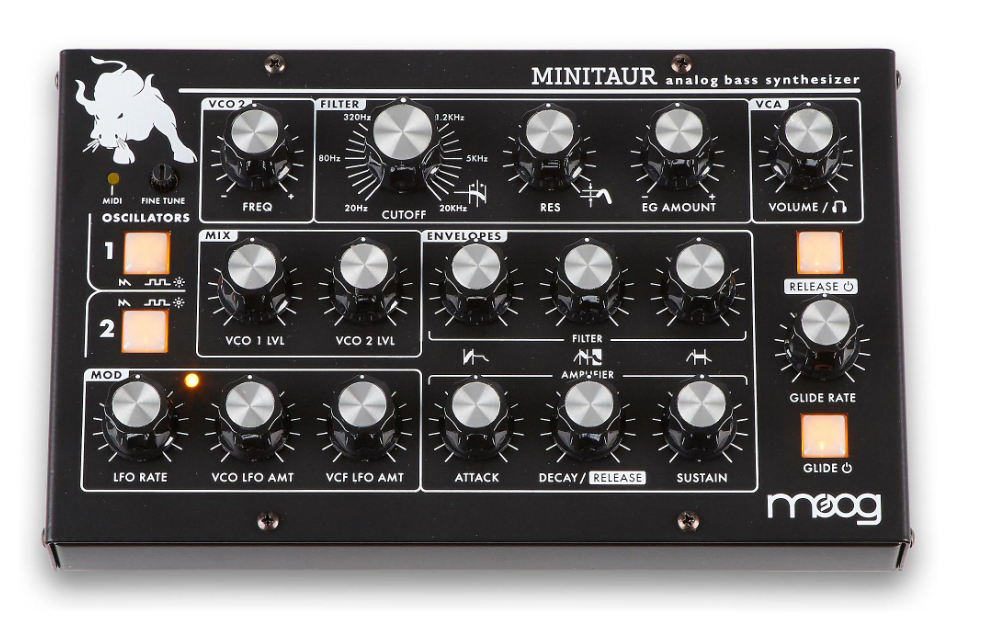
This is a dedicated analog bass synthesizer and nothing else, which is exactly why it’s first on this list. Moog Minitaur does one thing and does it with the kind of authority that only comes from a signal path designed from the ground up for low frequencies. Two Moog oscillators through a Moog ladder filter into a Moog VCA, all housed in a rugged desktop module that takes up almost no space.
The Minitaur’s frequency range is intentionally limited to bass territory, which means the entire circuit is optimized for the frequencies where bass lives rather than trying to be a general-purpose synth that also does bass.
- Moog Ladder Filter
The classic Moog 24dB/oct ladder filter is arguably the most famous filter design in synthesis history, and on the Minitaur it’s voiced specifically for bass frequencies. The filter has a particular way of thickening the low-mids as you close it that gives Moog basses their signature weight and body.
The resonance adds harmonic content without thinning out the fundamental the way many other filter designs do, which matters enormously for bass because you want overtones without losing the sub-bass foundation.
- Dual Oscillators
Two Moog analog oscillators with sawtooth and square waveforms provide the raw harmonic content. Detuning the two oscillators against each other creates the thick, chorused bass tone that’s been a staple of electronic music for decades. The oscillators track well into the lowest registers, producing clean, powerful sub-bass that doesn’t lose definition even at the bottom of the keyboard range.
- Bass Focus
The entire instrument is designed exclusively for bass, with a frequency range limited to the lower registers. This constraint means every component in the signal path is optimized for low-frequency performance rather than compromising across a full frequency range.
The result is a bass synth that handles everything from tight 808-style subs to massive, room-filling analog bass with an authority that general-purpose synths don’t quite match in the low end.
- Desktop Module
The compact desktop format means the Minitaur sits neatly alongside your other studio gear without demanding keyboard space. You play it from whatever MIDI controller you already own, and the small footprint makes it practical as a dedicated bass module that’s always connected and ready rather than a large instrument you have to make room for.
Get the Free Plugin Starter Kit
The genuinely useful free DAWs and plugins worth installing. No filler. Straight to your inbox.
2. Novation Bass Station II
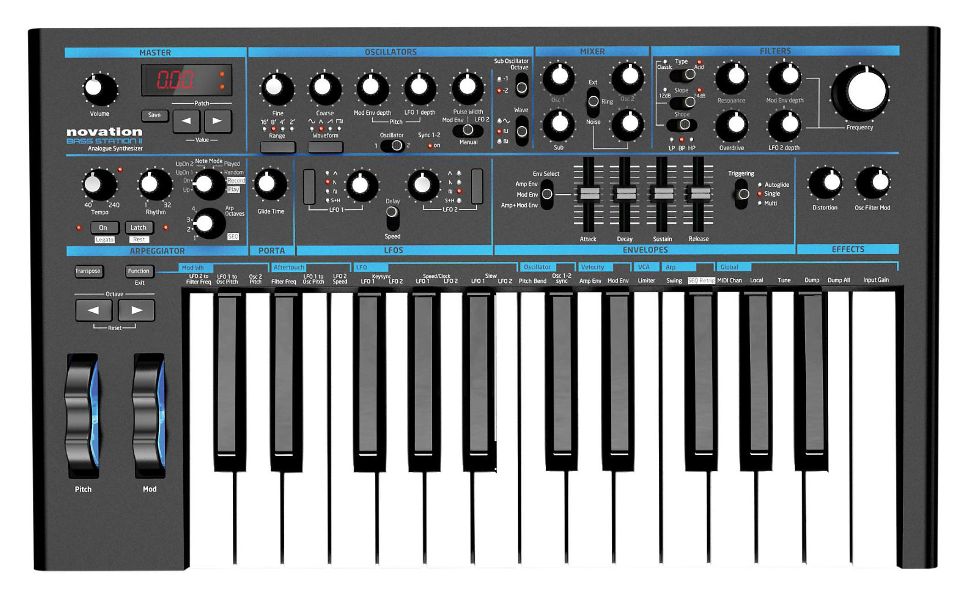
Don’t let the name fool you into thinking this is a one-trick bass machine. Novation Bass Station II is a fully featured analog monosynth that happens to be exceptionally good at bass, with two selectable filter types, a sub-oscillator, and enough modulation depth to handle leads, effects, and sound design alongside its bass duties.
What earns it the second spot on a bass-focused list is the combination of that dedicated sub-oscillator with the dual filter architecture that gives you two fundamentally different approaches to shaping low-end tone from the same instrument.
- Dual Filters
Two selectable filter types with distinctly different resonance characters give you fundamentally different tonal options from the same oscillator section. The classic filter is smooth and warm, rounding off the top end in a way that produces deep, controlled bass tones suited to pads and sustained lines.
The acid filter is aggressive and squelchy with self-oscillating resonance that screams in the way a TB-303 does. Having both available means you can switch between polished sub-bass work and nasty acid lines without touching another synth.
- Sub Oscillator
A dedicated sub-oscillator adds low-end weight one or two octaves below the main oscillators, fattening bass sounds without the complexity of detuning a third oscillator. The sub is essential for bass work because it provides pure fundamental content underneath the harmonically richer main oscillators. You get the tonal interest of the filtered oscillators on top with the chest-hitting weight of the sub underneath.
- Paraphonic Mode
A paraphonic mode lets you play multiple notes through a single filter, which is unusual for a monosynth and useful for bass contexts where you want to play root-fifth intervals or octave stacks rather than single notes. The paraphonic capability adds harmonic complexity to bass parts that strictly monophonic instruments can’t produce.
- Arpeggiator
The built-in arpeggiator and step sequencer generate rhythmic patterns that interact with the filter and envelopes in real time. For bass, the arpeggiator creates pulsing, rhythmic bass lines from held chords, and the step sequencer lets you program specific patterns with per-step slides and accents that bring bass sequences to life.
- Patch Saving
128 patch memory locations let you save and recall bass patches instantly, which is something many analog monosynths at this price don’t offer. Having patch storage means you can build a library of go-to bass sounds organized by type (sub bass, acid bass, funky fingered bass, etc.) and recall them between sessions without reprogramming from scratch.
- Aftertouch
The velocity-sensitive keyboard with aftertouch provides expressive control over bass parts that module-style synths played from external controllers don’t always handle as naturally. Pressing harder into a held bass note to open the filter or increase vibrato adds a performance quality to bass lines that static MIDI triggering lacks.
3. Arturia MiniFreak
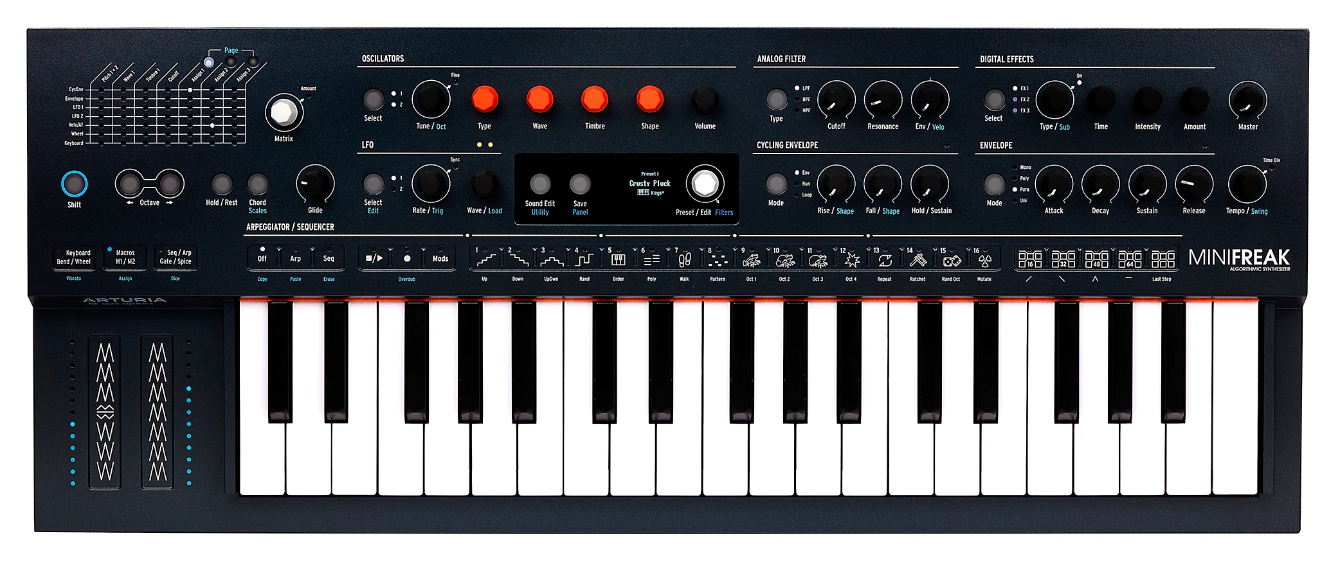
Including a hybrid digital/analog synth on an analog bass list might raise eyebrows, but the MiniFreak’s analog Steiner-Parker filter is the reason it’s here. Feed any of the digital oscillator engines through that real analog filter and you get bass tones with a weight and character that purely digital synths at this price don’t provide. The filter is the bass secret weapon.
What makes Arturia MiniFreak genuinely useful for bass alongside dedicated analog instruments is the variety of oscillator engines you can run through that analog filter, giving you bass tones that no single analog oscillator architecture produces.
- Analog Filter
The real Steiner-Parker multimode analog filter is what gives the MiniFreak its bass credentials.
The filter adds warmth, saturation, and harmonic richness to whatever the digital oscillators produce, and the resonance behavior at low frequencies is smooth and musical rather than thin and whistly. Sweeping the cutoff on bass sounds produces the kind of rolling, fat filter movement that pure analog synths are known for, because it is a pure analog filter handling the frequency shaping.
- Engine Stacking
Running two different oscillator engines simultaneously through the analog filter creates bass tones with more harmonic complexity than any single-oscillator design. You can stack a wavetable bass with a virtual analog sub, or layer FM harmonics with superwave thickness, and the analog filter shapes the combined output into something cohesive. The stacking capability means your bass palette extends well beyond what traditional analog mono synths offer.
- Effects Chain
Three simultaneous effects including distortion, chorus, and compression process the bass signal within the synth. The built-in distortion is particularly useful for bass because it adds harmonic content that helps bass translate on smaller speakers without needing an external saturation plugin. Having effects integrated means you save bass patches with their processing included.
4. Behringer Poly D
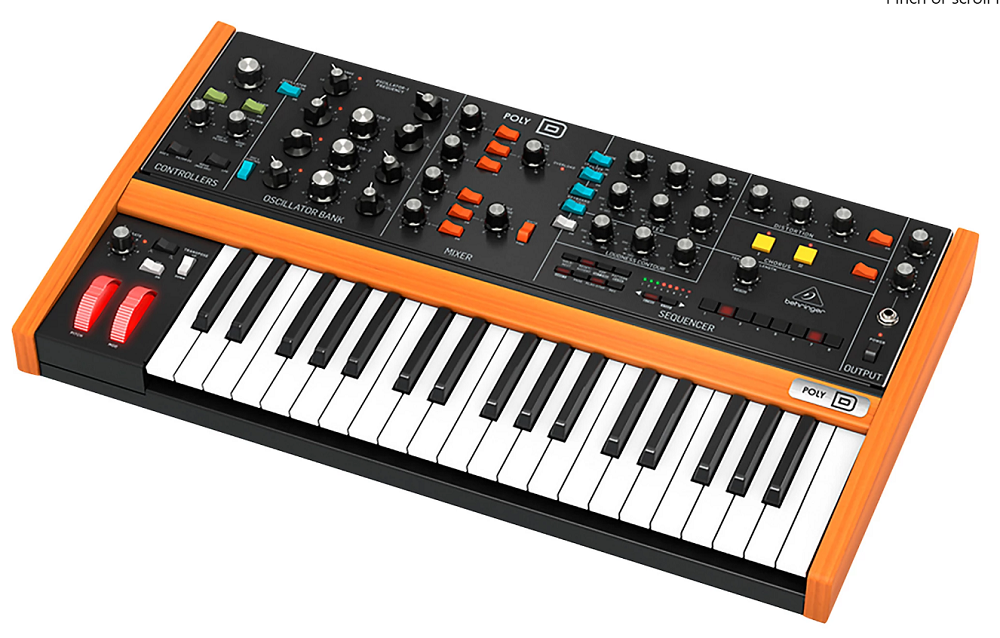
Four analog oscillators through a Moog-style ladder filter with four-voice paraphonic capability at a price that would have been unthinkable a decade ago. Behringer Poly D is inspired by the Minimoog architecture but adds a fourth oscillator and paraphonic voicing that the original never had, making it one of the most powerful bass instruments available at its price point.
The four-oscillator design is what makes the Poly D special for bass work. Stacking four detuned analog oscillators through a ladder filter produces bass tones with a thickness and richness that dual-oscillator designs simply can’t match.
- Four Oscillators
Four analog VCOs with individual waveform selection and tuning give you significantly more harmonic content than the typical two-oscillator monosynth. Stacking all four in unison with slight detuning produces massively thick, chorused bass that fills the low-end spectrum with harmonic complexity. You can also tune oscillators to intervals (octaves, fifths) for layered tonal bass that has both fundamental weight and upper harmonic interest.
- Ladder Filter
A Moog-style 24dB/oct ladder filter shapes the four oscillators with the warm, musical resonance character that defines the classic Moog bass sound. The ladder filter’s specific behavior at low frequencies, where it thickens the low-mids and adds body rather than simply removing highs, is what makes this filter architecture the gold standard for bass synthesis.
- Distortion Circuit
A built-in analog distortion adds harmonic saturation that can push bass tones from clean and deep to aggressive and grinding without external pedals. The distortion is useful for bass because it adds overtones that help bass cut through a mix, and the continuous control lets you dial in exactly the right amount from subtle warmth to obvious crunch.
- Paraphonic Mode
Four-voice paraphonic capability lets you play chords through the single filter, which means you can play bass chords, power chord intervals, and stacked voicings that monophonic bass synths can’t produce. The paraphonic mode doesn’t give you independent filters per voice, but it does give you harmonic complexity that’s useful for bass-heavy genres where you want more than single notes.
5. Korg MS-20 Mini
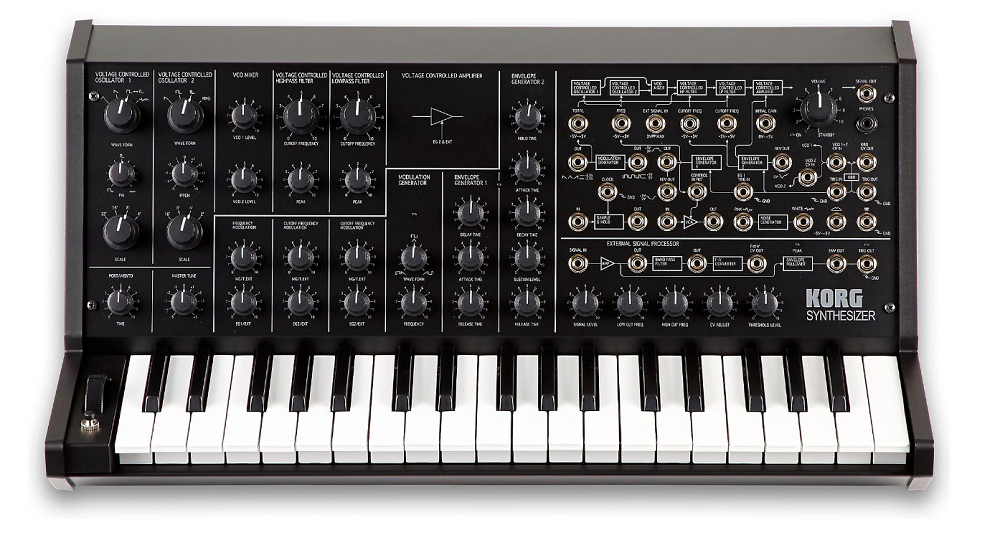
The MS-20 makes this list because its dual-filter architecture produces a specific kind of aggressive, resonant bass that no other synth on this list quite replicates.
The combination of a high-pass filter and low-pass filter in series creates a frequency-shaping capability that’s unique to the MS-20 design, and for bass, the results range from earth-shaking sub to screaming, distorted analog fury.
Korg MS-20 Mini brings the full circuit character of the original into a compact format that costs a fraction of what vintage units command.
- Dual Filters
The high-pass and low-pass filters in series create bass tones that other filter architectures can’t replicate. Running the HPF at a low setting while sweeping the LPF produces tight, focused bass where the bottom end has been precisely shaped rather than just rolled off. When you push both filters into resonance simultaneously, the interaction creates aggressive, screaming bass textures that the MS-20 is famous for.
- Patch Bay
The patch bay lets you route external audio through the MS-20’s filters, feed modulation into unexpected places, and create feedback paths that add chaos to bass sounds. For bass specifically, you can use the patch bay to route the output back into the input for feedback-driven bass distortion, or process drum machines and other bass sources through the MS-20’s aggressive filter character.
- Raw Character
The MS-20’s overall tonal quality is raw, gritty, and aggressive in a way that more polished analog synths deliberately avoid. The circuit has a natural distortion and edge that makes bass sounds cut through a mix without needing external processing. For producers who want bass that fights for attention rather than sitting politely underneath, the MS-20’s inherent aggression is a feature.
6. Moog Subsequent 37
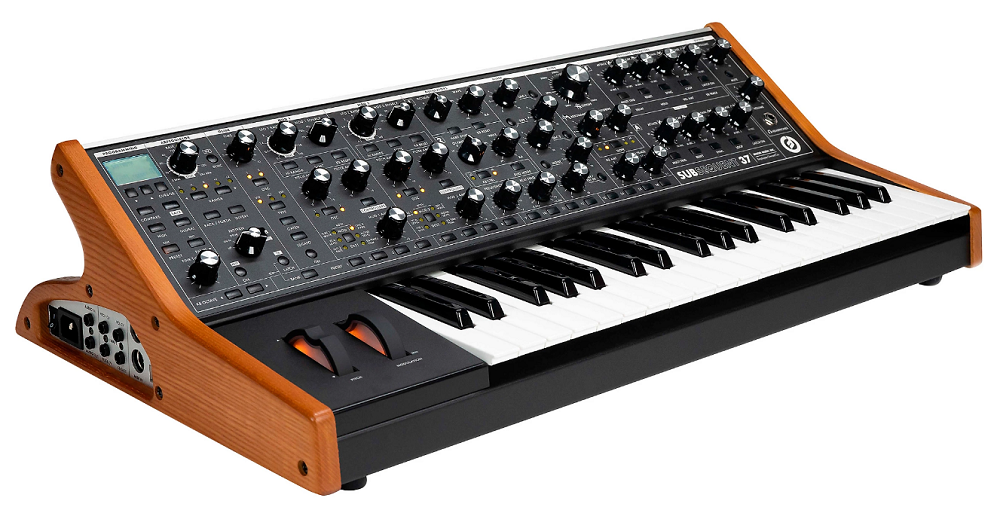
The flagship Moog monosynth and arguably the most complete bass synthesizer ever made. Moog Subsequent 37 gives you two Moog oscillators through the Moog ladder filter with a level of build quality, tonal refinement, and hands-on control that justifies the higher price through sheer quality of sound and playability.
If the Minitaur is the dedicated bass module, the Subsequent 37 is the full instrument that does bass with authority while also handling leads, pads, and everything else a monosynth can do.
- Moog Tone
The Moog oscillator and filter architecture produces the warm, fat, harmonically rich tone that has defined synthesizer bass since the 1970s. The Subsequent 37 represents this architecture at its most refined, with component improvements and output headroom beyond what earlier Moog synths offered.
The bass sounds from the Subsequent 37 have a density and presence in the low end that you feel physically in a way that’s difficult to achieve from other architectures.
- Multidrive
A Multidrive circuit adds analog distortion that ranges from subtle harmonic warmth to aggressive overdrive. For bass, the Multidrive is invaluable because it adds the upper harmonic content that helps bass translate on smaller speakers while maintaining the fundamental weight. The distortion is voiced to complement bass frequencies rather than thin them out.
- Duo Mode
Duo mode splits the two oscillators across two notes for paraphonic bass playing, letting you play root-fifth patterns, octave intervals, and two-note bass lines that monophonic mode can’t produce. The duo capability adds harmonic richness to bass parts while keeping the Moog tone character intact across both notes.
- Aftertouch
The velocity and aftertouch-responsive keyboard provides expressive control that makes bass parts feel performed rather than programmed. Pressing into a held bass note to gradually open the filter or introduce vibrato adds musical expression to sustained bass tones that static triggering can’t achieve.
- Preset Memory
Extensive preset storage with banks and favorites lets you save and organize bass patches by type and recall them instantly. The preset system means you can build a comprehensive Moog bass library within the synth itself, organized however suits your workflow, without losing sounds between sessions.
7. Behringer MonoPoly
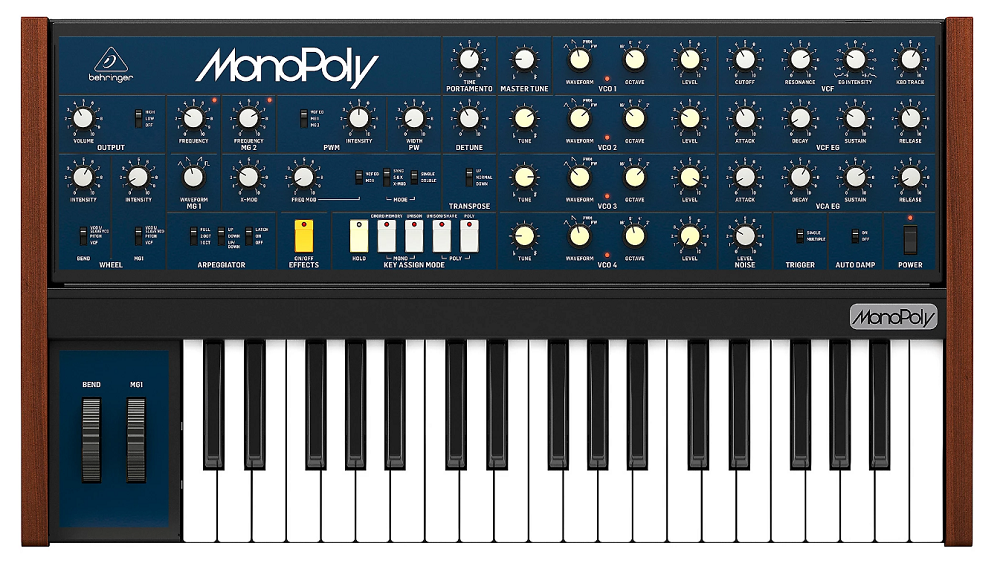
Inspired by the Korg Monopoly, this four-oscillator synth from Behringer brings analog polyphonic and unison bass capabilities at a price that makes the concept accessible.
Behringer MonoPoly gives you four analog oscillators that can operate in mono, unison, or four-voice polyphonic modes, making it one of the most flexible bass instruments on this list in terms of voicing options.
The ability to switch between massive unison bass and polyphonic bass chords from the same instrument covers territory that dedicated monosynths and dedicated polysynths each only partially address.
- Voice Modes
Switchable mono, unison, and four-voice poly modes let you move between different bass approaches on the same instrument. Unison stacks all four oscillators on a single note for maximum thickness. Poly mode distributes them across four notes for bass chords. Mono mode gives you the tightest, most focused bass with a single oscillator path.
The mode flexibility means one synth covers the range from single-note sub-bass through thick unison through polyphonic bass stabs.
- Cross Modulation
Oscillator cross-modulation generates harmonic content by having one oscillator modulate the frequency of another at audio rate. For bass, cross-mod adds metallic, complex overtones that cut through a mix in ways that standard detuned oscillators don’t. The cross-mod intensity is continuously variable, so you can dial in just a touch of harmonic complexity or push it into aggressive, dissonant territory.
- Sync Modes
Oscillator sync forces one oscillator to restart its waveform cycle at the frequency of another, producing the hard, aggressive, harmonically bright bass tones that oscillator sync is known for. Sweeping the synced oscillator’s pitch while holding a bass note creates the classic sync sweep that adds movement and intensity to bass sounds.
Extra: Roland TB-03
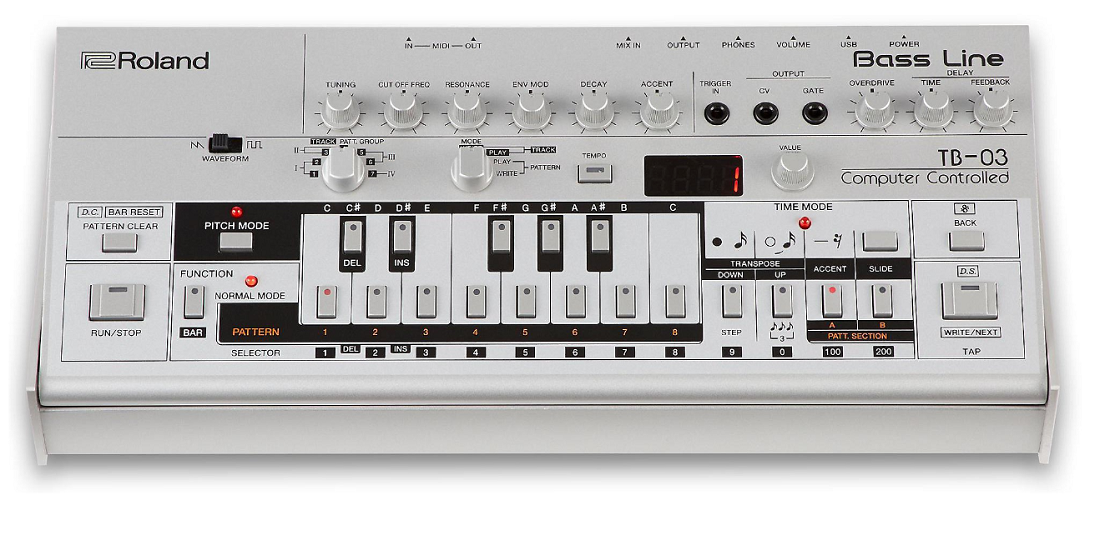
I’m including this as a bonus because the TB-303 bass line is its own category of sound, and the Roland TB-03 is the most faithful digital recreation Roland has made of their own legendary acid bass machine. The TB-03 uses Roland’s ACB (Analog Circuit Behavior) modeling to reproduce the specific quirks and character of the 303 circuit in a compact, battery-powered format.
The 303 sound is immediately recognizable and has defined entire genres of electronic music. Whether you need it depends entirely on whether acid bass is part of your sonic vocabulary.
- 303 Character
The ACB modeling captures the specific tonal quirks that made the TB-303 a legend: the way the filter squelches and screams at high resonance, the particular slide behavior between notes, the way the accent circuit changes the filter response alongside the volume. The TB-03 nails these behaviors with enough accuracy that the output sits in a mix the way real 303 recordings do.
- Step Sequencer
The original 303-style step sequencer with its famously unusual programming method is reproduced faithfully. The sequencer’s workflow, where you enter notes and then separately enter accents and slides, is what historically produced the happy accidents that became classic acid patterns.
The programming method is deliberately awkward, and that awkwardness is part of the instrument’s creative identity.
- Slide & Accent
The slide and accent functions are what make 303 bass lines feel alive. Slides create smooth portamento connections between notes that give bass lines their flowing, liquid character. Accents simultaneously boost volume and open the filter for emphasized, squelchy hits that define the rhythmic feel of acid bass. Without proper slide and accent behavior, a 303 emulation doesn’t feel right, and the TB-03 handles both convincingly.
- Overdrive
Built-in overdrive pushes the output into the saturated, distorted territory that many producers run their 303s through externally. The overdrive adds harmonic density and aggressive character that transforms the clean 303 tone into something heavier and more suited to modern production contexts where acid bass needs to compete with heavily processed elements.
Get the Free Plugin Starter Kit
The genuinely useful free DAWs and plugins worth installing. No filler. Straight to your inbox.

Hello, I’m Viliam, I started this audio plugin focused blog to keep you updated on the latest trends, news and everything plugin related. I’ll put the most emphasis on the topics covering best VST, AU and AAX plugins. If you find some great plugin suggestions for us to include on our site, feel free to let me know, so I can take a look!