
Getting into hardware synthesis doesn’t have to drain your bank account. The idea that you need to spend thousands on a flagship polysynth to make interesting sounds is one of the biggest myths in music production, and the current crop of budget hardware synths proves it.
You can pick up a genuinely capable instrument for less than the cost of a few plugin bundles, and the hands-on experience of twisting real knobs and hearing a real circuit respond under your fingers is something no amount of mouse clicking replicates.
What I find exciting about the budget end of the hardware market right now is the variety. You’re not limited to basic mono analog boxes anymore. The affordable range includes FM synthesizers, hybrid digital/analog engines, semi-modular patching systems, virtual analog polysynths, and even experimental instruments that do things no expensive flagship attempts.
I’ve put together twelve picks (plus a bonus) that cover a wide spread of synthesis types, from pure analog through digital and hybrid, all at prices that won’t make you wince. Each one does something genuinely useful, and a few of them do things that synths costing five times as much can’t touch.
1. Arturia MicroFreak
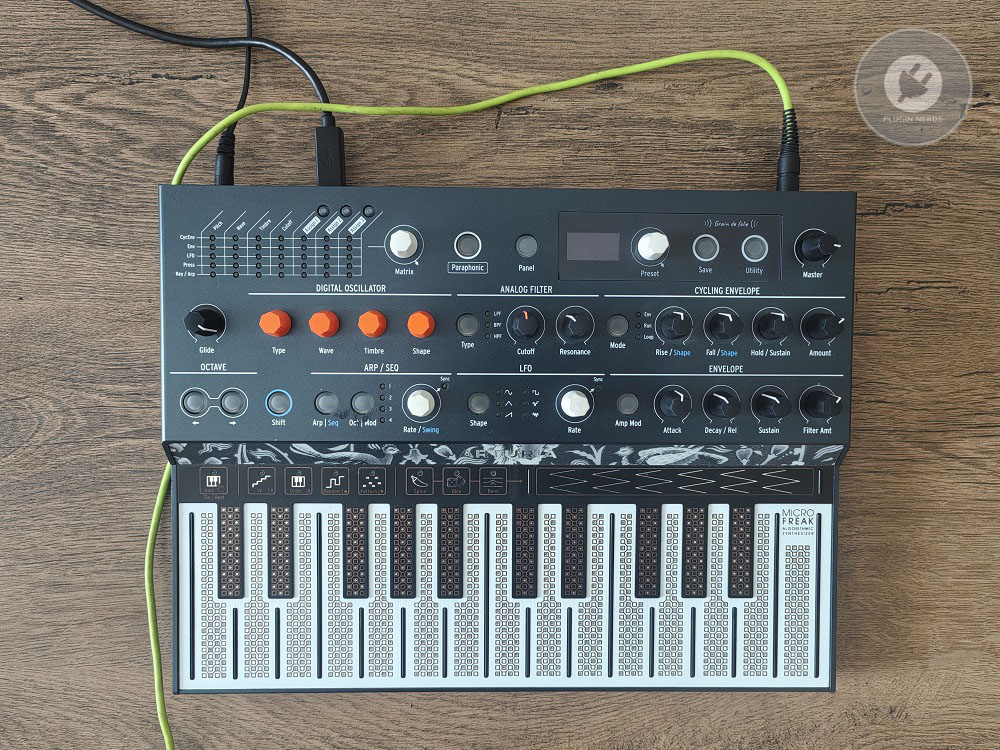
If I had to recommend one single budget hardware synth for someone who wants to explore the widest possible range of sounds from a single instrument, this would be it.
Arturia MicroFreak packs an absurd number of different synthesis engines into a compact, affordable package with a hybrid analog/digital architecture where digital oscillators feed into an analog Steiner-Parker filter.
The sheer variety of what this little thing can produce continues to surprise me. You can go from warm analog-style pads to harsh digital noise to physical modeling plucks to granular textures without loading a different instrument.
- Engine Variety
The two oscillator slots each offer over a dozen synthesis engines including virtual analog, wavetable, superwave, harmonic, Karplus-Strong, modal, FM, granular, and noise models.
You combine any two freely, which means the number of possible starting timbres is enormous before you even touch the filter. A granular oscillator mixed with a Karplus-Strong model is just a menu selection away, and those combinations produce sounds you genuinely won’t get from any other synth at this price.
- Touch Keyboard
The 25-key capacitive touch keyboard responds to pressure and finger position, providing expressive control that standard keys don’t offer.
The flat touch strips take getting used to if you’re coming from a traditional keyboard, but once you adjust, the pressure-sensitive response opens up timbral control that velocity alone can’t provide. Sliding your finger across the surface while holding a note creates continuous modulation that feels genuinely expressive.
- Analog Filter
A real Steiner-Parker analog filter processes everything the digital oscillators produce, adding warmth, resonance, and analog character that purely digital budget synths miss. The analog filter is what gives MicroFreak sounds their body and weight.
Sweeping the cutoff on a real analog circuit introduces subtle nonlinearities and saturation that change with the signal level, and you can hear the difference compared to digital filter models.
- Sequencer
The built-in step sequencer with probability and randomization per step generates patterns that are more musically interesting than what most people program deliberately. You set the probability of each step firing, which means the sequence evolves and varies on every loop. The randomization is what makes MicroFreak sequences feel alive rather than repetitive.
- Mod Matrix
A comprehensive modulation matrix connects sources to destinations with positive or negative amounts. The matrix is where the MicroFreak’s depth really opens up, because connecting unexpected sources to unexpected destinations produces results the front panel alone doesn’t suggest.
Modulating the oscillator engine type from an LFO, for instance, creates timbral shifts that no conventional mod routing achieves.
- Spice & Dice
The Spice and Dice randomization applies controlled chaos to your sequences, randomly varying pitch, velocity, and gate length within boundaries you set. It’s the fastest way to generate pattern variations that feel human and unpredictable rather than mechanically looped.
2. Yamaha Reface DX
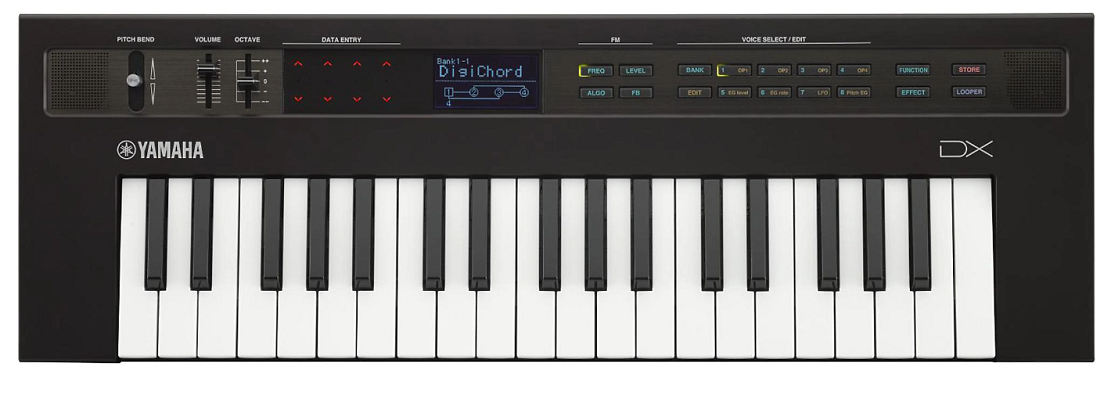
Starting with an FM synth might seem like an odd choice for a budget list, but hear me out. Yamaha’s Reface DX is a four-operator FM synthesizer in a tiny, battery-powered package that gives you access to a synthesis method that no analog synth at any price can replicate.
The metallic bells, glassy electric pianos, evolving harmonic textures, and impossible timbral complexity that FM produces are unique to this architecture, and the Reface DX makes it more approachable than FM has ever been.
The real breakthrough here is the touchscreen interface that replaces the notoriously intimidating button-and-menu workflow of classic DX7 programming with something you can actually see and interact with visually.
- FM Engine
Four FM operators with selectable algorithms give you the mathematical frequency manipulation that creates FM’s distinctive harmonic character.
The relationships between operators produce sounds ranging from pure, clean sine tones through crystalline bells and mallets to complex, evolving textures that subtractive synthesis fundamentally cannot create. For producers who’ve only worked with analog-style synths, FM opens up an entirely different sonic vocabulary that’s worth having in your toolkit.
- Touch Display
The touchscreen provides direct, visual manipulation of operator levels, ratios, feedback, and envelopes in a way that makes FM synthesis dramatically more intuitive than the DX7 ever was. You can see the relationship between operators and how your adjustments affect the harmonic content in real time.
The visual feedback reduces the learning curve that historically made FM synthesis intimidating enough to scare most producers away from exploring it.
- Built-in Looper
A phrase looper records and overdubs in real time, letting you layer FM textures on top of each other. The looper transforms the Reface from a single-patch instrument into a layering tool where you build complex FM soundscapes from multiple passes. For a device this small, the creative possibilities the looper opens up are genuinely surprising.
- Battery Power
Battery-powered operation in a form factor small enough to throw in a backpack means you can make music literally anywhere. On a train, in a park, at a hotel. The portability factor is what makes the Reface DX practical as a grab-and-go creative tool rather than another piece of studio furniture you have to find space for.
3. Korg Monologue
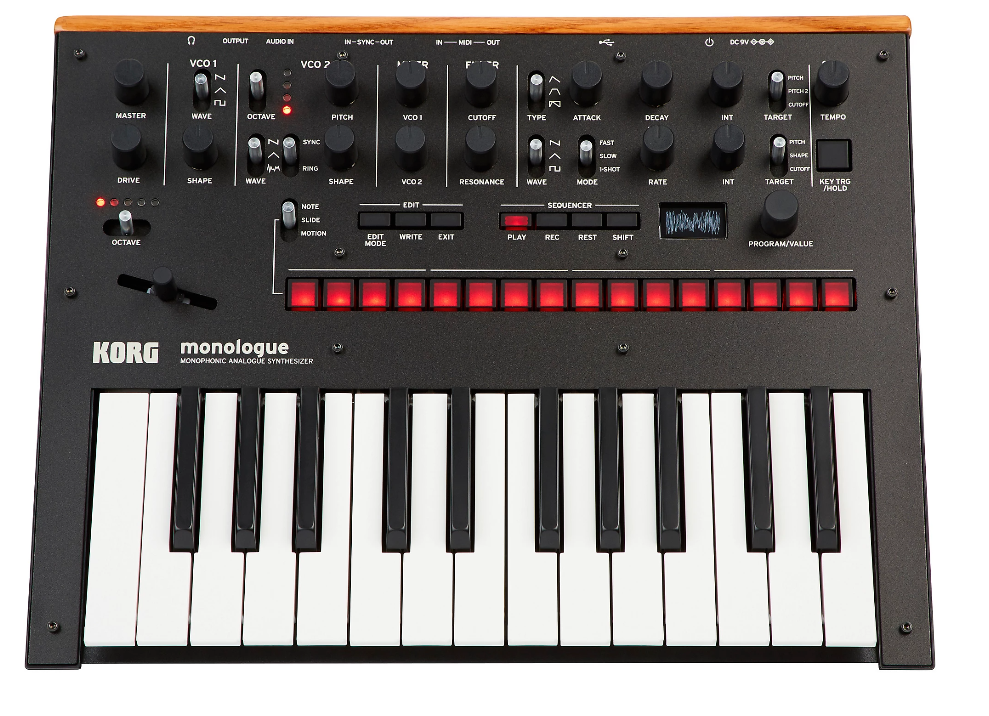
Sometimes you just need a solid, no-nonsense analog monosynth that sounds great and doesn’t overcomplicate things. Korg’s Monologue gives you a fully analog signal path with two oscillators, a resonant filter, and a sequencer in a compact format that delivers punchy basses and cutting leads without any menu diving whatsoever.
Everything is on the front panel. You twist a knob, you hear the change. For producers coming from software who want to understand what analog synthesis feels like at a fundamental level, the Monologue is one of the most direct introductions available.
- Analog Purity
The fully analog signal path with two VCOs, a resonant low-pass filter, and an analog VCA delivers the warm, raw, characterful tone that defines analog synthesis. The Monologue sounds bigger and fatter than its small size suggests, with a low-end weight that sits in a mix without needing much processing. The analog character is real and immediately audible compared to digital emulations.
- Microtuning
Built-in microtuning support lets you create and save custom tuning scales, which is unusual for a budget monosynth and genuinely useful for producers working with non-Western scales, experimental tuning systems, or just wanting to detune things for creative effect. You can dial in specific cent offsets for each note.
- OLED Display
A small OLED oscilloscope display shows you the waveform in real time as you adjust parameters. The visual feedback helps you understand what your adjustments are doing to the sound, which makes the Monologue educational as well as musical. Watching the waveform change as you sweep the filter or adjust pulse width connects what you see with what you hear.
4. Roland AIRA Compact S-1 Tweak Synth
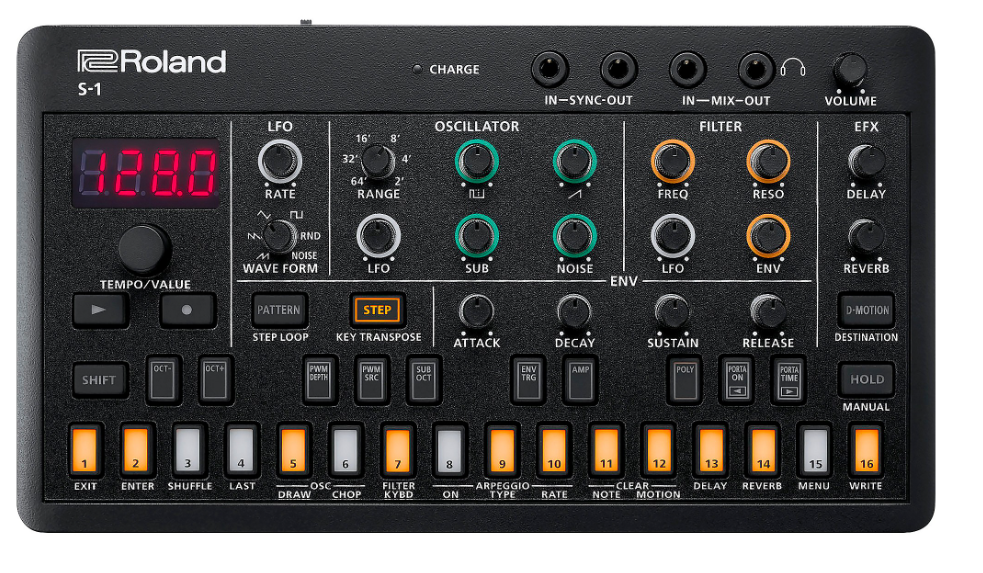
Roland went in a direction nobody expected with the AIRA Compact line, cramming their ZEN-Core synthesis engine into a tiny, battery-powered format that’s closer to a pocket calculator in size than a traditional synth.
The S-1 Tweak Synth gives you access to Roland’s digital modeling technology in something you can literally hold in one hand.
The size is deceptive. This isn’t a toy. The ZEN-Core engine inside is the same technology Roland uses in instruments costing several times more.
- ZEN-Core Engine
The ZEN-Core synthesis platform provides virtual analog oscillators, PCM waveforms, multimode filters, and comprehensive effects in a quality level that matches Roland’s full-size instruments. You’re getting the same core synthesis technology found in the Jupiter-X and Fantom series, scaled down into a pocket format. The sound quality doesn’t compromise for the size.
- Portable Format
Battery-powered operation in a form factor roughly the size of a large smartphone means you can make sounds anywhere. The S-1 connects to other AIRA Compact units (drum machine, effects, mixer) via 3.5mm sync cables, so you can build a complete tiny setup from multiple units. The portability makes it practical for sketching ideas on the go in a way that even small keyboard synths can’t match.
- Ribbon Controller
A touch-sensitive ribbon strip replaces a traditional keyboard for pitch input, which changes how you interact with the synth compared to pressing discrete keys. The ribbon allows continuous pitch slides, glissando effects, and playing techniques that conventional keyboards don’t facilitate.
- Effect Quality
The built-in effects section draws from Roland’s effect algorithms with reverb, delay, chorus, and more. The effect quality is noticeably better than what most budget synths include, because the ZEN-Core platform handles effects at the same quality level as the synthesis.
5. Sonicware LIVEN Evoke
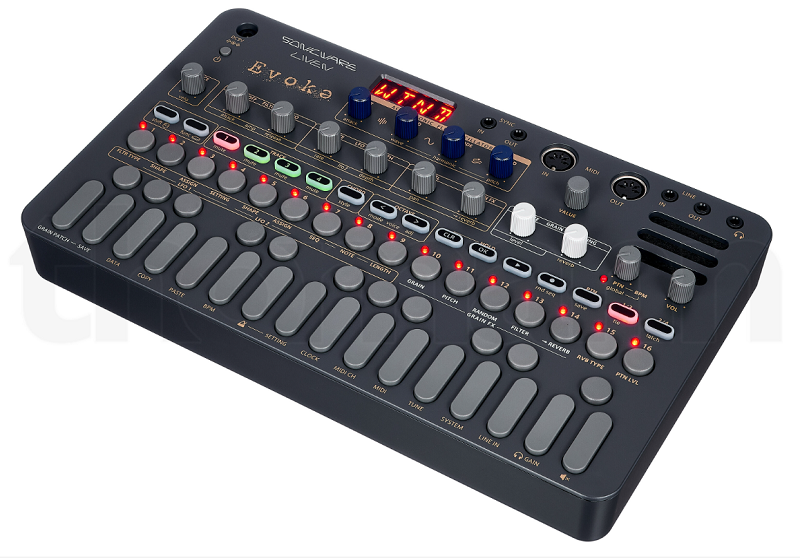
A desktop groovebox-style synthesizer from a Japanese company that makes genuinely innovative instruments at budget prices. Sonicware LIVEN Evoke uses virtual analog synthesis combined with a built-in sequencer and speaker in a format designed for immediate, hands-on music making without a computer.
What appeals to me about the LIVEN series is that they’re designed for fun first. You pick it up, twist some knobs, and you’re making music within seconds.
- Standalone Design
The built-in speaker, battery power, and sequencer make this a completely self-contained music making device. You don’t need a DAW, an audio interface, headphones, or even a power outlet. You just turn it on and start creating. The standalone nature is what makes it genuinely different from synth modules that require a full studio setup to be useful.
- Hands-On Layout
Dedicated knobs for every major parameter with no menu diving required means you shape sounds by touching controls, not navigating screens. The immediacy of the layout encourages experimentation because there’s zero friction between having an idea and hearing the result.
- Sequence Engine
The integrated step sequencer lets you build complete musical phrases with the synth engine, combining pattern programming with real-time knob tweaking. The sequencer and synth are designed as one unified instrument rather than a synth with a sequencer bolted on, which makes the workflow more fluid than separate components.
6. Modal Cobalt5s
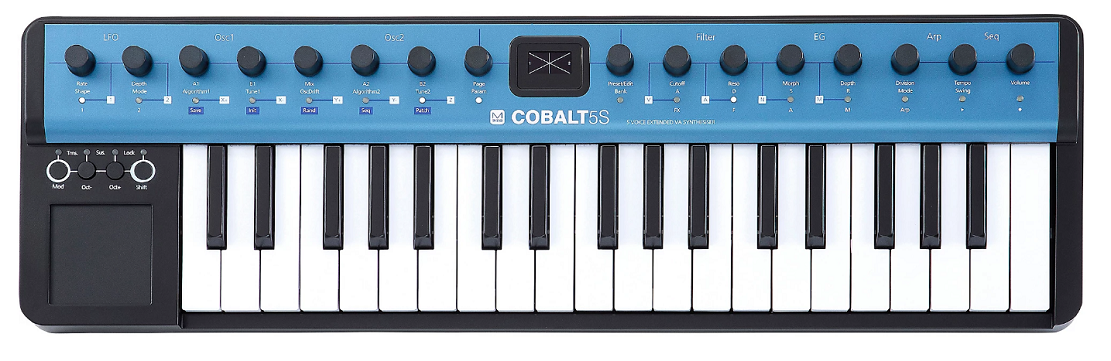
A five-voice virtual analog polysynth that gives you polyphony and chord capability at a price where most alternatives are monophonic. Modal’s Cobalt5s uses virtual analog modeling to provide multiple voices of synthesis with a sound quality that impresses given the affordable price point.
For producers who need to play chords, pads, and polyphonic parts from hardware without spending polysynth money, the Cobalt5s fills a gap that very few budget instruments address.
- Five Voices
Five-voice polyphony lets you play full chords and pads from a budget hardware synth, which immediately sets it apart from the mono and paraphonic instruments that dominate this price range. Five voices is enough for most chord voicings and pad work, and you can stack voices in unison for massive monophonic leads and basses when polyphony isn’t needed.
- Virtual Analog
The virtual analog engine models classic analog oscillator and filter behavior with enough quality to produce convincing warm pads, cutting leads, and fat basses. The modeling approach means you get multiple waveforms per oscillator, flexible filter types, and modulation options that would be expensive to implement in true analog circuitry at this price.
- Algorithm Modes
Multiple synthesis algorithms beyond basic subtractive synthesis expand the tonal palette into territory that simple virtual analog doesn’t reach. The additional algorithms provide different oscillator interaction modes that create harmonic content beyond what standard VA synthesis produces.
- Joystick Control
A four-axis joystick replaces the traditional pitch and mod wheels, providing simultaneous control over multiple parameters from a single physical control. The joystick encourages real-time performance because you can sweep filter, pitch, and modulation simultaneously with one hand.
- MPE Support
MPE (MIDI Polyphonic Expression) compatibility means the Cobalt5s responds to per-note expression from MPE controllers like ROLI Seaboard or Linnstrument. MPE opens up expressive performance possibilities where each note in a chord can have its own independent pitch bend, slide, and pressure, which is rare at this price point.
7. Korg Volca Modular
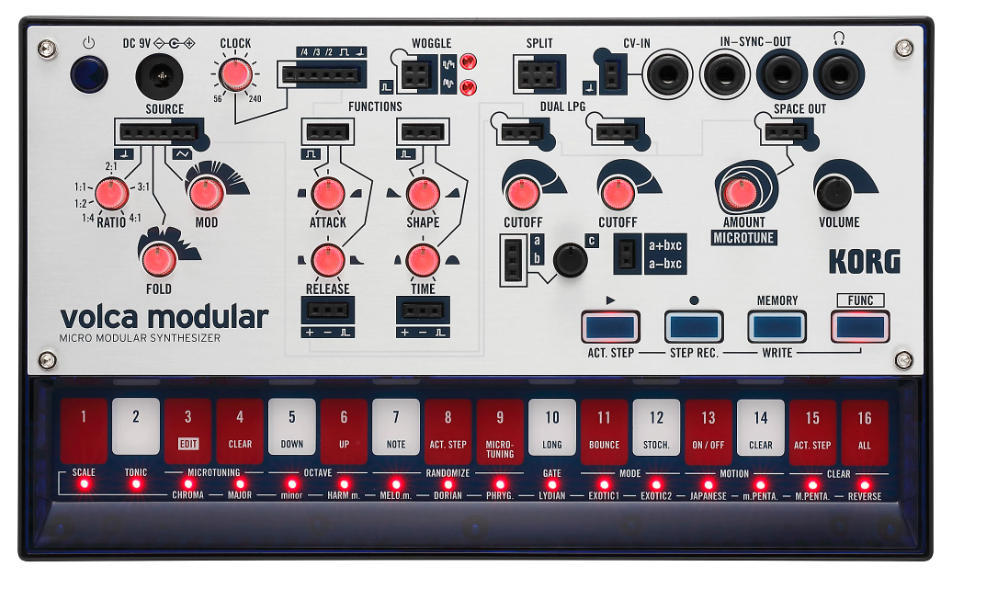
A semi-modular analog synth that fits in the palm of your hand and costs less than most plugin bundles. Korg’s Volca Modular gives you real West Coast synthesis with patch cables, a built-in sequencer, and the kind of experimental sound design capability that you’d normally associate with much more expensive modular systems.
The West Coast synthesis approach is fundamentally different from the subtractive East Coast style that most synths use, which means the Volca Modular produces sounds that conventional synths simply can’t.
- West Coast
The architecture uses wavefolder-based timbre shaping rather than the traditional filter-based subtractive approach. Instead of starting with a harmonically rich waveform and filtering away content, the Volca Modular starts with a simple waveform and folds it to add harmonic complexity. The result is timbres that have a different quality from filtered sounds, with a metallic, complex, evolving character that subtractive synths don’t produce.
- Patch Points
Twenty patch points with included cables let you rewire the signal flow, connect modulation sources to unexpected destinations, and create feedback paths that change the synth’s behavior. The patching is where the Volca Modular becomes genuinely experimental, because the standard signal path only scratches the surface of what the architecture can do when you start cross-connecting modules.
- Tiny Price
At its price point, the Volca Modular is the cheapest entry into real modular synthesis available. You get actual patch cables, real analog circuits, and West Coast synthesis for less than many single Eurorack modules cost. As an introduction to modular concepts without the financial commitment of a full Eurorack system, nothing else comes close.
8. Behringer MS-1 MKII
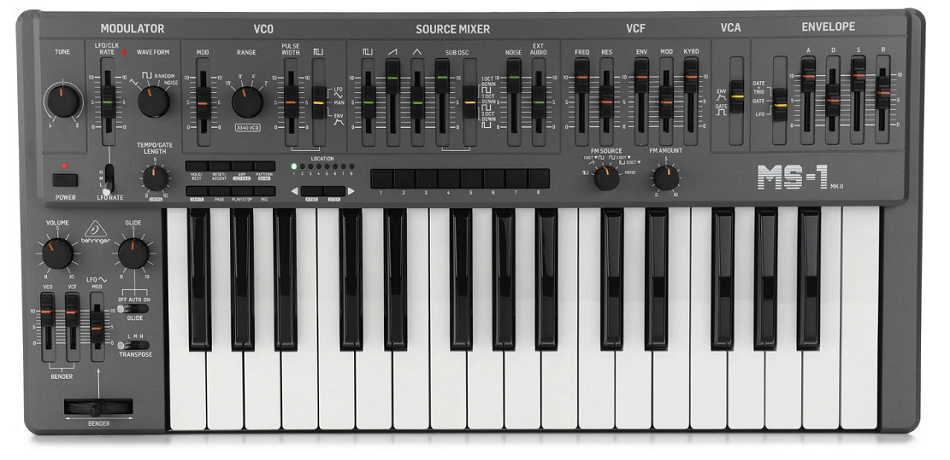
Behringer’s take on the Roland SH-101 has been refined through multiple revisions, and the MS-1 MKII is the most polished version yet. This is a monophonic analog synth that captures the specific character of the SH-101 circuit, an instrument beloved by house and techno producers for decades, at a fraction of what original units sell for on the vintage market.
The SH-101 sound is one of those things that’s difficult to fake with software. The specific way the filter resonates, the weight of the sub-oscillator, and the way the sequencer interacts with the sound engine all contribute to a character that’s become synonymous with electronic music.
- SH-101 Circuit
The analog circuit closely follows the original Roland SH-101 design, reproducing the specific oscillator character, filter sweep, and sub-oscillator weight that made the SH-101 a classic. The filter has that particular smooth, musical resonance that thins out and screams in a way that’s immediately recognizable on countless dance records.
You get the specific tonal quality that producers have been paying vintage prices for, without the maintenance headaches of 40-year-old hardware.
- Step Sequencer
The built-in step sequencer follows the SH-101’s approach where you step-enter notes in real time and then the sequence plays back with the synth’s filter, envelope, and modulation settings applied. The sequencer’s interaction with the synth engine is part of the instrument’s musical identity, producing the kinds of acid-style basslines and arpeggiated sequences that defined entire genres.
- Sub Oscillator
A dedicated sub-oscillator adds low-end weight one or two octaves below the main oscillator, fattening bass sounds without needing to detune a second oscillator. The sub is what gives SH-101-style basses their particular thick, solid low-end character that sits in a mix with minimal EQ work.
- Mod Grip
An optional modulation grip attachment lets you hold the synth like a keytar and use a modulation lever for real-time filter and pitch control during performance. The grip transforms the MS-1 from a tabletop synth into a performance instrument that you can play standing up, which is genuinely fun and changes how you interact with the sound.
9. Teenage Engineering PO-20 Arcade
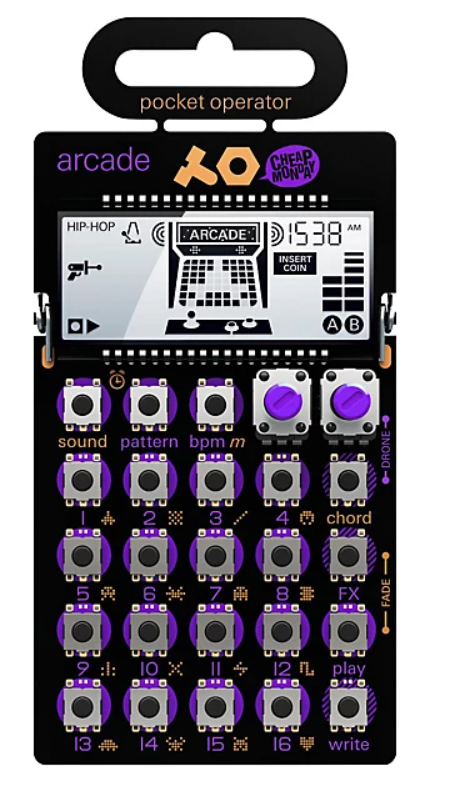
At the absolute bottom of the price scale sits a device that shouldn’t be as fun or as musically useful as it is. Teenage Engineering’s PO-20 Arcade is a pocket-sized chiptune synthesizer built on a bare circuit board with a built-in speaker, sequencer, and the kind of 8-bit, lo-fi digital sounds that evoke classic video games and early computer music.
The PO-20 isn’t competing with proper synths on sound quality. It’s competing on pure creative joy, and on that metric it wins against instruments costing twenty times as much.
- Chiptune Engine
The 8-bit synthesis engine produces authentic retro game console sounds including square waves, noise channels, and the specific tonal quality of vintage sound chips. The sounds are intentionally lo-fi, and that limitation is the point. You get bleeps, bloops, arpeggiated chiptune leads, and percussive hits that sound like they came directly from an 80s arcade cabinet.
- Pattern Chaining
Multiple pattern slots that chain together let you build complete arrangements from short sequences. You program individual patterns and then chain them into longer compositions, which is how classic tracker and game music was composed. The pattern workflow encourages a different kind of composition than linear DAW arrangement.
- Pocket Size
The device is literally pocket-sized and runs on a single AAA battery for extended periods. You can make music on a bus, in a waiting room, or anywhere you have thirty seconds to spare. The extreme portability means the PO-20 is always available when inspiration strikes.
- Effects
Built-in effects add punch, filtering, and modulation to the raw chip sounds. The effects are simple but effective at adding variety to the 8-bit palette, and they’re selectable per pattern so different sections of your arrangement can have different processing.
- Sync Chain
A 3.5mm sync connection lets you connect multiple Pocket Operators together for multi-instrument jams. The sync chain means you can combine the PO-20 with other PO units (drums, bass, etc.) for a complete pocket-sized production setup that costs less than a single budget synth from other manufacturers.
10. SOMA Rumble of Ancient Times
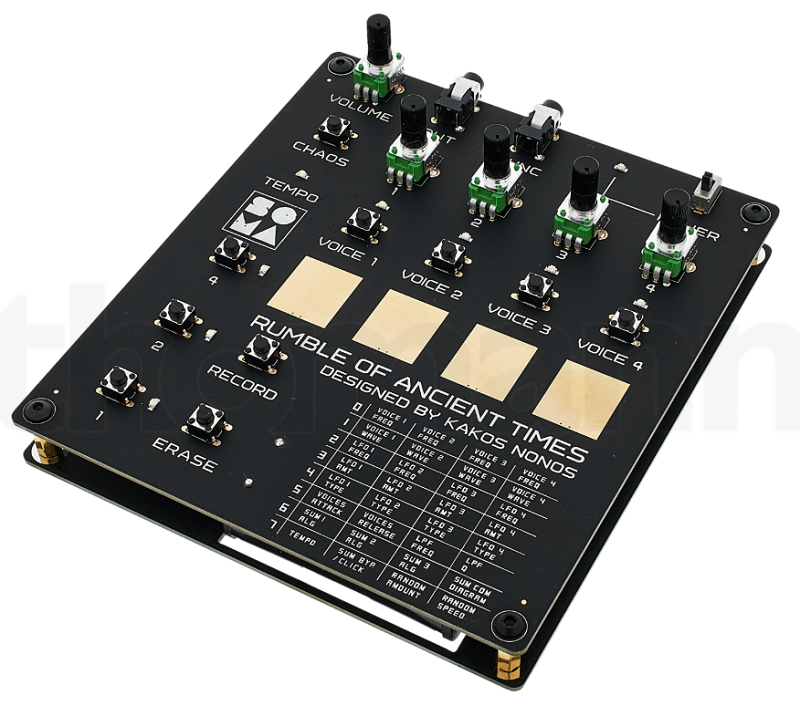
This is the weird one on the list, and I include it specifically because it does things that nothing else here (or anywhere else, really) can do. SOMA Rumble of Ancient Times is an experimental analog instrument that generates sound through feedback networks and chaotic analog circuits rather than conventional oscillators and filters.
If every other synth on this list represents different flavors of structured synthesis, the SOMA represents controlled chaos as a musical philosophy. It’s not for everyone, but for producers and sound designers who want truly unpredictable, organic, evolving analog textures, nothing at any price competes.
- Feedback Network
The sound generation uses analog feedback circuits where multiple stages feed into each other, creating complex, evolving tones that emerge from the interaction between circuit elements rather than from a programmed oscillator.
The feedback architecture means the instrument’s behavior is inherently chaotic and organic, producing textures that evolve continuously and never exactly repeat. You guide the chaos rather than program specific sounds.
- Touch Interface
Metal touch plates on the surface of the instrument respond to your skin’s conductivity, allowing you to shape sounds by touching, pressing, and bridging connections with your fingers. The touch interface means your body literally becomes part of the circuit, and the resistance of your skin influences the sound. It’s the most physically intimate form of synthesis interaction I’ve encountered on any instrument.
- Analog Character
The fully analog circuit produces warmth, saturation, and harmonic richness that digital chaos generators don’t replicate. The analog character means even the most extreme, experimental sounds from the SOMA carry an organic quality that feels alive rather than computed. The circuit’s imperfections are its personality.
- Drone Capability
The feedback architecture excels at generating sustained, evolving drone textures that shift and morph over extended periods without requiring any input. You set up the feedback network, adjust the touch plates to find an interesting state, and the instrument generates evolving ambient content indefinitely. For ambient production, film scoring, and meditation music, the drone capability is genuinely useful.
11. Korg Volca FM2
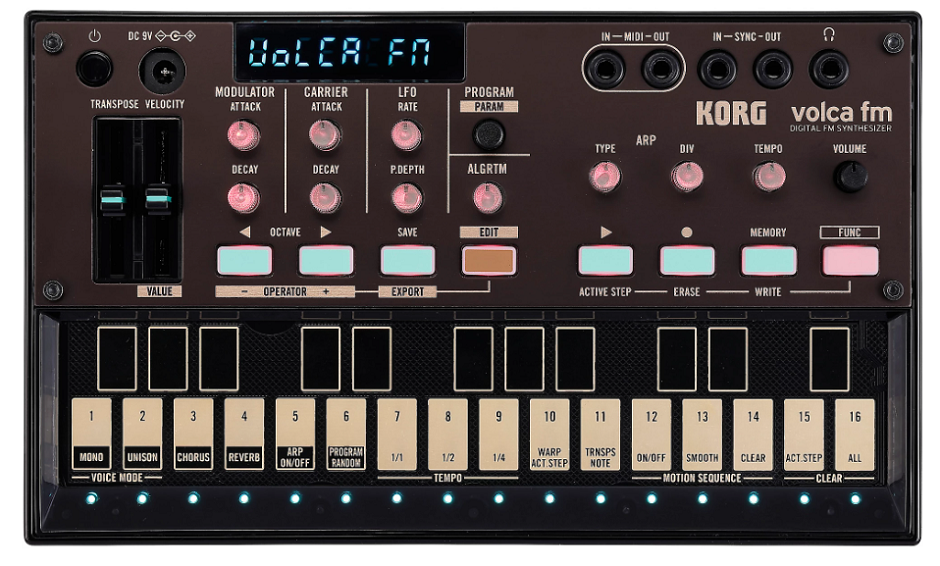
The updated version of Korg’s pocket FM synth doubles the polyphony of the original and adds effects that weren’t there before, making it an even more compelling budget FM option.
Korg Volca FM2 gives you six-voice FM synthesis compatible with classic DX7 patches in the same tiny, affordable format that made the Volca series a phenomenon.
What makes the FM2 special at this price is the DX7 compatibility. The thousands of DX7 patches created over four decades work on this thing, giving you an instant library of classic FM sounds.
- DX7 Compatible
The engine is compatible with original Yamaha DX7 SysEx patches, which means the enormous library of DX7 sounds accumulated over forty years is available to you on this budget device. You can download classic patches from online repositories and load them directly. The compatibility gives you access to arguably the largest patch library in synthesizer history without buying vintage hardware.
- Six Voices
Six-voice polyphony (doubled from the original’s three) lets you play chords and more complex FM textures. The polyphony increase is significant because many classic FM sounds, especially electric pianos and bells, benefit from being played polyphonically. Three voices was limiting. Six voices lets you play the instrument properly.
- Chorus & Reverb
Added chorus and reverb effects that the original lacked give the FM sounds more depth and spatial character without external processing. The reverb in particular adds an icy, shimmering quality to the FM tones that suits the crystalline character of the synthesis engine. The effects transform dry FM patches into finished, atmospheric sounds.
- Motion Sequence
Korg’s motion sequencing records knob movements and plays them back as per-step parameter automation. The motion recording lets you create evolving FM textures where the operator levels, feedback, and other parameters shift on every step of the sequence. FM synthesis is particularly responsive to parameter automation because small changes in operator relationships produce dramatic timbral shifts.
- Step Sequencer
The 16-step sequencer with active step selection, motion recording, and multiple playback modes provides a compositional tool beyond just triggering notes. You can program sequences and then automate the FM parameters across those sequences, creating phrases where the timbre evolves with the melody.
- Sync Chain
3.5mm sync connects to other Volcas and compatible gear for synchronized multi-instrument setups. The sync chain integration means the FM2 works as part of a larger Volca ecosystem where you combine it with analog Volcas for a complete hardware setup at a total cost that’s still remarkably affordable.
12. Behringer UB-Xa Mini
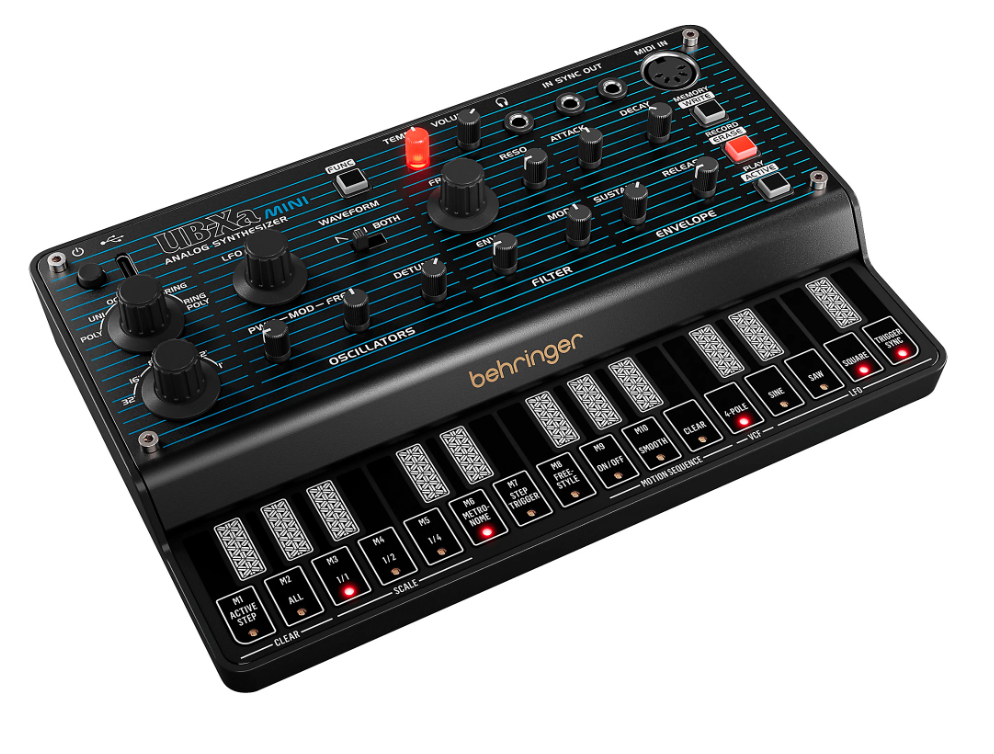
The budget version of Behringer’s Oberheim OB-Xa recreation, scaled down to a desktop format but maintaining the core analog polysynth character that made the original a studio legend. Behringer UB-Xa Mini gives you access to classic Oberheim-style analog polyphony at a fraction of what the full-size version costs.
For producers who want real analog polysynth sound, warm vintage pads, brass sounds, and the distinctive Oberheim filter character, the UB-Xa Mini puts that sonic territory within budget reach.
- Oberheim Character
The analog voice architecture follows the Oberheim design approach with multiple VCOs per voice and a multimode filter that reproduces the warm, thick, harmonically rich character that made the OB-Xa one of the most sought-after vintage synths. The specific Oberheim quality, a warmth and richness in the midrange that’s immediately recognizable, comes through in the Mini version.
- Polyphonic
Multiple voices of analog polyphony let you play chords, pads, and layered textures from a budget analog instrument. True analog polyphony at this price point is genuinely rare, and having access to the Oberheim voice character in a polyphonic format opens up pad and texture territory that mono and paraphonic budget synths can’t reach.
- Desktop Format
The compact desktop module format saves space and cost compared to the full-size keyboard version while maintaining the same voice architecture and sound engine. You play it from a MIDI keyboard you already own, which means you’re paying for the sound engine rather than a redundant keyboard if you already have a controller.
Extra: Korg Volca Bass
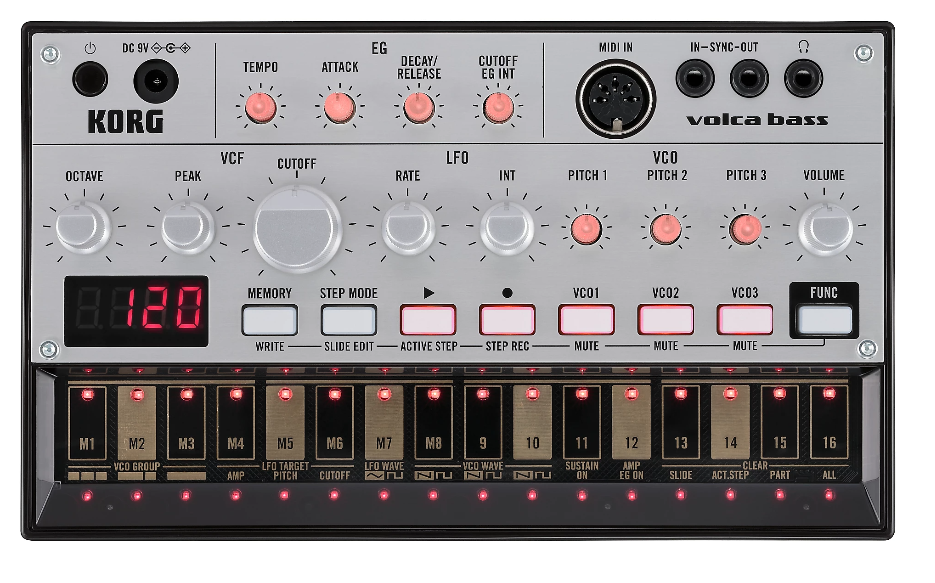
I’m adding this as a bonus because it remains one of the best value analog bass synths ever made, and it’s been consistently available at prices that make it almost an impulse purchase. Korg Volca Bass gives you three analog oscillators with individual tuning, waveform selection, and filter control in the same tiny Volca format that costs less than most single Eurorack modules.
The three oscillator design is what sets it apart from other ultra-budget options, because you can detune the oscillators against each other for massive, thick bass tones that single-oscillator synths can’t match.
- Three Oscillators
Three analog VCOs with individual control over pitch, waveform, and octave give you significantly more harmonic complexity than single or dual oscillator designs. You can stack all three for huge unison bass, spread them across octaves for layered tonal content, or detune them for thick, chorused textures. The three-oscillator architecture at this price is genuinely unusual.
- Analog Filter
The resonant analog filter shapes the three oscillators with the smooth, warm character that defines analog bass synthesis. The filter responds well to modulation, and sweeping it across the three detuned oscillators produces the kind of fat, moving bass that hardware analog is known for.
- Step Sequencer
The 16-step sequencer with active step editing lets you program bass patterns directly on the device. The sequencer interacts naturally with the synth’s parameters, and you can automate filter sweeps and other parameters across the sequence steps for evolving bass lines.
- Sync Chain
3.5mm sync connects to the rest of the Volca family for synchronized multi-instrument setups. The Volca Bass fills the low-end role in a Volca chain, and combining it with a Volca FM2 for melodic content and a Volca Drum for rhythm gives you a complete analog/digital hardware setup at a total price that’s genuinely remarkable.

Hello, I’m Viliam, I started this audio plugin focused blog to keep you updated on the latest trends, news and everything plugin related. I’ll put the most emphasis on the topics covering best VST, AU and AAX plugins. If you find some great plugin suggestions for us to include on our site, feel free to let me know, so I can take a look!