
When you need virtual guitar that sounds convincing enough for professional production, the conversation eventually leads to Ample Sound.
The Chinese developer has built one of the most respected catalogs of sampled string instruments in the plugin market, covering electric guitars, acoustic guitars, bass guitars, and ethnic string instruments with a depth of sampling and articulation support that few competitors match across as many instrument types.
What ties every Ample Sound product together is a shared approach to the challenge of virtual guitar: deep multi velocity sampling with extensive round robin variation, a comprehensive articulation system controlled by key switches and velocity, a strumming engine that generates realistic rhythm parts from chord input, and built in amp and effects processing where appropriate.
The consistency of this approach means that once you learn one Ample Sound product, you can work effectively in any of them. The instruments themselves sound different because they’re modeled on different guitars, but the workflow translates directly.
I’ve selected seven products from the Ample Sound catalog that I think represent the most useful instruments for producers and composers, covering Telecaster and Stratocaster electrics, Les Paul humbuckers, Martin and nylon string acoustics, banjo, and ukulele.
From the Pluginerds Store
Before you go — if you're putting together or upgrading a home studio setup, we run our own store alongside the blog at Pluginerds Shop. Everything on it is picked by people who actually make music, not sorted by whoever paid for placement on a marketplace. Worth a look if you're filling in the gaps in your setup.
Visit Pluginerds Shop1. Ample Sound Guitar TC (Telecaster)
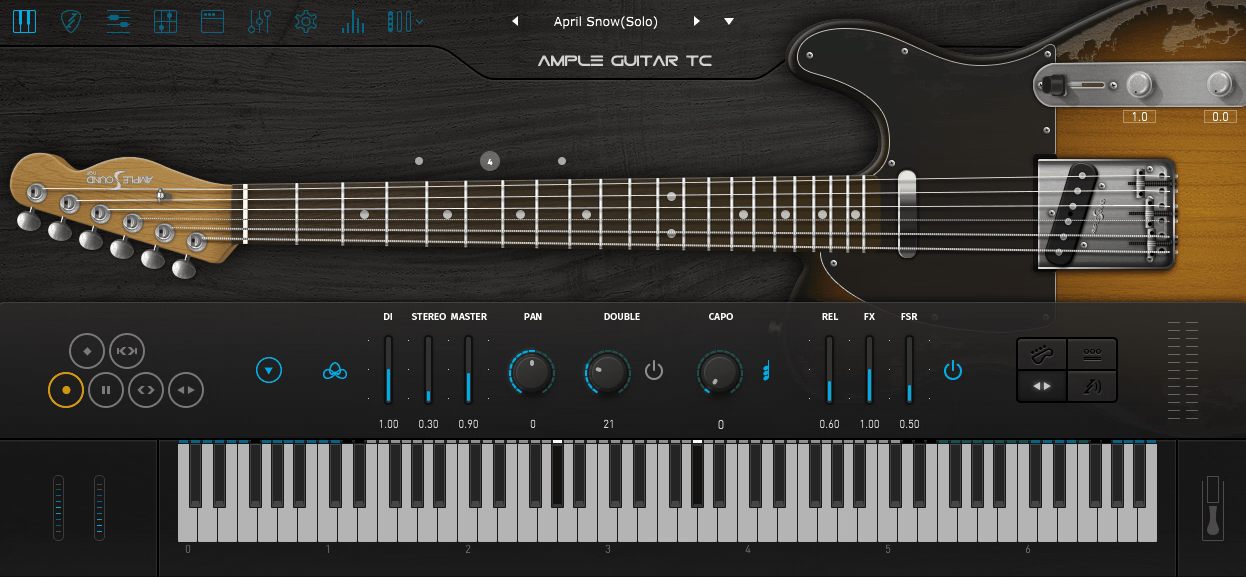
Few electric guitar tones are as instantly recognizable as the Fender Telecaster’s bright, twangy bite, and this plugin captures that specific character with the kind of sampling depth that justifies choosing it over a generic electric guitar library.
Ample Guitar TC models the Tele’s single coil pickups, ash body resonance, and bolt on neck response across the full fretboard with enough velocity layers and round robin samples to avoid the mechanical quality that plagues simpler guitar libraries.
What I reach for the TC specifically for is that cutting bridge pickup tone that no other guitar type quite replicates. When a production needs acoustic brightness but with electric sustain, or when a rhythm part needs to slice through a dense arrangement without relying on volume, the Telecaster voice does the job.
The neck pickup provides a surprisingly warm, round tone as well, which gives you more tonal range than people typically associate with the instrument.
- Telecaster Bite
The sampling captures the Tele’s distinctive bridge pickup snap with the bright, metallic attack and nasal midrange presence that separates it from every other electric guitar.
The bridge pickup tone is the Telecaster’s signature voice, and it’s reproduced here with the string ping and twang that Tele players value for country, indie, punk, and classic rock.
- Dual Pickups
Both bridge and neck positions are sampled independently, providing the full range of Telecaster voices. The tonal gap between the two pickups is significant: the bridge delivers aggressive twang while the neck provides warm, jazzy roundness that works for clean chord parts and smooth leads.
- Strumming Engine
A realistic strumming generator creates rhythmic chord performances from MIDI input with adjustable feel, speed, dynamics, and direction. The engine handles the chicken picking and hybrid picking patterns characteristic of Telecaster playing, producing tight, percussive rhythm parts that capture the instrument’s quick attack.
- Bend System
A detailed string bending system with controllable range and speed captures the expressive bends central to country, blues, and rock playing on the Telecaster. The bending quality is smooth and natural, avoiding the pitch stepping that less detailed guitar plugins exhibit during bends.
Available from Ample Sound in VST, VST3, AU, and AAX formats.
Get the Free Plugin Starter Kit
The genuinely useful free DAWs and plugins worth installing. No filler. Straight to your inbox.
2. Ample Sound Guitar SC (Stratocaster)
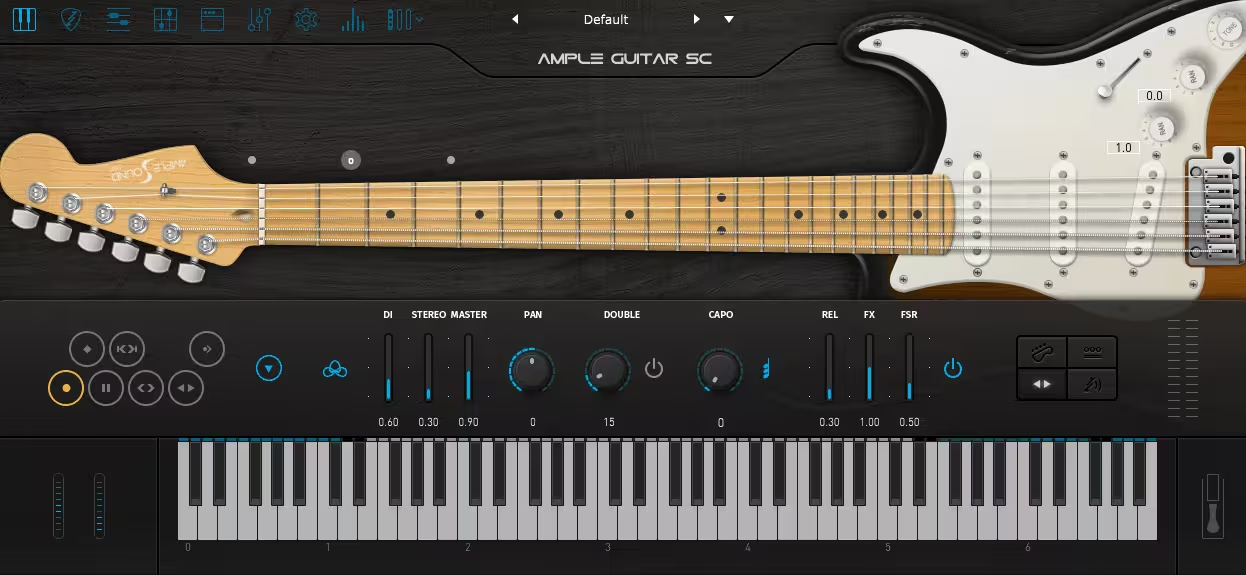
The most recorded electric guitar in history deserves a thorough emulation, and Ample Guitar SC provides one of the more detailed Stratocaster plugins available.
The sampling covers all five pickup positions including the in between selections (positions 2 and 4) that produce the Strat’s distinctive quacky, hollow tone, and the multi velocity round robin depth prevents repeated notes from triggering identical samples.
I’ve covered the SC in multiple previous articles because it keeps earning its place across different contexts. On this Ample Sound focused list, what’s worth emphasizing is how the Stratocaster’s tonal versatility makes it the single most useful electric guitar in the catalog if you could only pick one.
Clean funk rhythm on the bridge pickup. Warm blues on the neck. That hollow, in between tone for R&B and neo soul. Overdriven rock leads through the built in amp.
The five pickup positions genuinely produce five different instruments from one plugin, which is a level of versatility that other guitar types don’t match.
- Five Positions
All five pickup selections are sampled independently, including the in between positions 2 and 4 that produce the Strat’s signature quacky, scooped tone. Having access to all five voices from one instrument gives you tonal range that would require multiple guitar plugins from another developer to achieve.
- Strumming Engine
The rhythm generator creates convincing strummed chord performances from your MIDI chord input with adjustable speed, dynamics, strum direction, and feel.
The strumming produces natural timing variation between strings rather than triggering all six simultaneously, which is the key difference between a realistic rhythm part and an obviously programmed one.
- Articulation System
Key switches trigger hammer ons, pull offs, slides, bends, mutes, harmonics, and legato transitions that respond to velocity and playing context.
The articulations produce different results depending on how you trigger them, creating natural variation rather than identical output every time.
- Amp Simulation
A built in amp and cabinet simulation provides the complete signal chain within the plugin, covering everything from clean Fender tones to moderate overdrive.
You can also bypass the amp section entirely and use the DI output with external amp modeling for more control.
- Tab Player
An integrated tablature player imports guitar tab files and performs the parts with appropriate articulations and string assignments.
For producers who can find guitar tab online but don’t play guitar themselves, this feature bridges the gap between notation and realistic performance.
- Fretboard Display
A visual fretboard shows which notes and strings are being triggered in real time, helping you understand and refine the MIDI programming. The display makes it easier to create realistic guitar voicings rather than keyboard style voicings that sound unnatural when played back as guitar.
Available from Ample Sound in VST, VST3, AU, and AAX formats.
3. Ample Sound Guitar LP (Les Paul)
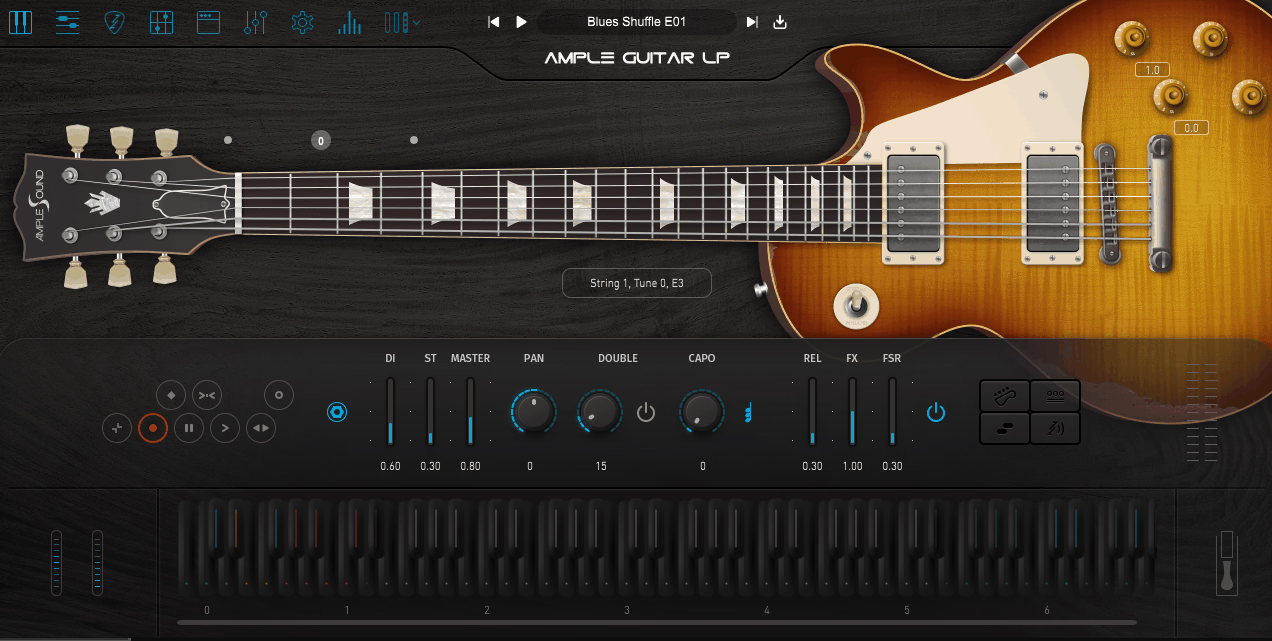
Thick, warm, and powerful: the Gibson Les Paul’s humbucker driven character fills a specific role in production that single coil guitars can’t cover. Ample Guitar LP captures the mahogany body, maple top, and PAF style humbucker combination that produces the fat, sustained, harmonically rich tone associated with decades of rock, blues, and hard rock records.
What the Les Paul brings to a production that other guitars don’t is weight. The thick body and humbucker pickups produce a signal with more low midrange presence and longer sustain than any single coil instrument.
I reach for the LP when a track needs guitar that fills a large sonic space, whether that’s power chords, singing lead lines, or sustained melodic passages where the notes need to ring out fully. The dynamic response where soft playing produces warmth and harder playing drives into a growling saturation is captured well in the sampling.
- Humbucker Tone
The PAF style humbucker sampling captures the thick, warm, noise free signal with prominent low midrange and smooth highs that defines the Les Paul sound. The humbuckers produce a fundamentally different character from single coil guitars, sitting in a mix with more authority and weight.
- Sustain Quality
The Les Paul’s exceptional sustain is captured with long, naturally decaying notes that maintain tonal integrity throughout. The sustain is essential for lead work and held chord voicings where notes need to ring without thinning or losing their harmonic content.
- Dynamic Range
The sampling captures how the tone changes with playing dynamics: warm and clean at low velocity, progressively driven and saturated as velocity increases. This dynamic tonal shift is a defining characteristic of humbucker equipped guitars and creates expressive variation from your performance input.
Available from Ample Sound in VST, VST3, AU, and AAX formats.
4. Ample Sound Ethno Banjo (Five String Banjo)
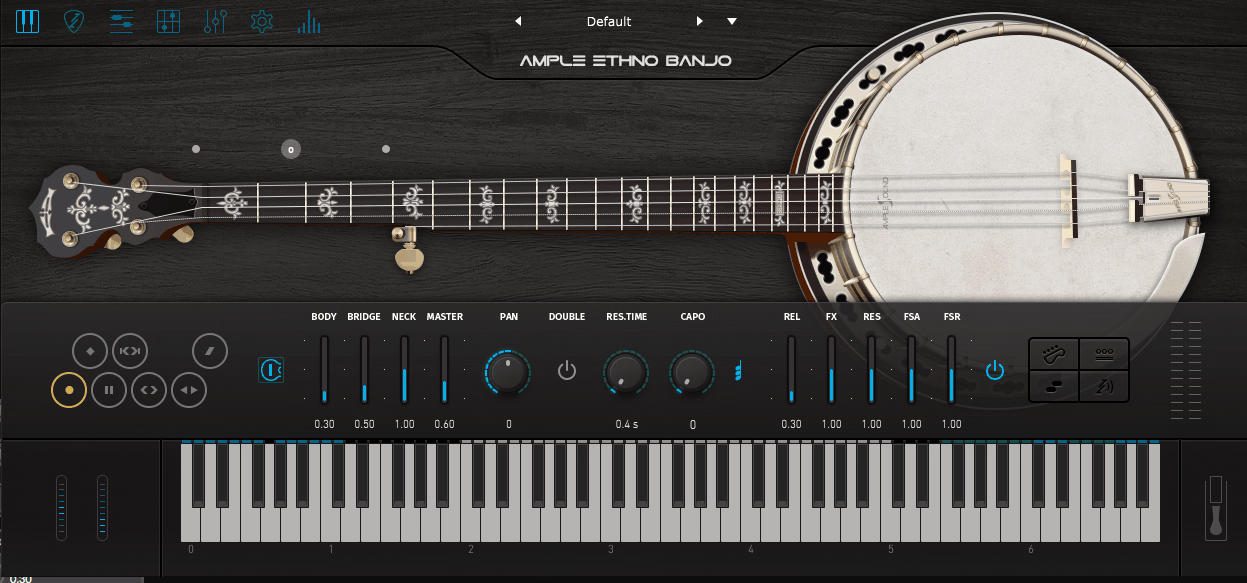
Moving outside the standard guitar catalog, this plugin addresses an instrument that’s surprisingly difficult to find in high quality virtual form. Ample Ethno Banjo captures a five string banjo with the same sampling depth and articulation approach that Ample Sound applies to their guitar products, including the characteristic bright, percussive attack and metallic ring that defines the banjo’s voice.
For producers working in country, bluegrass, folk, Americana, or cinematic Americana, having access to a convincing banjo is valuable because the instrument’s sound is so distinctive that no other instrument can substitute for it. A mandolin sounds different. A bright acoustic guitar sounds different. The banjo’s short sustain, metallic brightness, and rhythmic percussiveness are unique, and Ample Ethno Banjo captures these qualities with enough articulation support to produce parts that sound like actual banjo playing rather than a keyboard triggering banjo samples.
- Banjo Character
The sampling captures the specific metallic brightness, short sustain, and percussive attack that define the five string banjo. The instrument’s distinctive tone is immediately recognizable and sits in a completely different frequency space from guitars, which makes it useful for adding textural contrast to arrangements.
- Picking Patterns
The performance engine handles the rapid picking patterns (including Scruggs style three finger rolls) that are fundamental to banjo playing. Programming convincing banjo picking by hand is extremely tedious, and the engine handles the mechanical challenge of generating the fast, interlocking right hand patterns that characterize the instrument.
- Articulations
Key switch articulations cover the playing techniques specific to banjo: slides, hammer ons, pull offs, chokes (mutes), and harmonics. The banjo specific articulations are important because the instrument is played differently from guitar, and generic guitar articulations don’t capture the banjo’s unique performance techniques.
- Open Tunings
Support for standard and alternate banjo tunings (including open G, the most common five string tuning) ensures the voicings and string resonances are correct for authentic banjo parts. The tuning support matters because banjo music relies heavily on open string drones that only work in specific tunings.
Available from Ample Sound in VST, VST3, AU, and AAX formats.
5. Ample Sound Guitar M (Martin Dreadnought)
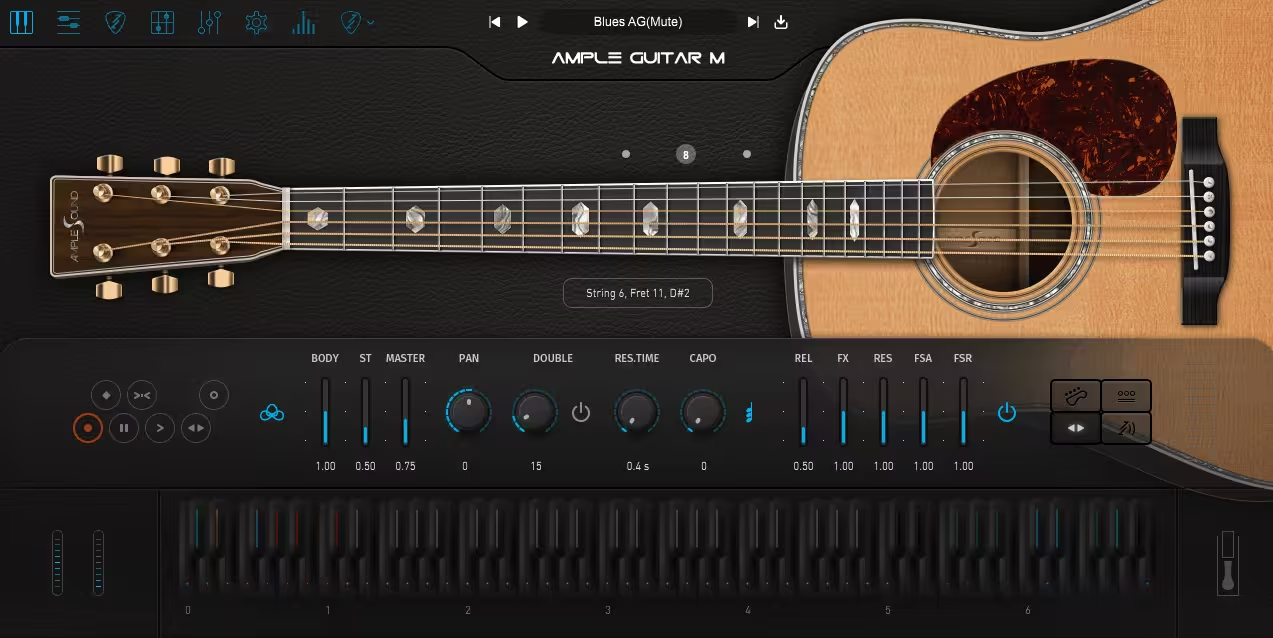
When a production calls for the full bodied warmth of a Martin D-41 dreadnought, this is the plugin I reach for without hesitation.
I’ve covered Ample Guitar M across several previous articles, and the reason it keeps appearing is straightforward: it’s one of the most detailed and playable acoustic guitar plugins available in any format, and the Martin character it captures is the default acoustic guitar sound that most listeners associate with professionally recorded acoustic music.
The combination of the strumming engine, fingerpicking mode, body resonance simulation, and tab player provides multiple paths to creating convincing acoustic guitar parts regardless of your skill level or the complexity of the part you need. Whether you’re programming a simple strummed accompaniment or a detailed fingerstyle arrangement, Ample Guitar M handles both ends of that spectrum and everything in between.
- Martin Character
The sampling captures the specific tonal signature of a Martin D-41: rich low end, clear midrange projection, and sparkling highs that define the dreadnought sound. Multiple microphone positions let you blend perspectives to match the character your mix needs.
- Strumming Engine
A dedicated rhythm generator creates realistic strummed performances from chord input with adjustable speed, dynamics, and feel. The natural timing variation between strings is what makes strummed chords sound performed rather than triggered, and the engine handles this convincingly.
- Body Resonance
A sympathetic resonance simulation adds the acoustic coupling between strings and body that gives a real guitar its fullness and three dimensional sound. The resonance contributes sustain and complexity that dry multisamples alone don’t provide.
Available from Ample Sound in VST, VST3, AU, and AAX formats.
6. Ample Sound Guitar L (Nylon String Classical)
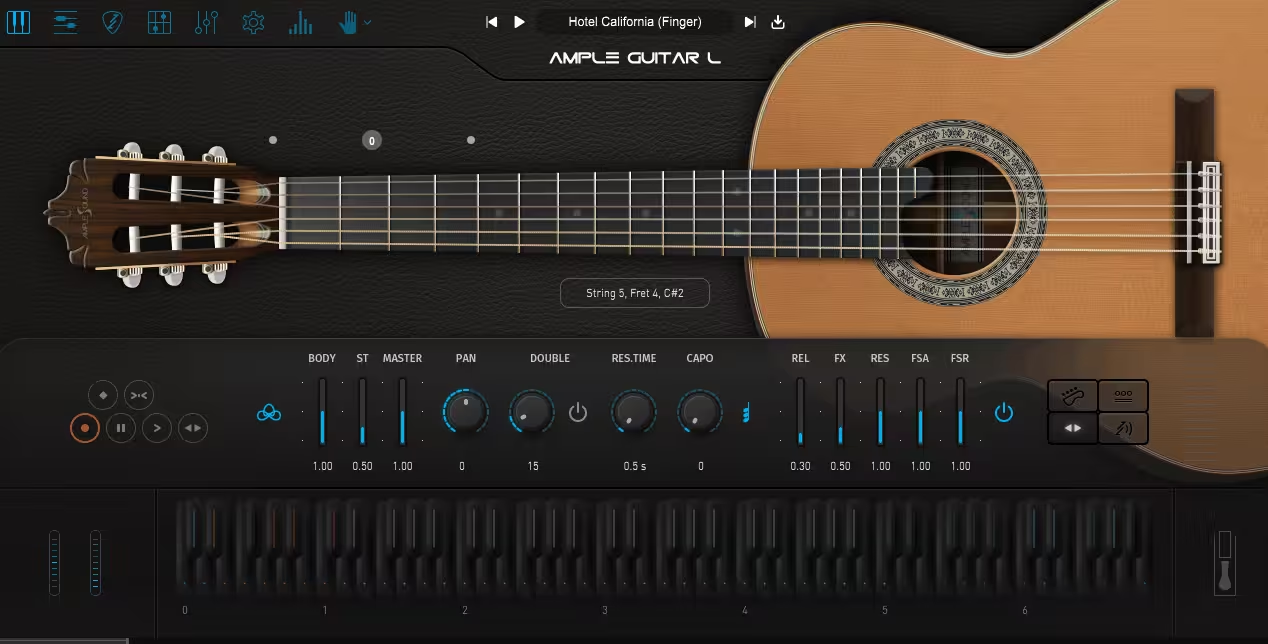
Nylon string guitars occupy a completely different sonic territory from steel string acoustics, and finding a convincing nylon string plugin is harder than you might expect. Ample Guitar L captures a classical nylon string guitar with the warm, mellow, rounded tone and soft, finger played articulations that define the instrument’s character.
The sampling approach accounts for the nylon string’s longer attack, softer transients, and warmer harmonic content compared to steel string instruments.
I find Ample Guitar L essential for Latin, classical, flamenco influenced, bossa nova, and cinematic production where the nylon string voice is the appropriate choice. The instrument sounds fundamentally different from any steel string guitar, and no amount of EQ or processing will make a steel string recording sound like nylon.
The fingerstyle articulations are particularly important here because nylon string guitar is almost exclusively played with fingers rather than a pick, and the round, soft attack of finger played nylon strings is a defining characteristic that the sampling captures.
- Nylon Warmth
The sampling captures the specific warm, mellow tone of nylon strings with their characteristic soft attack, rounded transients, and rich fundamental. The nylon string tone sits in a completely different space from steel string guitars, with less high frequency brightness and more emphasis on the warm, woody midrange and low end.
- Finger Articulations
Comprehensive fingerstyle articulations cover the playing techniques specific to classical guitar: rest stroke, free stroke, rasgueado, tremolo, and harmonics. The finger specific articulations are essential because the nylon string guitar is played differently from steel string instruments, and the right hand technique significantly affects the tone and character.
- Body Resonance
The classical guitar body resonance is modeled with the specific fan braced, cedar or spruce topped character that classical instruments exhibit. The resonance adds the warm, intimate quality that classical guitar is known for, placing the sound in a believable acoustic space.
- Legato System
A smooth legato engine handles the connected, flowing note transitions that classical guitar music demands. The legato quality matters more on nylon string than any other guitar type because classical repertoire relies heavily on connected, singing melodic lines where gaps between notes would sound unmusical.
- Performance Modes
Multiple playing modes covering different right hand techniques let you match the virtual performance to the style of music. Tremolo picking for classical passages. Rasgueado for flamenco influenced parts. Standard fingerpicking for bossa nova and jazz. Each mode produces distinctly different performance characteristics.
Available from Ample Sound in VST, VST3, AU, and AAX formats.
7. Ample Sound Ethno Ukulele (Concert Ukulele)
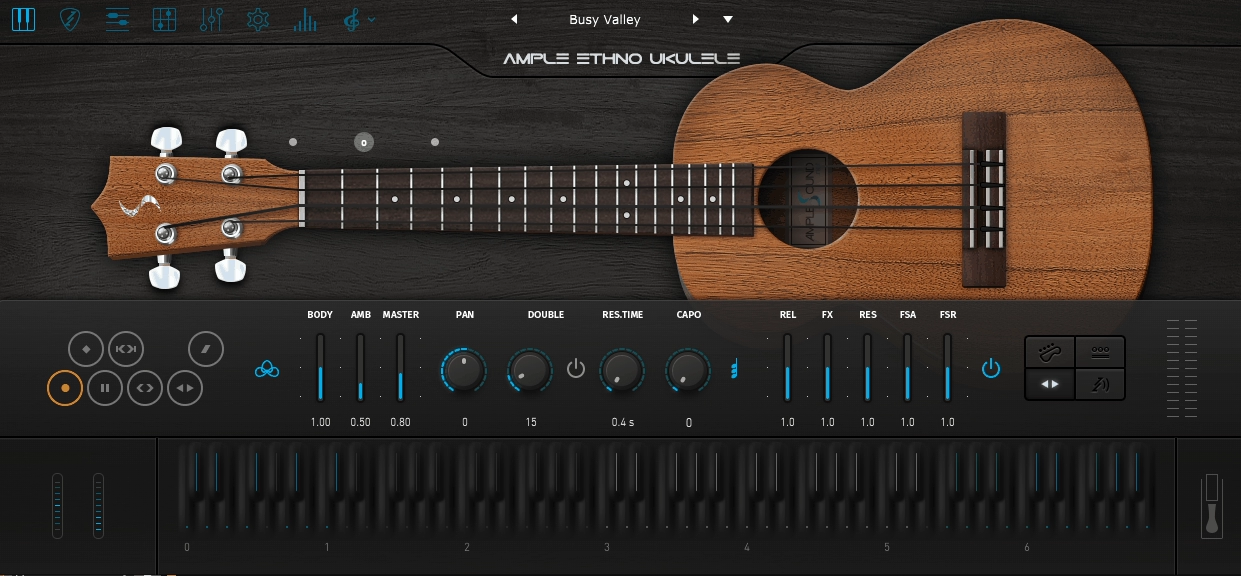
Rounding out the collection with something lighter, this plugin captures a concert ukulele with the cheerful, bright tone and compact, intimate character that has made the instrument ubiquitous in advertising, indie pop, and feel good production.
Ample Ethno Ukulele applies the same sampling approach as the rest of the catalog, with multi velocity round robin sampling and articulation support adapted to the ukulele’s specific playing techniques.
The ukulele might seem like a niche instrument, but its sound appears in an enormous amount of commercial music, advertising, YouTube content, and indie production. Having a convincing ukulele plugin means you can add that specific bright, happy character to a production without hiring a ukulele player or learning to play one yourself.
Ample Ethno Ukulele handles both strummed and fingerpicked parts, and the compact, trebly character of the instrument sits in a frequency range that rarely conflicts with other elements in a mix.
- Ukulele Character
The sampling captures the bright, compact, cheerful tone of a concert ukulele with the specific nylon string warmth and short sustain that define the instrument’s voice. The sound is instantly recognizable and carries the positive, upbeat character that producers use ukulele for.
- Strumming Patterns
The strumming engine generates realistic ukulele rhythm performances from chord input, handling the light, quick strumming style that characterizes ukulele playing. The strumming captures the instrument’s fast response and bright attack, producing the percussive, cheerful rhythm that ukulele is prized for.
- Compact Frequency
The ukulele’s high pitched, compact frequency range means it sits above most other instruments in a mix without competing for space. This natural frequency separation makes the ukulele easy to mix and ensures it adds brightness and character without masking vocals, guitars, or other midrange instruments.
Available from Ample Sound in VST, VST3, AU, and AAX formats.
Get the Free Plugin Starter Kit
The genuinely useful free DAWs and plugins worth installing. No filler. Straight to your inbox.

Hello, I’m Viliam, I started this audio plugin focused blog to keep you updated on the latest trends, news and everything plugin related. I’ll put the most emphasis on the topics covering best VST, AU and AAX plugins. If you find some great plugin suggestions for us to include on our site, feel free to let me know, so I can take a look!