VST plugin bundles have become one of the smartest ways to build up your music production toolkit in 2026. Instead of buying individual plugins one at a time, bundles let you get multiple tools together at a lower price. This saves money and gives you a complete set of tools that work well together.
Plugin bundles are great for music production because they give you everything you need for specific tasks like mixing, sound design, or mastering all in one package. I’ve found that bundles help me work faster since all the plugins share a similar design and workflow. Plus, many companies offer bundles that range from free options to professional-grade collections.
In this article, I’ll walk you through five great VST plugin bundles that stand out in 2026.
| Bundle | Best For | What You Get | My Verdict | Watch Out |
|---|---|---|---|---|
| 1. CARP Audio Everything | Sound design | Creative FX tools | Best Sound Design | Not for basic mixing |
| 2. FabFilter Mixing Bundle | Loud clean mixes | EQ, comp, sat, FX | Best Mixing | More expensive |
| 3. Thenatan X-Plugins | Creative effects | Lo fi and glitch FX | Best Value (especially when on sale) | Less control |
| 4. Waves Free Pack | Building a toolkit | Mix tools and synth | Pro sound for free | License tied to one system |
| 5. Polyverse Bundle | Electronic sound design | Filters, pitch, reverb | Best for Psytrance & Electronic Music that requires unique sound design |
Learning curve |
1. CARP Audio Everything Bundle – Best Sound Design


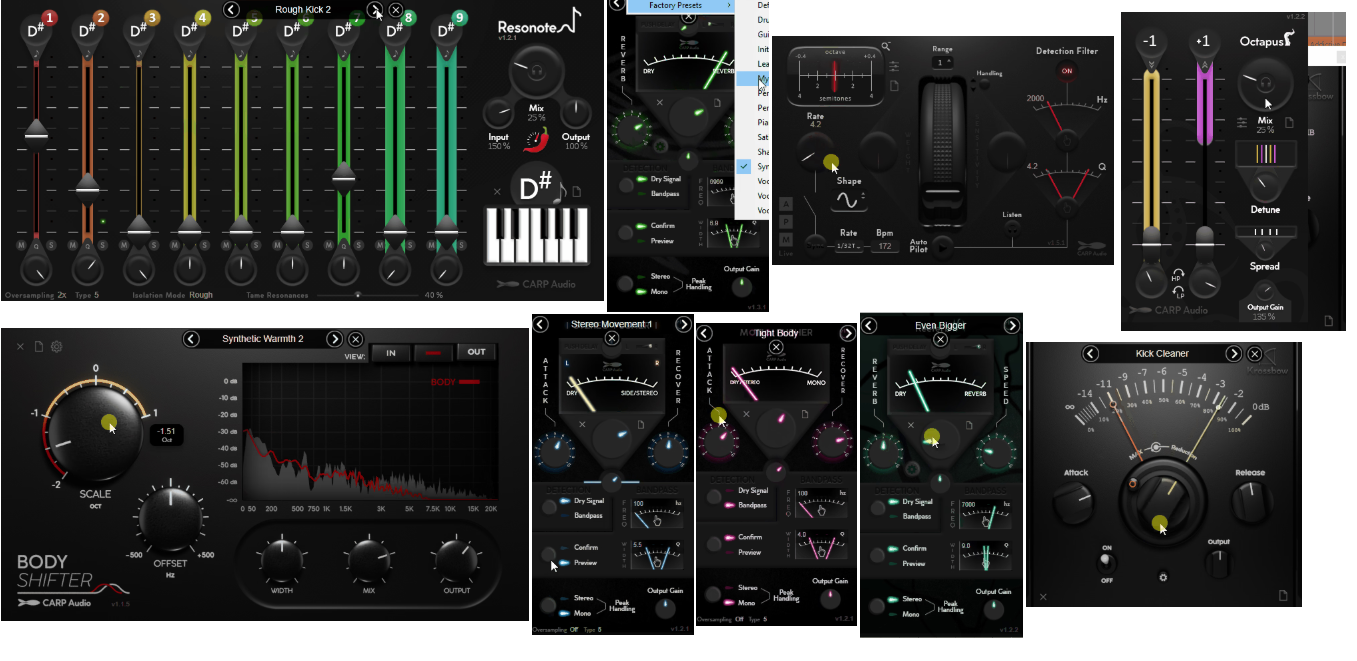
I’ve spent some time digging through sound design toolkits, and the CARP Audio Everything Bundle stands out because it tackles problems most standard plugins ignore. You’re not getting another compressor or EQ here. Instead, you get 9 specialized plugins built specifically to reshape audio in ways that normally require messy routing and tons of manual work.
What I liked about the bundle is how it handles the tedious stuff automatically. CARP Audio designed these tools for producers who want to transform sounds quickly without opening 6 plugins just to get one texture right. Each plugin solves a specific creative challenge, and they all share a clean interface that makes experimentation feel natural instead of overwhelming.
The pricing makes this even better. The regular price sits at $249, but I’ve seen it drop to $99 during sales. For 9 plugins that cover this much ground, that’s a solid value if you work in electronic music, film scoring, or experimental production.
Reeferb is the first plugin I want to talk about because it changed how I think about reverb. Most reverbs just sit there until you automate them manually, but Reeferb listens to your audio and adjusts the tail length, stereo width, and wet/dry mix automatically based on what’s happening in the signal.
This means you can load it on a vocal track or a snare, and it will swell and pull back on its own without you drawing in automation curves. I would use this for transitions, ambient hits, and vocal swells. It removes a huge chunk of boring automation work and gives you movement that feels musical instead of robotic.
Reeferb IR takes the original idea of “automatic reverb that reacts to your audio” and pushes it into a more creative space by letting you use convolution impulses instead of a standard algorithmic reverb. Instead of sitting statically in the mix, it listens to the incoming signal and decides when to open up the reverb tail, when to pull it back, and how wide or intense it should feel based on the dynamics of the sound.
The coolest part is that it does this with whatever IR you load into it, so you can use real spaces, weird FX impulses, or even your own samples and the plugin will animate them for you. You don’t have to automate reverb sends or volume curves anymore – Reeferb IR handles the swelling, blooming and breathing on its own.
I’d use this on vocals, guitars, pads, or percussive hits where I want a space that evolves naturally and reacts like part of the performance.
Body Shifter does something I didn’t even know I needed until I tried it. You can shift the spectral weight of a sound up or down without changing its pitch. This means you can take a thin snare and give it more body, or move a vocal’s resonance without making it sound detuned or EQ’d to death.
It’s like changing the microphone placement after you’ve already recorded. I’ve used this on drums to thicken them up, on vocals to add chest resonance, and on synths to shift their harmonic focus. Standard EQs can’t do this because they just boost or cut frequencies; Body Shifter actually moves the tonal center.
Octapus builds massive octave layers fast. It generates octaves above and below your source audio, and each octave gets its own stereo width, detune control, and filtering. This is perfect for creating huge electronic textures or adding sub-bass weight to synths and bass lines.
The time-stretch processing inside creates smeared, atmospheric octave tones that work great for pads and cinematic layers. I stack this on bass sounds when I want them to feel wider and more complex without layering multiple tracks.
Krossbow takes a different approach to dynamics. Instead of setting a threshold and ratio like a normal compressor, you define a maximum reduction amount, and the plugin pushes your audio toward that target without crushing transients.
This keeps punchy sounds punchy, which is hard to do with standard compression. I would recommend it on drums and electronic percussion because it can give you control without making things sound flat or over-compressed. It’s especially good for aggressive sound design where you want intensity but still need clarity.
Resonote is a note-tuned resonator with saturation built in. You pick a note or chord, and the plugin emphasizes the harmonic resonances at those frequencies. This is incredible for turning percussive or atonal sounds into something that matches the key of your track.
I’ve used this on foley, noise layers, and drum hits to give them tonal identity. The soft distortion stage adds harmonics in a way that feels musical instead of harsh. If you work with field recordings or sound effects, this plugin is worth the bundle price alone.
APM Live does automatic pitch modulation based on your incoming audio. It analyzes the signal and creates real-time pitch movement using internal modulation engines. You can control how sensitive it is, how fast it moves, and how deep the modulation goes. This creates robotic vibrato, fluttery pitch bends, or granular-style pitch effects without needing multiple plugins or automation lanes. Use it on vocals, synths, and FX to add movement that feels organic but controlled.
Stereo Pusher and Mono Pusher work together to shape your stereo field intelligently. Stereo Pusher expands or tightens the side channel based on the signal’s dynamics, so your width reacts to the music instead of staying static.
This is great for synths, pads, and ambient swells without causing phase problems. Mono Pusher does the opposite—it shapes the center image to make mono content more stable and punchy. I use Mono Pusher on kicks, bass, and vocals to keep the center tight, and Stereo Pusher on everything else to add space without losing focus.
The CPU efficiency across all 7 plugins is noticeably good. I can stack multiple CARP plugins in a chain without hearing my computer fan spin up, which matters a lot when you’re building complex sound design layers. The interfaces are consistent across the bundle, so once you learn one plugin, the others feel familiar.
2. FabFilter Mixing Bundle (For loud mixes) – Best Mixing


The FabFilter Mixing Bundle gives you seven professional mixing tools that work together to create loud, controlled, and polished mixes. I find this bundle essential when I need surgical precision and serious loudness without losing clarity. Each plugin shares the same clean visual design and processing quality that makes FabFilter plugins so recognizable in professional studios.
What makes this bundle different from others is how every plugin focuses on a specific mixing task. You get Pro-Q 4 for EQ, Pro-C 2 for compression, Pro-DS for de-essing, Pro-G for gating, Saturn 2 for saturation, Timeless 3 for delay, and Pro-R 2 for reverb. They all include oversampling options and zero-latency modes when you need them. The visual feedback systems show you exactly what each plugin is doing to your audio in real time.
I reach for this bundle when I need my mixes to hit competitive loudness levels without breaking apart. The combination of dynamics control, frequency shaping, and harmonic enhancement gives me everything I need to prepare tracks for modern mastering. You can push mixes harder because each tool helps maintain clarity and punch at high levels.
Pro-Q 4 is the centerpiece EQ plugin with some of the most advanced features I’ve used. It includes up to 24 EQ bands that you can configure however you need. The Spectral Dynamics mode lets you control harsh frequencies dynamically without setting up separate dynamic EQ bands.
The EQ Match feature analyzes reference tracks and helps you shape your mix to match their frequency balance. You can accept the suggestions fully or use them as starting points. The AI-guided band suggestions detect problem areas like resonances and masking between instruments. The analyzer shows where frequencies overlap so you can carve out space for each element.
You get three processing modes: zero-latency, natural phase, and linear phase. I use zero-latency during tracking and mixing, then switch to linear phase for final mastering touches. The collision detection feature shows when two tracks compete in the same frequency range, which saves me hours of guesswork.
Pro-C 2 handles compression with 8 different compression algorithms including Punch, Bus, Vocal, Mastering, and Opto styles. Each algorithm has different envelope behavior that suits specific sources. I love the Range control because it limits how much compression can happen, letting me add character without crushing dynamics.
The lookahead feature catches transients before they pass through, giving smoother results on drums and bass. You can adjust the knee, hold time, and add custom side-chain filtering to make the compressor respond only to specific frequencies. The real-time gain reduction curve shows exactly what the compressor is doing, which helps me dial in perfect settings faster.
Pro-DS removes harsh sibilance from vocals without the weird artifacts cheaper de-essers create. It uses an intelligent detection algorithm that identifies actual sibilant consonants instead of just reacting to high frequencies. This prevents that lisping sound you get from aggressive de-essing.
You get split-band and wide-band modes for different vocal types. The plugin includes lookahead and linear-phase options for precise work. When I’m pushing mixes to competitive loudness levels, sibilance becomes a major problem because it triggers limiters and creates harsh spikes. Pro-DS solves this before it becomes an issue.
Pro-G works as both a gate and expander with multiple processing styles. The adjustable attack, hold, and release controls let you shape exactly how the gate opens and closes. Consider using it on drums to clean up bleed between hits, which keeps transients sharp and clear.
The side-chain EQ lets you make the gate respond only to specific frequencies. For example, you can gate a tom mic based only on low-mid information, ignoring cymbal bleed. The visual display shows your incoming signal, threshold, and gain reduction all at once. Cleaning unwanted noise and room sound helps mixes stay tight when you add bus compression and limiting later.
Saturn 2 adds harmonics and saturation with up to six independent frequency bands. Each band can use different distortion models like tube, tape, amp, or circuit-style saturation. The advanced modulation section includes LFOs, envelope followers, and XY controls that can create movement and interest.
I use Saturn 2 to add punch to basslines without affecting the midrange, or to warm up vocals without muddying the low end. The plugin includes oversampling options that prevent digital aliasing when you push the saturation hard.
Each band has its own EQ and dynamics controls. This lets me enhance exactly the parts of the spectrum that help mixes translate on phone speakers and earbuds.
Timeless 3 provides delay effects with 12 multifunction filters, diffusion, and modulation. The ducking feature makes delays audible without covering up your main vocals or lead instruments. This is crucial when you need space and depth but can’t afford to lose clarity.
You can create tape-style flutter and saturation that stays controlled enough for mixing. The freeze and reverse functions turn delays into rhythmic effects without cluttering your mix. The real-time spectrogram helps you see if the delays are building up in problem frequencies. I would use it to fill space in arrangements without sacrificing headroom for limiting.
Pro-R 2 delivers professional reverb with a new Spaces system that models realistic room behaviors. Instead of confusing early and late reflection controls, you get musical parameters like Distance, Brightness, Character, and Stereo Width. The interface makes it easy to dial in the exact reverb you need without endless tweaking.
The post-EQ and decay-rate EQ let you shape how different frequencies behave in the reverb tail. Use this to keep low end tight while letting high frequencies sparkle. You can lock the decay time while switching between presets to maintain consistency. The reverb stays clear even when compressed or limited, avoiding the smeared sound that makes mixes feel muddy.
3. Thenatan X-Plugins Bundle – Best Value


After spending about 2 hours messing around with these nine plugins, I realized that the X-Plugins Bundle is one of those rare VST plugin bundles where you actually get way more creativity than you pay for.
What grabbed me right away wasn’t just the low cost. It was how different each plugin felt from the usual suspects in my effects folder. These aren’t your standard compressors or clean reverbs. They’re built for texture, for happy accidents, for those moments when you want your track to feel alive and a little unpredictable.
The whole bundle normally sells for $265.50, but you can grab it for $53.10 right now which I think is a no brainer. That’s a massive discount for tools that actually inspire new ideas instead of just polishing what’s already there. I’ve used them on everything from lo-fi hip-hop beats to ambient soundscapes, and they never feel out of place.
TapeStop is the first plugin I reach for when I want that classic tape machine effect where everything slows down or speeds up like an old cassette player dying. You get two modes: Pitch Mode warps the pitch as it slows, and Time Mode keeps things more controlled with pure time-based manipulation.
The coolest part is the Noise Player. You can actually load your own crackle or hiss sounds to layer over the effect, which gives you that authentic tape vibe without needing actual hardware.
RingerShifter is where things get weird in the best way. It’s a frequency shifter and ring modulator that completely re-maps the harmonic content of whatever you feed it. The built-in LFO lets you modulate the shift amount, so you can create everything from subtle robotic textures to full-on alien sirens.
I love throwing boring loops through this plugin and watching them transform into something completely new. Percussion sounds especially good when you want to add metallic or otherworldly character. It’s also great for creating evolving drones that shift and pulse over time.
VibratoTremolo combines two classic modulation effects into one simple interface. You get vibrato for pitch modulation and tremolo for volume modulation, with controls for Mix, Rate, and Depth. It sounds basic on paper, but the way they interact creates movement that feels organic and musical.
Consider using it on sustained synth pads to give them life, or on melodies where you want that vintage warped texture. The plugin is lightweight and easy to dial in, which means you can get the sound you want without overthinking it.
DelayGrain is my favorite when I need something atmospheric. It’s a granular delay that splits your audio into tiny grains, then lets you manipulate time and pitch independently. You can pitch the grains up to +12 semitones or more, creating shimmer effects that sound almost like a choir.
The texture options are incredible. You can go from subtle sparkle to full-on glitchy chaos depending on how you set the parameters. I’ve used it to turn simple piano chords into massive cinematic pads, and it never fails to surprise me with new combinations.
ReverbMod solves a problem I didn’t even know I had. It’s a reverb with built-in ducking, so the reverb tail automatically responds to the dry signal without needing a separate sidechain compressor. You can also sidechain it via audio or MIDI, which opens up creative possibilities for rhythmic space effects.
The tempo-synced reverb is perfect for dance music where you want the reverb to pump with the beat. It saves me so much time in routing and compression, and it sounds clean without being sterile. This one would fit well on vocals, synths, and even drums when I want depth that doesn’t muddy the mix.
DropWow is pure lo-fi character. It produces random pitch and volume dropouts that mimic old tape and cassette artifacts. The effect isn’t clean or polished, it’s deliberately broken and nostalgic.
If you’re making lo-fi hip-hop or anything that needs that tape-worn vibe, this plugin is perfect. I also use it on transitions to add imperfection and humanity to otherwise digital productions. It’s one of those tools that makes everything feel a little more real.
DramaGhost grabs the last few seconds of audio and loops them, creating layered soundscapes and drones that evolve over time. The Drama knob controls how much audio gets looped and how distant or ghostly the loop feels.
It’s great for ambient pads, cinematic backgrounds, and breakdowns. Also, it’s especially good for scoring because it creates space without taking up too much frequency range. The effect can be subtle or completely overwhelming depending on how you set it.
DigitalRobot is the most experimental plugin in the bundle. It has 24 LFOs modulating various parameters across 8 EQ bands, plus time-stretching and robotic repeating of the input signal. The randomness is the point here. You’re not meant to have full control.
I love using this for generative textures and glitch music. Sometimes I’ll run a simple loop through DigitalRobot and just see what happens. The results are always unpredictable, which is perfect for sound design or when I need sci-fi effects. It’s not for everyone, but if you like happy accidents, this plugin delivers.
FlangerPhaser blends classic flanger and phaser effects into one engine. You can create everything from subtle chorus-like phasing to full psychedelic swirls that completely transform your sound.
I use this on guitars, synths, and vocals when I want movement and depth. The swirling modulation adds space without making things sound washed out. It’s one of those effects that works in almost any genre if you dial it in right.
4. Waves Free Plugin Pack – Pro sound for free

Image Credit: Waves
I’ll be honest, when I first heard Waves was putting together a free plugin pack, I figured it would be stripped-down demos or outdated tools. I was wrong. This bundle gives you 7 full plugins plus StudioVerse chains, and they’re the same processors top engineers use in actual productions.
What makes this bundle different from other freebies is that Waves committed to free lifetime updates. You’re not getting abandoned software that’ll break in two years. You’re getting tools that will grow with your production setup, and you don’t pay a cent for future improvements.
The pack covers a lot of ground. You get EQ, compression, saturation, reverb, guitar effects, a channel strip, and even a surprisingly deep FM synth. That’s way more versatile than the stock plugins in most DAWs, and it’s all packaged with Waves’ signature analog-modeled sound.
AudioTrack is my go-to when I need quick results on multiple tracks. It combines a 4-band parametric EQ, compression, expander, and gate in one plugin. Instead of loading three or four separate processors, I drop AudioTrack on a vocal or drum track and shape everything in one window. The CPU usage stays low even when I use it across 20+ tracks, which matters when you’re working on bigger sessions. I use it for fast mix cleanup, carving out muddy frequencies while taming peaks and cutting out background noise all at once.
Then there’s Flow Motion FM Synth, which caught me off guard because FM synthesis usually scares people away. This one makes it approachable. You get 4 oscillators with full FM matrix routing, plus 4 LFOs and envelope modulators. The snapshot sequencer lets you save up to 16 different patch states and morph between them, so you can create evolving textures that shift throughout your track. It ships with over 1,000 presets covering everything from glassy pads to growling basses and sharp leads. I’ve used it for sound design on film cues and aggressive dubstep wobbles, and it handles both without breaking a sweat.
GTR Solo gives you amp simulations and 12 stomp pedals modeled after classic guitar gear. You get 9 guitar cabs, 1 bass cab, and 3 different mic types with flexible routing options.
All the effects sync to your DAW tempo, and you can rearrange the pedal order however you want. What I love is running synths and vocals through GTR Solo to add grit and character. A clean synth pad can turn into something warm and saturated, or a flat vocal can pick up some edge without sounding harsh.
IR Live Convolution Reverb uses high-resolution convolution technology, and you can load your own impulse responses. That means you’re not stuck with the included spaces. If you record your own IRs or download specialized ones, you can simulate any acoustic environment you want.
The interface is simpler than most convolution reverbs, so you don’t need an engineering degree to get realistic room ambience or huge cathedral spaces on your tracks.
Lil Tube is a tube saturation plugin modeled after real thermionic circuits. The main control is a Drive knob, and you can push it hard for obvious warmth or keep it subtle for gentle harmonic richness.
I use it on vocal buses to add thickness without making things sound overprocessed, and it works great on synths that need more presence in a dense mix. You can throw it on drum buses, individual instruments, or even your master bus for a touch of analog glue.
V-Comp is modeled after the Neve 2254 diode-bridge compressor with triple-transformer circuitry. This isn’t just dynamic control. It adds analog coloration as it compresses, giving you that vintage console sound.
I use V-Comp on mix buses when I want everything to feel cohesive and warm, not just squashed. It works beautifully on vocals, drum buses, and instrument groups where you want musical compression that adds character instead of just limiting peaks.
V-EQ3 is a three-band EQ modeled on classic Neve console designs like the 1073 and 1066. It’s not surgical, it’s musical. You’re not hunting for problem frequencies, you’re shaping tone and adding color.
I reach for V-EQ3 when I want vocals to sit forward in the mix with warmth, or when I need to add weight to a bass without making it muddy. It’s perfect for broad strokes and character shaping rather than precise corrective work.
The bundle also includes StudioVerse, which is a library of preset plugin chains designed by professional engineers. These are full effect chains with reverb, EQ, dynamics, and more already dialed in.
You get macro controls so you can tweak the chains to fit your track without rebuilding everything from scratch. There are also StudioVerse Instruments, which are pre-made instrument chains combining synths, effects, and creative routing. This speeds up workflow when you need production-ready sounds fast.
One thing to know: the free license ties to one Waves account and one machine. If you work across multiple computers regularly, that could be limiting. You’ll also need to use Waves Central for installation and license management, which some people find clunky.
Flow Motion’s FM synthesis might feel overwhelming if you’re used to simple subtractive synths. The learning curve exists, but the 1,000+ presets give you a solid starting point while you figure out the modulation matrix.
I think this pack is essential if you’re building your plugin library in 2026. You’re getting professional-grade tools that cost nothing, and they cover mixing, sound design, and creative production. The fact that Waves keeps updating it for free makes it even better.
5. Polyverse Bundle Deal – Best for Psytrance & Electronic Music


This bundle gives you six specialized plugins built for producers who want to create sounds that haven’t been heard before. You get Manipulator, Gatekeeper, Comet, Supermodal, I Wish, and Filterverse all in one package.
What drew me in first was learning that Infected Mushroom helped develop some of these tools. These aren’t plugins designed by a team guessing what producers need. They came from actual psytrance legends who needed specific tools for their own work and decided to share them with the rest of us.
I would recommend Polyverse Bundle Deal when you need to push past normal processing. You won’t find standard EQs or compressors here. Instead, you get tools that turn a simple drum loop into a melodic instrument or freeze a vocal and play it like a synth. The entire collection works together to transform your sounds into something entirely new.
The bundle works on Windows 64-bit and macOS with support for VST2, VST3, AU, and AAX formats. I’ve had zero compatibility issues across my different DAWs, which matters when you’re working on multiple projects.
Plugins included:
Filterverse – Creative Multi-Filter Engine
Filterverse goes way beyond normal filtering. You get three filter slots with routing options that let you chain, parallel, or modulate filters in ways that turn static sounds into moving, evolving textures.
I used it on a basic metronome click and turned it into an actual melody just by setting up the right filter modulation. The plugin includes eight modulation sources with audio-rate modulation capabilities, which means you can use other audio to control the filters. It supports full stereo and mid-side processing, so you can filter just the sides of your mix while leaving the center untouched.
Supermodal – Resonantor / Body modeler
Supermodal uses hundreds of bandpass filters to model how different objects resonate and vibrate. I applied it to a drum loop and suddenly the drums sounded like they were hitting resonant metal plates or wooden boxes.
The Modal XY control is brilliant because you can morph between different resonant models in real time, making it playable during your performance or automation. You get four modulation slots, meta-knobs, envelopes, and a sequencer built in. I’ve used it to turn percussion into tonal harmonic material that fits my track’s key.
Manipulator – Vocoder / Audio Transformer
Manipulator transforms any mono audio source into something completely different. You can create up to four polyphonic voices controlled by external MIDI, which means you play chords using a single vocal recording.
The plugin includes 10 different effect types covering pitch, formant, stereo width, smear, and harmonics. I recorded one bass note and used Manipulator to create an entire bass chord progression from that single note. For psytrance and electronic music, being able to harmonize and transform any sample into a melodic element saves me hours of recording time.
Gatekeeper – Volume Sequencer, Envelope Shaper
Gatekeeper handles rhythmic gating and volume modulation with sample-accurate precision. It works as an LFO, envelope, and step sequencer all in one, giving you complex volume patterns that would take forever to automate manually.
I use it for side-chain style pumping without needing a compressor, and for creating stutter and gate effects on pads and leads. The plugin supports MIDI triggering and can send MIDI CC to other plugins, which means you can use it to modulate parameters across your entire project. For psytrance’s signature pumping and rhythmic chopping, this plugin delivers exactly what you need.
Comet – Evolving Reverb
Comet isn’t just another reverb plugin trying to model real rooms. It creates lush, evolving spaces that breathe and shift over time through preset morphing. I apply it to leads and synths to place them in dynamic spaces that change throughout the track.
The reverb tails can be modulated, so you get movement instead of static ambience. During breakdowns in electronic tracks, I use Comet to create massive space hits that evolve and build tension. The algorithmic approach gives you flexibility that static impulse responses can’t match.
I Wish – Pitch Freezer & Audio Synth
With I Wish, You feed it any audio source, freeze the pitch at any moment, then play that frozen sound across your keyboard like a polyphonic synth.
I took a vocal phrase, froze it mid-word, and suddenly had a playable pad instrument with a totally unique texture. You can also apply real-time pitch and formant modulation while playing, which opens up performance possibilities I haven’t found in other plugins. The stutter effects add another layer when you want rhythmic variations.
—
This bundle costs less than buying the plugins separately, and you get access to regular updates and improvements. Polyverse released a Filterverse update in July 2025 that added new features, which shows they’re actively developing these tools.
The learning curve is real though. You won’t open these plugins and instantly understand everything they can do. I spent time with each one, experimenting and reading the manuals to unlock their full potential. But once you learn them, you have tools that can define your sound rather than just polish it.
For electronic music and psytrance production, this bundle gives you the exact tools you need. Filters, resonators, modulators, pitch manipulation, and creative reverb all designed to work together.
You can freeze a sound with I Wish, filter it through Filterverse, add resonance with Supermodal, gate it rhythmically with Gatekeeper, harmonize it in Manipulator, and space it out with Comet. The possibilities multiply when you start combining these plugins on the same sound.
I recommend this bundle if you’re working in genres where sound design matters as much as songwriting. If you just need to mix a standard pop vocal, you might not use these plugins to their full potential. But if you want to create signature sounds that set your tracks apart, the Polyverse Bundle Deal delivers tools you won’t find anywhere else.

Hello, I’m Viliam, I started this audio plugin focused blog to keep you updated on the latest trends, news and everything plugin related. I’ll put the most emphasis on the topics covering best VST, AU and AAX plugins. If you find some great plugin suggestions for us to include on our site, feel free to let me know, so I can take a look!