
There’s something about a synthesizer that looks and sounds like it belongs in a 1970s or 80s studio that no amount of modern design can replace. The visual character of vintage-styled hardware, the wood side panels, the colored knobs, the analog meters, the deliberate retro layouts, connects you to a musical lineage that spans decades.
And when the sound matches the aesthetic, when the oscillators have that organic warmth, the filters carry that specific analog character, and the whole instrument responds with the gentle imperfections of real circuits, you get an experience that modern-looking synths with identical specs simply don’t provide.
What I find worth pointing out is that “vintage” in 2026 doesn’t mean “limited.” Every synth on this list combines classic aesthetics and tonal character with modern reliability, MIDI/USB connectivity, and build quality that won’t leave you dealing with the maintenance headaches of actual vintage gear.
You get the look and the sound without the unreliable components, drifting tuning, and missing parts that make owning genuine vintage synthesizers a labor of love (or frustration).
I’ve picked fourteen hardware synths that deliver convincing vintage character in both appearance and sound, from full-size keyboard flagships through compact desktop recreations to instruments that evoke a specific era without directly cloning any single design.
1. Roland Jupiter-X
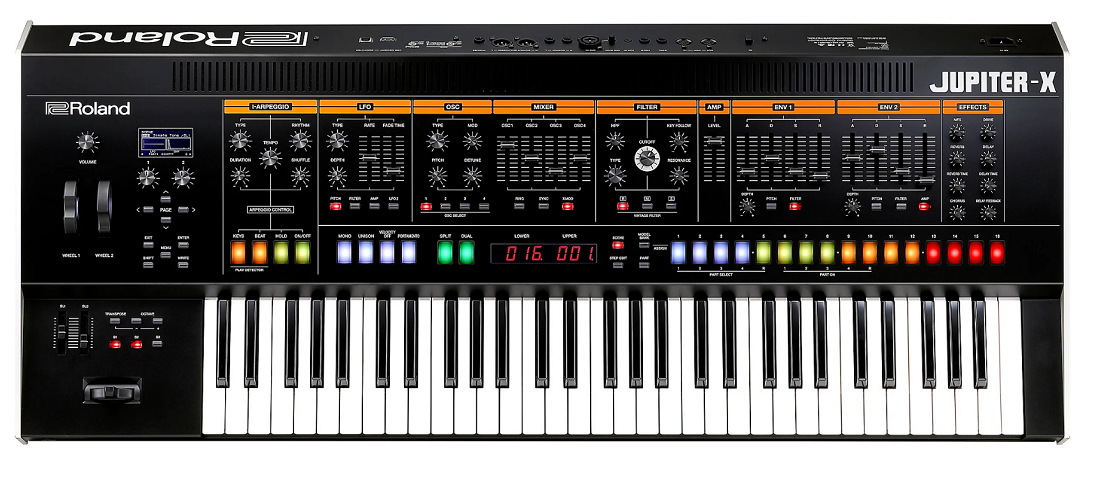
Roland took the visual language of the legendary Jupiter-8 and wrapped it around their modern ZEN-Core synthesis platform, creating an instrument that looks like it stepped out of a 1981 catalog but runs on 2020s technology underneath.
Jupiter-X captures the specific panel layout, color scheme, and physical presence of the original Jupiter series while offering access to modeled recreations of multiple classic Roland instruments through the Model Expansion system.
The vintage appeal goes deeper than cosmetics. The Model Expansions don’t just approximate old Roland sounds. They model the specific circuit behaviors, filter quirks, and oscillator drift of the originals, meaning the Jupiter-X sounds vintage because it’s deliberately reproducing the characteristics that made those instruments special.
- Jupiter-8 Model
The Jupiter-8 Model Expansion reproduces the specific oscillator behavior, filter sweep, and voice-to-voice variation of the original, including the subtle analog drift that gave the Jupiter-8 its warmth.
The model captures the JP-8’s particular character in the upper harmonics and the way its filter resonance interacts with low-frequency content, which is what made the original one of the most sought-after polysynths of its era.
- Classic Library
Beyond the Jupiter-8, Model Expansion packs for the Juno-106, SH-101, JX-8P, and other Roland classics give you a growing library of vintage Roland sounds, each with their own specific tonal identity.
The expansion system means the Jupiter-X isn’t locked to one vintage character. You can switch between the warmth of a Jupiter, the chorus-drenched shimmer of a Juno, and the raw edge of an SH-101 from the same instrument.
- Retro Aesthetic
The front panel design deliberately references the Jupiter-8’s visual identity with the specific slider layout, color coding, and panel organization that defined Roland’s flagship polysynth. The aesthetic is immediately recognizable to anyone familiar with vintage Roland instruments, and the physical presence of the full-size keyboard with the Jupiter-style panel creates a visual and tactile connection to that era.
- Scene Morphing
A dual-scene system lets you set up two vintage sound configurations and crossfade between them in real time. Morphing from a Jupiter-8 pad into a Juno-106 string creates evolving timbral transitions that draw from two different vintage characters simultaneously, which is something no actual vintage instrument could do because you’d need two separate synths.
Get the Free Plugin Starter Kit
The genuinely useful free DAWs and plugins worth installing. No filler. Straight to your inbox.
2. Behringer DeepMind 12
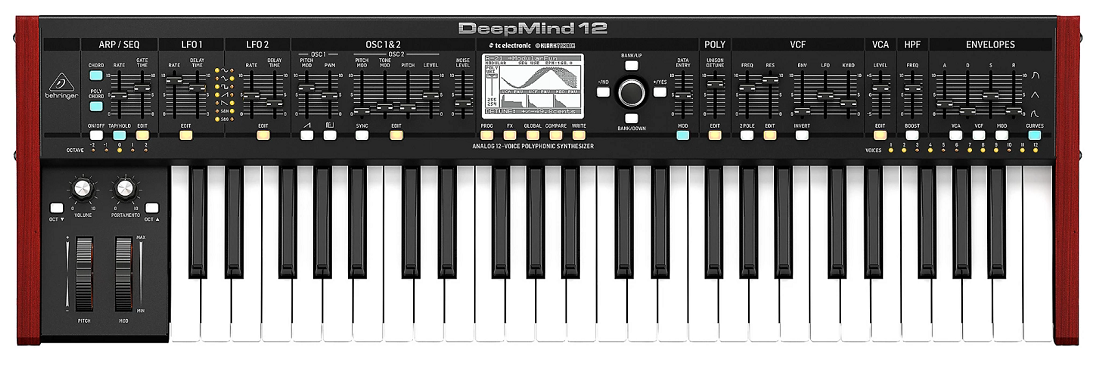
The DeepMind 12 wears its vintage influences openly, with a panel design that references the classic Roland Juno-106 in layout, color, and control organization. But underneath that familiar exterior sits an original Behringer design with twelve voices of analog polyphony and a modern effects engine that extends well beyond what any vintage synth offered.
For producers who want the visual warmth of a classic Juno-era polysynth with significantly more capability than any original from that period, the DeepMind 12 occupies a unique position. It looks vintage, sounds genuinely analog, and provides modern features that the instruments it visually references never had.
- Juno Aesthetic
The front panel layout with its specific slider arrangement and section organization follows the visual language of 1980s Roland polysynths closely enough that the family resemblance is unmistakable. The color scheme, knob positioning, and overall proportions evoke a specific era of synthesizer design where everything was clearly labeled, logically organized, and designed for hands-on tweaking rather than screen navigation.
- Analog Warmth
Twelve voices of genuine analog oscillators and filters produce the warm, organic tone quality that vintage polysynths are prized for.
The analog signal path delivers the subtle voice-to-voice variation, the gentle harmonic richness, and the specific character of real voltage-controlled circuits that defined the sound of 80s polyphonic synthesis. You hear the difference between these analog voices and digital emulations most clearly on sustained pads where the slight imperfections between voices create natural width and movement.
- Modern Effects
The 32-slot effects engine with four simultaneous slots goes far beyond what any vintage synth included. Classic instruments shipped dry or with basic chorus at most. The DeepMind gives you chorus, flanger, phaser, delay, reverb, overdrive, EQ, and more, processed internally with routing flexibility.
The effects are what bridge the gap between vintage analog tone and modern production-ready sound, letting you create finished patches without external processing.
- Chorus Depth
The chorus implementation specifically deserves mention for a vintage-focused list because the chorus is what defined the Juno sound.
The DeepMind’s chorus captures that wide, shimmering, slightly detuned character that made Juno pads a staple of house music and synthpop. Having a quality chorus on a twelve-voice analog polysynth means you can create those specific vintage pad textures with even more harmonic depth than the originals provided.
- Modulation Matrix
An 8-slot modulation matrix adds sound design depth that vintage instruments lacked. The mod matrix lets you create evolving, self-modulating patches where filter, amplitude, and effects parameters shift over time, which takes the vintage analog foundation and extends it into territory that 80s synths couldn’t reach because their modulation options were limited to fixed LFO and envelope routing.
- Tablet Control
A wireless editor application gives you full visual parameter access on a tablet screen. Vintage synths had whatever controls were on the front panel and nothing else. The DeepMind’s wireless editor means you can program complex patches with visual feedback while maintaining the analog sound quality that the vintage aesthetic promises.
3. Korg MS-20 Mini
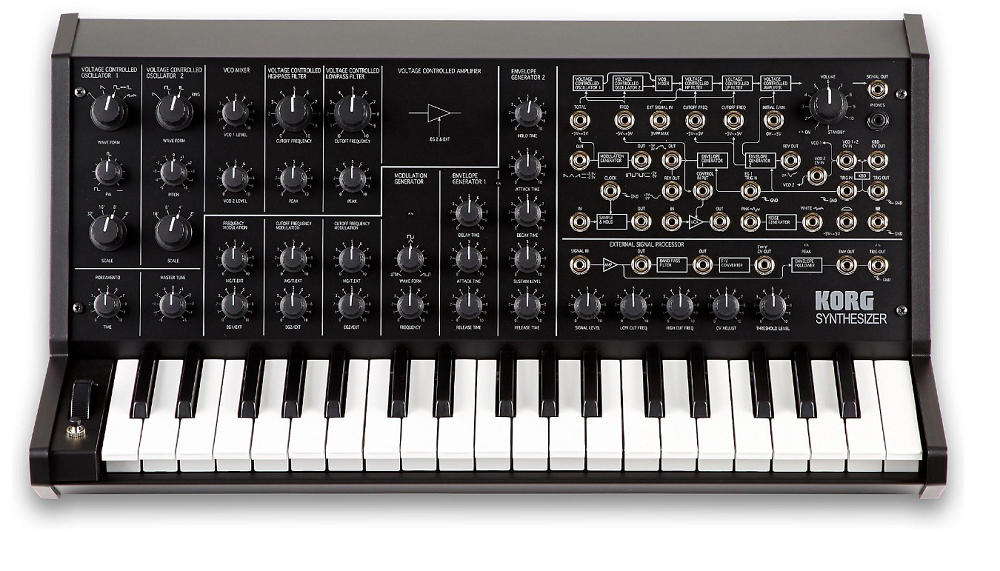
Few synthesizers are as instantly recognizable as the Korg MS-20, and the mini version recreates both the aggressive sound and the iconic visual design in a roughly two-thirds scale format. Korg MS-20 Mini is a genuine analog monosynth with the same dual-filter architecture and front-panel patch bay that made the original a cult classic since its 1978 debut.
The MS-20’s visual design is one of the most distinctive in synth history. The dark panel with white graphics, the patch bay with its colorful cables, and the specific knob layout have become iconic beyond the music world. The mini version preserves all of these visual elements faithfully.
- Original Circuit
The analog circuit design follows the original MS-20 topology, reproducing the specific oscillator character, the aggressive dual-filter interaction, and the raw, unpolished tone quality that defined the original.
The MS-20’s sound is unlike any other monosynth because the high-pass and low-pass filters in series create a frequency-shaping behavior that more common single-filter designs don’t replicate.
- Patch Bay
The front-panel patch bay is both a functional tool and a visual signature of the MS-20’s identity. The colorful patch cables connecting points across the panel look dramatic and retro, and they provide genuine signal routing, modulation, and external processing capability that transforms the MS-20 from a standard monosynth into a semi-modular sound design instrument.
- Scaled Design
The two-thirds scale recreation preserves every visual element of the original, from the panel graphics and knob colors to the keyboard shape and overall proportions, while making the instrument more practical for modern desk setups. The smaller size doesn’t compromise the controls. Everything is functional and accessible, just more compact than the full-size 1978 original.
4. Roland Juno-X
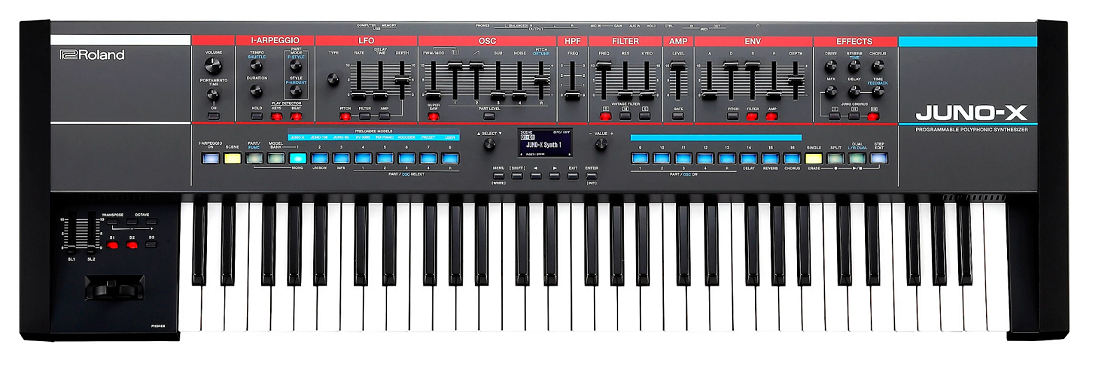
If the Jupiter-X references Roland’s flagship heritage, the Juno-X goes directly after the specific instrument that defined an entire generation of electronic music. Roland Juno-X is designed to look, feel, and sound like a modern continuation of the Juno-60 and Juno-106 line, with a visual design that could pass for a lost prototype from Roland’s early 1980s catalog.
The Juno’s visual identity, the distinctive slider panel, the specific button layout, the clean, functional aesthetic, is one of the most recognized in synthesizer history. The Juno-X preserves that identity while housing modern technology inside.
- Visual Heritage
The front panel design faithfully references the Juno-60/106 aesthetic with the specific slider arrangement, section organization, and overall proportions that made the originals visually distinctive. The Juno-X looks like it belongs alongside vintage Junos in a studio photograph, which matters for producers who care about the aesthetic environment they create music in.
- Dual Models
Dedicated Juno-60 and Juno-106 recreations each capture the specific tonal differences between the two originals. The Juno-60 model reproduces the warmer, slightly grittier character with its darker chorus.
The 106 model delivers the cleaner, brighter tone with the more defined chorus that became ubiquitous in house music. Having both available means you choose the specific vintage Juno character each track needs.
- Chorus Legacy
The modeled chorus effect specifically reproduces the behavior of the original Juno chorus circuits, which is arguably the most important sonic element to get right because the chorus defined the Juno sound more than the oscillators or filter. The chorus adds the wide, shimmering, slightly wobbly character that made Juno pads immediately recognizable across decades of recorded music.
- Expandable Platform
Model Expansion packs add other vintage Roland engines beyond the Juno recreations, meaning the instrument grows to cover more of Roland’s vintage catalog over time. The expandability is a modern advantage that actual vintage instruments never had, turning one physical instrument into access to an evolving library of classic Roland sounds.
5. Moog Matriarch
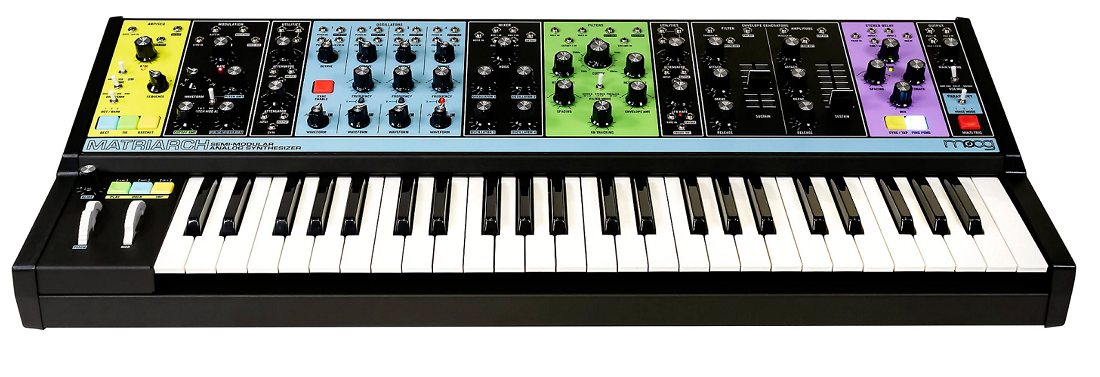
There is no synthesizer manufacturer with more vintage credibility than Moog, and the Matriarch channels that legacy through a retro-colored multi-panel design that deliberately references Moog’s modular heritage from the 1960s and 70s.
Moog Matriarch gives you four analog oscillators, dual Moog ladder filters, an analog BBD delay, and a 90-point patch bay, all presented in a visual style that feels like it could have existed alongside the original Moog modulars.
The color-coded panel sections and the exposed patch bay create a visual statement that no other modern synth quite matches. It looks like a piece of musical history even though it’s a thoroughly modern instrument.
- Moog Legacy
The four Moog oscillators through dual Moog ladder filters produce the specific warm, fat, harmonically dense tone that has defined the Moog sound since the 1960s.
The tonal character is immediately recognizable because the Moog circuit topology produces a particular low-end weight and midrange presence that competing designs approach but don’t replicate exactly. Playing the Matriarch connects you to the same tonal lineage as records made on Minimoogs and Moog modulars fifty years ago.
- Modular Look
The color-coded panel layout with dedicated sections for each module visually references the organization of vintage Moog modular systems where separate modules sat in a cabinet. The retro color palette (olive, burnt orange, cream) and the specific typography choices create an aesthetic that’s deliberately vintage without being a direct copy of any single historical instrument.
- Patch Bay
The 90-point patch bay is both a functional modulation system and a visual centerpiece that defines the Matriarch’s appearance. Colored cables spanning the panel create the classic modular synthesizer visual that no sealed-panel instrument can match. The patch bay looks as good as it sounds, and for vintage aesthetic purposes, the visual impact of a synth with cables patched across its face is significant.
6. Sequential Prophet 10
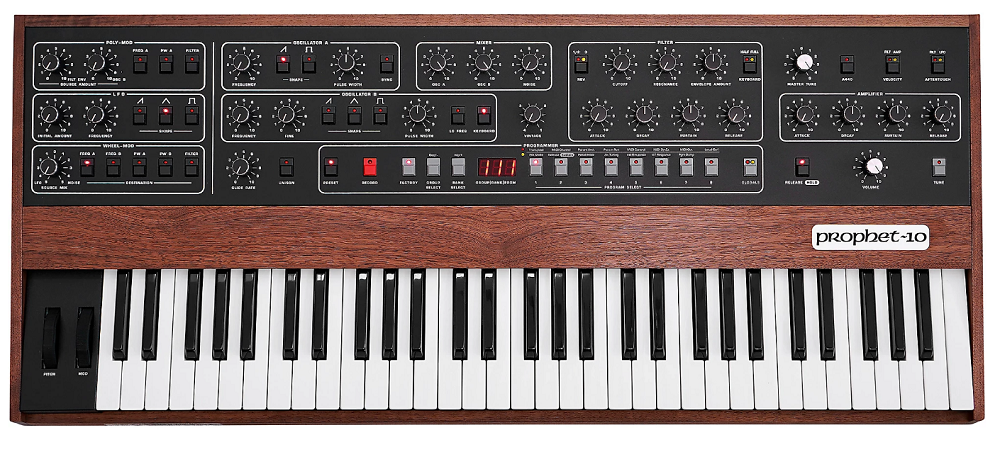
The Prophet-5 is one of the most important synthesizers in music history, and the Prophet 10 doubles its voice count to ten while maintaining the exact same analog voice architecture and visual design language.
Sequential Prophet 10 gives you the classic Prophet aesthetic, real walnut end cheeks, the distinctive knob and switch layout, the specific panel proportions, with the benefit of additional polyphony.
Sequential’s visual design has barely changed since the late 1970s because it didn’t need to. The layout is functional, attractive, and immediately identifies the instrument as part of a legendary lineage.
- Prophet Voice
Ten voices of genuine analog synthesis with Curtis CEM oscillators and switchable filter types produce the warm, musical, harmonically rich tone that made the Prophet name legendary.
The voice architecture offers both the Rev 1/2 filter (designed by Dave Rossum) and the Rev 3 filter (designed by Doug Curtis), meaning you can choose between the specific tonal character of different Prophet eras.
- Walnut Cheeks
Real walnut end panels provide the specific visual warmth and premium feel that has defined Sequential instruments since 1978. The wood isn’t decorative laminate. It’s genuine hardwood that ages naturally, developing patina over time the way vintage instruments do. The tactile and visual quality of real wood end cheeks is something that plastic-bodied synths can’t replicate.
- Panel Layout
The front panel organization follows Sequential’s established design philosophy where every parameter has a dedicated control arranged in logical signal-flow order.
The layout hasn’t changed significantly from the original Prophet-5 because it was already well-designed. You read the panel left to right and the signal path makes visual sense, which means programming sounds is intuitive even for players unfamiliar with the specific instrument.
- Poly-Mod
The Poly-Mod section provides the same sound design capability that made the original Prophet-5 a creative tool beyond simple subtractive synthesis. Routing oscillator and filter signals as modulation sources creates metallic, complex, evolving timbres that go far beyond standard pad and lead territory. The Poly-Mod is what separates the Prophet sound from other vintage analog polysynths.
- Vintage Knob
A vintage parameter introduces adjustable amounts of voice-to-voice variation, deliberately recreating the tuning drift and component tolerances that gave original vintage synths their organic, living quality. You can dial in as much or as little vintage character as you want, from perfectly stable modern tuning to the gentle instability that makes old analog synths sound warm and alive.
7. Behringer MS-5
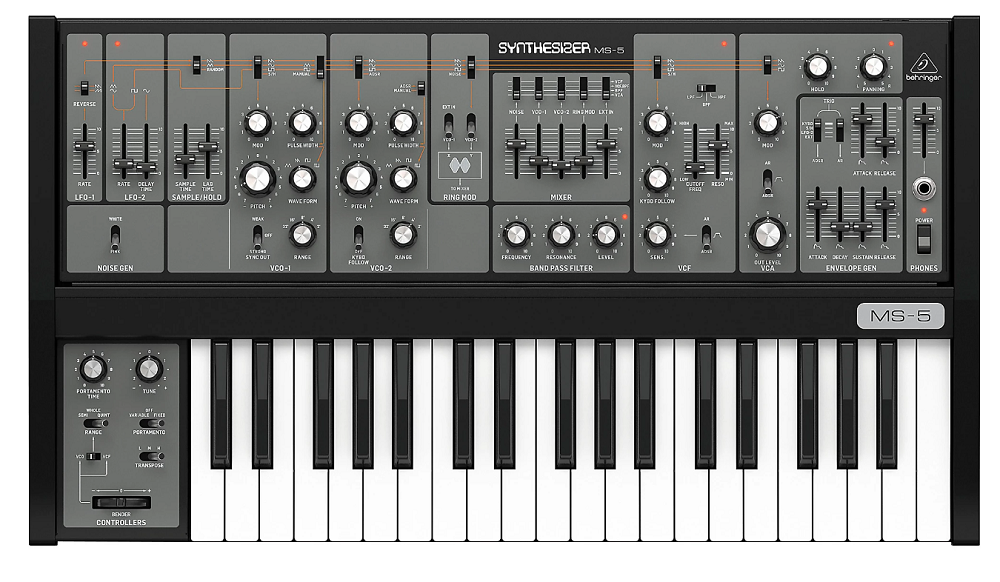
A compact desktop recreation of the Roland SH-5, one of Roland’s less famous but more interesting vintage monosynths from 1976. Behringer MS-5 brings the SH-5’s dual independent filter architecture and ring modulator into a module format that captures the vintage aesthetic of the original’s panel design in a smaller footprint.
The SH-5 had a distinctive visual character with its white panel graphics on a dark surface, and the MS-5 reproduces that aesthetic faithfully while fitting the instrument into a desktop-friendly format.
- Vintage Panel
The panel layout and graphic design follow the original SH-5’s visual language, with the specific knob positioning, section labeling, and graphic elements that identified the instrument as a 1970s Roland product. The visual recreation means the MS-5 carries the look of that era alongside the sound, creating a cohesive vintage experience from a modern reproduction.
- Dual Filters
Independent high-pass and low-pass filters operating as separate modules reproduce the SH-5’s specific frequency-sculpting capability. The dual independent filter architecture was unusual even in the 1970s and remains uncommon today, giving the MS-5 a tonal shaping flexibility that connects it to the original’s distinctive sound design capabilities.
- Ring Modulator
A built-in ring modulator provides the metallic, inharmonic tones that expanded the SH-5’s palette beyond standard subtractive synthesis. The ring mod was a feature that appeared on several vintage synths of the era and adds a specific sound design capability associated with the experimental electronic music of the 1970s.
8. Korg microKORG
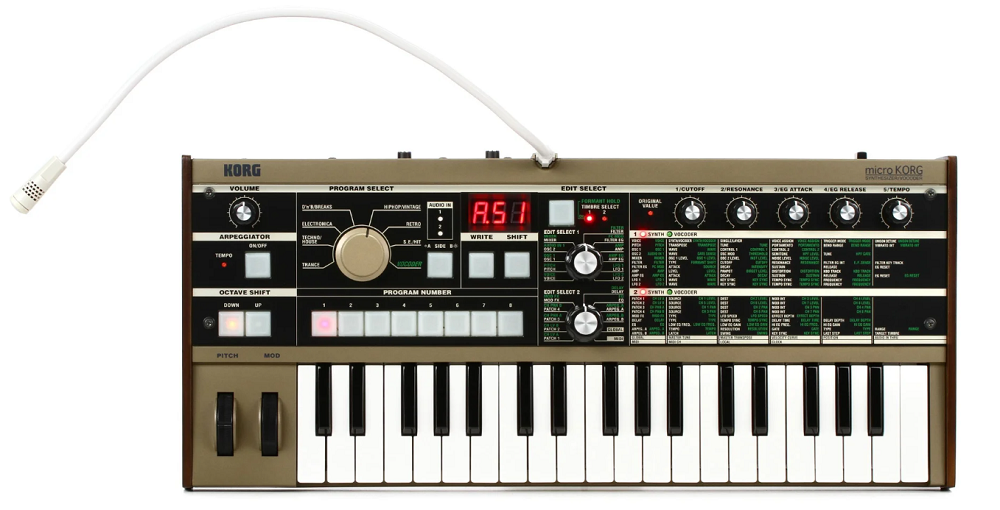
Over two decades in continuous production, and the microKORG has itself become a vintage instrument at this point. The original design debuted in 2002, and its compact form factor, retro-styled panel matrix, and analog-modeled engine have become so recognizable that the microKORG is a design icon in its own right. Korg microKORG gives you a virtual analog synth with a built-in vocoder in the compact format that launched a generation of small-form-factor synthesizers.
The microKORG’s longevity is its vintage credential. It’s been photographed on so many stages, in so many studios, and in so many bedrooms over the past twenty-plus years that it carries a visual and cultural weight that newer instruments haven’t accumulated yet.
- Iconic Form
The physical design with its compact chassis, angled panel, and distinctive knob layout has become one of the most recognized silhouettes in modern synthesizer history. The microKORG’s look has appeared in music videos, live streams, and studio photographs across every genre for over two decades.
Owning one connects you visually to a specific era of electronic music production that began in the early 2000s and continues today.
- Vocoder Heritage
The built-in vocoder with microphone carries forward a tradition that connects to vintage instruments like the Roland VP-330 and Korg VC-10. Vocoding has been part of electronic music since the 1970s, and having it integrated into a compact keyboard maintains that sonic lineage. The vocoder produces the robotic, harmonized vocal textures that have been a staple of electronic production for decades.
- Matrix Editing
The parameter matrix editing system where you select a parameter row and column to access deep settings using two knobs has become the microKORG’s signature interaction method. The matrix approach is a specific workflow that a generation of synth players learned on, and its particular combination of compactness and depth defined how many producers first experienced hardware synthesis.
- Preset Quality
A well-designed factory preset library covering classic synth sounds, pads, basses, leads, and vocoder patches provides a curated collection of sounds that references the broader vintage synth canon. The presets aren’t trying to emulate specific vintage instruments. They’re channeling the general character and types of sounds that hardware synths have been known for since the 1970s.
9. Behringer MonoPoly
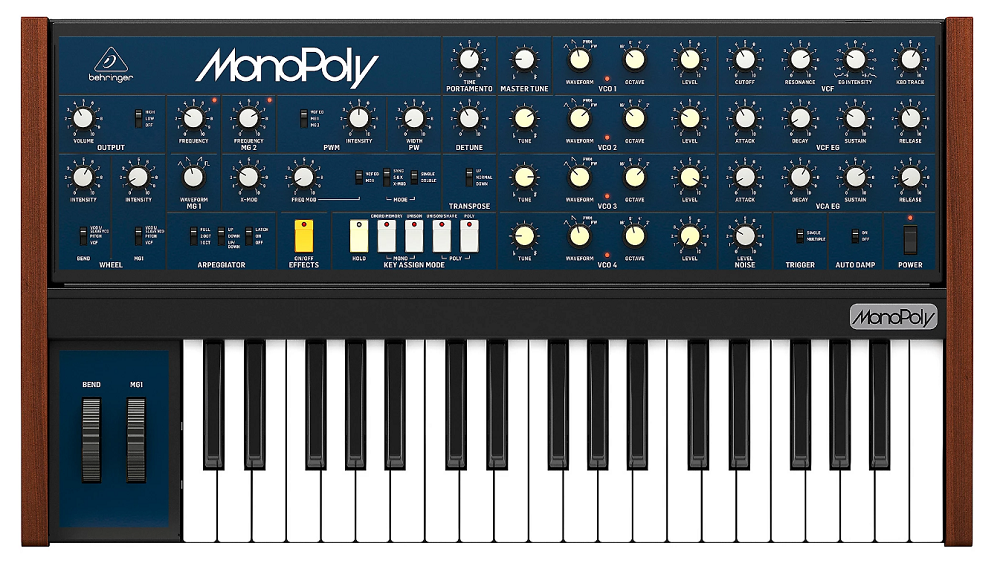
A recreation of the Korg Monopoly from 1981, faithfully reproducing the original’s four-oscillator design with switchable voice modes in a visual package that preserves the specific aesthetic of early 80s Korg instruments. Behringer MonoPoly maintains the original’s distinctive panel layout and color scheme while adding modern connectivity.
The Korg Monopoly had a specific visual identity with its dark panel, white and colored knob caps, and particular control organization that identified it as part of Korg’s early 1980s lineup alongside instruments like the Polysix and Mono/Poly.
- 1981 Aesthetic
The panel design, color scheme, and control layout faithfully reproduce the Korg Monopoly’s visual identity. The specific combination of dark background with white and colored accent elements, the knob spacing, and the section organization recreate the look of Korg’s early 80s instruments.
For vintage aesthetic purposes, the MonoPoly carries the visual character of a specific and recognizable era in Japanese synthesizer design.
- Mode Switching
Mono, unison, poly, and chord memory modes reproduce the original Monopoly’s unique ability to switch between fundamentally different voicing configurations. The mode variety was unusual for its era and gave the original its versatile reputation. You move from thick monophonic bass to four-voice polyphonic chords to memorized chord shapes, all with the same vintage voice character.
- Cross-Mod
Oscillator cross-modulation creates the complex, metallic overtones that expanded the original Monopoly’s palette beyond standard subtractive tones. The cross-mod was a feature that gave the original its reputation for aggressive, harmonically rich sounds that more polite polysynths of the era couldn’t produce.
- Sync Character
Oscillator sync reproduces the classic sync sweep sound that was a signature capability of the original instrument. The hard sync sound, where one oscillator’s pitch sweeps while locked to another’s cycle, is one of the most recognizable lead textures from the early 1980s and carries a specific vintage association.
- Arpeggiator
A built-in arpeggiator generates rhythmic patterns that take advantage of the four-voice architecture, creating sequences that reference the kind of arpeggiated content that was central to early 80s electronic music. The arp interacts with the vintage-voiced oscillators and filter to produce patterns that carry the specific tonal character of the era.
10. UDO Audio Super Gemini
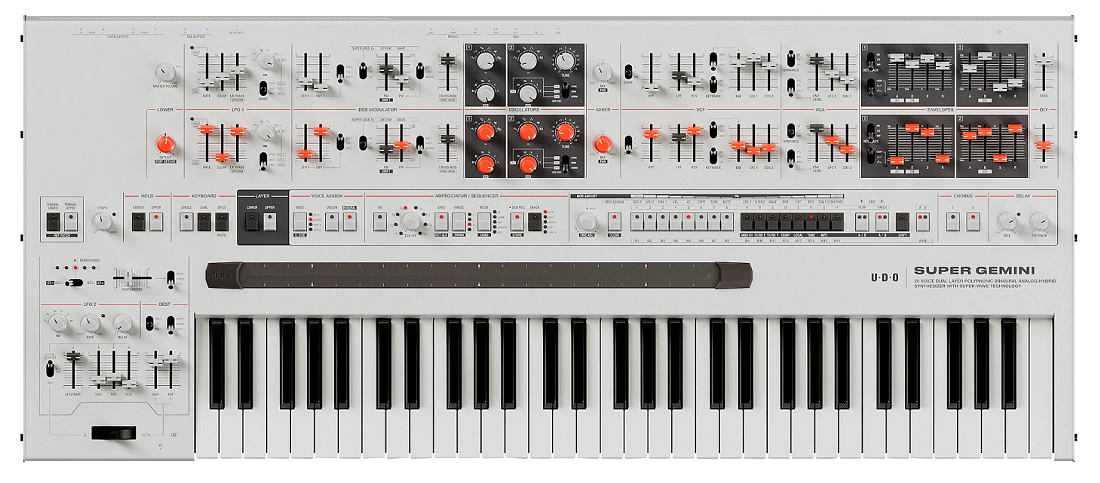
The white edition of UDO Audio’s flagship takes a deliberately futuristic-retro approach, looking like a synthesizer that a 1970s science fiction production designer might have imagined for a film set in 2050.
UDO Audio Super Gemini houses two complete hybrid synthesizers under one panel with 20 voices of polyphony, a ribbon controller, and a visual design that’s both vintage and otherworldly.
The Super Gemini’s aesthetic doesn’t reference any specific vintage instrument. Instead, it channels the broader visual language of vintage synthesis, the large panel surface, physical controls everywhere, analog-style layout, into something that feels timeless rather than dated.
- Dual Synths
Two complete synthesizer engines stacked on a single panel, each with its own full complement of controls, gives you a visual and functional density that references the large, complex analog instruments of the 1970s. The panel surface covered in knobs and controls has the visual presence of vintage modular systems where every parameter was physically accessible.
- Binaural Mode
A binaural stereo mode pairs voices into true stereo sets with independent modulation per ear, creating spatial imaging that vintage instruments never achieved. The binaural processing adds a dimensional quality to the Super Gemini’s pads and textures that connects to the immersive, headphone-oriented listening experiences that vintage electronic albums created through studio processing.
- Ribbon Controller
A ribbon strip controller provides smooth, continuous pitch and modulation performance in the tradition of the Yamaha CS-80 and other classic performance synthesizers. The ribbon creates the kind of fluid, expressive gestures that keyboardists used on landmark recordings in the 1970s and 80s.
- Organic Sound
The hybrid DDS oscillator architecture produces a tonal quality that bridges digital precision with analog warmth, creating sounds that feel organic and alive in the way vintage instruments did because of their component tolerances.
The oscillators aren’t trying to replicate any specific vintage synth. They produce a character that’s broadly vintage in its warmth without being limited to any single historical reference.
11. Behringer Poly D
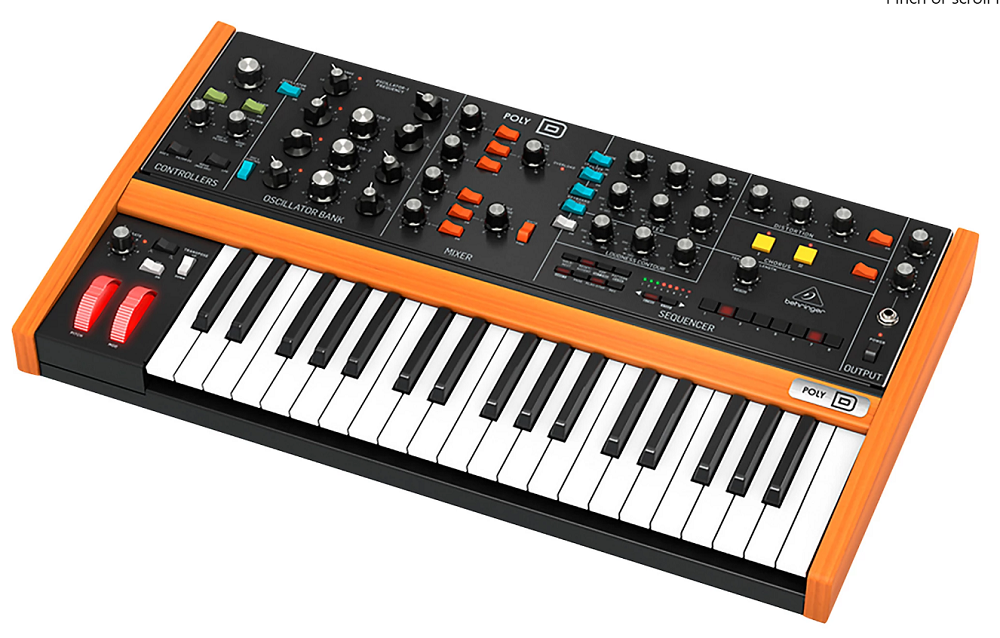
A recreation that combines the Minimoog’s legendary visual design with an expanded four-oscillator architecture that Moog never built. Behringer Poly D recreates the Minimoog’s tilted panel, left-hand controller section, and wood cabinet aesthetic while adding a fourth oscillator and paraphonic capability that extend the instrument beyond the original’s specification.
The Minimoog’s visual design is the most iconic in synthesizer history. The angled panel with its rows of knobs, the wood sides, and the pitch/mod wheels on the left side defined what a synthesizer looks like in the public imagination, and the Poly D preserves that visual identity.
- Minimoog Look
The tilted panel design, wood enclosure, and controller placement directly reference the Minimoog’s visual identity, creating an instrument that’s immediately recognizable as part of that design lineage. The specific panel angle, the proportions, and the physical layout carry the visual weight of one of the most photographed instruments in music history.
- Four Oscillators
Four analog VCOs through a ladder filter go beyond the Minimoog’s standard three-oscillator design, providing more harmonic content for stacked unison sounds. The additional oscillator adds thickness and complexity that the original circuit didn’t offer while maintaining the fundamental Moog tonal character.
- Ladder Filter
The 24dB/oct ladder filter reproduces the specific warm, musical resonance behavior that defined the Moog bass sound. The ladder filter is the most recognizable filter design in synthesis, and its particular way of shaping low frequencies has made it the standard by which all other bass synth filters are judged.
- Distortion
Built-in analog distortion adds harmonic saturation in the tradition of overdriving vintage equipment, where the natural clipping of analog circuits produced warmth and aggression that digital distortion handles differently. The distortion extends the tonal range from clean vintage warmth to the kind of driven, saturated character that producers achieved by pushing vintage mixing consoles and amplifiers.
- Keyboard Feel
The full-size keyboard with velocity sensitivity provides a playing surface scaled to the Minimoog’s proportions, maintaining the physical relationship between the player and the instrument that the original design established. The keyboard size and position feel correct for the tilted-panel format in a way that mini-key versions don’t quite achieve.
- Paraphonic Mode
Four-voice paraphonic capability lets you play chords through the shared filter, which is something the original Minimoog couldn’t do. The paraphonic expansion adds harmonic variety to the vintage Moog voice while maintaining the single-filter-path character that defines the Minimoog’s tonal signature.
12. Yamaha Reface DX
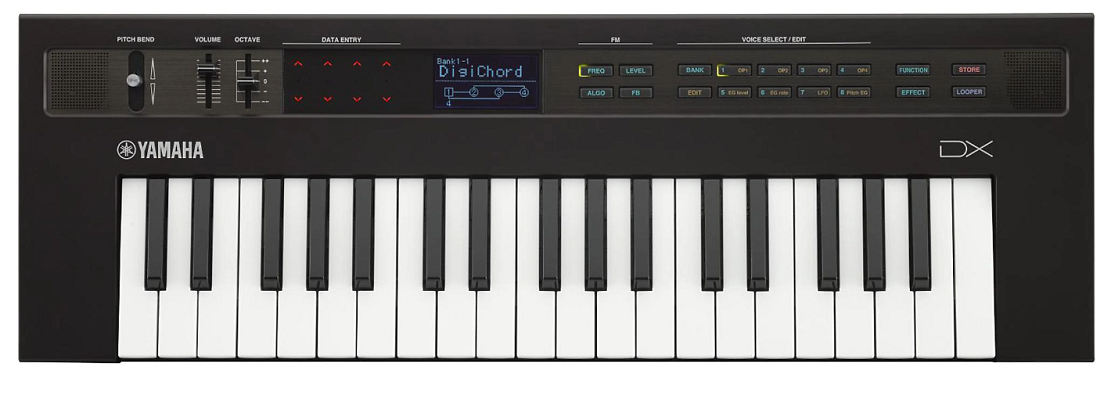
A pocket-sized recreation of the Yamaha DX7 experience, the synth that defined 1980s pop, funk, and R&B more than any other single instrument. Yamaha Reface DX gives you four-operator FM synthesis in a compact format with a mini keyboard, built-in speaker, and battery power, styled in a visual palette that references Yamaha’s 1980s design language.
The DX7’s specific sounds, the electric pianos, the metallic stabs, the glassy bells, are among the most recognizable synth textures in popular music, and the Reface DX provides a portable way to access that sonic territory.
- FM Synthesis
Four-operator FM synthesis with a touch-based interface for adjusting operator levels and feedback provides direct access to the synthesis method that defined 1980s keyboard sounds. The FM engine produces the crystalline electric pianos, percussive bass, and bell-like tones that appeared on hit records throughout the decade. The sound is unmistakably DX-era, carrying the specific character of digital FM that analog synthesis can’t replicate.
- DX7 Aesthetic
The visual design references Yamaha’s 1980s product palette with specific color choices and proportions that connect the Reface to the DX generation. The teal-accented design language places the Reface DX visually in the same family as the instruments that dominated the music technology landscape of the mid-1980s.
- Compact Heritage
The mini format with built-in speaker and battery power makes the Reface DX portable in a way that the original DX7 never was, while maintaining the specific sonic character that made the original essential. The compact size means you can access vintage FM tones anywhere, which is useful for producers who need that specific 80s character during writing sessions outside the studio.
13. Behringer Odyssey
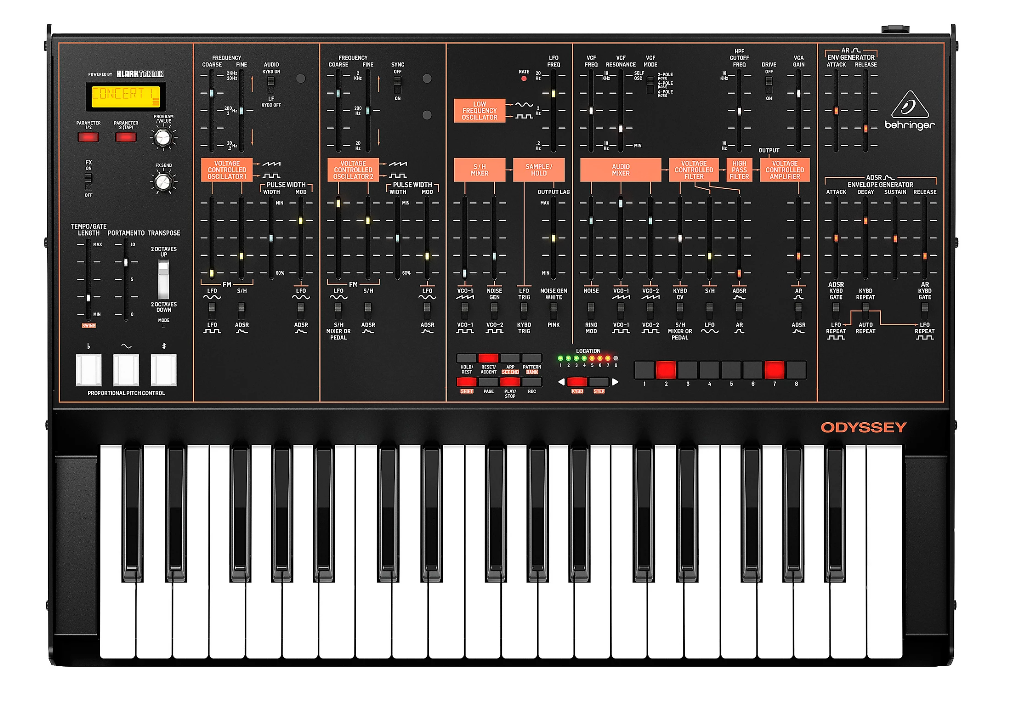
Recreating one of the most distinctive visual designs in synthesizer history, the ARP Odyssey with its dual-slider control interface and specific proportions. Behringer Odyssey reproduces both the sound and the look of the original, including the switchable filter revisions that corresponded to different production runs of the original instrument.
The ARP Odyssey has one of the most recognizable front panel designs in synthesis, with its dual-slider-per-parameter layout that no other manufacturer adopted. The visual identity is unique to the Odyssey and immediately identifies the instrument.
- Slider Interface
The dual-slider control layout reproduces the Odyssey’s specific interface design where parameters are adjusted with sliders rather than knobs. The slider interface gives the Odyssey a visual and tactile character that’s completely different from every other synth on this list, and it references a specific design philosophy from ARP that prioritized visual feedback (slider position tells you the parameter value at a glance).
- Three Filters
Switchable Mk I, Mk II, and Mk III filter circuits reproduce the different filter characters that appeared across the original Odyssey’s production history. Each revision sounds noticeably different, from the raw aggression of the Mk I to the smoother response of later versions. Having all three available is like owning three different vintage Odysseys, each from a different era of production.
- Production Colors
The Behringer Odyssey is available in color schemes that reference different production eras of the original ARP instrument. The specific color combinations (black/orange, white/gold) correspond to actual periods in the Odyssey’s manufacturing history, meaning the visual design carries real historical significance rather than arbitrary aesthetic choices.
- Sample & Hold
The sample-and-hold module generates the stepped random modulation that became synonymous with vintage science fiction sound design and experimental electronic music. The S&H sound, that characteristic random bleeping and bubbling, is one of the most recognizable vintage synth effects and connects the Odyssey to decades of electronic music history.
14. Behringer Vocoder VC340
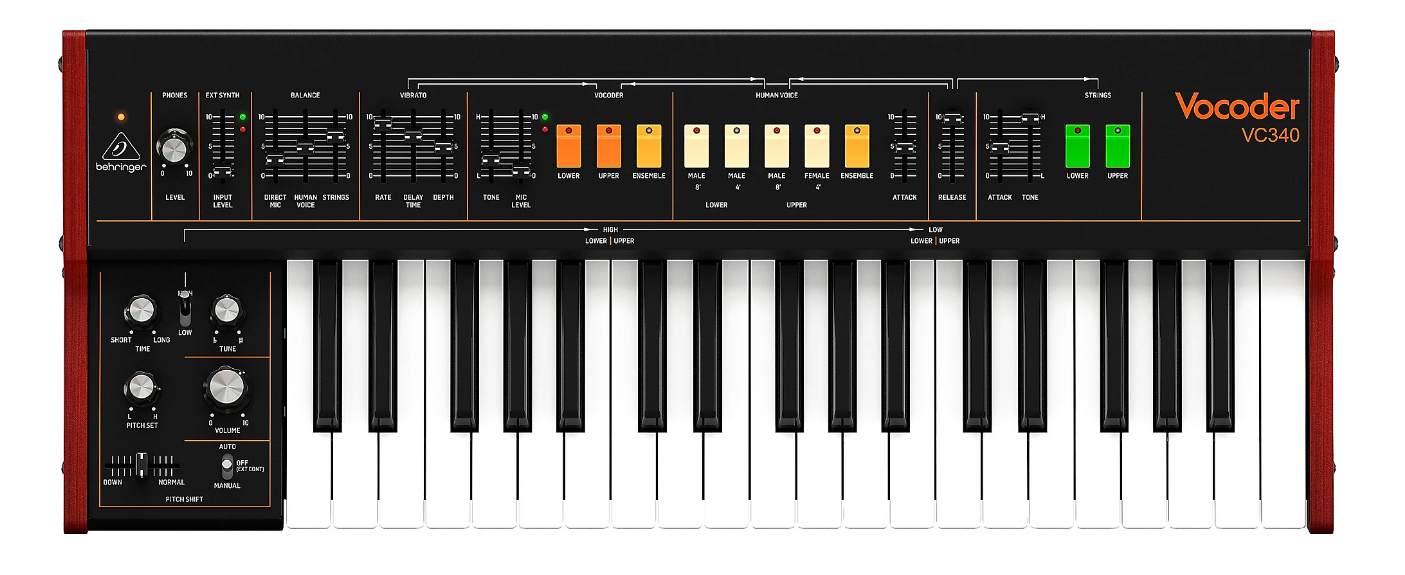
Closing this list with an instrument that recreates one of the most distinctive vintage keyboard instruments ever produced. The Behringer VC340 reproduces the Roland VP-330 Vocoder Plus from 1979, a unique instrument that combined a vocoder, string synthesizer, and choir synthesizer in a single keyboard. The visual design follows the original’s specific aesthetic with its dedicated section controls and vintage Roland styling.
The VP-330 occupied a unique niche in the late 1970s, and nothing else currently available replicates its specific combination of three sound sources in one instrument with this vintage visual character.
- VP-330 Design
The panel layout and visual design follow the original Roland VP-330’s specific aesthetic, with dedicated sections for the vocoder, strings, and choir arranged in the same visual organization as the 1979 original. The styling references Roland’s late 1970s product design language, with the specific proportions and graphic elements that identify it as belonging to that era.
- Triple Engine
Three simultaneous sound sources (vocoder, string machine, and choir synthesizer) reproduce the VP-330’s unique architecture where you blend between completely different types of synthesis in real time. The combination of a vocoder with analog string and choir sections creates textures that no standard polysynth replicates, producing sounds that are immediately associated with late 1970s progressive electronic music.
- String Machine
The dedicated string synthesizer produces the specific warm, ensemble-processed analog string tone that vintage string machines contributed to decades of recorded music. The sound isn’t orchestral realism. It’s the particular synthetic string character, warm, wide, and slightly artificial in a beautiful way, that you hear on records by Tangerine Dream, Jean-Michel Jarre, and Vangelis.
- Ensemble Effect
The built-in ensemble processing applies the specific widening and detuning that vintage string machines used to create their characteristic thick, immersive sound from simple oscillator sources. The ensemble effect is what transforms thin oscillator tones into the wide, lush textures that string machines are remembered for, and it’s an integral part of the VP-330’s vintage identity.
- Section Mixing
Independent level controls for all three sections let you blend the vocoder, strings, and choir in any combination, creating hybrid textures that reference the specific performance techniques that VP-330 players developed in the late 1970s and early 1980s. The section mixing turns the VC340 into a performance instrument where you bring different vintage sound sources in and out during a piece.
Get the Free Plugin Starter Kit
The genuinely useful free DAWs and plugins worth installing. No filler. Straight to your inbox.

Hello, I’m Viliam, I started this audio plugin focused blog to keep you updated on the latest trends, news and everything plugin related. I’ll put the most emphasis on the topics covering best VST, AU and AAX plugins. If you find some great plugin suggestions for us to include on our site, feel free to let me know, so I can take a look!