
Building a solid library of virtual instruments is one of the first things you need to do when setting up for music production, and choosing the right ones can save you from constantly searching for sounds that should already be at your fingertips.
A reliable piano, a good synth, a convincing bass guitar, and a usable acoustic guitar will cover the foundation of most arrangements. Beyond that, orchestral strings, brass, woodwinds, and organ round out the palette for producers who work across different genres.
I’ve put together thirteen instrument plugins that cover the major categories you’re likely to need: pianos (both acoustic and hybrid), synthesizers, organ, bass guitar, electric and acoustic guitars, strings, brass, woodwinds, and 808 sub bass.
Some of these are realistic emulations designed to replace or augment live recordings. Others are creative tools that transform familiar instrument sounds into something entirely new. The goal isn’t to list the most expensive option in every category, but to highlight plugins that genuinely deliver on their specific purpose.
What you won’t find here is a lot of overlap. Each plugin fills a distinct role, and together they form a well rounded toolkit that handles everything from straight ahead pop and rock arrangements to cinematic scoring and electronic production.
From the Pluginerds Store
Before you move on: we also sell studio gear directly at Pluginerds Shop. If you'd rather buy from a site that spends its time reviewing this exact category than roll the dice on an unfamiliar marketplace listing, it's worth a look.
Visit Pluginerds Shop1. Arturia Augmented GRAND PIANO (Hybrid Piano)
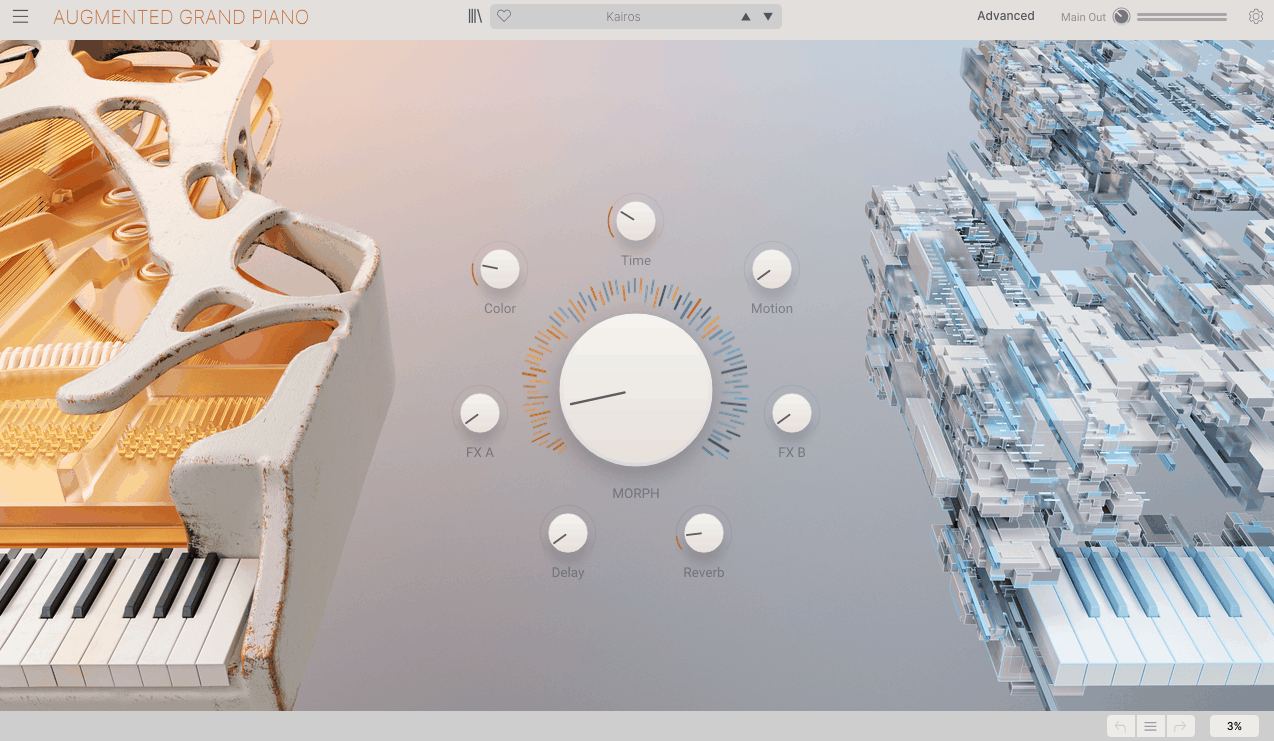
Most piano plugins try to be the most realistic grand piano emulation possible, and Arturia Augmented GRAND PIANO deliberately goes in a different direction. It starts with detailed recordings of a late 1980s Steinway Model D, but then layers those samples with processed recordings (piano played with bows, ping pong balls, paper between strings) and fuses everything with a four mode synthesis engine covering virtual analog, granular, wavetable, and harmonic synthesis.
The result is an instrument that can produce conventional piano sounds when you need them, but that’s not really the point. Augmented GRAND PIANO is at its best when you’re using the Morph control to blend between sample layers and synthesis, creating sounds that start as piano and evolve into something that couldn’t exist in the acoustic world. I reach for it primarily in cinematic, ambient, and electronic production where I want piano as a textural element rather than a traditional keyboard part.
- Morph Control
The Morph knob simultaneously adjusts up to eight assignable parameters, letting you make sweeping timbral changes between your sample and synthesis layers with a single movement. Moving the Morph from one extreme to the other can take you from a clean acoustic piano to a granular, deconstructed texture. This is the creative center of the plugin and where most of the sound design potential lives.
- Dual Layers
Two distinct layers, each with two sound sources, let you combine sampled piano recordings with synthesis in any configuration. You can pair a concert grand with a granular texture, or a prepared piano with a wavetable pad. The layering system is where you build the hybrid sounds that define the plugin’s character.
- Prepared Recordings
Beyond standard piano samples, the library includes recordings of unconventional playing techniques: bowing the strings, using mallets, placing objects between strings, and processing the results through tape machines and studio effects. These recordings are unique to Augmented GRAND PIANO and give you source material that you won’t find in conventional piano libraries.
- Synthesis Engine
The four synthesis modes (virtual analog, granular, wavetable, harmonic) can be used independently of the piano samples, making this a capable synth in its own right. The synthesis section shares DNA with Arturia Pigments, which means the sound quality and modulation capabilities are substantial.
Available from Arturia in VST, VST3, AU, AAX, and standalone formats. $99.
Get the Free Plugin Starter Kit
The genuinely useful free DAWs and plugins worth installing. No filler. Straight to your inbox.
2. Xfer Records Serum 2 (Multi Purpose Synth)

I’ve covered Xfer Records Serum 2 in detail across previous articles, but it belongs on any instrument plugin list because it remains the single most versatile synthesizer available for electronic music production. The dual wavetable oscillator architecture, the drag and drop modulation system, the built in wavetable editor, and the ten slot effects rack provide everything you need to build sounds from scratch across virtually any genre.
What makes Serum 2 relevant to an instrument focused list rather than just a synth list is how effectively it handles tasks that you’d normally assign to dedicated instruments. Need a plucked harp? A metallic bell? A thick detuned brass stab? A filtered vocal texture? Serum can produce all of these convincingly through wavetable selection and modulation. It won’t replace a dedicated orchestral library for realism, but for electronic and hybrid production where you want synthetic versions of acoustic timbres, the wavetable approach gives you remarkable flexibility.
- Wavetable Editor
The built in editor lets you create custom wavetables from scratch, import audio files, draw waveforms, or generate tables from mathematical functions and spectral processing. This editor is what transforms Serum from a preset player into a sound design tool capable of producing timbres that don’t exist anywhere else.
- Visual Modulation
Every modulation assignment appears as a colored ring directly on the parameter it controls, showing depth and range in real time. You can see exactly what every LFO, envelope, and macro is doing to every parameter at a glance, which makes complex patches understandable rather than mysterious.
- Advanced Unison
The unison engine goes beyond simple detuning with multiple voice distribution modes (stack, chord, custom warp) that produce dramatically different textures from the same oscillator. The unison modes are particularly effective for creating massive, wide synth leads and pads that fill a mix.
- Noise Oscillator
A dedicated noise oscillator with a large library of noise types provides the breath, texture, and transient content that wavetable oscillators alone can’t produce. Blending noise with the wavetable oscillators adds realism and organic character to synthetic patches.
- Effects Rack
The ten slot effects rack includes reverb, delay, chorus, flanger, phaser, distortion, compression, EQ, filter, and multiband processing. The effects are high quality enough to build complete, mix ready patches without leaving the synth, and slots can be reordered for different signal flows.
- Sub Oscillator
A dedicated sub oscillator provides clean low frequency content beneath the wavetable oscillators, which is essential for bass patches where you need a solid fundamental that the more complex wavetable harmonics sit on top of.
Available from Xfer Records in VST, VST3, AU, and AAX formats.
3. ujam STRIIINGS (Orchestral Strings)
Programming realistic orchestral strings from scratch is one of the most time consuming tasks in music production, requiring knowledge of articulations, bowing techniques, ensemble voicing, and detailed MIDI programming. ujam STRIIINGS skips most of that complexity by providing performance based string phrases and textures that you trigger and arrange rather than program note by note.
I should be clear that STRIIINGS is not a replacement for a deep orchestral library like Spitfire or East West for serious film scoring. What it is genuinely useful for is adding convincing string elements to pop, electronic, hip hop, and singer songwriter productions where you need strings but don’t have the time or expertise to program them from scratch. The phrase based approach means you’re getting musically appropriate performances rather than static sustained chords, which makes a significant difference in how realistic the result sounds.
- Performance Phrases
Rather than individual sustained notes, STRIIINGS provides pre performed phrase patterns that respond to your chord input. You trigger a pattern and play chords, and the plugin generates musically appropriate string arrangements that follow your harmony with realistic bowing and articulation.
- Style Selection
Multiple performance styles cover different musical contexts from gentle, intimate passages to dramatic, cinematic swells. Switching styles changes the articulation, rhythm, and intensity of the generated phrases to match the mood of your production.
- Ensemble Variation
Different ensemble sizes and section configurations (full orchestra, chamber, solo) provide timbral variety without requiring you to load separate libraries for each section. You can adjust the ensemble character to fit the scale of your production.
Available from ujam in VST, VST3, AU, and AAX formats.
4. Arturia Augmented Woodwinds (Hybrid Woodwinds)
Following the same philosophy as the Augmented GRAND PIANO, Arturia Augmented Woodwinds combines recorded woodwind samples (flute, clarinet, oboe, bassoon, and others) with the Augmented Series synthesis engine to create sounds that range from realistic woodwind tones to completely abstract, processed textures.
The creative potential of Augmented Woodwinds sits in the space between a traditional woodwind library and a synthesizer. You can use the recorded samples alone for a more conventional sound, engage the synthesis layers to add electronic texture and movement, or blend the two through the Morph control. For film composers and ambient producers who want woodwind timbres that evolve and transform in ways that acoustic instruments can’t, this plugin offers a unique palette that you won’t find in standard sample libraries.
- Woodwind Samples
The sample library includes detailed recordings of multiple woodwind instruments across various articulations: sustained notes, staccato, legato transitions, and more. The recordings serve as the realistic foundation that the synthesis layers build upon and transform.
- Morph System
The Morph control blends between sample and synthesis layers while simultaneously adjusting assignable parameters, creating smooth transitions from acoustic to synthetic. A single Morph movement can take a realistic clarinet tone and gradually dissolve it into a granular texture.
- Synthesis Layers
The four synthesis engines (virtual analog, granular, wavetable, harmonic) layer on top of or replace the woodwind samples, providing electronic texture, harmonic complexity, and evolving movement that acoustic woodwinds can’t produce on their own.
- Macro Controls
Three macro knobs provide quick, expressive control over multiple parameters simultaneously. The macros are pre assigned in factory presets to control the most musically relevant aspects of each sound, letting you shape the character in real time during performance or while recording.
Available from Arturia in VST, VST3, AU, AAX, and standalone formats.
5. ujam BRAAASS (Orchestral Brass)

Just as STRIIINGS handles orchestral strings through a performance based approach, ujam BRAAAASS applies the same philosophy to brass instruments. Rather than requiring you to program individual trumpet, trombone, and French horn parts with realistic articulations and timing, BRAAAASS provides intelligent brass phrases that respond to your chord input and generate musically appropriate brass arrangements automatically.
I use BRAAAASS in situations where a track needs a brass section but the production doesn’t justify the time investment of programming detailed brass parts from a full orchestral library. For pop, funk, soul, hip hop, and electronic productions where brass serves a supporting role, the phrase based approach gets you to a convincing result quickly. The sounds lean toward punchy, modern brass stabs and smooth jazz section lines rather than classical orchestral writing.
- Brass Phrases
The plugin generates brass section performances from your chord input, creating multi voice arrangements with realistic timing, dynamics, and articulation that would require extensive MIDI programming to achieve manually.
- Style Switching
Different performance styles change the character and intensity of the generated brass parts, from tight staccato stabs to flowing legato lines. Switching styles adapts the rhythmic pattern and articulation to match different musical contexts.
- Dynamic Response
The generated phrases respond to velocity and expression input, producing louder, more aggressive performances at higher velocities and softer, more restrained playing at lower levels. The dynamic response adds realism to the generated parts.
Available from ujam in VST, VST3, AU, and AAX formats.
6. Arturia B-3 V2 (Hammond Organ)

The Hammond B-3 organ is one of the most iconic keyboard instruments ever built, and Arturia B-3 V2 provides a detailed emulation that models the tonewheel generation, key click, percussion, chorus/vibrato scanner, and the rotary speaker cabinet that’s inseparable from the Hammond sound. It’s part of Arturia’s V Collection, and for organ sounds specifically, it’s one of the more convincing software versions available.
What I appreciate about the B-3 V2 compared to simpler organ plugins is the attention to the details that make a Hammond sound alive. The tonewheel leakage between drawbar settings, the key click on note attack, the chorus/vibrato scanner with its characteristic warble, and the rotary speaker simulation with its slow/fast switching behavior all contribute to an experience that responds to your playing rather than just producing static organ tones. If you play with expression, the B-3 V2 rewards that.
- Tonewheel Modeling
The 91 virtual tonewheels are modeled individually with the specific harmonic content, crosstalk, and leakage that characterized real Hammond organs. The leakage between tonewheels is particularly important because it’s part of what gives the Hammond its signature warmth and complexity, and you can control the leakage amount.
- Drawbar System
The nine drawbar harmonic mixing system reproduces the Hammond’s unique approach to additive synthesis, where each drawbar controls a specific harmonic. The drawbars respond in real time and provide the immediate, tactile sound shaping that defines the Hammond playing experience.
- Rotary Speaker
The Leslie rotary speaker simulation models the horn and drum rotation, cabinet resonance, and overdrive behavior of the real speaker system. The slow/fast switching with realistic acceleration and deceleration is essential for authentic Hammond performance, and the model captures the Doppler effect and amplitude modulation that the rotating speakers produce.
- Key Click
The modeled key click reproduces the electrical contact noise that Hammond organs produce when keys are pressed and released. This transient is a signature element of the Hammond sound, particularly in jazz and gospel playing, and the click intensity is adjustable from subtle to pronounced.
- Percussion Circuit
The single trigger percussion circuit models the Hammond’s distinctive percussion feature, which adds a brief, bright harmonic attack to the first note played in a legato passage. The percussion is what gives Hammond organ its characteristic “pop” on melodic lines, and the model captures the single trigger behavior where only the first note in a connected phrase triggers the percussion.
Available from Arturia in VST, VST3, AU, AAX, and standalone formats.
7. FAW SubLab XL (808 Sub Bass)

If your production relies on deep 808 sub bass for trap, hip hop, or bass music, FAW SubLab XL is a dedicated tool built specifically for that purpose. I covered it in the previous article on 808 plugins, but it deserves a spot on an instrument list because for many producers, the 808 kick/bass is just as central to their arrangements as a piano or guitar would be in other genres.
SubLab XL combines synthesis and sampling in a workflow focused entirely on the frequencies below 200 Hz. The X Sub engine generates controlled upper harmonics that make your sub bass audible on smaller speakers, which solves one of the most common problems in bass heavy production. For producers who use 808s as a melodic bass instrument rather than just a kick drum trigger, SubLab XL provides the pitch envelope control, saturation options, and keyboard tracking you need to make those bass lines work across different notes.
- X Sub Engine
The proprietary synthesis generates controlled harmonics from your sub bass signal, ensuring low end remains audible on laptop speakers and earbuds without adding harsh overtones. This addresses the fundamental challenge of sub bass production across different playback systems.
- Sampler Layer
A sample layer lets you load your own 808 kicks and blend them with the synthesized content. The sampler includes pitch and amplitude envelopes for shaping imported samples, letting you combine a sampled transient with synthesized sustain for complete 808 sounds.
- Bass Distortion
A multi stage distortion rack voiced specifically for sub frequencies adds grit and harmonic weight without destroying the fundamental. General purpose distortion plugins often fall apart on sub bass content, and SubLab XL’s saturation is designed to avoid that problem.
Available from Future Audio Workshop in VST, VST3, AU, and AAX formats.
8. Ample Sound Guitar SC (Strat Electric Guitar)
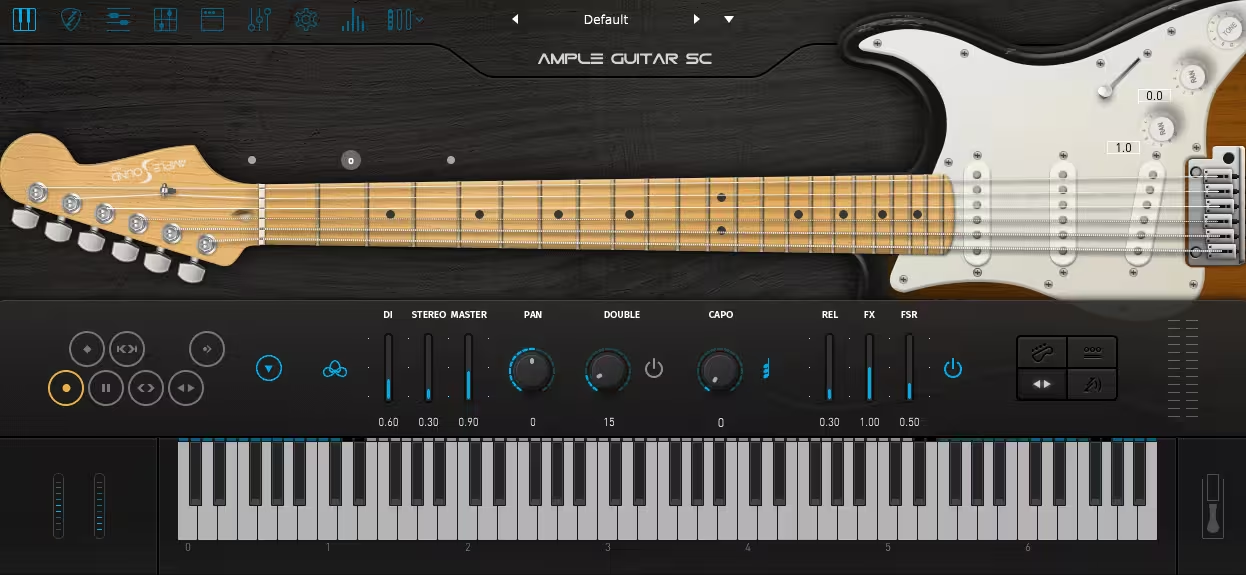
Convincing electric guitar from a plugin is notoriously difficult to achieve, and I want to set realistic expectations: no virtual guitar perfectly replicates what a real guitarist does. That said, Ample Sound Guitar SC (modeled after a Fender Stratocaster) gets closer than most by providing deeply sampled performances with detailed articulation switching, strumming patterns, and the kind of round robin sample variation that prevents the machine gun effect you hear from simpler guitar libraries.
What makes Ample Guitar SC practical for production is the combination of a realistic sample set with a built in strumming engine and amp simulation. You can program chord progressions and have the plugin generate realistic strumming patterns with adjustable feel and dynamics. You can also play single note lines with hammer ons, pull offs, slides, and bends triggered by velocity and key switching. For producers who need electric guitar parts but don’t play guitar or don’t have access to a guitarist, this is one of the more convincing options in the Stratocaster category.
- Deep Sampling
The multi velocity, round robin sampling captures the Stratocaster’s tone across the full fretboard with enough variation per note to avoid the repetitive, mechanical quality that plagues cheaper guitar libraries. Each fret position has multiple sample layers, and the round robin switching ensures that repeated notes don’t trigger identical samples.
- Strumming Engine
A realistic strumming pattern generator creates rhythmic chord performances from your MIDI input, with adjustable speed, dynamics, and feel. You program chords and the engine generates the strumming, which saves enormous amounts of time compared to programming individual string hits manually.
- Articulations
Key switches trigger hammer ons, pull offs, slides, bends, mutes, harmonics, and other playing techniques that are essential for realistic guitar parts. The articulation switching is the difference between a guitar plugin that sounds like a keyboard playing guitar samples and one that sounds like an actual guitar performance.
- Amp Simulation
A built in amp and cabinet simulation provides the complete electric guitar signal chain within the plugin. You can shape the tone from clean Fender style sounds to overdriven rock tones without needing external amp modeling software.
Available from Ample Sound in VST, VST3, AU, and AAX formats.
9. IK Multimedia MODO BASS 2 (Bass Guitar Collection)

I’ve written about IK Multimedia MODO BASS 2 in previous articles, but it’s worth including here because it approaches bass guitar in a fundamentally different way than any sampled instrument. Instead of playing back recordings, MODO BASS 2 uses physical modeling to simulate the actual string vibration, body resonance, pickup response, and amplifier behavior of real bass guitars in real time.
The physical modeling approach means that MODO BASS 2 responds to your playing input with a level of expressiveness that sample libraries can’t match. Changing your velocity, playing position, or articulation produces smooth, continuous tonal variation rather than switching between discrete sample layers. The plugin includes 22 physically modeled bass guitars covering everything from Fender Precision to Music Man StingRay to upright bass, each with distinct body, string, and pickup characteristics.
- Physical Modeling
The engine simulates real time interaction between string vibration, body resonance, and pickup response as a continuous physical system. Moving the virtual plucking position smoothly changes the harmonic content, and every note responds dynamically to velocity and expression input without sample switching artifacts.
- 22 Bass Models
Twenty two distinct bass guitars are modeled from the ground up, each capturing the specific body shape, scale length, string gauge, and pickup configuration of iconic instruments. The variety covers virtually every bass guitar style you’d encounter in professional production.
- Playing Techniques
Multiple articulations including fingerstyle, pick, slap, mute, and harmonics are accessible through velocity ranges and key switches. The transitions between techniques are smooth because the physical model generates them in real time rather than crossfading between different sample sets.
- Amp and FX
An integrated bass amp, cabinet, and pedalboard provides the complete signal chain within the plugin. The amp models respond authentically to the physically modeled bass signal, and the signal chain order can be customized for different tonal configurations.
- String Customization
You can change the string type (roundwound, flatwound, nylon), string age (fresh to worn), and gauge for each bass model, which affects the harmonic content and playing feel. Worn strings produce a duller, more thumpy tone. Fresh strings are brighter and more articulate. This level of customization isn’t possible with sampled instruments.
Available from IK Multimedia in VST, VST3, AU, and AAX formats.
10. Echo Sound Works Vinyl Guitar 2 (Free Vinyl Guitar)

Not every production needs pristine, perfectly recorded guitar. Sometimes you need something that sounds like it was played through a broken amp, recorded to a worn cassette, and found in a dusty thrift store bin. Echo Sound Works Vinyl Guitar 2 provides exactly that: guitar samples intentionally processed with lo fi character, vinyl noise, and analog degradation that suit lo fi hip hop, chillwave, vaporwave, and ambient production.
This is a free plugin that fills a specific creative niche rather than trying to compete with realistic guitar libraries. The sounds have a nostalgic, worn quality that would require significant processing to achieve from clean guitar samples. I keep Vinyl Guitar 2 loaded for sessions where I want textural guitar elements that carry immediate vintage character without any additional effects processing. For the price (free), it does exactly what it promises.
- Built In Character
The samples come pre processed with vintage degradation including surface noise, frequency roll off, and subtle wow and flutter. This built in character means you don’t need to layer additional lo fi effects to achieve the retro texture that certain genres call for.
- Playable Patches
Multiple preset patches provide different guitar textures from clean and mellow to heavily processed and atmospheric. Each patch is velocity responsive and immediately playable from a standard MIDI keyboard without any configuration.
- Ambient Textures
Several patches go beyond straight guitar sounds into pad like, atmospheric territory that uses guitar as the source material. These ambient patches work well as background layers that add organic warmth to electronic productions.
- Free Download
Completely free from Echo Sound Works with a simple email signup. The download includes the instrument and all associated samples, and it loads quickly without demanding significant system resources.
Available in VST, VST3, AU, and AAX formats. Free.
11. Ample Sound Guitar M (Acoustic Guitar)
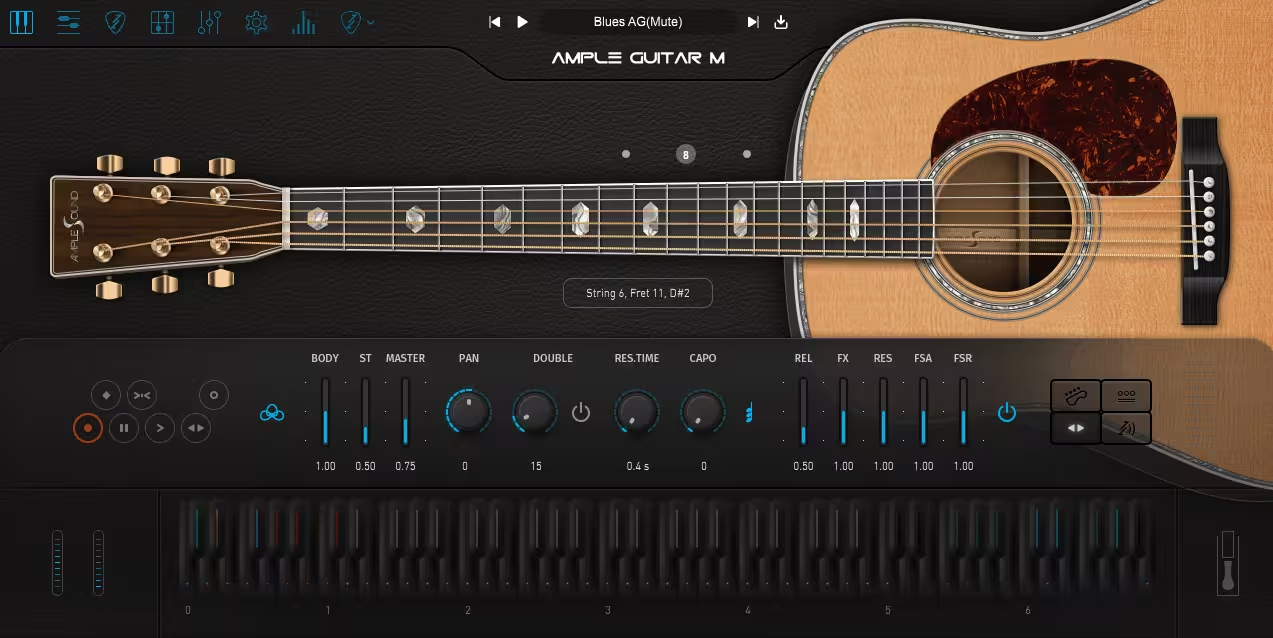
Acoustic guitar is one of the most commonly needed instruments in production, and Ample Sound Guitar M (modeled after a Martin D-41) provides one of the more detailed and playable acoustic guitar plugins available. Like the Guitar SC for electric, the strength here is in the deep sampling with extensive articulation support and a strumming engine that generates realistic rhythmic performances from chord input.
What I find sets Ample Guitar M apart from simpler acoustic guitar plugins is the body resonance simulation and the number of articulations available. You get sustain, palm mute, natural harmonics, hammer ons, pull offs, slides, and fingerpicking patterns that respond to velocity and key switching. The Martin D-41 character, with its rich, balanced tone and strong mid range projection, comes through in the recordings, and the plugin does a respectable job of capturing the warmth and complexity of an actual dreadnought acoustic.
- Martin Tone
The sampling captures the specific tonal characteristics of a Martin D-41 dreadnought, including the rich low end, clear midrange projection, and sparkling highs that define the Martin sound. The recordings were made with high quality microphones at multiple positions, and you can blend the microphone perspectives to suit your mix.
- Strummer Module
A dedicated strumming engine generates realistic acoustic guitar strumming patterns from chord MIDI input. The strumming speed, dynamics, and up/down pattern are adjustable, and the engine produces convincing rhythmic performances that avoid the mechanical quality of manually programming individual string hits.
- Fingerpicking
A fingerpicking mode generates multi string picking patterns that respond to your chord voicings. The fingerpicking engine produces the independent string timing and dynamic variation that characterizes real fingerstyle guitar playing, which is extremely difficult to program convincingly by hand.
- Tab Player
An integrated tablature player lets you import guitar tablature and have the plugin perform the part with appropriate articulations and string assignments. This is useful for producers who can read or find guitar tab but don’t play guitar themselves.
- Body Resonance
A body resonance simulation adds the sympathetic vibration and acoustic coupling between strings and body that gives an acoustic guitar its fullness and sustain. The resonance contributes the sense of a physical instrument in a real space that dry samples alone don’t convey.
- Articulation System
Comprehensive key switching and velocity based articulations cover sustain, mute, harmonics, hammer ons, pull offs, slides, and legato transitions. The articulation coverage is what allows you to create parts that sound like actual guitar performances rather than keyboard triggered samples.
Available from Ample Sound in VST, VST3, AU, and AAX formats.
12. Rhodes V8 (Rhodes Electric Piano)
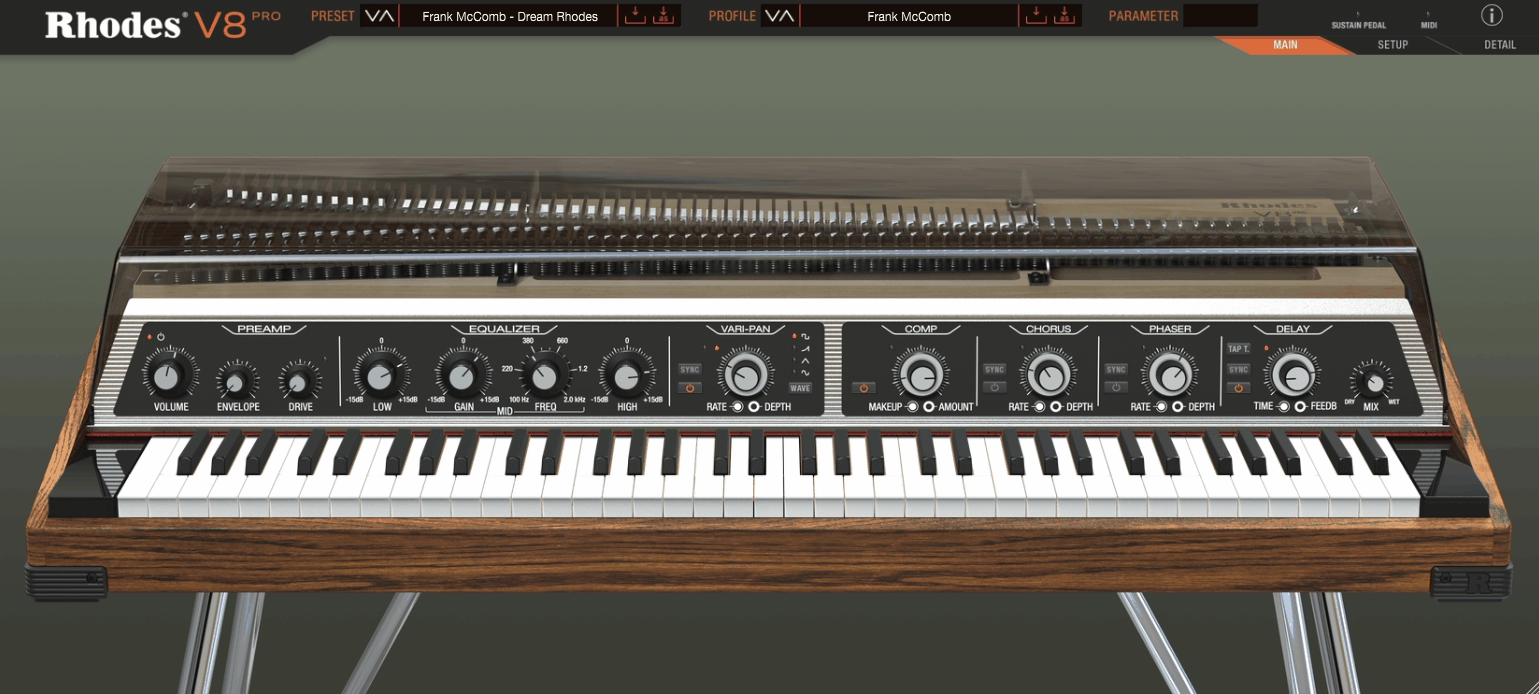
The Rhodes electric piano has a warm, bell like tone that’s been central to jazz, soul, R&B, neo soul, and lo fi production for decades. Rhodes V8 is the official plugin from the Rhodes brand itself, providing an emulation backed by the company that originally designed and manufactured the instrument. The modeling covers the tine and tonebar generation, pickup response, and amplifier coloration of multiple Rhodes models across different eras.
What matters to me about Rhodes V8 compared to generic electric piano plugins is the dynamic response. A real Rhodes sounds dramatically different depending on how hard you play it. Soft playing produces a warm, mellow tone. Harder playing brings out the bark and harmonic overtones that give the Rhodes its character. Rhodes V8 captures this velocity dependent behavior, which means your performance dynamics actually translate into tonal variation rather than just volume changes.
- Multiple Models
Several Rhodes piano models from different eras are included, each with its own tonal character based on the specific tine material, hammer felt condition, and pickup alignment of that particular generation. The tonal differences between models are subtle but meaningful for players who know the Rhodes sound well.
- Dynamic Response
The modeling captures how the Rhodes tone changes dramatically with velocity, from warm and mellow at soft dynamics to bright and barky when played hard. This velocity dependent timbral shift is a defining characteristic of the real instrument and is essential for expressive Rhodes playing.
- Effects Section
A built in effects chain includes the classic effects associated with Rhodes performance: tremolo, chorus, phaser, and overdrive. The effects are modeled after the specific units that were commonly paired with Rhodes pianos, and they respond authentically to the modeled instrument signal.
Available from Rhodes in VST, VST3, AU, and AAX formats.
13. Arturia Piano V3 (Acoustic Piano Collection)

Where Augmented GRAND PIANO provides hybrid, experimental piano sounds, Arturia Piano V3 focuses on delivering realistic acoustic piano emulations of twelve iconic piano models using physical modeling rather than sample playback. The collection covers concert grands, upright pianos, and historical instruments from manufacturers including Steinway, Yamaha, and others, each modeled with attention to the hammers, strings, soundboard resonance, and pedal behavior that define each instrument’s character.
The physical modeling approach in Piano V3 has both advantages and limitations compared to sample based pianos. On the positive side, the models are lightweight (the entire plugin is small compared to multi gigabyte sample libraries), they respond continuously to velocity and expression without the discrete layer switching that sampled pianos exhibit, and the resonance behavior (sympathetic string vibration, sustain pedal interaction) is generated in real time rather than approximated with reverb. On the other hand, the very top tier sample based pianos still edge ahead in raw acoustic realism for some players. For most production contexts, Piano V3 sounds convincing and plays well.
- Twelve Models
The collection includes twelve physically modeled pianos spanning concert grands (Steinway D, Yamaha C7), upright pianos, and historical instruments. Each model has distinct tonal characteristics, hammer voicing, and resonance behavior that reflect the original instrument’s design and era.
- Physical Modeling
Rather than playing back recorded samples, the engine generates sound through real time simulation of hammer impact, string vibration, soundboard resonance, and acoustic radiation. This means the piano responds continuously to your playing dynamics rather than switching between pre recorded velocity layers.
- Room Simulation
A configurable room environment simulates how the piano sounds in different acoustic spaces, from intimate practice rooms to concert halls. The room simulation interacts with the piano model’s radiation pattern, so different piano models respond differently to the same room setting.
From the Pluginerds Store
One more thing before you finish reading: we also stock studio hardware and accessories directly through Pluginerds Shop. Microphones, interfaces, controllers, cables, and the small stuff that never comes included with anything.
Visit Pluginerds Shop- Lid Position
An adjustable piano lid affects the brightness and projection of the sound, just as opening or closing the lid on a real grand piano changes how the sound radiates into the room. This is a detail that contributes to the realism of the playing experience.
Available from Arturia in VST, VST3, AU, AAX, and standalone formats.
Get the Free Plugin Starter Kit
The genuinely useful free DAWs and plugins worth installing. No filler. Straight to your inbox.

Hello, I’m Viliam, I started this audio plugin focused blog to keep you updated on the latest trends, news and everything plugin related. I’ll put the most emphasis on the topics covering best VST, AU and AAX plugins. If you find some great plugin suggestions for us to include on our site, feel free to let me know, so I can take a look!