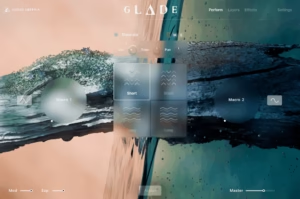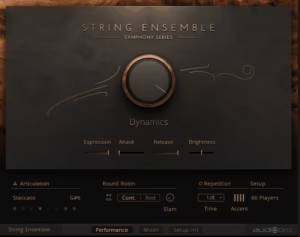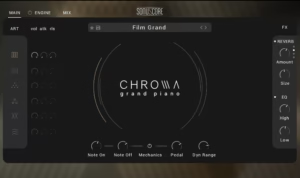
Let’s talk about some of the best Kontakt libraries for hip-hop and trap production.
What strikes me most is how these tools have evolved beyond basic sample collections. Instead of handing you raw sounds that need hours of shaping, these Kontakt libraries deliver production-ready textures with character, movement, and emotional weight already built in.
Whether you’re crafting melodic trap hooks, laying down boom-bap breaks, or building atmospheric soundscapes, these instruments understand what modern hip-hop and trap producers actually need – 808s with harmonic richness that translate across systems, drums with Noah Shebib’s signature underwater vibe, keys that blend rather than fight for space, and pads that evolve on their own.
For bedroom producers working in compact setups, these libraries will genuinely level up your beats without requiring modular synthesis knowledge or expensive outboard gear. Let’s break down which libraries excel at what.
| Plugin Name | Best For | Engine Type | Key Strength | My Verdict | Pros | Cons |
|---|---|---|---|---|---|---|
| 1. Native Instruments Melted Vibes | Moody melodic hooks | Dual-Layer Synth | Melt knob for real-time instability | Expressive Melodic Textures | Emotionally rich presets, built-in step sequencer, CPU efficient layering | Sounds are wet by default, less suited for upfront leads |
| 2. 40’s Very Own Drums | Characterful drum kits | Sample-Based Drum Engine | Pre-mixed kits with 40’s signature sound | Production-Ready Drums | 206 mixed sounds, built-in MIDI grooves, signature macro for cohesion | Less flexibility for ultra-bright or clinical drum sounds |
| 3. George Duke Soul Treasures | Expressive keys for soulful hip-hop | Velocity-Layered Sampler | Round-robin and dynamic response | Rich Analog Character | Curated vintage instruments, authentic mechanical quirks, expressive MIDI playback | Not ideal for bright, upfront modern synth leads |
| 4. Native Instruments Empire Breaks | Organic breakbeats | Loop-Based Sampler | Sliceable loops with groove control | Humanized Breakbeat Library | Dusty, swing-based loops, sliceable for variation, built-in processing chain | Not suited for ultra-quantized trap drums |
| 5. 40’s Very Own Keys | Warm, atmospheric keys | Processed Kontakt Patches | Velocity-sensitive tonal depth | Ambient, Low-Mid Focused Keys | Pre-shaped sounds, expressive dynamics, low CPU | Designed for blend and mood, not cutting leads |
| 6. Native Instruments Cloud Supply | Pads and textural layers | Multi-Layered Synth | Evolving modulation with internal motion | Atmospheric Texture Engine | Dynamic multi-layered presets, macro controls, spatial depth | Not ideal for precise, static pad sounds |
| 7. Native Instruments Lo-Fi Glow | Lo-fi textures and pads | Modulated Synth Patches | Internal motion and tonal imperfection | Character-Driven Lo-Fi Sounds | Organic drift, warm harmonic color, movement macros | Limited high-end clarity, textures can feel too soft for upfront leads |
| 8. Native Instruments Stacks | Layered melodic atmospheres | Multi-Layer Synth Engine | Interactive multi-element layering | Expressive Layered Melodies | Velocity-responsive, internal modulation, harmonic integration | Not designed for minimal or ultra-clean leads |
| 9. Output Substance | Dynamic basslines | Layered Bass Synth | Harmonic layering and modulated low end | Translation-Friendly Bass Engine | Harmonic richness, multi-dimensional layers, velocity-sensitive modulation | Not suitable for pure sine or ultra-clean sub bass |
1. Native Instruments Melted Vibes – Moody melodic hooks

What caught my attention about Melted Vibes right away is how it completely skips the “clean slate” approach most melodic libraries use. Instead of handing you neutral sounds that need shaping, every preset already feels processed, unstable, and emotionally loaded before you even touch a knob.
I think this makes it incredibly useful for modern hip-hop and trap where melodies carry weight and mood rather than technical clarity. The sounds drift, wobble, and breathe on their own, which means you’re not spending hours programming modulation just to make a melody feel alive.
The library uses a dual-layer structure where two independent sound sources run simultaneously, creating thickness and width without stacking multiple instances. I really like this because it saves CPU and keeps workflow moving when you’re sketching ideas.
The Melt knob is the heart of the instrument – it controls pitch variance, harmonic movement, and tonal instability in real time, letting you push melodies from restrained to dream-like just by automating one parameter.
Most presets lean toward moody, hazy, and slightly degraded textures with softened transients that blend into dense beats rather than cutting through sharply. This makes Melted Vibes perfect for supporting vocals or sitting behind 808s without fighting for space.
The built-in step sequencer adds rhythmic or melodic motion without external MIDI tools, which is great for making sustained sounds breathe over time. I would say the internal effects chain – reverb, delay, chorus, saturation – is integrated deeply into the sound design, and you can reorder effects to dramatically change how a preset behaves.
Many sounds arrive fairly wet by default, so I usually dial back the effects when the melody needs to sit closer to the front of the mix.
- Dual-Layer Architecture with Independent Control
Each preset combines two sound sources with different tones, modulation behaviors, or stereo placement. You can adjust balance, tuning, and filtering independently to tame or exaggerate characteristics depending on how busy your arrangement is. This naturally produces thickness without requiring additional instances.
- Melt Control for Real-Time Instability
The Melt knob alters internal modulation, pitch variance, and harmonic movement continuously. At lower settings, sounds stay controlled with restrained movement. Push it higher and melodies drift noticeably with warble, detuning, and tonal smear that adds emotion to sustained notes and slower phrases.
- Built-In Step Sequencer for Organic Movement
The sequencer introduces rhythmic or melodic motion without external MIDI programming. It works best when used subtly to make sustained or pad-like sounds breathe over time, keeping loops from feeling static or repetitive.
- Reorderable Internal Effects Chain
- Opinionated Preset Design for Immediate Use
Presets arrive with effects engaged, modulation moving, and tonal shaping in place. They’re musical ideas shaped to feel finished enough to use immediately rather than blank synthesis templates.
The library offers variations on altered keys, bent synths, drifting plucks, and soft leads that feel processed and worn in.
- Melodic Focus for Hip-Hop and Trap Context
Melted Vibes functions best as melodic color rather than foundation. It excels at leads, hooks, and secondary melodic lines that add emotion and texture to beats.
Because sounds already contain movement and space, it pairs well with clean drum programming and solid low-end elements, providing contrast rather than competition.
2. 40’s Very Own Drums – Production-Ready Drums
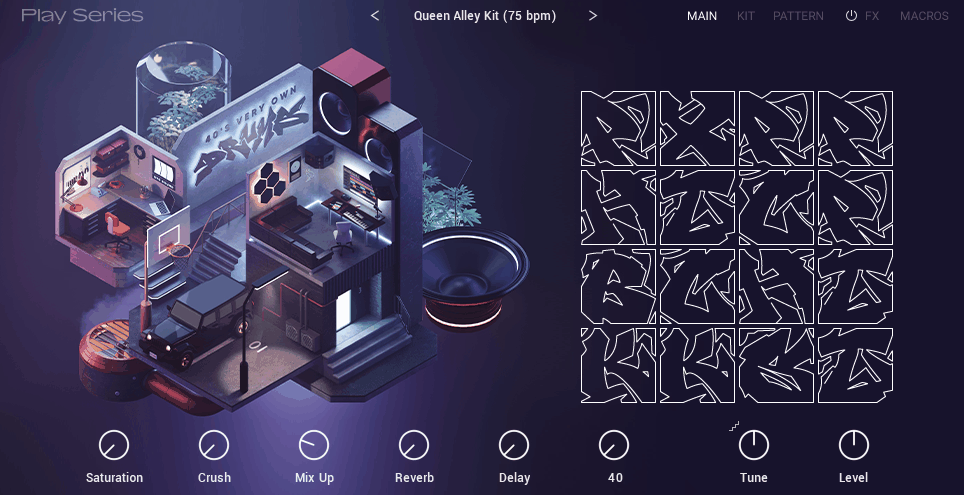
40’s Very Own Drums is a pure hip hop Kontakt library that flips the typical drum library concept on its head by giving you fully mixed, character-rich drum sounds instead of raw one-shots that need hours of processing.
This collaboration between Native Instruments and Noah “40” Shebib brings you 15 kits with 206 individual sounds that already carry that signature “underwater” aesthetic – subdued highs, ambient low frequencies, and weighted midranges that defined Drake’s sound for over a decade.
Ssounds were recorded through high-quality gear in 40’s SOTA studio and then shaped with filtering, compression, and saturation before landing in the instrument, which means you’re working with production-ready drums that sit in modern beats immediately. Each kit comes with 16 built-in MIDI groove patterns that you can drag directly into your DAW, tweak, and repurpose completely.
I guess this is perfect for bedroom producers who struggle with programming convincing rhythms from scratch – instead of drawing MIDI by hand or browsing random loops online, you load a kit, audition grooves, and refine patterns until they fit your track.
The “40” macro is the centerpiece control that bundles low-pass filtering, subtle sample rate reduction, compression, and saturation into a single dial, letting you instantly add that moody, cohesive feel without chaining together multiple plugins.
The interface splits into five pages – Main, Kit, FX, Pattern, and Macros – with six macro controls on the Main page for immediate sonic tweaks. I would recommend using the Kit Editor to swap individual samples and adjust pitch or velocity response when a kick or snare isn’t hitting right.
The Effects Editor lets you build custom chains with Kontakt’s onboard processing, and you can reorder effects to experiment with different textures and space.
- 15 Kits with 206 Pre-Mixed Sounds
Each kit contains 16 one-shot samples arranged as classic beat components – kicks, snares, hats, percussion. The sounds are fully mixed elements with dynamic response and tonal shaping already applied, captured through professional gear and processed with 40’s studio techniques.
- 16 MIDI Groove Patterns Per Kit
Every kit includes 16 built-in groove templates stored as MIDI data. You can drag them directly into your DAW, edit patterns, re-assign articulations, or repurpose them completely. This gives you instant rhythmic ideas without being locked into internal playback.
- “40” Macro for Signature Sound
This macro bundles low-pass filtering, sample rate reduction, compression, and saturation into one control. It quickly transforms bright kicks into deeper, darker elements that glue with ambient melodic content, making drums feel more cohesive without adding multiple external plugins.
- Five-Page Interface with Macro Control
The Main page shows 16 trigger pads with 6 reassignable macros for quick adjustments. Kit Editor handles sample swapping and behavior tweaking. Effects Editor builds custom chains. Pattern page browses grooves. Macro page centralizes Saturation, Crush, Reverb, Delay, Tune, Level, and Mix Up controls.
- Production-Ready Aesthetic
Sounds carry 40’s sonic imprint with subdued high-end and ambient low frequencies. They work immediately in trap, hip-hop, and R&B contexts where drums need to feel moody, spacious, and intrinsically mixed rather than clinical or ultra-bright.
3. George Duke Soul Treasures – Expressive keys for soulful hip-hop

The thing that separates Soul Treasures library from every other keys library I’ve used is that you’re not getting generic “Rhodes” or “Wurlitzer” presets – you’re getting specific instruments from George Duke’s personal studio collection, each with documented backstories and distinct sonic signatures.
I think this philosophical difference matters because the sounds are richly textured with mechanical noises, key action artifacts, subtle detuning, and unique harmonic footprints from vintage circuits that most libraries clean up or remove. These characteristics aren’t imperfections – they’re the essence of what makes these keyboards feel alive and musical rather than sterile.
What I really appreciate is how the library handles multiple velocity layers and round-robin variation to capture the mechanical and timbral richness of the original instruments. When you play softly, you get warmer, darker tones. Push harder and you bring out more grit, chorus, and mechanical texture.
This responsiveness invites expressive MIDI performance in ways most preset libraries don’t – even if you’re programming MIDI manually, the layered dynamic structure ensures simple patterns don’t sound flat.
The integrated effects and articulation controls within Kontakt let you shape tone, warmth, filter response, and drive without leaving the plugin, which keeps workflow moving when you’re building soulful hip-hop or lo-fi beats.
I must say the instruments excel in contexts where harmonic richness and analog character matter. A warm electric piano can add emotional depth under a rap verse, a clavinet hit gives rhythmic bounce without feeling too sharp, and vintage synth tones pad hooks with color and texture.
The sounds blend into the harmonic fabric of your track rather than dominating with brightness or clinical precision, which is exactly what I need when layering keys with punchy drums and heavy bass.
- Curated Collection from George Duke’s Personal Studio
You’re working with specific vintage gear including electric pianos, clavinets, vintage synths, and rare analog instruments that Duke himself favored. Each instrument has documented history and distinct tonal shades you won’t find in typical stock libraries.
The sampling captures mechanical and electrical quirks like key release noises, slight pitch wander, and analog filter coloration.
- Multiple Velocity Layers with Round-Robin Variation
Notes were sampled with detailed velocity response and round-robin alternation to capture mechanical and timbral richness. Soft playing yields warmer, darker tones while louder velocity brings out grit and texture.
Repeated notes don’t feel static or machine-like, making the instruments respond like real gear.
- Integrated Effects and Articulation Controls
Tone and warmth controls are tailored to each instrument’s character. Filter and drive modules emulate analog grit or looseness. Spatial elements include tasteful reverb and vintage-style modulation. Velocity-driven controls adjust timbre dynamically based on playing intensity, letting you shape attack punchiness while keeping body warmth.
- Expressive Dynamic Response for Musical Performance
The library rewards thoughtful MIDI input by responding naturally to velocity curves, timing variations, and expression control. You can automate dynamics or subtle filter changes over time to make parts feel alive rather than programmed.
This makes Soul Treasures ideal for producers using MIDI controllers or who take time with expressive programming.
- Optimized for Soulful Hip-Hop and R&B Production
The sounds work immediately in lo-fi, neo-soul, jazz-influenced beats, and emotionally rich hip-hop where keys need to weave into the mix with feeling. The intentional warmth and analog character help keyboard parts sit comfortably alongside punchy drums and heavy bass while carrying melodic weight without dominating.
- Kontakt Player Compatible
Runs in both full Kontakt and the free Kontakt Player, making it accessible without purchasing the full NI Komplete bundle. Full MIDI routing, velocity editing, and automation support work seamlessly in your DAW. Because samples are detailed, less external processing is needed – light compression and tasteful EQ are often enough to place instruments in your mix.
4. Native Instruments Empire Breaks – Organic breakbeats

When it comes to Empire Breaks, it doesn’t hand you individual kick and snare samples expecting you to build beats from scratch – instead, it gives you composite break-oriented loops and rhythmic fragments with groove and swing already baked in.
I think the core difference here is that you’re working with break segments meant to feel organic and variable rather than perfectly quantized patterns. The drums sound dusty, gritty, tape-like, and groove-oriented with subtle saturation, mild tape coloration, and dynamics that feel played rather than mechanically precise.
The sounds have inherent harmonic color because they’re trying to emulate the production vibe of head-nod beats and classic East Coast hip-hop, not present you with ultra-polished one-shots that sit perfectly flat.
Underlying structure is made up of segments and slices that can be retriggered, re-ordered, pitched, and transposed within the Play interface.
You can create custom rhythmic variations without reaching for external sample slicing or chopping tools, which feels similar to how producers originally flipped breaks with samplers like the SP-1200.
The groove and feel controls let you shape timing nudges, swing, and playback behavior so a break can land hard or lazy, tight or laid-back depending on what your track needs. For example, you might want the snare to slightly delay behind the kick, and Empire Breaks lets you adjust subtle timing so the loop feels more human.
The built-in processing signal chain includes saturation, filtering, transient shaping, and dynamic behavior that belong to the sound itself, giving you saturation that adds weight without excessive distortion and frequency response that feels warm and mid-focused.
I don’t think this is a library for ultra-tight modern trap where you need clicky kicks and razor-sharp snares – it’s designed for boom-bap, lofi, jazzy hip-hop, and sample-flip beats where the drums themselves should feel like they came from records.
- Break-Oriented Loops with Musical Groove
The core content consists of looped break material with groove and swing baked in, layered rhythmic fragments spanning kicks, snares, percussion, and transitional fills. These aren’t repetitive, perfectly quantized loops but break segments designed to feel organic and variable.
The sounds are already processed and musical, sitting well with samples, keys, and basslines without needing heavy treatment.
- Slice-Based Manipulation Without External Tools
The underlying structure uses segments and slices that can be retriggered, re-ordered, pitched, and transposed inside the Play interface.
You can create custom rhythmic variations without reaching for external sample slicing or chopping tools, making it feel like performing with breaks rather than just triggering static loops.
- Groove and Feel Controls for Human Timing
Controls let you shape timing nudges, swing, groove strength, and playback behavior. You can adjust subtle timing so snares delay behind kicks or hits land lazy instead of tight.
These aren’t gimmicks – they tailor the feel so breaks adapt to your track’s specific vibe, making drums feel more human and less automated.
- Built-In Processing Chain with Vintage Character
Each break includes saturation, filtering, transient shaping, and dynamic behavior as part of the sound itself. The saturation adds weight without excessive distortion, and frequency response feels warm and mid-focused especially in the kick/snare range.
- Performance-Oriented Workflow
You can trigger fills or variations at specific bars, automate groove feel and texture, and apply pitch and filter movement over time. The workflow feels more like performance and less like static pattern playback, letting you build drum parts within the plugin expressively.
- Dusty East Coast Hip-Hop Aesthetic
The drums have subtle saturation, mild tape coloration, and dynamics that feel played rather than quantized.
5. 40’s Very Own Keys – Warm, atmospheric keys

40’s Very Own Keys throws out the typical “clean slate” keyboard approach entirely – these sounds arrive warm, rounded, and shaded toward the lower mids with controlled treble energy and soft transients that sit in your mix instead of jumping out.
This collaboration with Noah “40” Shebib focuses on subtlety, warmth, and atmosphere over brightness or technical flash, which means you’re getting keyboard sounds that already carry his signature ambient, muted, emotionally spacious character.
I like how the sounds come pre-treated with subtle saturation, analog-leaning warmth, and spatial ambience that feels cozy but controlled, so you’re not loading a clean electric piano and tossing on five plugins just to make it blend with your track.
What really works here is the velocity dynamics that emphasize expressiveness – soft playing yields darker tones while harder velocity brings warmth rather than harshness.
I think this makes the instrument feel alive rather than static, especially when you’re building soulful or atmospheric beat tracks where keys need to grow, recede, and breathe with your arrangement. The library includes electric pianos with ambient body, warm keys and pads leaning toward lo-fi and jazzy textures, plus custom keyboard hybrids that sit between vintage warmth and modern vibe.
I would recommend this for producers who find stock keys too bright, clinical, or flat – instead of forcing you to shape a generic sound into something warmer, these sounds arrive with that warmth already built in.
The performance controls include saturation/drive, tone adjustments, filter and dynamic shaping, plus velocity sensitivity mappings that let you automate subtle changes over chord progressions without parts feeling static.
I don’t think this is designed for bright, cutting keys that dominate a mix – it’s intentionally restrained and colored to provide underlying musical depth rather than being the star of the melody.
- Pre-Shaped Sounds with Built-In Character
Keys arrive with subtle saturation, analog warmth, and spatial ambience already applied. Transients are rounded rather than sharp, and high-end energy is smoothed rather than accentuated.
This processing is part of the instrument’s identity, letting keys slot into mixes smoothly without drastic external shaping or fighting with other elements.
- Expressive Velocity Dynamics
Soft playing yields darker, warmer tones while harder velocity brings presence without harshness. The velocity sensitivity makes parts feel responsive and alive rather than just louder or quieter. It’s great for emotional music where keys need to respond to performance nuances and feel like they’re breathing with the arrangement.
- Performance Macro Controls
Saturation and drive controls add grit or weight. Tone adjustments subtly shift timbre without harsh EQ spikes. Filter and dynamic shaping elements help you dial darker or brighter contours. These controls support controlled expressiveness rather than flashy modulation, perfect for building soulful or atmospheric tracks.
- Curated Electric Pianos and Warm Hybrid Keys
This hip hop Kontakt library focuses on specific instruments rather than breadth – electric pianos with ambient body and soft attack, warm keys and pads leaning toward lo-fi and jazzy textures, and custom keyboard hybrids between vintage warmth and modern vibe. The content aligns with low-tempo, emotional, rhythm-driven productions.
- Kontakt Player Compatible with Low CPU
- Mix-Friendly Lower Mid Focus
Sounds are warm, rounded, and shaded toward lower mids with controlled treble energy. This makes them sit naturally in contemporary hip-hop and R&B where keys provide harmonic glue rather than upfront bursts of tone. Keys add emotional texture and tonal presence without fighting with drums, bass, or vocals for space.
6. Native Instruments Cloud Supply – Atmospheric Texture Engine

What makes this library different is that when you play a preset, you hear motion – filters breathe, modulation sweeps, and sonic layers shift in character rather than just sustaining flatly. The sounds feel more spatial than static, expanding the entire sonic envelope with low rumble, shimmering highs, and slow organic movement. This matters in modern trap, drill, grime, and ambient hip-hop where pads serve as textural anchors that interact with drums, vocals, and bass to define mood and emotional direction.
Cloud Suply uses multi-layered sound sources tied into dynamic modulation systems with LFO-based movement, filter and resonance modulation, and velocity-sensitive controls. Even when you’re holding a chord for several bars, there’s internal motion and evolution that keeps the texture interesting instead of turning into background mush.
The macro controls give you high-level shaping over movement intensity, filter balance, depth and weight, plus effect behaviors without drowning in menus. You can take a preset that feels ambient and make it tighter and more rhythmic, or push something already atmospheric into genuinely cinematic territory.
The sounds are typically composed of multiple layered sources with different spectral emphasis and motion characteristics, giving them complex harmonic behavior that adds depth in the low mids for warmth, creates ambient shimmer in higher registers, and provides spatial weight.
It’s not designed for hard-edged EDM or genres that demand clean, precise pad layers – the sounds come with character and were designed to shape your mix rather than just occupy it.
I can only say it works best when used to fill negative space in slower arrangements, create spacious environments that support vocals, add cinematic tension across sections, or serve as textural beds that unify disparate elements.
- Evolving Multi-Layered Sound Architecture
Presets use multiple layered sources with different spectral emphasis and motion characteristics. The engine adds LFO-based movement that subtly alters timbre, filter and resonance modulation that changes harmonic content over time, and velocity-sensitive controls. Even holding a chord for several bars produces internal motion and evolution rather than static sustain.
- Performance Macro Controls for Real-Time Shaping
Movement intensity controls how much internal modulation influences sound. Filter balance ranges from mellow to bright and airy. Depth and weight parameters control frequency emphasis. Effect behaviors include reverb and spatial width. These aren’t just effect sends – they meaningfully alter how sounds behave over time.
- Complex Harmonic Layering
Sounds add depth in low mids for warmth, create ambient shimmer in higher registers, and provide spatial weight that feels like a room or environment.
The layering lets pads sit underneath drums without muddying low-end clarity or fill out upper registers without harshness. This complexity means sounds interact with your track rather than just occupying frequency space.
- Movement-Focused Sound Design
Filters breathe, modulation sweeps, and sonic layers shift in character automatically. The evolving nature means sounds don’t feel static or dull even when notes are held for long durations. This internal motion helps keep texture interesting without requiring constant active playing or complex automation lanes.
- Mood Creation Over Melodic Performance
The library emphasizes ambient swells and pads that build tension or release, textural layers adding harmonic complexity, and evolving synth beds that suggest mood more than melody. Each sound has a character arc rather than being just a sustained tone, making them musically relevant for defining space instead of simply filling it.
- CPU-Efficient Play Series Design
Runs in free Kontakt Player or full Kontakt with good CPU performance. Sounds already feel full and processed, requiring only light reverb, delay, and gentle EQ to sit in mixes. This keeps workflow moving without chains of external effects or session-clogging resource demands.
7. Native Instruments Lo-Fi Glow – Character-Driven Lo-Fi Sounds

This library intentionally embraces imperfection as a feature rather than something to fix – the sounds have weight, warmth, and saturation baked in with mild tape-like color, filter wobble, drift, modulation, subtle noise, and round-edged transients.
Lo-Fi Glow doesn’t try to sound glossy or modern in a clean digital way but instead feels warm, slightly lived-in, and textured with characteristics that evoke old tape gear, analog drift, and dusty vinyl.
What I really appreciate is how the sound engine makes textures move even when you’re just holding a chord through internal modulation – slow filter movement, subtle pitch instability, and layered motion that avoids the static feel many modern pads have.
The library is organized around lo-fi-centric sonic moods rather than traditional categories, giving you ambient pads and washes with slow evolution, textural keys and layered harmonic beds, soft plucks and fractured melodic fragments, plus processed synth layers with analog drift.
I like how the sounds have internal motion and color that gives them life, making the instrument useful not just as background pads but as harmonic and emotional content that actively shapes the feel of your beat. The tonal balance tends toward soft mids, controlled highs that aren’t harsh or bright, and warm low mids that fill space without overpowering bass or creating empty brittle frequency ranges.
I think the performance controls include tone and filter adjustments, movement/motion depth, and saturation/drive that let you shape textures without diving into deep synthesis settings. You can dial toward warmer, darker textures for intros and verses or brighter, more present versions for hooks.
The movement controls determine how much internal modulation affects the sound – turn it up to make a texture feel more alive or down to make it more static.
I would recommend automating these macros across sections because you can make a pad feel breathier in a chorus and tighter in a verse with simple automation rather than switching presets.
- Intentional Imperfection as Musical Character
Sounds include mild saturation and tape-like color, filter wobble and drift, subtle noise and ambient character, and round-edged transients rather than sharp attacks. These characteristics give sounds a nostalgic, organic quality that fits the emotional palette of lo-fi music where feel matters more than technical precision.
- Internal Motion Engine for Evolving Textures
The engine uses slow filter movement, subtle pitch instability, and layered motion to keep sounds evolving. An ambient pad might slowly reveal harmonic content as it sustains, while textured key patches introduce mellow modulation on note tails.
Some presets subtly shift timbre during sustain, creating organic expressiveness that feels like vintage gear with age rather than rigid digital perfection.
- Lo-Fi-Centric Sound Organization
The library is organized around sonic moods – dusty, warm, lazy, hazy – rather than generic categories. You get ambient pads with slow evolution, textural keys and layered harmonic beds, soft plucks and fractured melodic fragments, and processed synth layers with analog drift. These are textures that play music rather than sustained tones that just sit underneath.
- Performance Macro Controls
Tone and filter controls influence harmonic content behavior from warmer/darker to brighter/more present. Movement and motion controls determine how much internal modulation affects sound. Saturation and drive adds weight and color that makes parts feel more intimate, gritty, or vintage-leaning. These macros let you shape the same patch across different track sections without switching presets.
- Mix-Friendly Tonal Balance
Sounds are harmonically rich with smooth upper frequencies, present but not invasive. The frequency balance avoids muddying mixes or sounding too thin and digital. They’re deliberately supportive rather than intrusive, sitting well in genres where atmosphere is key without stealing headroom from vocals or other primary elements.
- Texture Layering for Depth
Lo-Fi Glow shines when combined with sampled piano, electric keys, or lead melodies to give depth and context. It provides ambient weight behind sparse drums, making beats feel full and atmospheric without cluttering space. When used under dusty drum loops and soft percussion, it reinforces the lo-fi aesthetic by making drums feel embedded in the track.
8. Native Instruments Stacks – Expressive Layered Melodies

Here, each preset is composed of multiple interacting sound elements rather than single tones – you’re loading a small ecosystem of sonic material including a primary melodic voice, secondary harmonic texture, and additional ambient or modulated material that gives sounds weight and movement.
I think this matters because instead of static pads or simple plucky leads, you get tones that evolve as you play them with internal modulation, overlapping harmonics, and subtle motion that keep texture interesting over time.
With Stacks NI Kontakt library for Hi Hop, the layered architecture combines a lead component with defined melodic quality, a textural pad underneath for depth, and modulation sources that introduce motion into the sound, creating a nuanced multi-dimensional result that feels organic and expressive.
In addition, the internal modulation system uses slow filter sweeps, detune modulation, layered LFO changes, and evolving harmonic balances to make sounds feel like they live and breathe rather than sitting inert under your chords. This approach means you don’t have to rely solely on external automation to keep texture alive – the instrument itself introduces dimension and nuance automatically.
The velocity response impacts not just volume but also tone and texture, where softer playing yields warmer, rounder characteristics while harder playing brings out edge, brightness, or additional harmonic content. This makes simple phrases feel more impactful and alive in emotional melodic lines for hip-hop, trap, and R&B.
The harmonic richness comes from overlapping harmonics, detuned layers, and internal movement that fills frequency space in a musically intentional way, making tones feel full and complete right out of the box.
I don’t think this is designed for extremely crisp, cutting, highly articulate lead sounds like some EDM or pop scenarios need – the strength is in character, layering, and texture rather than brute digital timbral precision.
I can only say Stacks shines when you want melodic material that’s evocative, atmospheric, and layered, sitting between pad and lead roles with expressive integration into your track’s vibe.
- Multi-Layer Sound Architecture with Interacting Elements
Each preset combines multiple layers including primary melodic voice, secondary harmonic texture, and ambient or modulated material. These layers interact to create small ecosystems of sonic content rather than single static tones.
The result is sounds that feel rich and alive even when holding sustained notes, with complexity that pushes beyond basic synth tones into cinematic and expressive territory.
- Internal Modulation System for Organic Movement
The engine uses slow filter sweeps, detune modulation, layered LFO changes, and evolving harmonic balances to create motion within sustained notes. This makes sounds feel like they live and breathe rather than sitting inert.
The modulation is carefully tuned to give organic variability that works especially well when layers are held over multiple bars, meaning you don’t need extensive external automation to keep texture alive.
- Velocity-Responsive Performance Design
Velocity impacts tone and texture, not just volume. Softer playing yields warmer, rounder sound characteristics while harder playing brings out edge, brightness, or additional harmonic content. This encourages expressive playing whether performing live with MIDI controller or drawing detailed MIDI parts, making the instrument feel responsive rather than like static playback.
- Harmonic Integration for Mix-Friendly Behavior
Presets are rich in midrange and upper-mid harmonic content without being overly bright or harsh. The overlapping harmonics, detuned layers, and internal movement fill frequency space in musically intentional ways. Sounds sit naturally with vocals, basslines, and rhythmic elements without clashes, often feeling full and complete before EQ or effects are applied.
- Combined Lead and Pad Characteristics
Instead of loading a basic lead synth and then layering a separate pad underneath, Stacks gives you sounds that already combine those roles – melodic voice with harmonic ambience embedded. This smooths workflow when creating mood and emotional direction rather than tight, up-front synth lines.
- Adjustable Parameters Without Deep Complexity
You can adjust performance parameters, modulation strength, filter behavior, and other aspects to tailor presets to your track’s needs. This balance between ready-made complexity and editable control gives you expressive, layered material that you can tune and adapt without overwhelming technical depth or rigid locked-in presets.
9. Output Substance – Dynamic basslines

Substance by Output delivers engineered bass with intentional thickness and harmonic information that gives character without sounding forced or overtly digital, setting it apart from flat 808 sample collections.
When it comes to low end, it feels present with sideband harmonic content including subtle distortion, layered waveshapes, and timbral movement that makes bass audible on systems that don’t reproduce sub frequencies well, which is critical because simple low-end sine samples disappear on small speakers or poorly tuned monitoring.
The layered sound engine combines pure low-end layer with one or more harmonic layers from wavetables, processed samples, filtered sub content, transient elements, or effects-driven material to create multi-dimensional bass voices rather than flat sine tones.
The internal modulation affects filter behavior, amplitude, harmonic balance, and effects interaction as notes are held, making even fundamentally low bass sounds evolve subtly over time.
I think this is particularly useful in trap and hip-hop where extended 808 slides and sustained low end are common – the movement adds nuance and life to parts that would otherwise sound repetitive. What I like is how the harmonic presence makes bass audible even on smaller speakers while the deep low fundamental remains powerful on subs and club systems, which means you get translation across listening environments without excessive processing or layering.
The performance controls let you shape filter behavior, harmonic emphasis, saturation, and movement intensity through macro controls that are musically significant.
Many patches use velocity sensitivity and exhibit expressive changes depending on how notes are played, which is valuable in rhythmic basslines where variation in attack or intensity matters for musical impact.
- Engineered Sub-Bass with Harmonic Weight
Sounds maintain low fundamental needed to sit under mixes while containing sideband harmonic content – subtle distortion, layered waveshapes, and timbral movement. This harmonic content makes bass audible on systems that can’t reproduce sub frequencies well, unlike pure sine waves that disappear on small speakers. The approach creates bass that feels in the mix rather than buried under it.
- Multi-Layer Sound Engine Architecture
Each preset combines multiple elements – pure low-end layer with one or more harmonic layers from wavetables, processed samples, filtered sub content, transient elements, or effects-driven material. This creates multi-dimensional bass voices rather than flat sine tones. You’re loading crafted bass voices with low end, character, movement potential, and processing already in place.
- Internal Modulation for Evolving Low End
Many presets incorporate modulation that affects filter behavior, amplitude, harmonic balance, or effects interaction as notes are held. This creates a sense that bass is breathing or responding to itself rather than sitting statically. The movement works especially well in trap and hip-hop with extended 808 slides and sustained low end, adding nuance to parts that would otherwise feel repetitive.
- Performance Macro Controls
Controls shape filter behavior, harmonic emphasis, saturation, and movement intensity without diving into modular routing. You can tighten low end to make room for kick, add harmonic richness for small speaker translation, or reduce harmonic content for subtle low presence. These controls make Substance practical as a bass performance tool rather than static sample pack.
- Velocity-Responsive Expressiveness
Many patches use velocity sensitivity and exhibit expressive changes depending on how notes are played. This creates variation in attack and intensity that matters for musical impact in rhythmic basslines. The velocity response makes bass feel responsive and alive rather than mechanical or static.
- Cross-System Translation
Harmonic content ensures medium and high frequency components of bass remain audible on smaller speakers – a practical advantage when testing mixes away from full monitoring. Deep low fundamental stays powerful on subs and club systems. This dual-layer approach means bass translates from phone speakers to club rigs without needing different versions.

Hello, I’m Viliam, I started this audio plugin focused blog to keep you updated on the latest trends, news and everything plugin related. I’ll put the most emphasis on the topics covering best VST, AU and AAX plugins. If you find some great plugin suggestions for us to include on our site, feel free to let me know, so I can take a look!