
There’s a specific kind of frustration that comes with buying plugins one by one. You grab an EQ here, a compressor there, maybe a reverb when it goes on sale, and before you know it you’ve spent way more than you planned and your plugin folder still feels incomplete.
That’s exactly where bundles come in and honestly change the game. I mean, instead of piecing together a signal chain plugin by plugin, you get a curated, cohesive toolkit in a single purchase that’s designed to work together from the start. Whether you’re deep in production, wrestling with a mix, or doing final mastering passes, there’s a bundle on this list built specifically for where you’re at right now.
Let me walk you through 13 of the best ones worth your attention.
1. FabFilter Mixing Bundle
Best for: Mixing
If you’ve spent any real time in a mix, you’ve probably heard someone mention FabFilter. I’d say it’s one of those brands where the reputation is completely earned. The Mixing Bundle pulls together FabFilter’s core mixing tools, Pro-Q 3, Pro-C 2, Pro-MB, Pro-DS, Pro-G, and Saturn 2, and what you get is essentially a full professional mixing signal chain that can handle everything from surgical EQ work to multiband compression and saturation.
What’s included:
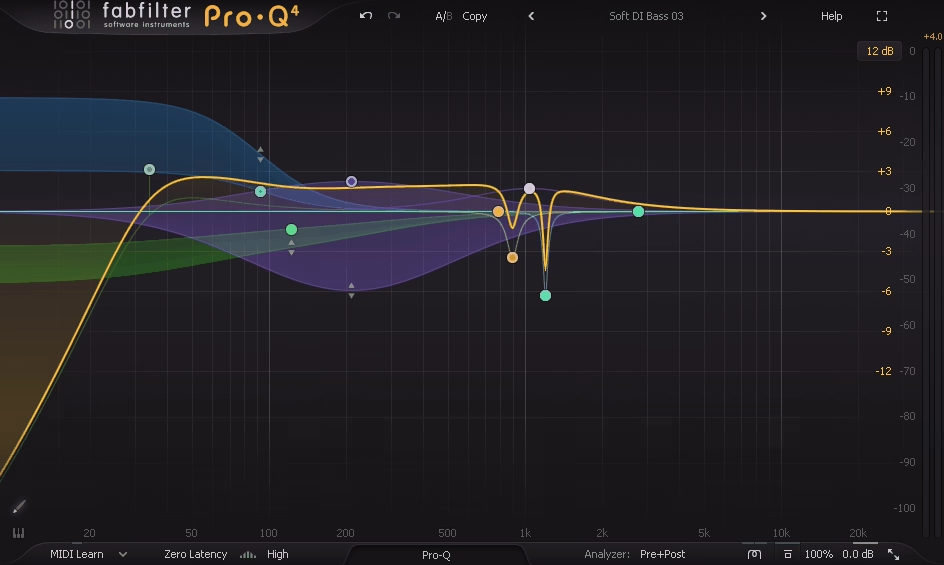
- Pro-Q 4 is the centerpiece EQ plugin with some of the most advanced features I’ve used. It includes up to 24 EQ bands that you can configure however you need. The Spectral Dynamics mode lets you control harsh frequencies dynamically without setting up separate dynamic EQ bands.
The EQ Match feature analyzes reference tracks and helps you shape your mix to match their frequency balance. You can accept the suggestions fully or use them as starting points. The AI-guided band suggestions detect problem areas like resonances and masking between instruments. The analyzer shows where frequencies overlap so you can carve out space for each element.
You get three processing modes: zero-latency, natural phase, and linear phase. I use zero-latency during tracking and mixing, then switch to linear phase for final mastering touches. The collision detection feature shows when two tracks compete in the same frequency range, which saves me hours of guesswork.
- Pro-C 3 (Compressor):
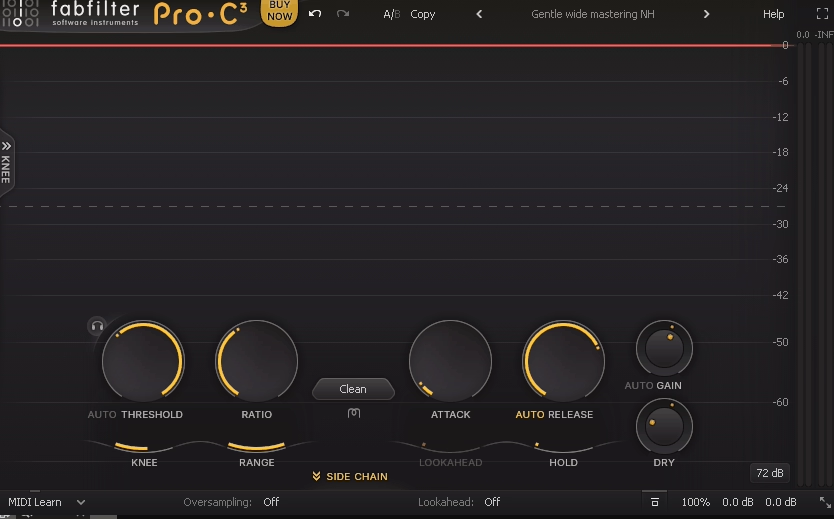
I love how Pro-C 3 takes everything that made its predecessor great and pushes it significantly further. Where Pro-C 2 gave you eight compression styles, Pro-C 3 now offers 14, adding six brand-new algorithms including Smooth, Upward, Vari-Mu, and TTM, which combines downward and upward compression across multiple bands simultaneously.
You’re not locked into a single character at all. On top of that, the new Character panel introduces three flavors of analog saturation, Tube, Diode, and Bright, with adjustable Drive and pre/post compression routing, so you can add harmonic color right inside the compressor without reaching for a separate plugin.
- Pro-DS removes harsh sibilance from vocals without the weird artifacts cheaper de-essers create. It uses an intelligent detection algorithm that identifies actual sibilant consonants instead of just reacting to high frequencies. This prevents that lisping sound you get from aggressive de-essing.
You get split-band and wide-band modes for different vocal types. The plugin includes lookahead and linear-phase options for precise work. When I’m pushing mixes to competitive loudness levels, sibilance becomes a major problem because it triggers limiters and creates harsh spikes. Pro-DS solves this before it becomes an issue.

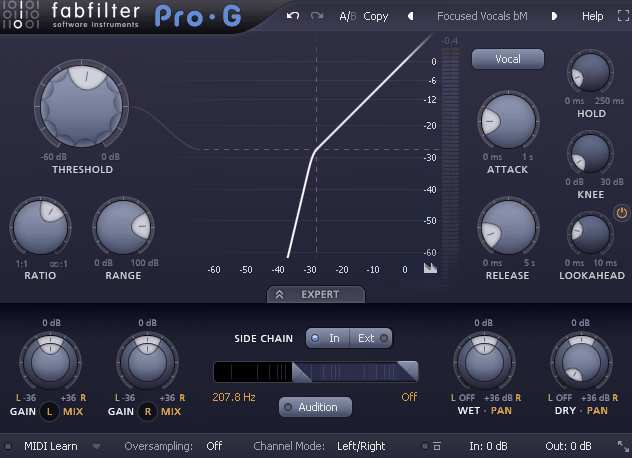
- Pro-G works as both a gate and expander with multiple processing styles. The adjustable attack, hold, and release controls let you shape exactly how the gate opens and closes. Consider using it on drums to clean up bleed between hits, which keeps transients sharp and clear
The side-chain EQ lets you make the gate respond only to specific frequencies. For example, you can gate a tom mic based only on low-mid information, ignoring cymbal bleed. The visual display shows your incoming signal, threshold, and gain reduction all at once. Cleaning unwanted noise and room sound helps mixes stay tight when you add bus compression and limiting later.
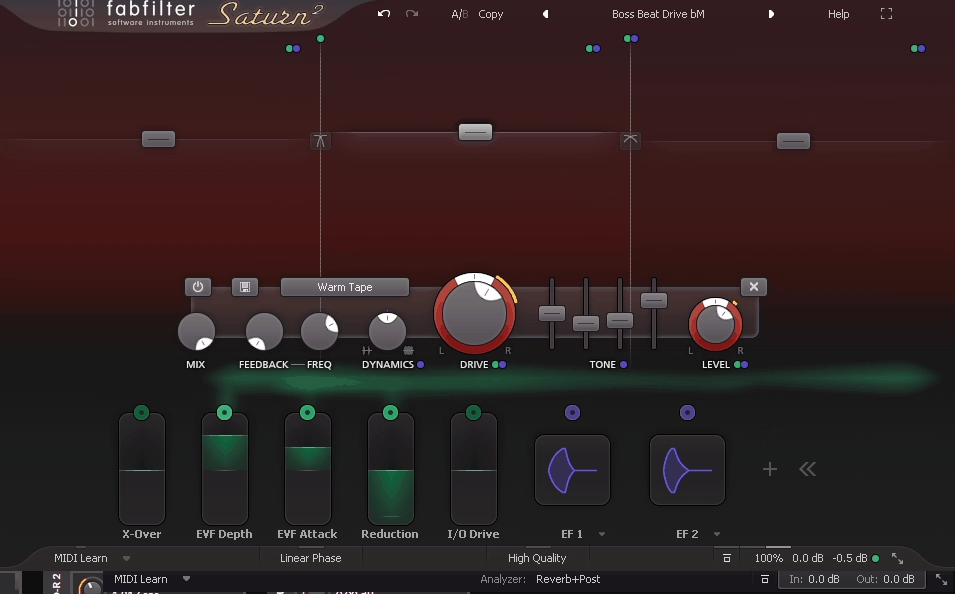
- Saturn 2 adds harmonics and saturation with up to six independent frequency bands. Each band can use different distortion models like tube, tape, amp, or circuit-style saturation. The advanced modulation section includes LFOs, envelope followers, and XY controls that can create movement and interest.
I use Saturn 2 to add punch to basslines without affecting the midrange, or to warm up vocals without muddying the low end. The plugin includes oversampling options that prevent digital aliasing when you push the saturation hard.
Each band has its own EQ and dynamics controls. This lets me enhance exactly the parts of the spectrum that help mixes translate on phone speakers and earbuds.
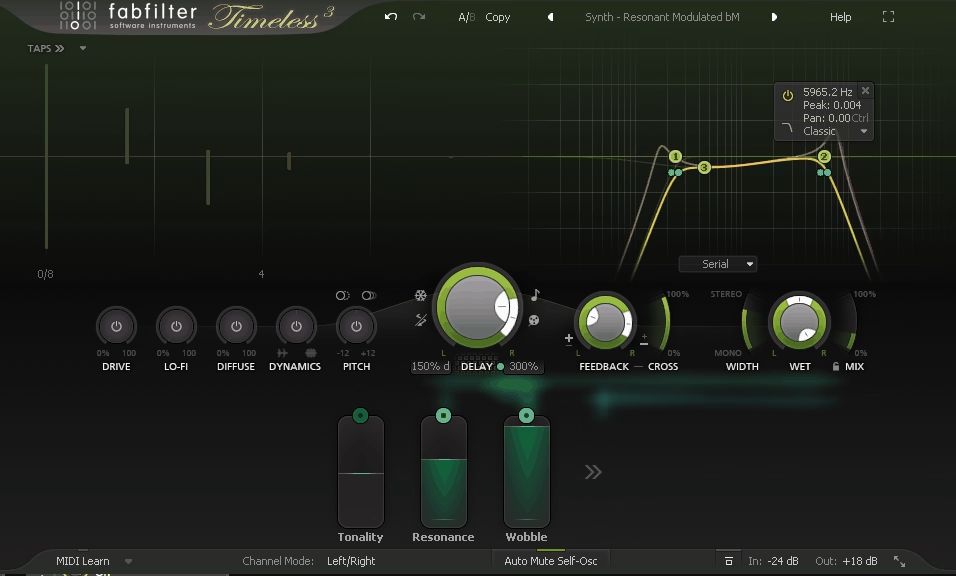
- Timeless 3 provides delay effects with 12 multifunction filters, diffusion, and modulation. The ducking feature makes delays audible without covering up your main vocals or lead instruments. This is crucial when you need space and depth but can’t afford to lose clarity.
You can create tape-style flutter and saturation that stays controlled enough for mixing. The freeze and reverse functions turn delays into rhythmic effects without cluttering your mix. The real-time spectrogram helps you see if the delays are building up in problem frequencies. I would use it to fill space in arrangements without sacrificing headroom for limiting.
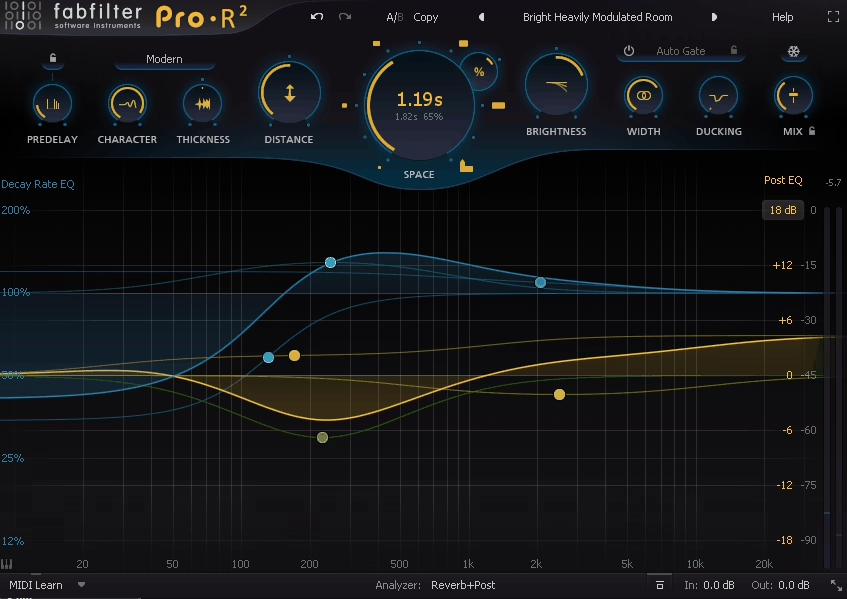
- Pro-R 2 delivers professional reverb with a new Spaces system that models realistic room behaviors. Instead of confusing early and late reflection controls, you get musical parameters like Distance, Brightness, Character, and Stereo Width. The interface makes it easy to dial in the exact reverb you need without endless tweaking.
The post-EQ and decay-rate EQ let you shape how different frequencies behave in the reverb tail. Use this to keep low end tight while letting high frequencies sparkle. You can lock the decay time while switching between presets to maintain consistency. The reverb stays clear even when compressed or limited, avoiding the smeared sound that makes mixes feel muddy.
Got it, here’s the corrected section rewritten with only the four plugins actually in the bundle:
2. Pulsar Audio Mastering Bundle
Best for: Mastering
Pulsar Audio has been quietly building a reputation as one of the more serious developers working in the analog modeling space, and the Mastering Bundle is where that reputation gets put to work. I believe this one is genuinely aimed at people who want the warmth and character of high-end outboard gear without the price tag or the maintenance. What I appreciate is how focused it is, just four plugins, but each one covering a specific and essential role in a mastering chain.
- MP-EQ (Pultec-Style Passive EQ):
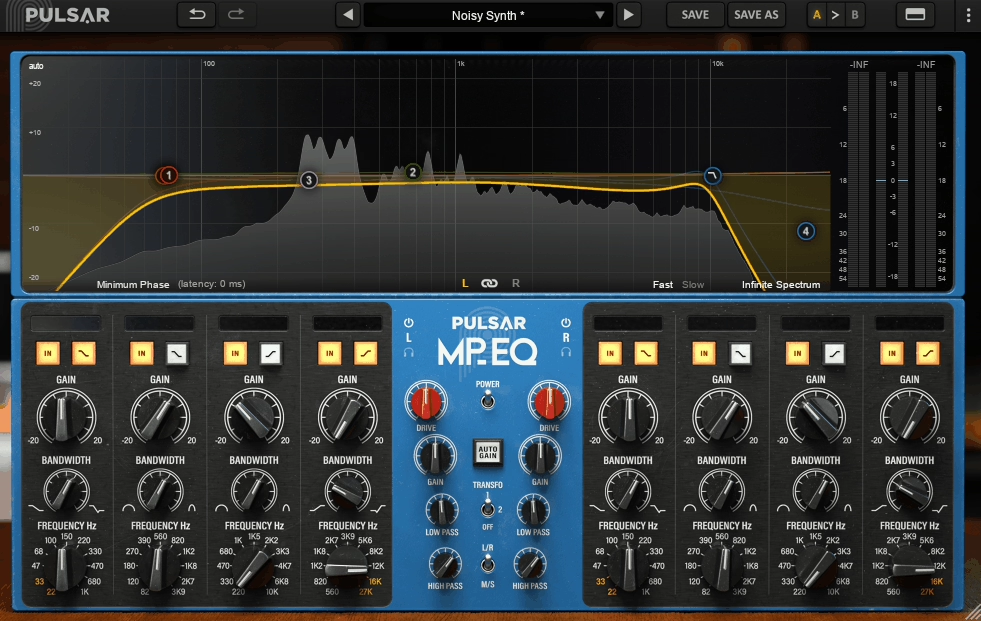
MP-EQ is Pulsar’s take on the legendary Pultec-style passive EQ design, built around a parallel topology that shapes frequencies without cumulative tonal correction, which gives it a more intuitive, fluid feel than conventional EQs.
I love how it adds sparkle and heft without ever feeling like it’s fighting the mix, and the Mid/Side mode makes it particularly powerful for mastering work where stereo field control matters.
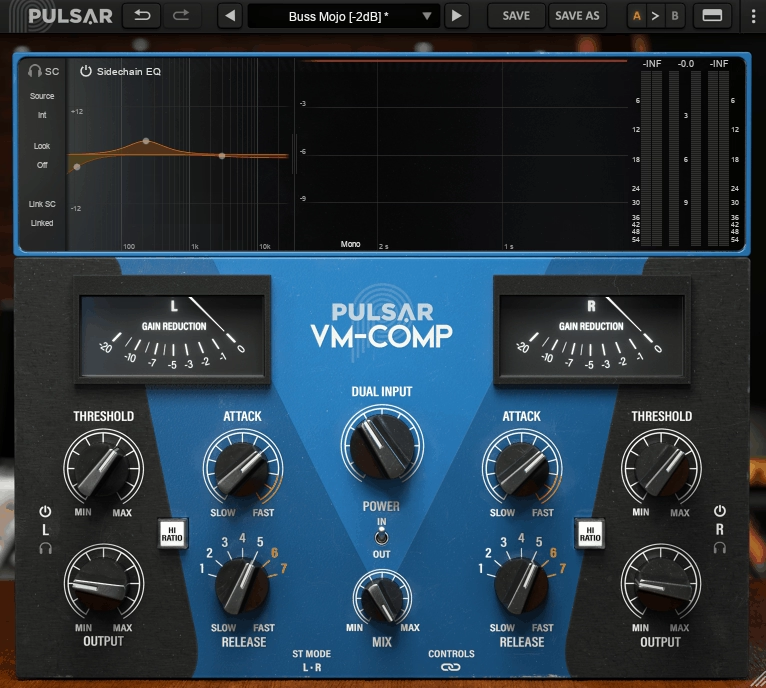
- VM-COMP (Tube Compressor):
VM-COMP is described by Pulsar as the most accurate emulation of an iconic all-tube compressor, and I’d say that claim holds up in practice. It’s the kind of smooth, glue-style compression that holds a master together without audibly processing it.
The sidechain, lookahead/behind options, and M/S mode give you more control than you’d typically get from a hardware unit of this type, and at extreme settings it still manages to stay musical rather than fall apart.
- 8200 (Transparent Master Bus EQ):
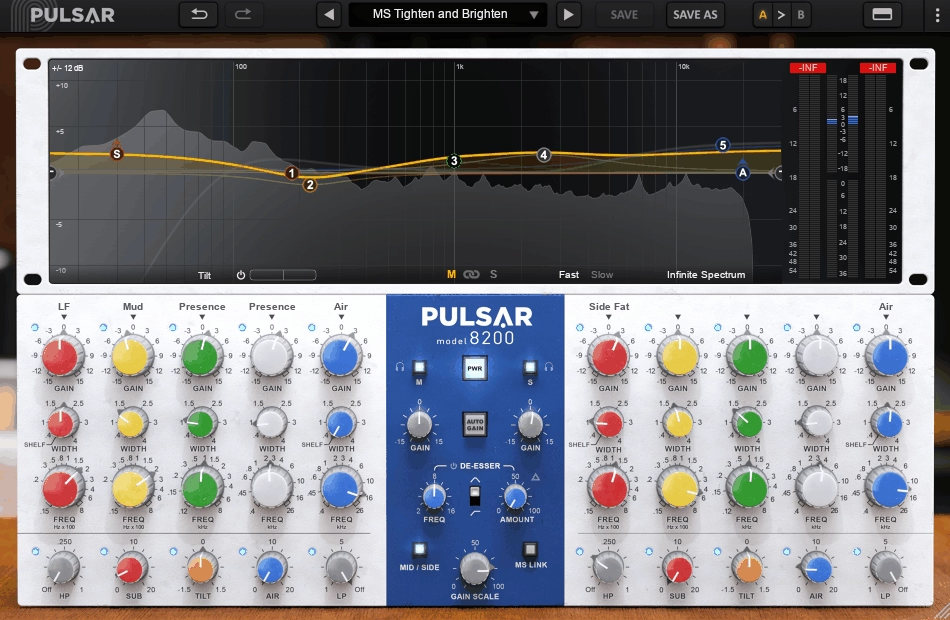
Modeled after the GML 8200, this is the clinical, precise tool in the bundle. It faithfully recreates the Class-A analog circuitry that made the original a staple in professional mastering rooms throughout the 80s, with a parallel topology and unique filter curves that preserve analog warmth while giving you the kind of transparent, high-resolution shaping that a master bus demands. I
found the tilt feature particularly useful for quick tonal balance adjustments without touching individual bands.
- W495 (Neumann 3-Band Tone Shaper):
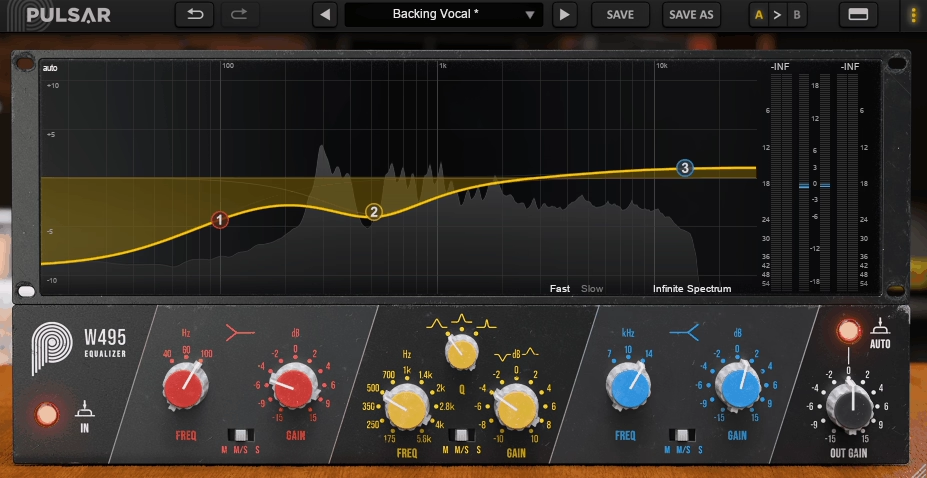
The Neumann W495 EQ was used on the vast majority of vinyl records mastered from the 1970s through the 90s, and Pulsar’s emulation is a component-accurate model of the original unit, right down to the subtle band saturations and output transformer character.
With just three bands, a low shelf, a parametric bell, and a high shelf, it forces you to make decisive, musical moves rather than over-processing, and the wide equalization curves can be pushed hard while remaining surprisingly natural. The per-band Mid/Side routing takes it well beyond what the hardware could ever do.
3. CARP Audio Everything Bundle (Mixing)
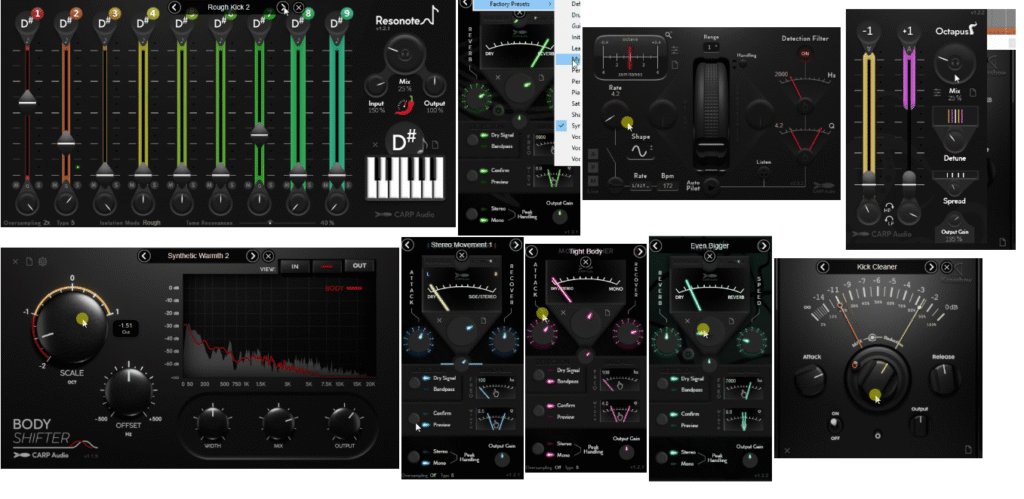
I’ve spent some time digging through sound design toolkits, and the CARP Audio Everything Bundle stands out because it tackles problems most standard plugins ignore. You’re not getting another compressor or EQ here. Instead, you get 9 specialized plugins built specifically to reshape audio in ways that normally require messy routing and tons of manual work.
What I liked about the bundle is how it handles the tedious stuff automatically. CARP Audio designed these tools for producers who want to transform sounds quickly without opening 6 plugins just to get one texture right. Each plugin solves a specific creative challenge, and they all share a clean interface that makes experimentation feel natural instead of overwhelming.
The pricing makes this even better. The regular price sits at $249, but I’ve seen it drop to $99 during sales. For 9 plugins that cover this much ground, that’s a solid value if you work in electronic music, film scoring, or experimental production.
- Reeferb is the first plugin I want to talk about because it changed how I think about reverb. Most reverbs just sit there until you automate them manually, but Reeferb listens to your audio and adjusts the tail length, stereo width, and wet/dry mix automatically based on what’s happening in the signal.
This means you can load it on a vocal track or a snare, and it will swell and pull back on its own without you drawing in automation curves. I would use this for transitions, ambient hits, and vocal swells. It removes a huge chunk of boring automation work and gives you movement that feels musical instead of robotic.

- Reeferb IR takes the original idea of “automatic reverb that reacts to your audio” and pushes it into a more creative space by letting you use convolution impulses instead of a standard algorithmic reverb. Instead of sitting statically in the mix, it listens to the incoming signal and decides when to open up the reverb tail, when to pull it back, and how wide or intense it should feel based on the dynamics of the sound.
The coolest part is that it does this with whatever IR you load into it, so you can use real spaces, weird FX impulses, or even your own samples and the plugin will animate them for you. You don’t have to automate reverb sends or volume curves anymore – Reeferb IR handles the swelling, blooming and breathing on its own.

I’d use this on vocals, guitars, pads, or percussive hits where I want a space that evolves naturally and reacts like part of the performance.
- Body Shifter does something I didn’t even know I needed until I tried it. You can shift the spectral weight of a sound up or down without changing its pitch. This means you can take a thin snare and give it more body, or move a vocal’s resonance without making it sound detuned or EQ’d to death.
It’s like changing the microphone placement after you’ve already recorded. I’ve used this on drums to thicken them up, on vocals to add chest resonance, and on synths to shift their harmonic focus. Standard EQs can’t do this because they just boost or cut frequencies; Body Shifter actually moves the tonal center.

- Octapus builds massive octave layers fast. It generates octaves above and below your source audio, and each octave gets its own stereo width, detune control, and filtering. This is perfect for creating huge electronic textures or adding sub-bass weight to synths and bass lines.
The time-stretch processing inside creates smeared, atmospheric octave tones that work great for pads and cinematic layers. I stack this on bass sounds when I want them to feel wider and more complex without layering multiple tracks.

- Krossbow takes a different approach to dynamics. Instead of setting a threshold and ratio like a normal compressor, you define a maximum reduction amount, and the plugin pushes your audio toward that target without crushing transients.
This keeps punchy sounds punchy, which is hard to do with standard compression. I would recommend it on drums and electronic percussion because it can give you control without making things sound flat or over-compressed. It’s especially good for aggressive sound design where you want intensity but still need clarity.

- Resonote is a note-tuned resonator with saturation built in. You pick a note or chord, and the plugin emphasizes the harmonic resonances at those frequencies. This is incredible for turning percussive or atonal sounds into something that matches the key of your track.
I’ve used this on foley, noise layers, and drum hits to give them tonal identity. The soft distortion stage adds harmonics in a way that feels musical instead of harsh. If you work with field recordings or sound effects, this plugin is worth the bundle price alone.

- APM Live does automatic pitch modulation based on your incoming audio. It analyzes the signal and creates real-time pitch movement using internal modulation engines. You can control how sensitive it is, how fast it moves, and how deep the modulation goes.
This creates robotic vibrato, fluttery pitch bends, or granular-style pitch effects without needing multiple plugins or automation lanes. Use it on vocals, synths, and FX to add movement that feels organic but controlled.

- Stereo Pusher and Mono Pusher work together to shape your stereo field intelligently. Stereo Pusher expands or tightens the side channel based on the signal’s dynamics, so your width reacts to the music instead of staying static.

This is great for synths, pads, and ambient swells without causing phase problems. Mono Pusher does the opposite—it shapes the center image to make mono content more stable and punchy. I use Mono Pusher on kicks, bass, and vocals to keep the center tight, and Stereo Pusher on everything else to add space without losing focus.
The CPU efficiency across all 7 plugins is noticeably good. I can stack multiple CARP plugins in a chain without hearing my computer fan spin up, which matters a lot when you’re building complex sound design layers. The interfaces are consistent across the bundle, so once you learn one plugin, the others feel familiar.
4. Baby Audio Complete Bundle
Best for: Mixing, Mastering, Production
Baby Audio is one of those developers that you discover when someone shares a screenshot of a session and you notice a plugin you’ve never seen before. Their whole thing is making tools that feel instantly inspiring rather than technically intimidating, and the Complete Bundle puts all 14 of their plugins into one package.
I think this is a really compelling buy for producers who want character-driven processing paired with genuinely creative instruments, not just a stack of mixing utilities.
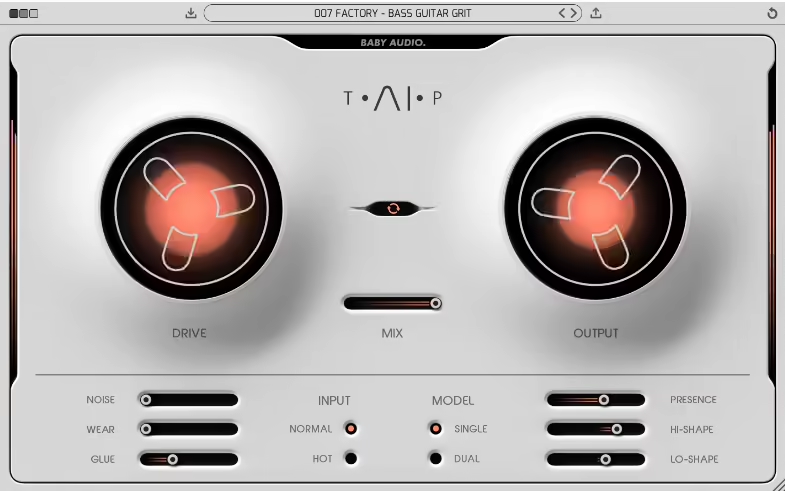
- TAIP (AI-Powered Tape Saturator):
I love how TAIP doesn’t try to be an exact hardware clone, instead it captures the feel of tape saturation through an AI-trained model. You get warmth, subtle compression, and harmonic content that glues elements together, with enough control to go from barely-there enhancement to full-on tape slam.
- Smooth Operator Pro (Spectral Signal Balancer):
This one is genuinely clever. Smooth Operator Pro analyzes the spectral content of your signal in real time and removes bloated frequency energy, targeting mud, harsh resonances, and masking between elements. It’s not a traditional EQ, it’s more like an intelligent polish tool, and it works surprisingly well on mix buses where conventional EQs tend to feel too blunt.
- Crystalline (Next-Gen Reverb):
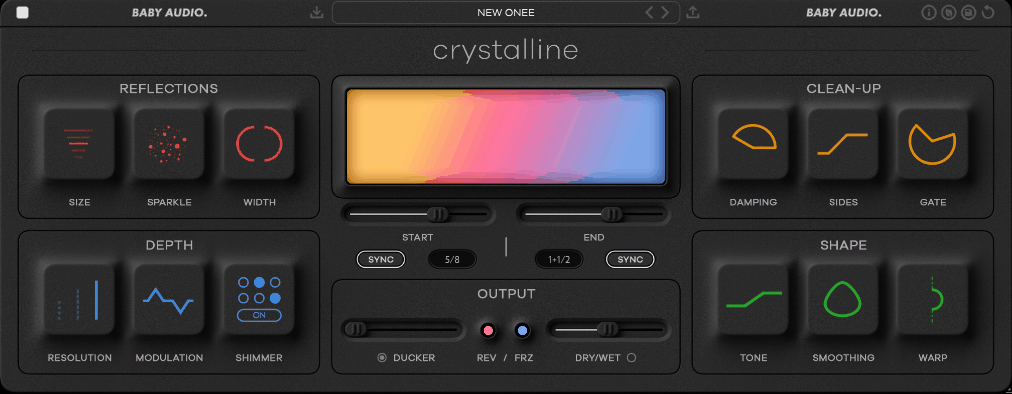
Baby Audio’s reverb takes a different approach than most, it’s built around lush, algorithmic tail generation that sits beautifully in a mix without clouding the low-mids. The interface encourages you to think about reverb differently, and with tempo-synced pre-delay and decay times, it fits into a production context with way less fiddling than most reverbs require.
- Transit 2 (Motion Effects and Transition Designer):
Transit 2 is one of those plugins I realized I needed after using it once. It gives you six different motion modes controlling 28 effect modules, all designed to create movement, energy, and transitions across a track. For producers who want cinematic build-ups and drops without building complex automation chains, this is a serious shortcut.

- Super VHS (80s Nostalgia Channel Strip):
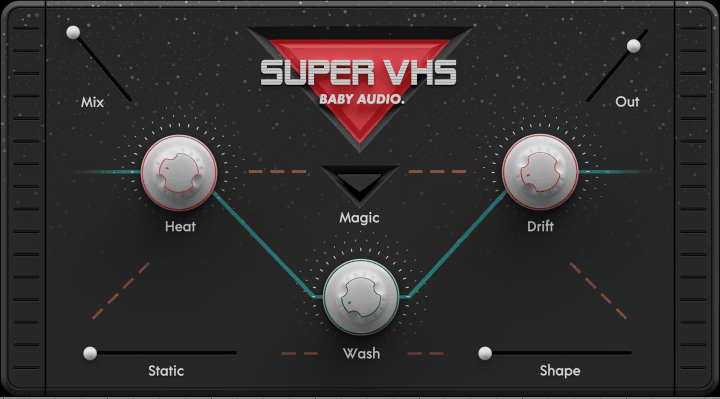
For any producer working in lo-fi, bedroom pop, or hip-hop, Super VHS is a one-stop toolkit for vintage degradation, combining tape saturation, pitch drift, sample-rate reduction, grainy reverb, static noise, and a legendary stereo chorus into six one-knob controls. I found it useful even on genres that aren’t explicitly lo-fi, just to add a bit of analog imperfection.
- Grainferno (Granular Synthesizer):
Grainferno is the most experimental instrument in the bundle. Its next-gen grain engine breaks samples into microscopic fragments and rebuilds them into entirely new textures, which means you can feed in any audio and pull out something the world hasn’t heard before. I’d say this one alone makes the bundle interesting for sound designers.
- Tekno (Drum Synthesizer):
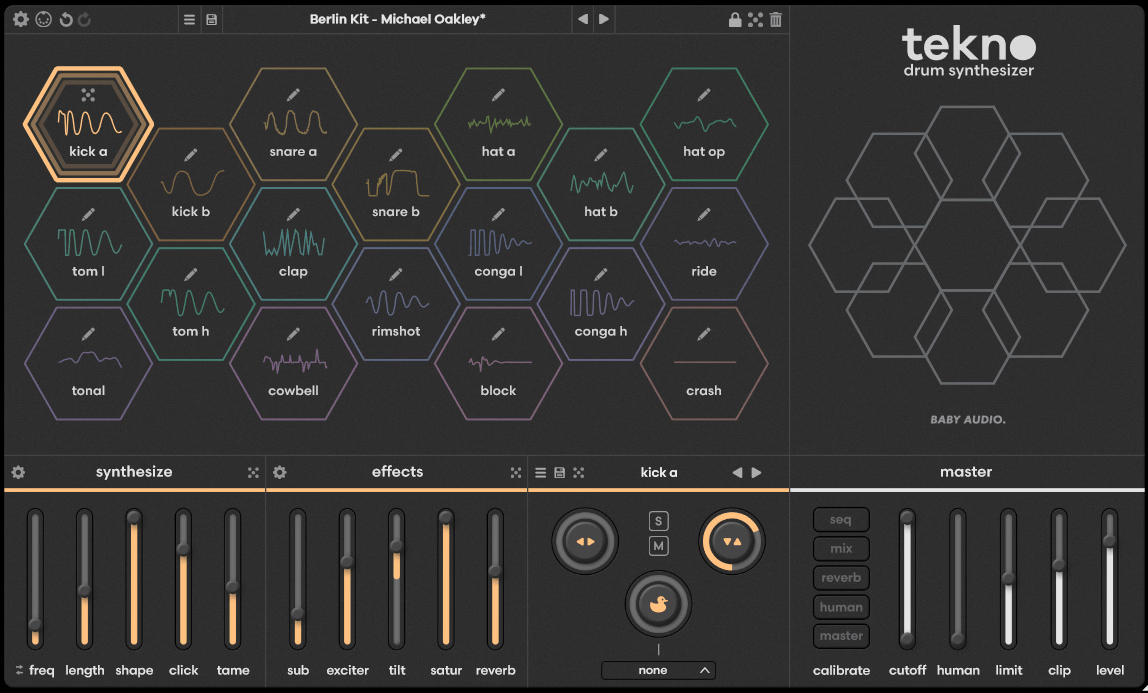
Tekno is a modern drum synthesizer built around the logic of legendary 20th-century drum machines, giving you synthesized kick, snare, and percussion from the ground up with total flexibility. The onboard humanize features mean each hit is slightly different, so programmed patterns don’t sound mechanical even at high tempos.
- BA-1 (Analog-Modeled Synthesizer):
BA-1 brings analog-modeled synthesizer architecture that’s genuinely close to the raw character of real hardware, with an easy-to-program layout and a Re-gen button that generates new starting points on demand. I must say, for an 80s-influenced instrument it’s surprisingly versatile across modern genres too.
- Atoms (Physical Modeling Synthesizer):
Atoms uses cutting-edge physical modeling to generate organic and otherworldly sounds that don’t behave like conventional synthesis. If you need textures that feel alive and unpredictable rather than programmed, this is the instrument in the bundle worth spending real time with.

- Comeback Kid (Analog-Flavored Delay):
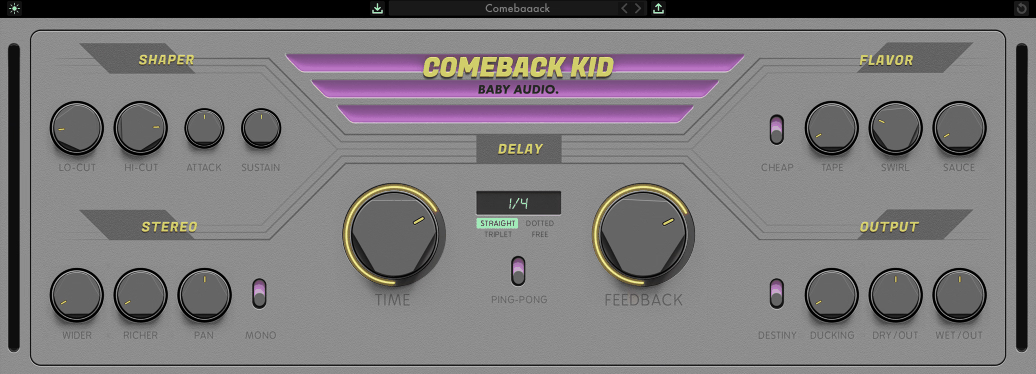
Comeback Kid is a versatile delay that lets you sculpt, shape, and transform the wet signal with a level of control that most delay plugins don’t offer. I found it especially strong on vocals, where the analog flavor it adds sits in a mix far more naturally than cleaner digital delays.
- IHNY-2 (Parallel Compressor):
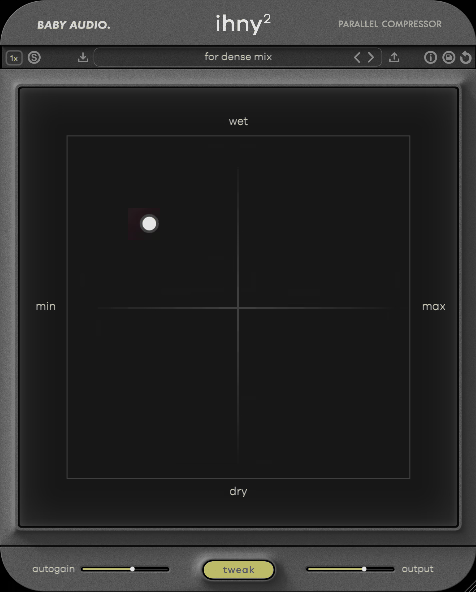
IHNY-2 is built to be the hardest-hitting compressor in the bundle, with an internal parallel signal path that means you get that New York compression impact without sacrificing the dynamics of the original signal. The surgical control over the compression shape makes it more than just a one-trick drum plugin.
- Spaced Out (Modern Space Echo Effect):
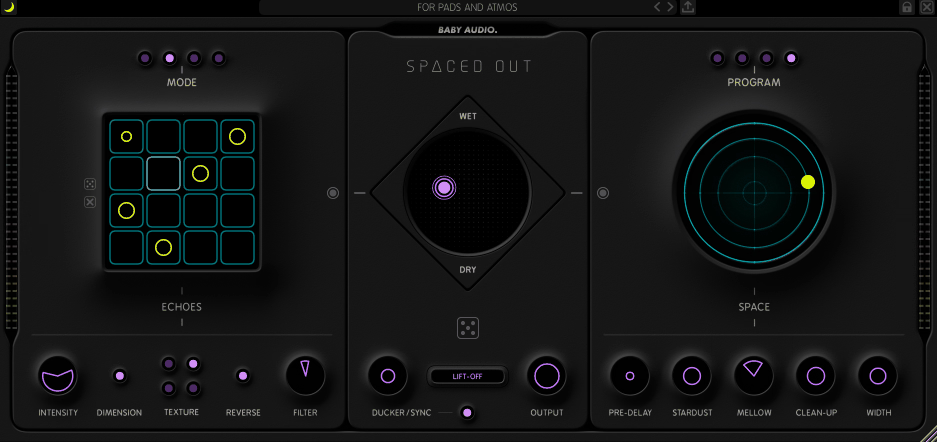
Spaced Out unites delay, reverb, and modulation into a single plugin with more than 50 individual effects under the hood. I’d say it’s the go-to in the bundle for adding lush, dreamy texture to vocals and synths without opening three separate plugins to get there.
- Humanoid (Vocal Transformer):
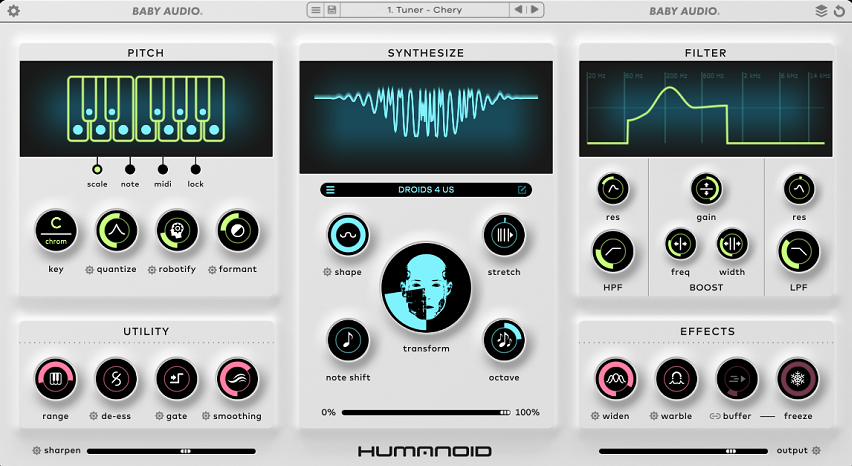
Humanoid takes a brand-new approach to vocal tuning and phase-vocoding, transforming singing performances into robotic, synthetic versions of themselves with a level of control that goes well beyond standard pitch correction. For modern pop, hyperpop, and experimental vocal production, I believe it’s one of the most forward-thinking tools in the entire bundle.
- Parallel Aggressor (Parallel Processing Plugin):
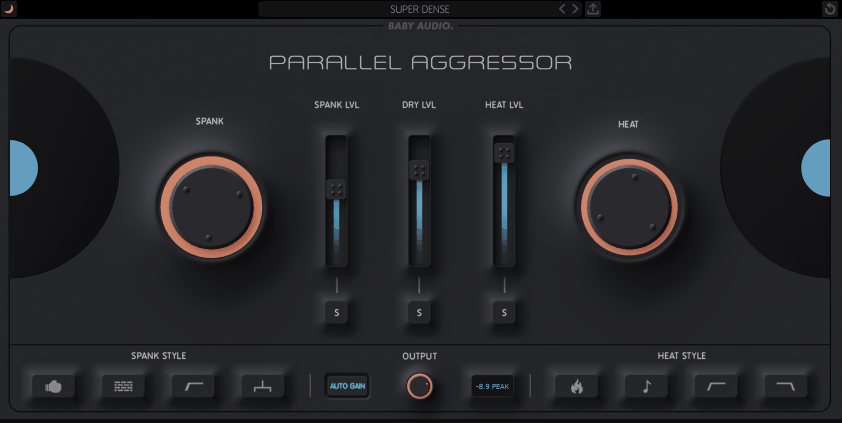
Parallel Aggressor puts parallel saturation and compression into one streamlined interface by splitting your audio into three individual signals that you balance to taste. It’s one of those tools that makes a bus sound noticeably bigger and more impactful without doing anything drastic to the original dynamics.
You’re right, the bundle has way more plugins than I listed and several were wrong entirely. Here’s the fully corrected iZotope Everything Bundle section:
5. iZotope Everything Bundle
Best for: Mixing, Mastering, Production
iZotope has been one of the most important plugin developers of the past decade, and the Everything Bundle is exactly what the name says, literally everything they make in a single purchase.
I want to note that this is one of the few bundles where the included tools span genuinely different categories: restoration, production, mixing, mastering, vocal processing, and even amp simulation, rather than just variations on the same theme.
For anyone who wants a single ecosystem that covers nearly every stage of a professional workflow, this is hard to argue with.
- Ozone 12 Advanced (Mastering Suite):
Ozone is the standard-bearer for software mastering, and version 12 pushes it further with tools like Stem EQ, Bass Control, and Unlimiter, alongside a creator-first update to Master Assistant. I found the AI-assisted starting point genuinely useful as a reference rather than a shortcut, and the depth underneath it is as serious as anything in professional mastering.

- RX 11 Advanced (Audio Repair and Restoration):
I have to say, RX is probably the single most powerful audio repair tool ever made for a DAW environment. Spectral Repair, Dialogue Isolation, Mouth De-click, Breath Control, and Ambience Match are just a few of the tools that make previously unusable recordings salvageable. If you work with any live-recorded content, voice-overs, or field recordings, this alone justifies the bundle.
- Neutron 5 (Mixing Suite):
Neutron 5 packages eight powerful channel strip plugins into one intuitive interface, with AI-powered assistance that analyzes your full session and suggests starting points for EQ, compression, and transient shaping across every track. It doesn’t make creative decisions for you, but it handles the technical foundation fast so you can stay in the flow.
- Nectar 4 Advanced (Vocal Production Suite):
For anyone working with vocals seriously, Nectar 4 Advanced covers the entire vocal processing chain in one cohesive plugin, and version 4 adds new modules like Audiolens referencing, Voices for harmony generation, and Auto-Level for consistent vocal rides. I believe it’s the most complete single-plugin vocal solution available right now.
- Guitar Rig 7 Pro (Multi-Effects and Amp Simulator):
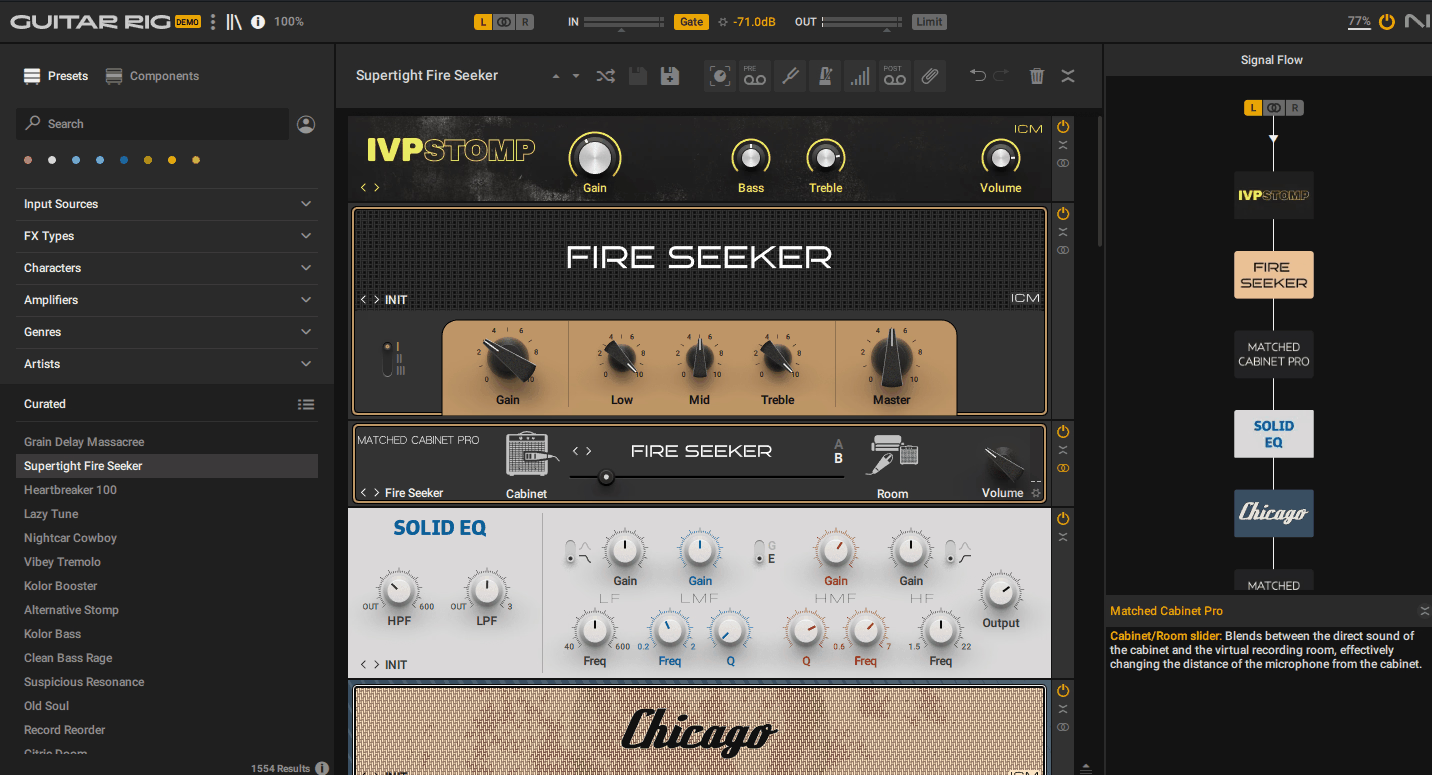
This one surprises people who think of iZotope as purely a mixing and mastering brand. Guitar Rig 7 Pro is a full multi-effects rack and amp simulator with new ICM amps, pedals, and effects, built around machine learning technology. I’d say it’s a genuinely strong creative tool for producers who want real amp character without miking a cabinet.
The bundle includes two distinct reverb tools covering different needs. Aurora uses adaptive unmasking to dynamically unmask instruments and vocals so the reverb adds space without drowning anything out, while Equinox fuses Exponential Audio algorithms with the same unmasking tech for post and music production use. I appreciate having both since they serve different contexts rather than just being variations of the same engine.
This is where the bundle gets genuinely interesting for sound design. Plasma uses Flux Saturation technology to analyze your signal and apply dynamic processing for precise warmth and character, Trash is the iconic iZotope distortion machine rebuilt with envelopes and filters for everything from harmonic enhancement to full mangling, and Driver combines smooth filtering with powerful distortion and audio modulation for creative, destructive processing.

- Stutter Edit 2, Crush Pack, and Mod Pack (Creative Effects):
I must say, these three together cover a lot of creative territory that most mixing-focused bundles ignore entirely. Stutter Edit 2 is a MIDI-triggered glitch and rhythm processor, Crush Pack covers lo-fi sampling character, ring modulation, and experimental timbres across three plugins, and Mod Pack takes chorus, flanger, and phaser well beyond their conventional forms. For electronic production and sound design, these are genuinely exciting tools.
- Cascadia and Replika XT (Delay Tools):
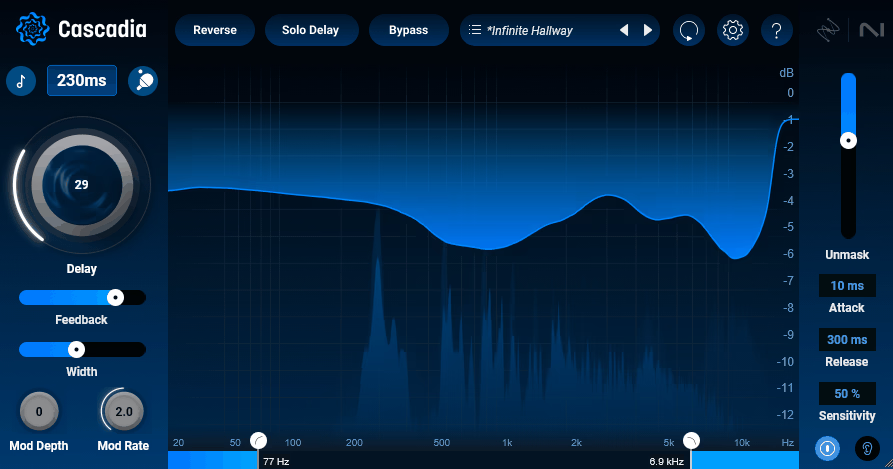
The bundle includes two complementary delay plugins. Cascadia is iZotope’s intelligent delay that reinforces rhythms and creates textures while keeping instruments focused, while Replika XT covers five deeply modeled delay modes spanning crisp digital repeats, analog warmth, and experimental textures. I found having both useful because they approach delay from completely different angles.
- Velvet, VEA, Humanoid-Adjacent Vocal Tools:
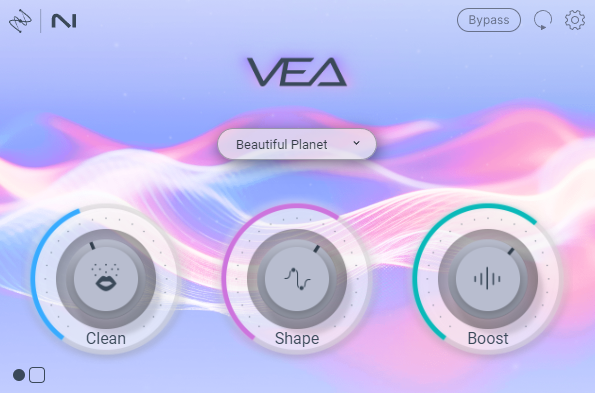
Beyond Nectar, the bundle adds several focused vocal tools. Velvet is a 3-in-1 sibilance tool handling harshness, dynamic tone shaping, and mouth noise removal in one plugin, VEA uses AI-powered voice enhancement to add instant clarity and power to recordings, and VocalSynth 2 explores the full sonic possibilities of the human voice through vocoders, talkboxes, harmonies, and doubles. I realized that taken together, these cover virtually every vocal processing scenario you’d encounter.
- Solid Mix Series and Brainworx Tools:
I want to note that the bundle also includes a strong set of utility and character processors that often get overlooked. The Solid Mix Series brings Solid Bus Comp, Solid EQ, and Solid Dynamics for high-end studio sound on busses, while the Brainworx additions cover bx_refinement for analog smoothness, bx_saturator v2 for multi-band M/S saturation, bx_subsynth for subharmonic generation, and several other utility tools. These alone would be a meaningful purchase on their own.
You’re right, the SSL Band Bundle is actually three instrument-specific strip plugins, not the mixing tools I described. Here’s the corrected section:
6. SSL Band Bundle
Best for: Mixing
SSL’s hardware consoles shaped the sound of recorded music for decades, and the Band Bundle brings that same philosophy into your DAW in a focused, practical way. Rather than offering generic channel strips, I think what makes this bundle genuinely useful is its instrument-specific approach.
Each plugin is purpose-built for a specific source, which means the decisions have already been made for you in terms of what processing matters most for each instrument type.
- Drumstrip (Drum and Percussion Processor):
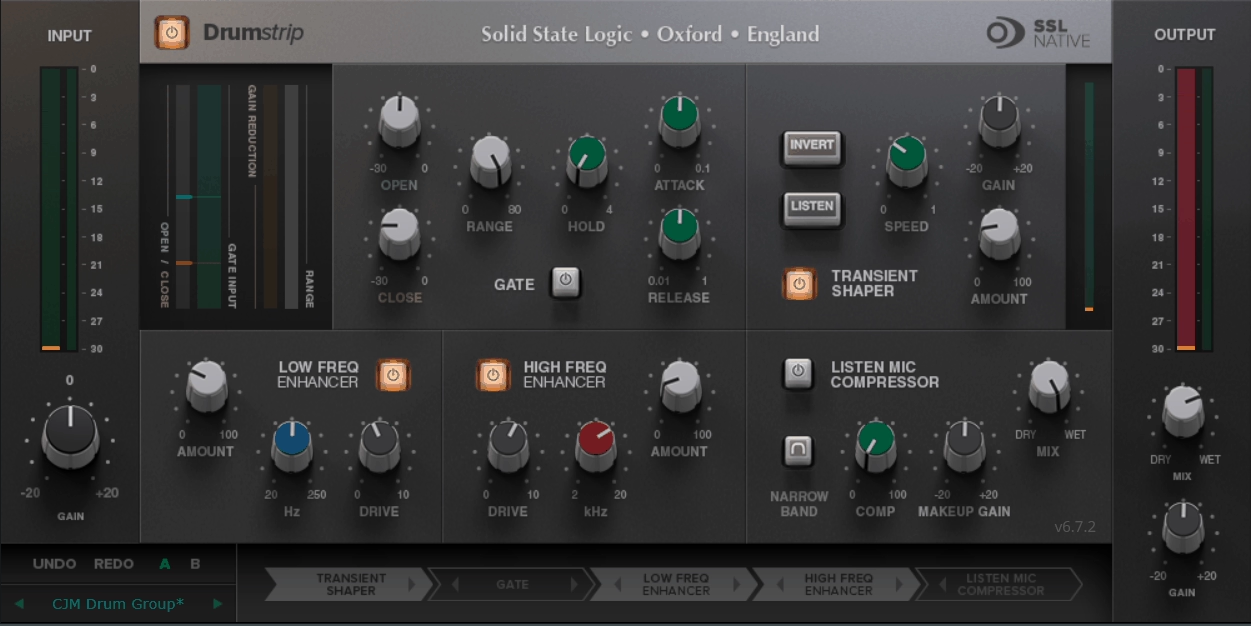
Drumstrip is built around five carefully tailored processing tools designed specifically for drums, combining an intuitive gate, low and high frequency harmonic enhancers, a transient shaper, and SSL’s legendary listen mic compressor all in a fully re-orderable processing path. I found the ability to reorder the signal chain particularly useful since the relationship between the gate and transient shaper changes dramatically depending on which comes first.
- Vocalstrip 2 (Vocal Channel Strip):
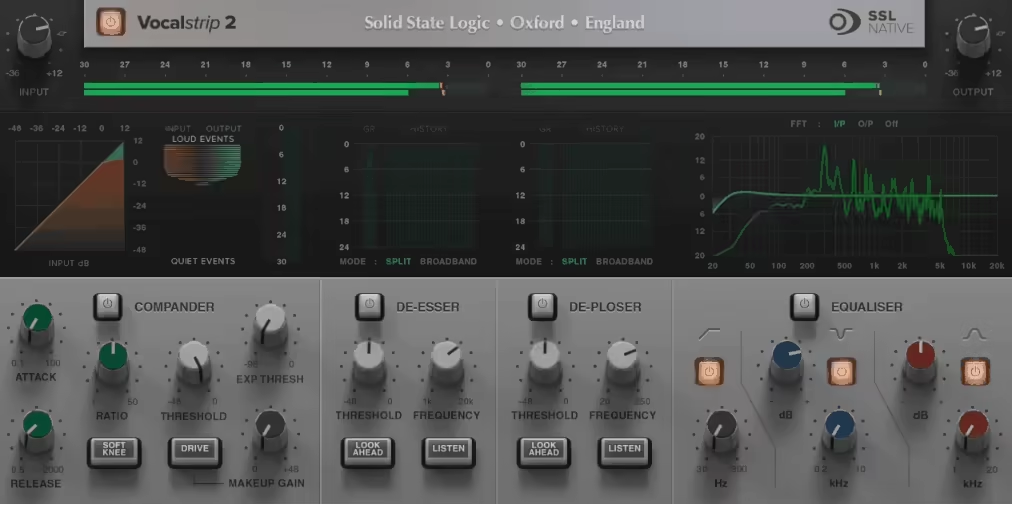
Vocalstrip 2 combines EQ, dynamics, a dynamic envelope-based de-esser, a de-ploser, and a compander into a single interface built specifically around the needs of a vocal signal. I appreciate that the de-ploser is included here since plosive control is something most channel strips ignore entirely, and having it baked into a vocal-specific strip means one less plugin in the chain.
- Guitarstrip (Guitar and Bass Processor):
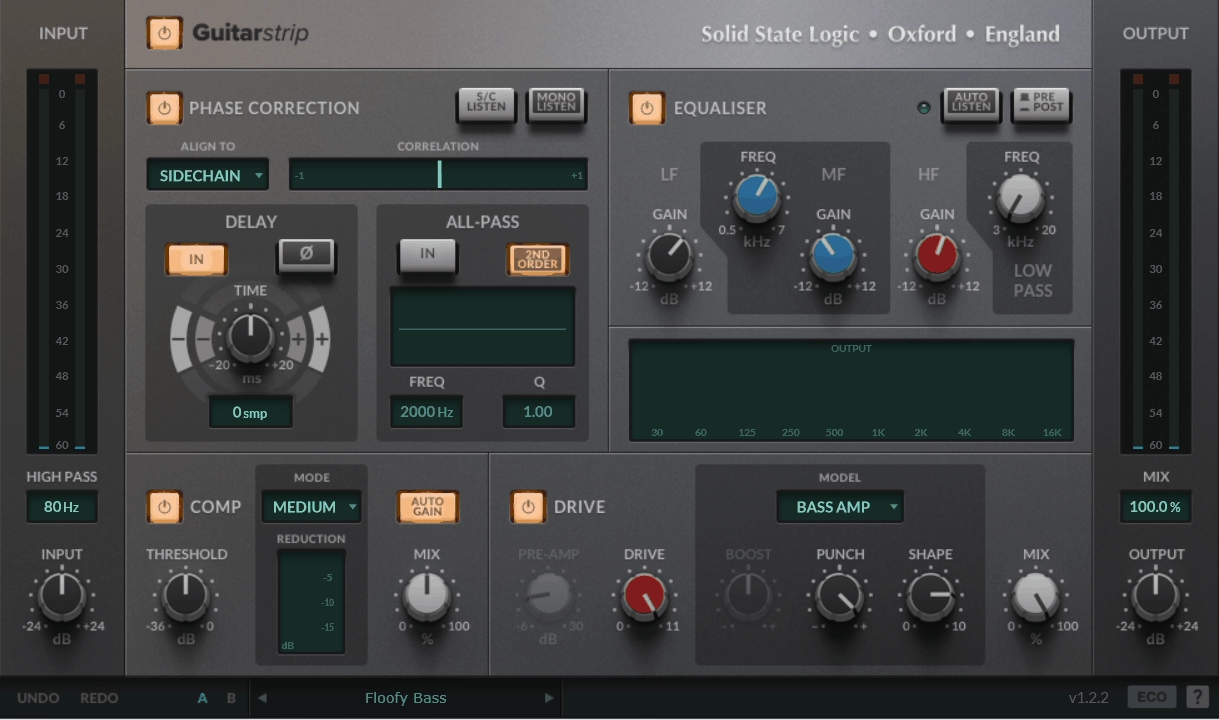
Guitarstrip covers electric, acoustic, and bass guitars with two classic analog drive emulations built in, a guitar amp and a bass amp character mode, alongside an easy-to-use compressor with auto gain, a shaping EQ, and a phase correction module. I’d say the phase correction alone makes this worth using on any session where guitars were recorded with multiple mics, since phase issues between positions are one of the most common and least-addressed problems in a typical guitar recording.
7. Polyverse Bundle Deal – Best for Psytrance & Electronic Music
This bundle gives you six specialized plugins built for producers who want to create sounds that haven’t been heard before. You get Manipulator, Gatekeeper, Comet, Supermodal, I Wish, and Filterverse all in one package.
What drew me in first was learning that Infected Mushroom helped develop some of these tools. These aren’t plugins designed by a team guessing what producers need. They came from actual psytrance legends who needed specific tools for their own work and decided to share them with the rest of us.
I would recommend Polyverse Bundle Deal when you need to push past normal processing. You won’t find standard EQs or compressors here. Instead, you get tools that turn a simple drum loop into a melodic instrument or freeze a vocal and play it like a synth. The entire collection works together to transform your sounds into something entirely new.
The bundle works on Windows 64-bit and macOS with support for VST2, VST3, AU, and AAX formats. I’ve had zero compatibility issues across my different DAWs, which matters when you’re working on multiple projects.
Plugins included:
- Filterverse – Creative Multi-Filter Engine
Filterverse goes way beyond normal filtering. You get three filter slots with routing options that let you chain, parallel, or modulate filters in ways that turn static sounds into moving, evolving textures.
I used it on a basic metronome click and turned it into an actual melody just by setting up the right filter modulation. The plugin includes eight modulation sources with audio-rate modulation capabilities, which means you can use other audio to control the filters. It supports full stereo and mid-side processing, so you can filter just the sides of your mix while leaving the center untouched.

- Supermodal – Resonantor / Body modeler
Supermodal uses hundreds of bandpass filters to model how different objects resonate and vibrate. I applied it to a drum loop and suddenly the drums sounded like they were hitting resonant metal plates or wooden boxes.
The Modal XY control is brilliant because you can morph between different resonant models in real time, making it playable during your performance or automation. You get four modulation slots, meta-knobs, envelopes, and a sequencer built in. I’ve used it to turn percussion into tonal harmonic material that fits my track’s key.

- Manipulator – Vocoder / Audio Transformer
Manipulator transforms any mono audio source into something completely different. You can create up to four polyphonic voices controlled by external MIDI, which means you play chords using a single vocal recording.
The plugin includes 10 different effect types covering pitch, formant, stereo width, smear, and harmonics. I recorded one bass note and used Manipulator to create an entire bass chord progression from that single note. For psytrance and electronic music, being able to harmonize and transform any sample into a melodic element saves me hours of recording time.

- Gatekeeper – Volume Sequencer, Envelope Shaper
Gatekeeper handles rhythmic gating and volume modulation with sample-accurate precision. It works as an LFO, envelope, and step sequencer all in one, giving you complex volume patterns that would take forever to automate manually.
I use it for side-chain style pumping without needing a compressor, and for creating stutter and gate effects on pads and leads. The plugin supports MIDI triggering and can send MIDI CC to other plugins, which means you can use it to modulate parameters across your entire project. For psytrance’s signature pumping and rhythmic chopping, this plugin delivers exactly what you need.

- Comet – Evolving Reverb
Comet isn’t just another reverb plugin trying to model real rooms. It creates lush, evolving spaces that breathe and shift over time through preset morphing. I apply it to leads and synths to place them in dynamic spaces that change throughout the track.
The reverb tails can be modulated, so you get movement instead of static ambience. During breakdowns in electronic tracks, I use Comet to create massive space hits that evolve and build tension. The algorithmic approach gives you flexibility that static impulse responses can’t match.

- I Wish – Pitch Freezer & Audio Synth
With I Wish, You feed it any audio source, freeze the pitch at any moment, then play that frozen sound across your keyboard like a polyphonic synth.
I took a vocal phrase, froze it mid-word, and suddenly had a playable pad instrument with a totally unique texture. You can also apply real-time pitch and formant modulation while playing, which opens up performance possibilities I haven’t found in other plugins. The stutter effects add another layer when you want rhythmic variations.

—
This bundle costs less than buying the plugins separately, and you get access to regular updates and improvements. Polyverse released a Filterverse update in July 2025 that added new features, which shows they’re actively developing these tools.
You’re right, the bundle actually has eight plugins including the MF-103 Phaser, MF-105 MuRF, and MF-109S Saturator that I missed entirely. Here’s the corrected section:
8. Moogerfooger Effects Plugin Bundle
Best for: Mixing
The Moogerfooger hardware pedals were designed by Bob Moog and his engineering team in the late 90s and early 2000s as direct descendants of the original Moog modular synthesizers, and they became some of the most sought-after processing units in electronic music history.
The plugin versions are faithful digital recreations of all eight original Moogerfooger pedals, and what makes this collection especially interesting is that the CV interconnectivity of the original hardware has been recreated in plugin form, meaning any Moogerfooger instance can modulate the parameters of any other across your project.
That alone puts it in a completely different category from most effects bundles.
The sound of the classic Moog transistor ladder filter in a plugin, with full MIDI controllability, a resonance that self-oscillates, and a CV-style envelope follower that tracks the dynamics of your input. Running drums or bass through this gives you the kind of organic filtering that analog-inspired plugins endlessly try to replicate.
The MF-102S pairs a wide-range carrier oscillator with an LFO, covering everything from soft tremolo all the way through to far-out clangorous ring modulation tones. The plugin replicates the hardware character faithfully, and the modulation range makes it far more versatile than a standard ring mod.

This is a direct descendant of the original 1970s rack-mounted Moog phaser, with an on-board LFO and that unmistakably deep, liquid phasing character that modern phaser plugins consistently struggle to replicate. I’d say this is one of the most historically significant effects in the entire bundle.

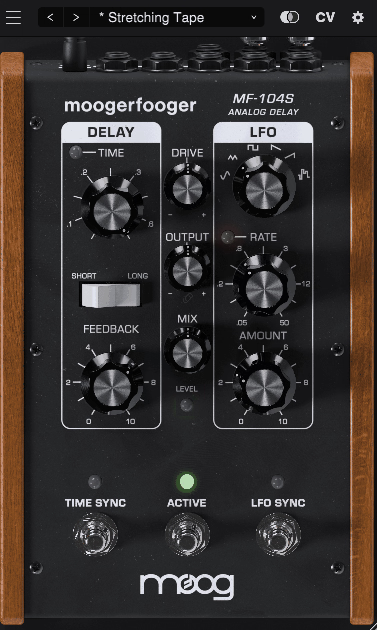
This is the one I’d highlight most strongly. The Moogerfooger delay has a BBD-style warmth and degradation as delay time increases, and it has remained one of the most highly sought-after analog delay circuits ever made. The MIDI controllability and LFO modulation make it one of the most musically interesting delay plugins in this entire list.
- MF-105S MuRF (Resonant Filter Bank):
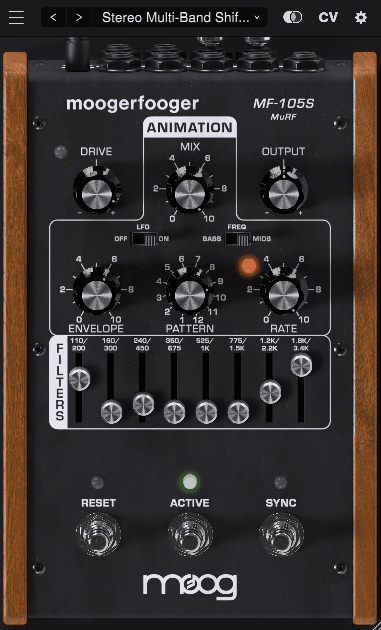
MuRF is genuinely unlike anything else in this bundle or most other bundles for that matter. It combines a resonant filter bank with a pattern generator and skewing envelope to create vibrant, rhythmic animation of an incoming sound. I think it’s one of the most creative and underappreciated effects Moog ever designed, and having it in plugin form makes it far more accessible than tracking down the hardware.
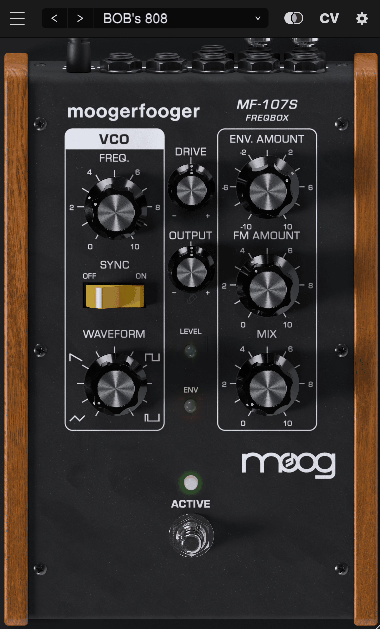
A synthesizer module that tracks the pitch of incoming audio and uses it to drive an internal oscillator with envelope and FM modulation, which then blends with the original signal. It creates frequency-locked sub-bass, harmonic reinforcement, and gnarly synced VCO sounds that sit in a completely unique creative space.
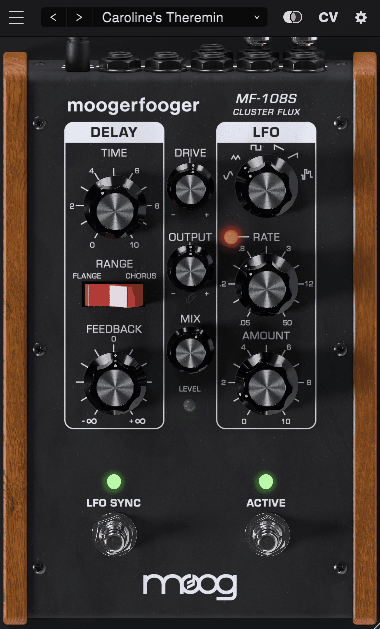
Cluster Flux covers chorus, flanging, and vibrato from a single plugin, and the Moog character gives these classic effects a warmth and dimensionality that most modern chorus plugins can’t match. I’d say it particularly excels on guitars and bass where you want modulation that feels alive rather than processed.
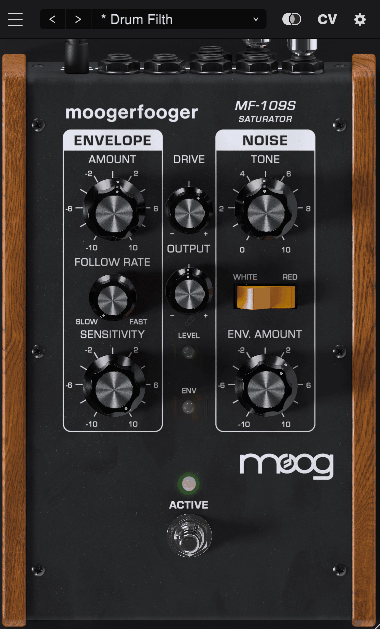
This one covers territory that the other seven don’t touch. The MF-109S moves from tight, distorted overdrive and analog saturation through to smooth compression, and it also models the noise generator circuit of the Minimoog Model D, giving you control over both noise level and tone with a switchable filter type. I must say, having a Minimoog-derived noise generator built into a saturation plugin is not something you find anywhere else.
You’re right, the Effect Rack has a specific and important structure I got wrong. It’s a single self-contained plugin housing 14 effects, not individual plugins, and the actual plugin list is different from what I had. Here’s the corrected section:
9. Soundtoys Effect Rack
Best for: Mixing
Soundtoys has been making character-first plugins for long enough that their tools have become part of how major-label records actually sound. The Effect Rack is worth understanding clearly before buying though, because it works differently from every other bundle on this list.
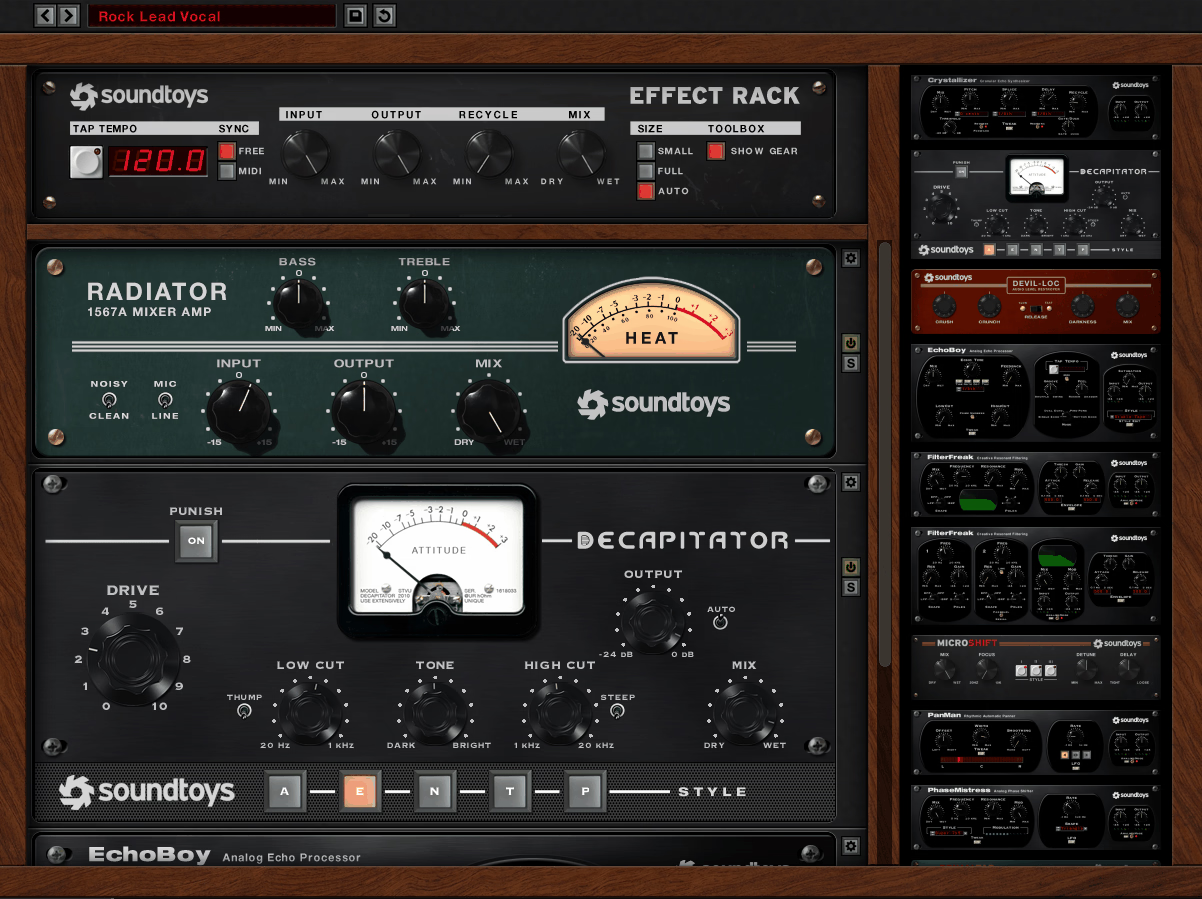
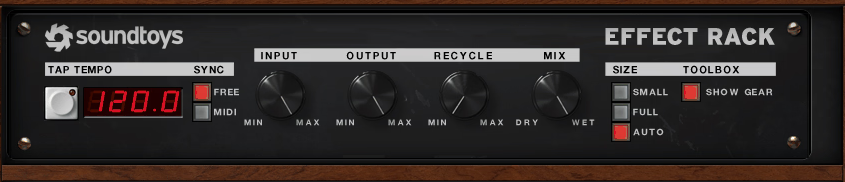
Rather than giving you individual plugins, Effect Rack is a single self-contained plugin that comes preloaded with 14 Soundtoys effects that you chain together inside it.
I think that distinction actually makes it more useful in a lot of workflows, because the global Recycle knob, global Mix control, and unified tempo lock mean you can treat an entire custom effect chain as one plugin with parallel processing and feedback routing built in.
Note that Little AlterBoy, Little Plate, Little PrimalTap, Little MicroShift, and Little Radiator are not included.
Included plugins:
- Decapitator and Radiator (Analog Saturation):
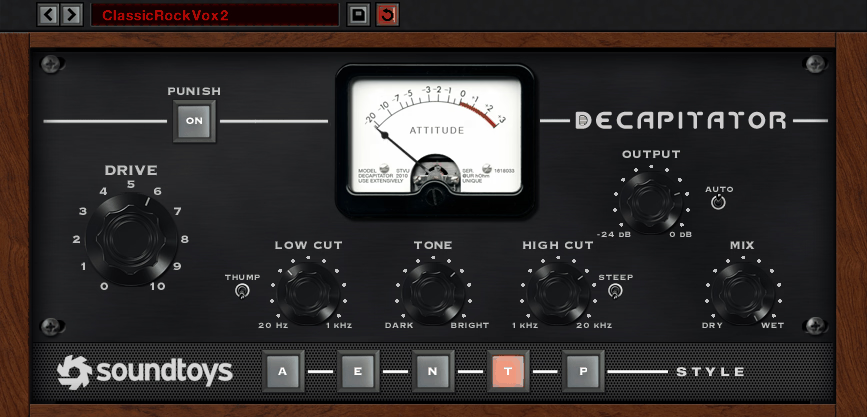
These two cover the saturation side of the rack from different angles. Decapitator models five different analog saturation sources, Ampex, API, Neve, SSL, and Chandler, with drive, tone, and mix controls that go from subtle harmonic warmth to complete tonal destruction. Radiator is based on the Altec 1566A tube preamp and is simpler by design, just input gain, tone, and mix, but I found it to be one of those small-amount-big-difference tools you end up reaching for constantly.
- EchoBoy and EchoBoy Jr. (Delay):
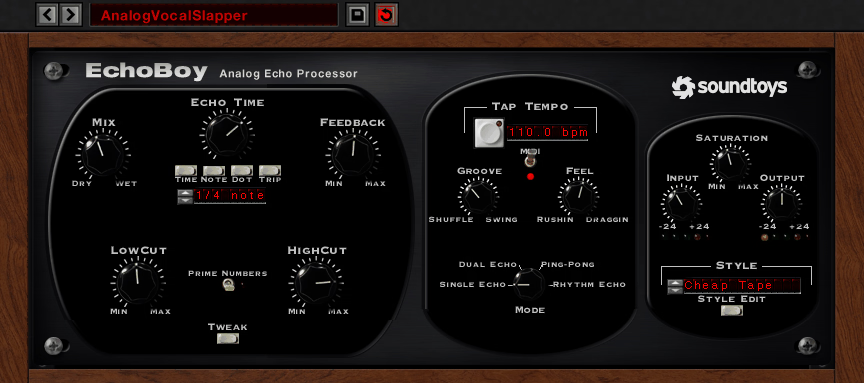
EchoBoy is one of the most comprehensive delay plugins ever made, with over 30 echo styles including emulations of hardware delays like the Echoplex and Space Echo, a full modulation section, and tempo sync. EchoBoy Jr. is the streamlined version of the same engine, useful when you want the character without the full parameter set. Having both inside the rack means you can layer delay characters or use Jr. as a simpler send while EchoBoy does the heavy creative lifting.
- PrimalTap (Vintage Digital Delay):
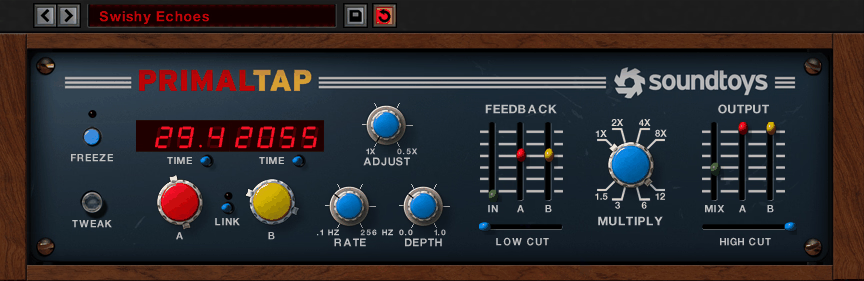
A specific recreation of the Prime Time hardware delay from the early 80s, complete with lo-fi digital artifacts, glitchy pitch shifting on time changes, and a doubling mode that adds a sense of thickness to anything running through it. I love how it makes modern productions feel like they belong to a completely different era.
- Crystallizer and MicroShift (Pitch and Width Effects):
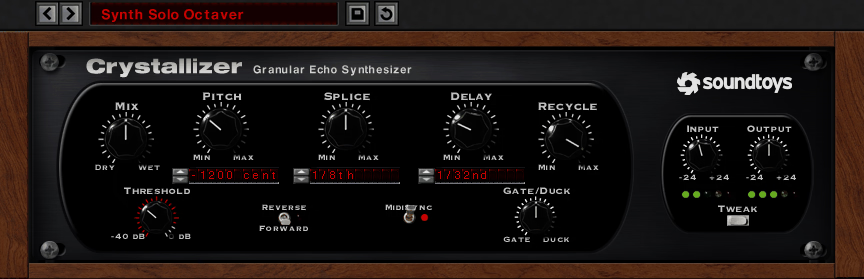
Crystallizer samples a window of audio, pitch-shifts it, and plays it back in reverse or forward with adjustable feedback, producing shimmering, crystalline textures that work beautifully on guitars, vocals, and synth pads. MicroShift recreates the classic studio pitch widening technique, adding dimension and stereo width through micro-pitch shifting in a way that stays mono-compatible and sits naturally in a professional mix.
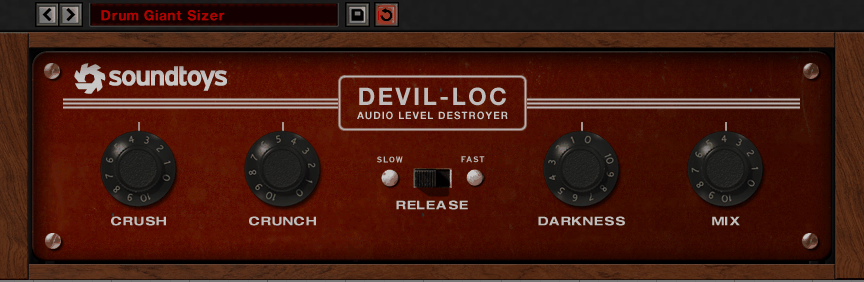
- Devil-Loc and Devil-Loc Deluxe (Aggressive Compression):
Devil-Loc is Soundtoys’ take on extreme smasher-style compression, built to crush transients and add aggressive character in ways that conventional compressors avoid. The Deluxe version adds additional control over the crunch and release behavior. I’d say these are the most deliberately destructive tools in the rack, and they’re excellent on room mics, parallel drum buses, and anywhere you want compression to be heard rather than felt.
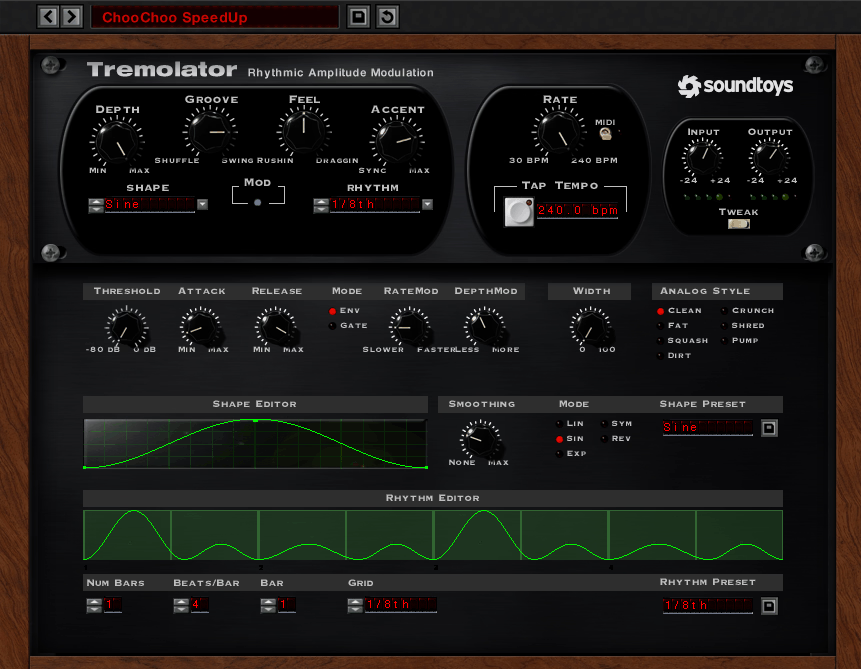
- Tremolator, PanMan, FilterFreak, and PhaseMistress (Rhythmic Modulation):
This is where the rack gets genuinely creative. Tremolator delivers beat-synced amplitude modulation, PanMan handles rhythmic autopanning with groove-aware timing, FilterFreak applies tempo-locked filter sweeps, and PhaseMistress brings deep, musical phasing, all lockable to a single unified tempo inside the rack. I found using two or three of these together with the Recycle feedback knob produces modulated ambience effects that would take complex DAW routing to replicate any other way.
- Sie-Q (Analog-Flavored EQ):
Sie-Q is a simple, musical EQ with analog character modeled on the sidechain EQ from a classic piece of hardware. It’s not a surgical tool, it’s the kind of EQ that adds as much character as it corrects, and inside a creative effects chain it’s particularly useful for tonal shaping between saturation and modulation stages without reaching outside the rack.
- Global Rack Controls (Recycle, Mix, Tempo):
I want to note that the global controls are arguably the most important feature of the whole thing. The Recycle knob feeds the rack’s output back into its own input, which lets you build modulated reverbs, cascading delays, and ambient textures that would require complicated routing in most DAWs.
Combined with the global Mix control for parallel processing and unified tempo lock across all rhythmic effects, the rack behaves like a single creative instrument rather than just a collection of plugins running in series.
You’re right, the bundle has 11 plugins and I had several completely wrong ones. Here’s the fully corrected section:
10. Minimal Audio: Everything Minimal Bundle
Best for: Mixing, Production
Minimal Audio has moved very quickly into serious territory for a relatively young developer, and the Everything Minimal Bundle is their most comprehensive offering, 11 plugins plus 33 preset packs, 9 wavetable packs, and 20 sample packs all included.
For me, what sets them apart is that their tools feel purpose-built for modern electronic music production, not just updated versions of classic concepts. The plugin list here covers synthesis, vocal processing, distortion, modulation, filtering, compression, reverb, and delay, so it’s a genuinely complete creative toolkit rather than a collection of similar tools.
Plugins included:
- Current 2 (Synthesizer and Sound Platform):
Current is the flagship instrument in the bundle and it’s genuinely deep. It’s built around a distraction-free Play View with an expressive dual XY pad that gives producers of any experience level immediate access to professional presets, while the engine underneath supports serious sound design with multiple synthesis engines you can audition and edit individually. I think it’s one of the more forward-thinking instruments in any bundle on this list.

- Evoke (Hypermodern Vocal Effect):
Evoke goes well beyond traditional pitch correction and vocoding through vocal resynthesis, a purpose-built approach that delivers results not possible with conventional vocal processing. The drag-and-drop workflow for harmonies and lead line transformation, combined with a full effects rack and powerful modulation, makes it a complete vocal production suite in a single plugin. I’d say this is one of the most distinctive tools in the entire bundle.

- Rift 2 (Hybrid Distortion):
Rift 2 takes distortion and completely reimagines it with a multi-polar processing engine, flexible multi-band crossover, physical modelling feedback, and advanced morphing filters. The pitch snapping, scale presets, and MIDI tracking blur the line between effect and instrument in a way that most distortion plugins never attempt. I found the curve sequencer for drawing custom modulation shapes and assigning them to any parameter particularly powerful for animated harmonic movement.

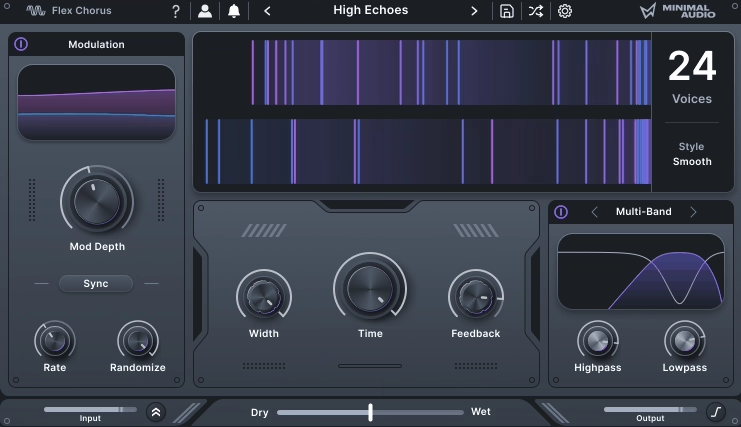
- Flex Chorus (Prismatic Chorus Effect):
Flex Chorus offers up to 24 voices with two distinct algorithm modes, Smooth mode for exceptionally deep and rich sound using human frequency perception, and Glass mode for glistening modern stereo effects. The onboard multiband and filtering controls mean you can apply wide chorus to the high end while preserving your low end completely, which is something most chorus plugins make you route around rather than handling natively.
- Cluster Delay (Tap Sequence Designer):
Cluster Delay offers up to eight processed delay taps with ramp, space, and scatter controls for sequencing complex delay patterns with minimal effort. The six routable integrated effects with built-in ducking, filters, and mid-side control make it far more than a conventional multi-tap delay. I realized that this isn’t a delay for simple echo effects, it’s a spatial design tool that places elements in three-dimensional space with unusual precision.
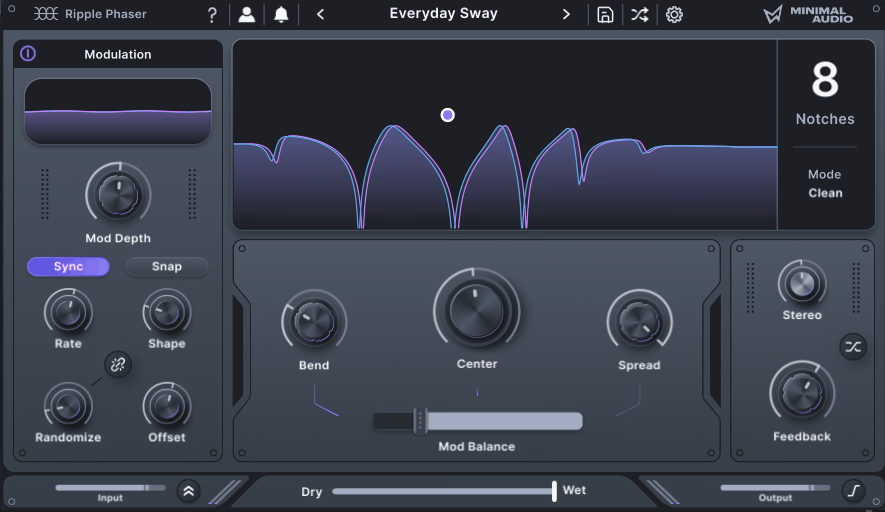
- Ripple Phaser (Multi-Mode Phase Manipulator):
Ripple Phaser goes beyond conventional phasing with exclusive filter modes and extreme phase shifting that inject liquid character and animated movement into a sound. I’d say it’s the most characterful modulation tool in the bundle, particularly useful on synths and pads where you want the phasing to feel like part of the sound rather than an effect applied on top.
- Morph EQ (Expressive EQ Designer):
Morph EQ’s core idea is its morphing feature that lets you draw custom filter paths and navigate between them with a single knob, which turns EQ into something closer to a performable instrument than a static correction tool. With seven filter types, real-time analysis, and a macro control that globally shifts and moves filter shapes, I’d say it’s more of an expressive filtering instrument than a corrective EQ, though it handles both roles effectively.
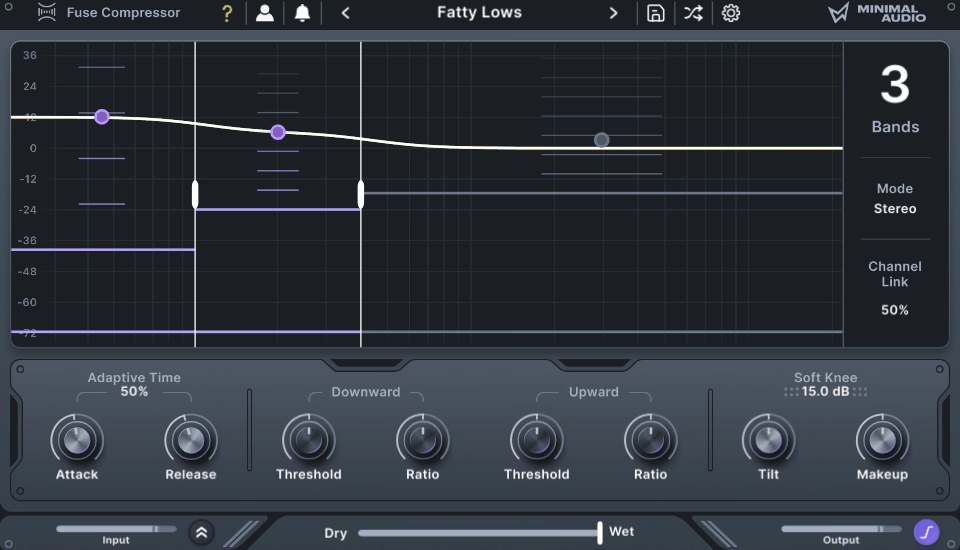
- Fuse Compressor (Dynamic Sculpting Effect):
Fuse Compressor offers up to six bands of dual compression, covering everything from transparent glue to hyper-detailed enhancement. I appreciate how thoughtfully the workflow is designed here, with macro ratio control, spectral tilt, and adaptive time reducing the typical complexity of multiband compression so you can focus on the sound rather than the settings. Mid-side processing, soft knee, and channel linking are all present for when you need precision.
- Swarm Reverb (Creative Dual-Stage Reverberator):
Swarm Reverb uses distinct early and late reflection algorithms to generate spaces from subtle room ambience to endless spatial decays, with pre-delay feedback and real-time adjustable size pushing it well beyond conventional reverb territory into genuine sound design. The built-in ducking and tempo-synced pre-delay mean it fits into a mix practically rather than requiring external routing to tame it.
- Hybrid Filter (Essential Multi-Mode Filter):
Hybrid Filter includes over 50 state-of-the-art filter types including custom morphing, formant, comb, and phaser modes, with a built-in low-frequency crossover that lets you experiment freely without disrupting your low end. The integrated envelope follower for modulating the morph and cutoff controls makes it a capable auto-filter as well as a static processing tool. I found it to be one of those utility plugins you end up inserting on more tracks than you expected.
- Wave Shifter (Frequency Modulation Effect):
Wave Shifter covers precise frequency shifting, ring modulation, and amp modulation with flexible frequency controls including BPM sync, tuning, and stereo spread. What makes it stand out is the internal FM and soft sync routing that unlocks effects typically found only inside synthesizers, along with a morphing LFO for designing evolving, animated effects. I noticed it’s particularly strong for creating rich resonances and cascading spatial effects through its feedback and filtering options.

11. Output FX Bundle
Best for: Mixing
Output is known primarily for their sample-based instruments, but their FX Bundle represents a deliberate move into the effects space and I think it deserves more attention than it usually gets. These are production-forward effects built for the way modern producers actually work, with a consistent emphasis on motion, texture, and sonic evolution over time.
- Portal (Granular FX):
Portal is a granular effects processor that breaks audio into grains, manipulates their pitch and timing, and reassembles them in ways that range from subtle shimmer to completely abstract texture. The realtime visualization makes it easy to understand what it’s doing, which speeds up creative decisions considerably.

- Movement (Rhythm Effects):
Movement is built around the idea of tempo-synced modulation of multiple effects simultaneously, with a single macro controlling the depth of filtering, tremolo, chorus, and other modulation effects in coordination. For producers who want rhythmically consistent motion in a mix, this simplifies a process that would otherwise require significant automation work.
- Thermal (Multi-Stage Distortion):
Thermal stacks five distortion modules in series, each selectable from a range of analog and digital distortion styles. The routing flexibility means you can build distortion chains that would normally require multiple plugins, and the pre/post filter stages give you precise tonal control before and after each distortion stage.

- Thermal and Portal Combined Workflow:
What I appreciate about the Output FX tools as a set is that they’re built around the concept of movement and texture rather than static processing. Effects evolve over time in sync with tempo or input dynamics, which makes them particularly well-suited for building tension in scoring and cinematic production work.
12. Eventide Clockworks Bundle
Best for: Mixing
Eventide’s hardware processors, the H910, H949, SP2016, and Omnipressor, are the kind of equipment that engineers talk about in reverential tones. They defined the sound of certain records so completely that the specific character of their processing became part of the musical language itself. The Clockworks Bundle is Eventide’s collection of faithful recreations of those landmark hardware units, and if you’ve ever wanted access to that sound without chasing down vintage gear, this is where you get it.
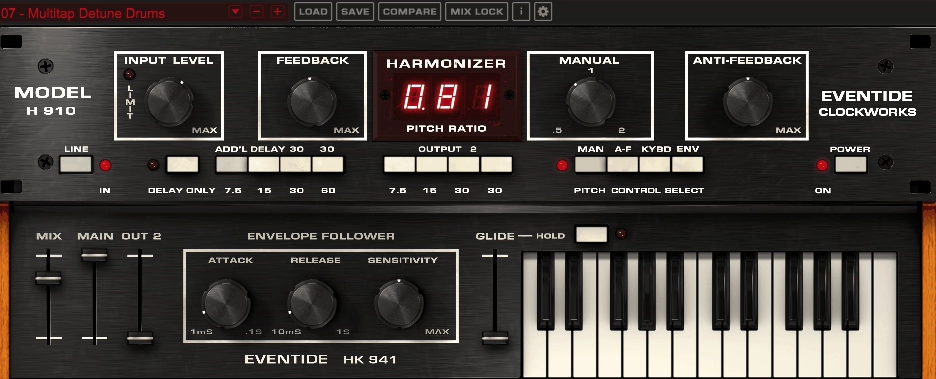
- H910 Harmonizer (Pitch and Delay):
The original H910 was the world’s first commercially available digital audio effects processor, and this plugin recreates its pitch shifting with feedback and delay, including the glitchy, lo-fi digital artifacts that made it so distinctive on records by David Bowie and Led Zeppelin. I must say, there is genuinely no other plugin that sounds like this.
- H949 Harmonizer (Smoother Pitch Shifting):
Where the H910 was deliberately unstable, the H949 was Eventide’s refinement, smoother pitch shifting, true flanging, and a more controllable micro-pitch shifting mode. The two work brilliantly together for layered pitch effects that have a three-dimensional presence that’s hard to achieve any other way.
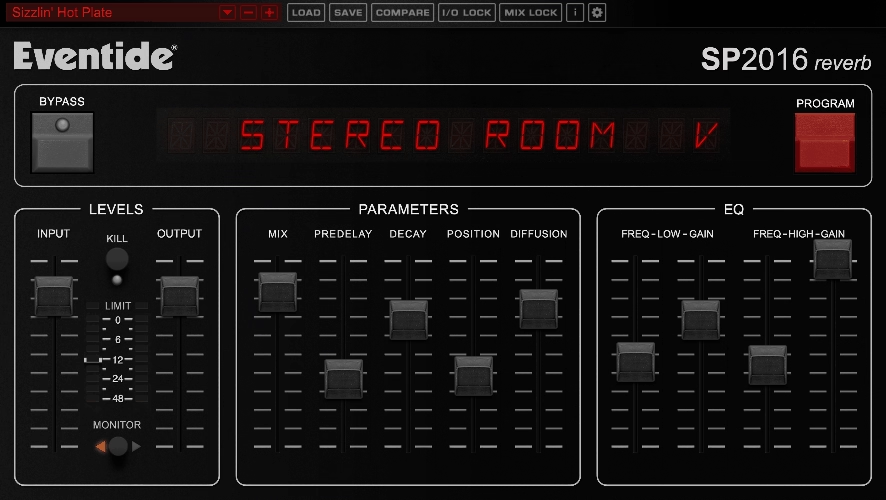
The SP2016 powered the reverb sound on countless hit records of the 80s and 90s, specifically the Room, Plate, and Stereo Room algorithms, which have a particular density and shimmer that modern reverbs struggle to replicate. I realized when using this that some reverb textures genuinely require this specific hardware character to work.
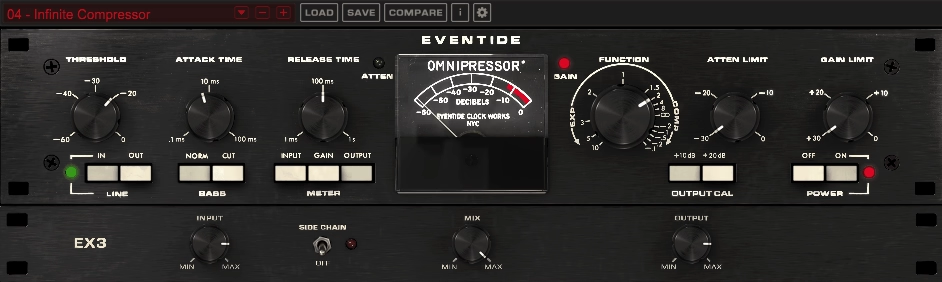
- Omnipressor (Dynamics Processor):
The Omnipressor is unlike any other compressor because it can invert its compression ratio below 1:1, effectively creating expansion or gain inversion effects that don’t exist in any other dynamic processor. The range goes from conventional compression to full gain inversion, passing through expansion modes that are genuinely unique to this hardware.
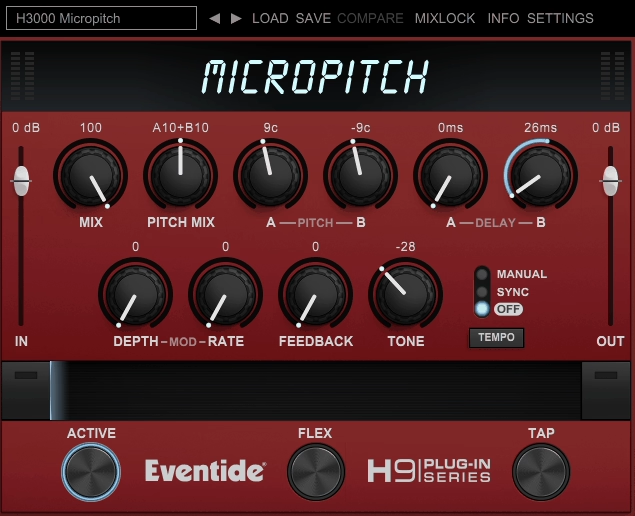
- MicroPitch (Pitch Enhancement):
MicroPitch recreates the classic micro-pitch shifting technique used on thousands of professional mixes to add dimension, width, and a subtle chorus-like enhancement to instruments and vocals. The plugin version adds stereo control and delay time adjustments that expand meaningfully on the original hardware’s capabilities.
Whether you’re building your first serious toolkit or filling in the gaps of an already developed setup, any of these bundles will move you forward. I’d say the most important thing is matching the bundle to where your workflow actually lives. A mastering-focused bundle doesn’t help you much if your gap is in production creativity, and vice versa. Pick the one that solves your actual problem, and you’ll use it every session.

Hello, I’m Viliam, I started this audio plugin focused blog to keep you updated on the latest trends, news and everything plugin related. I’ll put the most emphasis on the topics covering best VST, AU and AAX plugins. If you find some great plugin suggestions for us to include on our site, feel free to let me know, so I can take a look!