Finding the right guitar Kontakt library can transform your productions, whether you need electric guitars for rock and pop, acoustic guitars for singer-songwriter tracks, or bass guitars for solid low-end foundation.
The best guitar libraries in 2026 balance playability, tonal consistency, and workflow efficiency. Whether you need pattern-based rhythm guitars that adapt to chord changes, realistic bass lines with expressive legato, or clean tones ready for external processing, the library you choose directly affects how quickly you move from idea to finished track.
Some libraries prioritize instant results through pre-recorded phrases and groove engines. Others reward careful MIDI programming with velocity-sensitive behavior and round-robin sampling that eliminates robotic repetition.
I’ve tested libraries ranging from pattern-driven electric guitars to fingerstyle acoustic engines and performance-oriented bass instruments. Each approaches guitar sampling differently. Some bundle hundreds of tempo-synced patterns organized by genre. Others focus on manual control with articulation switching and legato scripting.
The variance is significant, and what works for pop rhythm guitar won’t necessarily fit exposed acoustic performances or aggressive bass lines. This list covers the most practical options for composers and producers who need professional guitar sounds without recording live instruments or building complex MIDI arrangements from scratch.
| Plugin Name | Best For | Engine Type | Key Strength | Pros | Cons |
|---|---|---|---|---|---|
| 1. Electric Sunburst Deluxe | Pop, Rock, Cinematic | Pattern + Melody Layer | Adaptive chord transitions | 237 Patterns, Multi-Style | Limited Lead Expression |
| 2. Electric Vintage | Funk, Soul, Retro | Chord + Rhythm Patterns | Groove Accuracy | Dynamic Strums, Quick Workflow | Single Guitar Tone |
| 3. Electric Ruby Deluxe | Indie, Pop, Alternative | Section-Based Patterns | Smooth Song Progressions | 200+ Evolving Patterns, MIDI Export | Controlled Tonal Range |
| 4. Electric Storm Deluxe | Modern Rock, Metal | Chord + Pattern Engine | High-Gain Rhythm | 200+ Patterns, Layer-Friendly | Genre-Limited Styles |
| 5. Electric Mint | Pop, Funk, R&B | Pattern-Based Engine | Tight, Controlled Rhythms | Muted Strums, Consistent Tonal Balance | Lead Lines Restricted |
| 6. Acoustic Sunburst Deluxe | Pop, Folk, | Pattern + Melody Engine | Predictable Strumming & Picking | Melody Layering, Stereo Doubling Options | Not Solo Performance Ready |
| 7. Picked Acoustic | Layered Acoustic Parts | Picked Patterns Engine | Precision Timing Control | Auto Voicing, Clean Midrange Tone | Fingerstyle Complexity Limited |
| 8. Strummed Acoustic 2 | Pop, Folk, Cinematic | Pattern-Based Strumming | Adaptive Chord Voicings | Humanized Timing, Wide Pattern Library | No Lead or Solo Articulations |
| 9. Scarbee Rickenbacker Bass | Rock, Funk, Pop | Sampled + Scripted Engine | Punchy Midrange Presence | Fingered & Muted Articulations, Round-Robin | High CPU Load |
| 10. Jam Bass | Pop, Hip-Hop, Funk | Phrase-Based Engine | Micro-Timing Accuracy | Chord-Adaptive Phrases, Style-Specific Sets | Expressive Solo Limited |
1. Session Guitarist: Electric Sunburst Deluxe – Best Pop, Rock, Cinematic

What sets Sunburst Deluxe apart is how it prioritizes playable, genre-specific performances over trying to simulate every guitar technique in isolation. Developed with Big Wave Audio, this library uses a split MIDI approach where one hand controls chords while the other triggers strumming and picking patterns.
This design enforces realistic transitions and voicings instead of letting you play physically impossible guitar parts. You get 237 total patterns including 27 strumming patterns, 28 arpeggio patterns, and reversed patterns, plus a second melodic instrument for playing your own melodies.
The Deluxe version expands significantly on the original by adding three distinct electric guitar models, each sampled with its own tonal character. What I really like is the pattern-based engine that includes hundreds of rhythm patterns spread across multiple styles, tempos, and rhythmic feels.
These patterns aren’t static loops. They adapt to the chord you’re holding, changing voicings and string usage automatically. I should mention the patterns are tempo-aware and synced to your DAW, playable at any tempo between approximately 60-65 BPM up to 160 BPM and above without time-stretching.
The library includes 31 song presets that group patterns into coordinated sets suitable for everything from contemporary pop to electronic tracks.
Here is what you get:
- 237 Total Patterns with Comprehensive Coverage
The pattern library includes 27 new strumming patterns, 28 new arpeggio patterns with an advanced picking engine, and reversed patterns that add entirely new sonic possibilities. Patterns cover pre-recorded riffs, strumming, and picking of arpeggiated chords in open, muted, and flageolet playing styles.
When you are sketching song ideas or building cues, the song presets contain 4-6 patterns that work well together plus a matching sound preset. This eliminates the guesswork of which patterns complement each other.
- Second Melodic Instrument for Custom Playing
The melody instrument lets you play your own melodies and combine them with integrated patterns. You get open, muted, flageolet, and tremolo articulations, each playable with fingers or plectrum. Hammer-on and pull-off samples are added automatically when velocity changes significantly between overlapping notes.
You will like this because you’re not limited to pre-recorded patterns. You can write note-by-note parts that feel like a real guitarist performing.
- Real-Time Bending and Multiple Vibrato Controls
The Deluxe version adds real-time bending with innovative pitch bend presets that allow bending only selected notes of a voicing to emulate typical guitar techniques. You get multiple vibrato speeds (slow, medium, fast) controlled via modwheel. This adds expression to parts that pattern-only libraries can’t deliver.
- Comprehensive Amp and Effects Chain
Three distortion and four modulation effects provide classic pedal sounds. Five amplifier models and ten cabinet choices let you dial in unique tones. The signal chain includes console EQ, two compressors, tape emulation, reverb, delay, and tape delay.
Studio-grade effects including Replika Delay, algorithmic reverb, and meticulously emulated stomp boxes (Chorus, Flanger, Phaser) create release-ready results entirely within the instrument.
- MIDI Export and Pattern Customization
Patterns can be exported as MIDI for advanced workflows. You can edit timing, accents, swing, and articulation emphasis to avoid the preset loop feeling. When you need rhythm parts to evolve subtly across a song, you can export the MIDI and manually tweak specific hits or layer additional guitars.
The limitations: this isn’t ideal for expressive lead guitar work or exposed solo performances. I don’t think the melodic options have the nuanced articulation control needed for convincing solos. The library relies heavily on patterns, so it can sound repetitive if you lean on the same grooves without modification.
The tonal shaping is efficient but may feel limited if you want deep amp-sim customization beyond what’s provided.
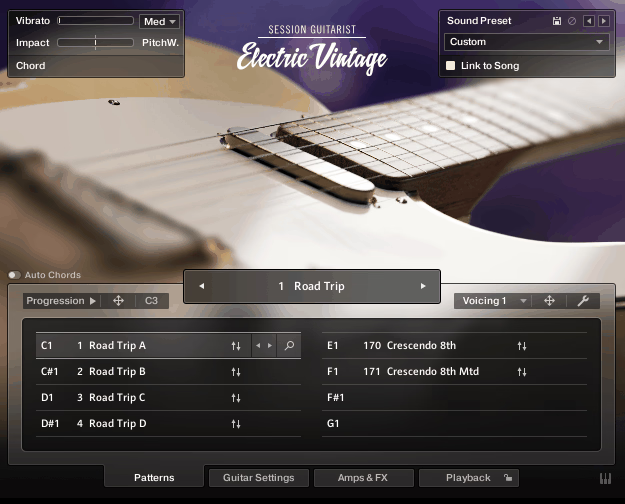
2. Native Instruments Session Guitarist Electric Vintage – Best Funk, Soul, Retro

Instead of aiming for maximum flexibility, Electric Vintage guitar Kontakt library is built around a very specific idea: classic rhythm guitar that locks into a groove without fuss. I would say this library is less about sound exploration and more about dependable musical behavior.
If you are working in funk, soul, pop, or retro influenced tracks, it focuses on getting believable rhythm parts down fast rather than offering endless tonal choices.
It runs in Kontakt Player and uses NI’s established Session Guitarist performance system, which means you guide how the guitar plays instead of programming every note. I think this approach still makes sense for those who want convincing results without deep guitar knowledge or recording setups.
- Pattern Driven Performance Engine
Electric Vintage is built around a chord and pattern workflow, where you trigger chords with one hand and rhythm patterns with the other. The engine automatically handles string choice, voicings, and realistic transitions between chords.
I would say this is where the library earns its keep, because it avoids the stiff or unnatural movement that often happens with manually programmed MIDI guitars. With over 100 rhythm patterns, you can quickly sketch verses, choruses, and bridges while keeping everything musically consistent.
- Genre Focused Rhythm Content
Rather than covering every style, the patterns are clearly designed for funk, soul, pop, disco, and early rock inspired grooves. You get tight 16th note strums, muted chops, and syncopated rhythms that sit inside the groove instead of fighting it. I think this makes it especially useful when the guitar is meant to support drums and bass rather than stand out as a lead element. The patterns respond dynamically to chord changes, adjusting articulation in a way that feels intentional rather than mechanical.
- Single Guitar Cohesion
It uses one vintage style electric guitar, sampled deeply enough to stay consistent across all patterns. I would say this limitation is actually a strength. Because the tone does not change drastically between presets, it is easier to mix and layer with other instruments. The guitar naturally occupies the midrange, helping it cut through without aggressive EQ or compression.
- Minimal Amp and Effects Section
The built in amp and effects are intentionally restrained. You get enough control to place the guitar in a mix, but it is not designed as a sound design playground. I think this works well if you already rely on DAW effects or external amp simulators. The relatively dry output also makes it easier to blend Electric Vintage into existing productions without fighting baked in processing.
- Workflow and MIDI Export
This guitar library is lightweight and quick to use, with moderate CPU usage and a straightforward interface. Patterns can be exported as MIDI, which gives you the option to refine rhythms manually or double parts with other instruments. For songwriting, demos, or background cues, this flexibility helps extend the life of the library beyond its internal engine.
In short, I would say Electric Vintage is best for producers who value speed, groove accuracy, and stylistic focus over deep customization. It will not replace a live guitarist or cover modern high gain styles, but within its niche, it remains a practical and musically reliable rhythm guitar tool!
3. Session Guitarist: Electric Ruby Deluxe – Best Indie, Pop, Alternative

If Electric Vintage feels like a throwback, Electric Ruby Deluxe feels deliberately current. I would say this library is built for situations where guitars are present but controlled, shaping momentum rather than stealing attention. From the first few minutes, it’s clear the goal is modern rhythm guitar that behaves predictably inside a dense mix, which matters a lot if you’re working from a bedroom setup with limited monitoring or time.
Electric Ruby Deluxe runs in Kontakt Player and belongs to the newer Deluxe generation, which expands the Session Guitarist concept without breaking its core idea. You’re still directing performance rather than programming strings and frets, but I think the added depth here makes it feel more adaptable for contemporary pop, indie, alternative, and cinematic songwriting.
Modern Pattern-Oriented Performance Engine
Electric Ruby Deluxe is driven by a pattern system designed around song structures rather than short groove loops. You trigger chords with one hand and patterns with the other, but the engine focuses on smooth transitions between sections like verse, pre-chorus, and chorus.
This matters because many of the over 200 patterns are designed to evolve subtly, reducing the “loop fatigue” that can show up in longer arrangements.
Balanced Voicing and Register Control
One thing that stands out though is how the guitar consistently sits in a controlled midrange. The voicings avoid excessive low-end build-up and harsh high transients, which I think makes layering with synths, pads, vocals, and bass far easier. You can change chords and patterns without the guitar suddenly jumping registers or clashing with other elements.
Expanded Tone Shaping Without Overdesign
Compared to older Session Guitarist titles, Ruby Deluxe offers more tonal flexibility, but it stays grounded. The internal signal chain focuses on clean to lightly driven tones rather than extremes. I don’t think it’s meant to replace external amp sims, but it gives you enough shaping to keep tones consistent across dozens of presets without constant tweaking.
Songwriting-Friendly Pattern Switching and MIDI Export
Patterns can be automated per section, which makes it easy to map out a full song quickly. You can also export patterns as MIDI, letting you refine rhythms or double parts later. This could be especially useful if you sketch ideas fast and polish them later, rather than committing everything upfront.
Efficient Workflow for In-The-Box Producers
CPU usage stays reasonable, and the interface prioritizes musical decisions over technical ones. I think this helps you stay focused on arrangement rather than sound design. It also integrates smoothly into NI-based templates, which matters if you’re already using Kontakt instruments regularly.
In short, I would say Electric Ruby Deluxe is about restraint and reliability. It doesn’t aim to impress with extreme tones or flashy articulations, but it delivers consistent, modern rhythm guitar that fits naturally into contemporary productions. If you want guitars that support your track without demanding constant fixes, this one makes a lot of practical sense.
4. Session Guitarist: Electric Storm Deluxe – Best Modern Rock, Metal

Electric Storm Deluxe is designed for modern rock, aggressive pop, and trailer-oriented cues where guitars need to lock tightly with drums and bass.
The patterns and chord triggers are simple but effective: you play basic chords and the engine handles picking style, muting, and rhythm density. I really like how predictable this makes the performance, switching from verse to chorus or layering guitars is straightforward and doesn’t require constant MIDI cleanup.
The tonal design is practical and midrange-focused, which I appreciate for mixing. I can stack the guitar with synths, pads, or other instruments without the tone suddenly becoming harsh or buried. I would recommend using the internal amp and effects as a starting point, but you can also route the guitar through external plugins for more customization if needed.
MIDI export is handy, allowing me to refine, double, or adapt patterns for more complex arrangements. For me, this combination of reliable rhythm patterns, stable tone, and manageable workflow makes Electric Storm Deluxe a solid choice when I need structured, heavy rhythm guitar quickly.
- High-gain rhythm voicing
I think the most important aspect is the controlled high-gain sound. It maintains clarity without excess low-end or harsh high frequencies, which keeps the guitar present in dense mixes. I like that even with fast chugs or syncopated riffs, the tone stays balanced, making layering with drums and bass simple.
- Extensive pattern library
The library comes with over 200 patterns, covering intros, verses, builds, and choruses.It’s cool how each pattern has subtle variations to avoid repetitive loops. You can automate pattern switching, and I would recommend alternating dynamics and intensity to maintain a sense of movement across the track.
- Reliable signal chain
Internal amp and effects are designed for consistency rather than flexibility. Patterns respond predictably to velocity changes, and switching between chords or riffs doesn’t alter the tone drastically. For me, this reliability is crucial for staying efficient in fast production sessions.
- Pattern-driven workflow
I like how the separation between chord input and rhythm patterns simplifies workflow. You focus on the musical structure, while the engine manages picking style, muted notes, and small rhythmic variations. This makes it especially practical for bedroom producers or those without advanced guitar programming experience.
5. Session Guitarist: Electric Mint – Pop, Funk, R&B

Session Guitarist Electric Mint focuses on tight, modern clean and lightly driven rhythm guitar instead of vintage character or high-gain aggression.
This library is built specifically for pop, indie, funk-influenced, and contemporary R&B arrangements where guitars need to feel present and rhythmic without dominating the mix. It emphasizes consistency, timing, and tonal balance over showcasing expressive guitar performance.
Also, the instrument is designed to slot into productions where guitars function as arrangement glue that locks with drums and reinforces groove in a controlled, repeatable way.
The chord-and-pattern engine uses patterns voiced and programmed differently from rock or vintage libraries. What I really like is the emphasis on muted strums, syncopated picking, ghosted notes, and tight sixteenth-note phrasing common in modern pop and funk-derived guitar parts. The engine handles dynamic restraint exceptionally well because even when patterns get busy, they rarely feel cluttered..
I think chord voicings are intentionally economical, avoiding wide string spreads that would sound unrealistic or messy when played clean. This makes stacking guitars with synths, keys, and vocals straightforward without constant EQ correction!
Things to know:
- Clean-Focused Tonal Design for Modern Pop
The internal signal chain avoids extreme coloration and focuses on clarity, transient definition, and midrange balance. Tones are designed to survive heavy compression, sidechaining, and dense mixes without falling apart.
Instead of endless tonal variation, you get a curated range of clean to lightly driven sounds that feel production-ready. It’s good because the tonal behavior remains stable across patterns, maintaining a consistent sonic footprint throughout your track without sudden spikes in brightness or volume when switching rhythmic ideas.
- Pattern Library Built for Songwriting and Arrangement
Patterns feel like parts a session guitarist would play under verses, pre-choruses, and choruses rather than attention-grabbing hooks. The rhythmic language fits well with programmed drums and MIDI bass, which is common in bedroom production setups.
If you are working on topline-driven music, these patterns support vocals without competing for space. Velocity and pattern switching allow subtle control over intensity rather than dramatic articulation changes, so you can keep the same groove across multiple song sections and simply adjust feel.
- Economical Chord Voicings for Mix Compatibility
Chord voicings avoid wide string spreads that sound unrealistic or messy when played clean. This makes it easier to stack guitars with other instruments without extensive editing. The controlled transient response works well for tight rhythm work in dense arrangements.
I would recommend this for producers working in small rooms or on headphones where judging guitar tone accurately can be difficult.
- Modest CPU Usage with Focused Interface
This guitar Kontakt library keeps sessions responsive even on laptops or minimal setups. It works well both as a primary rhythm guitar and as a secondary layer to add movement behind synths or keyboards. Because the guitar isn’t overly expressive, it blends naturally into hybrid arrangements.
The interface stays focused on musical decisions rather than technical ones, which keeps workflow moving.
The limitations: Electric Mint isn’t designed for lead lines, expressive bends, or exposed solo guitar parts. I don’t think it’s the right choice if you’re looking for gritty character, vintage imperfections, or dramatic tonal shifts.
The articulation set is intentionally narrow and rhythm-focused. It won’t replace a real guitarist for styles that rely heavily on nuanced dynamics or expressive phrasing. The tone is deliberately modern and polished, which may feel too clean and controlled for producers seeking raw, unprocessed guitar sounds.
6. Session Guitarist: Acoustic Sunburst Deluxe – Best Pop, Folk

I think Acoustic Sunburst Deluxe works best when you treat it as a comprehensive acoustic guitar writing tool rather than a realism-first sampled instrument for exposed solo performances.
The Deluxe aspect comes from broader scope that combines pattern-based strumming and picking with a melody instrument for single-note lines, plus additional voicing control intended to cover full songs.
I would say this makes it relevant for bedroom producers working on pop, folk, singer-songwriter, cinematic cues, or underscore where acoustic guitar is part of the arrangement fabric instead of standing completely alone.
The library is built around a steel-string acoustic sound that aims for balance rather than intimacy. The tone is generally even across the frequency spectrum with controlled low end and clear but not overly bright top. This makes it easier to fit into mixes without heavy corrective EQ, especially in home studio environments.
The chord-and-pattern engine handles realistic right-hand behavior while you focus on harmony and structure. Patterns cover common acoustic techniques such as steady strumming, syncopated rhythms, arpeggiated picking, and muted strokes.
I would say the patterns are musically conservative, designed to sit behind a song without drawing attention.
Here is what you get:
- Pattern-Driven Strumming and Picking Engine
Chords are triggered with single keys while patterns define rhythmic movement. The engine covers common acoustic techniques like steady strumming, syncopated rhythms, arpeggiated picking, and muted strokes.
When you are writing demos or sketching cues, these patterns behave like a virtual session guitarist performing parts that support vocals or piano without distraction. The stable timing and dynamics suit layered mixes where the guitar needs to be predictable and consistent.
- Dedicated Melody Instrument for Single-Note Parts
The separate melody instrument lets you play single-note lines, simple riffs, or doubled melodies. This helps when adding definition to intros or transitions where strumming patterns alone wouldn’t fit.
The melody instrument follows the same philosophy as the pattern engine: practical rather than flashy. I like this for building full song sections by switching between strumming patterns and melodic passages without loading multiple instruments.
- Doubling and Stereo Spread Options
Built-in options for doubling and stereo spread make parts sound wider and more produced without manual layering. This is particularly useful when building choruses or fuller sections quickly.
You can adjust the stereo width to fit the arrangement, keeping the guitar centered for verses or spreading it wide for impactful choruses. The doubling feels natural instead of artificially processed.
- Controlled Dynamics for Mix Compatibility
The sound doesn’t aggressively highlight finger noise, fret buzz, or micro-dynamics. For dense arrangements or cinematic cues, this restraint helps the guitar behave predictably without sudden transient spikes that punch through the mix inappropriately.
I would recommend this approach for home studio environments where controlling dynamics manually would require additional processing. The even frequency response means less time spent on corrective EQ to make the guitar sit well with other elements.
- Fast Workflow for Composition
You can sketch full song sections by switching patterns, adjusting chord voicings, and controlling intensity with velocity or automation. Everything is internally managed, which suits producers who don’t want to spend time editing MIDI note-by-note to simulate guitar logic. When I’m building acoustic arrangements quickly, the speed and repeatability keep the creative flow going instead of getting stuck in technical details.
The limitations: this isn’t ideal for exposed, solo acoustic performances where realism and nuance are critical. I don’t think the melody instrument replaces a fully detailed acoustic guitar sampler for expressive lead playing.
The pattern engine can sound repetitive if you lean on it too heavily without variation. The controlled dynamics mean it may feel less alive compared to a real guitarist in sparse arrangements. Producers looking for raw realism, fingerstyle nuance, or intimate solo guitar performances may find this approach limiting.
7. Session Guitarist: Picked Acoustic – Best Layered Acoustic

This library fills a very practical niche by focusing exclusively on picked, rhythm-centric acoustic guitar parts instead of trying to cover every possible technique.
The interface of Picked Acoustic is designed more around musical control than technical tweaking, which becomes clear the moment you start using it. This isn’t a general acoustic guitar aimed at covering everything. It’s about delivering tight, picked patterns that feel natural and musically grounded.
The engine separates harmony and rhythm where chords are played with left-hand MIDI input while the right hand triggers patterns or articulations. I really like how the engine interprets these intelligently, handling voicings and timing so the resulting parts avoid the stiffness you often get in hand-programmed MIDI guitars.
The patterns are deliberately conservative. There’s no sweeping fingerstyle complexity or expressive legato soloing. Instead, the emphasis is on precision, groove, and performance logic needed when writing backing parts for vocals or layered arrangements.
The tonal behavior delivers a clean, mid-centric acoustic sound that doesn’t fight with drums or bass. The attack of the pick is clear but not overly bright or brittle, and the instrument avoids excessive body resonance that could muddy the mix.
Here is what you get:
- Rhythm-Centric Picked Patterns for Supporting Roles
The library is engineered around picked rhythmic content rather than strums or solos. Patterns focus on precise, repeatable motion with clean attack, making them easy to fit under vocals or layered instruments without standing out inappropriately.
When you are building verses or reinforcing rhythm sections, these patterns add acoustic motion to the mix without requiring attention. You’re encouraged to think in terms of role within the arrangement rather than micro-performances, which helps avoid over-editing and keeps workflow efficient.
- Intelligent Performance Engine with Automatic Voicing
The engine interprets chord input and adjusts voicings automatically. Rather than writing every single string movement, you play basic chord shapes and let the instrument handle string choice and timing nuances. This speeds up production significantly because you’re not programming each note individually to simulate guitar logic.
The engine understands how picked acoustic parts should behave and enforces realistic transitions instead of letting you play physically impossible movements.
- Clean, Mix-Ready Tone with Controlled Resonance
The tonal character is controlled and transparent, avoiding overly warm resonance or harsh pick click. This helps the acoustic sit well with programmed drums and synth elements, which is common in home studio workflows.
Because acoustic parts are often layered under other elements in modern production, this controlled tonal footprint is more useful than an overly colored sample set. The mid-centric sound placement means less time sculpting EQ to make the guitar work alongside other instruments.
- CPU-Efficient Integration for Template Workflows
Running in Kontakt Player, the instrument is CPU-efficient and easy to slot into templates. The focus on performance logic over deep sound design means you spend more time writing music and less time adjusting parameters. I would recommend combining Picked Acoustic with external effects or amp simulations if you need tonal depth beyond the core clean sound.
The limitations: Picked Acoustic is not well suited for expressive acoustic solos, highly dynamic fingerstyle passages, or genres demanding nuance and articulation beyond steady picked movement.
It’s not a replacement for a session musician or a library built around detailed performance captures. The articulation range is too narrow for those cases. Producers needing highly nuanced acoustic expression will find this limiting. Instead, it excels in supporting roles like filling out verses, reinforcing rhythm, or adding acoustic motion to a mix without drawing inappropriate attention, so keep that in mind.
8. Session Guitarist: Strummed Acoustic 2 – Best Pop, Folk #2

Strummed Acoustic 2 guitar Kontakt library is built around delivering convincing, rhythmically accurate acoustic strumming without requiring deep guitar knowledge or manual MIDI programming.
This sits firmly in the arrangement-first category rather than performance-driven realism, designed for producers who need dependable acoustic rhythm parts that lock tightly to tempo and song structure. The focus is on playable strumming patterns, chord intelligence, and timing consistency, making it particularly useful for pop, indie, folk, singer-songwriter, and light cinematic work.
At the core of Strummed Acoustic 2 is a pattern-based strumming engine that separates harmonic input from rhythmic performance. You play chords in one range of the keyboard while strumming patterns are triggered in another. I think this separation is one of the library’s biggest strengths because it allows fast experimentation without rewriting MIDI. Patterns cover a wide range of musical feels, from straight eighth-note strums to syncopated and accented grooves.
The patterns are structured to reflect realistic downstroke and upstroke behavior rather than generic rhythmic chopping, which makes transitions between patterns feel musical instead of mechanical. The engine includes adaptive voicing logic that internally adjusts chord shapes to avoid impossible stretches or awkward inversions.
Here is what you get:
- Pattern-Driven Strumming with Realistic Down/Up Stroke Behavior
Patterns are embedded with downstroke and upstroke behavior that reflects how real guitarists move their right hand. This makes the strumming feel natural instead of mechanically chopped.
You trigger strumming patterns in one keyboard range while playing chords in another, which separates harmonic decisions from rhythmic performance. When you are sketching complete song sections quickly, you can combine simple chord progressions with pattern changes between sections using minimal automation for dynamics.
This workflow suits demo production, songwriting, and media cues where acoustic guitar supports the composition rather than leading it.
- Adaptive Voicing Logic with Chord Recognition
The engine internally adjusts chord shapes to avoid impossible stretches or awkward inversions. Even when feeding the instrument simple triads or keyboard-style voicings, the adaptive logic maintains realism. I like this because you don’t need to understand guitar voicing theory to get believable results. The chord recognition understands what you’re trying to play and adjusts string choices accordingly.
- Timing Offsets and Velocity Variation for Human Feel
Rather than sounding perfectly quantized, patterns include subtle timing offsets and velocity variation that simulate a human guitarist’s right-hand motion. This is especially noticeable in slower tempos where rigid strumming would sound artificial.
Controls for tightening or loosening the feel let you adapt the groove to different genres, from tight pop productions to looser folk arrangements. I would recommend adjusting these controls based on whether your track needs mechanical precision or organic looseness.
- Balanced, Mix-Ready Tone with Minimal EQ Needs
The tone is neither overly bright nor overly boomy, which makes placing it under vocals or alongside dense arrangements straightforward. The library includes tone-shaping and doubling options that allow subtle widening or emphasis without turning the instrument into a sound-design tool.
These features support arrangement clarity rather than creative experimentation. The neutrality is intentional and reduces the need for corrective EQ in home studio environments.
The limitations: Strummed Acoustic 2 doesn’t offer melodic lead playing, fingerstyle articulation, or detailed per-string control. I don’t think it’s the right choice if your project requires expressive acoustic guitar performances or exposed solo parts.
The timing flexibility is bound to the pattern system, so you’re shaping feel within predefined musical behavior rather than freely performing individual strums. Patterns can become repetitive if overused, especially in sparse arrangements. Variation depends on switching patterns and dynamics rather than nuanced performance gestures.
9. Scarbee Rickenbacker Bass – Best Rock, Funk, Pop

This bass library captures the distinctive tone of the classic Rickenbacker 4003 with remarkable faithfulness. Unlike many bass libraries that aim for generic low-end support, this instrument emphasizes character and definition through the Rickenbacker’s punchy midrange and growling tone.
Scarbee Rickenbacker Bass is built with extensive scripting to ensure playability and realism, focusing on natural string response, dynamic control, and smooth articulations that maintain clarity in mixes. It’s more about authentic performance replication where the bass feels alive even in a virtual environment.
Scarbee’s attention to string-level sampling and round-robin variation is immediately noticeable. Every note is captured in multiple velocity layers, which allows dynamic playing from soft fingerstyle to aggressive plucking. I would recommend experimenting with velocity scaling because it directly affects tonal warmth and attack realism.
The library includes multiple articulations including fingered notes, slides, and muted palm hits that you can switch seamlessly via key switches. This approach avoids robotic repetition common with sampled instruments.
The recorded tone features the Rickenbacker’s growling midrange, punchy lows, and slightly present highs, making it ideal for genres where bass must cut through dense arrangements.
- Round-Robin and Multiple Velocity Layers for Natural Feel
Every note is captured in multiple velocity layers that create dynamic response from soft fingerstyle to aggressive plucking. Round-robin variation ensures you don’t hear the same sample twice in succession, which eliminates the mechanical repetition that plagues many sampled bass instruments.
When you are programming bass lines, the velocity scaling directly affects tonal warmth and attack realism, giving you expressive control over how the bass sits in the mix. This makes the instrument feel responsive and alive rather than static.
- Multiple Articulations with Seamless Key Switch Control
The library covers fingered notes, slides, hammer-ons, and muted palm hits that switch via key switches. You can program realistic bass lines with minimal editing effort because the articulation variety handles performance nuance automatically.
I really like how this preserves the natural flow of a real bassist’s playing without requiring extensive MIDI programming. Legato programming, slides, and hammer-ons work in a way that feels like writing for an actual player.
- Iconic Rickenbacker Tone with Punchy Midrange
The recorded tone is immediately recognizable with the Rickenbacker’s growling midrange, punchy lows, and slightly present highs. This makes the bass cut through dense arrangements without overpowering other elements.
The tonal character suits rock, progressive music, funk, soul, and hybrid cinematic projects where the bass needs definition and presence. The midrange growl is essential for styles where the bass line carries melodic or rhythmic importance beyond simple low-end support.
- Built-In EQ and Amp Simulation for Tonal Shaping
The library includes EQ and amp simulation options directly within Kontakt, letting you shape tone without external processing.
You can subtly emphasize low-end body, add presence to mids, or tweak brightness for cleaner articulation. I think this is especially useful for bedroom producers without access to hardware amplifiers. The tone-shaping capabilities keep workflow streamlined by handling most tonal adjustments internally.
- Tempo Integration and Layering Compatibility
The instrument integrates well with DAW tempo and can layer alongside other Scarbee instruments like Mark I or Pre-Bass to create hybrid low-end textures. This versatility suits pop, rock, funk, or hybrid cinematic projects where you need multiple bass tones working together.
The limitations: the library focuses on classic Rickenbacker sound, which may not suit producers looking for overly modern or heavily processed bass tones. I don’t think it’s the right choice for extremely fast, percussive slap bass lines because it can feel slightly rigid compared to specialized slap bass libraries. The scripting and dynamic layers can be CPU-intensive in large sessions with multiple instances.
It excels most in fingerstyle, mid-tempo grooves, and melodic runs rather than extreme funk slap or highly experimental styles.
10. Native Instruments Session Bassist: Prime Bass

I like how Prime Bass bass Kontakt library bridges the gap between a live session player and a programmable instrument.
The library is designed to combine realistic performance with modern production-ready versatility, offering both acoustic fingered realism and subtle electronic manipulation.
This makes it practical for pop, rock, R&B, and hybrid cinematic production. The interface simplifies articulation switching, dynamic expression, and tone shaping so you’re not just adding low-end but gaining a playable instrument that responds to velocity, sustain, and performance nuances in a musical way.
Prime Bass is recorded with a deep multi-layered approach, capturing every string with multiple velocity layers, round-robin variations, and dynamic articulations. The subtle attention to fret noise, string release, and natural attack helps prevent robotic-sounding bass lines.
The library includes fingered notes, slides, muted hits, and palm-muted articulations triggered via MIDI or key switches. I think the scripted engine allows you to program realistic grooves without extensive MIDI editing.
You can perform legato slides, hammer-ons, and pull-offs naturally because the engine automatically handles transitions, making bass lines feel fluid even when entirely sequenced. The tonal character focuses on a clean but punchy sound with solid midrange that sits well in modern mixes.
- Multi-Layer Velocity and Round-Robin Sampling
Every string is captured with multiple velocity layers and round-robin variations that create natural, dynamic performance. The subtle details include fret noise, string release, and natural attack that prevent robotic repetition.
When you are programming bass lines, these layers respond to how hard I play, giving you expressive control over tone and dynamics. The round-robin system ensures you don’t hear the same sample twice in succession, which is critical for maintaining realism in repeated note patterns.
- Comprehensive Articulation Set with Legato Engine
The library covers fingered notes, slides, muted hits, and palm-muted articulations accessible via key switches. The legato engine interprets pitch transitions and slide timing automatically, making bass lines feel fluid even when sequenced.
You can perform legato slides, hammer-ons, and pull-offs naturally without programming each transition manually. I would say this is particularly useful for producers who want authentic phrasing in minimal time because the engine handles the technical details of realistic bass performance.
- Dual-Mic Positions for Mix Placement Control
Prime Bass includes close and room mic positions that you can blend for a sense of space without relying on convolution reverb. This makes placing the bass naturally in the mix easier, whether you need it tight and upfront or more ambient and cinematic.
The dual-mic approach gives you tonal flexibility directly within the instrument instead of requiring external processing.
- Internal Tone Shaping with EQ and Controls
Onboard EQ and tone controls adjust low-end weight, midrange presence, or attack character depending on genre. Unlike many bass libraries requiring external processing, Prime Bass’s internal tone shaping is sufficient for quick draft mixes and demos. I like this because you can dial in the sound you need without loading additional plugins, which keeps CPU usage manageable and workflow streamlined.
- Pre-Programmed Grooves and Direct MIDI Input
You can either play notes directly with MIDI input or trigger one-shot patterns and adapt them to your track. The library integrates seamlessly with other Session Guitarist instruments and can layer with hybrid synth textures or acoustic basses to fill out low-end in complex arrangements.
Prime Bass is less suited for extreme slap bass or highly percussive techniques. I don’t think the engine handles very fast funk-style runs as organically as specialized slap libraries. The CPU load can become noticeable with multiple instances, particularly when engaging all round-robin variations and legato scripting. It’s best used strategically in sessions where realism and tonal consistency outweigh heavy instance layering.
Extra 1: Session Bassist: Icon Bass

I must say Icon Bass focuses on giving you usable bass lines that feel alive and sit well in a mix rather than pure replication of a physical instrument. The library is designed to bridge the gap between ultra-realistic bass performance and instant playability in modern production contexts.
Unlike some libraries focusing purely on traditional fingered techniques, Icon Bass provides a controlled, punchy sound with articulations designed for contemporary music, making it highly suitable for pop, electronic, cinematic, and hybrid scoring. When it comes to the interface, it’s geared toward fast access to articulations, tone shaping, and groove programming.
The bass was recorded using a high-quality instrument with multiple mic positions to capture both clean direct tone and ambient room character. The sampling includes fingered attacks, muted notes, slides, and legato articulations that give expressive flexibility.
I like the legato engine that automatically handles pitch transitions and slide timing, making MIDI programming more musical and less mechanical. Key scripting allows you to switch articulations seamlessly while playing, enabling smooth transitions between slides, hammer-ons, and muted notes.
The library delivers a tight, modern low-end with focus on clarity and presence, allowing blending of direct and room mic channels for control over how forward or ambient the bass feels.
What you get:
- Multi-Layer Sampling with Subtle Nuance Capture
The sampling captures string release, fret noise, and dynamic attack variations across multiple velocity layers. This prevents robotic repetition and maintains realism in repeated note patterns.
When you are programming intricate bass lines in pop or cinematic tracks, these subtle details add life to the performance without needing a session player. The multi-layer approach responds naturally to how you play, adjusting tone and dynamics based on velocity input.
- Dynamic Legato Scripting for Realistic Transitions
The legato engine automatically interprets pitch transitions and slide timing, making note connections feel natural. You can perform slides, hammer-ons, and pull-offs without manually programming each transition.
I would say this is what makes Icon Bass feel more like playing an instrument than triggering samples. The scripting handles the technical aspects of realistic bass performance so you focus on musical decisions rather than MIDI editing details.
- Dual Mic Positions for Mix Placement Flexibility
Blend between direct and room mic channels to control how the bass sits in your mix. The direct mic gives you tight, upfront presence while the room mic adds ambient character for cinematic or hybrid contexts.
This flexibility means you can adjust the bass’s spatial position without relying on external reverb or room simulation. I like this because you’re shaping the instrument’s placement within the library itself instead of adding multiple processing plugins.
- Preset Tonal Profiles for Genre-Specific Sounds
The library provides preset tonal profiles designed for different genres, which saves time in fast production environments. Instead of starting from scratch with EQ and tone shaping, you can load a profile optimized for your style and make minor adjustments. Icon Bass is prepped for both organic and hybrid styles, meaning it integrates with synth layers or cinematic scoring without clashing in low frequencies.
- Pre-Programmed Phrases with Manual MIDI Input
You can either play bass lines manually via MIDI or use pre-programmed phrases and adapt them to fit your track. This is ideal for those working under tight deadlines because you’re not starting with an empty MIDI clip. The library is compatible with other Session Bassist instruments, allowing layering of different bass tones to achieve fuller, more textured low-end.
The limitations: Icon Bass is not optimized for slap or percussive bass techniques. I don’t think extremely fast funk-style passages sound as natural as a dedicated slap bass library. CPU usage can rise if multiple instances are loaded with all articulations and round-robins engaged, so careful instance management is advised for larger sessions.
Extra 2: Session Bassist: Jam Bass – Best Pop, Hip-Hop, Funk

Jam Bass is built around performance-first bass writing rather than detailed note-by-note realism.
The library is designed to generate believable, rhythmically tight bass parts that lock quickly with drums and harmonic content. The core idea is speed and musicality, giving producers access to bass lines that already feel played instead of programmed.
This makes it especially useful for modern pop, indie, hip-hop, funk, and groove-based electronic music where timing and pocket matter more than maximum articulation depth.
At the heart is a pattern-based engine built around real bass performances, broken into adaptable phrases. These phrases aren’t static loops. They respond to chord input and timing changes, allowing bass lines to follow harmonic progressions while maintaining natural rhythmic feel.
Jam Bass prioritizes micro-timing and groove consistency because the phrases capture the push-and-pull of a real bassist, including subtle anticipation and laid-back phrasing that’s difficult to program manually.
The library is sampled from a modern electric bass optimized for clarity and groove, with sound that’s intentionally controlled and mix-ready, focusing on note definition and rhythmic punch rather than long expressive sustains.
- Phrase-Based Engine with Chord-Responsive Patterns
The patterns aren’t static loops. They adapt to chord changes and timing modifications, allowing bass lines to follow harmonic progressions while maintaining natural rhythmic feel. You input chords or root notes, select a groove style, and let the engine generate musically coherent bass movement.
From there, patterns can be modified, simplified, or combined to fit verse, chorus, and bridge sections. I would say this workflow suits producers who think in sections rather than individual notes, making it particularly useful when sketching ideas quickly or when a track needs a bass part that feels intentional without dominating the arrangement.
- Groove and Micro-Timing Control
The phrases capture the push-and-pull of a real bassist, including subtle anticipation and laid-back phrasing difficult to program manually. You can adjust whether patterns sit ahead of or behind the beat, which dramatically affects the groove’s energy.
When you are working on hip-hop or funk tracks, this micro-timing control let you match the bass feel to the drum programming without extensive MIDI editing. For people working without a live rhythm section, this immediately elevates the track’s feel.
- Style-Specific Performance Sets
The library covers funk, pop, soul, hip-hop, and modern groove styles with performance sets designed for each genre. Instead of generic bass patterns that work nowhere specifically, you get phrases that understand the rhythmic language of different styles.
The tonal design supports bass lines that sit cleanly with drums, particularly kick-drum-driven arrangements. The consistent, dependable bass tone translates well across genres without excessive tweaking.
- Pattern Switching for Dynamic Arrangements
Jam Bass integrates smoothly into DAW workflows where automation and MIDI triggering switch phrases dynamically across a song. This avoids repetition while maintaining groove consistency. You can trigger different patterns for verses, choruses, and bridges, keeping the bass line evolving without manual MIDI programming for every section change.
Jam Bass is not ideal for exposed bass solos, intricate melodic passages, or genres requiring precise manual articulation control. I don’t think it suits projects demanding detailed finger noise control, expressive slides on command, or unconventional playing techniques.
The phrase system can feel stylistically opinionated, and producers working outside groove-based genres may find patterns less adaptable. Heavily customizing phrases beyond their original intent can be more work than starting with a fully playable bass instrument like Icon Bass or Scarbee Rickenbacker Bass.
Freebies:
1. Impact Soundworks Shreddage 3 Precision FREE

I can only say Shreddage 3 Precision FREE stands out because it’s not a demo in the traditional sense but a fully usable electric bass instrument built on the same core engine as Impact Soundworks’ paid Shreddage 3 libraries.
The library focuses on a single Precision-style bass, captured in detail and exposed enough to teach proper bass programming while remaining accessible to bedroom producers. What makes this notable is how it introduces realistic bass performance concepts like round robins, velocity-driven behavior, and articulation logic without requiring financial commitment. It’s positioned as both a practical tool and a learning instrument for producers who want to move beyond MIDI-block bass lines.
The library centers on a classic Precision Bass tone, sampled clean and intentionally neutral with no baked-in genre bias toward metal, funk, or pop. The tone is tight, controlled, and mid-forward, making it suitable for rock, indie, pop, and basic cinematic underscore work.
I think the Shreddage 3 engine emphasizes playable realism rather than pattern-based performance, which means bass lines are written manually and realism depends on how MIDI is programmed. The engine is responsive to velocity and timing, so even simple bass parts can feel more alive than static synth bass alternatives.
This makes it particularly useful for producers transitioning from electronic or sample-based production into more organic arrangements.
Things to mention:
- Velocity-Driven Articulation Switching
Playing strength influences tone and attack, which means your MIDI velocity directly affects how the bass sounds. This rewards intentional MIDI programming where bass lines respect realistic note ranges, spacing, and velocity variation.
When you are programming bass lines alongside drums and harmony, the velocity response makes parts feel more natural instead of sounding like triggered samples. Overly quantized or static MIDI exposes limitations quickly, so the library encourages better programming habits rather than masking poor technique.
- Round-Robin Sampling for Non-Repetitive Performance
Round-robin sampling reduces mechanical repetition common in simpler bass libraries. You won’t hear the same sample twice in succession, which is critical for maintaining realism in repeated note patterns. I really like this because even simple four-bar bass loops avoid the robotic feel that plagues cheaper libraries. The note-to-note behavior stays consistent, which is essential for bass realism in exposed arrangements.
- Basic Articulation Support via Keyswitches
The library supports sustains, mutes, and simple transitions implemented through keyswitches and velocity logic. While articulation depth is intentionally reduced compared to paid Shreddage libraries, you get enough control for realistic phrasing.
Expressive techniques like advanced slides, harmonics, or detailed legato control are either simplified or absent, but the fundamentals are solid. I would recommend this for producers learning how velocity, timing, and note choice affect bass feel.
- Kontakt Player Compatibility
The library runs in the free Kontakt Player, which lowers the barrier to entry for producers without a full Kontakt license. This compatibility makes it accessible even if you’re just starting with sampled instruments and don’t want to invest in additional software beyond your DAW.
- Manual MIDI Control for Structural Specificity
There are no pre-built grooves or genre patterns, which means resulting bass lines reflect your musical intent rather than the library’s stylistic bias. This makes it useful when the bass part needs to be structurally specific instead of stylistically generic. You compose bass lines exactly as needed without adapting pre-programmed phrases.
Cons: the free nature imposes real limitations. I don’t think it’s ideal for producers who rely heavily on auto-generated patterns or need deeply expressive bass performances out of the box. Because the library relies entirely on manual MIDI programming, it can feel less immediate than phrase-based bass instruments.
The tone is deliberately conservative, so if your project requires aggressive genre-specific bass character or extensive tonal sculpting inside the instrument, additional processing or a more advanced library will be necessary.
2. Impact Soundworks Shreddage 3 Stratus FREE

Stratus FREE approaches electric guitar sampling from a different angle by delivering a clean, Strat-style electric guitar designed for detailed MIDI programming and realistic performance behavior instead of focusing on distortion-heavy genres or pre-built riffs.
The goal here is controllable realism, especially for producers who want believable guitar parts without relying on loops. Built on the same Shreddage 3 engine as the paid Stratus library, the FREE version gives access to the core performance framework with reduced articulation depth and tonal flexibility.
This makes it a practical learning tool and genuinely usable clean guitar instrument for pop, indie, funk, ambient, and cinematic layering.
The sampled instrument is a single-coil Strat-style guitar, recorded clean and without exaggerated coloration. I think this matters because clean electric guitars are unforgiving where timing, velocity, and note transitions are exposed immediately. The library embraces that reality instead of hiding behind effects or genre voicing.
Tonally, the guitar sits well in a mix without dominating it, working best when treated like a real DI guitar shaped with amps, pedals, or subtle saturation after the fact. The defining strength is how it models real guitar behavior even with a limited articulation set, including velocity-sensitive picking, round-robin sampling, and string-aware playback where notes respond differently depending on register and playing intensity.
Here is what you get:
- Velocity-Sensitive Picking with String-Aware Playback
Notes respond differently depending on register and playing intensity. The velocity-sensitive picking means your MIDI velocity directly affects tone and attack character.
String-aware playback prevents the “keyboard guitar” effect when MIDI is programmed thoughtfully. These systems work together to make the guitar feel responsive instead of like triggered samples. When I’m programming rhythm guitar parts or ambient arpeggios, this responsiveness makes the difference between believable and robotic.
- Round-Robin Sampling for Natural Repetition
Round-robin sampling prevents mechanical repetition when the same note is played multiple times. You won’t hear identical samples triggering consecutively, which is critical for maintaining realism in repeated chord strums or rhythmic patterns. Even simple four-bar guitar loops avoid the robotic feel common in cheaper libraries. The consistency of note behavior and dynamics is particularly valuable compared to simpler ROMpler-style guitars.
- Manual MIDI Control Requiring Intentional Writing
Unlike phrase-based guitar instruments, this library requires thoughtful programming. Chords need realistic voicings, fast runs need sensible velocity shaping, and sustained notes benefit from subtle variation. When those fundamentals are respected, the result sounds far more convincing than most free guitar instruments.
The library forces attention to timing, velocity, and note spacing, which are skills that translate directly to better programming across all virtual instruments. I would say this educational aspect makes it valuable beyond just the sound itself.
- Neutral Tonal Footprint for Flexible Processing
The guitar is recorded clean without baked-in genre bias, which means it adapts well to pop, indie, cinematic underscore, lo-fi, and electronic productions when processed creatively.
You build tone externally with amps, pedals, or saturation rather than relying on preset processing. This flexibility matters when you need the same guitar to work in different contexts across multiple projects. The clean recording gives you control over the final character.
- Kontakt Player Compatibility for Easy Integration
The library runs in the free Kontakt Player, integrating easily into most DAWs without additional licensing costs. You can sketch ideas quickly, then refine MIDI for realism once the arrangement takes shape. This makes it useful as a pre-production or demo tool for testing guitar-like phrasing before committing to live recording or a more advanced library.
The limitations: Stratus FREE is intentionally constrained with limited articulations compared to the paid version. I don’t think it’s ideal for producers expecting instant funk strums or rock riffs because the workflow is slower. Expressive techniques like advanced legato transitions, extensive slides, or performance effects are simplified or absent. Because the guitar is recorded clean, external processing is almost mandatory. Without amp simulation or effects, the raw tone can feel flat in dense mixes.

Hello, I’m Viliam, I started this audio plugin focused blog to keep you updated on the latest trends, news and everything plugin related. I’ll put the most emphasis on the topics covering best VST, AU and AAX plugins. If you find some great plugin suggestions for us to include on our site, feel free to let me know, so I can take a look!