
Very few plugin brands cover as much ground as Arturia.
The French company’s catalog spans vintage keyboard emulations, modern synthesizers, creative effects, hybrid instruments, and acoustic piano modeling, all built on their proprietary TAE (True Analog Emulation) technology and a shared design philosophy that emphasizes approachability without sacrificing depth.
Whether you own individual products or the comprehensive V Collection bundle, the consistency across the Arturia lineup means learning one plugin teaches you patterns that transfer to the rest.
What I appreciate about Arturia’s approach is the balance between faithful recreation and modern extension. Their vintage emulations don’t just copy the originals.
They model the hardware accurately and then add features the originals never had: expanded polyphony, modulation matrices, effects sections, and preset management that bring decades old designs into a modern production workflow.
The newer products like Pigments and the Augmented series go further, combining sampled content with synthesis in ways that produce sounds no single vintage instrument could generate.
This list covers eleven plugins that represent the best of the Arturia catalog, from their earliest modular emulation through flagship synths to creative effects and hybrid instruments.
From the Pluginerds Store
Before we get into the synths, two things that are easy to overlook when you are focused on the instrument itself. A stable stand and a sustain pedal are worth having sorted before your first real session — neither comes with any synth on this list.


1. Arturia Modular V3 (Moog Modular System)

Before the Minimoog existed, Moog’s instruments were room sized modular systems that required patch cables to connect every oscillator, filter, envelope, and amplifier.
This plugin recreates that original concept, giving you a virtual Moog System 55 style modular synthesizer where you build custom signal paths from scratch by connecting modules with virtual patch cables. Modular V3 is the oldest product in Arturia’s lineup and remains one of the most creatively open.
The fundamental difference between this and every other synth on this list is the absence of a fixed architecture. You start with an empty rack and decide how the signal flows. Want three oscillators into two parallel filters with cross modulation? Patch it.
Want an envelope controlling the pitch of one oscillator while an LFO modulates the filter of another? Patch that too. The freedom is the point, and for producers willing to learn modular concepts, the creative potential is enormous. The tradeoff is that you need to understand how modular synthesis works to use it effectively.
- Patch System
Virtual patch cables connect oscillators, filters, envelopes, VCAs, and utility modules in any configuration you design.
The freedom to create custom signal paths means you can build instrument architectures that don’t exist in any fixed synth, from simple mono leads to complex, evolving textures with feedback and cross modulation routing.
- Moog Modules
The module library includes Moog style oscillators, ladder filters, contour generators, and amplifiers that carry the characteristic Moog warmth and weight. Whatever architecture you build maintains the core sonic DNA of the Moog sound because the individual modules are voiced to match that character.
- Sequencer
A modular step sequencer generates pitched and rhythmic patterns that can drive any parameter in the system. The sequencer’s output can modulate filter cutoff, oscillator pitch, amplitude, or any other patchable destination, creating automated, evolving sequences from static sound sources.
- Effects Rack
A built in effects section with delay, reverb, chorus, and other processors provides finishing touches without requiring external plugins. The effects are accessible within the modular environment, and their parameters can be modulated by the system’s LFOs and envelopes.
Available from Arturia in VST, VST3, AU, AAX, and standalone formats.
Get the Free Plugin Starter Kit
The genuinely useful free DAWs and plugins worth installing. No filler. Straight to your inbox.
2. Arturia Pigments (Multi Engine Synth)

If you could only own one synthesizer plugin for the rest of your production career, Pigments would be on the short list of rational choices. The twin engine architecture runs any two of five synthesis engines simultaneously: wavetable, virtual analog, harmonic (additive), granular, and sample playback.
The combinations are where the real creative potential lives, because layering a granular texture with a VA bass oscillator produces hybrid sounds that neither engine generates alone.
I’ve covered Pigments across multiple articles in this series, and what keeps it relevant on an Arturia specific list is how it represents the most ambitious expression of Arturia’s design philosophy. The vintage emulations recreate the past. Pigments is where Arturia builds something genuinely new. The color coded modulation system where you drag from source to destination is intuitive enough for beginners while providing the depth that experienced sound designers demand.
The Play View simplifies any preset to a handful of macro controls for quick performance adjustments, and the generative sequencer creates evolving patterns that develop your patches over time.
- Five Engines
The wavetable, VA, harmonic, granular, and sample engines each bring distinct capabilities. Any two run simultaneously in the twin engine slots, and the layered combinations produce sounds that single engine synths can’t replicate.
A granular atmosphere layered with an analog bass creates textures that feel simultaneously organic and synthetic.
- Drag Modulation
The color coded modulation system assigns sources (LFOs, envelopes, random, function generators, macros) to any parameter by dragging from source to destination.
Each source gets a distinct color, and modulation ranges display directly on the target knobs, making complex routing immediately understandable at a glance.
- Play View
A simplified performance interface with audio reactive animations and quick edit macro controls provides the fastest path from loaded preset to usable sound.
You can adjust the core character of any patch through a handful of controls without navigating the full synthesis interface.
- Generative Sequencer
The built in sequencer and arpeggiator generates evolving stepped modulation patterns synchronized to your host tempo. The sequencer drives any parameter in the synth, not just pitch, creating complex, evolving performances from single key presses with one click randomization.
- New Filters
Recent versions added experimental filters including Rage (feedback distortion), Ripple (all pass resonance), and Reverb (reverb as filter). These additions push Pigments into more aggressive, experimental territory alongside the classic filter models.
- Free Updates
Arturia has maintained a policy of free major updates for existing Pigments owners through multiple versions. The ongoing free updates mean the plugin continues improving without additional cost, which represents genuine long term value for early adopters.
Available from Arturia in VST, VST3, AU, AAX, and standalone formats. $199.
3. Arturia Pure LoFi (Lo-Fi Effect)
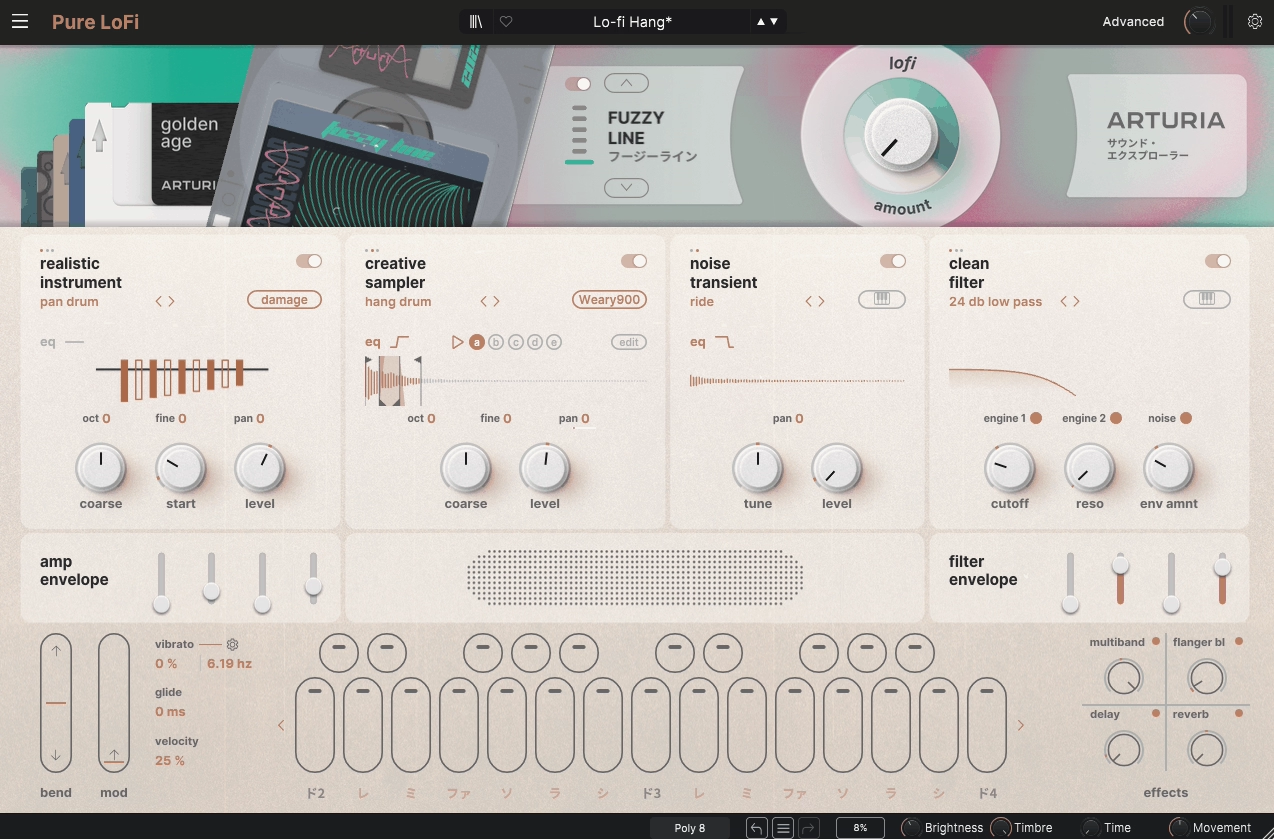
The lo fi aesthetic has become a production style in its own right, and Pure LoFi provides Arturia’s take on vintage audio degradation with a modular approach that lets you build custom lo fi processing chains.
Rather than a single “make it sound old” knob, the plugin offers individual modules for tape, vinyl, radio, bitcrushing, and analog degradation that you can engage, adjust, and reorder independently.
What sets Pure LoFi apart from simpler lo fi plugins is the per module control and the quality of the individual processing stages. The tape emulation sounds like tape. The vinyl simulation includes realistic crackle and wow.
The radio module produces convincing AM/FM frequency response. You’re not just applying a generic filter and calling it vintage. You’re choosing which specific aspects of analog degradation to apply and controlling their intensity individually. For producers who use lo fi as a deliberate creative choice rather than a preset, this level of control matters.
- Modular Chain
Individual processing modules for tape, vinyl, radio, bitcrush, and analog degradation can be engaged independently and reordered in the signal path.
The modular approach means you choose exactly which types of degradation to apply rather than accepting a fixed processing chain.
- Tape Section
The tape emulation models wow, flutter, saturation, and frequency response of different tape types. The tape processing adds warmth and movement that feels authentically analog rather than synthetically generated.
- Vinyl Module
A vinyl simulation with surface noise, crackle, frequency roll off, and subtle pitch instability reproduces the specific character of records played on turntables. The vinyl processing is detailed enough to sound convincing rather than like a simple noise layer added on top.
Available from Arturia in VST, VST3, AU, and AAX formats.
4. Arturia Augmented Grand Piano (Hybrid Piano)
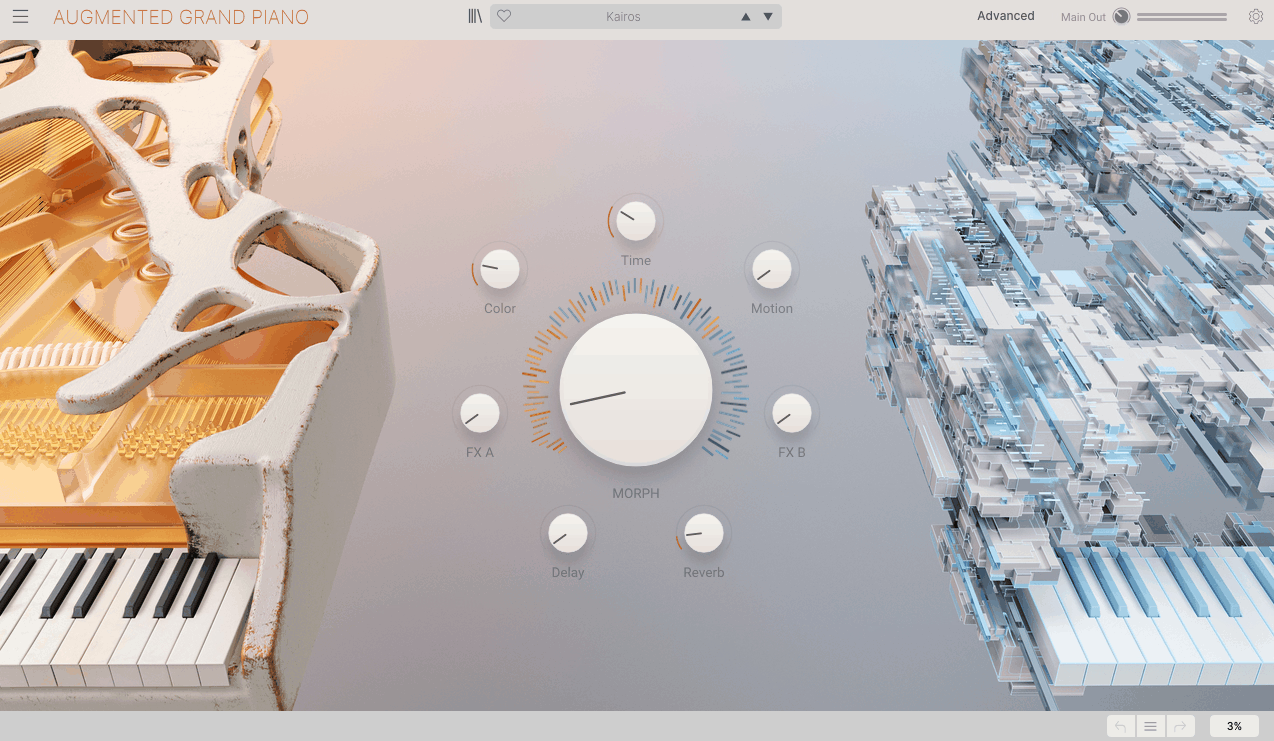
Traditional piano plugins try to be the most realistic grand piano possible.
Augmented Grand Piano deliberately goes in a different direction by starting with detailed recordings of a late 1980s Steinway Model D and then layering those samples with processed recordings, prepared piano techniques, and a four mode synthesis engine covering virtual analog, granular, wavetable, and harmonic synthesis.
The result is an instrument that can produce conventional piano sounds when you need them, but that’s not really the point. I reach for it primarily when I want piano as a textural, evolving element rather than a traditional keyboard part.
The Morph control blends between sample layers and synthesis, creating sounds that start as piano and dissolve into granular clouds, synthetic pads, or processed textures that couldn’t exist in the acoustic world. For cinematic, ambient, and electronic production, this hybrid approach opens up a creative space that straight piano libraries don’t touch.
- Morph Control
The central knob simultaneously adjusts up to eight assignable parameters, creating sweeping timbral changes between sample and synthesis layers with a single movement. Moving the Morph from one extreme to the other can take you from a clean concert grand to a completely deconstructed granular texture.
- Dual Layers
Two layers with two sound sources each combine sampled piano recordings with synthesis in any configuration.
Pairing a concert grand with a granular texture, or a prepared piano with a wavetable pad, builds the hybrid sounds that define the plugin’s character.
- Prepared Recordings
Beyond standard piano samples, the library includes recordings of unconventional playing techniques: bowing strings, using mallets, placing objects between strings, and processing through tape machines and studio effects. These sources give you material that doesn’t exist in conventional piano libraries.
- Synthesis Engine
The four synthesis modes (VA, granular, wavetable, harmonic) work independently of the piano samples, making this a capable synth in its own right. The synthesis section shares architecture with Pigments, which means the sound quality and modulation capabilities are substantial.
Available from Arturia in VST, VST3, AU, AAX, and standalone formats.
5. Arturia Acid V (303 Synth)
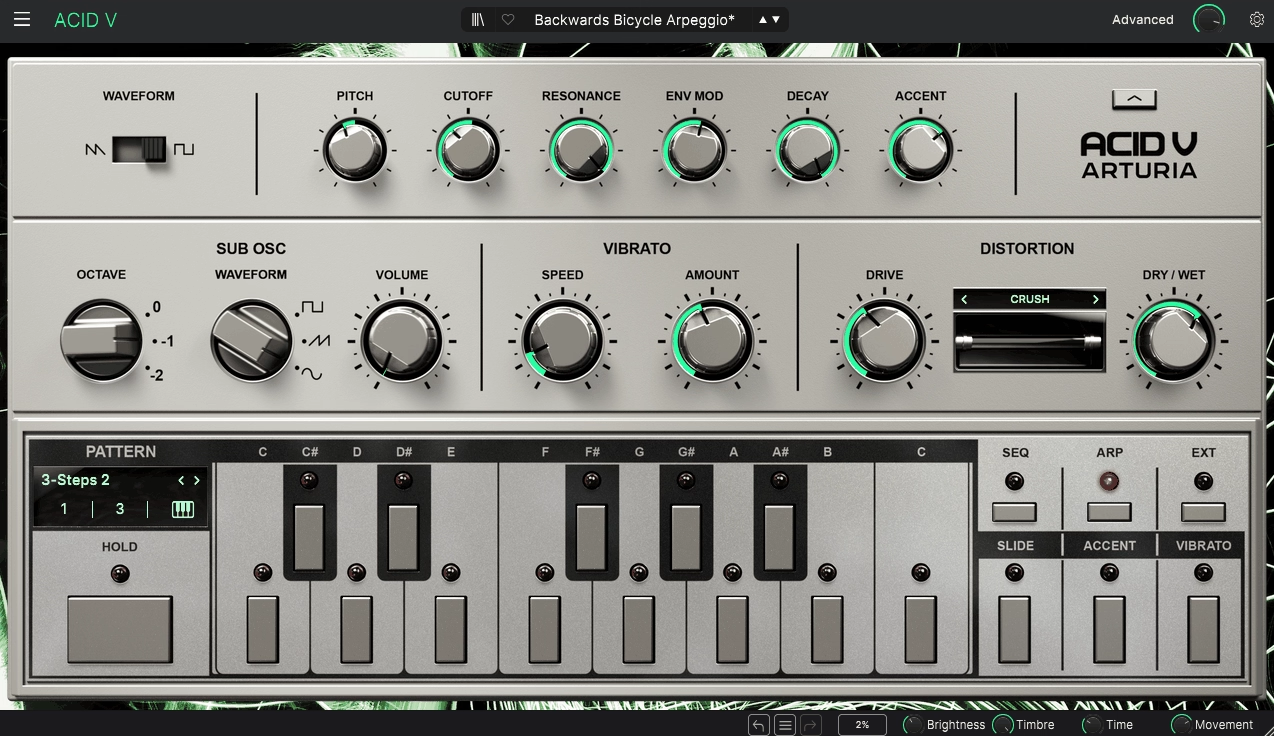
Acid house was born from the Roland TB-303, and Acid V provides Arturia’s take on that instrument by starting with a faithful reproduction of the original circuit and then expanding it with features the hardware never had.
The core 303 sound is modeled using TAE technology, capturing the distinctive filter squelch, accent behavior, and slide characteristics that define the acid bass sound.
Where Acid V goes beyond a standard 303 clone is in the extensions. An additional oscillator and sub oscillator expand the tonal range. The advanced sequencer with probability, ratcheting, and per step parameter locks creates evolving acid lines that would be impossible on the original hardware.
A full modulation matrix connects LFOs, envelopes, and random sources to any parameter. If you want the 303 character as a starting point but need flexibility that the original can’t provide, Acid V offers that specific combination.
- TAE Modeling
Arturia’s analog emulation models the original TB-303 circuit with attention to the filter, oscillator, and envelope characteristics that define the acid sound. The core 303 tone is authentic before any of the expanded features are engaged, so you can use it as a straight emulation when that’s all your track needs.
- Extended Sequencer
The sequencer adds probability per step, ratcheting, parameter locks, and variable sequence lengths that go far beyond the original 303’s capabilities. You can program sequences where filter cutoff, resonance, and accent vary independently per step.
- Extra Oscillators
A second oscillator and sub oscillator expand the tonal palette while maintaining the 303 character. The additional oscillators produce thicker, more complex bass tones that the single oscillator original can’t generate.
Available from Arturia in VST, VST3, AU, AAX, and standalone formats.
6. Arturia CMI V (Fairlight CMI)

One of the most fascinating instruments in the Arturia catalog, CMI V recreates the Fairlight CMI (Computer Musical Instrument), a pioneering digital sampling workstation from 1979 that cost as much as a house and helped define the sound of 1980s pop, new wave, and art rock. Artists like Peter Gabriel, Kate Bush, and Art of Noise used the Fairlight’s distinctive digital sampling, additive synthesis, and step sequencer to create sounds that had never been heard before.
The Fairlight’s sound has a specific digital character that’s completely different from analog synthesis or modern high resolution sampling. The low sample rate, limited bit depth, and early digital aliasing produce a gritty, crystalline quality that sounds dated in the best possible way.
CMI V captures this specific character and adds features the original hardware couldn’t offer, including extended polyphony, modern effects, and a dramatically expanded sample library. For producers who want that distinctive early digital texture for retro wave, synthwave, or experimental production, nothing else sounds quite like this.
- Sampling Engine
The Fairlight sampling engine reproduces the specific low resolution, aliased character of the original hardware’s sampling. The digital artifacts that were limitations in 1979 are now the distinctive sonic quality that producers seek, and CMI V captures this character faithfully.
- Additive Synthesis
The additive synthesis section lets you draw and manipulate individual harmonics to build sounds from scratch, reproducing the original CMI’s pioneering approach to additive sound creation. The additive engine is where the Fairlight produced its most unusual and distinctive tones.
- Page R Sequencer
The legendary Page R step sequencer is faithfully recreated, providing the rhythmic pattern programming environment that producers used to create some of the most recognizable sequences in 1980s music. The sequencer’s specific feel and workflow are part of the Fairlight’s creative identity.
- Extended Library
Beyond the original Fairlight sample library (which is included), CMI V provides an expanded collection of samples covering a wider range of instruments and textures. The extended library lets you explore the Fairlight sound with more content than the original hardware ever offered.
- Modern Additions
Effects processing, expanded polyphony, and modern MIDI implementation bring the 1979 design into a contemporary production workflow. You get the Fairlight character with the convenience of a modern plugin, which means you’re not fighting vintage hardware limitations to get the sound you want.
Available from Arturia in VST, VST3, AU, AAX, and standalone formats.
7. Arturia ARP 2600 V (Semi Modular Synth)
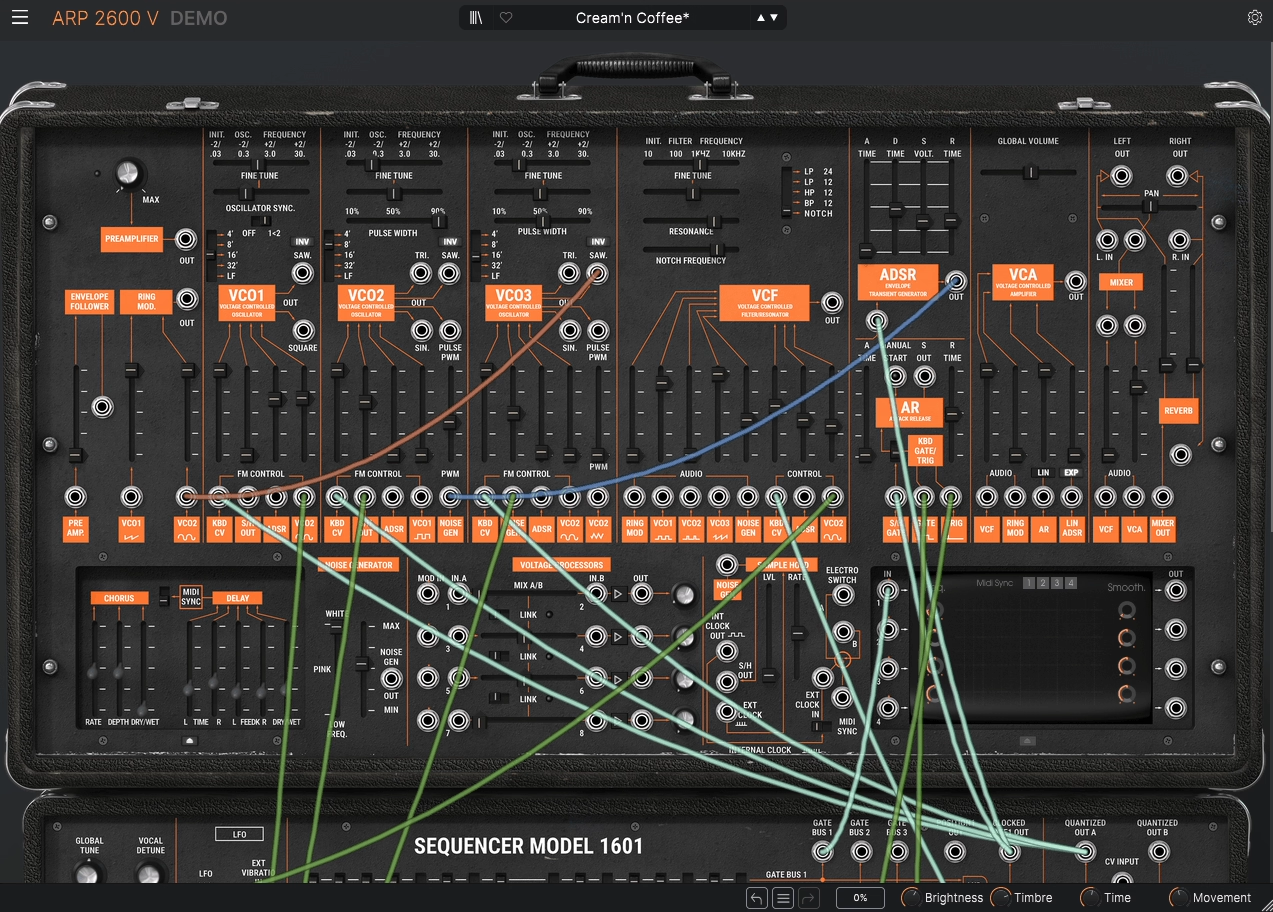
The original ARP 2600 was a semi modular synthesizer that bridged the gap between fully modular systems and fixed architecture instruments. Everything was pre wired into a default signal path that worked without patch cables, but you could override any connection by plugging in a cable. ARP 2600 V recreates this concept faithfully, giving you a synth that’s immediately playable out of the box but also capable of complex modular routing when you want to go deeper.
This balance between immediate usability and modular depth is what makes the ARP 2600 different from both Arturia’s Modular V (which requires patching to produce any sound) and their fixed architecture emulations (which don’t offer patching at all). I find myself reaching for the ARP 2600 V when I want the creative flexibility of modular routing but don’t want to start from an empty rack. The default signal path covers most standard subtractive synthesis needs, and the patch points are there when you want to experiment with unusual routings that produce sounds the defaults can’t.
- Semi Modular
The pre wired default routing produces sound immediately without any patching, but virtual patch cables can override any connection for custom signal flows. This hybrid approach gives you the convenience of a fixed synth with the flexibility of a modular when you need it.
- Three Oscillators
Three VCOs with multiple waveforms, hard sync, and ring modulation provide the harmonic foundation. The oscillator interaction when using sync and ring mod produces the aggressive, metallic textures that the ARP 2600 was famous for in sci fi soundtracks and experimental music.
- Spring Reverb
A modeled spring reverb reproduces the built in reverb tank from the original hardware. The spring reverb adds the characteristic boingy, metallic spatial quality that was part of the ARP 2600’s voice and contributed to its distinctive sound in countless recordings.
Available from Arturia in VST, VST3, AU, AAX, and standalone formats.
8. Arturia B-3 V (Hammond Organ)

The Hammond B-3 is one of the most iconic keyboard instruments in music history, and getting its sound right in software requires modeling not just the tonewheel generation but the key click, chorus/vibrato scanner, percussion circuit, and the Leslie rotary speaker cabinet that’s inseparable from how the instrument actually sounds.
B-3 V handles all of these elements with enough detail that the result responds to your playing rather than just producing static organ tones.
What draws me to the B-3 V over simpler organ plugins is the attention to the details that make a Hammond feel alive. The tonewheel leakage between drawbar settings adds warmth and complexity. The key click provides percussive transient character.
The chorus/vibrato scanner with its characteristic warble adds movement. And the rotary speaker with slow/fast switching and realistic acceleration behavior is the final element that transforms flat organ tones into the rich, dimensional sound that jazz, gospel, rock, and soul records depend on.
- Tonewheel Modeling
The 91 virtual tonewheels are individually modeled with specific harmonic content, crosstalk, and leakage between adjacent tonewheels. The leakage is part of what gives the Hammond its signature warmth, and you can control the amount to taste.
- Rotary Speaker
The Leslie cabinet simulation models horn and drum rotation, cabinet resonance, and overdrive with realistic acceleration and deceleration when switching between slow and fast speeds. The Doppler effect and amplitude modulation from the rotating elements are essential to the Hammond sound.
- Percussion Circuit
The modeled single trigger percussion adds a brief, bright harmonic attack to the first note in a legato passage. The percussion is what gives Hammond playing its characteristic pop on melodic lines, and the single trigger behavior is faithfully reproduced.
- Key Click
The electrical contact noise on key press and release provides percussive character that’s a signature element of Hammond playing, particularly in jazz and gospel styles. The click intensity is adjustable from subtle to pronounced.
Available from Arturia in VST, VST3, AU, AAX, and standalone formats.
9. Arturia Vocoder V (Vintage Vocoder)
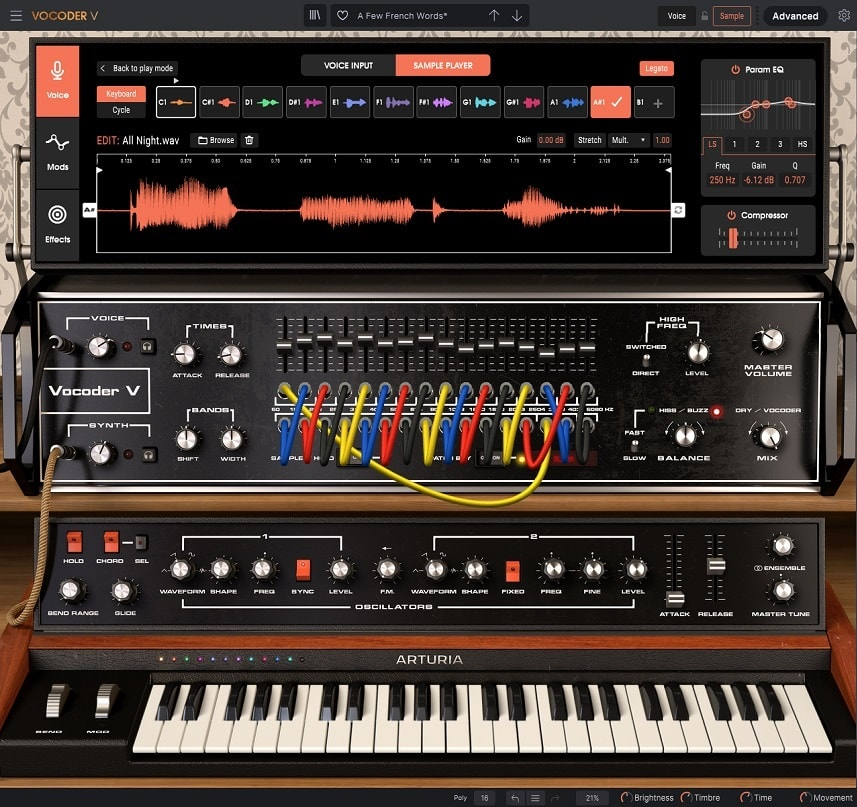
Vocoders take the spectral characteristics of one sound (typically a voice) and impose them on another (typically a synth), creating the robotic, singing synthesizer effect that’s appeared in electronic music from Kraftwerk through Daft Punk to modern pop production.
Vocoder V models a classic analog vocoder with the warm, characterful sound of vintage hardware alongside modern features that expand its creative range.
For producers who’ve only used the basic vocoder included with their DAW, the Arturia Vocoder V reveals how much more the technique can do when given proper tools. The number of frequency bands, the quality of the carrier synth, and the envelope follower behavior all affect how clearly the vocoded speech comes through and how musical the result sounds.
Vocoder V provides enough bands for clear intelligibility alongside a capable built in carrier synthesizer that eliminates the need to set up a separate synth for the carrier signal.
- Band Count
An adjustable number of analysis bands controls the resolution of the vocoding effect. More bands produce clearer, more intelligible vocoded speech. Fewer bands produce a more abstract, robotic quality. The adjustable count lets you choose the balance between clarity and effect character.
- Carrier Synth
A built in synthesizer serves as the carrier signal, eliminating the need to route a separate synth into the vocoder. The carrier synth is capable enough to produce a range of tones from simple saw waves to richer, layered sounds that affect the final vocoded character.
- Modulation
A modulation section with LFOs and envelopes can animate vocoder parameters over time, creating evolving vocoded textures that shift character throughout a passage. The modulation adds movement that prevents the vocoded sound from feeling static.
- Vintage Character
The analog modeling captures the warm, slightly imprecise character of vintage hardware vocoders, including the way the band pass filters interact and the subtle coloration of the analysis and synthesis circuits. The vintage quality gives the vocoding a musical warmth that purely digital vocoders often lack.
- Effects Section
Built in effects processing (chorus, delay, reverb, distortion) provides finishing touches within the plugin. The effects let you create polished, mix ready vocoded sounds without external processing.
Available from Arturia in VST, VST3, AU, AAX, and standalone formats.
10. Arturia Piano V (Acoustic Piano Collection)

Where Augmented Grand Piano provides hybrid, experimental piano sounds, the focus here is on delivering realistic acoustic piano emulations using physical modeling rather than sample playback.
Piano V includes twelve modeled pianos covering concert grands, uprights, and historical instruments, each capturing the hammers, strings, soundboard resonance, and pedal behavior that define each instrument’s character.
The physical modeling approach has specific advantages over sample based pianos that matter for production work. The entire plugin is lightweight compared to multi gigabyte sample libraries. The models respond continuously to velocity without the discrete layer switching that sampled pianos exhibit.
And the resonance behavior (sympathetic string vibration, sustain pedal interaction) is generated in real time rather than approximated. For most production contexts where you need a convincing piano that plays well and loads fast, Piano V handles the job without the storage and RAM demands of premium sample libraries.
- Twelve Models
The collection includes twelve physically modeled pianos spanning concert grands (Steinway D, Yamaha C7 types), uprights, and historical instruments. Each model has distinct tonal characteristics and hammer voicing that reflect the original instrument’s design.
- Physical Modeling
Rather than recorded samples, the engine generates sound through real time simulation of hammer impact, string vibration, soundboard resonance, and acoustic radiation.
The continuous dynamic response means the piano reacts to your playing without the discrete velocity layer switching that sampled instruments exhibit.
- Room Simulation
A configurable acoustic environment simulates how the piano sounds in different spaces, from intimate rooms to concert halls. The room interacts with each piano model’s radiation pattern, so different pianos respond differently to the same room setting.
- Lid Position
An adjustable piano lid affects brightness and projection, just as opening or closing a real grand piano’s lid changes how sound radiates into the room. The detail contributes to the realism of the playing experience and gives you tonal control over the final character.
Available from Arturia in VST, VST3, AU, AAX, and standalone formats.
11. Arturia Augmented Voices (Hybrid Vocal Instrument)
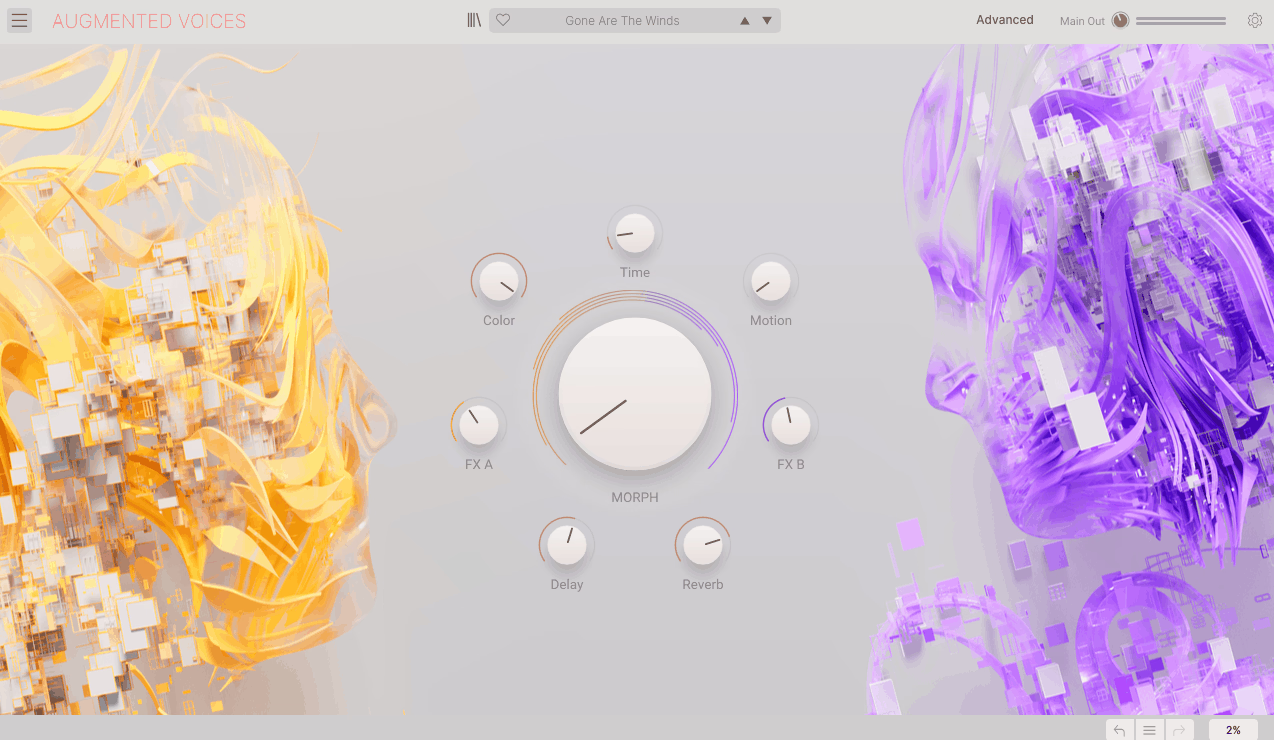
Closing the list with one of the most unusual instruments in the Arturia catalog, Augmented Voices combines recorded vocal samples with the Augmented Series synthesis engine to create sounds that range from recognizable human voices to completely abstract, processed vocal textures.
The approach mirrors the Augmented Grand Piano concept but applied to the human voice, which produces results that are both familiar and uncanny.
The creative potential of Augmented Voices lives in the space between a vocal sample library and a synthesizer. The recorded voices provide organic human character: breaths, syllables, sustained tones, and choral textures. The synthesis layers add electronic processing, granular transformation, and harmonic complexity that the raw vocal samples can’t produce alone.
The Morph control blends between these worlds, and the transition from natural voice to synthesized abstraction is where the most interesting sounds emerge.
For cinematic, ambient, electronic, and experimental production, this plugin provides vocal textures that you simply won’t find anywhere else.
- Vocal Samples
The library includes detailed recordings of multiple vocal performances spanning sustained tones, choral textures, whispered passages, and processed vocal sounds. The vocal source material provides the organic, human foundation that the synthesis layers transform and extend.
- Morph System
The Morph control blends between vocal samples and synthesis layers while simultaneously adjusting assignable parameters. A single Morph movement can take a natural choir and gradually dissolve it into a granular cloud, creating smooth transitions between organic and synthetic that feel like a single evolving instrument.
- Synthesis Layers
The four synthesis engines (virtual analog, granular, wavetable, harmonic) process and transform the vocal content into electronic textures. The synthesis can run independently or interact with the vocal samples, producing hybrid sounds that combine human warmth with electronic precision.
From the Pluginerds Store
Now that you've got a shortlist of synths in mind, the practical side is worth sorting in parallel — a stand and pedal take five minutes to order and you'll want them the day the synth arrives.

- Macro Controls
Three macro knobs provide quick, expressive control over multiple parameters simultaneously. The macros are pre assigned in factory presets to control the most musically relevant aspects of each sound, letting you shape the character in real time during performance.
- Effects Section
Dedicated delay and reverb plus customizable per layer effects add spatial processing and coloration. The effects are integrated within the Augmented architecture, meaning they respond to the Morph control and can shift character as you blend between vocal and synthetic content.
- Preset Library
Over 300 presets spanning ethereal choirs, processed vocal textures, hybrid pads, atmospheric effects, and experimental sounds provide immediate creative starting points. The presets demonstrate the range of the instrument and serve as foundations for your own sound design.
Available from Arturia in VST, VST3, AU, AAX, and standalone formats.
Get the Free Plugin Starter Kit
The genuinely useful free DAWs and plugins worth installing. No filler. Straight to your inbox.

Hello, I’m Viliam, I started this audio plugin focused blog to keep you updated on the latest trends, news and everything plugin related. I’ll put the most emphasis on the topics covering best VST, AU and AAX plugins. If you find some great plugin suggestions for us to include on our site, feel free to let me know, so I can take a look!