If you’ve been looking at compact drum machines for electronic music production or live performance, you’ve probably encountered the Roland TR-6S as part of their modern Aira Compact series.
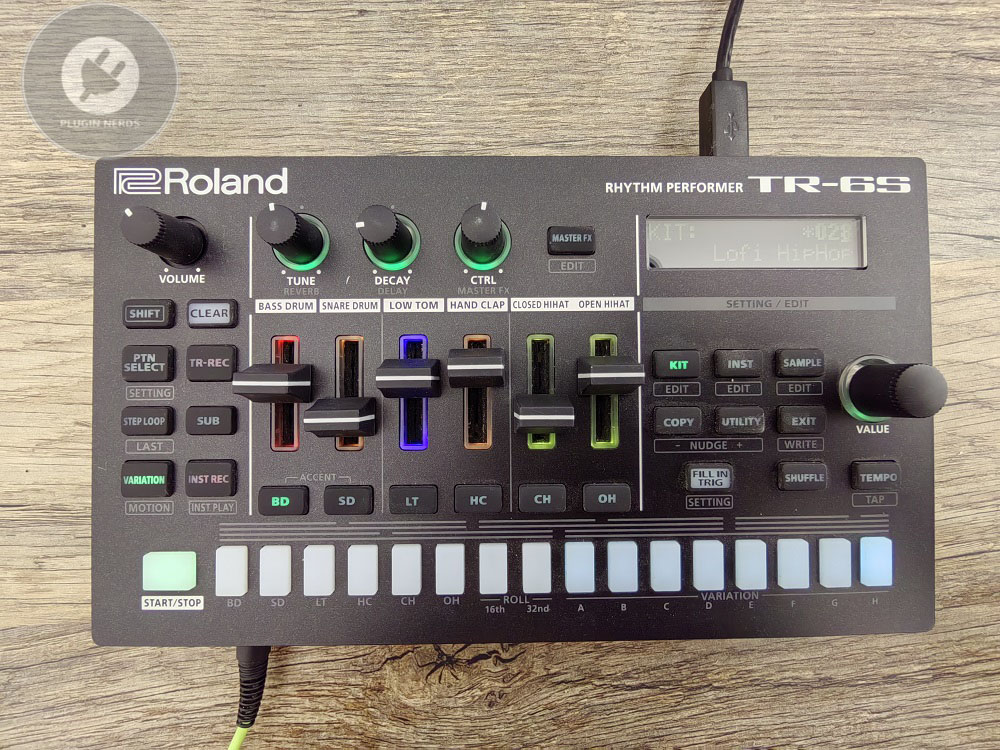
The TR-6S is Roland’s compact drum machine that combines classic TR sound engines with modern sequencing and effects in a battery-powered unit smaller than most tablets. From my perspective, this represents Roland’s attempt to make their legendary drum machine DNA accessible in a format that fits dawless setups, travel production, and tight studio spaces without requiring the cost or footprint of their larger products.
But real question to ask is: is Roland TR-6S actually worth it in 2026?
Yes, in 2026, the TR-6S remains solid for portable beat-making and classic TR sounds, offering genuine Roland character in battery-powered format. Great for dawless setups and mobile production, but consider the TR-8S if you need sampling and individual outputs, or software if portability isn’t priority.
Sound engine
The unit provides six tracks with access to Roland’s ACB (Analog Circuit Behavior) modeling of classic drum machines including the 808, 909, 707, and others, plus PCM sample playback for more modern sounds.
I’ve found the TR emulations sound convincing with the characteristic punch, weight, and tonal qualities that made the originals legendary, and honestly, in mix contexts, these sounds hold up against hardware recreations and vintage units.
The 808 sounds deliver that iconic boom-bap character with deep kicks, snappy snares, and those distinctive toms and cowbells that define so much hip-hop and electronic music. I’ve used these extensively for:
• Trap and hip-hop production
• Lo-fi beats requiring vintage warmth
• Electronic tracks needing classic foundation
The 909 kit provides the aggressive, punchy character that techno and house producers rely on, and the kicks have genuine weight while the hi-hats deliver the crisp, cutting quality that sits perfectly in fast electronic patterns. The 909 emulation captures that slightly brighter, more aggressive character compared to the warmer 808.
PCM samples expand the sonic palette beyond vintage emulations, and you get access to more modern electronic drums, acoustic-ish sounds, and percussion that wouldn’t fit the classic TR aesthetic. I appreciate having these options for hybrid productions where you want classic TR foundation with contemporary accent sounds layered on top.
The sound editing is limited compared to full grooveboxes or DAW instruments, and you get basic controls for:
- Pitch/tuning
- Decay
- Level
- Some model-specific parameters
This simplicity keeps the workflow fast but means you’re working with the sounds as designed rather than deeply sculpting custom tones. For most beat-making applications, the available editing is sufficient, though sound designers wanting extensive sound shaping will find the parameters restrictive.
Sequencing and making patterns
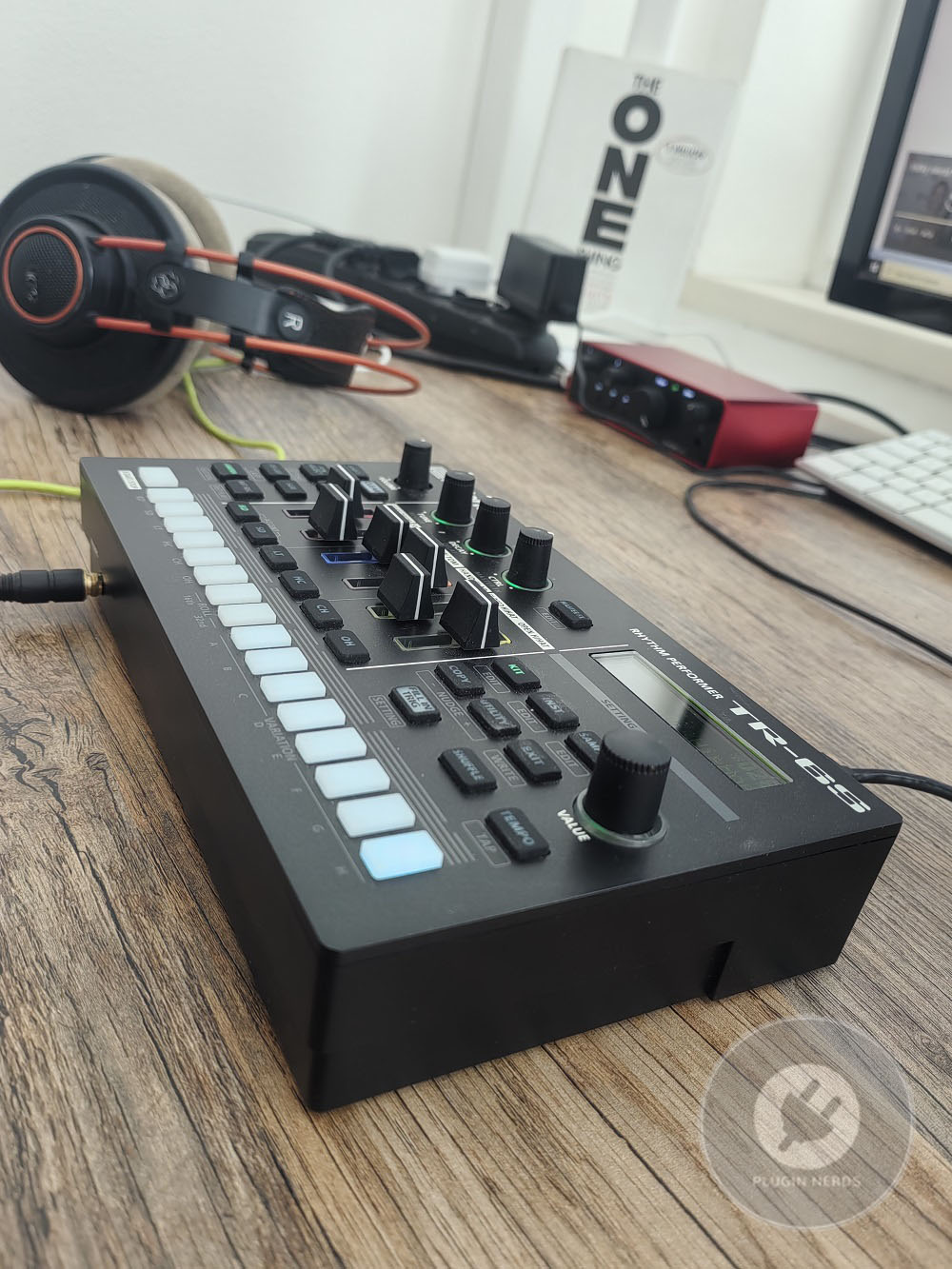
The 16-step sequencer provides the classic TR step programming experience with six tracks running simultaneously, and I’ve found the workflow intuitive if you’re familiar with TR-style programming. The velocity-sensitive pads let you add dynamic variation to patterns, which makes programmed beats feel less mechanical and more human.
Pattern length can extend beyond 16 steps through pattern chaining, and you get 128 patterns of storage across multiple projects. From my experience, this is adequate for building complete song structures or extensive live sets without running out of memory, though users with massive pattern libraries might find themselves managing storage carefully.
The scatter function adds real-time variation and fills by retriggering and manipulating the current pattern, and I think this is genuinely useful for live performance and adding spontaneous energy to programmed beats. The scatter creates:
• Drum rolls and fills
• Glitchy rhythmic variations
• Transitional effects between sections
Step recording works as expected with TR-style programming where you enable steps and adjust parameters per step, and the workflow becomes second nature quickly once you understand the button combinations. Real-time recording is also possible where you play the pads and the machine captures your performance, which works better for loose, spontaneous beat creation.
The probability feature lets individual steps trigger with less than 100% certainty, and this adds subtle variation to patterns that evolve over time rather than looping identically. I’ve used this sparingly to create hi-hat patterns that breathe and change without constant manual intervention.
Effects
The built-in effects section includes delay, reverb, and other processors that add polish and depth to the raw drum sounds, and I’ve found the effects quality is decent without being exceptional. The effects work well for:
- Adding space and depth to dry sounds
- Creating dub-style delays on specific hits
- Unifying disparate sounds into cohesive kits
Per-track effects assignment means you can route different sounds through different processing, and this flexibility helps create more complex sonic textures than simple master effects would allow.
The effects parameters are limited compared to dedicated effect units, but they’re sufficient for adding character and dimension to patterns.
The compressor and sidechain functions help create that pumping, ducking effect common in electronic music, and while it’s not the most sophisticated sidechain implementation, it works adequately for adding groove and movement to patterns. I’ve used it successfully on basslines and pads to create space for kick drums.
Design and portability
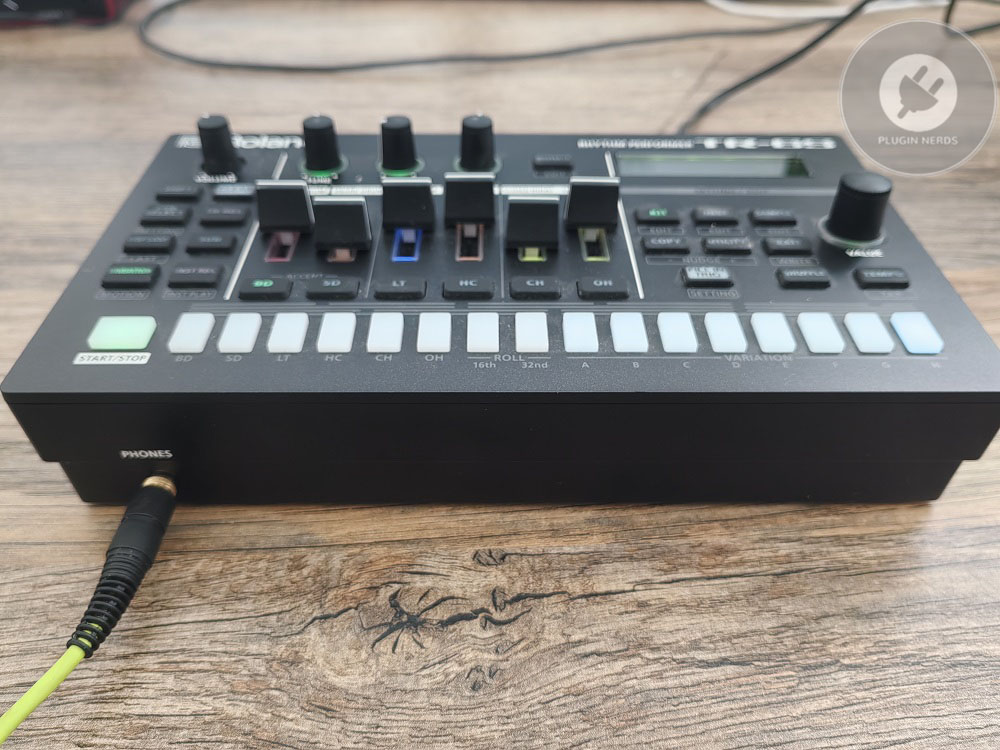
The compact form factor is genuinely small and light, fitting easily in bags for travel or occupying minimal desk space in cramped studios. I’ve taken it on trips and to coffee shops where larger drum machines would be impractical, and the battery operation (4 AA batteries) means you can sketch beats anywhere without power outlets.
The build quality feels solid for the size with metal top panel and plastic housing that doesn’t feel cheap or fragile. I’ve handled it regularly without excessive caution, and it’s held up well, though I wouldn’t subject it to road warrior abuse without protective cases.
Control layout packs considerable functionality into limited real estate, and while this means some functions require button combinations or menu diving, Roland managed to keep the most common operations accessible.
The workflow takes some learning, but once internalized, you can work quickly without constant reference to the manual.
The screen is small but functional, displaying essential information without room for extensive visual feedback.
You rely more on muscle memory and listening than visual confirmation, which works fine once you’re familiar with the unit but creates learning curve for newcomers.
Connectivity and integration
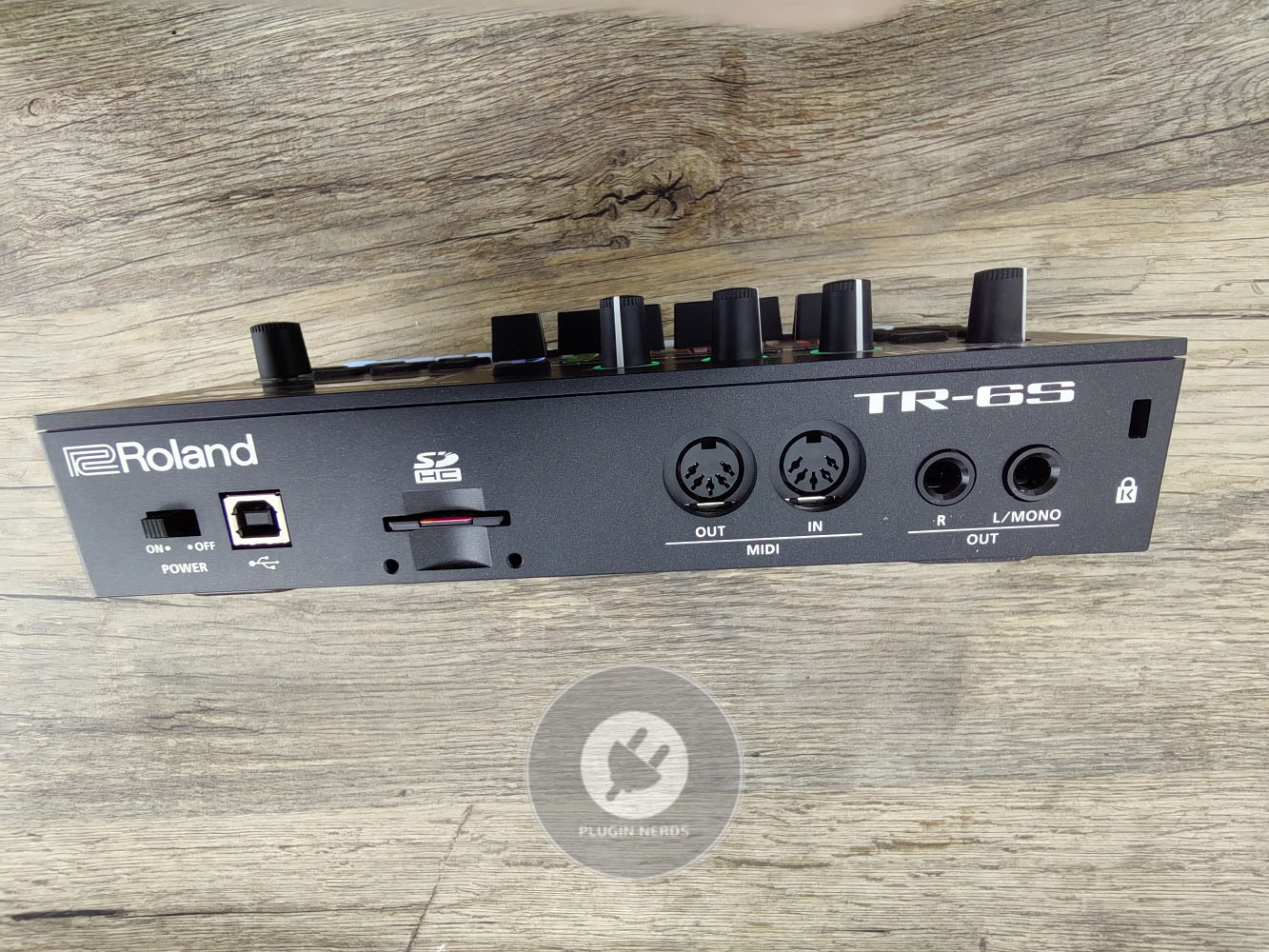
MIDI input and output via mini-jack connections let you sync with other gear or use the TR-6S as a MIDI controller, and I’ve successfully integrated it into hardware setups with synthesizers and other rhythm devices. The MIDI implementation is comprehensive enough for most synchronization and control scenarios.
Audio output is stereo mini-jack, which means you’ll need adapters for standard studio connections, and there’s no individual output per track for separate mixing. The stereo output is adequate for most uses, though producers wanting to process individual drum sounds separately will need to bounce stems or use different gear.
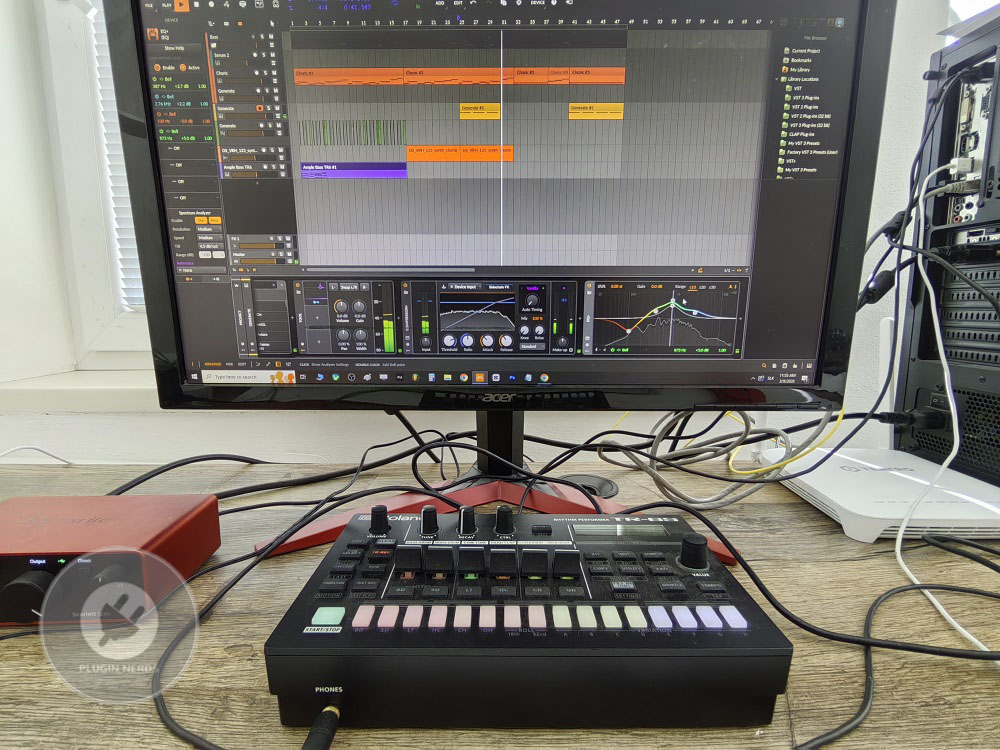
USB connectivity allows the TR-6S to function as an audio interface sending six individual tracks plus stereo mix to your DAW, and this overcomes the single stereo output limitation for studio production. I’ve used this feature successfully for:
- Recording individual drum sounds for mixing
- Syncing with DAW projects
- Integrating hardware into software workflow
The sync options include MIDI clock and USB, covering most synchronization scenarios whether you’re working with hardware or software.
Use cases
For electronic music production in genres like techno, house, trap, and experimental beats, this machine provides authentic TR sounds in portable format.
I’ve created complete drum tracks that hold up in finished productions, and the classic sound engines deliver the character producers expect from Roland drum machines.
Live performance benefits from the compact size and battery operation, and the scatter, probability, and pattern chaining features support dynamic, evolving sets. I’ve used it successfully in live contexts where the immediate hands-on control and reliable performance matter more than extensive sound editing. For sketching ideas away from the studio, the portability and self-contained nature make it genuinely useful, and I’ve developed beat ideas on the couch or while traveling that became foundations for finished tracks.
The battery operation and built-in speaker (small but functional) support true mobile creativity.
In dawless setups, the TR-6S serves as solid rhythm foundation that syncs reliably with other hardware, and the MIDI connectivity means it integrates smoothly into larger systems. The USB audio interface functionality bridges hardware and software workflows when needed.
Limitations
The six-track limit means you’re making decisions about which sounds occupy which tracks, and complex arrangements requiring more simultaneous sounds need creative layering or bouncing to audio. This limitation encourages focused beat-making but can feel restrictive for intricate productions.
Sound editing depth is limited compared to full grooveboxes or software, and you’re largely working with preset sounds adjusted through basic parameters. Sound designers wanting extensive synthesis will need to look elsewhere.
The small controls require precision, and fat-fingering buttons is possible when working quickly. The compact size means some compromises in playability, though you adapt with familiarity. No song mode beyond pattern chaining means arranging complete tracks requires external sequencing or DAW integration, and the internal pattern organization doesn’t support complex song construction the way dedicated arrangers do.
The Roland TR-6S typically sells around $350-400, positioning it as affordable entry to legitimate TR sounds compared to their larger, more expensive units. I think the value is strong if portability and classic sound matter more than extensive features, and you’re getting genuine Roland drum machine character in practical package.
Compared to the TR-8S, you sacrifice sampling, individual outputs, and more extensive control for significant cost and size reduction. The choice depends on whether you need full-featured drum machine or portable beat-making tool. Against software TR emulations, you’re paying for hardware immediacy, portability, and dawless capability, and whether that justifies the cost depends on your workflow preferences and whether you value hands-on control.
Last words
Roland TR-6S delivers authentic Roland drum machine sounds in genuinely portable format that works for both studio production and mobile beat-making. The classic sound engines capture the character that made TR machines legendary, and the modern sequencing features add flexibility without overcomplicating the workflow.
If you want portable access to classic TR sounds with battery operation and compact size, this machine delivers exactly that without pretending to be full-featured production center.
If you need extensive sound design, sampling, or complex arrangement tools, larger grooveboxes better serve those requirements.
I continue using it for beat sketching and portable production where its strengths align perfectly with quick, creative drumming needs. The sound quality justifies choosing it over generic drum machines, and the portability enables creativity in contexts where larger gear wouldn’t work.
It’s a focused tool that excels at what it’s designed to do, and understanding that scope helps determine whether it fits your production needs and workflow style.

Hello, I’m Viliam, I started this audio plugin focused blog to keep you updated on the latest trends, news and everything plugin related. I’ll put the most emphasis on the topics covering best VST, AU and AAX plugins. If you find some great plugin suggestions for us to include on our site, feel free to let me know, so I can take a look!