
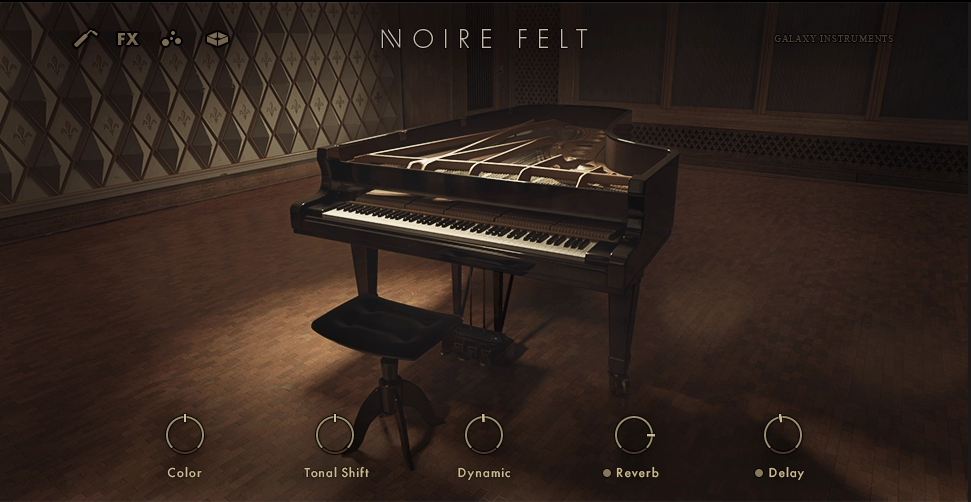
This is Nils Frahm’s Yamaha CFX 9-foot grand running through Funkhaus Berlin’s vintage signal chain, and right from the start I need to say this isn’t just another sampled piano. The instrument was intonated specifically to match Frahm’s sonic preferences and recorded in Saal 3 where he’s made some of his most recognizable work, with the whole thing handled by Galaxy Instruments and Uli Baronowsky, who spent weeks capturing this specific instrument using vintage microphones and preamps. What you end up with is something that sounds industrial and intimate at the same time.
The library gives you two complete versions of the piano. Pure is the standard concert grand sound, but I found it’s not what you’d expect from a typical CFX because the intonation work Frahm and piano technician Carsten Schulz did on the hammers gives it this round, vocal quality that sits somewhere between pristine and worked-in. It’s clean enough for classical work but has character that holds up in denser arrangements.
The Felt version puts a felt moderator between hammers and strings, which cuts attack and creates this close, breathy tone that works better for intimate compositional work than most felted piano libraries I’ve tried, mainly because the samples still retain dynamics. You can play delicate passages or push harder and the instrument responds appropriately, which gives you way more expressive range than you would expect. I love how it manages to sound intimate without ever feeling thin.
Getting Into the Details
Now, what makes NI NOIRE piano Kontakt librarydifferent is how much control you have over the mechanical elements. On the Piano Edit page, you can adjust release samples, body resonance, overtones, pedal noise, mechanical noise, and felt noise independently. Here you can balance rumble against damper noise against string noise in the pedal channel alone, and the same goes for mechanical note-on and note-off sounds, which have their own low-pass filter because the low end can get intrusive fast.
I appreciate that this level of detail exists because you can dial in a piano that sounds like someone’s actually playing it in a real room, or strip it all away if you need something cleaner. The control is specific enough that you can decide exactly how much of each noise type you want, which I think is crucial when you’re trying to match the piano to a specific production style.
There’s also a Sub control that adds a layer sampled by using an NS10 speaker wired in reverse as a microphone, which creates subharmonic content that sits under the piano without muddying it up. At first it seemed like a gimmick to me, but in practice I found it works surprisingly well for adding weight to the low end without EQ. It helps your piano cut through bass-heavy arrangements without pushing the volume uncomfortably high.
Shaping the Sound
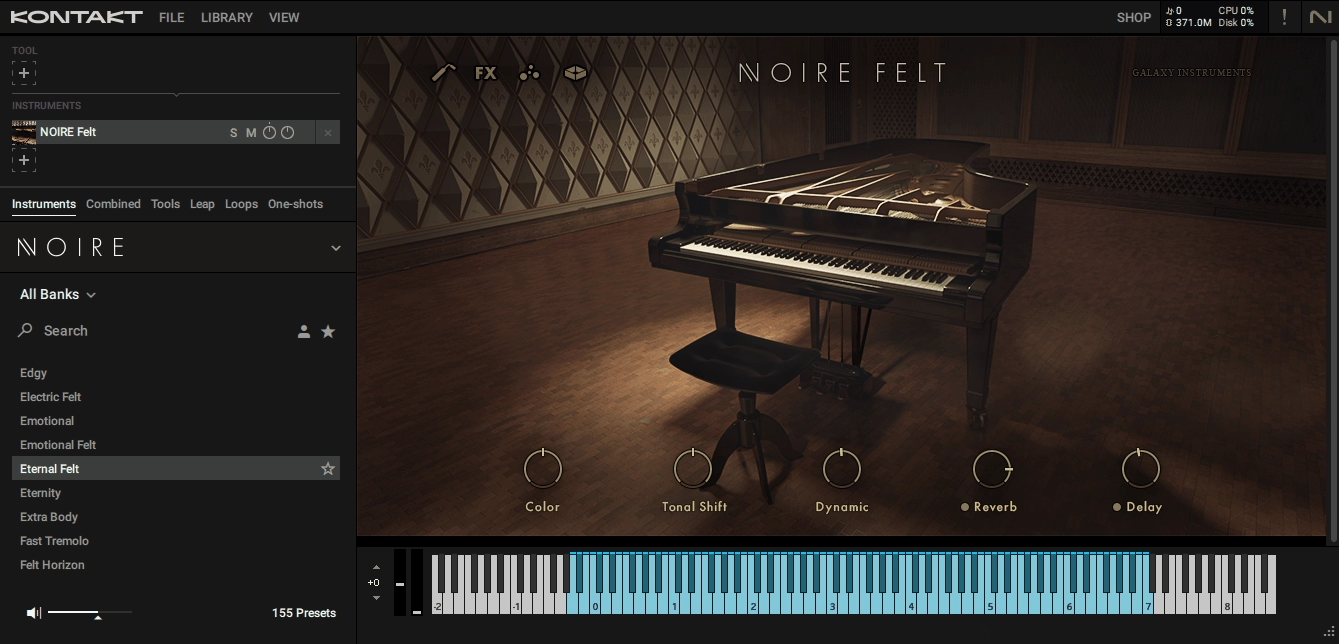
The main interface has five macro controls that give you quick access to the most important parameters. Dynamics adjusts velocity response, Reverb and Delay handle spatial needs, and then there’s Color and Tonal Shift, which get weird fast in the best way.
Color adjusts sample mapping, basically shifting which velocity layers you’re hearing, while Tonal Shift changes playback speed and formant frequency simultaneously. You can push the piano into territory that doesn’t sound like a piano anymore if that’s what your track needs. The tonal possibilities from just these two controls are pretty staggering once you start exploring them.
One thing that surprised me is setting Pure’s Color control to around -60 actually renders a convincing Felt piano, and in my opinion it’s richer than the dedicated Felt instrument. These controls give you a lot of range, so if you want a traditional concert grand sound it’s there, but if you want something more experimental, you have all the tools without needing external plugins.
The Piano Edit page also has Low Keys and High Keys controls for balancing the piano across the range, plus an Attack slider that can ease the sound in up to two seconds so you can turn the piano into a pad. The Effects page includes EQ, compression, and additional filters, plus a Pianist Noise layer that adds breathing and movement sounds, and I found the control is granular enough to dial in exactly what you need.
The Generative Side
This is where NOIRE gets really interesting. The Particles Engine is a generative MIDI algorithm that triggers additional samples based on what you play, creating clouds of harmonic elements using piano tones, plucked strings, mallets, or brush hits. It follows 17 preset algorithms that generate MIDI notes, and what I love is the result is always harmonically related to what you’re doing but never predictable.
You control Density and Variation, which govern how often notes trigger and what patterns they form. When tempo-synced, the Particles Engine creates rhythmic patterns that lock to your DAW’s tempo, but in free time it generates aleatoric clouds that shift constantly. You can balance the mix between the straight piano sound and the particles layer, using it subtly or pushing it forward as a dominant element.
There’s also control over attack types for the particles, so you can make them percussive or soft. What’s really interesting is you can route the Particles Engine’s MIDI output to external instruments. You enable Send MIDI to outside world in Kontakt’s preferences, set up a new instrument track with NOIRE’s MIDI output as input, and now the engine is triggering whatever you point it at.
The Particles page lets you choose algorithms that determine what notes get played relative to your input. You can adjust how much of the particles blend in, their individual attack and decay, and what sound source creates them. At first it seems complex, but I found it’s actually quite intuitive because the engine responds immediately and you just adjust until it feels right.
How It Actually Sounds
The Pure piano is somewhat dry and intimate, not reverb-drenched, and I think the tuning is nearly perfect with solid consistency across the range. The dynamic range is wide enough that you can go from whisper-quiet to aggressive without the samples breaking down. I feel like the basic Pure sound is slightly restrained, which might bother you if you want a big, bold concert piano, but I found that restraint makes it sit well in dense mixes.
The Felt version has this organic, breathy quality that works really well for neo-classical and post-minimalist composition. The attack is reduced but not eliminated, so you still have dynamic control and can shape phrases rather than getting one flat dynamic level. From my perspective, it’s more useful than other felted piano libraries because it doesn’t lock you into one emotional range.
The recording took place in Saal 3 at Funkhaus Berlin, which has concrete walls and high ceilings rather than traditional concert hall acoustics. The room adds dimension without washing everything out in reverb, and there’s intentional imperfection from both the room and the vintage signal chain. The samples don’t sound clinical to my ears, which gives NOIRE character.
My main criticism is the lack of microphone mixing options. Some libraries give you multiple mic positions to blend, but NOIRE doesn’t. You get the sound as recorded, which is fine if you like it, but limiting if you want to adjust perspective.
Performance Considerations
NOIRE can be demanding depending on how you use it. The Pure and Felt instruments run reasonably well on most modern systems with 16GB RAM and SSDs. However, the Particles Engine changes things significantly, and I can easily hit 100+ voices with a single chord, which strains your audio interface.
From what I’ve gathered, it’s more about interface performance under load. People with budget interfaces like the Tascam US322 report constant problems, while those using higher-end interfaces like RME or Audient handle it much better. If you plan to use the Particles Engine heavily, factor in interface quality because even if your CPU can handle it, a weak interface might bottleneck the system.
Some users freeze tracks to avoid real-time performance issues, which works fine but means you lose the ability to tweak things in real time. The library itself is around 15-16GB, which is reasonable. It runs in Kontakt 6 Player or full Kontakt and integrates well with KOMPLETE KONTROL keyboards through NKS integration.
Where It Works Best
I’d say NOIRE excels in neo-classical, ambient, cinematic, and hybrid electronic contexts. The combination of mechanical noises, the Particles Engine, and tonal flexibility makes it useful for modern compositional styles where the piano creates textures and atmospheres. If you’re scoring film or writing music that needs atmosphere and movement, this library gives you tools other pianos don’t offer.
For straight classical or jazz piano work, I don’t think NOIRE would be my first choice. The Pure version can do traditional work, but there are libraries with more traditional concert hall perspectives that might suit those genres better. That said, if you want a piano that can move between traditional playing and sound design without switching libraries, NOIRE handles both roles pretty well.
The Felt version is particularly strong for intimate compositions, and I’ve heard it used extensively in peaceful piano playlists and ambient work. It has enough character to be interesting but isn’t so idiosyncratic that it becomes a “character piano” you can only use for one specific thing. I think it strikes a good balance between personality and versatility.
What’s Missing
The Particles Engine snapshots could be more adventurous. The included presets demonstrate what’s possible but don’t push as far as they could. I found the engine’s real potential becomes clear when you start tweaking parameters yourself, but some users might expect the presets to be more immediately dramatic out of the box.
The lack of microphone positions bothered me more than I expected. You can shape the sound with EQ and compression, but you can’t fundamentally change the recording perspective. If the Funkhaus Berlin sound works for you, great, but if it doesn’t, you’re stuck with it.
The CPU demands with the Particles Engine active mean you’ll need a capable system if you plan to use that feature extensively. For those working on laptops or older systems, this might require bouncing tracks or working with the engine disabled until final mix.
Who Should Get This
If you’re a composer working in film scoring, ambient music, neo-classical, or hybrid styles, NOIRE offers genuine value. The combination of a well-recorded concert grand, felted version, detailed mechanical controls, and the Particles Engine gives you range that’s hard to match with single libraries. I feel like it’s especially useful if you want one piano library that can handle multiple roles across different projects.
For producers working in genres where piano is textural, the sound design possibilities make NOIRE valuable. The ability to route the Particles Engine to external instruments extends its usefulness beyond just piano sounds. Plus, the mechanical noise controls let you make the piano as clean or organic as your track requires.
If you’re looking for a pristine concert hall piano for solo classical performance, there might be better options. NOIRE can do that work, but I think it’s built with more experimental applications in mind. The Funkhaus recording environment and intentional character make it better suited for contemporary approaches than traditional repertoire.
Worth Considering
NOIRE is a piano library that knows exactly what to do. It’s Nils Frahm’s instrument, recorded in his space, with tools specifically designed to support his approach to composition. I found it gives the library a coherent identity that makes it feel like a complete instrument rather than just a collection of samples.
At the end of the day, I think Native Instruments NOIRE works best if you want more than just a sampled piano. If you need something that can move between traditional playing and experimental sound design, provide both clean concert grand tones and intimate felted textures, and offer generative elements that respond intelligently to your playing, this library delivers. The Funkhaus Berlin recording gives it distinct sonic character that cuts through dense mixes without sounding harsh, which is exactly what a lot of modern production needs.
Also, I made article on the best piano Kontakt libraries where I also included NOIRE as well, check it out too!

Hello, I’m Viliam, I started this audio plugin focused blog to keep you updated on the latest trends, news and everything plugin related. I’ll put the most emphasis on the topics covering best VST, AU and AAX plugins. If you find some great plugin suggestions for us to include on our site, feel free to let me know, so I can take a look!