
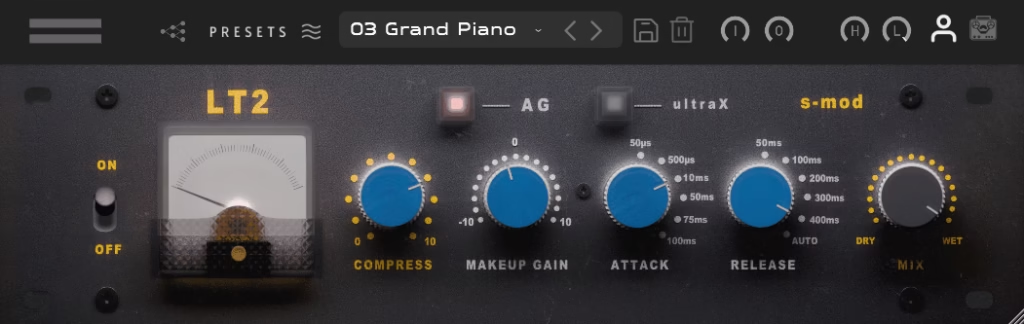
These are the best diode bridge compressor plugins I found and recommend for adding dense, musical glue to buses and full mixes when you need cohesion that feels solid rather than clinical.
The core characteristic of diodge bridge compression is straightforward: diode bridge circuits produce smooth, firm gain reduction that becomes denser as you push into it. This makes them particularly effective on material where standard VCA or FET compression either sounds too clean and technical or too obviously aggressive. Mix buses gain stability without losing impact. Drum groups feel glued into single cohesive units. The compression holds sources together with substance rather than just controlling peaks.
Here’s what separates effective diode bridge implementations from generic bus compressors: they need to deliver thickness and body without turning sources dull or lifeless. Many vintage-inspired compressors add character but lack the control features needed for modern productions with heavy low end and wide stereo information.
Others provide surgical control but miss the musical density that made classic British diode bridge units valuable for bus and mastering work.
The technical details determine whether a plugin actually solves real mixing problems. Multi-band capabilities let you tighten specific frequency ranges without flattening everything else. Mid-side processing enables center stability without collapsing stereo width. Integrated limiting stages handle peaks that would otherwise force you into additional processing chains. These features separate tools that work efficiently in contemporary workflows from strict vintage emulations that inherit hardware limitations.
Modern mixing contexts demand bus compression across multiple stages – drum buses need weight without losing transient snap, instrument groups require cohesion without separation, mix buses need finishing density without obvious compression artifacts. Diode bridge compressors handle these applications when you want substance and authority rather than transparency or special effects.
This guide covers implementations that balance classic diode bridge density with practical features for current production demands. The selection includes Tone Empire LT2COMP, Arturia Comp Diode 609, Lindell Audio 354E, Waves V-Comp, and IK Multimedia Precision Comp.
Each entry explains what the compressor delivers sonically, which applications benefit from its particular compression characteristics, and when its feature set justifies choosing it over alternatives. But now, let’s dive in!
1. Tone Empire LT2COMP diode bridge compressor plugin
Bus compression fails when it either controls dynamics without adding any cohesion or adds so much character that the processing becomes obvious and distracting, and finding the balance between technical control and musical glue separates decent bus work from professional results.
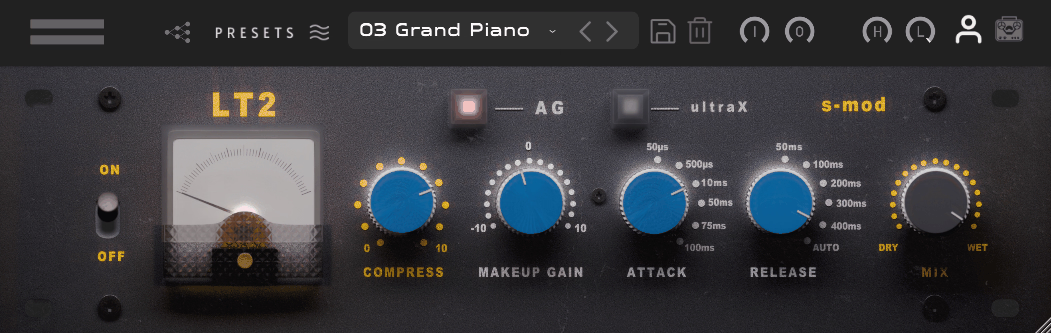
Tone Empire LT2COMP is a modern diode bridge compressor built around a very specific kind of British glue that people reach for when a mix or bus needs to feel more unified, thicker, and more confident without turning sharp or clinical, and I think diode bridge compression has a reputation for sounding dense and musical when it leans into gain reduction where the plugin is clearly aimed at that lane.
It’s the kind of compressor I would grab when I want the bus to feel like it’s being held together by something solid not just technically controlled.
What makes it stand out in a diode bridge plugin list is that it’s not positioned as a niche effect but presented as a bus and mastering capable tool meaning it’s meant to sit on keys/pianos, drum buses, instrument buses, and mix buses and give me that record cohesion people associate with classic British diode bridge units but in a DAW friendly workflow.
- Amazing Presets
With that being said, you will find presets covering the whole spectrum from pianos, bass, bus, drums, guitars, synths, percussions, vox, mastering and even orchestra presets!
- Mix Bus Cohesion Without Dullness
On a mix bus the compressor is mainly about cohesion without dullness where the benefit is you can make the mix feel more together and slightly more finished especially in the midrange where dense arrangements can feel disconnected.
Instead of hearing obvious pumping you typically get a more stable picture where elements feel like they belong to the same space.
- Drums Feel Glued and Weighty
On a drum bus it can deliver that classic diode bridge behavior where drums feel glued and weighty with a stronger sense of body and sustain. This proves a good fit when the kit sounds energetic but slightly too separate like the snare and kick don’t feel like they’re living inside the same frame, and the plugin can help the drum picture feel more like a single instrument. In addition, the kit transforms from individual hits into a cohesive performance.
- Diode Bridge Glue Stays Musical When Pushed
The most important reason to use the compressor is the way diode bridge compression tends to deliver smooth, musical gain reduction that still feels firm. The benefit is you can compress buses in a way that adds density and stability without the bus suddenly sounding like it’s being squeezed by a modern clean compressor, and this is why diode bridge units are often used for bus and mastering style control where the plugin is clearly aimed at that result.
- Class A and Transformer Weight
The plugin is built around the idea of a Class A signal path and transformer balanced stages which in practical mixing terms means it’s trying to give me warmth, depth, and a slightly vintage weight that helps sources feel less sterile. The benefit isn’t color for color’s sake but that buses can feel more solid and less brittle when you start compressing.
This matters most on mix bus and drum bus work where a purely clean compressor can sometimes hold things together but also make the mix feel a little flat.
- Vocal Warmth and Presence
On vocals the value is often warmth and presence while smoothing dynamics where this isn’t the compressor you pick when you want ultra clean invisible leveling. It’s more about helping a vocal feel a bit more solid and forward especially if the recording is already good and you just want it to sit with less effort.
- Bass Control With Body
On bass the benefit is control with body where it can make bass lines feel more stable and locked and can add a sense of thickness that helps bass translate without relying entirely on EQ.
The compression prevents the inconsistency that makes bass feel amateur while maintaining the weight that gives bass its power.
- Knee Control for Subtle or Obvious Compression
The plugin includes knee control where the benefit is you can decide how gentle or immediate the compression feels. A softer knee can help me get cohesion that feels more transparent useful for mix bus and mastering style work, and a harder knee can make the bus feel more assertive and controlled great on drums and punchy buses where you want the compression to act more like a grip.
- High Quality Processing Modes
The compressor includes higher resolution modeling with an Ultra X quality option designed around up to 192 kHz internal behavior where the benefit is when you push compression harder the result can stay cleaner and smoother especially in the top end where some plugins can start to feel grainy.
This proves particularly useful for diode bridge compression because it’s common to drive these compressors enough that the tone becomes part of the sound, and having a higher fidelity mode helps that tone stay more refined.
2. Arturia Comp Diode
Diode bridge compression solves a specific problem that most other compressor types struggle with which is adding density and weight to buses without either turning them thin and clinical or making them pump in ways that sound dated and obvious.
Modern productions demand bus compression that can handle heavy low end and wide stereo information while keeping the center focused and the energy consistent, and most vintage style compressors either lack the control features needed for contemporary material or add so much character that they limit versatility.
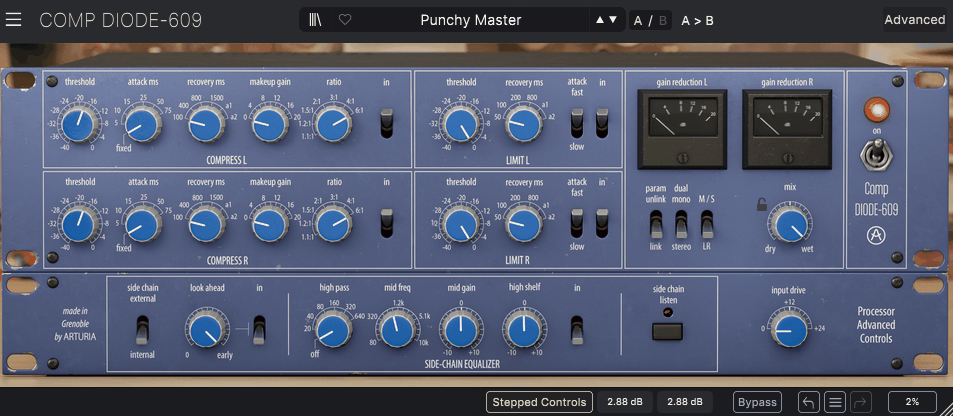
Arturia Comp Diode 609 is the kind of diode bridge compressor plugin you reach for when you want a bus to feel more finished, more glued, and more confidently together without turning the mix into a pumping effect, and I think the core value is the way it can add density and weight while still letting the source keep its character.
In practice it’s a compressor that earns its place not because it can do extreme tricks but because it solves common mix problems quickly which are loose low end, spiky upper mids, and buses that feel disconnected.
- Cohesion With Body Not Thin Tightness
The main sonic benefit is cohesion with body where instead of sounding tight but thin it tends to make buses feel more solid and more intentional. When it’s set well the mix doesn’t feel smaller but feels more stable with a clearer center and less random movement from hit to hit.
It’s also a good choice when you want confidence and forwardness without pushing faders where a diode style compressor can create the perception that the mix is louder and more anchored even when levels stay the same simply because the energy is held in a more controlled continuous way.
- Compressor Plus Limiter Behavior
A big advantage of this style is that it can give me glue and peak containment in a single overall move where in mixing terms that means I can tighten a bus and keep it from spiking in unpredictable places without adding a separate chain just to handle peaks. This proves especially useful on drum buses and mix bus work where peaks can change how the whole mix feels.
The integrated approach prevents the need for stacked processing chains.
- Mix Bus Glue That Stays Modern
On the mix bus the compressor is best when you want the mix to feel more unified and more confident without changing the vibe. A good mix bus use case is when the chorus hits and the mix gets slightly chaotic like the low end swells, cymbals get splashy, and the center loses focus, and the compressor can help the chorus feel like a controlled lift instead of a messy pile up.
The most practical approach is treating it as a frame for the mix where you ‘re aiming for a mix that feels like it has a stronger center and more consistent energy from section to section.
- Synth Bass Translation Without Mud
On synth bass the value is control plus readability where synth bass often has huge low end energy and a lot of harmonic content moving through the mids. The compressor is useful here because you can keep the bass feeling anchored and steady while still allowing the synth movement to come through, and sidechain shaping helps prevent the deepest lows from causing wobble.
The result is a synth bass that stays present and stable which often means you can use less corrective EQ and less aggressive limiting later.
- Mid Side Control for Center Stability
The practical benefit of Mid/Side here is mix stability where you can keep the center of the mix feeling locked which helps kick, snare, bass, lead vocal stay consistent while the sides retain width and movement.
This matters in real mixes because a lot of bus compression problems are really center problems, and Mid/Side control lets me fix the center without accidentally shrinking the stereo image.
The separate processing prevents the common issue where bus compression collapses width.
3. Lindell Audio 354E
Single band compression works perfectly until you encounter the inevitable situation where tightening one frequency range ruins everything else, forcing you to choose between fixing the low end or preserving the top end clarity you worked hours to achieve.
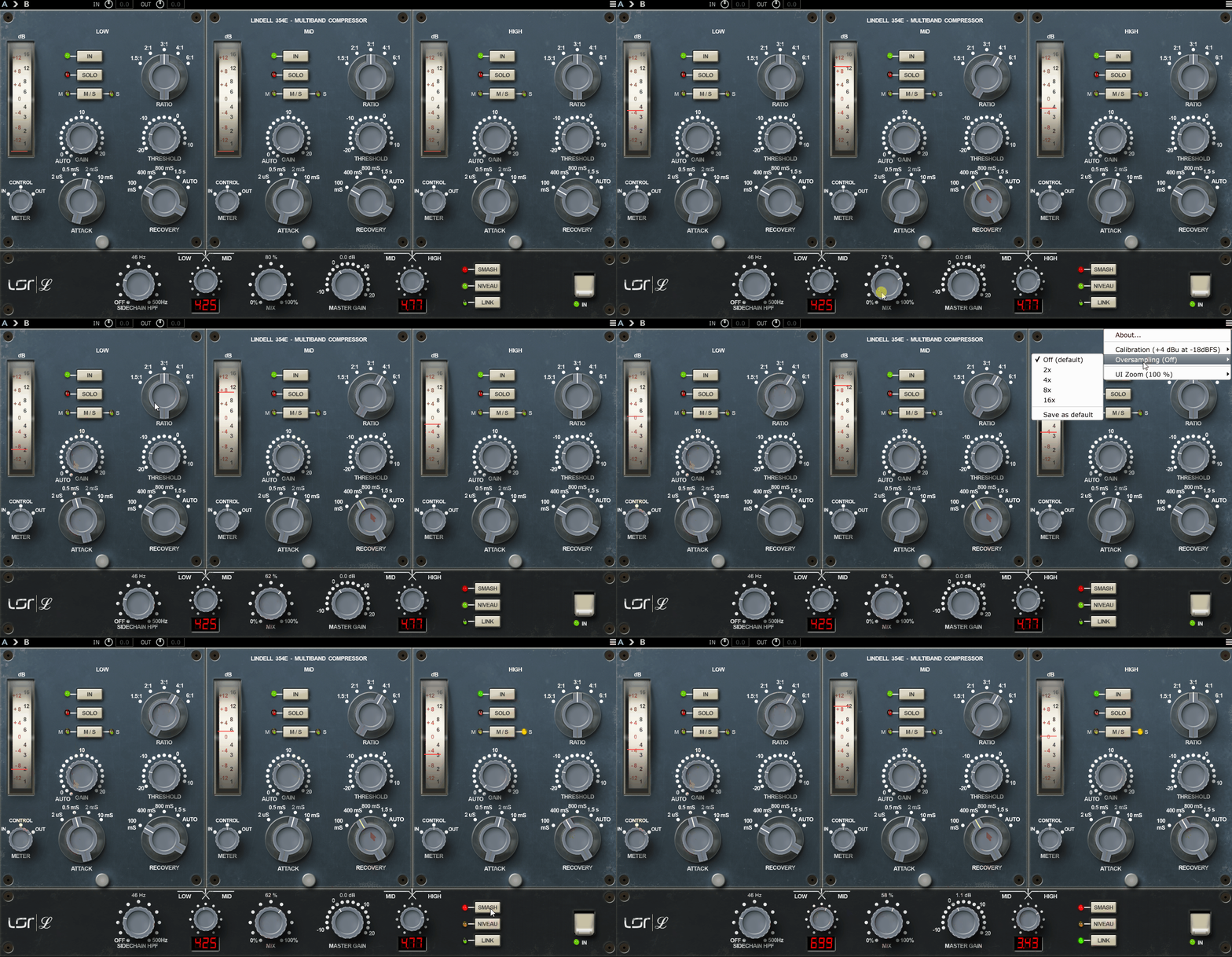
Lindell Audio 354E is a diode bridge style compressor built for the kind of control that’s hard to get quickly with a normal single band compressor which is tightening specific ranges without flattening the whole mix, and I think it’s often described as a mastering leaning tool because it can do that classic everything feels more finished move but it also has enough attitude to become a serious tone shaper on buses when I want it to.
The big reason it belongs in a diode bridge list is that it combines that dense, slightly weighty diode bridge behavior with a workflow that makes it easy to get more punch, more solidity, and more translation without turning my mix into a pumping effect.
- Overload Mode for Aggressive Density
There’s a switchable overload style mode often described as SMASH / NUKE style behavior where the benefit is you can turn the plugin into an aggressive tone tool when you want obvious density and attitude on drums, rooms, or guitars.
This makes it more than a polite mastering compressor where it can be clean and controlled when you want finesse and can get intense when you require the bus to sound bigger and more urgent. Also, the mode switching provides two distinct characters in one plugin.
- Mix Bus Stability Without Losing Impact
On a mix bus the plugin is most useful when the mix is close but feels slightly unbalanced like the low end is big but not controlled, the mids feel a bit crowded, or the top end gets spiky in choruses. Because it can work in multi band I can add cohesion while keeping the mix open so the result is typically more stable and more glued without losing impact.
- Mastering Control That Preserves Dynamics
For mastering this is where the plugin makes a lot of sense where you can use it to apply gentle selective control that keeps the track consistent across sections especially when the arrangement changes. Instead of compressing the whole song the same way you can keep the master feeling controlled and confident while still preserving dynamics, and the diode bridge character also tends to help masters feel slightly thicker and more record like which is useful when a mix sounds good but needs that final sense of density.
- Drum Bus Weight and Glue
On a drum bus it can deliver the classic diode bridge benefit which is weight and glue where kicks feel more planted, snares feel less jumpy, and the kit can feel like it belongs in one frame. It’s especially good when drums sound energetic but slightly disconnected because it can make the bus feel cohesive without killing transient snap.
The diode bridge character adds body without the lifeless quality of over compression.
- Three Band Control Solves Real Problems
The plugin gives me 3 independent bands where the benefit is I can compress the low, mid, and high ranges differently which is exactly what I need when a mix is mostly right but one area is either too jumpy or too uncontrolled. In mastering terms this helps you do small moves that keep the song stable without changing the tone of everything at once.
In mixing terms it lets you shape the feel of a bus where for example you can keep the low end tight while letting the midrange stay lively or calm aggressive highs without dulling the whole sound.
- Mid Side Processing Fixes Center Without Ruining Width
The plugin includes Mid Side mode where the benefit is straightforward – you can control the center of the mix where the kick, snare, bass, and vocal live without crushing the sides where width and ambience live. That proves a big deal for mastering because it lets me tighten the foundation while keeping the stereo picture open.
It’s also very useful on guitar buses and synth layers where you can keep the center stable while leaving the sides to breathe which often sounds more natural than stereo compression that treats everything the same.
4. Waves V-Comp
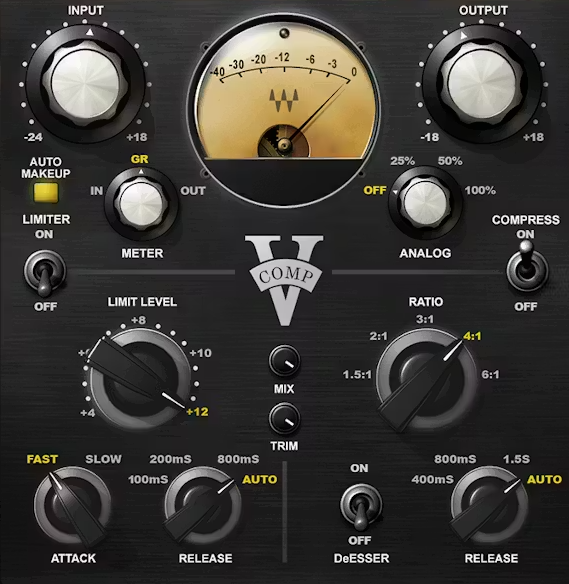
Waves V-Comp is a vintage style diode bridge compressor plugin mainly useful for one reason which is it makes material feel thicker, more unified, and more finished with very little effort, and it’s inspired by the classic Neve 2254 family of bus compression so the sound leans toward density and weight rather than modern ultra clean peak control. If you want a compressor that can add glue while also giving a mix a subtle sense of size and authority, V-Comp sits right in that lane.
The main sonic benefit is cohesion with body where V-Comp tends to make audio feel more connected especially in the low mids and midrange where mixes often feel separated or slightly edgy. When it’s doing its job the track feels like it has a stronger internal balance and the groove feels more consistent without sounding clamped.
It also brings a subtle sense of harmonic thickness that can make a mix feel more solid at the same loudness where that matters because in real mixing better is often more stable and more confident not more obviously compressed.
- Four Analog Character Options
The four analog character options are a practical advantage because they let you choose how much vintage weight I want even before I start compressing. The benefit is you can match the compressor’s vibe to the source quickly where on a bright mix bus you can lean toward a rounder feel while on darker material you can pick a character that keeps clarity without losing the thickness you came for.
- Three Transformer Stage Modeling
The modeling of three transformer stages matters in practice because it’s a big part of why V-Comp can make sources feel bigger and more glued without sounding like a clean digital compressor. The benefit isn’t transformer emulation as a spec but that the compression tends to feel more substantial and less clinical especially when you are using it on buses.
- Combined Compressor Plus Limiter
The combined compressor plus limiter design is useful because it supports a very common real workflow which is use compression for cohesion then use a firmer stage to stop occasional peaks from poking out and changing how loud the whole bus feels. This proves especially valuable on drum buses and mix buses where a few sharp transients can make the entire program feel less controlled than it actually is.
- Switchable De Esser Mode
The switchable de esser mode is a practical bonus for vocals and bright program material where the benefit is you can smooth harshness and sibilance while keeping the main tone intact instead of adding a separate de esser that changes the vocal color or forces you into a longer chain. This integrated approach keeps my processing simpler while still solving the brightness problems that plague many vocal recordings.
- 37 Presets From World Class Engineers
V-Comp includes 37 presets from world-class mixing engineers which is a useful number because it covers common starting points across vocals, drums, and bus work without turning into endless browsing. The benefit is speed when you want a direction quickly especially if you are trying to audition how the compressor behaves on a bus versus on a single track.
- Vocals That Feel Anchored Not Over Processed
V-Comp is good on vocals when your goal is stability with size where if a vocal is dynamic and slightly spiky a compressor that leans thick can help it sit forward without relying on aggressive top end EQ. The benefit is that the vocal can feel more held in the track with less need for constant fader chasing while still sounding like a performance.
It’s especially useful when the vocal feels too clean or too separate from the instrumental where this type of compression can make the vocal feel like it belongs inside the mix rather than floating on top of it.
5. IK Multimedia Precision Comp
Broadcast environments and mastering applications demand compression that controls dynamics reliably without introducing harshness or listening fatigue because audio must remain listenable across extended playback periods and varied playback systems.
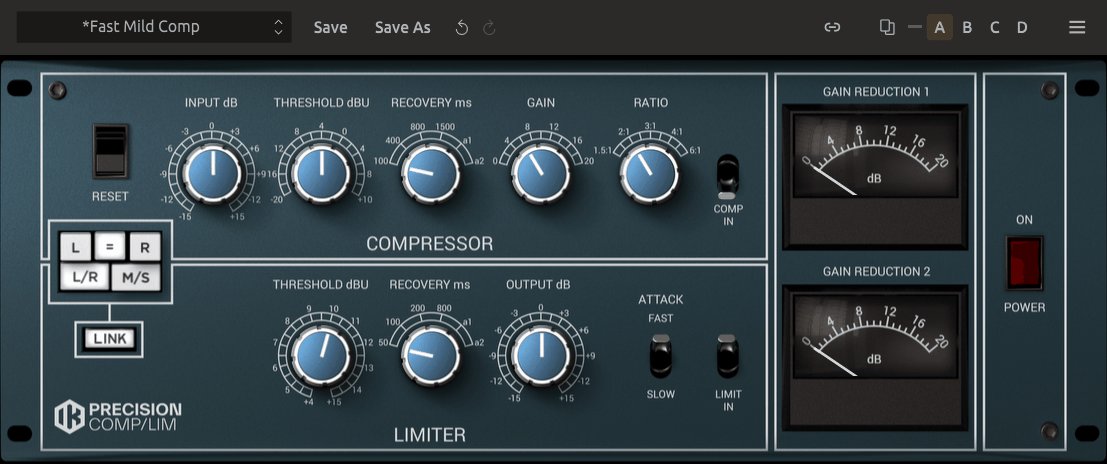
IK Multimedia Precision Comp is built for engineers who want controlled, broadcast safe dynamics without turning the sound hard or aggressive. It’s modeled after a classic British diode bridge compressor from the 1970s where the main value is the way it can make a signal feel more stable, more polished, and more finished while still keeping the program material natural.
This is why it shows up in so many practical contexts including music recording and mixing, mix bus work, mastering, post production, and broadcasting where it’s not trying to be the loudest or the most colorful compressor in my folder but trying to be the one that helps my audio feel consistent and professional when it has to translate across systems and situations.
- Polish Without Aggression
The signature benefit here is polish without aggression where Precision Comp tends to add a sense of density and control while keeping the material musical which is exactly what you want when working on full mixes, dialog, or program audio that must remain listenable over time. It’s often the kind of compression you notice most when you bypass it and suddenly the mix feels a little less held together.
On individual tracks it can add presence and stability without getting sharp where vocals can feel more anchored, bass can feel more even, and drums can feel more connected.
- Two Stage Control for Glue and Protection
Precision Comp is designed as 2 linked sections including a compressor for the main glue and stability job and a limiter for catching peaks when you need firmer containment. The benefit is you can keep the program sounding natural while still preventing the occasional transient from jumping out and changing how loud the whole piece feels, and this proves especially useful on mix bus and mastering chains where you want the master to feel even and confident not squeezed.
In real use this lets you work like an engineer instead of fighting one processor to do two jobs where the compressor can do the musical leveling and the limiter can do the safety net work.
- Gentle Character Fits Mastering and Broadcast
A lot of compressors sound great until they’re asked to control real world program dynamics then they get edgy or fatiguing where Precision Comp’s reputation comes from being more nuanced and less aggressive than many other vintage style units. This is exactly why it’s a strong mastering pick and also a practical tool for broadcasting and post production where clarity and comfort matter.
The benefit is longer listening comfort where you can keep loudness behavior under control while still sounding musical which matters if the audio will be heard on TV, streaming, radio style environments, or long form content.
- Post Production and Broadcasting Reliability
In post and broadcast the job is often making audio feel consistent and reliable across playback systems and content types where Precision Comp fits because it can tighten dynamic behavior while keeping things smooth and listenable. The limiter stage is useful as a safety tool for unpredictable peaks, and the overall tone helps avoid the harshness that can make dialog and program audio tiring.
- Adds Record Weight Without Extra Coloration
Even when you are not trying to crush anything this style of circuit modeling tends to add a subtle sense of weight and solidity where the benefit is tracks can feel more finished with fewer steps. For mixing this can mean vocals sit easier, bass feels more stable, and a bus feels more unified without needing to stack multiple processors to get there.
- Music Recording and Mixing Application
For tracking and mixing Precision Comp is a strong choice when you want compression that smooths and stabilizes without obvious grab. It’s useful on vocals when you want the performance to feel more consistent but still natural, it works on bass when I want steadier note energy without turning the low mids into a blanket, and it’s effective on drum buses when you want the kit to feel more connected and controlled especially when my arrangement gets dense.

Hello, I’m Viliam, I started this audio plugin focused blog to keep you updated on the latest trends, news and everything plugin related. I’ll put the most emphasis on the topics covering best VST, AU and AAX plugins. If you find some great plugin suggestions for us to include on our site, feel free to let me know, so I can take a look!