
Parallel compression solves a fundamental problem in modern production: the conflict between maintaining natural transients and achieving the density that makes tracks competitive. Standard compression forces you to choose between keeping dynamics or adding thickness – parallel processing lets you have both by layering a heavily compressed signal under the clean original.
These are the best parallel compression plugins I found for 2026 for making drums, vocals, and bass and few other mixing aplplications feel bigger and more controlled without destroying the natural punch that makes sources feel alive in a mix. In this selection I included picks like Baby Audio IHNY 2, FabFilter Pro-C 2, Arturia Bus FORCE, Waves CLA 76, and some others. Plus two capable free options focused specifically on drum parallel processing.
The technique works because you’re not replacing the source but supporting it. Clean drums keep their sharp transient attack while a crushed parallel layer adds sustained body and perceived loudness. Lead vocals maintain natural articulation while a compressed return fills gaps in quieter phrases. Bass retains low end foundation while a parallel path increases midrange readability across playback systems.
Here’s what separates effective parallel compression plugins from generic compressors: they need to sound musical when pushed into extreme gain reduction ranges that would make standard compressors fall apart. Most transparent leveling compressors become harsh and brittle under heavy compression. Parallel-focused tools are designed to deliver density and character at settings you’d never use on direct inserts.
The implementation details matter significantly. Internal parallel routing eliminates setup friction and encourages experimentation. Integrated saturation prevents the flat lifeless quality that ruins heavily compressed returns. Sidechain filtering stops kick and bass from dominating compression behavior in ways that cause unwanted pumping. These features determine whether a plugin actually solves parallel compression workflow problems or just adds another compressor to your collection.
Modern productions demand parallel processing across multiple buses – drum groups need explosive energy, vocal stacks need cohesive support layers, bass requires translation help without volume increases. Using specialized parallel tools rather than general purpose compressors means faster decisions and more consistent results across varied material.
Each entry explains what the plugin delivers in parallel contexts, which sources benefit from its particular compression characteristics, and when its workflow design justifies choosing it over alternatives.With that said, I will start start with the first one:
1. Baby Audio IHNY 2
Parallel compression changed how engineers approach dynamics because it solved the fundamental conflict between keeping natural transients alive and adding the density that makes tracks feel competitive in modern mixes.
Before parallel processing became standard workflow, you either squashed sources to achieve thickness or kept them dynamic but thin, and neither approach delivered the aggressive yet punchy sound that defines contemporary production.
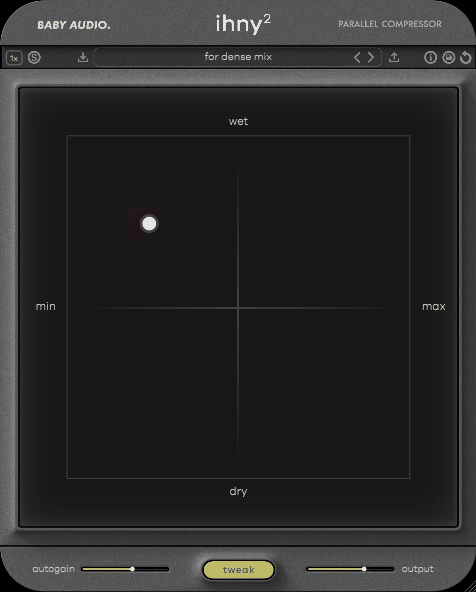
Baby Audio IHNY 2 is a purpose built parallel compressor plugin for situations where you want a track to feel bigger, tighter, and more energetic but don’t want to lose the natural punch and movement of the original, and I think the reason it gets recommended so often is that it makes parallel compression feel like a single focused decision instead of a routing project.
You can push the compressed path into that hard hitting New York style intensity then bring it back in a controlled way so the result feels loud in perception and more exciting without turning the source into a flat brick.
In day to day mixing IHNY 2 is at its best on drum buses, drum loops, room mics, bass groups, and even instrument stacks that feel a bit too polite, and it’s not trying to be my gentle leveling compressor but the tool I reach for when you want a source to stand up in the mix fast.
- Bass Audibility and Steadiness
On bass IHNY 2 can add audibility and steadiness without forcing me to push the bass fader where bass becomes easier to read in the chorus because the parallel path can increase the sense of sustain and presence while I still keep the clean foundation of the original.
This solves the problem where bass sounds perfect in verses then disappears when the arrangement gets dense, and the parallel compression creates consistent presence without destroying the clean low end that gives bass its weight.
- Fast Internal Parallel Workflow
IHNY 2 is built around an internal parallel signal flow so you’re not building sends, returns, and extra routing just to get the effect where the speed and consistency.
You can create the parallel compression shape in seconds which makes it realistic to use across multiple buses in a session instead of saving it for one special track, and this workflow efficiency means you can apply parallel compression more broadly which improves mix cohesion overall.
- Shape Control for New York Style
IHNY 2 includes a dedicated Shape option that applies a smiley EQ curve to the compressed path where theI can get the classic New York parallel vibe where the parallel return adds weight and sparkle helping the compressed layer feel more present and exciting instead of just louder and squashed.
This proves one of the reasons the plugin feels like a parallel compressor that already knows the style it’s meant to deliver, and I don’t need to build the frequency shaping manually every time. The built-in curve delivers the classic sound immediately.
2. FabFilter Pro-C 2
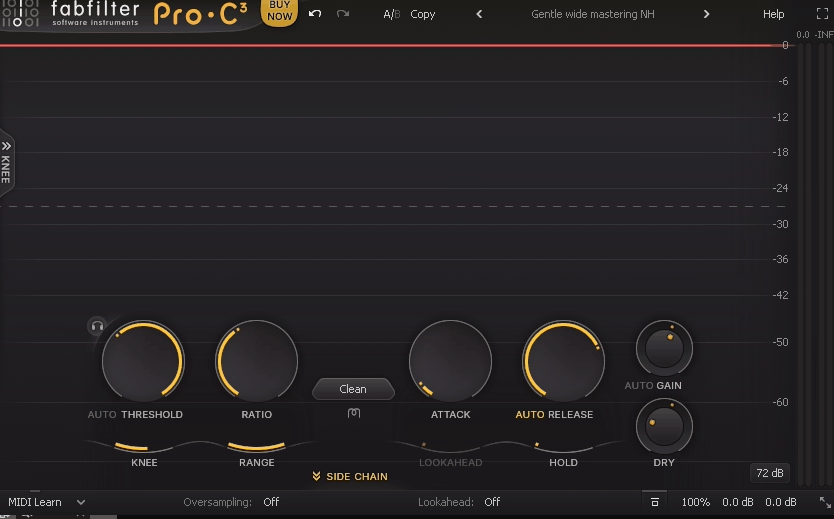
I updated the image for Pro-C 3 since it was released in the meantime.
Specialized tools work beautifully until your session demands something slightly different, and most parallel compressors lock you into one sonic personality which means you’re either perfectly matched or constantly compromising depending on what the track needs.
Building multiple parallel returns with different compressor characters solves the flexibility problem but creates routing complexity and decision fatigue when you’re trying to work quickly across varied material.
FabFilter Pro-C 2 (now Pro-C 3) isn’t marketed as a parallel compressor first but in real mixing it’s one of the easiest compressors to recommend for parallel work because it gives me repeatable punch, clean control when I push it hard, and very fast decision making when I’m shaping a parallel return.
You can build a parallel chain that adds density and excitement without turning drums into fuzz, without wrecking transients, and without guessing what the compressor is doing.
Instead of relying on one New York flavor the plugin lets you decide what your parallel channel is supposed to contribute which could be snap, body, forward midrange, controlled low end, or obvious rhythmic movement. That flexibility is why it shows up in a lot of modern templates as the parallel compressor that can adapt to whatever the session needs that day.
- Parallel Drum Thickness Without Transient Loss
On a parallel drum bus the compressor is great when you want the parallel layer to add thickness and sustain while your main drum bus keeps the clean transient shape. You can drive the parallel return hard and still keep it usable so the kit feels bigger and more consistent without losing the front edge of the kick and snare.
This separation means you’re not choosing between impact and density but getting both by layering clean and compressed versions intelligently. The drums feel powerful without becoming lifeless slabs.
- Room Mics Become Controlled Energy
On room mics it’s one of those compressors that can turn ambience into energy in a controlled way where the parallel return can add that room stays up feeling that makes a kit sound more alive.
I appreciate how this transforms distant ambience into an active element of the drum sound, and the compressed room layer adds dimension that makes drums feel three dimensional rather than close miked and flat.
The room becomes part of the performance rather than background noise.
- Eight Styles for Different Parallel Jobs
The plugin gives me 8 compression styles and for parallel compression this proves genuinely useful because it lets you choose what the parallel return should feel like rather than trying to force one mode into every role. You can pick a style that already leans toward my goal then focus on amount and tone.
- Range Control Keeps Compression Musical
The Range control limits how far the gain reduction can go where in parallel work this proves a big deal because it helps me push the compressor hard for tone and sustain without the return turning into a completely flattened block. Parallel channel stays musical and supportive even when you are aggressive with the threshold.
3. Arturia Bus FORCE
Traditional parallel compression tutorials teach you to create a send, load a compressor, crush it hard, then blend it back, but this workflow ignores the reality that crushed signals almost always need additional processing to actually work in a mix.
Then, you end up stacking EQ to fix midrange buildup, saturation to add back harmonics the compression removed, filters to control frequency imbalance, and clipping to manage peaks, which means your simple parallel compression technique becomes a five plugin chain that’s different on every track.
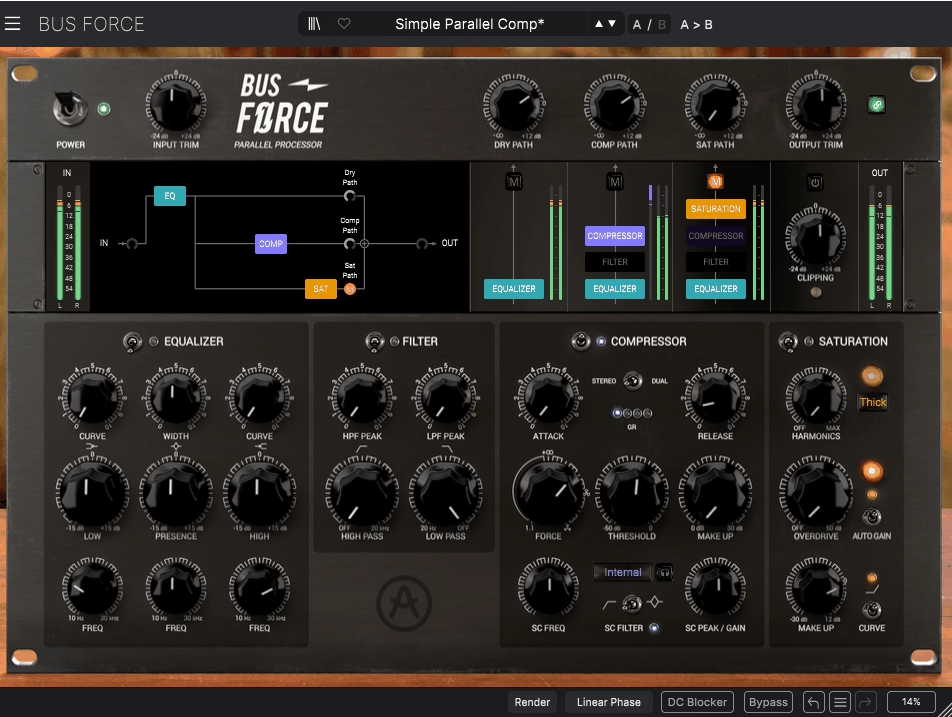
Arturia Bus FORCE is another parallel compressor plugin built for one practical outcome which is making a sound feel more finished and more mix ready without building a long chain by letting you create multiple processed versions of the same signal in parallel each with its own character then blend them into a final result that feels bigger, clearer, and more controlled.
The reason it works so well for parallel compression workflows is that it’s not only compression in parallel but parallel processing as a whole mixing move where the compressed layer can be supported by filtering, EQ shaping, saturation, and clipping in a controlled way.
Bus FORCE is the kind of tool I would recommend when you want to push a source forward without ruining the original tone and transients, and it’s especially strong on drum buses, drum loops, room mics, bass groups, and mix bus enhancement when you want a bit more density and excitement but still need the track to stay intact.
- Drum Bus Confidence at Same Fader Position
On a drum bus the plugin makes parallel compression feel like an intentional layer rather than a crushed duplicate where you can build a parallel path that adds thickness and sustain under your clean drums while keeping the main drum hits punchy.
The kit sounds more confident at the same fader position, and I usually need less extra EQ or transient shaping to get the drums to read.
This integrated approach means you’re building complete drum sounds rather than just controlling dynamics.
- Three Parallel Paths as Complete Mix Move
The heart of the plugin is its 3 audio paths plus a final blend stage where you can build three different supportive layers in one plugin instance without setting up sends, returns, and multiple plugins just to test an idea.
In practice this gives you a very workable approach for parallel compression where one path can be the clean foundation keeping the transient truth and natural tone, one path can be the compressed density layer doing the heavy lifting for sustain and loudness perception, and one path can be a character layer adding bite, weight, or contour so the parallel return doesn’t just sound like a flattened copy.
The real mixing advantage is speed where you can build a layered parallel sound that feels finished in minutes not an hour.
- Five Modules Cover Full Parallel Return Job
The plugin is built around 5 processing modules including EQ, Filter, Compressor, Saturation, and Clipping where the I can shape the parallel return into something that actually contributes to the mix instead of a generic compressed layer that I then have to fix with other plugins.
- Routing Flexibility for Purpose Built Layers
The plugin offers 36+ routing configurations which in benefit terms means you can decide whether my parallel layer is mainly about compression, compression plus tone, tone plus control, or filter driven impact without needing to rebuild a chain from scratch.
4. Waves CLA 76
Parallel compression fails when the compressed layer sounds like a mistake rather than a feature, and the difference between useful parallel returns and unusable mush often comes down to choosing compressors that stay musical when pushed into extreme settings.
Most compressors are designed for transparent control which means they start falling apart sonically the moment you exceed moderate gain reduction, turning into artifacts and harshness rather than useful density.
FET style compression changed parallel workflows entirely because these compressors were built to sound good under aggressive settings, delivering punch and character rather than digital artifacts when driven hard.
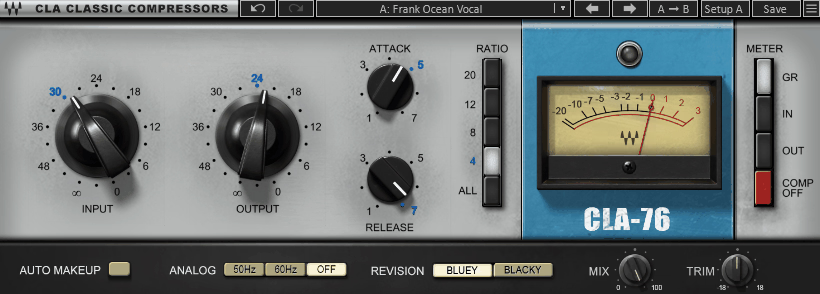
Waves CLA 76 is one of the most practical parallel compression recommendations because it gives you a parallel layer that can be aggressive, punchy, and forward without turning into a blurry mess. The core reason it works is simple where this style of FET compression is great at creating a crushed support layer that adds density and excitement while your main drums or vocal keep the natural transient shape.
In other words it’s a compressor that still feels useful when you push it hard which is exactly what parallel compression needs. In a parallel setup the plugin is usually not the transparent control layer but the layer that makes things feel more energetic and more mixed especially on drums, rooms, and punchy instrument groups.
- Two Distinct Flavors for Matched Returns
The plugin includes 2 models commonly referred to as Bluey and Blacky two different attitudes that help me build the right parallel layer faster. Bluey is typically the choice when you want the parallel return to feel more aggressive and exciting especially for drums, rooms, and energetic instrument buses.
Blacky is often a better fit when you want the return to feel smoother and more controlled like a thicker support layer that doesn’t get quite as edgy. In practical parallel work this choice matters because your parallel return should complement the main track where if the return feels too edgy it fights the original, and if it feels too soft it doesn’t add much.
- Parallel Drum Impact and Sustain
On a parallel drum bus the compressor is excellent at turning the parallel return into impact and sustain instead of just more level. You can make snare body stay up, make kick feel more confident, and bring out room tone and decay so the kit feels larger.
The most useful outcome is that the kit feels denser and more consistent while the clean drum bus keeps the snap. This separation prevents the flat lifeless quality that ruins heavily compressed drums.
- Room Mics Become Part of Groove
On room mics the plugin delivers a classic make the room part of the groove move where you push the compression so the room swells and breathes in a controlled way then blend that under the close mics. The result is size and urgency without needing to fake it with reverb. The compressed room layer adds dimension organically rather than through artificial space.
5. Softube Tube Tech CL 1B Mk II

Parallel compression conversations usually focus on crushing drums and creating explosive room sounds, but this narrow view ignores the technique’s most valuable application which is creating polished supportive layers that add consistency without sacrificing naturalness.
Vocals need parallel compression that makes performances feel expensive and controlled rather than aggressive and forward, where the goal isn’t impact but steady presence that keeps words intelligible through dense arrangements without obvious processing artifacts.
Most parallel compressor recommendations push you toward aggressive FET or VCA styles that excel at drums but turn harsh and brittle when applied to vocals, leaving you with parallel returns that fight the original rather than supporting it.
Softube Tube Tech CL 1B Mk II is one of the most reliable choices when my goal is parallel compression that adds polish not chaos. A lot of parallel setups are about smashing a signal and blending it back for aggression but CL 1B parallel is different where it’s about creating a second layer that feels smoother, denser, and more finished then riding that underneath the original so the source stays natural but gains confidence.
If you mix a lot of vocals this is the parallel compressor you reach for when you want the vocal to stay present and controlled through a busy chorus without turning into a gritty obviously compressed effect. I think it also works great on bass and certain instrument groups when you want steady energy and soft saturation style thickness without making the transient edge disappear.
- Expensive Stable Vocal Feel
On lead vocals the compressor excels at making the vocal feel expensive and stable where in parallel you can compress the return more firmly than you would on the main vocal insert then blend it so it fills in quiet words and keeps the vocal up without pinning the performance. The result is a vocal that feels more consistent across lines especially when the arrangement gets dense while the main track keeps the natural articulation and expression.
This layered approach solves consistency without destroying emotional dynamics.
- Unified Background Vocal Stacks
On background vocals the parallel return can help stacks feel more unified where instead of every harmony poking out at random moments the compressed layer adds a steady bed of level that makes the whole stack behave like a single section.
This proves especially useful when stacks have lots of dynamic variation between singers or takes and you want them to feel like a controlled bed behind the lead.
- Polished Sound Even When Pushed
The CL 1B sound is famous because it can be driven into meaningful gain reduction while still sounding smooth and musical where in parallel work this proves a big advantage because my return track often needs more compression than you would ever want directly on the source. With the plugin the return tends to stay silky and controlled not brittle or crunchy which makes it easier to blend into a finished vocal sound.
- Tube Opto Density Without Harshness
CL 1B style compression is commonly chosen for vocals because it tends to add a sense of body and richness while it controls dynamics where in parallel that translates to a return that can make a vocal feel bigger and more confident without needing to pile on saturation plugins just to get thickness. You can use the compressed layer as tonal support that also happens to be dynamically stable.
6. Baby Audio Parallel Aggressor
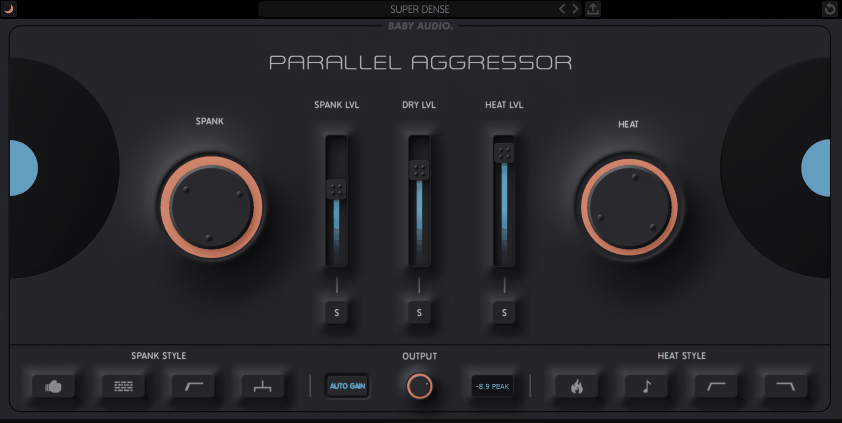
Traditional parallel compression requires building the entire processing chain manually which means you’re spending mental energy on mechanics instead of music, and this friction prevents you from experimenting freely with parallel processing because setup time discourages exploration.
Baby Audio Parallel Aggressor is built for one job which is creating a parallel support layer that makes a sound feel bigger, more forward, and more controlled without sacrificing the natural life of the original track.
It does this by splitting your signal into three lanes inside one plugin so you can keep my clean foundation intact while adding a compressed lane for density and a saturated lane for attitude.
That combination is why it works so well for parallel compression workflows in real mixes. Where a lot of parallel setups require routing, extra plugins, and constant level checking, the plugin is designed to feel like a single mixing move where you decide how much compression energy you want, how much harmonic edge you want, and how much of your original you want left untouched.
- Room Mics Bloom and Stay Present
On room mics it’s a classic parallel trick tool where you can push the compressed lane so the room blooms and stays up then add saturation to make the room feel more present without needing to brighten it with EQ. The result is bigger space and more excitement that you can tuck under the close mics until the kit feels alive.
- Three Lane Design Keeps Original Intact
The plugin’s biggest advantage is that it you three internal lanes including a dry foundation, a compressed lane, and a saturated lane where you don’t have to choose between natural and processed. You can keep the source sounding like itself while layering in exactly the amount of density and edge needed for the mix.
This is why it’s so effective as a parallel compression recommendation where the plugin is literally built around the parallel concept not adapted to it.
- Drum Weight and Sustain Under Clean Transients
On drums and drum buses the plugin is a fast way to add weight and sustain under clean transients where you can make the snare feel thicker, make the kick feel more stable in level, and bring out the between hit energy that makes drums feel expensive.
- Spank Compression Adds Energy Not Just Control
The Spank engine is the parallel compression side where it’s designed to do what people actually want from New York style compression which is more impact and more consistent energy under the original. Instead of chasing a bunch of technical settings you are mainly deciding how much support the compressed lane should provide which makes it fast to dial in on drums, vocals, and group buses.
A useful detail here is that the compression lane is not purely clinical but intended to have a bit of attitude which helps the parallel layer feel like it contributes something musical rather than sounding like a sterile duplicate that got smaller.
- Heat Saturation for Perceived Loudness
The Heat engine is what turns the plugin from parallel compressor into a real mix tool where I can add harmonic density to the parallel layer so the source feels louder and more present without actually pushing the fader as much.
For drums this can translate to more bite and urgency, for vocals it can translate to more forwardness without relying on top end boosts, and for bass it can translate to better definition without making the low end muddy.
- Style Buttons Reshape Parallel Behavior
This parallel compressor plugin includes style injection buttons that reshape the behavior of the compression and saturation lanes where you can quickly steer the parallel layer toward a more useful role without needing extra plugins. On the compression side there are four Spank Style options that can emphasize punch, add more smack, or change how the compressor focuses so the parallel lane supports the groove instead of fighting it.
On the saturation side there are also style options such as Extra Hot, Tone, and filtering choices that help the saturated lane sit where it belongs instead of taking over the entire sound.
7. UAD Empirical Labs EL8 Distressor
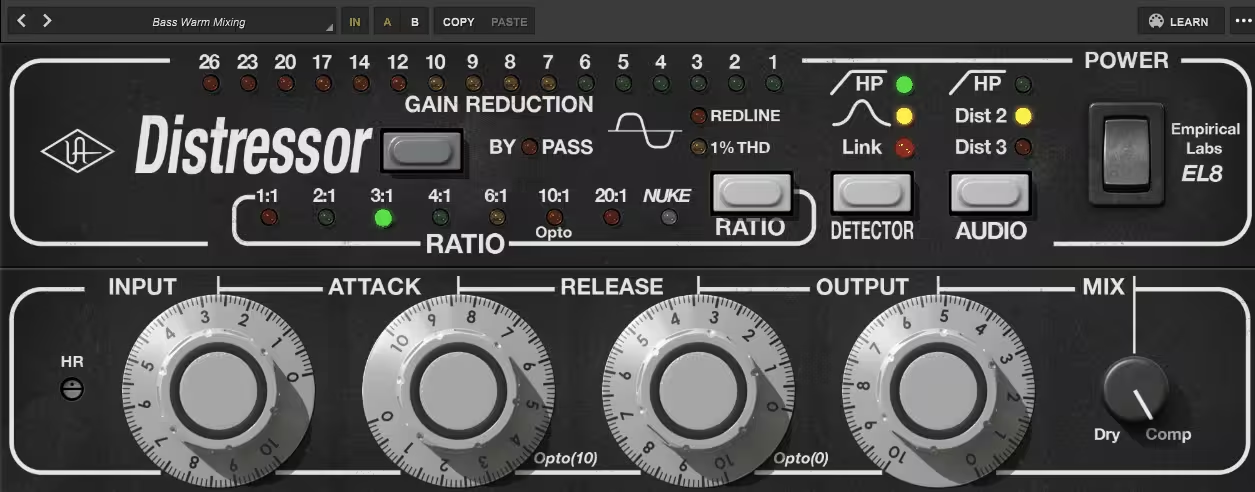
EL8 Distressor is one of the strongest parallel compression recommendations because it can create a parallel return that feels huge, energetic, and finished without collapsing into harshness or turning everything into a flat block.
In parallel workflows I’m usually asking for two things at once which are more density and more attitude while the original track keeps the clean transient truth. The Distressor is built for exactly that role because it can behave like multiple compressors depending on how you set it, and it can add harmonic character without needing a separate saturation stage.
This isn’t a one trick drum crush plugin where it can do that but the real value is that you can build different parallel layers for different jobs including a parallel return that adds punch and sustain on drums, a parallel return that adds presence and stability on vocals, or a parallel return that adds readability and controlled energy on bass.
- Room Mics Get Explosive Energy
On room mics it’s one of the most reliable ways to create that explosive room energy layer where you can push a more extreme curve and make the ambience swell and stay up then tuck it under the clean kit to add size and excitement. The result isn’t just louder rooms but more perceived space and intensity without washing out transients.
- Eight Ratio Curves as Different Personalities
The biggest practical advantage is that its ratios aren’t just more or less but it you 8 distinct ratio curves and they behave like different tools you can pick for different parallel roles. You get everything from 1:1 for tone and thickness without obvious compression through musical compression curves up to aggressive limiting behavior including Nuke for that over the top room crush style return.
In parallel compression terms this buys you the ability to make a parallel return that is supportive and smooth for vocals, a return that is punchy and energetic for drums, or a return that is intentionally extreme for special effect rooms and loops without switching to a different plugin.
- Dist 2 and Dist 3 Add Finished Attitude
Parallel returns often sound flat if they’re only compressed where the Distressor avoids that because it can add harmonic character in a controlled way using Dist 2 and Dist 3.
Parallel return can contribute thickness and edge without needing a separate saturator where Dist 2 is the option I reach for when you want a more flattering warmth feel while Dist 3 is typically the one that helps drums and aggressive sources feel more forward and urgent.
This is one of the reasons it’s so effective for parallel work where the return doesn’t just get louder and flatter but gains character and density that actually helps it blend as a musical layer.
- Sidechain Control Prevents Wrong Pumping
Parallel compression often fails because the compressor reacts to the wrong thing where kick and sub energy can dominate or harsh peaks can trigger ugly movement.
The compressor includes sidechain filtering options designed to help me control what drives the compression which proves extremely valuable when building a parallel return that needs to sit under a clean main track without obvious pumping. Lastly, parallel layer adds energy and sustain while staying stable in the mix especially in modern low end heavy productions.
- Bass Readability Layer
On bass in parallel the compressor is great for adding a readability layer where you keep my main bass track for low end foundation then use the parallel return to add sustain and harmonics that help the bass line stay audible without pushing the fader or boosting muddy low mids.
The parallel return increases perceived sustain and presence which helps bass translate across different playback systems. The bass stays clear without volume or EQ compensation.
Freebies:
1. Kiive Audio Xtressor NUKE
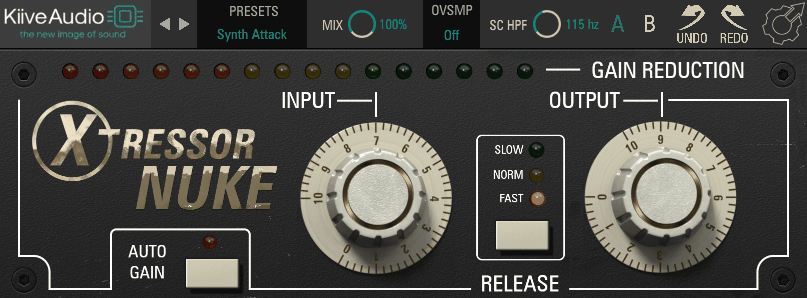
Free parallel compression plugins usually fail by trying to be everything to everyone, offering mediocre performance across multiple compression styles rather than excelling at one specific job that solves real mixing problems.
The best free tools understand their lane and deliver one result exceptionally well, letting you drop them into sessions knowing exactly what you’ll get without spending twenty minutes tweaking parameters hoping for usability.
Kiive Audio Xtressor NUKE is a free parallel compression weapon made for one kind of result which is make drums and aggressive buses feel bigger, louder in perception, and more explosive without spending time dialing a full compressor.
It’s essentially a commit style processor where the compression character is the point. You can drop it on a parallel drum bus or room mic return, push it until it starts doing the thing, and blend that energy underneath my clean signal.
The best way to think about it is that it’s not trying to cover every compressor task but is built for the moments where you want a parallel layer that adds density, sustain, grit, and urgency and I want to get there fast.
- Parallel Drum Body Between Hits
On a parallel drum bus the plugin can create that classic crushed layer that makes the kit feel like it has more body between hits. Kicks feel more planted, snares feel thicker, and the groove holds together more consistently when the arrangement gets busy.
When you blend it under your clean drums you can keep the clean transient snap while gaining a second layer that makes the drums feel larger and more confident.
- Room Mics Become Explosive
On room mics this plugin can turn ambience into an obvious part of the sound where the compressed return pulls up the room sustain and the decay which is exactly what you want when trying to make a drum recording feel bigger without relying on reverb. This is where it earns its name because the parallel return can feel explosive if you push it.
- Three Release Modes Change Groove Feel
You get 3 release modes including Fast, Normal, and Slow where you can match the compressor movement to the tempo and attitude of the track without needing detailed timing controls. Fast is the most common choice when I want the return to feel more energetic and rhythmic especially on snare heavy material.
Normal is the safe middle ground when I want the return to feel thick and controlled without sounding like it’s bouncing, and Slow can work when you want the parallel layer to feel heavier and more sustained especially on room mics where you want the ambience to stay up longer.
- Sidechain High Pass Prevents Kick Domination
The plugin includes an adjustable sidechain high pass filter where your parallel return can stay exciting without the compression being dominated by kick and sub energy.
2. Kiive Audio XTMax
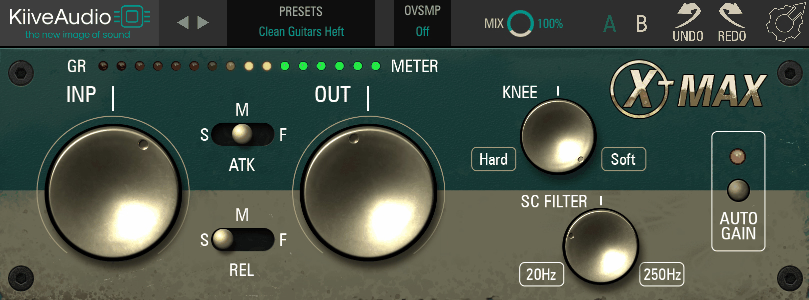
Free drum compressors typically offer either transparent leveling that doesn’t solve energy problems or aggressive crushing that destroys transients, rarely delivering the middle ground where drums feel controlled yet explosive in ways that justify their place in your template.
Most bedroom producers waste hours trying to make general purpose compressors work on drums when specialized tools would solve the problem in seconds, and this friction prevents experimentation that would actually improve their mixes.
Kiive Audio XTMax is a free drum focused parallel compressor plugin designed to get you to one outcome fast which is bigger, more explosive drums that still sit in a mix.
It’s the kind of plugin you can reach for when a drum bus sounds fine in solo but once the bass, synths, and vocals come in the kit feels too small, too uneven, or too polite. XTMax is built to create a confident, gritty, already mixed drum picture with just a few decisions which makes it perfect for both main drum bus control and parallel crush layers.
The reason it works well in parallel compression workflows is that it can generate a processed layer that has real density and urgency where you can push it hard enough to be useful then blend that energy under the clean signal so transients stay clear while the sustain and body come up.
- Room Mics Become Mix Layer
On room mics the plugin can turn ambience into an actual mix layer where instead of the room disappearing until you crank it the compression brings up the decay and excitement so I can tuck it under close mics for bigger space and more energy. The room transforms from background element into active component.
- Three Release Modes Match Groove
The plugin has 3 release modes which is one of the main reasons it’s quick to use on drums where you can get the compressor moving in the right musical way without fine tuning for minutes.
A faster release feel typically gives you more energy and movement perfect for modern punchy drums and loops, a medium release feel tends to be the safe option for most drum bus jobs where you want control but not obvious pumping, and a slower release feel can create a heavier more sustained layer that works well for room mics and bigger drum sounds.

Hello, I’m Viliam, I started this audio plugin focused blog to keep you updated on the latest trends, news and everything plugin related. I’ll put the most emphasis on the topics covering best VST, AU and AAX plugins. If you find some great plugin suggestions for us to include on our site, feel free to let me know, so I can take a look!