
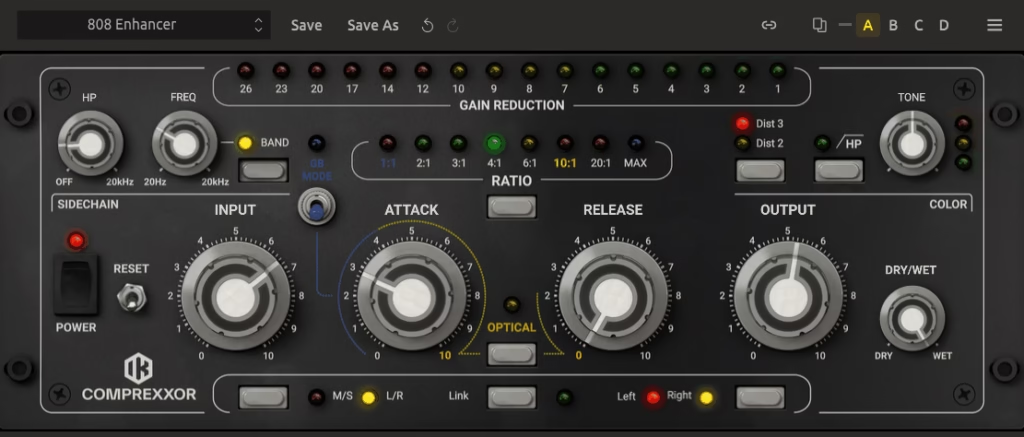
These are the best Distressor-style compressor plugins I want to recommend for bedroom producers who need vocals, drums, and bass to actually command attention in a mix without stacking multiple processors.
Most compressors are built for one specific job – either transparent leveling or vintage glue. Distressor-style compressors work differently. They’re designed to handle multiple sources and attitudes, which is why they’ve become go-to tools for making tracks sound more expensive and intentional fast.
The core benefit of a Distressor isn’t subtle control – it’s range. You can use gentle settings for steady vocal presence, medium compression for consistent bass translation, or aggressive settings to make drum rooms explode :D. All within one familiar tool instead of switching between specialized compressors depending on whether you need polish or attitude.
Here’s what makes these compressors valuable: they solve the common problem where a track is technically fine but doesn’t read properly in the mix. Your vocal has decent levels but disappears when the chorus hits. Your snare sounds good until guitars arrive. Your bass is loud in the studio but vanishes on earbuds. Distressor-style compression fixes these issues by reshaping how a sound hits, holds, and carries energy through dense arrangements.
I think what separates these from cleaner compressors is that they can add presence and density at the same time. You’re not just controlling peaks – you’re making sources feel closer, more urgent, and more confident. This is why engineers reach for them on lead vocals, drum rooms, bass, and aggressive instruments when standard leveling isn’t enough.
This guide covers six premium Distressor-style plugins: UA Empirical Labs EL8 Distressor, IK Multimedia Comprexxor, Softube Empirical Labs Mike-E, Slate Digital FG-Stress, Empirical Labs Arousor, and Kiive Audio XTComp. Plus three solid free options at the end focused specifically on drums.
Let’s break down what each one brings to your workflow.
From the Pluginerds Store
Before you go — if you're putting together or upgrading a home studio setup, we run our own store alongside the blog at Pluginerds Shop. Everything on it is picked by people who actually make music, not sorted by whoever paid for placement on a marketplace. Worth a look if you're filling in the gaps in your setup.
Visit Pluginerds Shop1. UA Empirical Labs EL8 Distressor Compressor
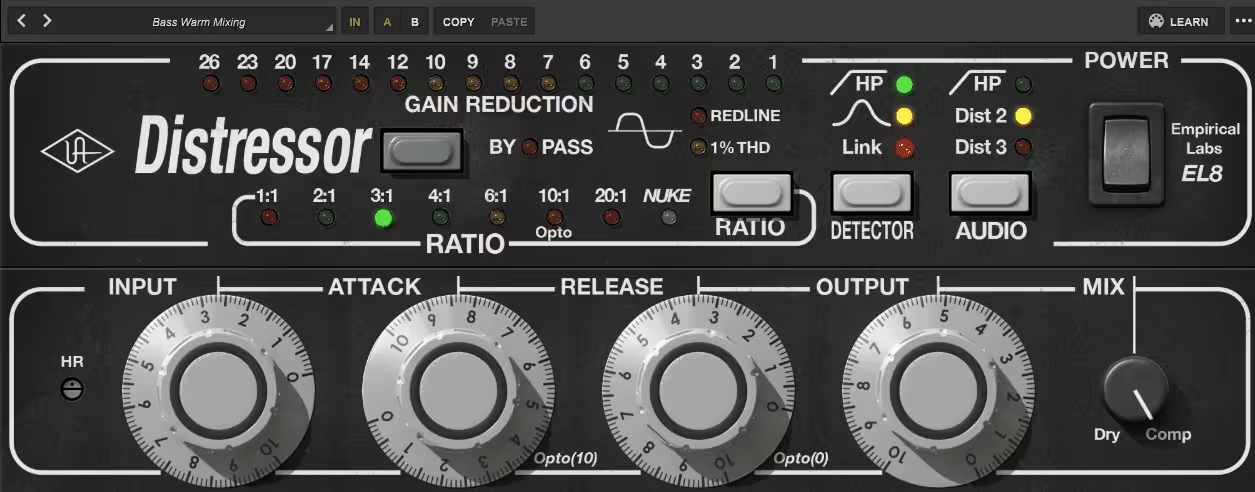
Some compressors are known for one specific job like transparent leveling or vintage character, and you reach for them when you need exactly that sound. Other compressors earn their reputation by being the opposite where they handle so many different sources and attitudes that they become the first thing you try when something needs to stand out.
The UAD Empirical Labs EL8 Distressor is one of those compressors that can make a track sound more expensive fast not because it’s subtle but because it gives you multiple right answers depending on what the source needs, and I think the main benefit is range where you can go from barely controlling peaks to seriously reshaping envelope and attitude without switching to another compressor.
UA markets it as an end to end emulation of the Distressor available both natively on macOS and Windows and on UA DSP for Apollo and UAD hardware which means you can use it for mix work or commit the sound while tracking.
If you want a Distressor type plugin to make things stand out, this is exactly the lane where it’s less about transparent control and more about giving a vocal, drum, or bass part a defined shape that holds its place in the mix.
The Distressor sound is often described as finished because it can tighten dynamics and add presence at the same time, and I think this helps you do common jobs that make sounds pop rather than just controlling levels politely.
- Vocals Stay Front of Mix Without Constant Automation
The compressor delivers front of mix control where vocals stay up without relying purely on fader automation because it can catch fast peaks and keep the average level steady without smearing articulation.
I think UA even calls out the hardware’s ultra fast attack behavior as something many emulations miss and their model gets right, and this matters because you’re getting vocal presence that feels natural rather than obviously compressed.
- Drum Impact and Room Excitement
This is where the Distressor reputation really comes from because it can make room mics explode, make a snare feel more aggressive, or tighten a drum bus so the groove becomes more consistent.
- Density Without Low End Mud
The compressor adds urgency and thickness but you can steer it away from the common low end triggers everything problem so the mix stays stable, and this is where a Distressor often beats more vintage modeled compressors.
- Harmonic Attitude
The most useful make it stand out benefit is harmonic attitude you can dial in without reaching for separate saturation plugins where Dist 2 and Dist 3 modes are famous because they can thicken and energize a source.
Get the Free Plugin Starter Kit
The genuinely useful free DAWs and plugins worth installing. No filler. Straight to your inbox.
2. IK Multimedia Comprexxor
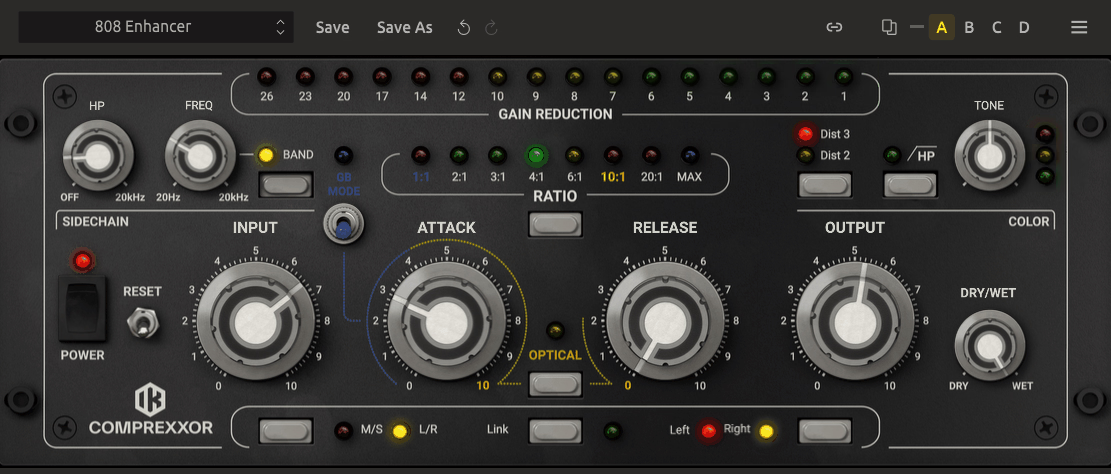
When a vocal technically has decent levels but still doesn’t read properly in the chorus, or a snare disappears when guitars arrive, you’re facing problems that volume alone can’t fix.
IK Multimedia Comprexxor is a Distressor style compressor built for one consistent outcome which is making tracks sound like they belong in a finished record by giving you control over how a sound hits, how it holds, and how it carries energy in a dense mix, and to me, the benefit is range without confusion where you can use it as a clean leveler, punch shaper, or attitude compressor that makes a part jump forward.
The core sound sits in the tight, controlled, forward family where it can make a source feel more stable in level but also tends to add a sense of intent to the envelope, and I would say this is why it works well when you want something to sound more professional without stacking multiple processors.
Comprexxor is especially useful when a source is technically fine but still not reading properly, and this is the kind of compressor I would recommend to use to fix that by shaping dynamics rather than just turning things up.
- Vocal Steadiness Without Dead Sound
On vocals the benefit is steadiness without killing the performance where used lightly it keeps words intelligible without making the singer feel ironed out, and used harder it can create a more modern front of mix vocal that stays present even when the track gets busy.
I find that around 1 to 3 dB of gain reduction delivers natural leveling where the vocal feels controlled but still open, and when I want the vocal to feel more produced pushing into 3 to 6 dB often gets there without obvious pumping.
The compressor follows the performance rather than flattening it which means you hear the source becoming more consistent and confident instead of hearing compression as an obvious effect.
- Drum Impact That Stays Consistent
On drums Comprexxor delivers impact without inconsistency where on close mics like snare, kick, or toms it helps keep hits feeling like hits while making them more reliable, and on room mics and parallel drum channels it can add the excitement people associate with Distressor style compression.
I recommend to use around 2 to 4 dB on close drums to tighten and stabilize, while 4 to 8 dB on room or parallel channels can create clearly audible energy that makes drums feel bigger and more modern. If I go into 6 to 10 dB it becomes a deliberate effect which works great for modern rock and punchy electronic drums when that’s the goal I’m chasing.
- Bass Translation That Works Everywhere
The win on bass is translation across playback systems because bass often fails not from lacking low end but from inconsistent note shape where you get a loud click at the start then the body drops, or the sustain is huge but the attack has no definition.
I can say Comprexxor helps you land in that audible everywhere zone where the bass stays present on small speakers without getting boomy on big ones, and this solves the common problem where bass sounds perfect in the studio then disappears on earbuds.
Most mixes land well with 2 to 5 dB of gain reduction on bass depending on how controlled the performance is, and compression that shapes the note envelope often makes bass feel louder and clearer without needing extra low end boost.
3. Empirical Labs Mike-E Compressor
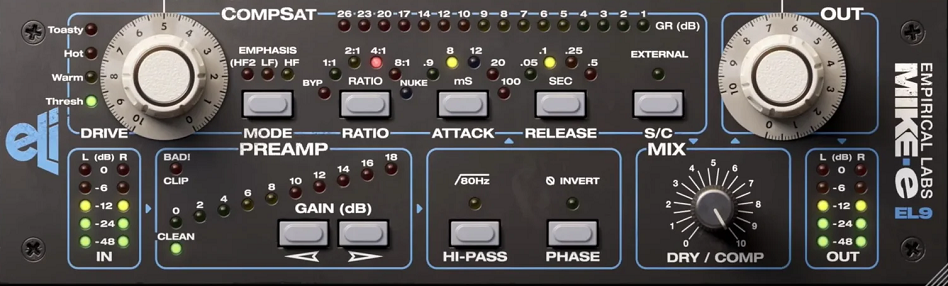
Professional records sound expensive partly because individual elements feel complete rather than just compressed, and the difference between amateur and professional mixes often isn’t the gear but understanding that sources need multiple types of processing working together rather than in isolation.
You can spend hours stacking a compressor for dynamics, saturation for attitude, and transient shaping for impact, or you can use tools designed to handle all three jobs in one cohesive process without the phase issues and CPU load that come from plugin chains.
When a vocal, bass, drum room, or gritty guitar needs to move from raw to record ready without building a processor stack, that’s exactly what Softube Empirical Labs Mike-E delivers where the benefit is taking something and making it sound finished and confident in one insert without needing separate compressor, saturator, and transient tool.
This distressor plugin is modeled after the Empirical Labs Mike-E hardware known for doing that modern controlled slightly aggressive polish that helps tracks hold attention, and I think if a Distressor is the tool you reach for when you want flexible compression character, Mike-E is what you reach for when you want that plus a more produced result fast. It’s especially useful when you want a source to feel denser and more stable but still energetic, and I appreciate how it’s designed for getting there quickly rather than through multi-plugin chains.
- Level Control and Attitude Simultaneously
The main reason Mike-E stands out is that it lets you do level control and attitude at the same time where instead of compressing first and then trying to add energy with saturation, you can shape both within one processor.
I think this works well on sources that need to be stable in level but also feel alive like vocals that must stay present, bass that must stay readable, or drum rooms that need to sound exciting. On vocals it delivers that front of mix quality where it keeps level steady while also adding thickness and edge that reads well in dense arrangements, and I typically use around 1 to 3 dB of gain reduction for controlled polish or 3 to 6 dB when I want a more clearly compressed modern vocal sound.
- Two Stage Control for Everyday Dynamics and Problem Peaks
The plugin is built for two stage control where you can handle everyday dynamics and problem peaks in one flow, and I would say in practical mixing terms this means you keep a track consistent without the compressor constantly reacting too hard while still catching the occasional spike that would otherwise poke out in the chorus.
This proves especially helpful on vocals where a single loud word can ruin the balance and on bass where one note can jump out and feel disconnected, and having both types of control integrated means you’re solving multiple problems with one tool rather than chaining processors.
- Density Without Losing Clarity
Mike-E is designed to add density without turning into mud which matters because a lot of channel strip style tools make things thicker but lose clarity, and I can say Mike-E tends to keep the sound forward and present which is why it’s often chosen for modern genres where you want weight but still need articulation.
On bass it’s good at making notes feel more even without losing the pick or finger definition and can add grit and density so the bass reads on small speakers without needing to boost low end, and I find around 2 to 5 dB gets you steadiness while 5 to 8 dB gives you a more assertive locked in bass tone.
4. Slate Digital FG-Stress Distressor
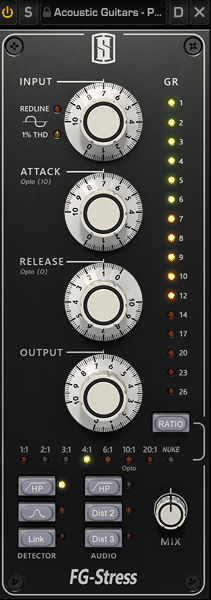
Amateur mixes often fail not because individual tracks sound bad but because nothing commands attention, and every element competes equally for space without any clear hierarchy or focus. You can have perfect levels and pristine recordings yet the mix still feels flat because tracks don’t assert themselves or claim defined positions in the stereo field.
When a track feels too jumpy, too flat, or too polite and you need it to feel controlled, louder in perception, and more intentional without just turning it up, Slate Digital FG-Stress delivers exactly that where the plugin is made for one goal which is helping a sound take a clear position in the mix.
It works on the usual Distressor targets like vocals, drums, bass, rooms, and aggressive instruments but proves just as useful on synth leads and guitars when the arrangement is dense and you need a part to stay readable.
I think the practical reason people keep a Distressor style compressor around is simple where one tool can handle both subtle control and obvious character, and FG-Stress is built for that workflow without forcing you to choose between multiple specialized compressors.
- Quick Choice Between Polish and Attitude
The biggest benefit is that FG-Stress lets you choose between polish and attitude quickly where if a track already sounds good but feels inconsistent you can use it as a stabilizer making the part stay in place, and I spend less time riding faders and less time fixing obvious peaks with automation.
This proves most noticeable on vocals and bass where small level swings can make a mix feel amateur fast. If a track feels boring or too polite the compressor can be pushed into more aggressive behavior that changes the feel of the sound where the result isn’t just more compressed but a part that feels closer, more urgent, and more confident, and you can use this on room mics, drum buses, and certain vocal styles where intensity is part of the production.
- Lead Vocals Stay Forward Without Sounding Pinned
On lead vocals the plugin can keep the vocal forward without making it sound pinned where it helps words stay intelligible through busy choruses and stops the occasional loud phrase from jumping out.
It’s good to start with 1 to 3 dB of gain reduction which usually gives a cleaner steadier vocal without changing the vibe, and if you want a more produced vocal that stays locked in place pushing to 3 to 6 dB is often where that happens. The benefit is the singer sounds present and controlled without that obviously compressed quality that makes performances feel mechanical.
- Drum Impact and Excitement on Demand
On drums the plugin delivers impact and excitement where it can tighten close mics so hits land more consistently and make room mics feel bigger and more energetic.
- Density Without Relying on EQ Boosts
FG-Stress delivers density without relying on EQ boosts which matters because in many mixes people try to make something stand out by boosting presence or top end then the track gets harsh.
5. Empirical Labs Arousor
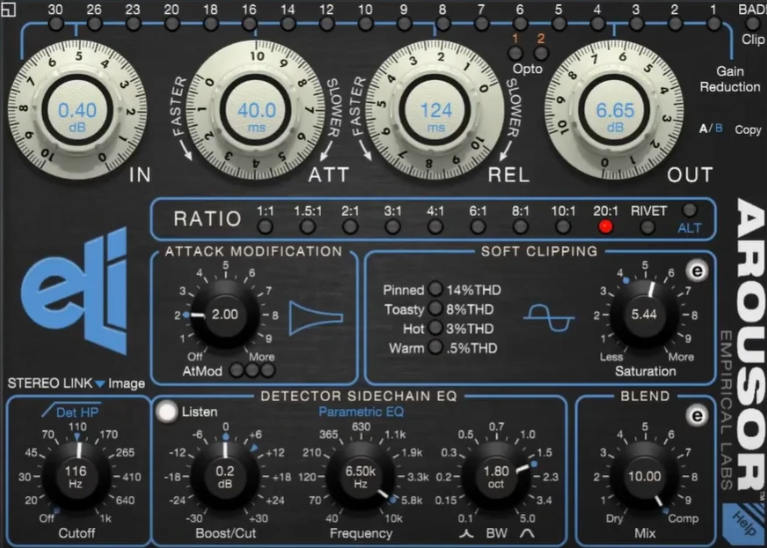
Good compressors solve dynamics problems by making levels more consistent, but great compressors do something more valuable where they make sources feel intentional and commanding rather than just quieter at the peaks.
The gap between technically controlled and emotionally present is what separates competent mixes from memorable ones, and understanding this difference changes how you approach compression entirely. When you stop using compressors only to fix problems and start using them to create presence and attitude, your mixes transform from adequate to engaging.
Empirical Labs Arousor is a modern Distressor style compressor plugin that focuses on one practical goal which is making sources feel more controlled and more exciting without needing a long chain, and I think it’s not a vintage glue compressor but a shaping tool for moments where a track is either too dynamic, too polite, or too buried and you want it to stay present and intentional across the whole song.
If you already understand why people love Distressor style compression, Arousor is in that family but built to be more flexible for modern mixing where it’s the kind of plugin I can use on a lead vocal, snare, drum room, bass, or synth lead and get a clear result quickly whether that’s smoother, punchier, thicker, or more aggressive depending on what I ask from it.
- Polish or Attitude on Demand
The biggest benefit of Arousor is that it lets you choose whether compression should feel like polish or like attitude where if your track already has the right vibe but feels inconsistent Arousor can act like a stabilizer making the track sit where you put it.
I appreciate how the result is less fader chasing and fewer small fixes later because the source stays controlled, and if your track feels too polite Arousor can be pushed into more assertive behavior that changes how the sound hits. The result isn’t simply more compressed but the source feels closer, more urgent, and more confident, which is why it works so well for snares, drum rooms, aggressive vocals, and synth leads that need to command attention.
- Vocals Stay Forward
On vocals Arousor is good at keeping the vocal forward without turning it into a flat slab where it can hold loud words in place and lift quiet phrases so the vocal stays intelligible through dense choruses.
- Drum Impact Without Harshness
On drums Arousor is strong when you want the drum sound to feel more deliberate where it can tighten close mics so hits land more consistently and make room mics feel bigger and more energetic.
I find it especially useful when I want excitement without fuzz meaning the drums can get more intense without turning into harsh distortion, and this separation between energy and harshness proves crucial on modern productions where drums need to hit hard without fatiguing listeners.
Also, this distressor plugin adds snap and consistency so drums stay defined when guitars or synths enter the arrangement.
- Density Without Harshness
Arousor delivers density without harshness which matters because a lot of make it stand out moves involve boosting top end or presence which often creates fatigue, and I think the compressor can add perceived thickness and forwardness through dynamic shaping instead so the sound feels bigger without needing as much EQ.
6. Kiive Audio XTComp
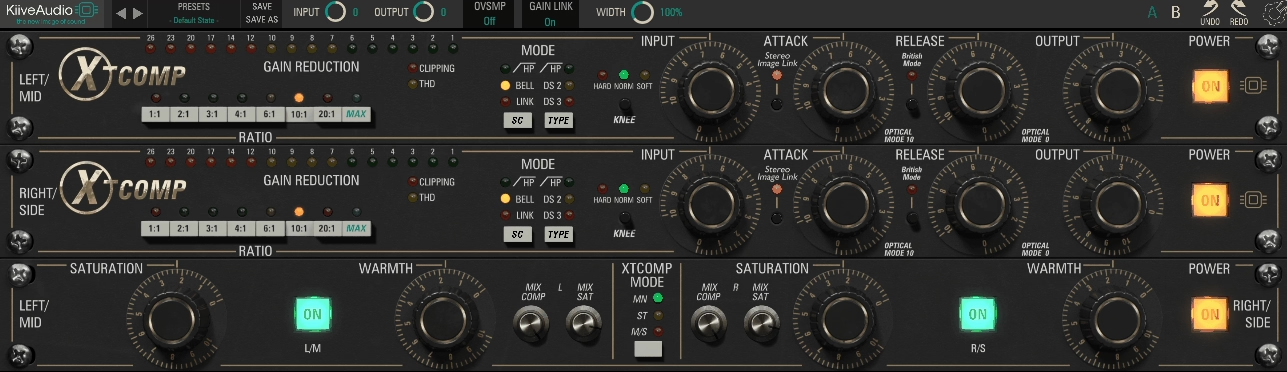
Kiive Audio XTComp is a modern Distressor style compressor built for people who want tracks to sound more finished fast especially in dense mixes where basic leveling isn’t enough, and the benefit here is that it can do clean control when you need stability and also add obvious punch and attitude when you want a sound to stand out.
It’s the kind of compressor you can drop on a vocal, snare, drum room, bass, or aggressive synth and immediately get a clearer sense of shape, energy, and placement without extensive parameter hunting.
XTComp proves especially useful when a track feels like it’s either too spiky or too flat where some compressors smooth things out but also remove excitement while others add aggression but get harsh quickly, and I appreciate how XTComp is designed to let you choose how far you want to go from subtle control to deliberate character without the plugin feeling like it’s fighting the source.
- Multiple Roles in One Compressor
The biggest benefit of XTComp is that it gives you multiple roles in one compressor where you can use it as a stabilizer when you want tracks to sit reliably and also push it to reshape the envelope when you want a more produced modern sound.
I think that flexibility matters because most mixes need both where the lead vocal may need subtle control while the drum room needs to be aggressive, and XTComp lets you stay within one familiar sound family while still getting different outcomes. This consistency speeds up workflow enormously because you’re not constantly switching between different compressor personalities and relearning interface layouts.
- Vocals Stay Steady and Forward
On vocals XTComp helps me keep the vocal steady and forward without needing to over automate where the main result is consistency that still feels natural.
If the singer gets louder in the chorus or certain words poke out the compressor can hold those moments in place while keeping articulation intact, and you find it also useful when you want a vocal to feel more urgent and present without boosting presence EQ and creating harshness.
The benefit is the performance sounds controlled and professional throughout the entire track rather than jumping between quiet and loud unpredictably.
- Drum Punch and Room Excitement
On drums XTComp delivers punch and excitement where on close mics it can tighten hits so the groove feels more controlled, and on room mics or parallel drum channels it can deliver that bigger more aggressive compression sound where the room becomes part of the energy of the track instead of just ambience.
I appreciate how this is often where XTComp earns its keep because it can make drums feel larger without immediately collapsing the transient impact, and the compression adds authority to drum hits that helps them cut through dense arrangements without losing their natural attack.
Freebies:
1. Kiive Audio XTMax
Free plugins often compromise by trying to do everything adequately rather than one thing exceptionally well, which leaves you with mediocre tools that clutter your plugin folder without solving real problems.
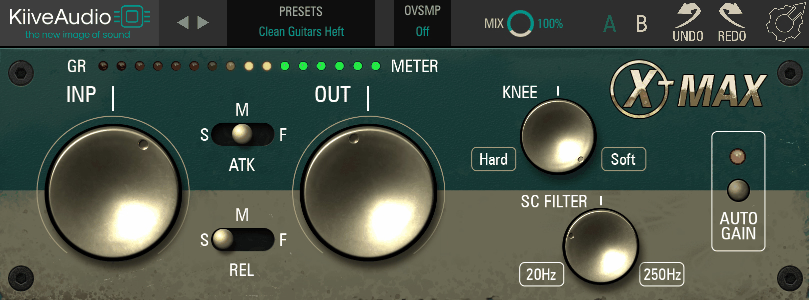
Kiive Audio XTMax is a free compressor plugin designed with a clear purpose which is make drums feel bigger, tighter, and more exciting with minimal effort, and I think it’s not trying to be a neutral utility compressor for every source but instead is tuned for the exact situations where drums need to stand out in a modern mix especially when the raw recording or sample stack feels flat, inconsistent, or lacking impact.
XTMax works best when you want a drum sound to read immediately whether that means more punch on the close mics, more energy in a loop, or a more aggressive push on a drum bus. Because it’s focused on drums you don’t spend time fighting the plugin or trying to make it behave like something it’s not, and you can use it, dial it in, and hear the result fast without the trial and error that comes from general purpose compressors.
- Explosive but Controlled Drum Bus Sound
On a drum bus XTMax is aimed at that explosive but controlled sound where it can make the kit feel more unified so the kick and snare land with more authority and the groove feels more consistent.
Drums feel like they’re driving the track rather than sitting behind it, and if the kit sounds separated or underpowered XTMax can make it feel like one instrument instead of individual hits fighting each other. This unified approach transforms decent drum recordings into the kind of cohesive powerful kits that make professional productions feel expensive.
- Drum Loops Get Presence and Energy
On drum loops the compressor can be a quick fix for lifelessness where a lot of loops sound good in isolation but fail to cut once bass and synths are added.
I appreciate how XTMax can increase the sense of presence and energy so the loop holds its place without you needing to over boost highs or over layer extra samples, and this solves the common problem where you keep adding more drum layers trying to achieve impact but really just need better dynamic control on what you already have.
2. Kiive Audio Xtressor NUKE
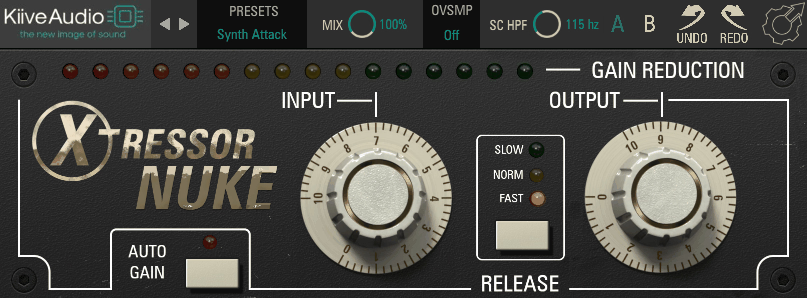
Subtle compression has its place in mixing but sometimes the best results come from embracing extremes rather than fighting for transparency, and parallel processing changed everything by letting us use aggressive settings without destroying our original transients.
The compressors that pretend every source needs gentle treatment miss the point entirely because certain elements demand intentional destruction to feel exciting and larger than life.
When you want a room mic to explode, a parallel drum channel to feel like it’s eating the speakers, or a loop to cut through a dense arrangement without relying on extra EQ, you’re not looking for transparent control but deliberate aggression.
Seems like Kiive audio loves to make distoressor compressor plugins! Xtressor NUKE is a free distressor plugin built for one specific outcome which is making drums and aggressive sources sound bigger, louder in perception, and more intense, fast, and I think the benefit is that it removes the decision fatigue by starting from an extreme high energy behavior and letting you steer it into the exact kind of smash you need.
- Instant Aggression Without Setup Time
The main benefit is obvious which is instant aggression where the plugin is made for moments when you are not trying to be subtle, and that makes it useful in modern genres where drums are expected to feel larger than life and consistent through the track.
I like how instead of giving me endless options and expecting me to design an aggressive sound from scratch, it starts from extreme settings and lets me refine from there. This workflow flip saves enormous time because you’re adjusting intensity rather than building compression behavior from neutral starting points.
- Drum Rooms Become Controlled Walls of Energy
On drum rooms the compressor can take a recording that feels distant and turn it into a controlled wall of energy where the room becomes part of the groove rather than background ambience.
From the Pluginerds Store
A quick mention: alongside the blog, we run Pluginerds Shop, our own store for studio hardware and accessories. Everything on it is there because someone on this team actually uses gear like it, not because it was the cheapest thing to list.
Visit Pluginerds ShopGet the Free Plugin Starter Kit
The genuinely useful free DAWs and plugins worth installing. No filler. Straight to your inbox.

Hello, I’m Viliam, I started this audio plugin focused blog to keep you updated on the latest trends, news and everything plugin related. I’ll put the most emphasis on the topics covering best VST, AU and AAX plugins. If you find some great plugin suggestions for us to include on our site, feel free to let me know, so I can take a look!