
These are the best bus compressor plugins I recommend for bedroom producers who need reliable glue, punch, and cohesion without spending hours tweaking settings that don’t actually improve the mix.
This type of compression is one of those mixing tools that sounds simple until you actually try to use it. Load a compressor on your mix bus, adjust threshold and ratio, and somehow your mix either sounds exactly the same or suddenly feels squashed and lifeless.
The core job is managing relationships between elements rather than just controlling peaks. When it works, your drums stop feeling like eight separate tracks and start moving like one instrument.
Here’s what makes choosing the right tool important: different designs deliver different results. An SSL-style unit provides cohesion and glue. An API adds forward motion and density. Some options, like the Bettermaker model, offer switchable detection modes so you’re not locked into one compression personality across every mix.
I think the biggest mistake people make is treating all these tools like they do the same job with slightly different flavors. They don’t. Some are built for gentle mix bus glue, others are designed to make drums hit harder, and a few can genuinely handle both if you know how to set them up.
This guide covers nine plugins that solve practical mixing problems – the kind where low end triggers excessive pumping, or drums sound great until the chorus hits and everything flattens. The list includes Bettermaker, Waves SSL G-Master, SSL’s own version 2, UAD API 2500, IK Multimedia, and few more + one solid free option at the end.
Let’s break down what each one brings to your workflow.
From the Pluginerds Store
Before you get into the plugins on this list, something most mixing and mastering guides do not mention. A compact IEM pair as a second reference at low volume catches what your main headphones are smoothing over.


1. Bettermaker Bus Compressor
In my opinion, bus compression can solve dynamics problems or create new ones depending on whether the compressor matches what your material actually needs, and finding one tool that works reliably across different buses without constant second-guessing saves more time than most people realize.
Some sessions demand aggressive control on drums but gentle cohesion on the mix bus, and switching compressors constantly disrupts workflow and makes consistency nearly impossible.
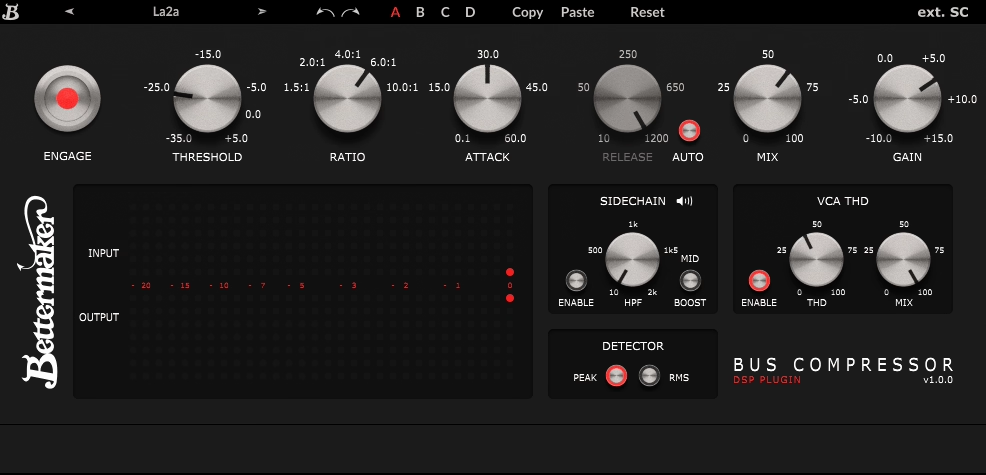
The Bettermaker Bus Compressor plugin is built for one main job which is making buses feel finished without turning your mix into a different mix. For instance, and you get a glue that stays controlled when the arrangement gets dense so drums, music stems, and the full mix feel more connected while keeping the punch that should stay punchy.
Plugin Alliance describes the plugin as close to the hardware but more forgiving and more surgical which explains why it handles mix bus duties and still works for tighter tasks like calming harsh hats or vocal edges when needed.
I would say where many bus compressors lock you into one personality, this one gives you clear ways to steer the result without needing extra plugins or complicated setups, and that flexibility matters when you’re working across different material that needs different compression approaches.
- Switchable Detection for Different Material Behavior
Here, you can choose between Peak detection and RMS detection which translates into two very different outcomes where Peak tightens control over fast hits like snare spikes or aggressive drum transients and RMS provides smoother leveling that follows the overall energy.
I think this choice alone covers a lot of real world situations because it lets you keep the same compressor on a drum bus and a mix bus but set it to behave in a way that matches the material instead of forcing one feel onto everything. Peak works when the bus needs to catch transients decisively, and RMS works better for sustained sources like pads, bass layers, or full mixes that need cohesion more than clamp.
- Low End Stability Without Pumping
A common bus compressor problem is the kick and bass driving the detector so hard that the entire mix ducks, and the sidechain section is designed to prevent that where the benefit is simple – you can compress the bus while keeping the low end stable.
You get a sidechain high pass filter and midrange emphasis option so you can reduce how much deep lows trigger gain reduction and when needed make the compressor respond more to the parts of the mix that define punch and clarity.
Personally, I think this is what helps a drum bus stay tight without the kick pulling the whole kit down, and it helps a mix bus stay glued without obvious pumping in bass heavy tracks.
Get the Free Plugin Starter Kit
The genuinely useful free DAWs and plugins worth installing. No filler. Straight to your inbox.
2. Waves SSL G-Master Buss Compressor
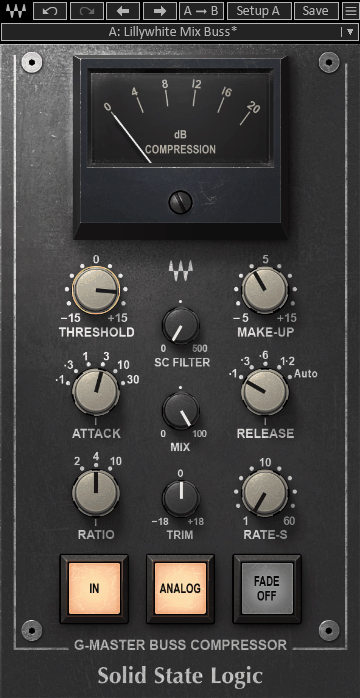
The Waves SSL G-Master Buss Compressor delivers the classic “make the mix sit together” result where the main benefit is how quickly it transforms a full mix or busy subgroup from separate layers into a single performance, and I think people reach for it when the mix already sounds good but still feels slightly loose like the drums aren’t fully locked to the music or the chorus opens up but doesn’t hit as one piece.
Waves positions it as an emulation of the classic SSL 4000 G bus compressor, and I would say the core value remains that same thing which is cohesion plus punch when you keep it in sensible ranges.
Used lightly the benefit isn’t more compression but better phrasing and movement where the kick, snare, bass and midrange start pushing together, and this explains why many engineers treat it as a default mix bus tool while keeping gain reduction conservative.
I can say in real use people commonly stay around 3 to 4 dB on the mix bus because beyond that it starts to feel too squeezed, and if your mix feels like it lacks a clear center this compressor tends to firm up the middle without making the sides feel disconnected.
The plugin isn’t a stereo widener but the bus compression movement often makes the mix feel more finished because the loudest moments stop poking out randomly, and I appreciate how this cohesion happens naturally rather than requiring complicated processing chains.
- Making Drums Feel Like One Instrument
On a drum bus the benefit is usually easier to hear immediately where it makes the kit feel like one instrument while still keeping the kick and snare defined, and a Sweetwater reviewer described it as bringing the drum bus onto the same aural plane specifically calling out that it can make the kick feel stronger without overpowering everything else.
- Unified Stems Without Individual Track Tweaking
On music stems like guitars, keys, backing vocals, or full instrumental buses the compressor proves most useful when the group feels slightly inconsistent from section to section, and instead of fixing those things track by track this makes the stem move more like a single unit especially when the arrangement gets thicker.
- Fast Decision Making Through Limited Choices
The benefit of its limited choice set is that it pushes you toward decisions that work on buses rather than endless tweaking, and you typically choose one of 3 ratio options which are enough to cover most real bus needs from gentle glue to more obvious control.
I appreciate how this limitation actually helps you work faster because it makes you focus on what matters which is how much cohesion you want and how much punch you want to keep, and it’s why the plugin remains a long haul favorite for some users as a tool that lives on the mix bus permanently.
- Finishing Move That Requires Good Foundation
This compressor is at its best when the mix balance is already close and you want the mix to feel tighter, slightly more controlled, and more unified rather than using it as a rescue compressor for messy balances.
3. SSL Bus Compressor 2
The company that makes the original hardware usually faces a choice when creating their own plugin version – either replicate the exact limitations of the old console unit or acknowledge that modern mixing needs have evolved and add practical improvements.
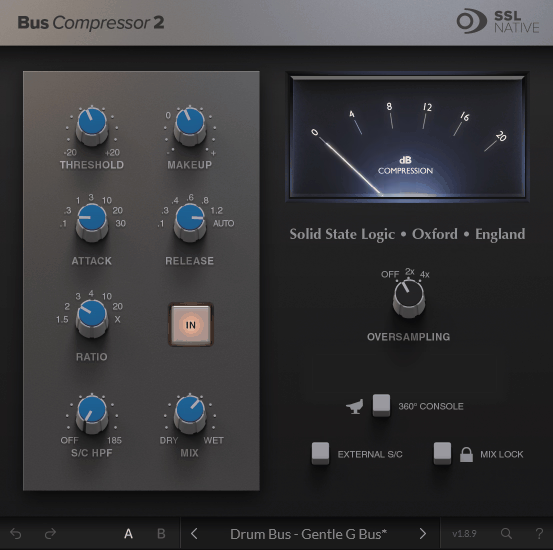
When Solid State Logic decided which direction to take, they chose evolution while keeping the core character intact. SSL Bus Compressor 2 represents their modern take on the classic G Series stereo bus compressor sound tuned for how people actually mix today with heavier low end, denser arrangements, more stem work, and more revision cycles, and I think the main reason to pick it over basic SSL style clones is that it stays faithful to the core glue behavior while giving you extra decision points that help you land the compression exactly where you want without fighting the plugin.
If you already like the SSL bus compression feel, this one delivers that same cohesion with fewer compromises when your track doesn’t fit perfectly into the original’s fixed options.
The benefit sonically is that it can pull the rhythm section and midrange together without making the mix feel squashed as long as you keep gain reduction sensible, and SSL explicitly frames it as retaining the dynamic character of a mix even at higher ratios which explains why this style stays so widely used.
- Better Timing Options That Land Where You Need Them
The added timing choices solve common real mix problems by giving you middle ground options that often land perfectly when the original stepped times force you to compromise.
You get an attack option that sits between grabbing too much punch and feeling too loose which matters enormously on modern drums and punchy electronic material where that middle step can be the difference between keeping the snare crack and having the compressor blur it.
The release timing additions let you match the compressor’s recovery to the groove more easily rather than choosing between too fast and too slow, and I can say this stops the mix from breathing awkwardly between hits especially in mid tempo tracks where classic release options feel slightly off.
- Ratio Range That Handles Both Subtle and Aggressive Needs
The extra ratio choices give you two very specific benefits where lower ratios make it easier to get cohesion without hearing obvious compression which matters if you want glue but don’t want the mix to sound processed, and higher options give you a firmer clamp for aggressive drum buses or dense groups when you want the bus to stay controlled without switching to a different compressor.
- Sidechain Control That Prevents Low End Pumping
A classic SSL bus compressor can get pulled around by kick and bass in modern mixes, and the sidechain high pass filter reduces this low end driven pumping specifically. I think the benefit here is simple where you keep the low end big and consistent while still compressing the mix bus for cohesion, and engineers mention the filter reaching high enough to handle real low end problems not just subsonic cleanup.
4. UAD API 2500 Bus Compressor
Some mixes sound technically correct but lack that driving energy that makes people want to turn them up, and figuring out why requires understanding the difference between controlling peaks and shaping how a mix pushes forward.
You can compress a bus without adding any real impact, or you can compress it in ways that make the groove feel more intentional and forceful. When you need a mix or drum bus to feel more forward and more together rather than just achieving quieter peaks, you’re looking at a specific category of compressor.
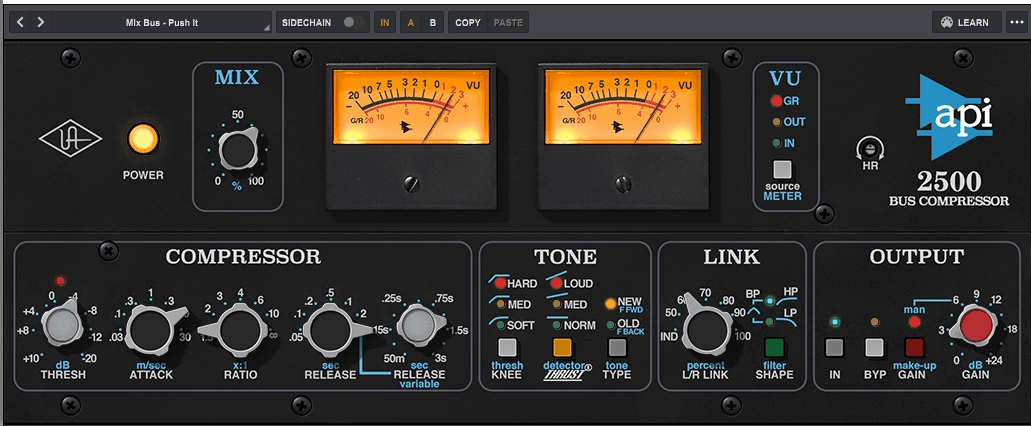
The UA API 2500 Bus Compressor plugin delivers exactly that where the main benefit is that it can add a sense of forward motion and density while staying controllable, so you can use it on a drum bus to make the groove hit harder or on the mix bus to make the track feel more finished without immediately flattening it.
Universal Audio positions it as an end to end emulation of the API 2500 hardware, and I think what matters is that the sound isn’t only the compression but also the weight and tone you get as you drive into it.
On buses the API 2500 delivers a mix of punch, density, and a slightly forward midrange that helps elements feel glued without turning dull, which result as punchy and midrange forward with reduced pumping and a tighter more controlled top end and upper mids which matches exactly how many people use it on drums and energetic mixes.
- Two Compression Behaviors for Different Bus Needs
A big reason engineers stick with the API 2500 is that it covers two common bus needs without switching plugins where when you want the compressor to grab and control transients more firmly you use the more modern behavior, and when you want a rounder more blended glue that feels less clampy you use the more vintage behavior.
I think the benefit in practice is simple where you can keep the API tone while choosing whether the compression feels tighter and more present or smoother and more cohesive, and this flexibility means you’re not reaching for different compressors depending on whether your material needs obvious control or subtle unity.
- Low End Stays Big While Compressing
A common problem on mix buses is low end triggering too much compression which makes the whole track breathe, and the Thrust behavior is built to solve that where the benefit is that you can compress the bus while keeping the bottom end feeling large and stable.
Tape Op explains that Thrust modes change detector response resulting in reduced pumping and tighter upper mid and top end response, and AudioTechnology goes further describing Thrust as a way to rebalance the track so you get plenty of thick bottom end without EQ or compression artifacts.
I use this constantly on modern mixes where kick and bass would otherwise dominate the compression making everything duck, and the Thrust circuit lets me get the API character without sacrificing low end power.
5. IK Multimedia Bus Compressor

British console style bus compressors have been cloned and modeled countless times, and most aim for strict accuracy to the original hardware behavior. The problem with that approach is you inherit the limitations along with the character, which doesn’t always serve modern production needs.
The IK Multimedia Bus Compressor takes the classic British console VCA design as its foundation but adds purposeful features that make it more flexible than a strict clone, and I think this balance between familiar behavior and practical additions puts it in a useful middle ground.
IK built this as a component level model including the compression curve, soft knee behavior, and detection circuit from the original style unit, then layered on features that solve real world problems like low end triggering issues and stereo width control.
I can say it’s not trying to be invisible but rather makes a bus feel like a single cohesive piece especially when the arrangement gets busy, and when you set it for gentle gain reduction it tightens the mix without making it feel smaller.
The compressor rewards working in specific ranges rather than random settings. For mix bus glue I typically aim for 1 to 2 dB of gain reduction most of the time with occasional peaks a bit higher in louder sections, which gives cohesion without flattening dynamics.
For drum bus tightening around 2 to 4 dB often lands in the sweet spot where the kit becomes more controlled and unified while still keeping impact, and if you push into 5 to 7 dB and beyond you’re using it as an effect where the pumping becomes part of the sound intentionally.
- 12 Factory Presets for mixing (see the image)
- 1.5:1 Ratio Option for Gentle Leveling
IK added a 1.5:1 ratio option which matters because it lets you apply compression that’s more about gentle leveling and cohesion than obvious squeeze, and I think this separates it from compressors that only offer 2:1 as their lowest ratio.
This is the kind of ratio you can use when you want the mix to feel slightly more finished without hearing the compressor work, and it sits perfectly in that zone where you’re adding control and polish without any audible pumping or gain reduction artifacts. I would say go for 1.5:1 on full mixes that already sound pretty balanced but need that final bit of integration to feel professional.
- Grit Switch for Harmonic Character
The Grit switch reproduces the slightly increased 2nd harmonic distortion of an out of calibration unit adding a mild edge and thickness without turning into obvious saturation, and I can say this works beautifully when the bus needs a bit more attitude.
In plain terms it adds harmonic lift that makes things feel slightly thicker and more present, and you don’t need to reach for a separate saturation plugin just to get that touch of analog style character.
The Grit isn’t extreme or obvious but rather adds that subtle warmth and dimension that helps buses sit better in the mix, and I typically leave it engaged on drum buses where that extra bit of harmonic glue helps everything gel.
- Oversampling Options
- Mid Side Mode with Independent Processing
The plugin includes Mid Side mode where you can apply independent settings to mid and side channels, and I would recommend this particularly when you’re trying to control the center energy of a mix without collapsing width or when wide elements are triggering compression in ways that make the track feel smaller.
You can compress the mid channel more aggressively to control centered kick, bass, and vocals while leaving the sides lighter so stereo guitars and synths maintain their width and space. This isn’t for everyday mixing but proves invaluable on mixes with problematic stereo balance where traditional linked compression creates more problems than it solves.
6. Waves API 2500 Compressor
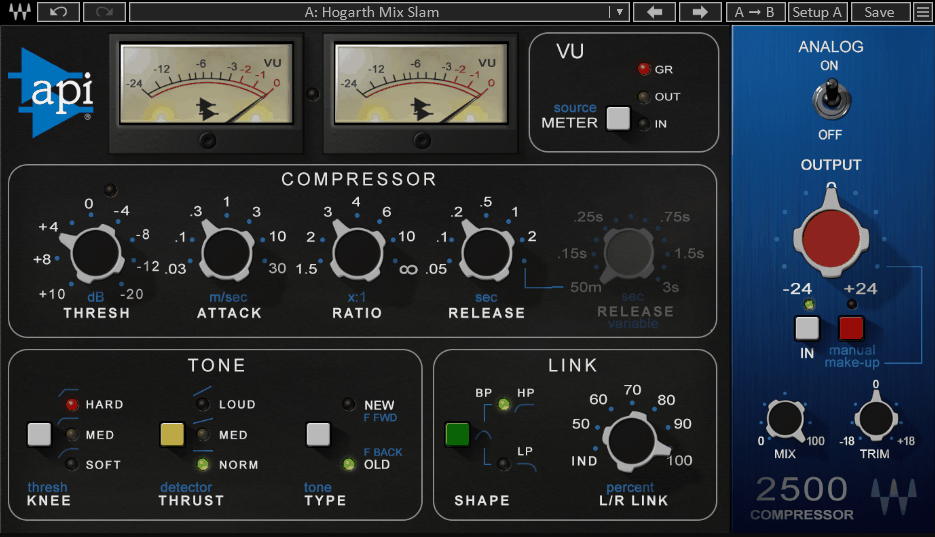
Bus compression shouldn’t force you into one sound or one approach, and the plugins that last in your arsenal are usually the ones that adapt to different material without requiring you to completely rebuild your chain.
The Waves API 2500 is a bus compressor plugin modeled with API built around the idea that it can either hit hard and stay punchy or smooth out a mix in a more rounded way depending on how you set its tone controls, and I think what separates it from basic VCA bus compressors is that it’s not just about threshold, ratio, attack, and release but about three core sections that interact: Type, Thrust, and Knee.
If you already know the SSL style glue sound, the Waves API 2500 sits in a completely different lane where it’s usually more forward and more obviously American in attitude especially on drums and rhythm heavy material, though it’s also capable of restrained controlled bus compression if you approach it with lighter gain reduction and the smoother tone options.
I would say this flexibility matters because you’re not locked into one compression personality but can shape the result to match what your specific material needs which is good news. Aslo, plugin handles vocals and guitars on music buses particularly well where the forward midrange character can make these elements feel more present and unified, and I’ve found it brings backing vocal groups together into one cohesive section rather than individual layers competing for space.
- Two Distinct Compression Feels Without Plugin Switching
You get two compressor behaviors where one feels more immediate and controlling because it reacts strongly to incoming changes, and the other feels smoother and more blended because it’s influenced by what the compressor is already doing which naturally softens the grab.
I think this matters on real buses because on a drum bus the more immediate mode locks hits together and keeps the groove tight when you have sharp peaks, while the smoother mode works better on full mixes or music buses where you want cohesion without the compressor calling attention to itself.
You can stay within one familiar interface while getting genuinely different compression characters depending on what your material needs.
- Thrust That Keeps Mixes Big While Compressing
The defining control is Thrust because it changes what the compressor listens to rather than what you hear directly, this is the reason the API 2500 often keeps a mix feeling big while still compressing it.
You can tighten the bus without the kick and bass constantly forcing the entire mix to duck, and the different Thrust modes range from standard behavior to extreme detector tilting where low end drives compression far less and highs drive it far more.
- Flexible Stereo Linking That Protects Width
The stereo linking isn’t just a basic on off switch but lets you set how tightly left and right dynamics follow each other with stepped percentages, and I feel that lower link values keep wide elements from pulling the entire stereo bus down while still preventing left and right from behaving like totally separate compressors.
7. Overloud Comp G
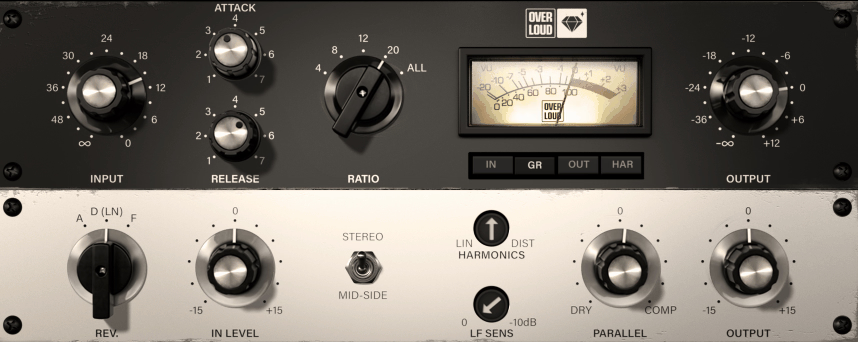
Mix bus compression can feel like a mystery when you’re starting out because the changes are often subtle and the difference between helpful cohesion and obvious pumping lives in tiny adjustments.
Some engineers spend years chasing that quality where the mix feels like it’s being held together by one consistent dynamic hand rather than individual elements competing for space. Overloud Comp G delivers exactly that British VCA master bus compressor style behavior built with their 4th generation DSP, and I think it aims for the familiar glue behavior without forcing you into rigid stepped controls that make precise adjustments frustrating.
The practical appeal here is continuously adjustable time constants and ratio which makes it easier to land on the exact amount of movement you want instead of constantly choosing the closest stepped option and living with compromise.
- Built In Mid Side Processing for Independent Control
One of the more important additions is built in Mid Side processing because it lets you apply different compression behavior to the center versus the sides without needing separate routing or wrapper plugins.
The Mid Side implementation feels integrated rather than bolted on, and I appreciate how quickly you can adjust center versus side compression amounts without complicated routing.
- Continuously Adjustable Ratio and Timing
Overloud highlights continuous time and ratio selection which is one of the simplest but most practical reasons to choose this over stricter hardware emulations with stepped controls. The ratio range adjusts continuously covering the typical bus compression spectrum from gentle glue to aggressive control, and I would say this fine control mainly helps you dial in the edge cases where stepped ratios leave you choosing between too little and too much compression.
- Meter Calibration with Multiple Sensibilities
The compressor offers meter calibration with different sensitivity options which proves more useful than it sounds because bus compression decisions often happen in small ranges. I think a meter that’s too coarse can hide the difference between barely doing anything and actually changing the groove, and being able to adjust how sensitive the meter feels helps you read what’s happening without relying on guesswork.
- Efficient CPU Performance
8. Softube Bus Processor

Mix bus chains get complicated fast when you’re stacking separate plugins for compression, saturation, and stereo control, and most sessions end up with five or six processors doing overlapping jobs that don’t always interact well.
Softube Bus Processor is made for one thing: getting a bus to sound like it belongs together then letting you finish it without building a long chain, and I think the benefit is speed without shortcuts where you can tighten the dynamics, add the right amount of density, and clean up common mix bus problems like unstable low end and messy stereo spread all inside one cohesive tool.
Softube positions it as a modern bus processor built around a classic bus compressor style but with added saturation, sidechain control, and stereo shaping aimed at real mix bus and stem work.
The main outcome is cohesion that still feels punchy where instead of making the mix smaller it tends to make the track feel more assembled so the rhythm section and midrange behave like one piece, and I would say this change becomes most obvious in choruses and dense sections where the mix can otherwise feel like it expands in an uncontrolled way.
A practical advantage here is that you can keep the compression subtle but still get an audible improvement, and several product descriptions emphasize finish and polish even with conservative settings which is usually what you want from a bus processor.
- Bass Guitars and Synth Bass Get Controlled Weight
The processor handles bass instruments on music buses particularly well where the sidechain shaping and saturation can add controlled density without the low end becoming muddy or overwhelming the mix.
I’ve found it brings synth bass layers together into one cohesive low end that sits properly rather than competing frequencies that fight each other, and the mono bass control ensures the low end stays focused and powerful rather than wide in ways that hurt translation. This proves especially valuable on bass heavy electronic music and hip hop where you need the low end to feel massive but controlled.
- Stable Low End
A big real world problem with bus compression is the low end dragging the whole mix down, and Bus Processor is built to help you compress without the kick and bass constantly deciding the groove for you because it gives you dedicated sidechain shaping for both compression and saturation sections.
I think the benefit is simple which is less pumping, more stable bass weight, and you can still keep the mix tight without every kick hit triggering compression that affects your entire track.
- Density Without Muddy Midrange
The saturation is designed as a bus stage rather than an effect that takes over, and I would say the benefit is that you can add thickness and attitude then keep the mix clear by shaping what the saturation reacts to.
9. Cytomic The Glue
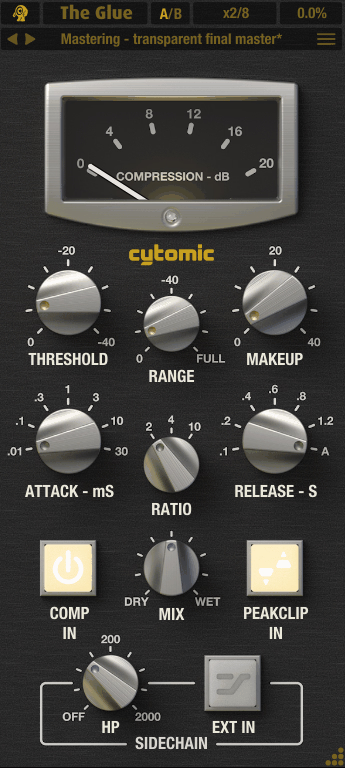
Sometimes the best plugin version of classic hardware isn’t the one made by the original manufacturer but the one built by developers who understand modern DAW workflows, and Cytomic The Glue proves this by taking the classic 80s British console stereo bus compressor behavior and expanding it in ways that actually matter inside sessions rather than just adding features for marketing purposes.
The core remains a VCA feedback compressor with that familiar everything locks together movement, but I think Cytomic adds controls that let you push the effect harder while keeping it controllable and repeatable in modern productions, and what makes The Glue a staple is that it can sit on a mix bus doing subtle cohesion or work on drums to get that tight punchy bus compression that makes the groove feel more organized.
The feedback topology means the detector behavior is influenced by what the compressor is already doing not just what’s coming in which tends to produce smoother gain reduction movement compared to strict feed forward designs, and this is one reason SSL style bus compression feels cohesive instead of clampy.
- Range Control for Gain Reduction Ceiling
The Range control sets a ceiling on how much gain reduction the compressor is allowed to apply, and I think this represents one of the most useful real world controls for bus compression because it lets you keep the characteristic movement of the SSL style detector while preventing a chorus, fill, or transient heavy section from suddenly getting crushed.
Cytomic gives practical guidance where -60 dB to -80 dB emulates the original behavior while around -15 dB to -40 dB provides a stricter ceiling on compression depth, and this is a clean way to keep bus compression consistent across a track without relying on constant threshold automation. I would recommend this to set around -20 dB to -30 dB on full mixes where you need the compressor to glue everything but not clamp too hard during loud sections.
- Sidechain High Pass Filter from 20 Hz to 2000 Hz
This bus compressor plugin includes a sidechain high pass filter with range from Off or 20 Hz up to 2000 Hz using a -6 dB per octave slope, and the manual suggests around 200 Hz as a practical setting when low frequencies make the compressor breathe too much.
I feel like it’s important on modern mixes where kick and bass can dominate the detector causing the entire mix to pump, and setting the filter to ignore those low frequencies lets the compressor respond to the musical midrange and high content instead. I would usually set this between 80 Hz and 150 Hz on full mixes depending on how much low end energy is present.
- Dedicated Peak Clipping Stage After Compression
The Glue includes a dedicated peak clipping stage placed after the compressor for catching sharp transients that Cytomic describes as staying linear until roughly -2.0 dB then curving and ultimately capping around -0.5 dB.
I think the practical use here isn’t making it loud but taming the occasional hit that would otherwise force you into a slower attack or lower threshold than you actually want, and if you like the groove and density you’re getting from your compression settings this gives you a separate way to control stray peaks without changing the compression feel.
Use it lightly when individual snare hits or vocal peaks poke through but don’t want to adjust the main compression behavior.
- Diode Based Envelope Follower for Smooth Detection
Cytomic models a diode based envelope follower for the detector which contributes to how it transitions into gain reduction without feeling abrupt, and I think this detail matters for the overall smoothness of the compression movement.
The detector responds musically to level changes rather than mechanically clamping, and this modeling choice is part of why The Glue feels cohesive on buses where you need compression that emphasizes groove and relationships between elements rather than just controlling peaks.
Freebie:
Analog Obsession BUSTERse

Here, I only listed one freebie, as I prefer quality over quantity. Anyway, we don’t need 5 of them right?
Free SSL style bus compressors usually give you the basic glue sound but leave you struggling with the same old problems where kick and bass trigger too much compression or the detector reacts to everything equally without discrimination.
Analog Obsession BUSTERse delivers that classic SSL VCA bus compressor behavior but adds dedicated sidechain filter and transient sections that let you make the compressor react to the parts of the signal that actually matter for your mix, and I think what separates this from typical free compressors is how you can steer its detection in three different ways rather than just tweaking threshold and ratio hoping for better results.
The plugin is positioned as the big brother of the earlier BUSTER release with the additions specifically targeting detector control.
What makes this more than a basic free SSL clone is how filtering the sidechain, emphasizing specific detector ranges, and pushing the detector to focus on transients solves mix bus compression problems that usually aren’t about the compressor itself but about what triggers it.
The compressor creates cohesion by making the mix move together especially around drums and rhythmic midrange, and I would say the glue effect comes from fairly familiar time constants and ratios which makes it easy to land on that tight slightly forward bus compression feel people associate with SSL style processing.
- Turbo & XFORMER Modes for Character
Turbo mode makes the compressor affect the whole signal range while normal behavior focuses more on mid frequencies, and I think this represents the difference between a classic mid driven glue feel versus a more full range bus clamp that tightens lows and highs more noticeably.
XFORMER mode switches the modeled path to transformer balanced behavior affecting impedance and character, and used lightly this adds a bit of density and attitude when the bus feels too clean. The combination of both modes with 4x oversampling enabled by clicking the Analog Obsession label helps reduce aliasing when the processing gets more aggressive.
From the Pluginerds Store
Before you commit to any mix decision made with the plugins above, it's worth checking it on a second reference. A compact IEM pair at low volume catches things your main headphones smooth over.

- Sidechain Filter Section with Three Band Control
The sidechain filter section functions as the core fix the trigger toolkit with dedicated HPF from 20 to 500 Hz for keeping deep lows from driving gain reduction, and it solves the problem where kick and bass cause the whole mix to duck especially in modern productions where sub energy stays constant.
You also get a mid control centered around 1500 Hz with range of -6 dB to +6 dB letting you decide whether the compressor should be more sensitive to the mix’s midrange presence, and this proves practical when you want the compressor to react more to snare crack, vocal presence, or guitars rather than only following low end hits.
- Transient Sidechain Section for Attack Emphasis
The transient section makes the compressor respond more to attacks and peaks instead of overall sustain including transient BOOST from 0 to 10 dB that increases sensitivity to attacks while reducing how much the detector follows the tail of sounds.
Get the Free Plugin Starter Kit
The genuinely useful free DAWs and plugins worth installing. No filler. Straight to your inbox.

Hello, I’m Viliam, I started this audio plugin focused blog to keep you updated on the latest trends, news and everything plugin related. I’ll put the most emphasis on the topics covering best VST, AU and AAX plugins. If you find some great plugin suggestions for us to include on our site, feel free to let me know, so I can take a look!