
This post takes a close look at the best reverb plugins 2026 has brought to mixing engineers and producers, comparing how each one handles space, depth, and realism in its own way.
It looks at both algorithmic and plate-style reverbs, featuring tools from the precise FabFilter Pro-R 2 and FlexVerb to the more experimental Lese Hikari and Baby Audio Crystalline.
The post stands out by mixing technical details with real mixing experience. Each section feels like a producer sharing hands-on thoughts instead of just listing specs.
Altogether, these reviews give a clear picture of how modern reverbs combine new ideas, ease of use, and unique sound, whether digital or inspired by analog gear.
1. Baby Audio Crystalline
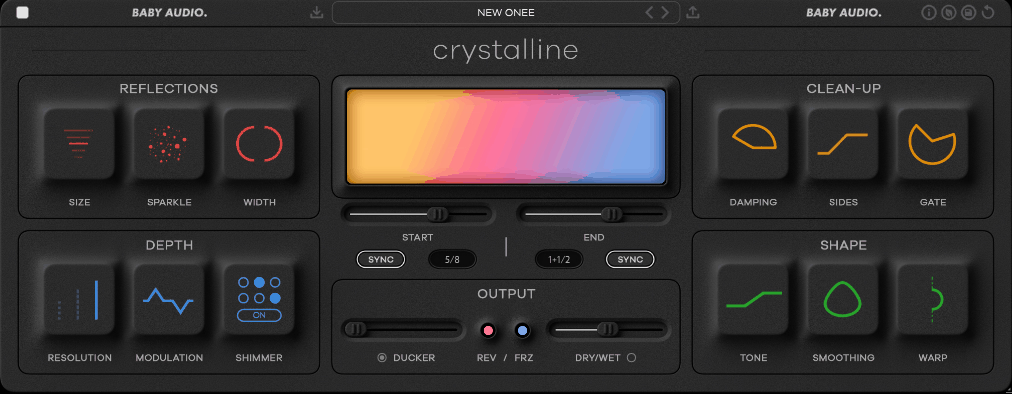
Baby Audio Crystalline is a modern algorithmic reverb that takes the classic algorithmic sound and pushes it into 21st-century territory. It’s based on an allpass loop algorithm which gives it a unique sonic fingerprint, and the result is a reverb that sounds clean, lush, and pristine without ever feeling artificial or metallic.
Also, it’s worth mentioning that it’s loaded with 300+ presets from world-class producers like Damian Taylor (Bjork, The Killers), Michele Canova (John Legend, Alicia Keys), and Eric J Dubowsky (Flume, St. Vincent).
- DAW-Synced Pre-Delay and Decay Times
Crystalline lets you hard-sync the reverb attack and decay times to your DAW’s tempo, which means your reflections naturally lock with the rhythm of your music. This generally results in much cleaner mixes because the reverb breathes with the track instead of fighting it.
You can switch back to classic millisecond timing if you prefer, but tempo-sync is genuinely a game-changer once you try it.
- Detached Size and Length Controls
Crystalline isn’t bound by the laws of physics: Size and Length are completely independent, so you can dial in huge spaces with ultra-short tails or tiny spaces with epic decay times. This gives you reverb shapes that aren’t possible in real-world acoustics.
- Built-In Ducker (with Gentle Mode)
The onboard Ducker automatically lowers the reverb signal when the dry signal is playing, giving you a cleaner mix where you can push more reverb without losing clarity. There’s also a Gentle mode for slow, natural ducking, plus a standard mode that’s more pumpy for creative effects.
- Smoothing + Transients/Warp Controls
The Smoothing parameter applies an EQ curve to mellow out resonant frequencies, while Warp (formerly Transients) shapes the reverb’s dynamic profile by warping the transient response. Particularly useful on percussive material where you can shift emphasis toward attack or sustain.
2. Arturia Rev INTENSITY
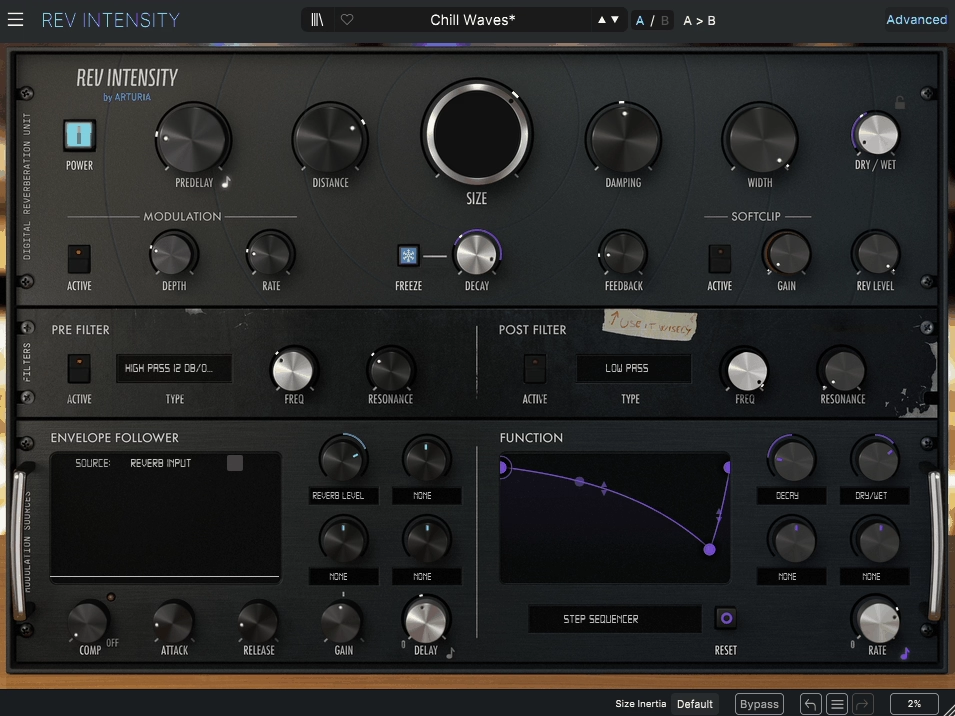
Rev INTENSITY is Arturia’s original algorithmic reverb design, and it’s not an emulation of any classic hardware. Instead, it’s a fully modern, modulation-heavy reverb built for experimental and progressive sound designers who want to twist and warp their reverbs into something completely new.
- Highly Modulable Engine (13 Destinations)
Practically any parameter can be modulated, with up to 13 modulation destinations. Combined with the envelope follower and function generator, this turns Rev INTENSITY into something closer to a synth-based reverb than a traditional one.
- Programmable Envelope Follower (with Sidechain)
You can use the incoming signal itself or a sidechain signal to modulate any parameter within the plugin. The envelope follower can control up to 4 parameters at once, which means you can have your reverb size, decay, filter cutoff, and pitch all responding to the input level dynamically.
- Programmable Function Generator
The Function Generator lets you draw, sequence, or flick through function presets to create custom modulation animations. So you can program movement that’s tempo-synced, rhythmic, or completely free-form, then assign it to whatever parameter you want.
This is the feature that lets you turn reverb into a melodic or rhythmic element of the track.
- Pre and Post Multimode Filters
You get multimode synth-style filters before and after the reverb engine, with resonance controls. Use them to carve out the reverb’s tone, or push them into self-oscillation for creative screaming effects.
3. Eventide SP2016 Reverb
This one is a plugin recreation of one of the most legendary reverb units in studio history. The original 1982 hardware was the first programmable effects processor ever made, and it was used on hit records by Talking Heads, Adele, Mariah Carey, Eminem, Bryan Adams, and countless others.
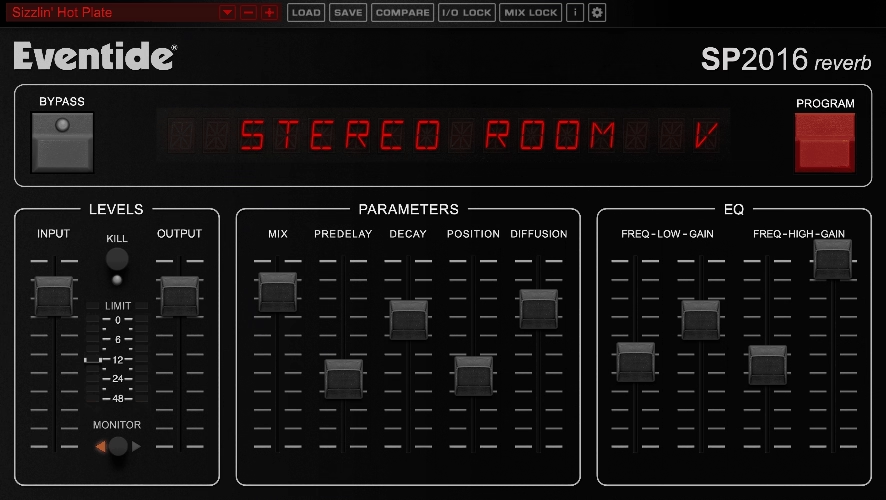
With SP2016 you get Room (mono in/stereo out), Stereo Room (full stereo), and Hi-Density Plate, each available in Vintage and Modern versions. The Vintage algorithms faithfully replicate the original hardware’s lower bit-depth (warmer, slightly grittier), while the Modern algorithms are brighter, more diffuse, and use higher bit-depth.
- Position Control
The Position slider is the secret weapon of the SP2016: it lets you place sounds at different distances in the reverb space with a single control. Front of the room, back of the hall, or anywhere in between, all from one slider. It’s deceptively simple but incredibly effective for 3D mix placement.
This is what makes the SP2016 feel like more than just a reverb, it’s a spatial positioning tool.
- Decay & Diffusion Parameters
The Decay slider runs from 200ms to 100 seconds (yes, 100 seconds), while Diffusion controls the density of the tail by altering the “flatness” of virtual surfaces. The Diffusion implementation is particularly subtle but makes meaningful differences with transient-heavy material.
- EQ Section with High and Low Shelves
The plugin includes high and low shelving EQ filters for non-surgical tail shaping, with up to -8/+4 dB at 50-500 Hz (low) and -8 dB at 1-8 kHz (high). This lets you tame muddy bass or harsh top-end without adding a separate EQ plugin to the reverb send.
- Artist Presets from Studio Legends
The plugin ships with artist presets from Dave Pensado, Richard Devine, Joe Chiccarelli, George Massenburg, Sasha, The Butcher Bros., Buda & Grandz, and Erin Tonkon. These are real working presets from people who use this reverb on hit records, so they’re genuinely useful starting points rather than marketing fluff.
- Kill Button for Audition
A small but smart feature: the Kill button mutes the dry signal so you can audition the reverb tail in isolation. Plus you get mix and level locks when browsing presets, so you can compare presets without volume bias affecting your judgement.
4. SSL Native FlexVerb
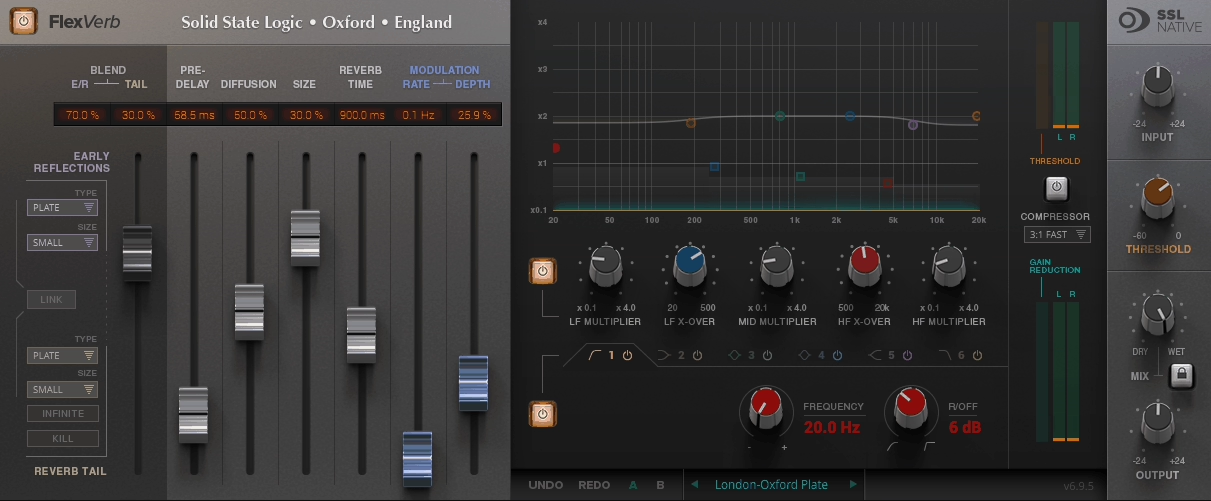
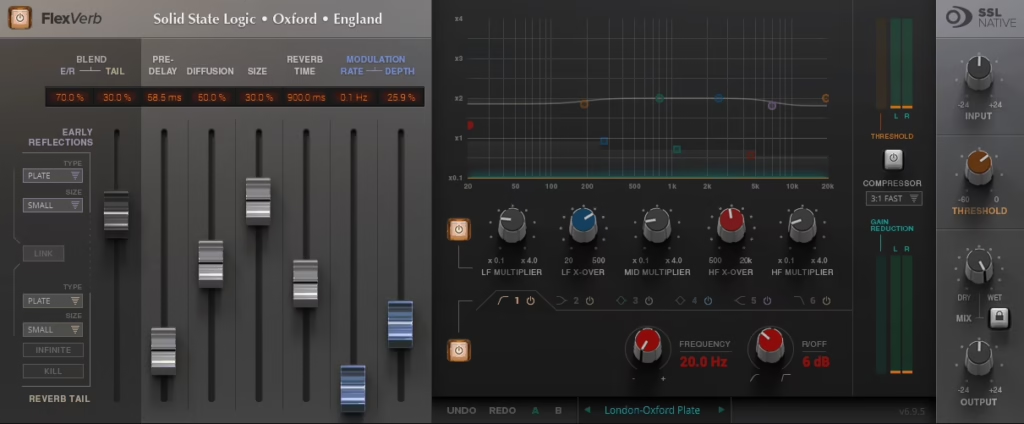
SSL Native FlexVerb is Solid State Logic’s algorithmic reverb, and it follows the same philosophy as their other plugins: professional-grade, transparent, and built for serious mix engineers. It’s not a creative sound design reverb like Rev INTENSITY or a vintage emulation like the SP2016. Instead, it’s designed to give you clean, flexible reverbs that fit naturally into any mix.
It delivers the classic SSL polish, and covers the 6 most useful reverb types: Hall for natural large spaces, Room for tight ambience, Plate for classic studio shimmer, Chamber for warm dense reflections, Ambience for short tails, and Reverse for creative effects. Each algorithm is purpose-built rather than being variations of a single engine.
- Frequency-Dependent Decay
A key feature is frequency-dependent decay control: you can set independent decay times for low, mid, and high frequencies. This is what lets you tune the reverb to sit naturally in your mix without muddying the low-end or sizzling the highs.
- Pre-Delay and Early Reflections
You get independent control over pre-delay and early reflections, which is critical for getting reverbs to feel like they’re part of the same space without smearing transients. The pre-delay can be tempo-synced for rhythmic placement.
- Built-In EQ and Modulation
FlexVerb includes a built-in EQ for tail shaping plus modulation controls that add subtle movement to prevent the reverb from sounding static. The modulation is particularly useful on long tails where digital reverbs can otherwise feel artificial.
- Clean SSL Sound
What makes FlexVerb feel different from other algorithmic reverbs is the classic SSL transparency: it adds space without adding character, which is exactly what you want for professional mixing. It sits behind the source rather than competing with it.
5. FabFilter Pro-R 2
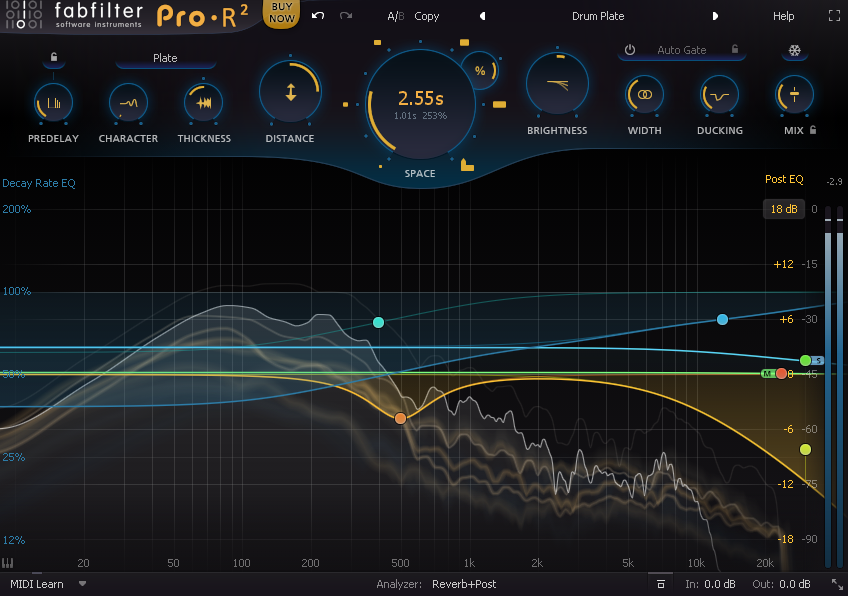
FabFilter Pro-R 2 is one of the best reverb plugins 2026 producers keep coming back to, nailing that sweet spot between realism and character without overcomplicating the process.
A major highlight is the decay rate EQ. It lets you control how different frequencies fade, so you can shape reverb tails musically. This makes it easy to create anything from tight rooms to long halls without unwanted frequency buildup.
You also get:
- The space control lets you move smoothly between different room models and automatically matches the decay time for a natural sound. You can quickly try out a range of acoustic spaces, and everything stays smooth as you adjust.
- Another great feature is the new vintage and plate algorithms. They’re perfect for recreating classic 80s digital sounds or metallic plates with modern accuracy. With the new thickness and ducking options, you can blend the reverb into your mix without it taking over.
- The impulse response import feature lets you load IR files and turns them into settings you can edit in Pro-R 2. This way, you can capture the feel of your favorite reverb hardware or space and still adjust it as you like.
6. Softube Dimensions
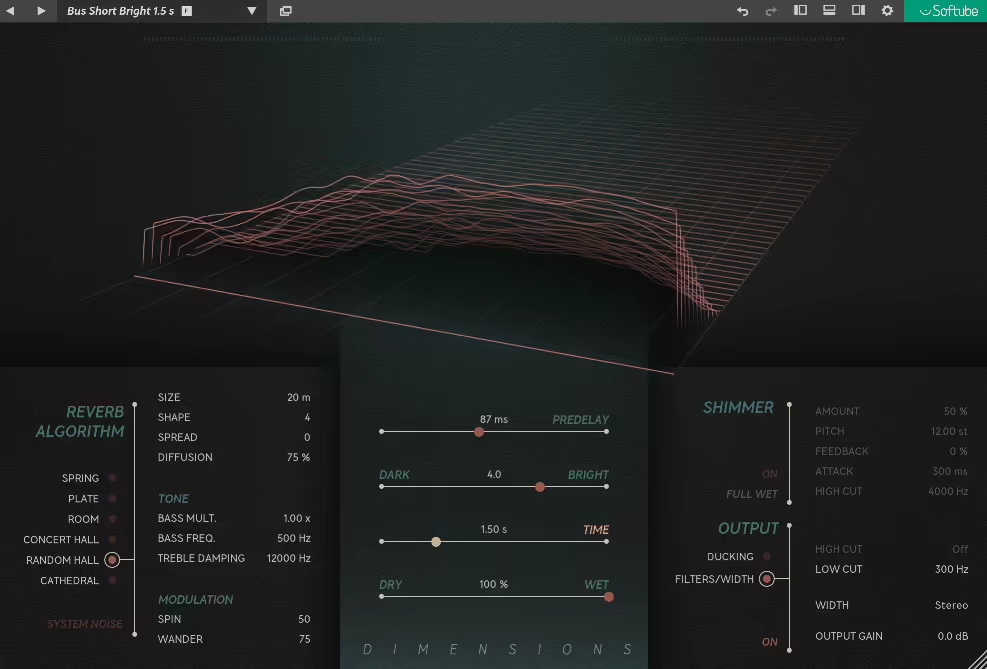
Some stereo effects can make a mix sound fake if they go too far. What stands out to me here is how natural the movement is, adding width and presence while keeping the center clear. The Softube Dimensions reverb plugin nails that classic chorus feel, blending smoothly into the sound instead of sitting on top. It’s a tool that makes everything feel bigger and more lively without drawing attention to itself.
- Softube Dimensions comes with six main reverb algorithms: Spring, Plate, Concert Hall, Room, Random Hall, and Cathedral. Each one offers a unique sound, from tight studio spaces to wide, atmospheric environments.
- The shimmer effect built into the plugin can turn any reverb mode into a lush soundscape. It adds a gentle pitch-shifted layer that works well for ambient synths, pads, or cinematic sounds. This gives you instant atmosphere without needing more plugins.
- An interactive visualizer shows the shape and energy of your reverb tail in real time. This helps you adjust reflections and tail length with visual feedback that feels musical.
- The plugin includes over 100 presets for drums, vocals, guitars, and keys, all ready to use in your mix. With simple controls for Time, Pre-delay, and Brightness, you can quickly shape depth and space without making things complicated.
7. sonible smart:reverb 2
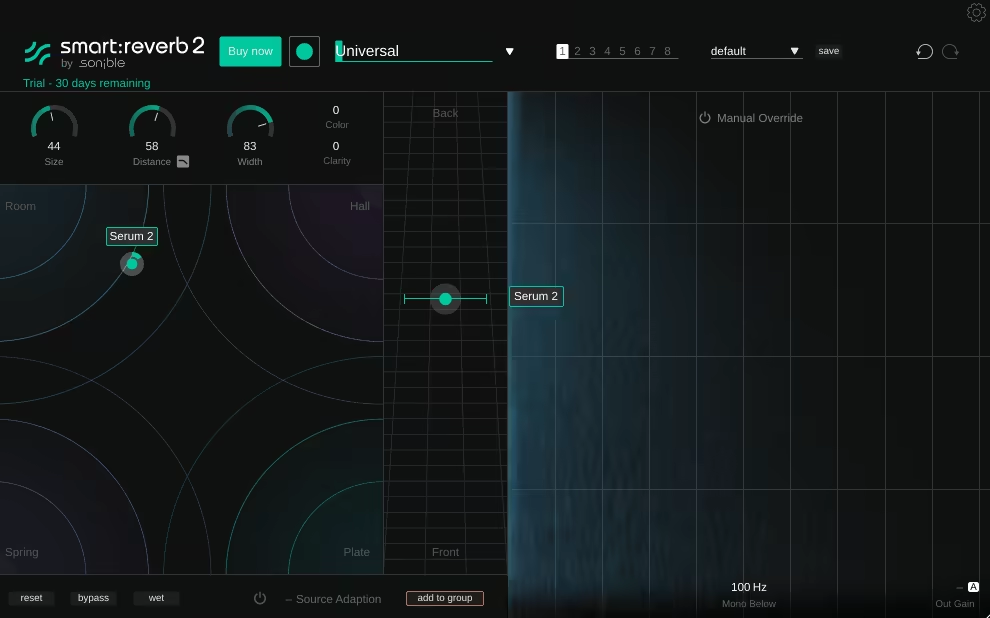
Most reverbs make you work to balance space and clarity. What’s different about sonible smart:reverb VST plugin is how it listens to your sound and builds a reverb that naturally fits around it.
The AI adapts in real time, shaping tone and reflections so the space feels clean but still full of depth. I’ve used it to place instruments in a mix more intuitively, and it makes depth staging feel effortless.
- The AI-driven processing in smart:reverb 2 analyzes your audio signal in real time and builds a custom reverb profile that matches the source’s tone and timing. This helps the reverb sit naturally in the mix without muddiness or masking other elements.
- A powerful distance control gives you precise control over spatial depth, letting you move instruments forward or backward in the mix intuitively. It automatically adjusts reflections and tail characteristics to maintain realistic depth and perspective.
- The group mode is a standout feature, letting multiple plugin instances communicate to manage overlapping frequencies. This keeps the overall reverb field clean and coherent across the entire mix, even with multiple sources active.
- With its interactive Reverb Matrix, you can blend between Room, Hall, Plate, and Spring styles while shaping Width and Color. It’s an easy and visual way to craft spaces that range from subtle realism to creative, atmospheric effects.
8. Lese Hikari
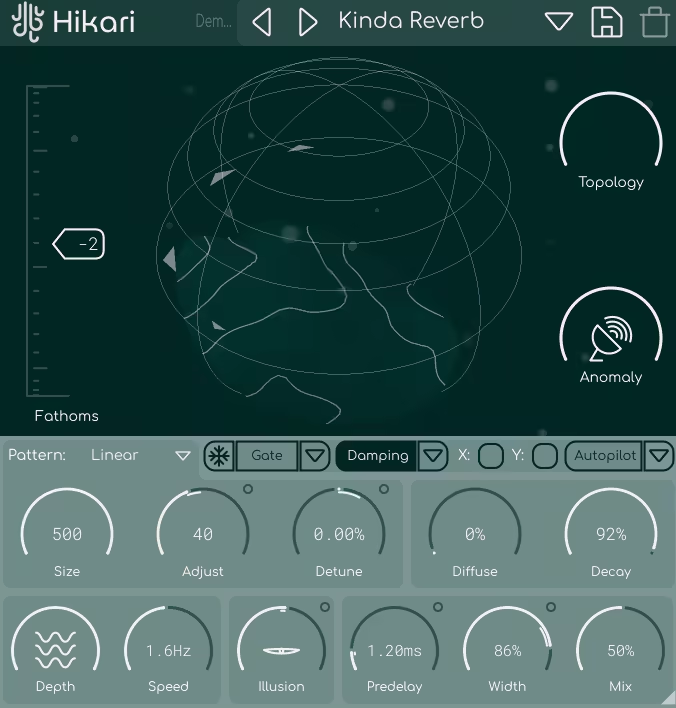
Some reverbs try to simulate real spaces, while others aim to create entirely new ones. This one falls deep into the second category, constantly shifting and reacting as you move through its environment. Hikari VST feels more like exploring an underwater world of reflections than using a standard reverb, and it’s incredible for crafting evolving, experimental atmospheres.
- The navigation system in Hikari lets you control a two-dimensional space that directly influences the reverb’s tone and behavior. Each axis modulates multiple parameters in real time. A single movement can create hundreds of possible variations, making it a powerful tool for evolving ambient design.
- The anomaly engine generates randomized trigger points that appear and disappear between plugin states. When you move close to one, the sound shifts unpredictably through unique reverb states and extra processing layers. No two passes ever sound the same.
- The built-in Illusion processor uses granular reverse playback to create short, glitch-like echoes that feel detached yet musical. It reads from a small audio buffer (about a few hundred milliseconds), producing subtle rhythmic dislocations that blend beautifully with sustained material.
- When it comes to fathoms control, it lets you adjust perceived depth by applying multi-stage filtering and decorrelation across several frequency bands. It can range from a light shimmer at 1–2 fathoms to a deep, hazy space at 10+ fathoms, shaping how submerged or airy your reverb feels in the mix.
9. Eventide Tverb
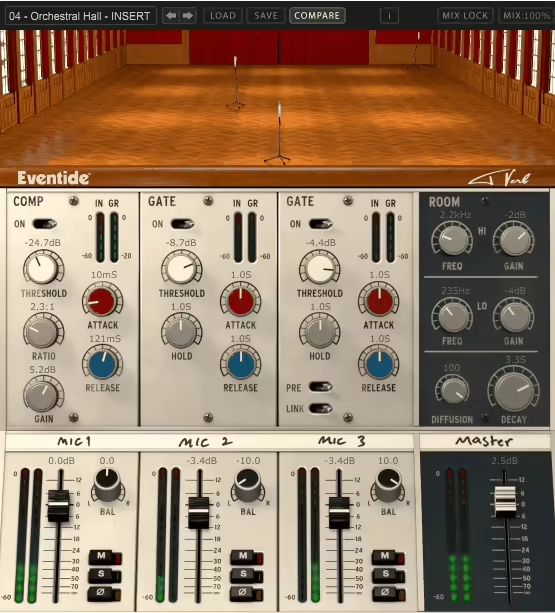
I didn’t expect to enjoy a reverb this much, but this one stands out. Tverb reverb plugin gives you a virtual version of the famous Hansa studio room, with three controllable microphones you can move to shape the sense of space in your mix. The built-in compression and gating, modeled after Tony Visconti’s setup on Bowie’s “Heroes,” make it even more interesting.
It’s a reverb that doesn’t just add space but actually feels like you’re performing inside a room with character and movement.
- Triple-Microphone System gives you one main mic and two fully moveable virtual microphones inside a modeled version of Berlin’s Meistersaal. You can adjust mic distance, placement, and angle to create depth, from close spaces to wide ambiences.
- Dynamic gating and compression replicate Tony Visconti’s Bowie “Heroes” setup with analog-modeled compression on the main mic and two linkable post-reverb gates on the room channels. This setup brings movement and clarity to vocals, drums, and ambient sources.
- Advanced reverb engine uses Eventide’s algorithmic processing to provide control over EQ, diffusion, and decay, while staying efficient on CPU. The built-in room mixer lets you fine-tune tone and space, shaping the reverb to sit naturally in the mix.
- Creative modulation and utility tools allow real-time mic automation, phase inversion, and Mix Lock for fast preset switching. These features make Tverb authentic, musical, and a powerful tool for shaping evolving reverb spaces.
10. Soundtoys SuperPlate
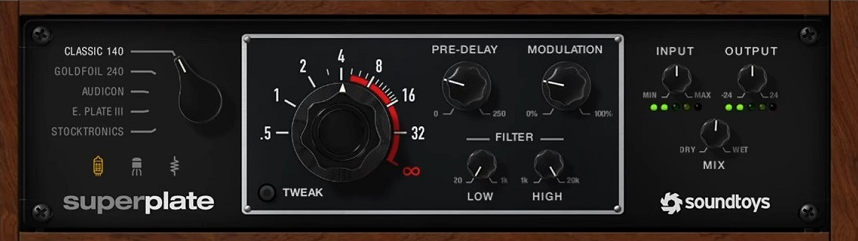
There’s something about plate reverbs that instantly adds class to a mix. I’ve been running vocals, snares, and synths through Soundtoys SuperPlate, and it nails that silky, metallic bloom the old hardware units were famous for. What sets this reverb VST plugin apart for me is how you can flip between five authentic plate models, then shape the tone with tube warmth, solid-state bite, or a clean path. The decay ducking and built-in EQ make it easy to fit lush reverbs into a mix without things getting cloudy.
- SuperPlate includes five classic plate models: EMT 140, EMT 240, Audicon, Stocktronics RX4000, and EcoPlate III. Each one is modeled for accuracy, so you get the real sound of these famous units. This range covers more than 60 years of plate reverb history, from warm vintage tones to modern, clean sounds.
- You can pick from three preamp modes: Tube, Solid-State, or Clean. Tube mode gives you rich harmonics based on the EMT V54, Solid-State mode adds gentle compression inspired by the EMT 162, and Clean mode keeps the sound pure and uncolored.
- Auto-Decay adjusts decay time in real time based on the input signal. This keeps transient-heavy sounds like drums or vocals from getting lost in reverb tails, making it easier to maintain clarity and mix balance without manually automating levels.
- The built-in EQ and filters give you detailed control, with low-cut, high-cut, and two parametric bands. This lets you shape the reverb tails exactly how you want, cutting out low-end rumble or boosting the highs to fit any mix.
In short, SuperPlate is one of the best reverb plugins 2026 has for vocals specifically, and it earns that spot without much debate.
11. Arturia Rev PLATE-140
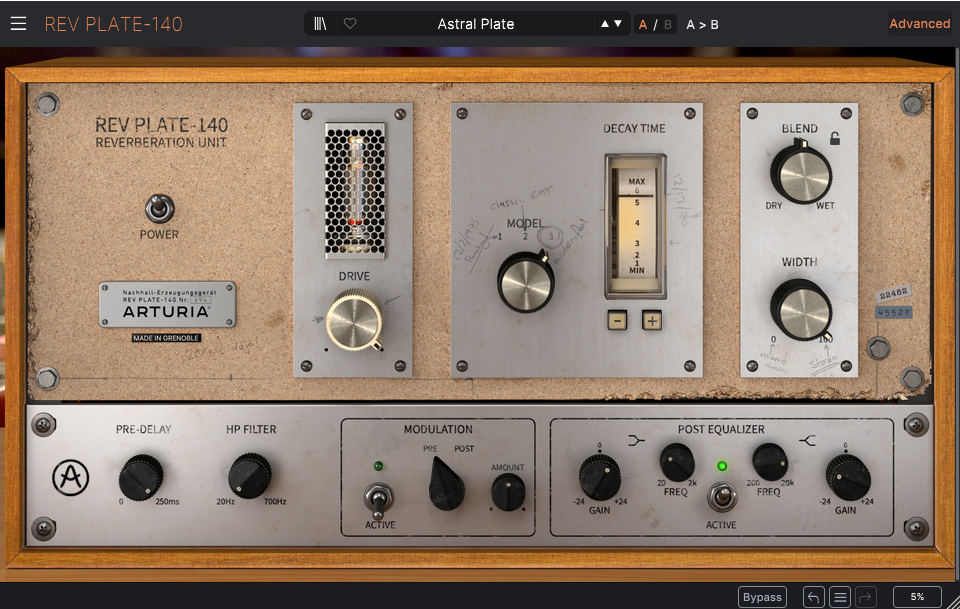
I’ve always loved how vintage plate reverbs sound, and this plugin really captures that classic vibe. Rev PLATE-140 delivers the lush, smooth feel of the original EMT 140, but you don’t have to deal with heavy gear or upkeep.
The built-in tube preamp brings warmth and grit when you need it, and the pre-filter, EQ, and modulation help you shape the sound to fit your mix. This reverb quickly gives vocals and drums that rich, polished sound every home producer looks for.
- You get three plate models that really capture the unique tones of the classic EMT 140, from tight and focused to lush and spacious. Each one mimics how real plates behave and sound, adding depth and presence that lifts vocals and instruments right away.
- The built-in tube preamp brings out rich harmonics and classic analog warmth by copying the original tube design. You can use it gently for a bit of color or turn it up for vintage-style saturation that helps your reverb blend into the mix.
- The plugin comes with tools like chorus-style modulation, a high-pass filter before the reverb, and a 3-band EQ after. These features let you add movement, clean up muddiness, and adjust the decay’s tone without needing other plugins.
- The plugin uses real analog emulation and physical modeling, combining accurate circuit modeling with detailed acoustic simulation. This means every reflection, resonance, and harmonic acts just like the original 600-pound plate from the 1960s.
12. iZotope Neoverb
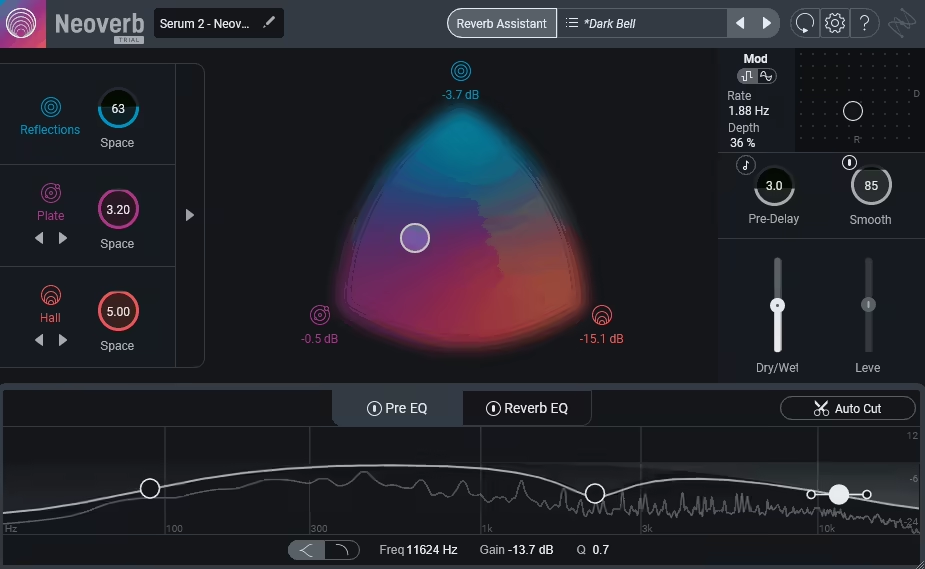
Getting reverb right is crucial for a good mix, especially in a small or untreated room. I appreciate how the iZotope Neoverb VST plugin makes this easy by analyzing your track and creating a reverb that fits naturally. The Blend Pad helps me mix different reverb types into one balanced sound without a lot of tweaking. Its smart EQ keeps the low end clean and the highs clear, so the reverb adds depth without making things muddy.
- The AI-Powered Reverb Assistant analyzes your audio in real time to create the best reverb for your mix. It listens to your track, avoids masking, and automatically adjusts settings to help you get a balanced, natural sound more quickly.
- The Three-Reverb Blend Pad lets you mix up to three different reverb types, like Room, Plate, and Hall. You can move between them with an interactive visual pad or automate the changes in your DAW to add depth and movement to your mix.
- Smart EQ and Unmasking Technology help reduce muddiness by cutting conflicting frequencies between the dry and wet signals. This way, your reverb adds space and clarity without making vocals or instruments sound unclear. Neoverb uses Exponential Audio Algorithms to capture the realistic sound of high-end hardware reverbs, but it doesn’t use much CPU. The result is a smooth and flexible reverb that works well for any genre.
Bonus: Transatlantic Plate Reverb
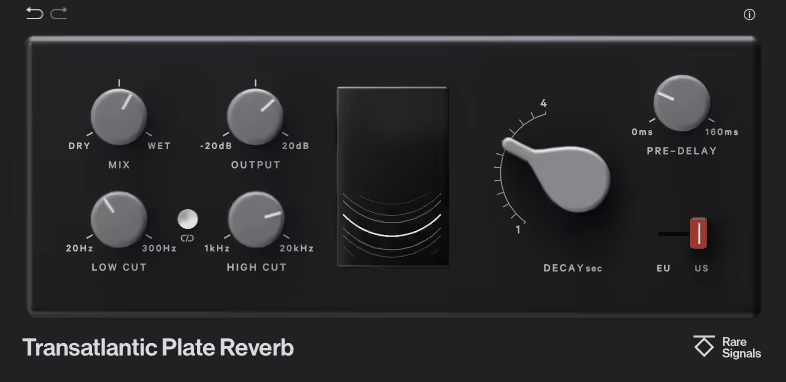
I really like how the Transatlantic Plate Reverb plugin captures the tone and depth of those classic European and American plates from the 1960s and 70s.
The plugin uses Dual-Plate modeling to recreate two of the most famous analog plates ever made, one from Europe and one from the US. Both plates were restored and tuned, so you get real hardware tone and depth from the golden age of recording.
- It keeps the reverb tails natural, preserving the real, organic decay of the plates without extra processing. With 24 different decay settings, it keeps the natural sustain and stereo spread that make analog plates sound musical and lively.
- It also extends the decay time beyond the original hardware, reaching up to 6 seconds on the European plate. That’s a full second longer than the vintage version, giving you deeper and more immersive reverb.
- In addition, it’s easy to use and keeps your workflow simple and musical. You can start shaping your sound right away, but there are also advanced settings for automation, decay modes, and CPU use if you need them.
Frequently Asked Questions (FAQs):
What does reverb sound like?
Reverb sounds like the natural tail you hear when you clap in a large empty room or shout in a stairwell. It is a wash of reflections that blurs and sustains the original sound, adding spaciousness and atmosphere. Short reverbs sound tight and intimate while long reverbs create a dreamy ethereal feel.
Why does my reverb sound metallic?
Metallic reverb usually comes from early reflections that are too evenly spaced, creating a comb filtering effect that sounds ringy and artificial. Try increasing diffusion to scatter the reflections, shortening the pre-delay, or rolling off highs with the reverb's built-in damping or EQ controls.
Does reverb make you sound better?
Reverb can make vocals and instruments sound more polished by smoothing imperfections and placing them in a flattering acoustic space. It fills gaps between notes and adds warmth that makes a performance feel professional. Too much will wash everything out and push your sound further back in the mix.
Can I use reverb on bass?
You can, but use it sparingly. Reverb on bass can quickly muddy up your low end and make the mix lose clarity and punch. If you do use it, high-pass the reverb return around 200-300 Hz so only the upper harmonics of the bass get the ambience while the low frequencies stay tight, dry, and well defined.
Should I use reverb on drums?
Yes, but be selective about which drums get it. Reverb works great on snare and toms to add body and depth, and a short room verb can glue a whole kit together. Avoid putting reverb directly on the kick as it will blur the low end. Use a send channel so you can control how much each drum element gets.
Reverb vs Echo vs Delay - What's the Difference?
Reverb is hundreds of reflections blending into a smooth tail that simulates a physical space. Delay repeats your signal at a set interval as a distinct rhythmic copy. Echo is a delay with feedback where each repeat gets quieter over time. Reverb creates space, delay adds rhythm, and echo sits between.

Hello, I’m Viliam, I started this audio plugin focused blog to keep you updated on the latest trends, news and everything plugin related. I’ll put the most emphasis on the topics covering best VST, AU and AAX plugins. If you find some great plugin suggestions for us to include on our site, feel free to let me know, so I can take a look!