
Standard delay gives you one echo pattern: a repeat (or a series of decaying repeats) that follows the input at a fixed time. Multi-tap delay is a fundamentally different tool. Instead of one playback point, you have multiple independent taps, each with its own timing, level, panning, and often its own filtering and pitch processing.
The result is complex, layered rhythmic echo patterns that a single-tap delay simply can’t create, and it’s the reason multi-tap delay has been a studio staple since the early days of tape and hardware rack units.
In a production context, multi-tap delay is what you reach for when you want echo that adds rhythmic movement and compositional complexity rather than just ambient space. A well-designed multi-tap pattern on a vocal phrase can turn a straightforward performance into something that feels arranged and textural.
On a guitar lead, it can transform a single note into a full cascading sequence. On a synthesizer stab, it can create polyrhythmic patterns that evolve across the stereo field.
The plugins in this roundup cover the spectrum from precise rhythmic tools to more creative and experimental multi-tap environments, and each one has a specific context where it performs best.
What Is Multi-Tap Delay?
A multi-tap delay uses multiple independent playback heads (taps) positioned at different points along a delay line, with each tap producing its own discrete echo at its specific timing position.
Rather than a single repeat that decays uniformly, you get several echoes arriving at different times, potentially with different levels, panning positions, filtering, and modulation applied to each one independently.
The musical result can range from polyrhythmic echo patterns (where taps at different subdivisions of the tempo create a complex rhythmic texture from a single input event), to stereo-spread echo arrangements (where taps are panned across the stereo field to create a sense of the sound bouncing around the space), to more experimental configurations where each tap applies different pitch shifting or tonal processing to create genuinely transformative effects.
Multi-tap delay is distinct from a standard delay with high feedback, where you get many repeats that are all at the same fixed timing interval. In multi-tap delay, you design the specific timing and character of each individual echo independently, which gives you compositional control over the rhythmic pattern the delay creates.
What to Look for in a Multi-Tap Delay Plugin
Before diving into specific plugins, understanding what separates a great multi-tap delay from a mediocre one helps you evaluate which options actually suit your workflow.
- Tap timing flexibility:
Whether taps can be set to freely chosen rhythmic values (note divisions, dotted notes, triplets), to specific millisecond values, or to a visual grid that lets you see the pattern spatially matters a lot for workflow. The best multi-tap delays give you both options.
- Per-tap parameter control:
The ability to set independent level, pan, and ideally filtering and modulation per tap is what distinguishes a genuinely powerful multi-tap tool from one that’s essentially a multiple-echo machine. When each tap can have different tonal character, the complexity and musicality of the patterns you can create expands significantly.
- Visual feedback:
Seeing the tap pattern laid out spatially in an interface accelerates designing complex patterns enormously compared to adjusting parameters numerically without seeing the full picture.
- Modulation options:
Some multi-tap delays allow modulation of tap timing, level, or panning over time, which creates evolving, animated delay patterns rather than static ones.
- Character and tone:
Whether a multi-tap delay sounds transparent or has its own character (analog warmth, tape degradation, specific filtering) determines which productions it suits best.
1. Eventide UltraTap
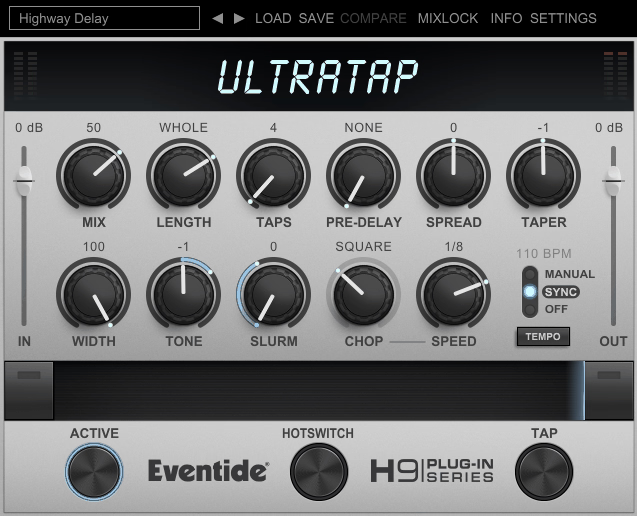
This tool is derived from the classic H3000 Harmonizer’s multi-tap algorithm, which gave it an immediate credibility and sonic reference point that most newer multi-tap plugins don’t have. The H3000’s ultra-tap effect was widely used in 1980s and early 90s recording and had a specific character that’s associated with a particular era of elaborate echo processing.
When it comes to plugin version of UltraTap maintains the core character of the original algorithm while adding modern controls and workflow. The spread control distributes the taps across a defined time window, and combined with the taper control (which shapes how the tap levels decay across the pattern), you can create arrangements from smooth, even distributions to exponentially front-weighted or back-weighted patterns.
The clusters and slurm controls add a specific smearing and randomization quality that’s unique to the H3000 algorithm and produces a sound that genuinely can’t be replicated with other delay types.
UltraTap is most effective for:
- Ambient swells and builds: The spread and cluster controls create washy, atmospheric echoes that work particularly well for building tension before a section change
- Complex rhythmic patterns on percussive elements: Setting taps at specific rhythmic positions with varying levels creates a pattern that interacts with the groove rather than simply echoing it
- That specific 80s character: If you want the specific sound of H3000-era processing, this is the most direct route to it
The interface is clean and the controls are relatively approachable compared to more complex multi-tap tools, which makes UltraTap a good starting point for producers who are new to multi-tap delay.
2. D16 Tekturon
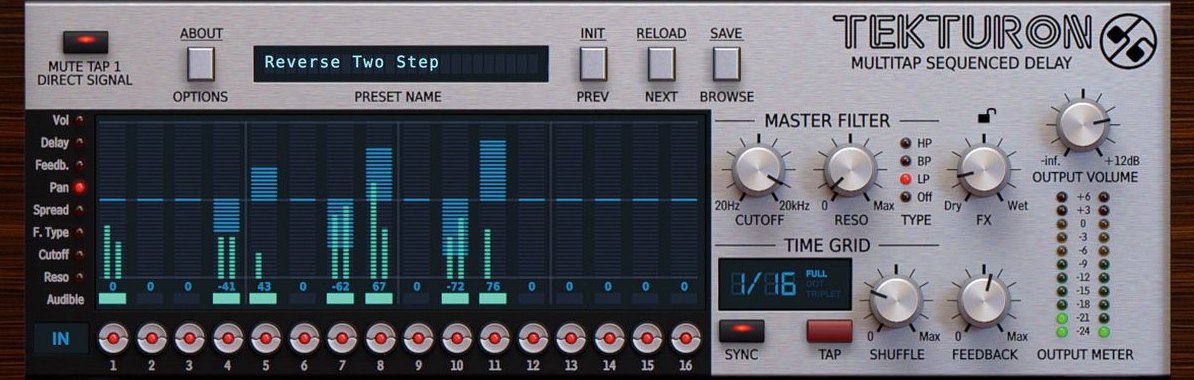
Image credit: Musicradar
D16 Tekturon is the most grid-based and visually oriented multi-tap delay plugin in this roundup, and it approaches multi-tap delay from a sequencer-inspired perspective rather than from the hardware delay unit model. Each tap is placed on a visual step grid that represents the timing of the echo pattern, and you can independently set the level and pan of each tap by clicking and dragging in the grid view.
The visual approach of Tekturon makes it immediately clear what rhythmic pattern your taps are creating, because you can see all the taps laid out across the grid simultaneously. This speeds up designing complex patterns significantly compared to tools where you set each tap’s timing numerically without a spatial overview.
What distinguishes it from other grid-based delay tools is the feedback routing, which allows the output of the tap grid to be fed back through the entire grid again rather than through a simple feedback loop.
This creates complex, evolving patterns where earlier taps can feed into later taps in a way that produces layered, cascading echo behavior.
- Producers who think rhythmically about delay patterns: The grid view makes it natural to think about the tap pattern as a rhythm rather than as an echo effect
- Complex polyrhythmic echo designs: The independent timing of each tap on a grid makes polyrhythmic patterns straightforward to design visually
- Controlled, precise pattern creation: When you need exact control over where each echo falls rhythmically, Tekturon’s grid gives you that precision
3. Minimal Audio Cluster Delay
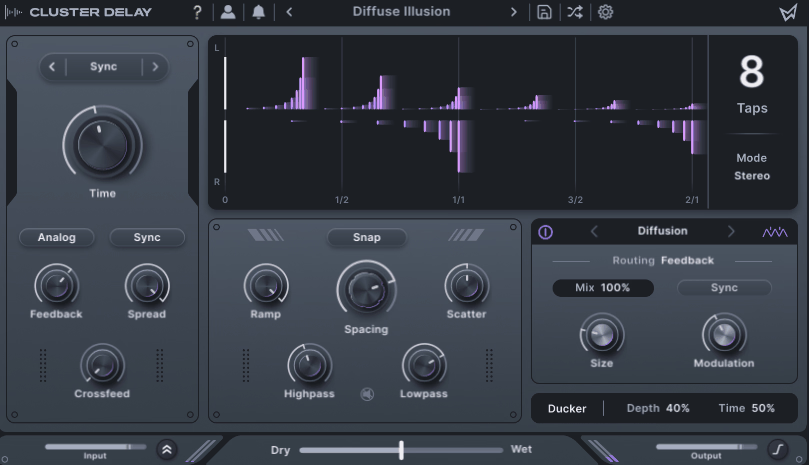
Minimal Audio Cluster Delay takes a different approach from traditional multi-tap delay by focusing on the relationship between clusters of taps rather than on individually positioned single taps. You define clusters of echoes rather than individual taps, and the plugin arranges the echoes within each cluster based on the spread and timing parameters, which creates a more diffuse, cloud-like echo texture than precisely positioned individual taps produce.
The character of Cluster Delay is distinctly modern and suits electronic production aesthetics specifically.
The resonant filter section applied to the delay output adds tonal shaping that can make the echoes feel harmonically related to the dry signal in ways that a transparent delay can’t achieve. The saturation control adds subtle warmth and harmonic content to the delay tails that makes them feel denser and more present in a mix.
4. Waves SuperTap
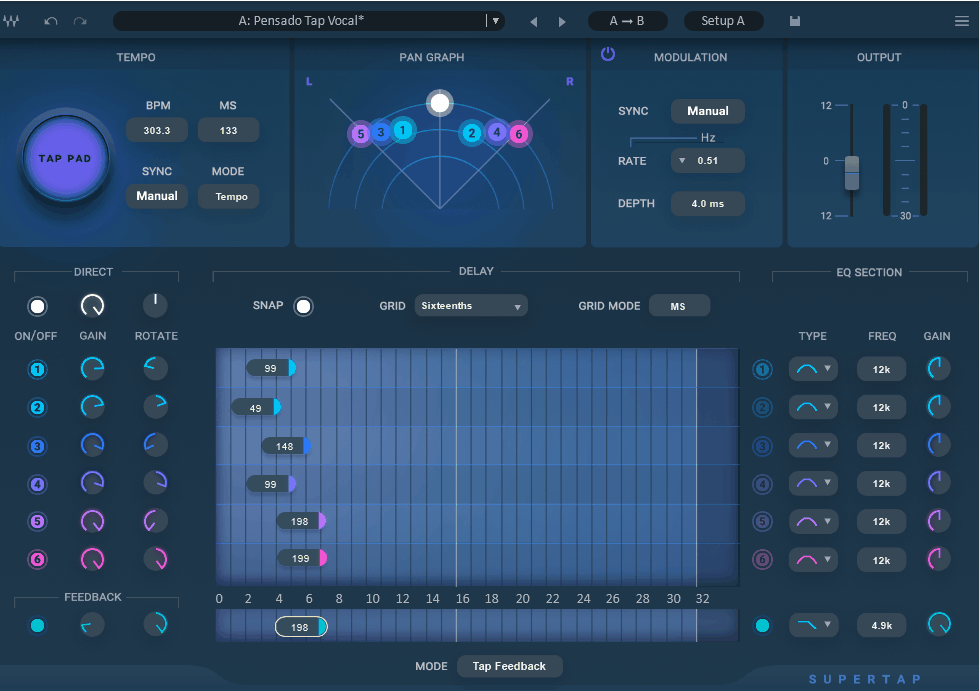
Where it distinguishes itself from other options is in the sound quality of the delay tails: it has a specific clean, analog-adjacent character that suits tracking and mixing applications where you want a transparent multi-tap effect that adds rhythmic complexity without imposing a strong character of its own. The delay tails are detailed and musical without the lo-fi character of some vintage-inspired alternatives.
SuperTap is most effective for:
- Classic multi-tap applications on vocals, guitars, and lead instruments where you want the rhythmic complexity of multi-tap without adding an obvious sonic color
- Producers who want the hardware multi-tap workflow in a plugin form factor: set each tap’s timing, level, and pan, and you’re done
- Mixing contexts where the delay needs to complement rather than transform the source
The Waves pricing model (check for sales, as SuperTap is frequently discounted) makes it one of the more accessible options in the category, and its straightforward workflow has kept it in rotation at studios that adopted it when it was released.
5. PSP 608 MultiDelay
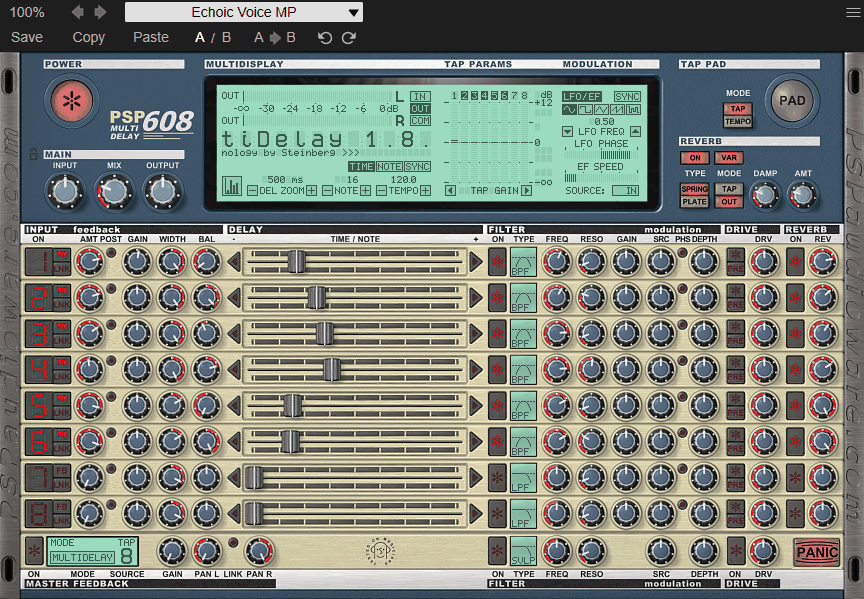
PSP 608 MultiDelay is one of the most comprehensive and feature-complete multi-tap delay plugins available, and it’s the right choice when maximum parameter control per tap is the priority.
Each of the eight taps has independent timing, level, pan, and crucially its own filter section, which means the frequency response of each echo can be shaped independently from the others.
The per-tap filtering is what separates the PSP 608 from simpler multi-tap tools: you can make earlier taps brighter and later taps darker to simulate the frequency response degradation of analog tape delay, or you can give each tap a completely different tonal character for more experimental results.
Per-tap modulation is also available, allowing different amounts of pitch modulation or chorus on different taps, which creates patterns where individual echoes have their own animated quality.
Great for:
- Sound designers and producers who want maximum flexibility per tap and are willing to invest the time in detailed parameter adjustment
- Emulating the specific character of hardware multi-tap units with per-tap frequency response degradation
- Designing complex echo systems where each tap is an independent voice with its own tonal and modulation character
The interface is denser than simpler options, which is the expected trade-off for this level of per-tap control. If you know what you want and are willing to dial it in, PSP 608 can produce results that none of the simpler tools can match.
6. EUCLYD
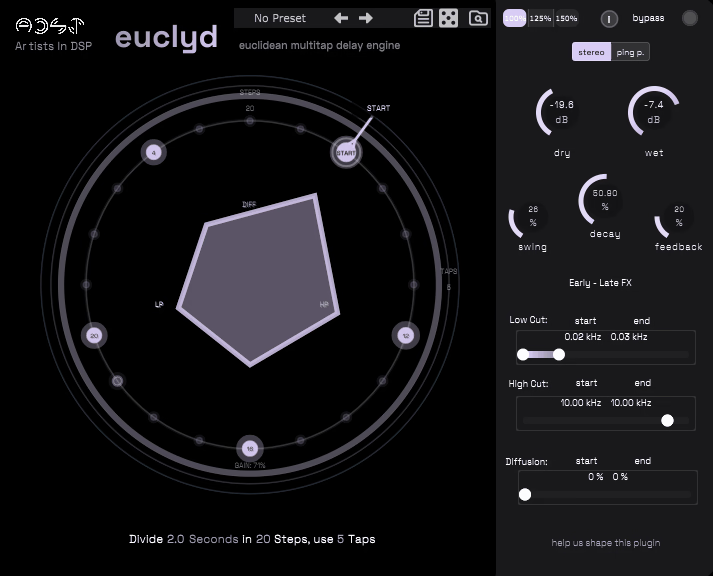
EUCLYD takes the most conceptually unusual approach in this roundup by applying Euclidean rhythm generation to multi-tap delay placement.
Rather than manually positioning taps at specific timing values, you define the number of taps and a grid length, and the plugin distributes them using Euclidean distribution, which places the taps as evenly as possible across the grid in a mathematically optimal pattern.
Euclidean rhythms have a specific quality that makes them feel natural and organic: they match the rhythmic patterns found in a wide range of traditional music styles and create a sense of rhythmic inevitability rather than the arbitrary feel that randomly placed taps can produce.
Rotating and shifting the pattern changes the relationship between the Euclidean distribution and the beat grid without changing the pattern’s internal structure, which creates a range of rhythmic variations from a single configuration.
Great for:
- Producers interested in algorithmic and generative approaches to rhythm: If you’re drawn to the idea of mathematically generated rhythmic patterns, EUCLYD is the most direct application of that concept in delay form
- Finding rhythmically interesting patterns quickly without manually placing individual taps: the Euclidean algorithm often generates patterns that feel musical immediately without requiring manual adjustment
- Experimental and electronic music contexts where unusual rhythmic treatments are welcome
The conceptual approach requires a different mental model from traditional multi-tap delay, but for producers who click with it, EUCLYD produces patterns that would be time-consuming to discover through manual tap placement.
7. Soundtoys PrimalTap
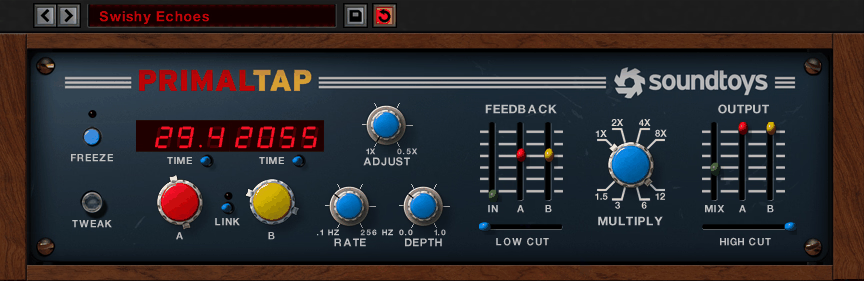
This one is a direct emulation of the Lexicon Prime Time, a specific vintage hardware delay unit from the late 1970s that was widely used in professional recording studios.
The Prime Time was one of the earliest digital delay units available to studio engineers, and it had a specific character that came from its early digital architecture: a lo-fi, slightly grainy quality with a specific frequency response that’s become associated with vintage recording aesthetics.
Unlike most of the other plugins in this roundup, PrimalTap is specifically a character delay with a strong sonic identity rather than a neutral tool.
The clock rate control adjusts the internal sample rate of the emulated hardware, which changes the fidelity and character of the delay tails from relatively clean to heavily degraded depending on the setting. At lower clock rates, the echoes acquire a lo-fi, slightly bit-reduced quality that’s specifically associated with early digital processing.
It’s good for:
- Vintage and lo-fi production contexts where the specific character of early digital delay hardware is the aesthetic target
- Drums and percussion where the lo-fi character of degraded echoes adds grit and a specific vintage texture
- Producers who want a delay with strong character rather than a neutral multi-tap tool that adds pattern complexity without imposing its own sound
If you’re after a clean, transparent multi-tap tool, PrimalTap is the wrong choice. If you want the specific sound of this era of hardware processing, it’s exceptionally good at delivering it.
8. Audiority Deleight
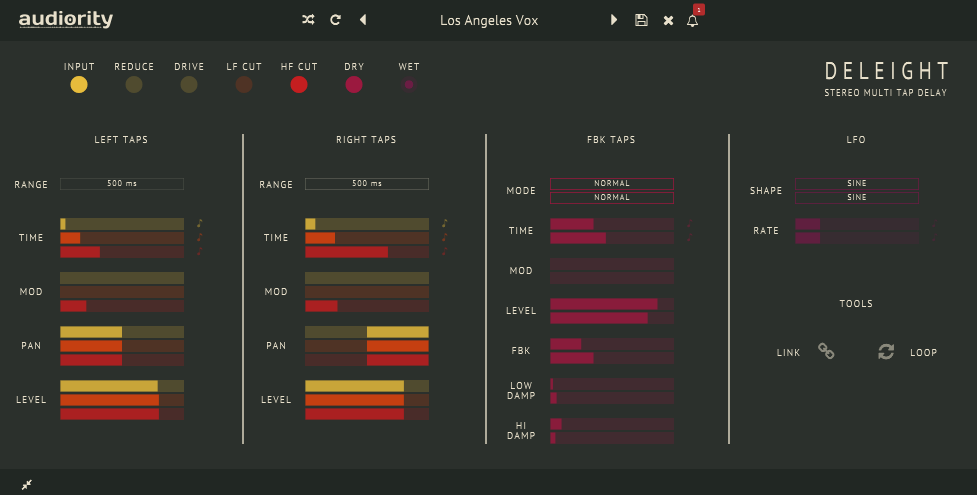
Audiority Deleight positions itself as an accessible, musically intuitive multi-tap delay that prioritizes ease of use without sacrificing creative flexibility. The tap sequencer interface is among the most approachable in the category, with a visual layout that makes the relationship between tap positions and the resulting rhythmic pattern immediately clear even to producers new to multi-tap delay.
What distinguishes Deleight from simpler visual-delay tools is the modulation system, which allows parameters like tap timing and level to be modulated over time, creating evolving delay patterns that change character during sustained performance or playback. The groove section allows the tap pattern to be quantized to or swung against the tempo grid in ways that make the echoes interact more musically with rhythmically complex sources.
The filtering and saturation section adds tonal shaping to the overall delay output rather than per-tap, which makes it a simpler but still capable tool for adding warmth and character to the echo tails without the complexity of per-tap processing.
The Bottom Line
Multi-tap delay ranges from elegant simplicity to deeply complex rhythmic programming tools, and the best choice depends entirely on what you’re trying to accomplish.
For vintage character and heritage sound, Soundtoys PrimalTap (Lexicon Prime Time emulation) or Eventide UltraTap (H3000 heritage) are the most historically rooted options and the ones that sound most specifically like a particular era of hardware processing.
Then, when it comes to visual, grid-based rhythm design, D16 Tekturon’s sequencer grid is the clearest interface for building precise rhythmic tap patterns, and Audiority Deleight offers a similar visual approach with added modulation for a more accessible entry point.
In addition, for maximum per-tap control, PSP 608 MultiDelay with its independent per-tap filtering and modulation is the most comprehensive option for producers who want to fully sculpt each echo individually. If you are after electronic production character, Minimal Audio Cluster Delay’s cluster-based approach and tonal filtering create a specifically contemporary sound that suits electronic production aesthetics better than vintage emulations.
Lastly, for algorithmic creativity, EUCLYD’s Euclidean distribution approach generates rhythmically interesting patterns through mathematics rather than manual positioning, which suits producers who want to discover unexpected patterns quickly.
Most producers find that one or two multi-tap plugins cover all their needs: one character-focused tool for when the specific sonic identity matters, and one more flexible tool for when precise rhythmic pattern design is the goal. The combination of UltraTap or PrimalTap for character and Tekturon or PSP 608 for precision covers that full range effectively. Good luck!

Hello, I’m Viliam, I started this audio plugin focused blog to keep you updated on the latest trends, news and everything plugin related. I’ll put the most emphasis on the topics covering best VST, AU and AAX plugins. If you find some great plugin suggestions for us to include on our site, feel free to let me know, so I can take a look!