
Roland’s current synthesizer lineup tells an interesting story about where the company sees hardware heading. Rather than chasing the analog revival that’s dominated the market for the past decade, Roland has doubled down on their ZEN-Core digital modeling platform and used it to do something no other manufacturer can: give you access to faithful recreations of their own legendary back catalog alongside modern synthesis engines, all running on the same underlying technology.
Whether you want the lush pads of a Jupiter-8, the chorused warmth of a Juno-106, the acid squelch of an SH-101, or sounds that don’t reference history at all, the current Roland range covers it.
What I find compelling about Roland’s approach in 2026 is the consistency across the lineup. The ZEN-Core engine that powers the flagship Jupiter-X is the same engine inside the pocket-sized S-1 Tweak Synth.
The Model Expansion packs you buy for one instrument work across compatible models. Your investment in sounds and expansions carries between instruments rather than being locked to a single product.
I’ve selected seven current Roland synths that represent the strongest options across the range, from the flagship performance keyboard through compact desktop units to a keytar that’s more capable than it has any right to be.
1. Roland Jupiter-X
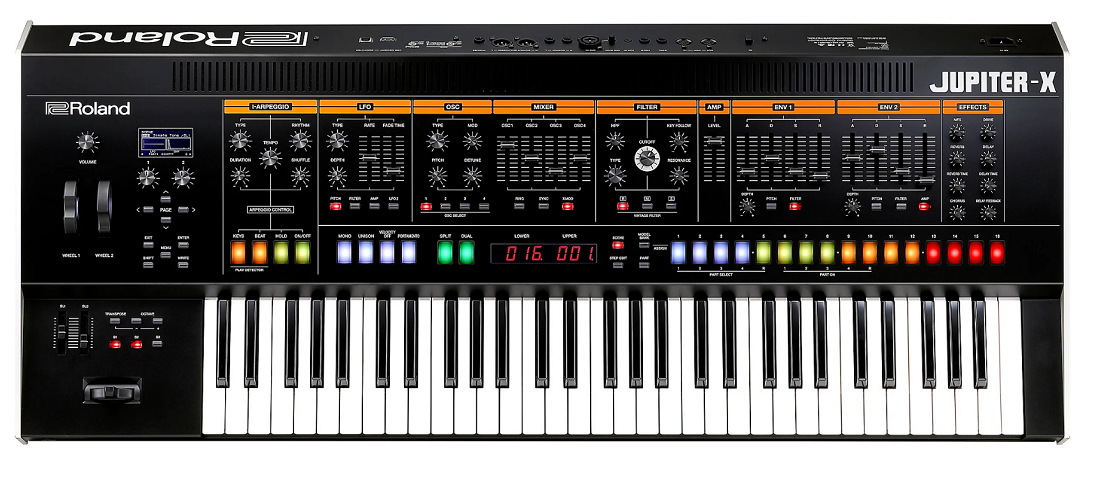
The flagship of Roland’s current synth lineup and the instrument that makes the strongest case for the ZEN-Core platform as a serious synthesis engine.
Roland Jupiter-X gives you a 61-note keyboard with access to modeled recreations of classic Roland instruments alongside the modern ZEN-Core engine, the I-Arpeggio intelligent pattern generator, and a dual-layer scene system that lets you combine and morph between sounds in real time.
For producers and performers who want one keyboard that covers the full range of Roland’s sonic heritage while also handling contemporary sound design, the Jupiter-X is the most complete option in the lineup.
- Model Expansions
Downloadable Model Expansion packs add entirely new synthesis engines that faithfully recreate specific classic Roland instruments. The Jupiter-8, Juno-106, SH-101, JX-8P, and other legendary synths are available as expansions, each capturing the specific oscillator behavior, filter character, and quirks of the original rather than offering generic approximations.
The expansion system means the Jupiter-X grows over time as Roland releases new classic recreations, and each expansion adds a genuinely different sonic character to the instrument.
- I-Arpeggio
The I-Arpeggio (Intelligent Arpeggio) generates musically aware patterns that respond to your chord voicings and inversions rather than following fixed note-cycling rules. Play a minor chord and the arp adapts. Switch to a major voicing and the pattern character shifts to match.
The intelligence produces results that sound composed rather than algorithmically generated, which is what separates the I-Arpeggio from standard arp implementations.
- Scene System
A dual-layer scene system lets you save two complete sound configurations and crossfade between them in real time. Layering a Jupiter-8 pad with a Juno-106 texture and morphing between them creates evolving timbral transitions that draw from two different legendary sound characters simultaneously. The scene morphing is particularly useful for live performance where you need smooth transitions between contrasting sounds.
- ZEN-Core Engine
The modern ZEN-Core synthesis platform provides virtual analog oscillators, PCM waveforms, multimode filters, and comprehensive effects alongside the vintage model recreations. The ZEN-Core engine handles contemporary sounds that the classic models weren’t designed to produce, ensuring you’re not limited to recreating the past when your production needs current timbres.
Get the Free Plugin Starter Kit
The genuinely useful free DAWs and plugins worth installing. No filler. Straight to your inbox.
2. Roland Juno-X
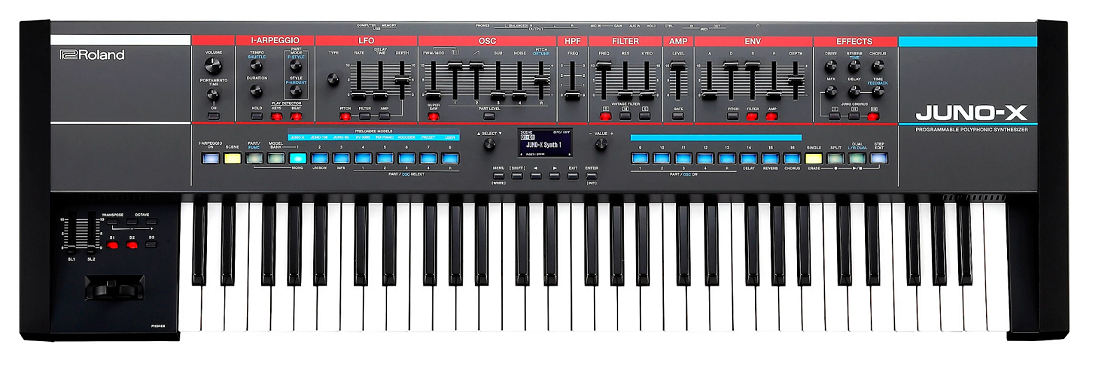
If the Jupiter-X is the flagship all-rounder, the Juno-X is the instrument specifically designed for musicians who want the Juno sound front and center. Roland Juno-X delivers dedicated recreations of both the Juno-60 and Juno-106 alongside the full ZEN-Core engine in a 61-key performance keyboard that looks and feels like it belongs in the same lineage as the originals.
The Juno chorus is one of the most recognized sounds in electronic music history, and having both the 60 and 106 versions available with their specific tonal differences is what makes the Juno-X the go-to instrument for producers who consider that sound essential.
- Juno-60 Model
The Juno-60 recreation captures the original’s warmer, slightly grittier character with the specific chorus behavior that defined the instrument’s sound.
The Juno-60 chorus is subtly different from the 106’s version, producing a darker, more saturated widening effect that many producers consider the more desirable of the two. The model captures not just the oscillator and filter behavior but the specific way the chorus interacts with the signal, which is where much of the Juno-60’s character lives.
- Juno-106 Model
The Juno-106 recreation delivers the cleaner, brighter Juno sound with the chorus that became the default pad texture for an entire era of house music, synthpop, and ambient. The 106’s chorus has a more defined, sparkly quality compared to the 60, and the model reproduces the specific oscillator drift and filter sweep character that made the 106 one of the most recorded synths in popular music.
- Expanded Controls
The front panel provides dedicated controls that go beyond what either original Juno offered, including additional filter modes, effects parameters, and the I-Arpeggio system. The expanded control set means you can push the Juno sound into territory that the originals couldn’t reach, combining the classic tonal character with modern features that weren’t available in the 1980s.
- Model Expansion
Beyond the Juno models, downloadable Model Expansions add other classic Roland engines and contemporary sounds to the instrument.
The expandable architecture means the Juno-X isn’t limited to Juno sounds despite its name and heritage focus. You can add Jupiter-8, SH-101, and other Roland character voices, which transforms the Juno-X from a dedicated Juno machine into a broader Roland sound library over time.
- Performance Section
A dedicated performance section with the I-Arpeggio, scene layering, and real-time control options makes the Juno-X a proper stage instrument rather than just a studio preset player. The performance features let you build complete live sets where you transition between sounds, layer textures, and generate arpeggiated patterns during performance without pre-programming everything in advance.
- Full Keyboard
The 61-note full-size keyboard with velocity sensitivity provides the playing surface that the original Junos offered, maintaining the performance feel of the classic instruments. The full keyboard matters for Juno-style playing where sustained chords, bass lines, and lead parts all happen from the same instrument during performance.
3. Roland GAIA 2
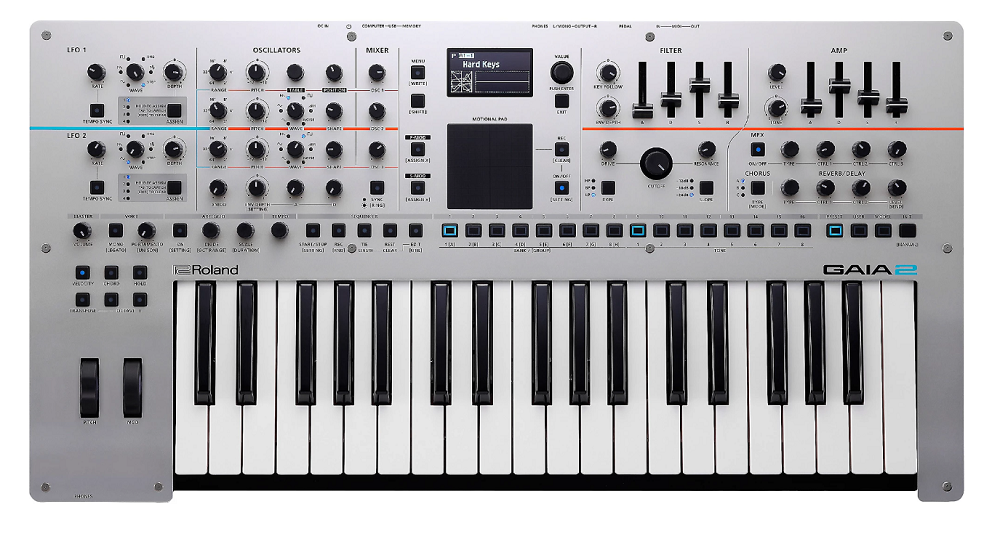
The synth on this list with the most immediate, hands-on interface, where every major parameter has a dedicated control and you never touch a menu for basic sound design. Roland GAIA 2 uses the ZEN-Core engine with three independent tone generators and gives you a front panel covered in knobs, sliders, and buttons that you shape sounds with by touch rather than navigation.
For producers and performers who want to design sounds by twisting controls and listening rather than scrolling through screens, the GAIA 2’s no-menu philosophy makes it one of the most intuitive synths Roland has ever made.
- Three Tones
Three independent tone generators that layer, split, or combine give you the building blocks for rich, stacked sounds. Each tone has its own oscillator, filter, envelope, and LFO, meaning a single patch contains three independently shaped layers. Stacking three slightly different tones with different filter settings and envelope shapes creates depth and movement that single-layer patches can’t match.
- No Menu Diving
Every major parameter has a dedicated front-panel control with no hidden menus for basic sound design. The direct access means you shape sounds by reaching for controls and listening to the result rather than navigating page after page of screen parameters. The workflow encourages experimentation because there’s zero friction between having an idea and hearing what it sounds like.
- D-50 Engine
Access to Roland’s D-50 synthesis engine alongside the virtual analog models adds the atmospheric, layered digital textures that the D-50 contributed to decades of electronic and pop music. The D-50 sounds complement the virtual analog tones with a different character, extending the GAIA 2’s palette into territory that subtractive synthesis alone doesn’t reach.
4. Roland JD-Xi
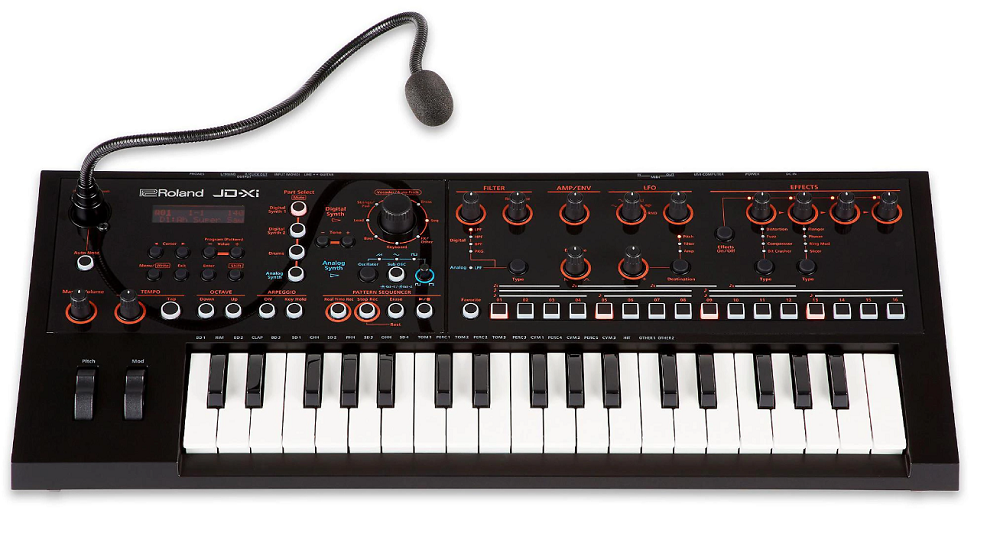
A compact crossover synthesizer that combines analog and digital synthesis with a built-in vocoder, drum kits, and a pattern sequencer in a format designed for complete music production from a single small instrument. JD-Xi covers more ground per square inch than any other synth in the Roland lineup, with separate analog mono, digital poly, drum, and vocal sections all running simultaneously.
The JD-Xi is Roland’s answer to the question “what if a single compact keyboard could handle every part of an arrangement?” and the answer is surprisingly capable.
- Analog Section
A dedicated analog mono synth section with a real analog oscillator and filter provides genuine analog tone for bass and lead parts. The analog section runs alongside the digital voices rather than replacing them, meaning you get the warmth and character of a real analog signal path for the parts that benefit most from it while the digital sections handle polyphonic and drum duties.
- Four Parts
Four simultaneous parts (analog mono, digital poly 1, digital poly 2, and drums) let you build complete arrangements with bass, chords, melody, and rhythm all playing simultaneously from one compact keyboard. The four-part architecture means you can sketch complete songs on the JD-Xi without any additional instruments, which is useful for songwriting, live performance, and portable production.
- Vocal FX
A built-in vocoder and Auto-Pitch section with microphone input lets you process your voice through the synth engine in real time. The vocal processing adds a dimension that most compact synths don’t include, letting you create vocoded pads, pitch-corrected vocal lines, and synthesized vocal textures from a single instrument with a mic plugged in.
- Pattern Sequencer
A pattern sequencer programs drum patterns and melodic sequences within the instrument, creating complete musical phrases that play back with all four parts. The sequencer handles both step-programmed drums and real-time recorded melodic content across the analog and digital parts, making the JD-Xi a self-contained production tool.
5. Roland Jupiter-Xm
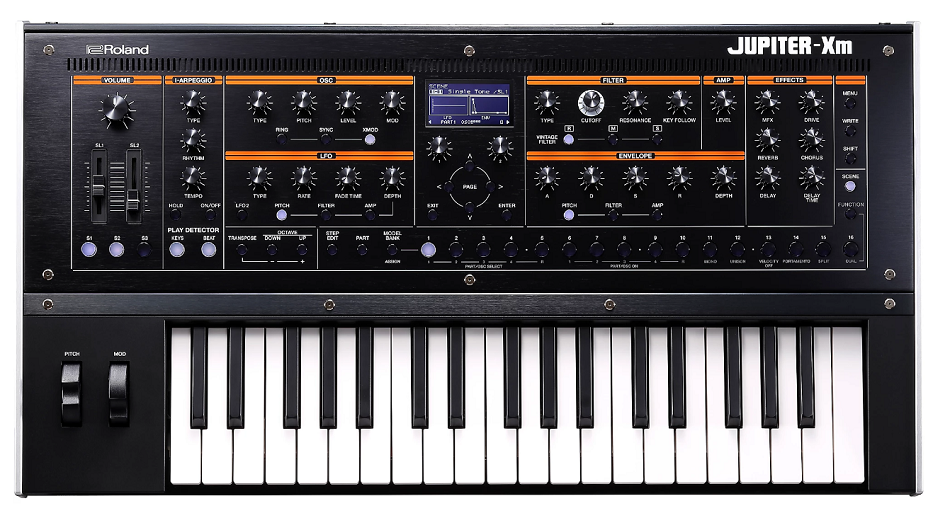
Everything the Jupiter-X offers scaled down into a compact, battery-capable format with a mini keyboard and built-in speaker. Roland Jupiter-Xm delivers the same ZEN-Core engine, Model Expansions, I-Arpeggio, and scene system as the flagship in a package you can genuinely throw in a backpack and take anywhere.
For producers who love the Jupiter-X’s capabilities but need something portable for traveling, performing in small venues, or sketching ideas away from the studio, the Xm delivers the identical sonic engine in a fraction of the size.
- Same Engine
The identical ZEN-Core synthesis platform and Model Expansion compatibility as the flagship Jupiter-X means every sound and expansion you own works on both instruments. You’re not getting a stripped-down version or a different synthesis engine scaled to fit. The Xm processes the same algorithms at the same quality, which means patches created on the Jupiter-X translate directly to the Xm and vice versa.
- Battery Power
Battery operation makes the Jupiter-Xm functional without a power outlet, which genuinely changes how and where you can use a synth of this capability. Sketching ideas on a train, performing in venues without reliable power, or simply making music on the couch without cables. The battery capability transforms the Jupiter-Xm from a studio instrument into a truly portable creative tool.
- Built-in Speaker
A built-in speaker lets you hear the synth without headphones or external amplification. The speaker isn’t going to replace studio monitors, but it means you can audition sounds, sketch ideas, and practice patches anywhere without additional equipment. For a synth this capable, having self-contained audio output adds practical convenience.
6. Roland AIRA Compact S-1 Tweak Synth
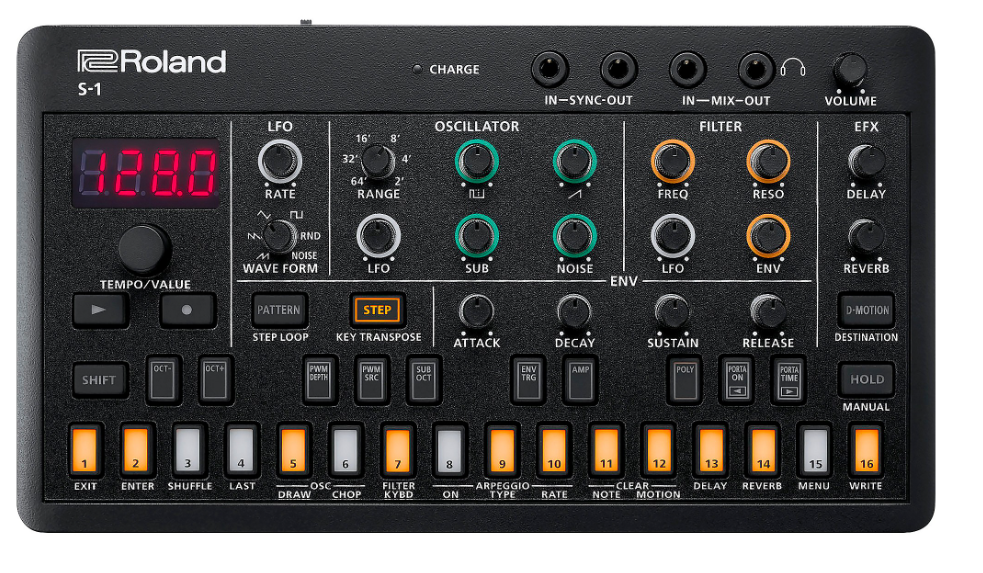
The smallest and most portable synth in Roland’s current lineup, packing the ZEN-Core engine into a format roughly the size of a large smartphone.AIRA Compact S-1 proves that Roland’s synthesis technology scales down to pocket-size without sacrificing sound quality, giving you the same core engine found in the Jupiter-X in a device you can hold in one hand.
The S-1 is part of Roland’s AIRA Compact line where multiple small units (synth, drum machine, effects, mixer) connect together via 3.5mm sync cables to build a modular portable setup.
- Pocket ZEN-Core
The ZEN-Core synthesis engine running in this tiny format delivers the same sound quality and synthesis capability as Roland’s full-size instruments.
You’re getting virtual analog oscillators, PCM waveforms, multimode filters, and quality effects from a device that fits in a jacket pocket. The sound quality doesn’t compromise for the portable form factor, which is genuinely impressive and means the S-1 produces sounds you’d use in finished productions.
- Ribbon Controller
A touch-sensitive ribbon strip replaces a traditional keyboard for pitch input, allowing continuous pitch slides, glissando effects, and playing techniques that discrete keys don’t facilitate. The ribbon encourages a different kind of interaction with pitch than pressing keys, which leads to sounds and playing styles that keyboard-based synths don’t naturally produce.
- AIRA Ecosystem
The S-1 connects to other AIRA Compact units (T-8 Beat Machine, J-6 Chord Synth, E-4 Voice Tweaker) via 3.5mm sync cables for synchronized multi-unit setups. The modular ecosystem approach means you can build a complete portable production rig from multiple palm-sized units, each handling a different role, all synced together and collectively smaller than a single standard keyboard synth.
- Battery Powered
Battery operation with extended runtime means the S-1 functions anywhere without power infrastructure. Combined with the headphone output, you have a completely self-contained synthesis tool that works on a park bench, an airplane, or a backstage warmup area with zero setup required.
- Effects Quality
The built-in effects draw from Roland’s established effect algorithms at quality levels well above what most pocket-sized devices include. The effects are processed by the same ZEN-Core engine that handles the synthesis, which means reverb, delay, chorus, and distortion maintain the quality standard of Roland’s larger instruments despite the tiny form factor.
Extra: Roland AX-Edge
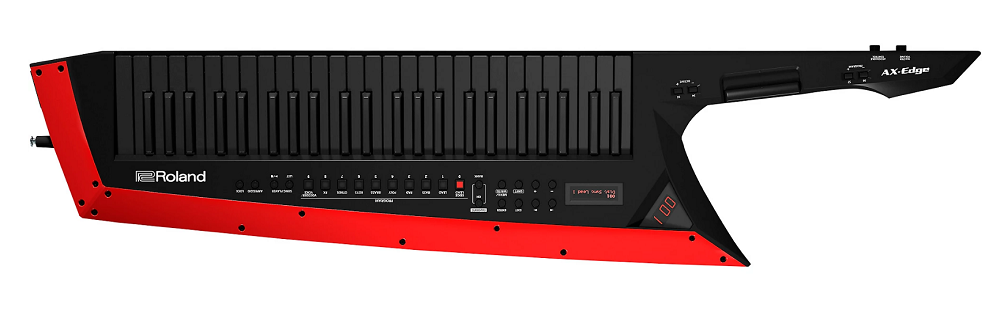
Closing the list with something completely different. The Roland AX-Edge is a keytar, a shoulder-mounted performance synthesizer designed to be played standing up on stage, facing the audience, with the same kind of physical presence that a guitar player brings.
It’s powered by the SuperNATURAL engine with extensive onboard sounds, a ribbon controller, and motion sensors that detect how you move the instrument.
The AX-Edge exists for one specific purpose: live performance where the keyboardist needs to be a visible, mobile, charismatic frontperson rather than someone hiding behind a static keyboard on a stand.
- Performance Design
The entire instrument is designed for stage performance with the keyboard angled for playing while standing, a strap system for shoulder mounting, and controls positioned for access while moving. The performance-first design means every aspect of the AX-Edge, from the control layout to the weight distribution to the sound selection workflow, is optimized for playing in front of an audience rather than sitting at a desk.
- Motion Control
Built-in motion sensors detect the instrument’s orientation and movement, generating control data that you can assign to any parameter. Tilting the AX-Edge forward opens the filter. Raising it above your head increases the effect intensity. The motion control turns your physical stage presence into a sound-shaping tool, which creates a visual and musical connection between what the audience sees and what they hear.
- Ribbon Strip
A ribbon controller mounted on the neck provides smooth, continuous pitch and modulation control during performance. The ribbon placement is designed for the keytar format, sitting where your left hand naturally rests when supporting the instrument, making pitch bends and filter sweeps physically intuitive during standing performance.
Get the Free Plugin Starter Kit
The genuinely useful free DAWs and plugins worth installing. No filler. Straight to your inbox.

Hello, I’m Viliam, I started this audio plugin focused blog to keep you updated on the latest trends, news and everything plugin related. I’ll put the most emphasis on the topics covering best VST, AU and AAX plugins. If you find some great plugin suggestions for us to include on our site, feel free to let me know, so I can take a look!