
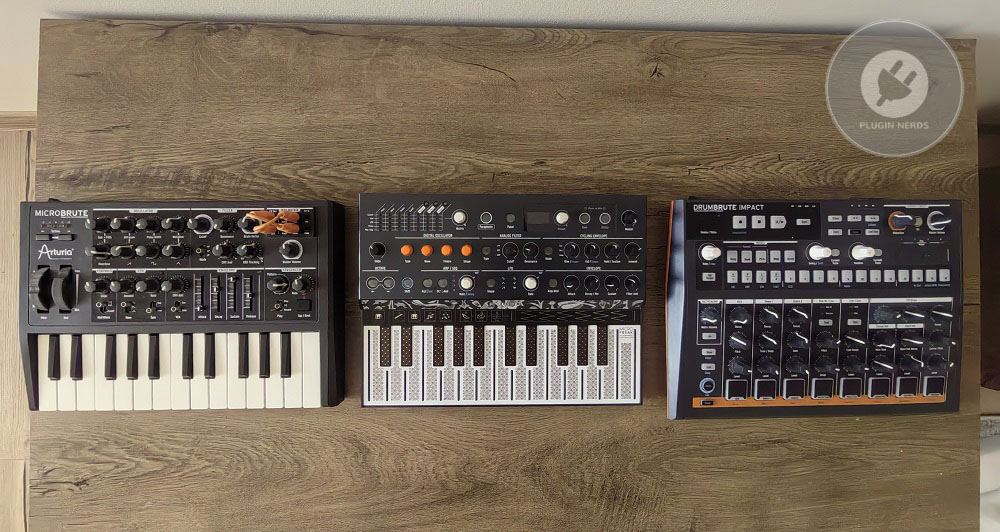
This question comes up constantly in production forums, and the answers tend to fall into two predictable camps. Hardware enthusiasts insist that plugins will never match the real thing. Software advocates argue that the difference is imperceptible and the workflow advantages of staying in the box make hardware obsolete. After spending years working with both, I think the honest answer is more nuanced than either side admits, and it depends almost entirely on what you’re actually trying to accomplish.
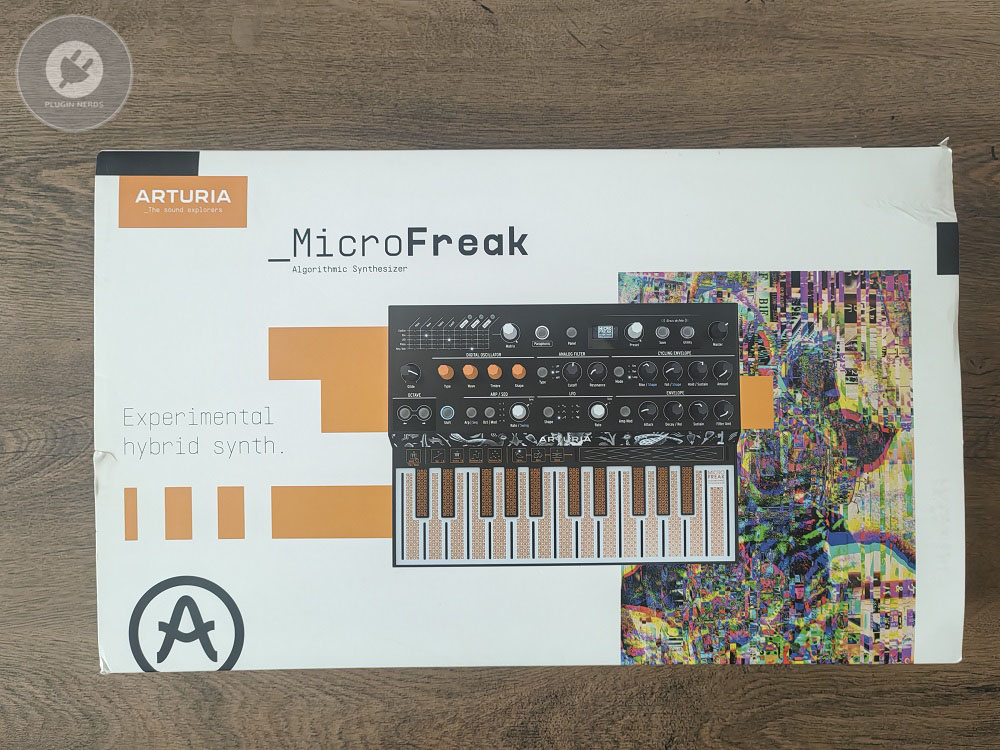
The timing of this question matters too. In 2026, you can pick up something like an Arturia MicroFreak for around $300 and get a hybrid digital/analog synth with a touch sensitive keyboard, multiple synthesis engines, and a built in sequencer that does things no single plugin replicates in quite the same way. On the software side, synths like Serum 2, Vital, and u-he Diva have reached a level of quality where the sonic argument for hardware is thinner than it’s ever been. So where does that leave the average producer trying to make a smart decision with their budget?
The sound question, answered honestly
Let’s get the elephant in the room out of the way first. In 2026, the sonic gap between hardware and software has narrowed to the point where most listeners, and plenty of experienced engineers, cannot reliably tell the difference in a blind test. I know that’s a controversial statement, and I’ve watched enough forum threads devolve into arguments about it to know that some people feel very strongly otherwise.
But here’s what I’ve observed in my own work. When I’ve done careful A/B comparisons between hardware synths and their plugin counterparts, matching levels and removing variables, the differences on most digital hardware are subtle enough that they disappear entirely in a mix context. A Roland JV-2080 running the same patch as its Roland Cloud equivalent sounds close enough that I’d challenge anyone to identify which is which once it’s sitting alongside drums, bass, vocals, and everything else in a finished production.

Analog hardware is a slightly different conversation. There is a quality to real analog oscillators, real voltage controlled filters, and real component tolerances that the best emulations approximate but don’t perfectly replicate. My experience with u-he Diva versus actual Juno and Moog hardware is that Diva gets remarkably close, close enough for any professional production, but there’s a subtle aliveness to the hardware that I can sometimes perceive when the synth is soloed and I’m actively listening for it. In a mix? I genuinely cannot tell. And I’ve been doing this long enough that I should be able to if the difference were significant.
Something like the Arturia MicroBrute sits in an interesting position here. It’s a fully analog mono synth with a real Steiner-Parker filter and analog oscillator, but it costs about the same as a mid-range plugin. The analog character is real, the filter sounds genuinely different from any software emulation I’ve compared it against, and the raw, aggressive tone it produces has a quality that software gets close to but doesn’t nail with the same effortlessness.
For producers who want to understand what people mean when they talk about “analog character” without spending thousands, the MicroBrute is one of the most affordable ways to hear it for yourself.
The people who claim night-and-day differences between hardware and software are, in my observation, often comparing apples to oranges. Different patches, different levels, different monitoring conditions. When you control for those variables, the gap shrinks dramatically. That said, “subtle” and “nonexistent” are not the same thing, and if those subtleties matter to your ear and your workflow, that’s a perfectly valid reason to choose hardware.
Where hardware genuinely wins
If the sound argument is mostly settled (or at least much closer than it used to be), why would anyone spend money on hardware synths in 2026? Because sound quality isn’t the only factor, and in some cases it’s not even the most important one.
Tactile interaction Turning physical knobs, sliding real faders, and feeling the resistance and travel of actual controls is fundamentally different from clicking a mouse on a virtual knob. This isn’t nostalgia talking.
The physical interaction changes how you approach sound design because you can adjust multiple parameters simultaneously with both hands, which produces results you wouldn’t arrive at by clicking one parameter at a time.
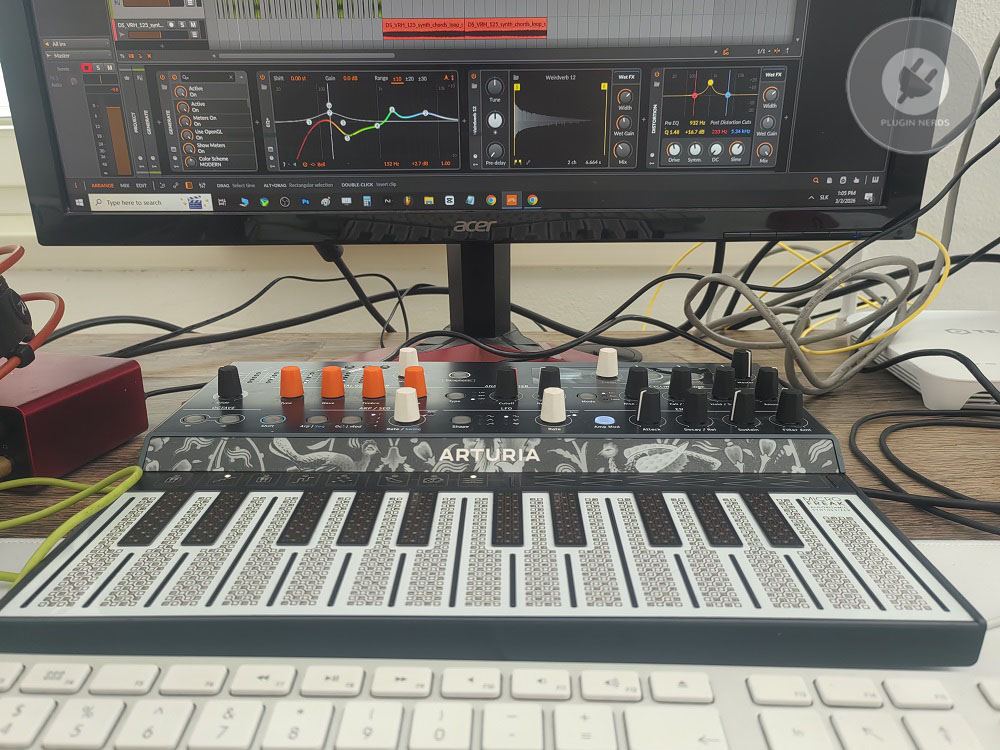
Several composers I respect have made this exact point: they design far more sounds from scratch on hardware but almost exclusively preset surf and tweak on software. The interface shapes the creative output. The MicroFreak’s touch keyboard is a perfect example of this. The capacitive touch strips respond to pressure and position in ways that a standard MIDI keyboard doesn’t, and that unusual interface pushes you into playing styles and sound design choices that you wouldn’t make with a conventional controller.
Reliability and independence Hardware never breaks because of a software update. This one has become increasingly relevant. I’ve lost count of the times a DAW update, OS upgrade, or authorization change has broken a plugin that was working perfectly the day before.
A thirty-year-old Roland D-50 still powers on and makes the same sounds it always has. No activation servers, no subscription renewals, no compatibility patches. It just works. The reliability argument has actually gotten stronger for hardware as software ecosystems have gotten more complex and fragile.
You can also use hardware synths without a computer at all, which is a genuine creative benefit for producers who spend their day job staring at screens and want music making to feel different.
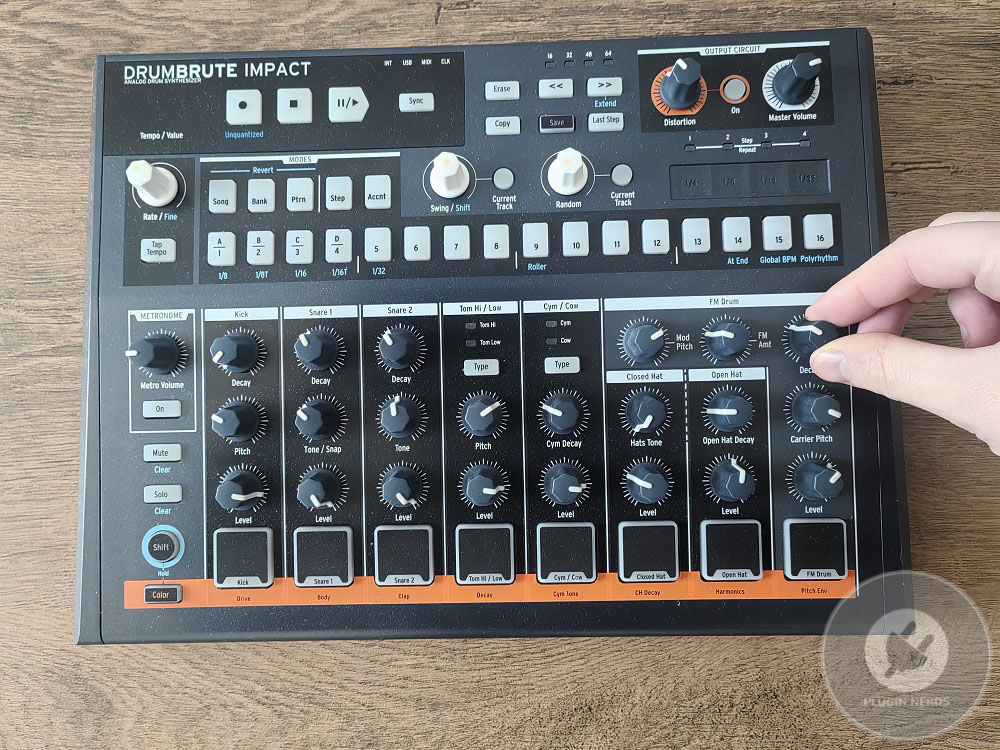
Instruments that don’t exist as plugins The Groove Synthesis 3rd Wave, the Waldorf Quantum, the Elektron instruments with their particular sequencing workflows, there are hardware synths that offer synthesis approaches and creative workflows that no software has replicated. The Arturia DrumBrute Impact is a smaller scale example of this.
Yes, you can program drums in any DAW with any drum plugin. But the DrumBrute Impact’s dedicated per-voice knobs, built in distortion circuit, and hardware step sequencer create a workflow where you build beats by turning knobs and hitting pads rather than clicking a grid with a mouse.
The beats that come out of a hands-on session with a hardware drum machine are different from what you’d program in a piano roll, not because the sounds are better, but because the workflow produces different creative decisions.
Resale value A plugin you bought five years ago is worth nothing on the resale market. A hardware synth, particularly a well-maintained one from a reputable manufacturer, can often be sold for close to what you paid, sometimes more.
The financial argument for software being “cheaper” is somewhat undercut by the fact that hardware is an asset you can recover value from while software is a sunk cost.
Where software genuinely wins
The advantages of staying in the box are practical, significant, and shouldn’t be dismissed by anyone romanticizing the hardware experience.
- Instant total recall. When you open a project six months later, every plugin loads with exactly the settings you left it at. With hardware, you’re either writing down patch settings, storing SysEx dumps, or accepting that you’ll never perfectly recreate that sound again. For anyone working on multiple projects simultaneously or revising work over time, the recall advantage of software is enormous.
- Cost per sound. A single synth plugin gives you unlimited instances for one price. A hardware synth gives you one voice (or a handful of voices) for often significantly more money.
- The sheer variety of synthesis available through software at accessible price points is staggering. A producer starting from zero can build a complete, professional-quality synth collection in software for less than the cost of a single premium hardware unit.
- No audio routing complexity. Software synths output directly into your DAW’s mixer with zero latency and unlimited polyphony. Hardware requires audio interfaces with enough inputs, MIDI connections, and the workflow overhead of recording external audio into your session. If you want to edit the MIDI and re-render, you’re bouncing audio again. This workflow tax adds up across a full production.
- Space and logistics. A laptop running twenty synth plugins takes up one spot on your desk. Twenty hardware synths require a studio, power, cabling, maintenance, and occasionally repair. For anyone working in a bedroom, apartment, or shared space, the physical footprint of hardware is a genuine constraint.
- CPU is no longer the barrier it was. The old argument that hardware offloads processing from your computer barely applies anymore. Modern machines handle dozens of synth instances without breaking a sweat. Unless you’re running u-he Diva on every channel (which, fair enough, will still make your CPU complain), the processing argument for hardware has largely evaporated.
Three hardware synths that actually make the case
Rather than talking about hardware in the abstract, here are three affordable Arturia synths that I think genuinely demonstrate the value of hardware in 2026, specifically because each one offers something that software doesn’t fully replicate.
Arturia MicroFreak This is probably the best entry point into hardware synthesis right now. The MicroFreak gives you a hybrid analog filter fed by multiple digital synthesis engines (virtual analog, wavetable, Karplus-Strong, harmonic, superwave, and more through firmware updates).
The flat capacitive touch keyboard responds to pressure, position, and aftertouch in ways that push you into playing styles that a standard keyboard or mouse doesn’t encourage. The built in sequencer and arpeggiator with probability and randomization per step produces patterns that are more interesting than what most people program in a DAW piano roll. It’s affordable, it’s portable, and it produces sounds that are genuinely its own.
I think the MicroFreak is the strongest argument for “why would I buy hardware” at its price point because it combines unusual interface, multiple synthesis types, and creative sequencing in a way that no single plugin matches.
Arturia MicroBrute If you want to understand what real analog synthesis sounds like without spending a fortune, the MicroBrute gives you an actual analog signal path with a Steiner-Parker multimode filter that sounds raw, aggressive, and alive in ways that are difficult to replicate in software. It’s monophonic, which means it’s doing one thing at a time, but that one thing has a weight and presence that sits in a mix with minimal processing.
The patch bay on the top panel lets you rewire the signal path for modular-style experimentation, and the step sequencer adds another dimension beyond just playing notes on the keyboard. For producers who’ve only ever used software synths and wonder what the analog fuss is about, running a MicroBrute bass line alongside your plugin synths reveals the difference more clearly than any YouTube comparison video.
Arturia DrumBrute Impact The case for a hardware drum machine in 2026 is entirely about workflow rather than sound quality. The DrumBrute Impact has analog synthesis per voice (kick, snare, hi-hat, cymbal, and several others) with dedicated knobs for every parameter visible on the panel.
You don’t menu dive. You don’t click a grid. You turn a knob and hear the drum change immediately. The Distortion circuit adds grit and character that you’d normally achieve with a separate plugin, and the step sequencer with probability, randomization, and polyrhythm support produces beats that feel more alive than quantized DAW programming.
The workflow difference is real: spending an hour with the DrumBrute Impact genuinely produces different drum patterns than spending an hour clicking notes into a piano roll, because the physical interaction leads you to different creative decisions.
The hybrid approach most working producers actually use
In conversations with producers and composers whose work I respect, the most common setup isn’t purely hardware or purely software. It’s a deliberate combination where each format handles what it does best.
The typical approach I see working well is using software for the bulk of production work where recall, speed, variety, and convenience matter most, and keeping a small selection of hardware for the specific instruments, workflows, or creative experiences that software doesn’t replicate.
Maybe that’s one analog monosynth for sound design sessions where you want to get away from the screen. Maybe it’s a drum machine that inspires a different kind of beat making than a piano roll does. Maybe it’s a hybrid synth like the MicroFreak that gives you synthesis options and a playing interface you can’t get from a plugin.
What I’d caution against is buying hardware synths because you believe they’ll make your music sound better in some objective, measurable way. In most cases, they won’t. Your mix quality is determined by your arrangement, your processing, your monitoring, and your ears, not by whether your saw wave came from a physical circuit or a mathematical model of one.
My honest recommendation
If you’re asking whether hardware synths are worth it in 2026, here’s how I’d break down the decision.
- Get hardware if you genuinely enjoy the physical interaction and it changes how you create. If you need an instrument that doesn’t exist as software. If you perform live and need dedicated, reliable units that don’t depend on a computer. If you want a creative tool that gets you away from a screen. If you understand the workflow trade-offs and accept them willingly.
- Stay software if you’re primarily concerned with sound quality and production output. If you work on multiple projects and need perfect recall. If your budget is limited and you want maximum variety. If your space is constrained. If you’d rather spend time making music than managing gear.
- Don’t buy hardware because you think it will automatically make your productions sound professional. It won’t. The producers making music you admire could probably make equally compelling work with stock DAW plugins if they had to. The instrument matters far less than the person using it, and no piece of gear, hardware or software, is a substitute for developing your ears, your arrangement skills, and your taste.
If you want to test the waters without a major investment, something like the Arturia MicroFreak or MicroBrute is an affordable way to find out whether hardware changes your creative process enough to justify the space on your desk. If it does, you’ll know. If it doesn’t, you’ve spent less than the cost of a couple of premium plugins, and you can sell the hardware for most of what you paid.
The best synth is the one that gets you to finish music. For some people, that’s a room full of blinking hardware. For others, it’s a laptop and a pair of headphones. Neither is wrong, and anyone who tells you otherwise is selling something.

Hello, I’m Viliam, I started this audio plugin focused blog to keep you updated on the latest trends, news and everything plugin related. I’ll put the most emphasis on the topics covering best VST, AU and AAX plugins. If you find some great plugin suggestions for us to include on our site, feel free to let me know, so I can take a look!