
Country music lives and dies by its instruments. The twang of a Telecaster, the strum of a Martin dreadnought, the lonesome cry of a steel guitar, the pluck of a banjo on a front porch. These are sounds that carry decades of tradition, and getting them wrong in a production is something listeners notice instantly. You can’t fake country with generic guitar patches and hope nobody catches on.
The good news is that virtual instruments for country have gotten seriously good. Between deeply sampled acoustic and electric guitars, authentic banjo and mandolin libraries, lap steel plugins, and the drums and bass that hold a country track together, you can build convincing country productions entirely in the box. Some of these plugins nail the specific instruments that define the genre.
Others cover the supporting cast that rounds out a full arrangement. I’ve pulled together fourteen plugins that handle the core country toolkit, from the guitars and strings up front to the rhythm section holding everything down.
1. Ample Guitar M
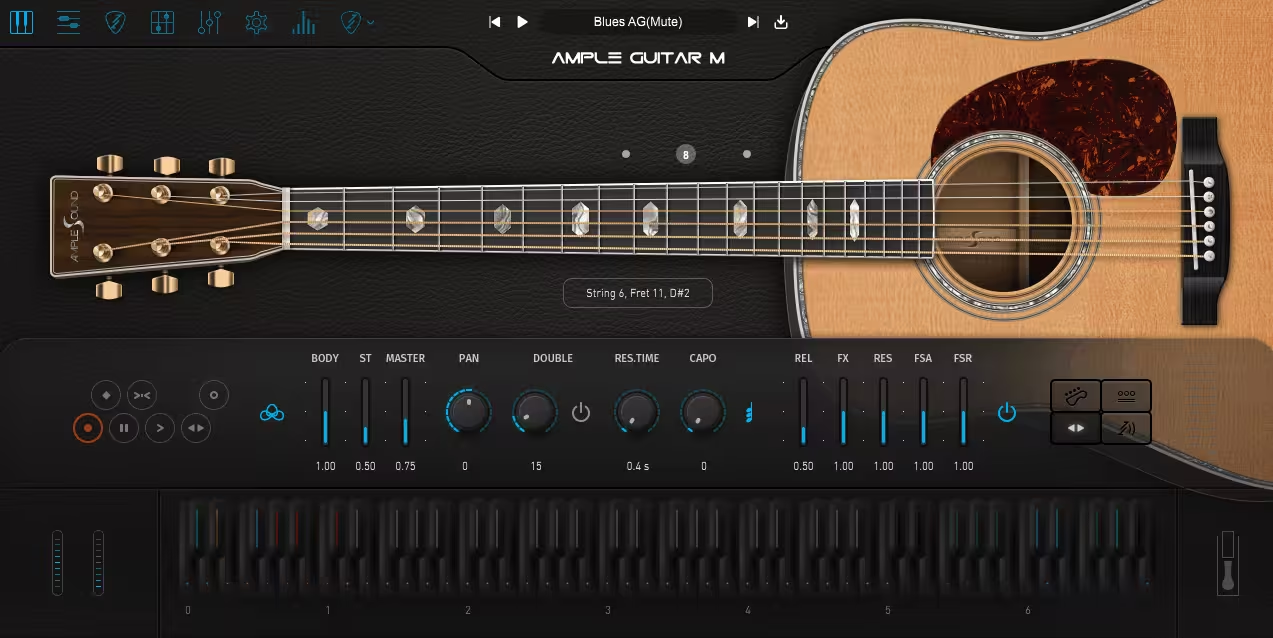
You need a good acoustic guitar for country, and this one delivers. Ample Sound’s Guitar M is modeled on a Martin D-41 dreadnought, which is about as country as an acoustic guitar gets.
The Martin dreadnought sound has been on more country records than I could possibly list, and the sampling here captures that specific boomy, warm, projecting tone that makes the D-41 a studio staple.
The library goes deep on articulations and playing techniques, which matters because country acoustic guitar isn’t just strumming chords. You need fingerpicking, flatpicking runs, muted percussive strums, and all the little details that separate a real guitar part from a keyboard triggered approximation.
- Martin Tone
The sampling captures the specific tonal character of a Martin D-41 dreadnought, with the boomy low end, warm midrange, and clear high end projection that this guitar is known for.
The Martin sound sits in a country mix the way nothing else does, providing the foundational acoustic guitar tone that the genre expects. You load this up and it sounds like someone brought a nice Martin into the studio, which is exactly what you want for country production.
- Strummer Engine
A built in strumming engine generates realistic chord strumming with proper string by string timing, velocity variation, and natural voicing.
The strummer handles everything from gentle fingerpicked arpeggios to driving flatpick rhythm with enough realism that the output doesn’t immediately sound programmed. For country rhythm guitar parts, the strummer gets you convincing results faster than programming each string hit individually.
- Picking Detail
The articulation set includes flatpicking, fingerpicking, hammer ons, pull offs, slides, muted strums, and palm mutes with multiple velocity layers. Country guitar uses all of these techniques regularly, and having them properly sampled means your guitar parts can include the specific playing details that make them sound authentic to the genre.
- Tab Player
An integrated tablature player imports guitar tab files and performs them with realistic articulations applied automatically. If you find a flatpicking lick written out in tab, you can import it and hear it performed by the virtual instrument with proper technique, which saves the tedious work of programming each note and articulation switch manually.
2. NI Abbey Road 60s Drummer
Country drums have a specific quality that modern, heavily processed drum libraries don’t capture. You need something that sounds like a real kit in a real room, played with sticks or brushes by a human being, not triggered from a sample pad.
NI’s Abbey Road 60s Drummer captures vintage drum kits recorded at Abbey Road Studios with the warm, slightly roomy, unmistakably analog character that country production loves.
The 60s era recording approach gives you drums that sit in a country mix naturally without needing extensive processing to remove the modern sheen that contemporary drum libraries carry.
- Vintage Kits
Multiple vintage drum kits from the 1960s are captured with the specific shell sizes, head types, and tuning that define the warm, round drum sound of that era.
The kits sound naturally warm and organic in ways that modern kits recorded in dead rooms don’t, which is the quality country production needs. You’re not fighting bright, clicky attack or processed low end. The drums just sound like drums in a nice room.
- Abbey Road Room
The Studio Two at Abbey Road provides an acoustic environment that flatters drums in exactly the way country benefits from. The room sound adds warmth, dimension, and a natural reverb character that makes the drums feel like they’re being played in front of you rather than triggered from a sample bank. The room is famous for a reason, and that character is baked into every hit.
- Mic Positions
Individual close, overhead, and room microphone channels give you control over how much room sound is present in your drum tone. For a tight, dry country sound you can push the close mics. For a looser, more vintage feel you can bring up the room. The mic flexibility means one library covers the range from modern Nashville tight to classic country open.
- Brush Kits
Brush kit variations capture the softer, more textural drum sound that country ballads and acoustic driven tracks need. Brushes are essential to country production, and having them properly sampled with the same vintage character and Abbey Road room sound as the stick kits keeps the sonic consistency across your entire drum palette.
- MIDI Grooves
Pre-performed MIDI patterns from session drummers provide authentic grooves and fills that carry the human timing and feel of real playing.
- Round Robins
Enough round robin variation prevents repeated hits from sounding mechanical, which matters in country where the drums often play steady patterns for extended sections. When your snare is hitting on 2 and 4 for sixty bars straight, hearing the same sample repeat is a dead giveaway, and the round robin depth here handles that convincingly.
3. NI Gentleman
Country piano has a warm, rich quality that concert grand libraries often miss because they’re voiced for classical or pop clarity. NI’s Gentleman captures an upright piano with the woody, intimate character that suits country, Americana, and singer songwriter contexts perfectly.
The upright piano sound just feels right for country in a way that a bright Steinway doesn’t. It’s the kind of piano you’d find in a honky tonk or a Nashville recording room.
- Upright Character
The upright piano tone carries warmth, woodiness, and a slight mechanical quality that makes it feel lived in rather than pristine. The upright sound is inherently more country than a grand piano because it lives in the same sonic territory as the instruments you hear on classic country records. The slight imperfections in the tone are features, not flaws, because they contribute to the down home aesthetic.
- Intimate Sound
The recording captures the close, personal quality of an upright piano being played in a room rather than a concert hall. The intimacy makes the piano sit naturally alongside acoustic guitars, fiddles, and vocals in a country arrangement without competing for space or sounding too polished for the context.
- Kontakt Platform
The library runs in Kontakt with NKS integration, fitting into existing production templates that use Kontakt as their primary sampler. The Kontakt platform means it loads alongside your other NI instruments in a unified workflow.
4. Ample Guitar TC
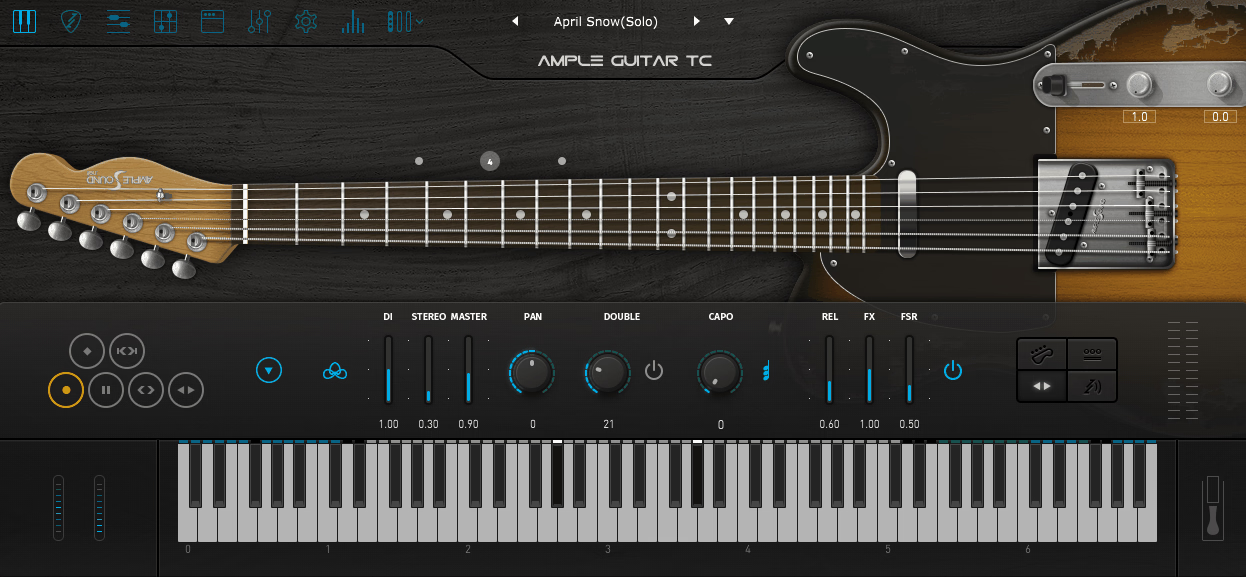
For the electric guitar side of country, you need something that sounds like a Telecaster, because the Tele is the country electric guitar. Ample Sound’s Guitar TC is modeled on a Fender Telecaster and captures the specific bright, twangy, cutting tone that defines country electric guitar from Buck Owens through Brad Paisley.
The Telecaster’s bridge pickup sound is country music in a nutshell, and this library nails that specific quality.
- Tele Twang
The sampling captures the specific bright, snappy, twangy tone of a Fender Telecaster that is synonymous with country music. The bridge pickup sound has that particular bite and clarity that cuts through a country mix without being harsh, sitting in the frequency range that Telecasters have occupied on country records for seventy years. You play a chicken picking lick through this and it sounds like a Telecaster, which is really all you need to know.
- Picking Techniques
The articulation set covers chicken picking, hybrid picking, bends, double stops, muted notes, and the specific country electric guitar techniques that define the genre. Country electric guitar isn’t just clean single notes. It’s a whole vocabulary of hybrid picked patterns, pedal steel bends, and percussive muted scratches that this library handles with proper sampling.
- Amp Integration
The library works with external amp simulation plugins to shape the final tone, letting you run the Telecaster through country appropriate amp models for a complete guitar chain. The clean, direct sampled tone provides a neutral starting point that responds well to amp modeling, which is how most producers shape their final electric guitar tone anyway.
- Expression Range
The velocity response covers the full dynamic range from barely touched ghost notes to hard, aggressive picking with natural tonal variation across the dynamics. Country electric guitar frequently moves between gentle, clean passages and harder, more aggressive sections within the same song, and the dynamic range here handles those transitions convincingly.
5. OTC Evolution Mandolin
A mandolin shows up in country, bluegrass, and Americana production constantly, and Evolution Mandolin captures the instrument with the articulation depth and performance scripting that OTS is known for. The bright, cutting, tremolo heavy sound of a well recorded mandolin adds a character that no other instrument provides.
If you write anything that leans bluegrass or Americana, you’ll reach for this more than you expect.
- Tremolo
The sampling captures mandolin tremolo with the sustained, shimmering quality that defines the instrument’s signature technique. Tremolo is to mandolin what strumming is to guitar, and having it properly sampled with the right attack, sustain, and decay behavior makes the difference between a mandolin that sounds real and one that sounds like a guitar pretending to be a mandolin.
- Chop Rhythm
The chop technique (short, percussive downstrokes that function as the mandolin’s rhythm role in bluegrass) is sampled as a specific articulation. Chop rhythm is essential to bluegrass and Americana production, and having it as a dedicated articulation means you don’t have to approximate it by shortening sustain samples, which never sounds quite right.
- Evolution Engine
The library runs on OTS’s Evolution engine with customizable articulation mapping, strumming patterns, and built in effects. The engine translates your MIDI input into realistic mandolin behavior, handling the instrument specific details that make the performance convincing.
6. Ample Slide Lapsteel
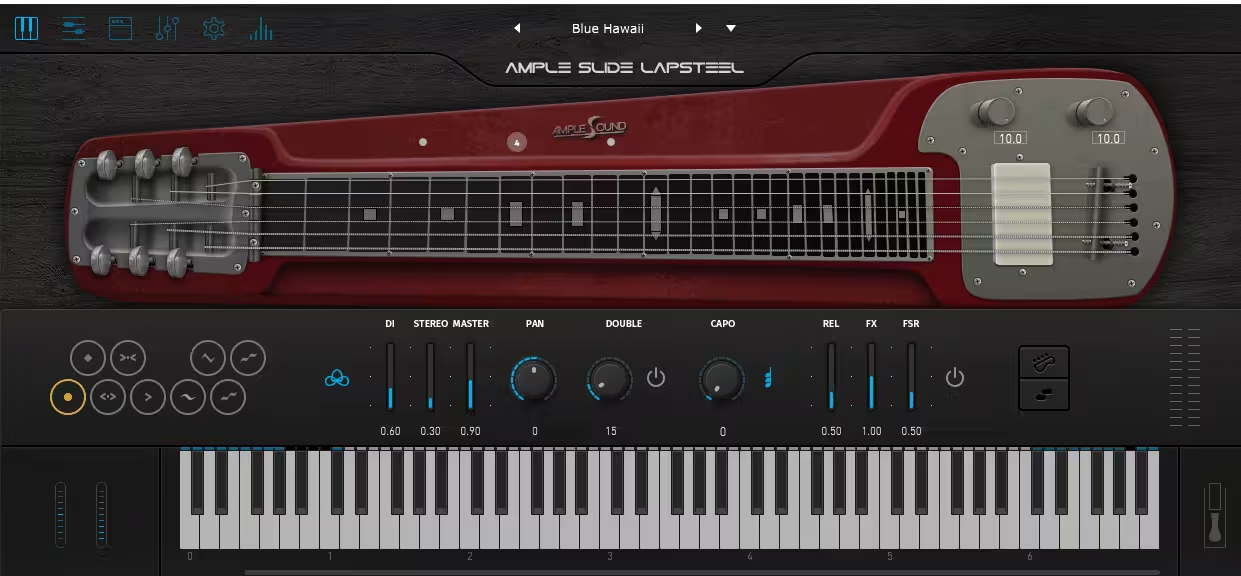
No country production toolkit is complete without a lap steel guitar, and this is where you’ll find it as a virtual instrument. Slide Lapsteel captures the crying, singing, sliding tone of a lap steel with the specific playing techniques that define the instrument’s role in country music.
The lap steel sound is one of the most emotionally powerful elements in country production. It’s the instrument that makes people cry at a country song, and having it in your virtual toolkit gives you access to that emotional weight.
- Slide Tone
The sampling captures the specific singing, sustaining tone of a lap steel guitar played with a slide bar, including the smooth pitch movement and sustained vibrato that define the instrument. The lap steel sound is fundamentally different from a regular guitar with a slide because the instrument’s open tuning, raised action, and bar technique produce a specific tonal character that can’t be faked by applying pitch bend to a standard guitar library.
- Pitch Movement
The slide articulations reproduce the smooth, continuous pitch movement between notes that is the lap steel’s defining characteristic. The pitch transitions aren’t stepped or jerky. They flow the way a real slide bar moves across the strings, which is what makes the instrument sound like it’s singing rather than playing individual notes.
- Pedal Emulation
Controls that affect pitch bending and string changes emulate some of the pedal steel guitar’s characteristic pitch effects. While this is a lap steel rather than a full pedal steel, the emulated pitch bending gives you access to some of the signature sounds that pedal steel produces, including the smooth chord changes and string bends that define Nashville country guitar.
- Vibrato Control
Adjustable vibrato through MIDI control lets you add the expressive wobble that lap steel players use to add emotion to sustained notes. The vibrato is controllable in depth and speed, letting you match the intensity to the emotional content of the passage. Gentle vibrato for ballads, wider vibrato for more intense moments.
- Expression Mapping
The MIDI expression mapping responds to modulation wheel and aftertouch for real time control over dynamics and tonal character. The expression control lets you shape the emotional arc of lap steel lines in performance, adding swells and dynamic variation that make the part feel played rather than triggered.
7. IK Multimedia The Resonator
For the specific sound of a resonator guitar (the kind you see in blues, country blues, and roots music), this instrument from IK Multimedia captures the metallic, projecting, distinctively American tone that resonator guitars produce. The Resonator requires SampleTank to run, which is worth noting upfront.
The resonator guitar sound adds a rootsy, authentic character that standard acoustic guitar libraries don’t provide, and it’s an essential color for productions that lean toward traditional country, delta blues, or Americana.
- Resonator Tone
The sampling captures the specific metallic, projecting quality of a resonator guitar that comes from the metal cone inside the body amplifying the string vibration. The tone is brighter, louder, and more nasal than a wooden acoustic guitar, with a sustain character and harmonic content that’s instantly recognizable. The resonator sound carries a rootsy, American authenticity that standard acoustic guitars simply don’t have.
- Slide Capability
Slide playing articulations capture the technique that’s most commonly associated with resonator guitars, where a bottleneck or metal slide produces the singing, sustained pitch movement that defines delta blues and country blues guitar. The slide sampling includes the specific string noise and attack character that accompanies real slide playing on a resonator.
- Acoustic Character
The recording preserves the natural acoustic behavior of the resonator guitar including the body resonance, overtone structure, and the specific way the metal cone colors the sound differently from a wooden soundboard. The acoustic character is what separates a convincing resonator sample from a processed acoustic guitar patch with some EQ applied.
8. NI Stradivari Violin
Fiddle is country music. You can argue about everything else, but a well played fiddle melody over a country track is one of the genre’s most defining sounds. NI’s Stradivari Violin captures a Stradivarius violin with enough articulation depth and expression for solo fiddle parts that carry a country arrangement.
The distinction between classical violin and country fiddle is mostly in the playing style rather than the instrument, so a high quality violin library with good legato and expression control handles both contexts.
- Legato Quality
The recorded legato transitions capture the smooth, connected bow movement between notes that makes solo violin melodies sound like continuous singing phrases rather than a sequence of separate notes. For country fiddle, legato quality determines whether your melody sounds like a real fiddler or a MIDI mockup, because fiddle playing is inherently lyrical and connected. The legato handles both slow, expressive intervals and faster passages with agile transitions.
- Dynamic Expression
The velocity and modulation response covers the full dynamic range from delicate, breathy pianissimo through assertive, driving fortissimo with natural tonal variation. Country fiddle moves between gentle, emotional passages and more energetic, rhythmically driven sections frequently, and the dynamic range here supports those transitions without sounding like two different instruments at the extremes.
- Solo Detail
The sampling is deep enough for exposed solo passages where the violin is the featured voice without other instruments masking imperfections. Country fiddle is often front and center in an arrangement, playing the melody while everything else supports it, which means the sampling quality needs to hold up under that scrutiny. The Stradivari recordings handle solo exposure convincingly.
- Vibrato Control
Adjustable vibrato through MIDI control lets you add the specific amount of pitch wobble that fits the emotional context. Country fiddle vibrato is typically warmer and wider than classical violin vibrato, and having continuous control over the depth and speed means you can match the vibrato character to the style rather than being stuck with whatever the library’s default behavior produces.
9. Ample Ethno Banjo
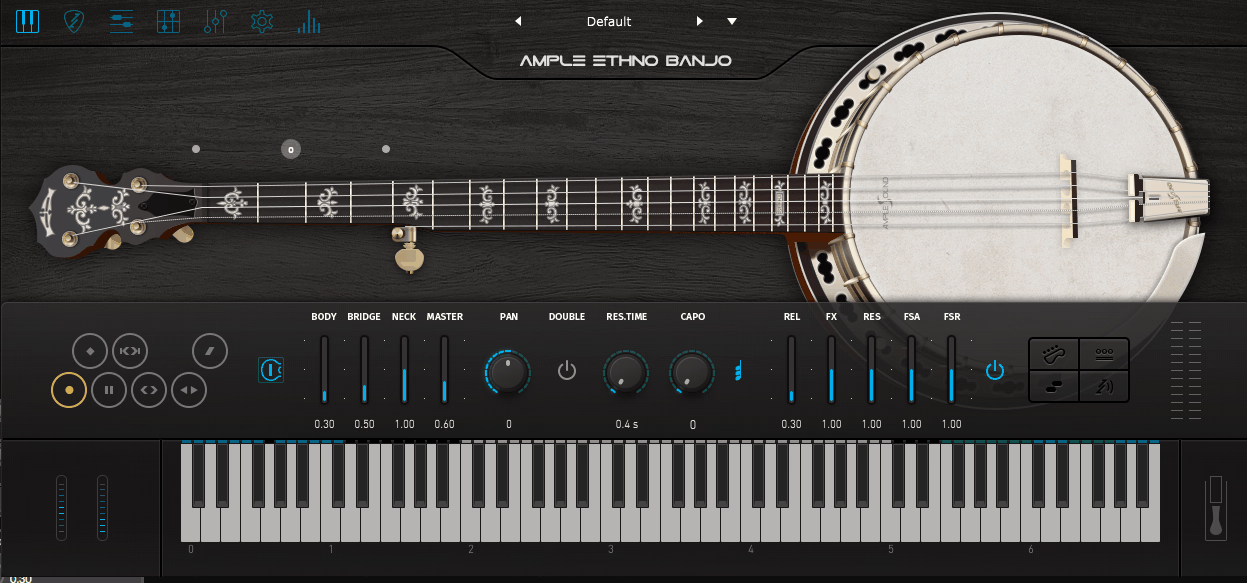
The banjo is one of those instruments that immediately says “country” or “bluegrass” the moment you hear it, and Ample Sound’s Ethno Banjo captures the bright, percussive, distinctively American tone of the instrument with the articulation depth that serious bluegrass and country production demands.
If your production needs that front porch, down home quality that only a banjo provides, this is your virtual instrument for the job.
- Banjo Tone
The sampling captures the bright, punchy, percussive tone of a banjo with the specific ring, sustain behavior, and overtone character that the instrument produces. The banjo sound is unlike any other stringed instrument because the drum head resonator and short scale length produce a tone that’s simultaneously bright, rounded, and percussive. The sampling preserves these specific tonal qualities rather than presenting a generic plucked string sound.
- Roll Patterns
Banjo roll patterns (the rapid picking patterns that define bluegrass banjo playing) are captured as specific articulations and performance features. Rolls like Scruggs style three finger picking are essential to bluegrass, and having them properly represented in the library means you can produce authentic bluegrass banjo parts without trying to program rapid picking patterns note by note.
- Picking Articulations
The articulation set covers fingerpicking, flatpicking, harmonics, slides, hammer ons, and pull offs with the specific attack and release character that banjo strings produce. Banjo articulations sound different from guitar articulations because the instrument responds differently to each technique, and the library captures these instrument specific behaviors rather than adapting generic picking samples.
- Drone Strings
The sampling includes the open drone strings that are a defining feature of five string banjo, where the short fifth string rings sympathetically alongside the melody strings. The drone is what gives bluegrass banjo its characteristic sustained overtone quality, and having it properly represented adds authenticity that banjo libraries lacking drone string sampling can’t provide.
- Tab Player
An integrated tablature player imports banjo tab files and performs them with automatically applied articulations and finger positioning. Banjo music is commonly written in tablature, and the tab player makes it practical to work with existing banjo parts by importing them directly.
10. Arturia B-3 V

The Hammond B-3 organ shows up in country more than people realize, from gospel influenced country to southern rock to the subtle organ pad that sits behind many Nashville recordings adding warmth without drawing attention to itself. B-3 V organ models the Hammond B-3 with the specific tonewheel, drawbar, and Leslie speaker behavior that defines the instrument.
The B-3 sound in country production is typically more restrained than in rock or gospel, sitting as a supporting texture rather than a featured solo instrument, but that supporting role is surprisingly common across the genre.
- Tonewheel Modeling
The physically modeled tonewheel engine reproduces the specific harmonic character that the Hammond B-3’s mechanical tone generation produces. The tonewheel sound has a warmth and harmonic richness that digital organ simulations don’t capture, because the real instrument generates sound through spinning metal wheels rather than electronic oscillators. The modeling captures the subtle imperfections and key click behavior that give the B-3 its character.
- Drawbar Control
Nine drawbar sliders give you the same harmonic mixing capability as the real instrument, letting you build organ tones from individual harmonics the way a B-3 player would. For country production, you typically want a warm, not too bright tone with emphasis on the lower drawbars, and the full drawbar control lets you voice the organ exactly for its supporting role without overpowering the guitars and vocals.
- Leslie Simulation
A modeled Leslie rotary speaker adds the characteristic swirling, doppler effect that defines how the B-3 sounds in most recording contexts. The Leslie simulation includes slow and fast rotor speeds with the transition behavior between them, which is one of the most recognizable and emotionally effective sounds in popular music. For country, a gentle slow Leslie adds warmth and subtle movement.
- Percussion
The percussion feature adds a brief harmonic attack to each note that the real B-3 produces, giving the organ a more defined, percussive onset. The percussion is what separates a B-3 from a generic organ sound, adding a snap to the beginning of notes that helps the organ articulate in a mix alongside guitars and drums. The second and third harmonic percussion options give you tonal variation in the attack character.
11. Ample Bass Upright
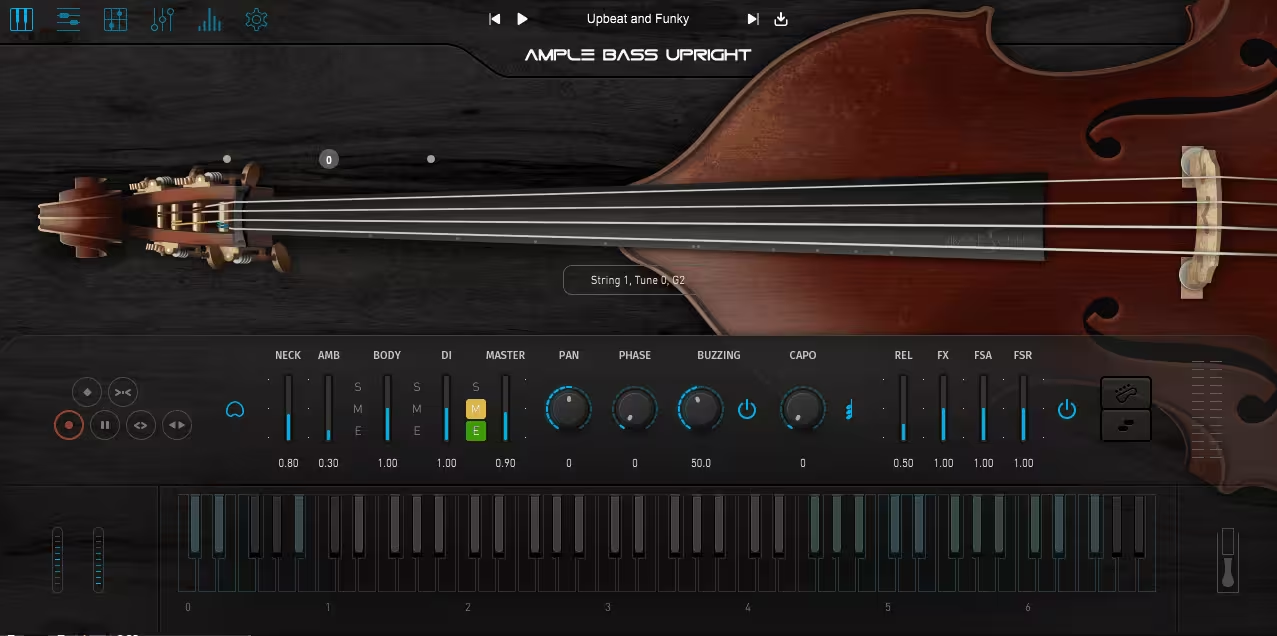
Country music with an acoustic upright bass carries a specific energy that electric bass doesn’t provide. The thumpy, woody, percussive quality of a plucked upright defines the rhythm section sound of classic country, rockabilly, and Americana. Ample Sound Bass Upright captures that sound with enough articulation depth and legato quality for both foundational bass lines and more melodic walking parts.
For traditional country and Americana production, the upright bass is the authentic choice that electric bass can’t fully replace.
- Woody Thump
The sampling captures the percussive, woody quality of a plucked upright bass that defines the low end of classic country. The upright bass sound is fundamentally different from electric bass, with more body resonance, more finger noise, and a rounder, less defined attack that sits in a country mix differently. The thump and decay behavior are what make the upright bass feel right for traditional country.
- Legato Slides
Recorded slide transitions capture the smooth connections between notes that upright bassists use constantly in country and bluegrass playing. The slides sound like a finger moving along a thick string rather than a pitch bend applied to a static sample, which is the kind of detail that separates convincing virtual bass from obviously programmed bass.
- Dynamic Range
The velocity response covers everything from barely touched ghost notes to hard, aggressive plucks with natural tonal variation. Country upright bass moves between gentle support and driving, percussive rhythmic playing depending on the song’s energy, and the dynamic range here handles both ends convincingly.
12. NI Session Guitarist Acoustic Sunburst Deluxe

For a different acoustic guitar option from the Ample Guitar M, this NI library takes a pattern based approach where you trigger pre-performed acoustic guitar strumming, picking, and fingerpicking patterns rather than playing individual notes. Acoustic Sunburst Deluxe provides performed guitar accompaniment that responds to your chord input.
The pattern approach trades individual note control for speed and realism, giving you convincing acoustic guitar parts faster than any note by note method.
- Performed Patterns
The library contains hundreds of pre-performed acoustic guitar patterns recorded by a professional guitarist, capturing the timing, dynamics, and technique of real acoustic playing. The patterns cover strumming, fingerpicking, hybrid picking, and percussive techniques in styles that range from gentle ballad accompaniment to driving uptempo rhythm. Because the patterns are performed rather than programmed, they carry the natural feel that makes the guitar sound human.
- Chord Following
The patterns respond to your chord input in real time, adapting the pre-performed phrases to whatever harmonic content you provide. You play chords and the engine transposes and revoices the patterns to match, which means you get the realism of a performed guitar with the flexibility to change chords freely. The voicing adapts to each chord musically rather than just transposing the same voicing up and down.
- Style Variety
Genre specific patterns cover a broad range of acoustic guitar styles that overlap with country production needs, from gentle fingerpicking through driving flatpick rhythm. The style variety means you can find appropriate patterns for different sections of a country song without loading a different instrument for each section.
- Kontakt Player
The library runs in the free Kontakt Player without requiring the full Kontakt purchase, making it accessible regardless of whether you own NI’s full sampler. The Kontakt Player compatibility also provides NKS integration for NI hardware.
13. u-he Diva
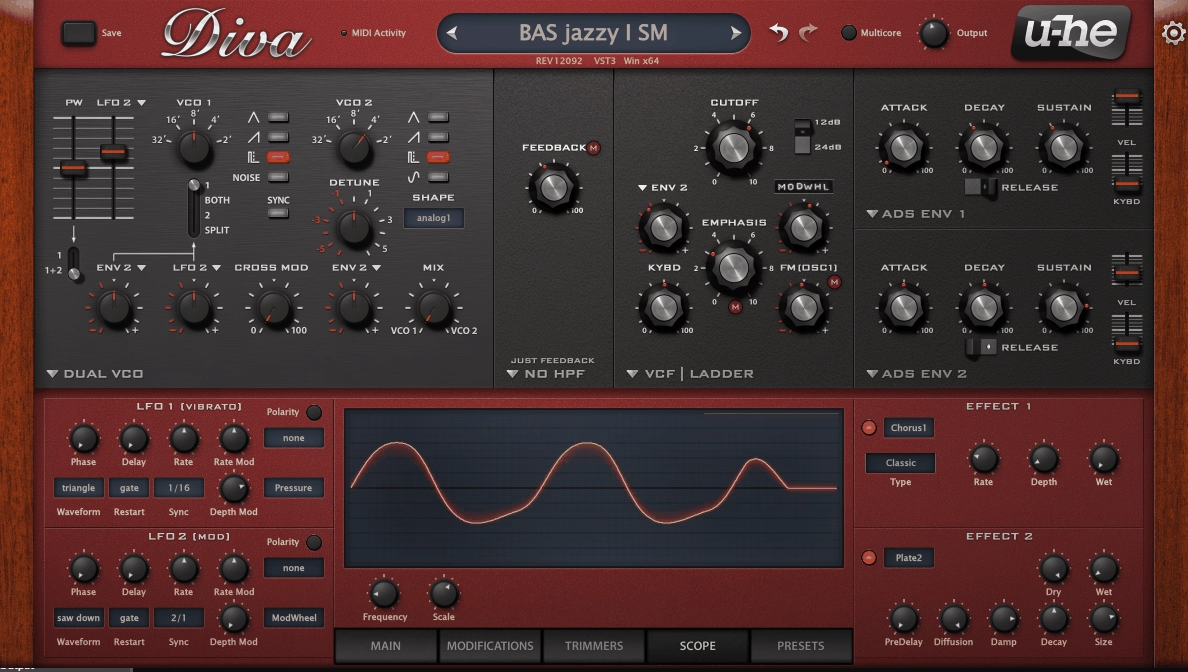
This might seem like an odd choice for a country list, but hear me out. u-he Diva is a virtual analog synthesizer that models classic hardware at the component level, and its warm, organic analog tone fills a specific role in modern country production that you might not expect. Nashville productions increasingly use subtle synth pads and textural elements alongside traditional instruments, and Diva’s analog warmth sits in a country mix without sounding obviously synthetic.
The warm pads and subtle textures that Diva produces blend with acoustic instruments more naturally than most digital synths because the analog modeling introduces the harmonic richness and imperfections that acoustic instruments carry. For modern country, country pop, and Nashville crossover production, a touch of warm analog synth underneath the guitars adds depth that listeners feel without consciously hearing.
- Analog Warmth
The component level analog modeling produces a warmth and harmonic richness that blends with acoustic instruments more naturally than clean digital synths. The analog character means you can add a subtle synth pad underneath guitars and fiddle without it sounding like you dropped an electronic element into an acoustic arrangement. The imperfections in the modeled circuitry are what make the blend work, because they’re similar in character to the imperfections in real acoustic instruments.
- Classic Hardware
The synth models hardware from Roland, Moog, Korg, and Oberheim with a modular architecture that lets you combine oscillators from one classic with filters from another. The hardware variety gives you access to different flavors of analog warmth depending on which classic synth character suits the specific production. A Juno style pad feels different from a Moog style pad, and having both options available from one plugin means you can match the synth character to the song.
- Pad Quality
The sustained pad sounds that Diva produces are where the country application lives. The pads carry movement, warmth, and harmonic depth that make them useful as textural elements in country arrangements. They fill the space between instruments without demanding attention, which is exactly the role a synth plays in country production when it’s used well.
- Preset Library
Over 1200 presets covering a wide range of analog synth sounds give you starting points that you can shape for your production. The presets include warm, musical pad sounds that require minimal tweaking to serve as subtle textural elements in a country arrangement. The quality and variety of the presets mean you’ll find useful sounds quickly without needing to program patches from scratch.
- CPU Note
I should mention that Diva is CPU heavy because of the deep analog modeling. You probably won’t run eight instances in a single project without your computer complaining. But for the one or two instances you’d use in a country production for subtle pad work, the CPU impact is manageable, and the sound quality justifies the processing cost.

Hello, I’m Viliam, I started this audio plugin focused blog to keep you updated on the latest trends, news and everything plugin related. I’ll put the most emphasis on the topics covering best VST, AU and AAX plugins. If you find some great plugin suggestions for us to include on our site, feel free to let me know, so I can take a look!