
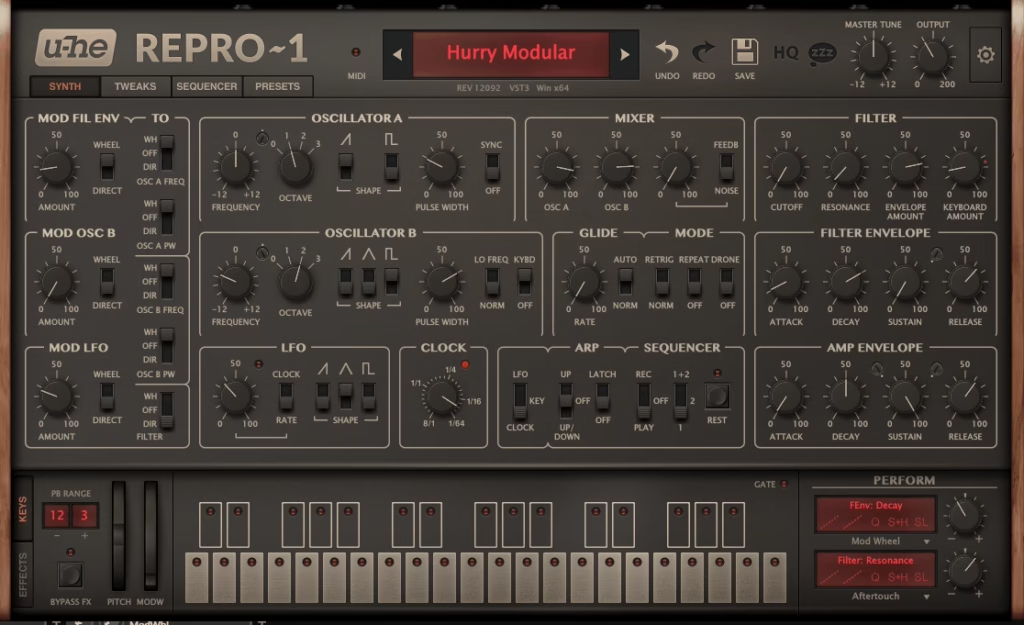
The Moog sound is probably the most recognizable synthesizer character in existence. That thick, warm low end, the creamy filter sweep, the way the oscillators interact when you push them into each other: these qualities have defined the Moog identity since Bob Moog built the first commercial synthesizers in the 1960s.
The 24 dB/octave ladder filter is the specific technical element that most people are referring to when they talk about “the Moog sound,” and recreating its behavior accurately in software has been the goal of dozens of plugin developers over the past two decades.
The good news for producers today is that software Moog emulations have reached a point where you can get convincingly Moog flavored sounds without investing in hardware that ranges from expensive (the current Moog lineup) to prohibitively expensive (vintage units on the used market).
Some of these plugins model specific Moog instruments at the circuit level. Others capture the general Moog character and extend it with features the original hardware never had. Both approaches produce useful results depending on what you need.
I’ve selected ten plugins that represent the best ways to get the Moog sound in your DAW, from official Moog software to third party emulations that approach the Moog character from different angles. Several are affordable enough that building a complete collection of Moog style synths won’t break your budget.
From the Pluginerds Store
Before you move on: we also sell studio gear directly at Pluginerds Shop. If you'd rather buy from a site that spends its time reviewing this exact category than roll the dice on an unfamiliar marketplace listing, it's worth a look.
Visit Pluginerds Shop1. Softube Model 72 Synthesizer System (Moog Inspired Modular)
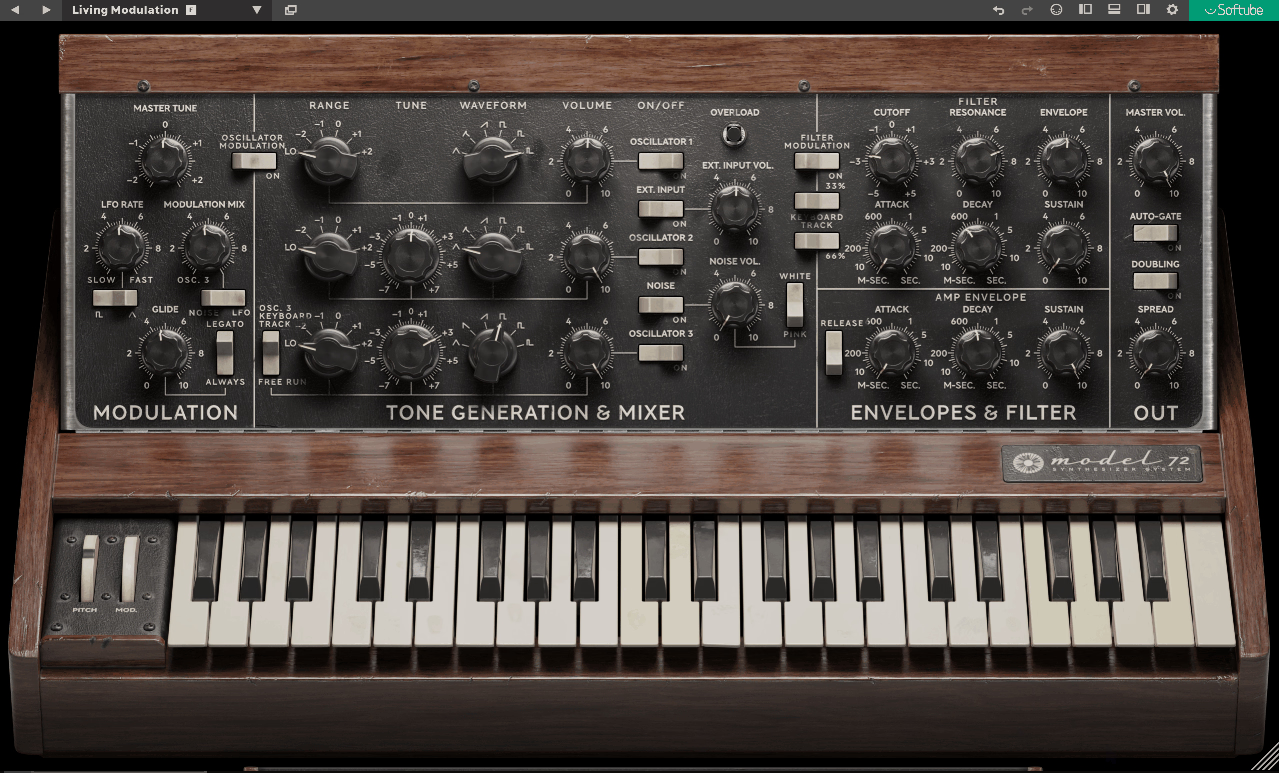
Rather than recreating a single specific Moog instrument, the Softube Model 72 draws inspiration from the Minimoog Model D architecture and expands it into a semi modular system with routing flexibility the original never offered.
The thick oscillators, the warm ladder filter, and the rich overdrive all carry the Moog DNA, but the patch point system lets you reconfigure the signal flow into configurations that a stock Minimoog physically can’t achieve.
What makes the Model 72 stand out in a crowded Minimoog emulation field is that it gives you the sound of a Moog with the flexibility of a modular without requiring you to learn a full modular environment. You get the immediacy of a fixed architecture synth with the option to reroute things when you want to explore.
The Softube modeling of the ladder filter is particularly well done, capturing the way resonance interacts with the signal level and the specific self oscillation behavior that defines the Moog filter’s musical quality.
- Ladder Filter
The 24 dB/octave ladder filter model captures the warm, resonant Moog character, including how the filter pulls the signal level down as resonance increases and the specific way self oscillation behaves at extreme resonance settings. This volume drop at high resonance is a defining Moog trait that many emulations miss.
- Patch Points
Virtual patch cables let you reconfigure the signal flow beyond the default Minimoog architecture. You can create oscillator FM, filter FM, and feedback routings that produce sounds the standard Minimoog topology can’t generate, expanding the sonic range while maintaining the core Moog character.
- Overdrive Circuit
A modeled overdrive section reproduces the specific saturation behavior of overdriving a Moog signal path, where the harmonic distortion adds weight and aggression that ranges from subtle warmth at low settings to full, screaming distortion when pushed hard.
- Voice Modes
Selectable mono, poly, and unison operation expands the Minimoog style engine into polyphonic territory. The unison mode stacks voices for massive, detuned bass and lead sounds that carry the thick Moog quality with even more weight than a single voice provides.
Available from Softube in VST, VST3, AU, and AAX formats.
Get the Free Plugin Starter Kit
The genuinely useful free DAWs and plugins worth installing. No filler. Straight to your inbox.
2. UAD Moog Minimoog
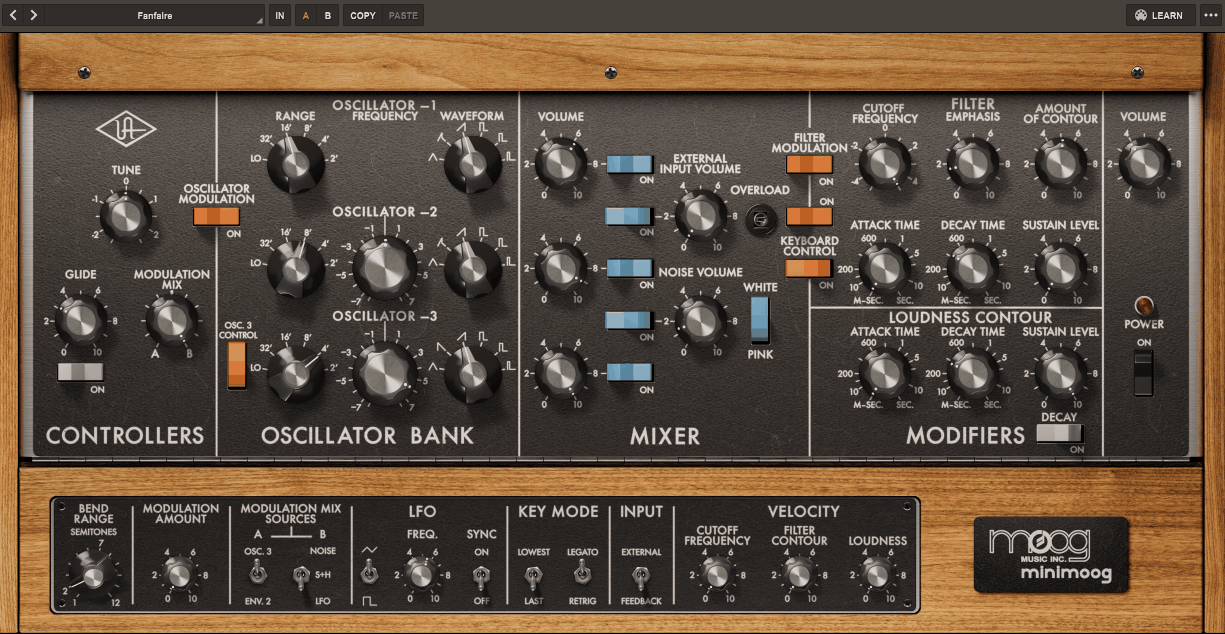
There’s something to be said for going straight to the source, and the Moog Minimoog plugin is the official software version of the most famous synthesizer ever made. Developed by Moog Music themselves, it provides a Model D emulation built with access to the original schematics, component specifications, and engineering knowledge that no third party developer has.
Having compared the Moog Minimoog plugin against several alternatives, I can say the filter behavior feels notably close to recordings of real hardware. The way the resonance sings at higher settings, the bass response when the filter is wide open, and the interaction between the oscillators when you enable oscillator 3 as a modulation source all feel right. The plugin stays true to the monophonic, three oscillator architecture of the original without adding polyphony or other modern extensions, which is either a limitation or a strength depending on whether you want the authentic Minimoog experience or a more flexible modern tool.
- Circuit Modeling
Moog’s own engineers modeled the complete Minimoog Model D signal path from their original documentation, capturing the specific transistor ladder filter, the oscillator waveform shapes, and the contour generator behavior that defines the Model D’s response. The accuracy benefits from the manufacturer’s direct access to engineering resources that third parties must reverse engineer.
- Oscillator Interaction
The three oscillator architecture with the ability to use oscillator 3 as a modulation source for the other oscillators and the filter reproduces the specific modulation routing that produces the Minimoog’s signature percussive, metallic, and pitch swept effects. The audio rate modulation behavior is modeled with the phase relationships and nonlinearities of the original circuit.
- Filter Emphasis
The modeled Moog ladder filter with its emphasis (resonance) control captures the specific way the Minimoog’s filter interacts with the audio signal, including the bass content reduction at high resonance and the smooth, musical quality of the self oscillation. This filter behavior is the core of the Moog sound and is modeled here by the company that designed the original circuit.
- Contour Generators
The two contour generators (ADS for filter, ADSR for amplifier) reproduce the specific curve shapes and timing behavior of the original Minimoog’s envelopes, which respond differently from generic ADSR envelopes and contribute to the snappy, responsive playing feel that Minimoog players value.
- Glide Circuit
The portamento (glide) circuit is modeled with the specific slew rate behavior of the original, producing the smooth pitch transitions between notes that are a signature element of Minimoog bass and lead playing. The glide time and legato triggering behavior match the original hardware.
- Mixer Overdrive
The oscillator mixer section overdrives when you push the levels, producing the warm, fat distortion that Minimoog players exploit by cranking all three oscillators to full volume. This mixer overdrive is a significant part of the Minimoog’s signature thickness and is accurately reproduced.
Available from Moog Music in VST, VST3, AU, and AAX formats.
3. u-he Repro (Prophet-5 / Moog Hybrid)
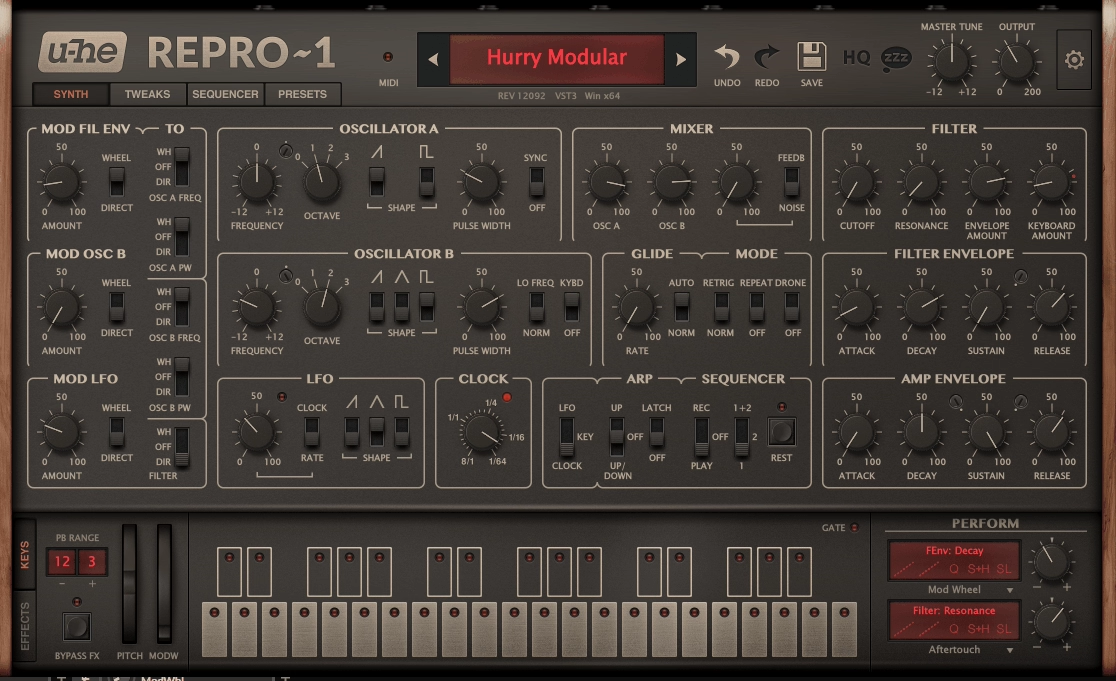
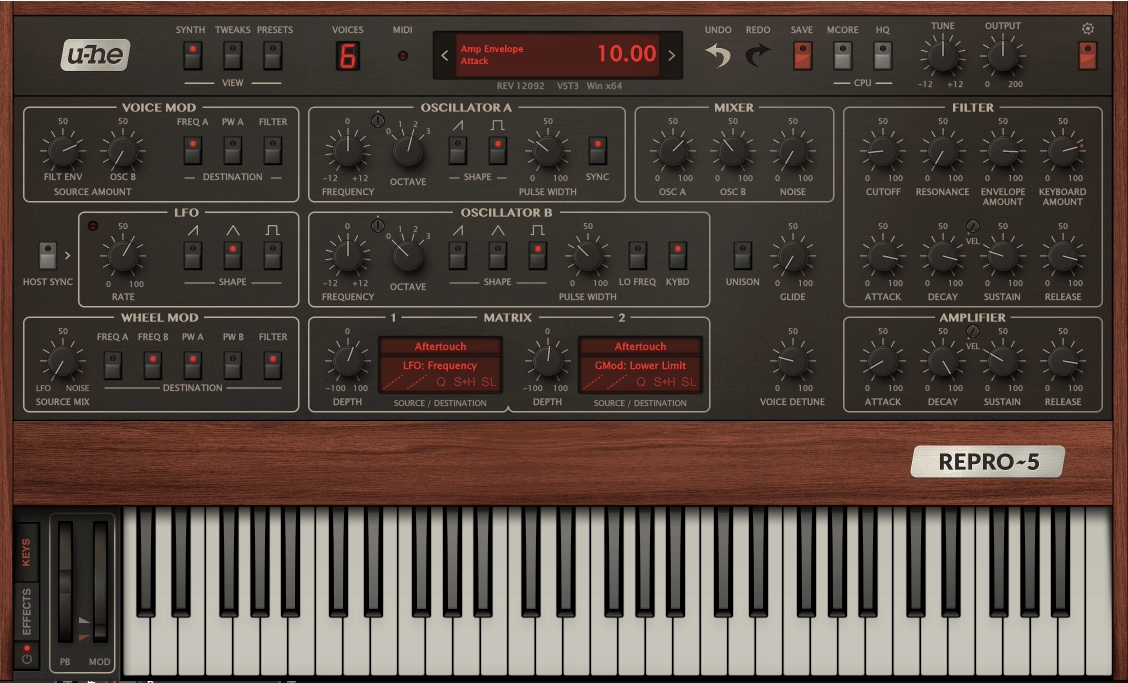
Including u-he Repro on a Moog list requires some explanation. Repro is actually two plugins in one: Repro-1 models the Sequential Pro-One (which uses a Curtis CEM filter), and Repro-5 models the Prophet-5 (available with both SSM and CEM filters). Neither is a direct Moog emulation. However, Repro’s approach to analog modeling and the way its filter options interact with the oscillators produces sounds that overlap significantly with Moog territory, particularly when using certain filter configurations.
The reason I include Repro here is practical: if you own Repro, you already have access to sounds that land in the thick, warm, analog space that people associate with Moog. The u-he modeling engine, with its component level accuracy and oscillator drift, produces an analog feel that competes with dedicated Moog emulations on pure sound quality. For producers who want a Swiss army knife of vintage analog synthesis that covers Moog adjacent territory alongside Sequential specific sounds, Repro provides outstanding value.
- Component Modeling
u-he’s modeling goes to the component level, capturing individual transistor, capacitor, and resistor behavior rather than using generic DSP approximations. The depth of the modeling produces analog character that sounds convincingly organic, with the instabilities and nonlinearities that real analog circuits exhibit.
- Oscillator Drift
The oscillators feature continuously variable drift that ranges from perfectly stable digital behavior to the kind of pitch wandering that vintage analog synths exhibit after warming up. The drift adds the organic movement that distinguishes real analog instruments from their digital emulations.
- Filter Character
Multiple filter circuit models offer different tonal characters, some of which produce results that sit in Moog adjacent sonic territory with warm bass response and musical resonance behavior. The filter modeling is where Repro earns its reputation for exceptional analog authenticity.
Available from u-he in VST, VST3, AU, AAX, and CLAP formats.
4. Cherry Audio Miniverse (Minimoog Emulation)
Cherry Audio has built a strong reputation for producing affordable, convincing vintage synth emulations, and Miniverse is their take on the Minimoog Model D.
Modeled after a specific vintage Minimoog unit, Miniverse captures the three oscillator architecture, ladder filter, and contour generators of the original while adding modern conveniences like polyphony, effects, and expanded modulation that the original hardware didn’t offer.
At a price point significantly below both the official Moog plugin and u-he Repro, Miniverse makes the Minimoog sound accessible to producers on tighter budgets. I’ve found the filter to be convincingly Moog flavored, with the characteristic warmth, bass weight, and musical resonance that defines the Moog ladder filter sound.
The addition of up to 16 voice polyphony transforms the monophonic Minimoog architecture into a polysynth capable of chords and pads, which dramatically expands the range of sounds you can produce while maintaining the core Moog character.
- Ladder Filter
Cherry Audio’s Moog ladder filter model captures the warmth, resonance behavior, and self oscillation characteristics of the original circuit. The filter’s response to the contour generators and the way it interacts with the oscillator levels produces the recognizable Moog filter sweep that is central to the instrument’s identity.
- Polyphonic Mode
Up to 16 voice polyphony with detunable unison (up to 48 oscillators per note in unison mode) extends the monophonic Minimoog architecture into territory the hardware can’t reach. Playing Moog flavored chords and pads is only possible with the polyphonic extension, and the thick, warm unison stacks are particularly impressive.
- Drift Parameter
A continuously variable Drift control adjusts tuning accuracy from perfectly stable to authentically loose, mimicking the calibration drift of real vintage hardware. The Drift parameter adds organic movement without requiring you to accept fixed amounts of instability.
- Modern Button
A Modern mode enhances the bass response and high frequency sparkle beyond what the original hardware produces, effectively giving you the option to use the classic Minimoog voicing or an updated version with extended frequency range and presence. This is useful when the classic tone needs a bit more contemporary polish.
Available from Cherry Audio in VST, VST3, AU, AAX, and standalone formats.
5. Arturia Modular V (Moog Modular System)

Before the Minimoog existed, Moog’s original instruments were large format modular synthesizers that required patch cables to connect oscillators, filters, envelopes, and amplifiers.
Arturia Modular V emulates this original Moog modular concept, providing a virtual version of a Moog System 55 style modular synthesizer with a library of modules that you patch together to build custom signal paths.
The Modular V is fundamentally different from the other plugins on this list because there’s no fixed architecture. You start with an empty rack and build your signal path from scratch by connecting modules with virtual patch cables.
This means you can create configurations that the Minimoog’s fixed routing doesn’t allow, including complex modulation paths, multiple filter configurations, and signal routing that only a full modular system provides.
The tradeoff is that you need to understand modular synthesis concepts to use it effectively, which makes it less immediately accessible than a fixed architecture plugin.
- Modular Patching
A virtual patch cable system connects oscillators, filters, envelopes, VCAs, and utility modules in any configuration you choose. The freedom to create custom signal paths means you can build instrument architectures that don’t exist in any fixed synth, from simple mono leads to complex, evolving textures with feedback and cross modulation.
- Moog Modules
The module library includes Moog style oscillators, ladder filters, contour generators, and amplifiers that carry the Moog sonic character. The individual modules sound like Moog components, so whatever architecture you build maintains the core warmth and weight of the Moog sound.
- System Flexibility
You can build everything from a simple three oscillator Minimoog recreation to a complex multi voice modular patch with parallel filter paths, audio rate modulation, and extensive CV routing. The flexibility is limited only by your understanding of modular synthesis and the available module count.
Available from Arturia in VST, VST3, AU, AAX, and standalone formats.
6. u-he Diva (Multi Vintage Analog)
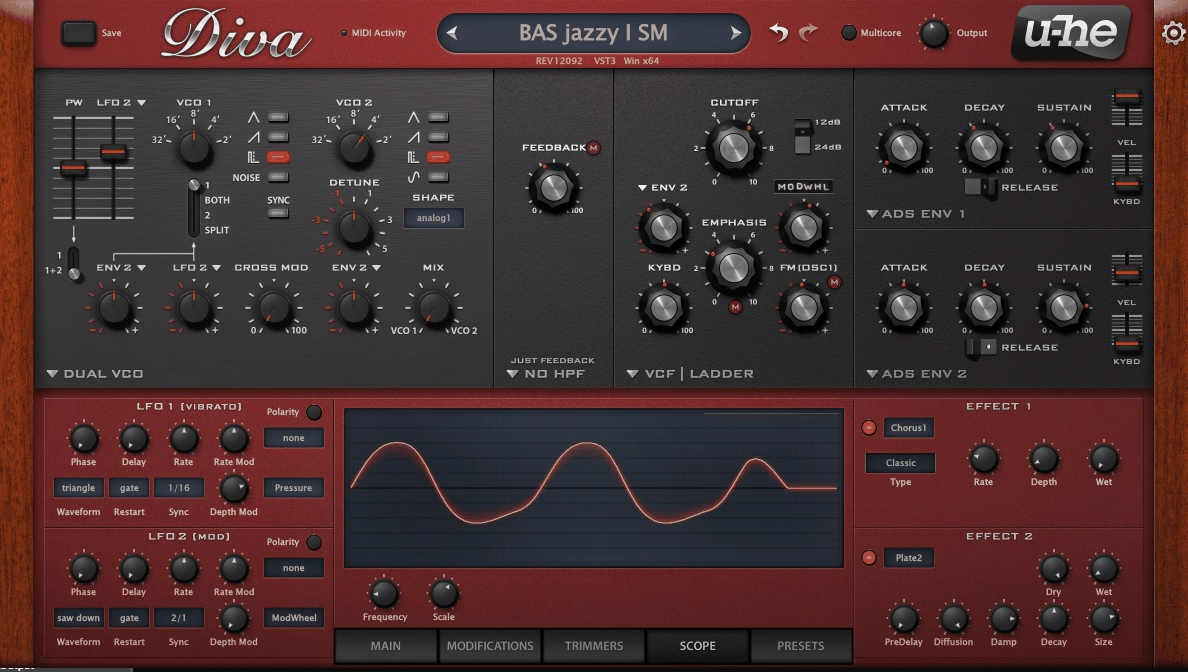
u-he Diva isn’t a Moog emulation specifically, but it deserves a place here because its modular approach to vintage analog modeling lets you build synth architectures that include Moog style components alongside elements from other vintage brands.
The plugin provides selectable oscillator, filter, and envelope modules inspired by different classic hardware, and mixing a Moog style filter with oscillators from another era creates hybrid instruments that don’t exist in hardware.
For producers who want the Moog filter character without being locked into a complete Minimoog recreation, Diva provides that flexibility. You can pair the Moog ladder filter module with whatever oscillator and envelope combination serves your patch best.
The downside is that Diva is famously CPU intensive due to the depth of its analog modeling, which uses zero delay feedback filters that are computationally expensive. On modern hardware, this is less of an issue than it used to be, but it’s worth mentioning if you plan to run multiple instances.
- Moog Filter Module
Diva includes a ladder filter module modeled after the Moog circuit, with the characteristic warmth, resonance behavior, and bass response that defines the Moog filter sound. You can use this filter in combination with oscillators and envelopes from other vintage synth designs, creating hybrid instruments.
- Mix and Match
The modular architecture lets you combine oscillator, filter, and envelope modules from different vintage synth families in any configuration. Pairing a Moog filter with Roland style oscillators or Sequential style envelopes creates sounds that no single hardware instrument can produce.
- Zero Delay Feedback
The filter modeling uses zero delay feedback (ZDF) processing, which is the most accurate method for modeling analog filter behavior in software. The ZDF approach captures the nonlinear interaction between the filter’s input and output that defines how the resonance responds to different signals.
- Oscillator Drift
Adjustable analog drift adds the pitch instability and tuning variation of real vintage hardware. At lower settings, the drift adds subtle organic movement. At higher settings, the oscillators wander noticeably, capturing the character of an instrument that hasn’t been calibrated recently.
- Voice Stacking
Unison and polyphonic modes with adjustable voicing let you stack the Moog style filter across multiple voices for massive chords and pads. The voice stacking with Diva’s analog modeling produces thick, complex textures that maintain the warmth of the individual Moog filter module.
Available from u-he in VST, VST3, AU, AAX, and CLAP formats.
7. AIR Music Technology Mini D (Minimoog Style)
On the more affordable end of the Moog emulation spectrum, AIR Music Technology Mini D provides a Minimoog inspired synthesizer at a budget friendly price.
The plugin captures the general character of the Minimoog’s three oscillator subtractive architecture with a ladder filter and delivers sounds that sit in recognizable Moog territory without the complexity or CPU demands of more detailed modeling engines.
I want to set realistic expectations with Mini D: this is a budget Minimoog emulation, and it doesn’t match the modeling depth of the official Moog plugin, u-he Diva, or even Cherry Audio Miniverse.
What it provides is a functional, usable Moog style synth at a price that makes it accessible to beginners and producers with limited budgets. The sounds are warm and musical, the interface is straightforward, and the filter has enough of the Moog character to be useful. For the cost, it’s a reasonable entry point into the Moog sound.
- Moog Architecture
The three oscillator design with a ladder style filter follows the Minimoog signal path layout, providing the classic Moog voice architecture in a simplified, accessible interface. The architecture produces the fundamental tonal character associated with the Minimoog: thick bass, singing leads, and warm sustained tones.
- Simple Interface
The controls are streamlined for quick sound creation without the density of a full circuit emulation. You get the essential Minimoog parameters without the additional complexity that more detailed emulations introduce, which makes it practical for producers who want Moog sounds without a learning curve.
- Low CPU
The lighter modeling approach means minimal processor impact, letting you run multiple instances alongside other instruments and effects without performance concerns. The low CPU usage is a genuine practical advantage for sessions with heavy plugin counts.
Available from AIR Music Technology in VST, VST3, AU, and AAX formats.
8. Cherry Audio Memorymode (Memorymoog Emulation)
While most Moog emulations focus on the Minimoog, Cherry Audio Memorymode models a very different instrument: the Memorymoog, which was the first fully programmable polyphonic Moog synthesizer.
Released in 1982, the Memorymoog essentially gave you six Minimoog voices (each with three oscillators and its own ladder filter) in a polyphonic keyboard with patch memory. Cherry Audio modeled their version from a vintage unit originally owned by jazz legend Chick Corea.
The Memorymoog sound is distinctive because having three oscillators per voice with individual ladder filters produces a thickness and harmonic complexity that other polysynths of the era couldn’t match.
Memorymode captures this quality, and the six voice architecture stacked in unison mode (expanded to 16 voices in the plugin) produces some of the fattest sounds you’ll hear from any synth plugin. If the Minimoog is the Moog sound in a mono lead and bass context, the Memorymoog is the Moog sound applied to chords, pads, and polyphonic playing.
- Three Oscillators Per Voice
Each of the 16 polyphonic voices has three independent oscillators, matching the Memorymoog’s design of being effectively “a Minimoog per key.” The three oscillator per voice count produces a harmonic density that synths with one or two oscillators per voice can’t replicate, giving Memorymode its characteristically massive sound.
- Ladder Filter
The Moog ladder filter per voice with selectable 12 and 24 dB/octave slopes captures the Memorymoog’s warm, musical filtering. The selectable slope options give you more tonal flexibility than the fixed 24 dB slope of the Minimoog, and the per voice filtering means each note has its own independent filter response.
- Mixer Overdrive
Like the original hardware, the oscillator mixer gently overdrives when levels are pushed, adding the fat, warm distortion that contributes to the Memorymoog’s famously hefty sound. This mixer saturation is a defining characteristic that distinguishes the Memorymoog from cleaner sounding polysynths.
- Drift Control
A continuously variable Drift parameter adjusts tuning accuracy from perfectly stable to authentically loose. The Memorymoog was notorious for tuning issues, and Cherry Audio’s approach lets you dial in as much or as little vintage instability as your production benefits from.
Available from Cherry Audio in VST, VST3, AU, AAX, and standalone formats.
9. Arturia Mini V (Minimoog Emulation)
Arturia Mini V is one of the oldest Minimoog emulations still in active development, having been part of Arturia’s V Collection since the earliest versions.
The current iteration uses TAE (True Analog Emulation) technology to model the Minimoog’s oscillators, ladder filter, and contour generators, and it extends the original architecture with additional modulation, polyphony, and effects that push the instrument beyond its original monophonic limitations.
Arturia has had more time to refine Mini V than most competitors have had with their Minimoog emulations, and the results reflect that iteration.
The filter behavior is convincing, the oscillator interaction when using modulation produces authentic results, and the extended modulation matrix opens up sound design possibilities that the original Minimoog’s limited modulation routing can’t achieve. For V Collection owners, Mini V is already included, making it a zero cost addition if you own the bundle.
- TAE Modeling
Arturia’s True Analog Emulation technology models the Minimoog at the component level, capturing the specific transistor ladder filter behavior, oscillator waveform shapes, and contour generator curves that define the Model D’s response. The modeling has been refined across multiple versions of Mini V.
- Expanded Modulation
A modulation matrix with additional LFOs and modulation sources provides routing options that go far beyond the original Minimoog’s single LFO and limited modulation bus. The expanded modulation lets you create evolving, animated patches that maintain the Moog character while adding complexity the original couldn’t produce.
- Polyphonic Extension
Up to 32 voice polyphony transforms the monophonic Minimoog into a polyphonic instrument capable of chords and layered textures. The polyphonic mode with unison detuning produces massive stacked sounds that carry the Moog thickness across every note you play.
- Effects Suite
An integrated effects section with chorus, delay, reverb, and overdrive provides finishing processing within the plugin. The effects are voiced to complement the Moog character, and the overdrive in particular adds authentic Moog style saturation to the signal.
- V Collection
Mini V is included in the Arturia V Collection bundle alongside dozens of other vintage keyboard emulations, making it part of a comprehensive vintage instrument library rather than a standalone purchase. If you own V Collection for its other instruments, Mini V comes included.
Available from Arturia in VST, VST3, AU, AAX, and standalone formats.
10. Moog Mariana (Modern Moog-inspired Bass Synth)
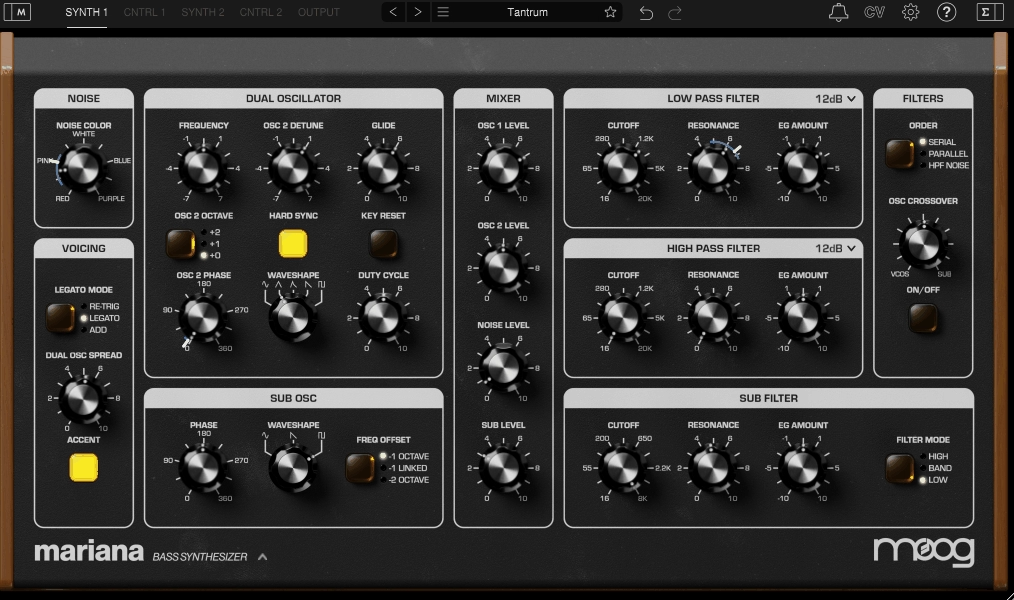
Closing out the list, Moog Mariana represents a different approach from everything else here.
Rather than emulating a specific vintage Moog instrument, Mariana is a modern polysynth designed by Moog that uses their engineering expertise to create something new. It’s Moog’s vision of what a contemporary software synthesizer should sound like when informed by decades of analog hardware design experience.
What distinguishes Moog Mariana from the vintage emulations on this list is the design intent. The vintage plugins try to recreate the past. Mariana uses the Moog sound as a foundation and builds forward with features like granular processing, wavetable oscillators, and modern modulation that none of the vintage hardware ever had.
The Moog ladder filter is still at the core, providing the familiar warmth and character, but the sound sources feeding into it are expanded well beyond what any analog Moog synthesizer could generate. If you want the Moog filter character on modern synthesis approaches, Mariana provides that specific combination.
- Moog Filter Core
The authentic Moog ladder filter sits at the center of Mariana’s signal path, providing the warm, musical filtering that defines the Moog sound. Everything else in the synth is modern, but the filter ensures that the output carries the distinctive Moog character regardless of what sound sources you’re feeding through it.
- Modern Oscillators
Beyond traditional analog waveforms, Mariana provides wavetable and granular sound sources that generate timbres no vintage Moog could produce. The modern oscillators paired with the classic Moog filter create a unique combination of contemporary sound design capability with vintage Moog warmth.
- Deep Modulation
A comprehensive modulation system with multiple LFOs, envelopes, and modulation destinations provides the kind of detailed sound design control that modern synths demand. The modulation depth allows for evolving, complex patches that go far beyond what any vintage Moog’s limited modulation routing could achieve.
- Official Moog
Developed by Moog Music, Mariana carries the legitimacy of the original manufacturer’s engineering team. The filter modeling and overall sonic character reflect Moog’s understanding of their own design principles, applied to a forward looking instrument rather than a backward looking emulation.
From the Pluginerds Store
One more thing before you finish reading: we also stock studio hardware and accessories directly through Pluginerds Shop. Microphones, interfaces, controllers, cables, and the small stuff that never comes included with anything.
Visit Pluginerds ShopAvailable from Moog Music in VST, VST3, AU, and AAX formats.
Get the Free Plugin Starter Kit
The genuinely useful free DAWs and plugins worth installing. No filler. Straight to your inbox.

Hello, I’m Viliam, I started this audio plugin focused blog to keep you updated on the latest trends, news and everything plugin related. I’ll put the most emphasis on the topics covering best VST, AU and AAX plugins. If you find some great plugin suggestions for us to include on our site, feel free to let me know, so I can take a look!