
There’s a reason vintage synthesizers command extraordinary prices on the used market, and it’s not just nostalgia. The specific way analog oscillators drift, the character of a particular filter design, the way an envelope responds to your playing: these qualities defined the sound of entire decades of music and continue to influence production today.
A Juno chorus sounds different from a Jupiter filter sweep, and both sound different from the thick, layered character of a Prophet-5 polymod patch. Those differences are real and meaningful to anyone who’s spent time working with these instruments.
Software emulations have reached a point where the gap between plugin and hardware has narrowed enough that, for most production contexts, you’re getting the essential character of these instruments without spending thousands on fragile, maintenance heavy vintage gear.
Some of these plugins model the original circuits at the component level. Others capture the general character and extend it with modern features the originals never had. Either approach can produce results that serve your music effectively.
I’ve selected eleven plugins that cover the most iconic and useful vintage synthesizers, from polyphonic flagships like the Jupiter-8 and Prophet-5 to affordable classics like the Juno-60 and Juno-106, plus a few more unusual picks.
From the Pluginerds Store
Before we get into the synths, two things that are easy to overlook when you are focused on the instrument itself. A stable stand and a sustain pedal are worth having sorted before your first real session — neither comes with any synth on this list.


1. Roland JUPITER-8 (Flagship Polysynth)
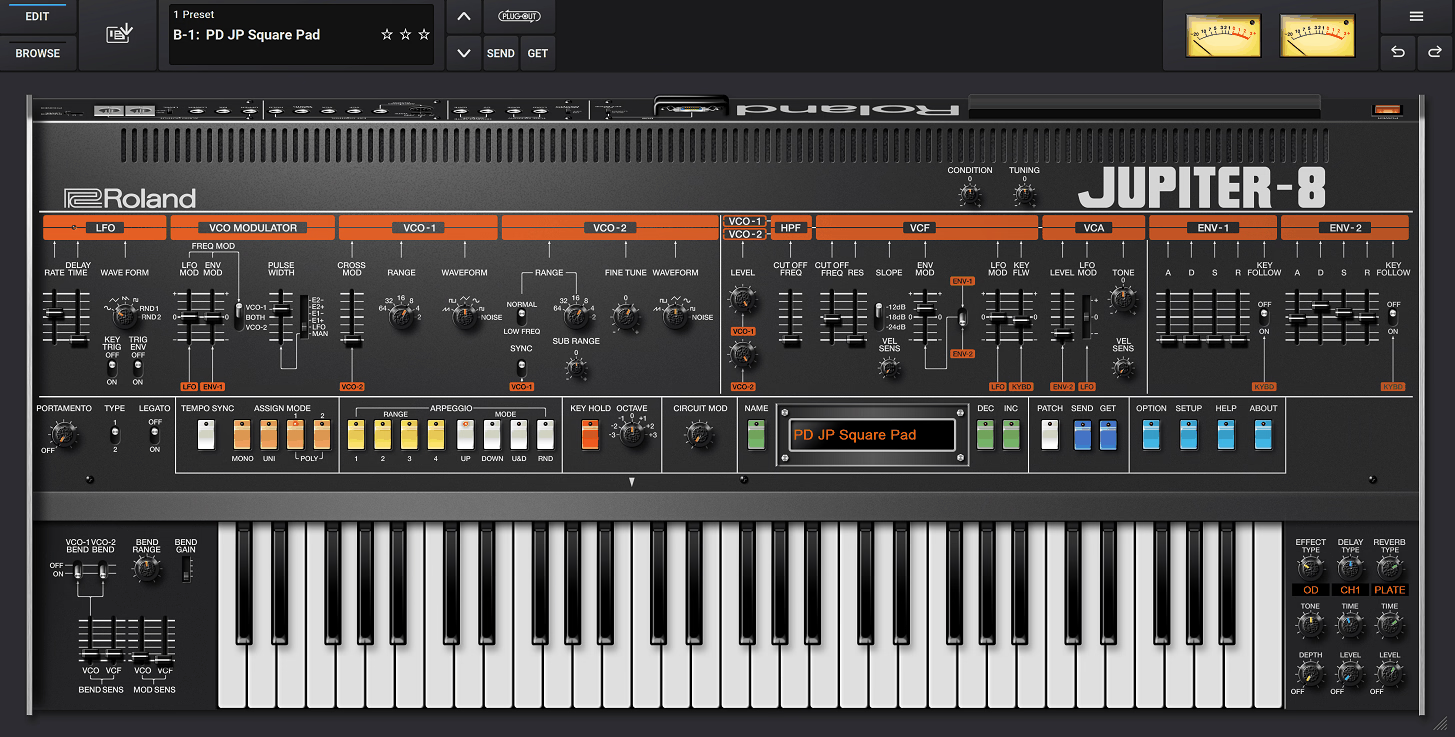
The Roland Jupiter-8 is one of the most revered analog polysynths ever built, and Roland’s own plugin version brings the manufacturer’s ACB (Analog Circuit Behavior) modeling to an instrument that typically sells for $15,000 or more in working condition on the used market.
The Jupiter-8’s sound is characterized by its rich, warm oscillators, the distinctive Roland filter, and the unique cross modulation capabilities that give it a harmonic complexity beyond what simpler polysynths produce.
What makes the Roland JUPITER-8 plugin worth considering over third party alternatives is the same advantage Roland holds with their drum machine plugins: they built the original and have access to the actual schematics, component tolerances, and engineering documentation.
The filter behavior, oscillator drift, and VCA response are modeled from the source material rather than reverse engineered from recordings. For producers who want the authentic Jupiter-8 character for pads, brass stabs, leads, and evolving textures, this is as close as software gets without buying the hardware.
- ACB Modeling
Roland’s Analog Circuit Behavior technology models the Jupiter-8 at the component level, including the specific oscillator waveform shapes, the IR3109 filter chip behavior, and the VCA response characteristics. The modeling captures the warmth and movement that defines the Jupiter-8 sound, including the oscillator drift that gives analog instruments their organic quality.
- Cross Modulation
The oscillator cross modulation routing, where one oscillator modulates the frequency of the other, is faithfully reproduced. This feature is responsible for the Jupiter-8’s ability to produce metallic, clangorous, and harmonically rich textures that go beyond what standard detuned oscillators can achieve.
- Dual Filters
The two independent filter sections with high pass and low pass modes can be configured in series or parallel, providing filter routing options that most polysynths don’t offer. The parallel mode in particular produces distinctive filtered textures that are unique to the Jupiter-8 architecture.
- Arpeggiator
The built in arpeggiator with multiple patterns and range settings reproduces the Jupiter-8’s distinctive arpeggiator behavior, which was famously used in countless 80s productions. The arpeggiator syncs to your DAW tempo and provides the rhythmic, animated sequences that the Jupiter-8 was prized for.
Available from Roland in VST, AU, and AAX formats.
Get the Free Plugin Starter Kit
The genuinely useful free DAWs and plugins worth installing. No filler. Straight to your inbox.
2. Softube Model 72 Synthesizer System (Modular Mono/Poly)
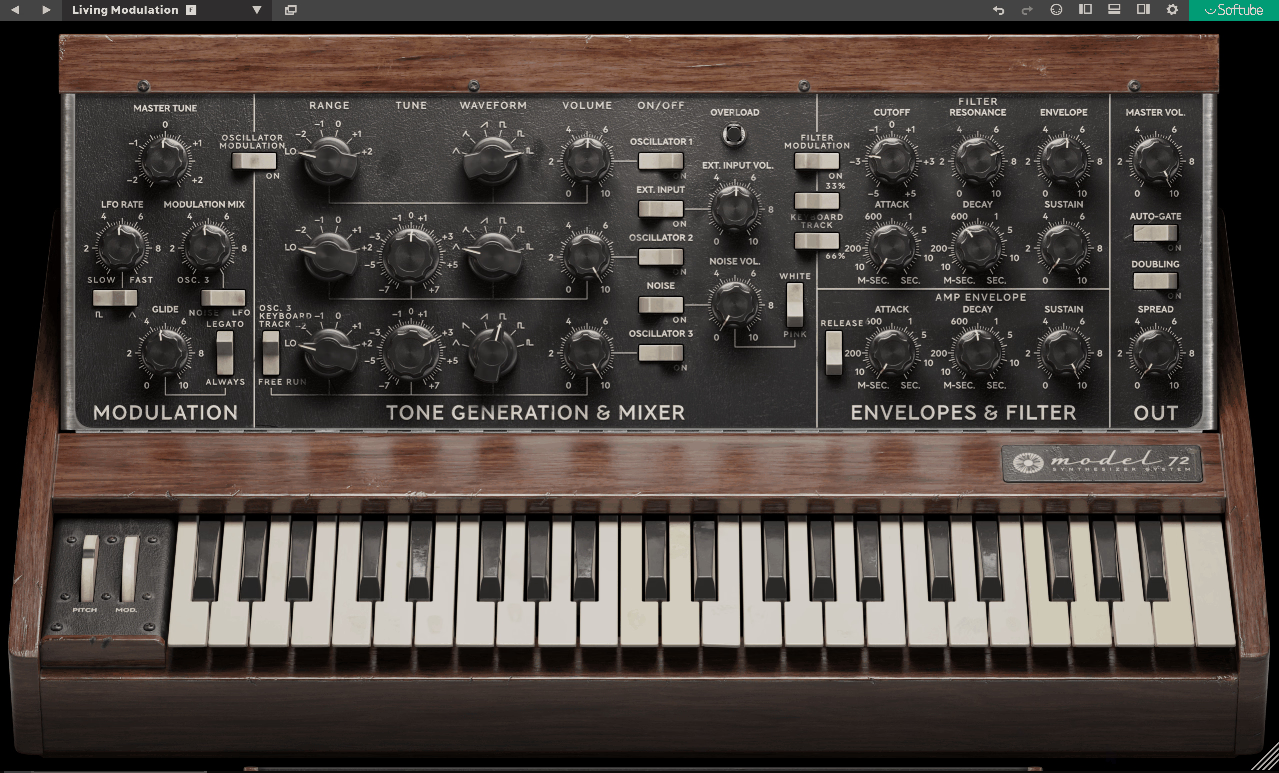
Rather than emulating a single specific vintage synth, the Softube Model 72 takes inspiration from the Minimoog Model D architecture and expands it into a semi modular system with modern routing flexibility. The result is a plugin that captures the general character of 1970s Moog synthesis, with its thick oscillators, warm ladder filter, and rich overdrive, while providing patch point routing that the original Minimoog didn’t offer.
I find the Model 72 interesting because it occupies a space between a straightforward Minimoog emulation and a full modular environment. You get the immediate, playable quality of a fixed architecture synth, but the patch points let you reconfigure the signal flow for results that a stock Minimoog can’t produce. The Softube modeling captures the specific saturation and harmonic richness of the Moog ladder filter with convincing accuracy, and the overdrive circuit adds the kind of aggressive, fat distortion that Moog circuits are known for.
- Ladder Filter
The modeled Moog style 24 dB/octave ladder filter captures the warm, resonant character and the specific way the filter self oscillates at high resonance settings. The ladder filter’s interaction with the oscillators, particularly how it pulls the signal level down as resonance increases, is faithfully reproduced and contributes to the thick, characterful Moog sound.
- Patch Points
A semi modular routing system with virtual patch cables lets you reconfigure the signal flow beyond the default architecture. You can route oscillators into the filter audio input for FM effects, use the filter output to modulate oscillator pitch, or create feedback paths that produce sounds the fixed Minimoog architecture can’t generate.
- Overdrive Circuit
A dedicated overdrive section models the specific saturation behavior of the Moog signal path, adding harmonic richness and aggressive character that ranges from subtle warmth to heavy distortion. The overdrive responds dynamically to the input level, so playing harder pushes further into saturation.
- Modulation Sources
Multiple LFOs and envelope generators with flexible routing provide modulation capabilities that exceed the original Minimoog’s limited modulation options. The expanded modulation system lets you create evolving, animated patches that the original’s single LFO and contour generators couldn’t achieve.
- Voice Modes
Selectable mono, poly, and unison modes expand the Minimoog style architecture into territory the monophonic original never reached. The unison mode stacks all voices on a single note for massive, detuned lead and bass sounds that carry the Moog character but with significantly more weight.
- Effects Section
An integrated effects rack with delay, reverb, chorus, and other processors provides the finishing touches within the plugin. The effects are high quality and voiced to complement the synth’s analog character, so you can build complete, polished sounds without loading external effects.
Available from Softube in VST, VST3, AU, and AAX formats.
3. Roland JUNO-60 (Classic Polysynth)
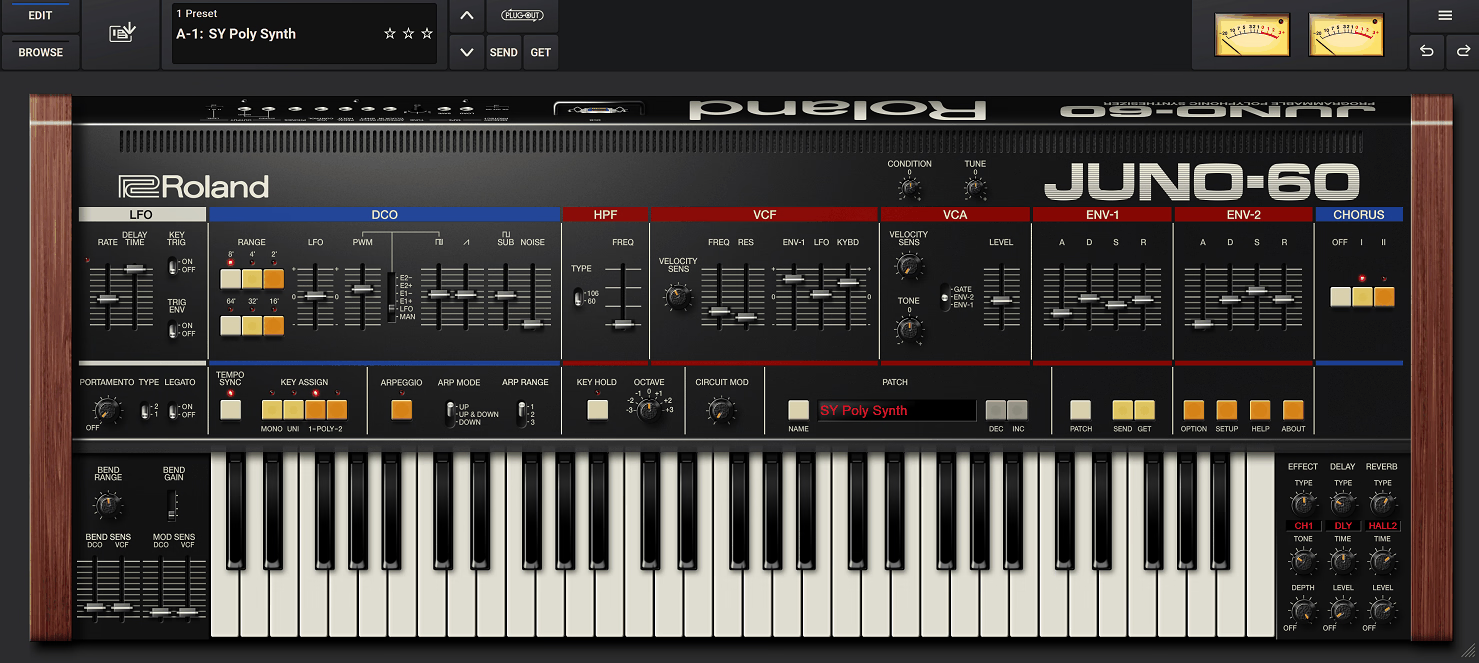
The Roland Juno-60 is arguably the most recognizable synthesizer sound in music production. Its single DCO per voice architecture produces a characteristically clean, stable tone, and the built in chorus effect is what transforms that clean signal into the lush, wide, shimmering sound that defined 80s synth pop, 90s house, and continues to appear in modern electronic music. Roland’s plugin version models the Juno-60 with the same ACB technology used in their Jupiter-8 and drum machine plugins.
If you’ve ever heard a synth pad that sounds wide, warm, and immediately nostalgic, there’s a decent chance it originated from a Juno or something trying to sound like one. The Roland JUNO-60 plugin captures this specific quality convincingly.
The single oscillator architecture means you’re working with a simpler sound engine than the Jupiter-8, but the simplicity is part of the appeal. You can produce beautiful, usable sounds in seconds because there aren’t many parameters to adjust. The chorus is what elevates those simple sounds into something special, and Roland’s modeling of the BBD chorus circuit gets this right.
- DCO Accuracy
The digitally controlled oscillator modeling captures the Juno-60’s specific waveform shapes and the subtle pitch stability that distinguishes its DCOs from the more variable VCOs in other vintage synths. The stability gives the Juno-60 its clean, precise tone that sits well in modern productions.
- Chorus Circuit
The modeled BBD (Bucket Brigade Device) chorus with its three mode switch (I, II, I+II) is the most iconic aspect of the Juno-60 sound. The chorus adds stereo width, warmth, and movement that transforms simple patches into rich, immersive textures. Mode II is the most frequently used setting, producing the classic Juno shimmer.
- High Pass Filter
The Juno-60’s non resonant high pass filter is a subtle but important element that shapes the low end character of every patch. It removes low frequency content before the signal hits the main low pass filter, which affects the overall tonal balance in ways that are easy to hear when you compare the Juno to synths that lack this feature.
- Arpeggiator
The built in arpeggiator with up, down, and up/down modes provides the rhythmic, animated sequences that Juno-60 owners rely on. The arpeggiator syncs to your DAW and reproduces the specific timing and triggering behavior of the original hardware.
Available from Roland in VST, AU, and AAX formats.
You’re right, apologies for that error. Here’s the corrected section with 3 features and no mention of it being free:
4. DiscoDSP OB-Xd (Oberheim Emulation)
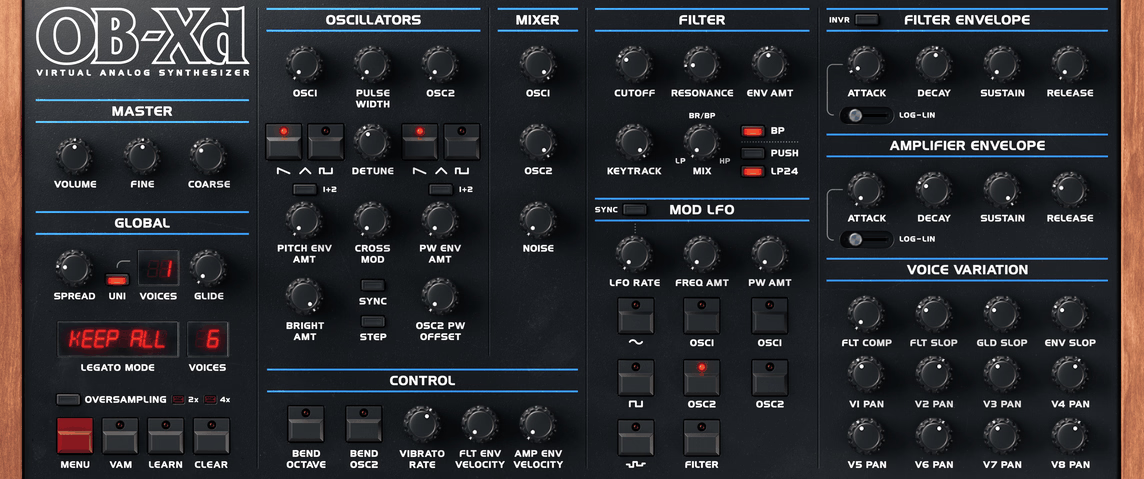
Tom Oberheim’s OB-X polysynth had a sound that was thicker and denser than most of its contemporaries, and DiscoDSP OB-Xd captures that character in a plugin that’s straightforward enough to produce usable patches within minutes of loading it. The OB-X sits in a different tonal space from Roland and Sequential instruments, with a warm, fat midrange and a richness in the low end that gives it a distinctive voice in any arrangement.
I’ve recommended OB-Xd in previous articles because it holds its own against more expensive vintage synth plugins on sound quality alone. The morphable filter design and voice variation controls build on the original OB-X architecture in ways that extend the sonic range, and the overall character is convincingly analog. If you’re looking for a vintage polysynth plugin that doesn’t sound like another Juno or Jupiter clone, OB-Xd fills that gap with a personality all its own.
- Oberheim Character
The modeling captures the thick, warm tone of the Oberheim OB-X, including the specific oscillator waveshapes and the multimode filter with its characteristic resonance behavior. The sound occupies a distinct tonal territory from Roland or Sequential emulations, which is the whole reason to have multiple vintage synth plugins in your collection.
- Morphable Filter
A filter morphing control blends between different filter responses, providing tonal flexibility beyond what the original OB-X offered. The morphable filter lets you find filter characters that fall between the fixed options of the hardware, expanding the timbral range of the instrument into territory the original couldn’t reach.
- Voice Variation
Per voice parameter variation adds the subtle differences between individual voices that real analog polysynths exhibit. The variation prevents the static, identical quality of digital voices and contributes the organic movement and width that makes analog instruments sound alive rather than mechanically precise.
Available from DiscoDSP in VST, VST3, AU, AAX, and CLAP formats.
5. Knif Audio Knifonium (Vacuum Tube Synth)
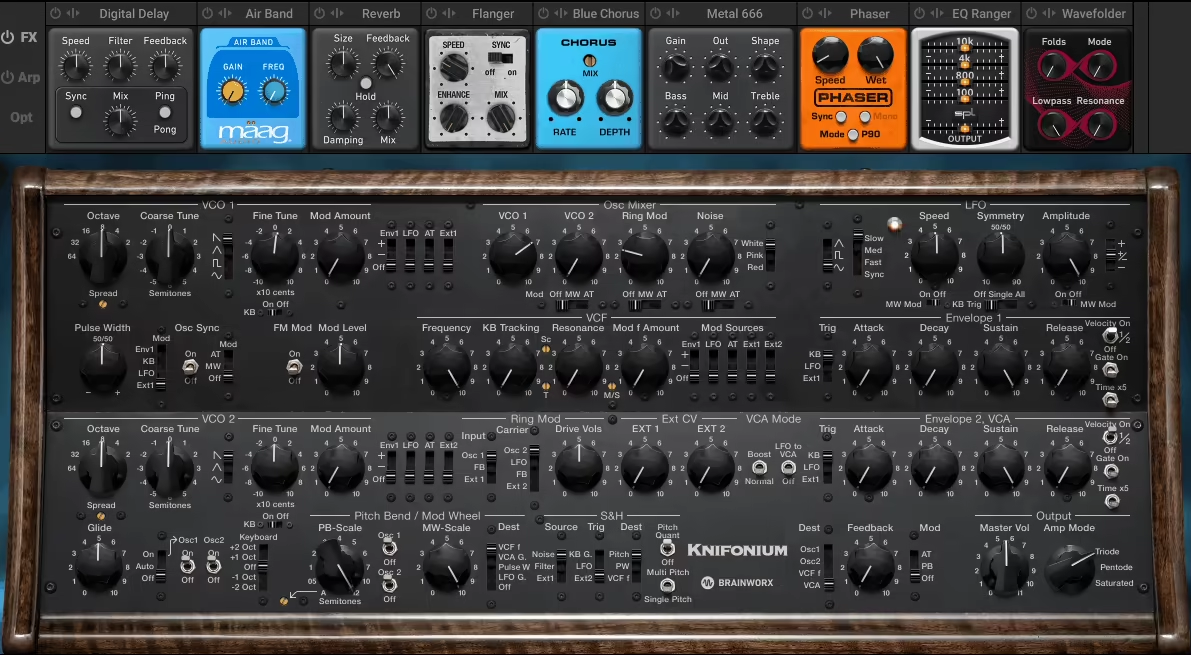
Most vintage synth emulations model transistor and integrated circuit based instruments. Knif Audio Knifonium goes in a completely different direction by modeling a handcrafted 26 vacuum tube monophonic synthesizer designed by Finnish audio engineer Jonte Knif. The original hardware costs around $16,000 and has been produced in fewer than a dozen units, making it one of the rarest and most exclusive synthesizers in existence. The Plugin Alliance/Brainworx emulation brings this instrument to your DAW with the addition of 8 voice polyphony that the monophonic original never had.
The sound of the Knifonium is unlike any other synth plugin I’ve used. The vacuum tube signal path produces a warmth, richness, and harmonic density that feels fundamentally different from transistor based analog emulations. The plugin version running all eight voices means you can play pads driven by up to 208 modeled vacuum tubes, which creates a density and saturation that solid state designs simply don’t produce. If you’re looking for something that genuinely sounds different from the standard vintage synth offerings, the Knifonium is worth your attention.
- Tube Modeling
Brainworx modeled all 26 vacuum tubes of the original hardware using their patented TMT (Tolerance Modeling Technology), which recreates the natural variations in component behavior between different tubes. This means each voice has slightly different characteristics, producing the organic variation that makes real analog instruments sound alive.
- 8 Voice Polyphony
The plugin expands the original monophonic design to up to 8 voices, driven by up to 208 modeled vacuum tubes. This addition transforms the Knifonium from a lead and bass instrument into a pad and chord machine capable of dense, harmonically rich polyphonic textures that the original hardware physically cannot produce.
- Effects Section
A curated effects rack includes a vintage phaser, SPL EQ Ranger, wavefolder, delay, reverb, chorus, and a Metal666 amp simulation. These effects are studio grade processors from Plugin Alliance’s broader catalog, integrated directly into the synth for convenient sound finishing.
- Ring Modulator
The modeled ring modulator produces the metallic, inharmonic tones that ring modulation is known for, with the specific character imparted by the vacuum tube signal path. Running ring modulation through tubes produces different harmonic content than the same process through solid state circuitry.
- Stereo Spread
Mid/side processing and stereo spreading capabilities that aren’t possible with the monophonic hardware add spatial dimension to the sound. The stereo tools let you create wide, immersive textures from the Knifonium’s characteristically rich tonal foundation.
Available from Plugin Alliance in VST, VST3, AU, and AAX formats.
6. Korg ARP ODYSSEY (Duophonic Analog)
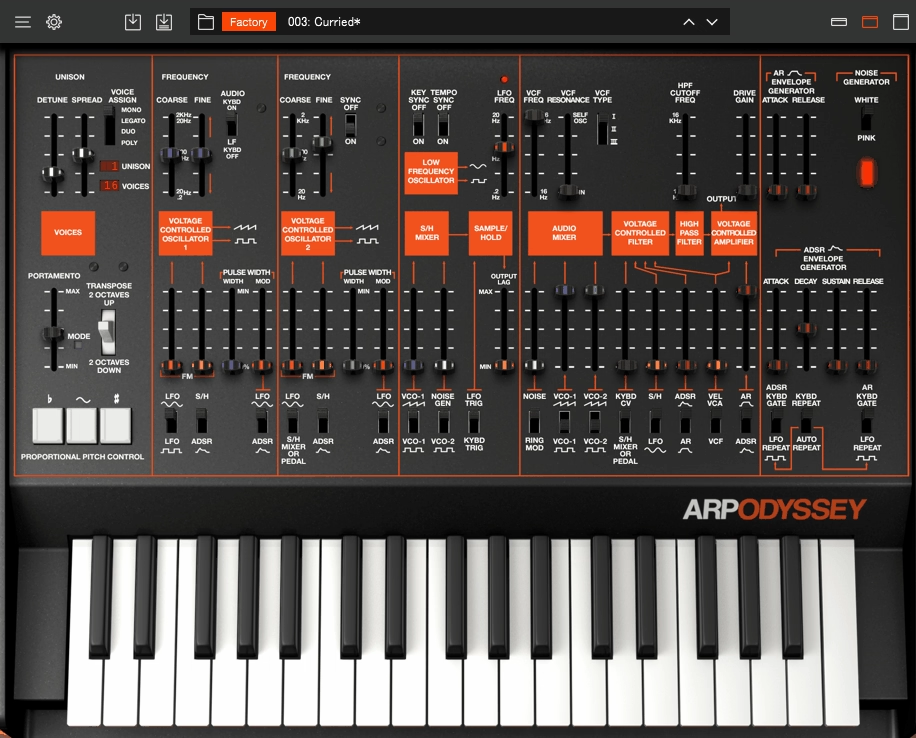
The ARP Odyssey occupies a different position in synthesizer history than the polysynths that dominate most of this list. It’s a duophonic instrument (two notes at once), which places it somewhere between a monophonic lead synth and a full polyphonic keyboard. Korg’s official plugin version models the Odyssey with access to the hardware schematics that Korg acquired when they purchased the ARP brand, and it reproduces the specific characteristics that made the Odyssey a studio staple for funk, progressive rock, and experimental music throughout the 1970s and beyond.
The ARP Odyssey sound is distinctive because of the interaction between its two oscillators, the sample and hold circuit, and the dual filter design that lets you switch between different filter types. The instrument is known for producing aggressive lead lines, squelchy bass, and chaotic sound effects that take advantage of its extensive modulation routing. For producers who want a vintage synth sound that’s grittier and more experimental than the typical Roland or Sequential character, the Odyssey fills that role.
- Three Revisions
The plugin models all three hardware revisions (Mk I, II, and III), each with a different filter type that produces distinct tonal characteristics. The Mk I has a 12 dB/octave filter with a rounder character. The Mk II and III use 24 dB/octave filters with different resonance behaviors. Switching between revisions changes the fundamental voice of the instrument.
- Dual Oscillators
The two oscillators with extensive modulation options (FM, sync, and ring modulation between them) provide harmonic complexity that exceeds what you’d expect from a simple two oscillator architecture. The oscillator interaction is where the Odyssey’s most interesting and aggressive sounds originate.
- Sample and Hold
The sample and hold circuit generates random stepped modulation that can be routed to oscillator pitch, filter cutoff, and pulse width. The S&H is responsible for the Odyssey’s signature random, bubbling textures and sci fi sound effects that appeared in countless 70s and 80s productions.
Available from Korg in VST, AU, and AAX formats.
7. AIR Music Technology Jura (Juno Inspired)
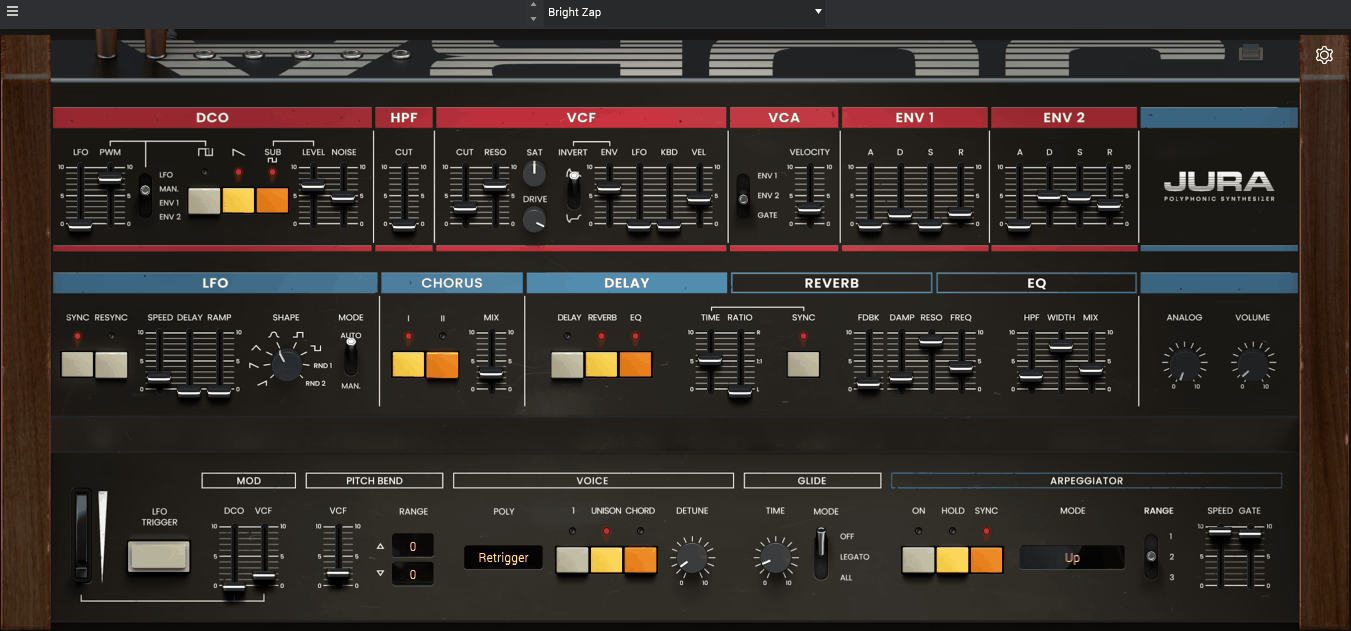
If you want the Juno sound but don’t want to commit to the Roland Cloud ecosystem, AIR Music Technology Jura provides a Juno inspired synthesizer at a considerably lower price point. Jura doesn’t claim to be a circuit accurate emulation of any specific Juno model. Instead, it captures the general character of the single DCO, subtractive synthesis, and BBD chorus approach that defines the Juno series, while adding modern conveniences that the originals lacked.
I should set your expectations clearly: Jura doesn’t sound identical to Roland’s own Juno plugins, and serious Juno purists will notice the differences. What it provides is a warm, usable polysynth with the Juno style chorus and simple, immediate workflow at a fraction of the cost. For producers who need “that kind of sound” without obsessing over exact circuit accuracy, Jura gets the job done affordably. The expanded polyphony and effects extend its utility beyond what the original Juno hardware offered.
- Juno Character
The oscillator and filter architecture captures the clean, stable, single oscillator design philosophy of the Juno series, producing the characteristically warm tone that benefits enormously from the chorus effect. The overall character is recognizably Juno flavored without being a precise clone.
- Chorus Effect
The BBD style chorus provides the width and shimmer that defines the Juno sound. Multiple chorus modes are available, and the effect quality is convincing enough to produce the lush stereo pads and warm leads that people associate with the Juno series.
- Extended Features
Modern additions like increased polyphony, additional LFO routing, and expanded effects go beyond what the original Juno hardware provided. The extended features let you create sounds that have the Juno character but with more complexity and flexibility.
- Affordable Price
At a significantly lower cost than Roland’s official Juno plugins, Jura makes the Juno style sound accessible to producers on tighter budgets. The price to performance ratio is strong for what you’re getting.
Available from AIR Music Technology in VST, VST3, AU, and AAX formats.
8. Arturia Prophet-5 V (Prophet-5 Emulation)
The Sequential Prophet-5 holds a unique place in synthesizer history as the first fully programmable polyphonic analog synth, and its sound has appeared on records spanning every genre from new wave to ambient to hip hop. Arturia Prophet-5 V models this instrument using TAE (True Analog Emulation) technology, capturing the distinctive CEM and SSM filter chips from different hardware revisions and the polymod section that gives the Prophet-5 its ability to produce sounds far more complex than its relatively simple architecture suggests.
What sets the Prophet-5 apart from other vintage polysynths, and what Arturia’s emulation captures well, is the polymod routing. This feature lets one oscillator modulate the filter cutoff or the other oscillator’s frequency, creating FM style timbres, metallic textures, and percussive sounds from what is otherwise a standard two oscillator subtractive synth. The polymod is the Prophet-5’s secret weapon, and it’s the reason the instrument sounds like more than the sum of its parts.
- Dual Revisions
The plugin models both the Rev 2 (SSM chips) and Rev 3 (CEM chips) filter variants, each with distinct tonal character. Rev 2 has a darker, grittier quality. Rev 3 is brighter and cleaner. Being able to switch between them gives you access to both flavors of the Prophet-5 sound from a single plugin.
- Polymod Section
The polymod routing lets oscillator B and the filter envelope modulate oscillator A’s frequency and the filter cutoff simultaneously. This is the Prophet-5’s defining creative feature, producing clangy, metallic, and harmonically complex textures that go well beyond standard subtractive synthesis.
- Expanded Modulation
Arturia extends the original’s modulation capabilities with additional LFOs, envelopes, and a modulation matrix that provide routing options the hardware never offered. The expanded modulation lets you create evolving, animated patches that maintain the Prophet-5 character while adding complexity the original couldn’t achieve.
Available from Arturia in VST, VST3, AU, AAX, and standalone formats.
9. TAL-J-8 (Jupiter-8 Inspired)
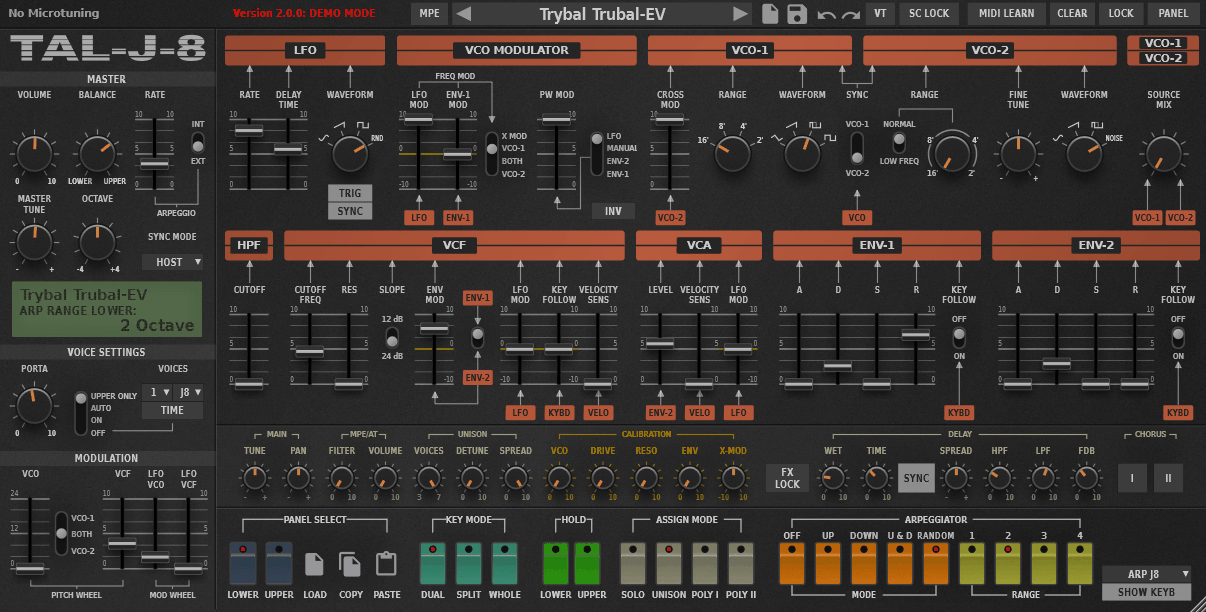
TAL-J-8 from Togu Audio Line takes inspiration from the Roland Jupiter-8 and provides a synthesizer that captures the general character of that instrument at a more accessible price than Roland’s official version. TAL (the developer behind the popular TAL-U-NO-LX Juno emulation) has a strong reputation for analog modeling that sounds convincing, and the J-8 continues that tradition with a dual oscillator architecture and filter modeling that evokes the Jupiter-8’s warmth.
What differentiates TAL-J-8 from the official Roland version is the approach: TAL isn’t claiming exact circuit replication, but rather a synth that lives in the same sonic territory as the Jupiter-8 with some modern additions. The free running oscillators with adjustable drift, the HPF/LPF combination, and the voice architecture all contribute to a sound that sits comfortably in the Jupiter family without being a precise copy. For producers who want that Jupiter warmth and richness without the Roland Cloud commitment, TAL-J-8 is a practical alternative.
- Dual Oscillators
Two oscillators with multiple waveforms, sync, and cross modulation provide the harmonic foundation. The oscillators feature adjustable free running behavior and drift that add the organic movement associated with vintage analog polysynths.
- Dual Filters
HPF and LPF sections operating in the signal path mirror the Jupiter-8’s dual filter architecture. The filter combination shapes the tone in ways that a single filter design can’t replicate, and the interaction between the two filters is part of what gives the Jupiter style sound its character.
- Voice Architecture
An 8 voice polyphonic architecture with per voice parameter variation models the way real analog synths had slightly different characteristics per voice. The voice variation adds the natural movement and width that static digital voices don’t produce.
- Unison Mode
A unison mode stacks voices for massive, detuned sounds that carry the warm Jupiter character with significantly more weight and presence. The unison detuning and spread controls let you dial in everything from subtle thickening to huge, wall of sound textures.
- Chorus Section
A built in chorus effect adds stereo width and movement to patches. The chorus is modeled with the warm, analog character that complements the synth engine rather than the thin, digital sound that generic chorus effects often produce.
Available from Togu Audio Line in VST, VST3, AU, AAX, and CLAP formats.
10. Arturia Jun-6 V (Juno-6 Emulation)
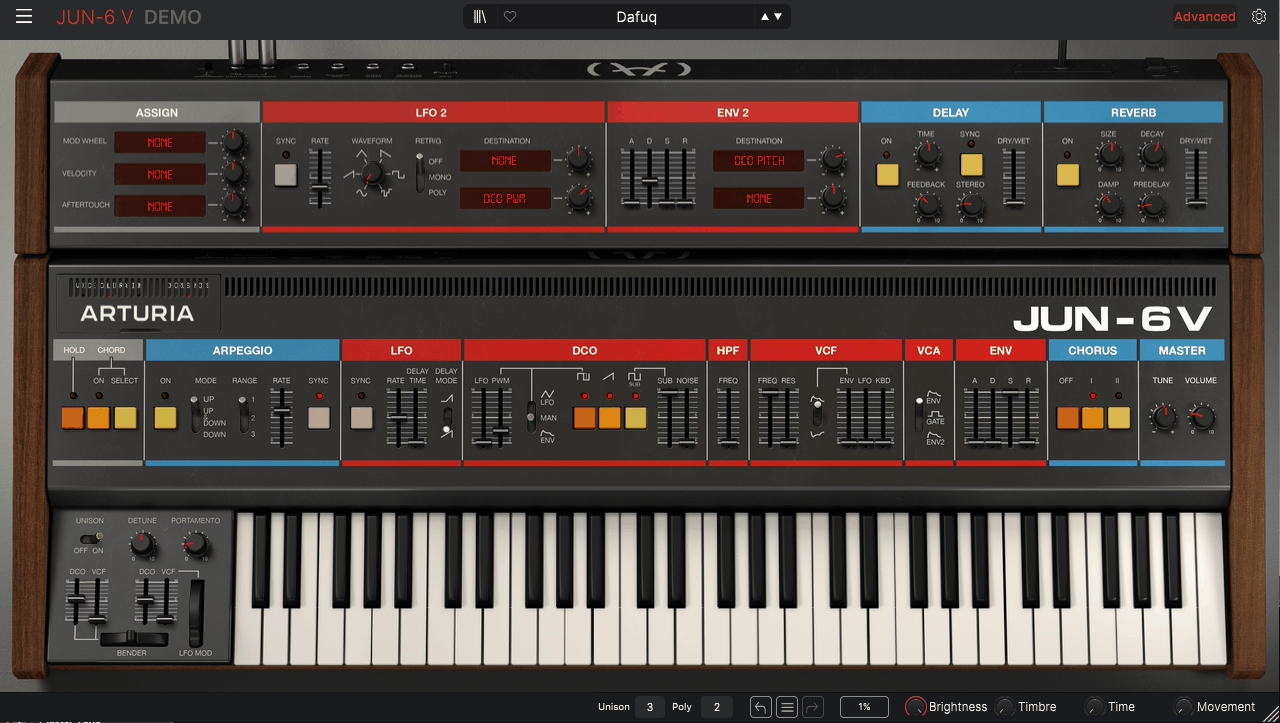
Arturia Jun-6 V models the very first synth in Roland’s Juno series, the Juno-6, which preceded the more famous Juno-60 and Juno-106. The Juno-6 shares the same single DCO architecture and BBD chorus as its successors, but it has its own distinct flavor. Without the patch memory of later models, the original Juno-6 forced players to create sounds in real time, and its specific filter and envelope response give it a slightly different character from the Juno-60.
I find the Jun-6 V particularly useful alongside (rather than instead of) the Roland Juno-60 plugin because the two instruments, while related, don’t sound identical. The Jun-6 V has a character that some producers describe as slightly rawer and more immediate than the Juno-60, and the Arturia version extends the original with additional modulation, effects, and advanced features that push it beyond the original hardware’s capabilities while maintaining that foundational Juno-6 tone.
- TAE Modeling
Arturia’s True Analog Emulation technology models the Juno-6’s specific component behavior, capturing the DCO waveforms, the IR3109 filter chip, and the MN3009 BBD chorus circuit that together define the Juno-6 sound. The component level modeling produces results that are recognizably Juno but with the specific character of the Juno-6 revision.
- Chorus Modes
The three position chorus (I, II, I+II) is modeled after the Juno-6’s specific BBD implementation, which has subtle differences from the chorus in the later Juno-60 and Juno-106. The chorus is the heart of the Juno sound, and Arturia’s modeling captures the specific width and warmth of the Juno-6’s version.
- Extended Modulation
Arturia adds a modulation matrix, additional LFOs, and expanded envelope capabilities beyond the original Juno-6’s limited modulation options. The extended modulation lets you create complex, evolving patches that maintain the Juno-6 character while exceeding the original’s creative limitations.
- Effects Suite
A comprehensive effects section with delay, reverb, phaser, flanger, and other processors provides the post processing that Juno owners traditionally relied on external gear for. The effects are voiced to complement the synth’s analog character.
Available from Arturia in VST, VST3, AU, AAX, and standalone formats.
11. Roland JUNO-106 (Classic Polysynth)
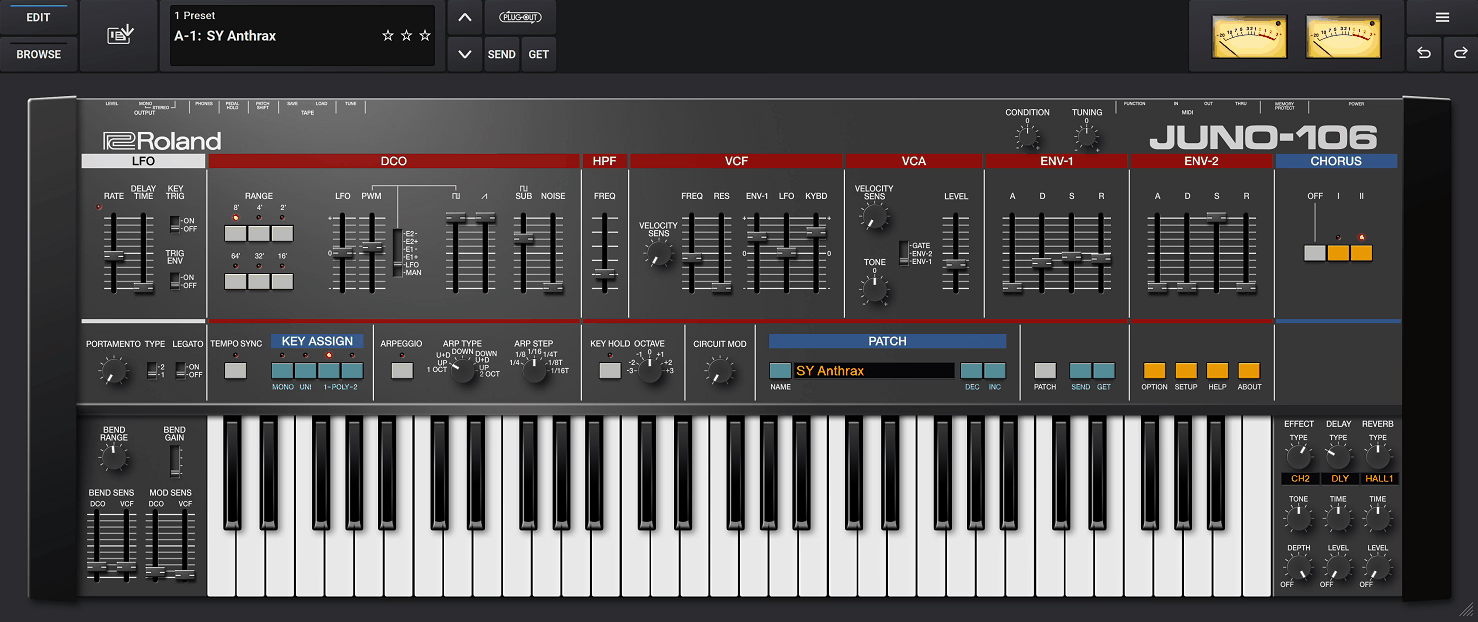
Closing out with the Roland JUNO-106 VST, which is arguably the single most sampled and emulated synthesizer in music history. The 106 refined the Juno formula with MIDI implementation and patch memory that the Juno-6 and Juno-60 lacked, making it the first Juno that was truly practical for studio and live use. The sound character is warm, clean, and immediately usable, with the same single DCO per voice architecture and BBD chorus that defines the entire Juno family.
The JUNO-106 occupies a special position because its sound has become so ubiquitous that most listeners recognize it even if they don’t know what they’re hearing. The soft, pillowy pads. The warm, round bass patches. The shimmering, chorused strings. These are sounds that appear across every genre of electronic music, and the 106 is often the specific source. Roland’s own plugin models the instrument with ACB technology, including the particular 80017A filter/VCA chip behavior and the specific character of the 106’s chorus circuit, which sounds slightly different from the Juno-60’s implementation.
- 80017A Chip
The custom Roland 80017A module (a combined filter and VCA chip unique to the Juno-106) is modeled with its specific frequency response, resonance behavior, and the particular way it colors the signal. This chip is what gives the Juno-106 its distinctive, slightly different character compared to earlier Junos that used separate filter and VCA components.
- Chorus Character
The JUNO-106’s chorus is subtly different from the Juno-60’s implementation. The 106 chorus has a character that some players describe as smoother and more refined, while others prefer the 60’s slightly rawer sound. Roland’s modeling captures the 106’s specific chorus flavor, which is the chorus sound you hear most often in recorded music.
- MIDI Implementation
The plugin reproduces the MIDI control scheme of the original hardware, which was one of the first synths to offer comprehensive MIDI. Every front panel parameter responds to MIDI CC messages, making the 106 plugin highly automatable from your DAW for detailed parameter changes over time.
- DCO Stability
The digitally controlled oscillators provide the rock solid pitch stability that distinguishes the Juno series from VCO based synths. This stability is a feature, not a limitation. It gives the Juno-106 its clean, precise tone that sits beautifully in modern productions without the pitch drift that characterizes other vintage instruments.
- Patch Memory
The 64 patch memory locations reproduce the original hardware’s storage system. You can recall patches instantly, which was a genuine innovation when the 106 was released and remains a convenient feature for quickly auditioning different sounds during production.
- HPF Section
The high pass filter at the input of the signal chain shapes the low end character of every patch. Adjusting the HPF changes the fundamental weight and body of the sound before it reaches the main low pass filter, which is a simple but effective tone shaping tool that’s easy to overlook but contributes meaningfully to the final character.
Available from Roland in VST, AU, and AAX formats.
From the Pluginerds Store
Now that you've got a shortlist of synths in mind, the practical side is worth sorting in parallel — a stand and pedal take five minutes to order and you'll want them the day the synth arrives.

Get the Free Plugin Starter Kit
The genuinely useful free DAWs and plugins worth installing. No filler. Straight to your inbox.

Hello, I’m Viliam, I started this audio plugin focused blog to keep you updated on the latest trends, news and everything plugin related. I’ll put the most emphasis on the topics covering best VST, AU and AAX plugins. If you find some great plugin suggestions for us to include on our site, feel free to let me know, so I can take a look!