
Native Instruments has been building software instruments since the late 1990s, and their catalog has grown into one of the largest and most varied in the industry. The challenge for anyone looking at NI’s lineup isn’t finding something good. It’s figuring out which products are actually worth your money among the dozens of options available. Some are genuinely excellent tools that professionals rely on daily. Others are more niche and may not justify the investment unless you work in specific genres or scoring contexts.
I’ve spent years working with NI products across music production, sound design, and scoring, and what I’ve put together here reflects the plugins and libraries that have actually earned their place in my workflow. Some are flagship products you’ve probably heard of. Others are more specialized Kontakt libraries that fly under the radar but deliver when you need them. The common thread is that each one does something useful, sounds good enough for professional work, and isn’t easily replaced by a cheaper alternative.
This list covers 22 plugins and Kontakt libraries spanning synthesizers, samplers, orchestral tools, cinematic sound design instruments, and performance libraries. Whether you’re producing electronic music, scoring to picture, or building pop arrangements, there’s something here for you.
1. Absynth 6

After being discontinued in 2022, Absynth 6 returned in late 2025 as a fully rebuilt version of NI’s legendary semi modular synthesizer, developed in partnership with original creator Brian Clevinger. The hybrid engine combines granular, FM, wavetable, and subtractive synthesis across three oscillator channels, and the result is a synth that produces evolving, breathing textures unlike anything else in the NI catalog.
I was relieved when NI brought Absynth back because nothing else quite fills the same role. It’s not a synth for punchy basses or tight leads. It’s a synth for soundscapes, evolving pads, and atmospheric textures that shift and morph over time. The 28 multi segment envelopes with up to 68 breakpoints each are what make Absynth genuinely unique. No other synth offers that level of modulation complexity in such a focused, usable package.
- Hybrid Engine
Three oscillator channels each support nine synthesis modes including subtractive, FM, wavetable, ring mod, granular, and sample based. The modes can be mixed across channels, creating hybrid patches that combine different synthesis approaches in a single sound. The granular engine now supports up to 32 grain density (up from 8 in version 5), producing thicker, richer grain clouds.
- Preset Explorer
An AI powered visual browser arranges the 2,000+ presets into an interactive map based on timbral similarity. You navigate by feel rather than scrolling through text lists, which makes discovering sounds faster and more intuitive. The browser learns relationships between presets that you might not find through conventional categorization.
- MPE Support
Full MPE and polyphonic aftertouch support brings expressive per note control to Absynth for the first time. Each note can independently respond to pressure, slide, and per note pitch, which adds a performance dimension that was absent from previous versions.
- Surround Spatialization
True multichannel surround support lets you spatialize Absynth’s effects and output across surround configurations, making it directly useful for immersive audio and film scoring without external panning tools.
Available in VST, VST3, AU, AAX, and standalone formats. $199 new, $99 upgrade from previous versions.
Get the Free Plugin Starter Kit
The genuinely useful free DAWs and plugins worth installing. No filler. Straight to your inbox.
2. Kontakt 8
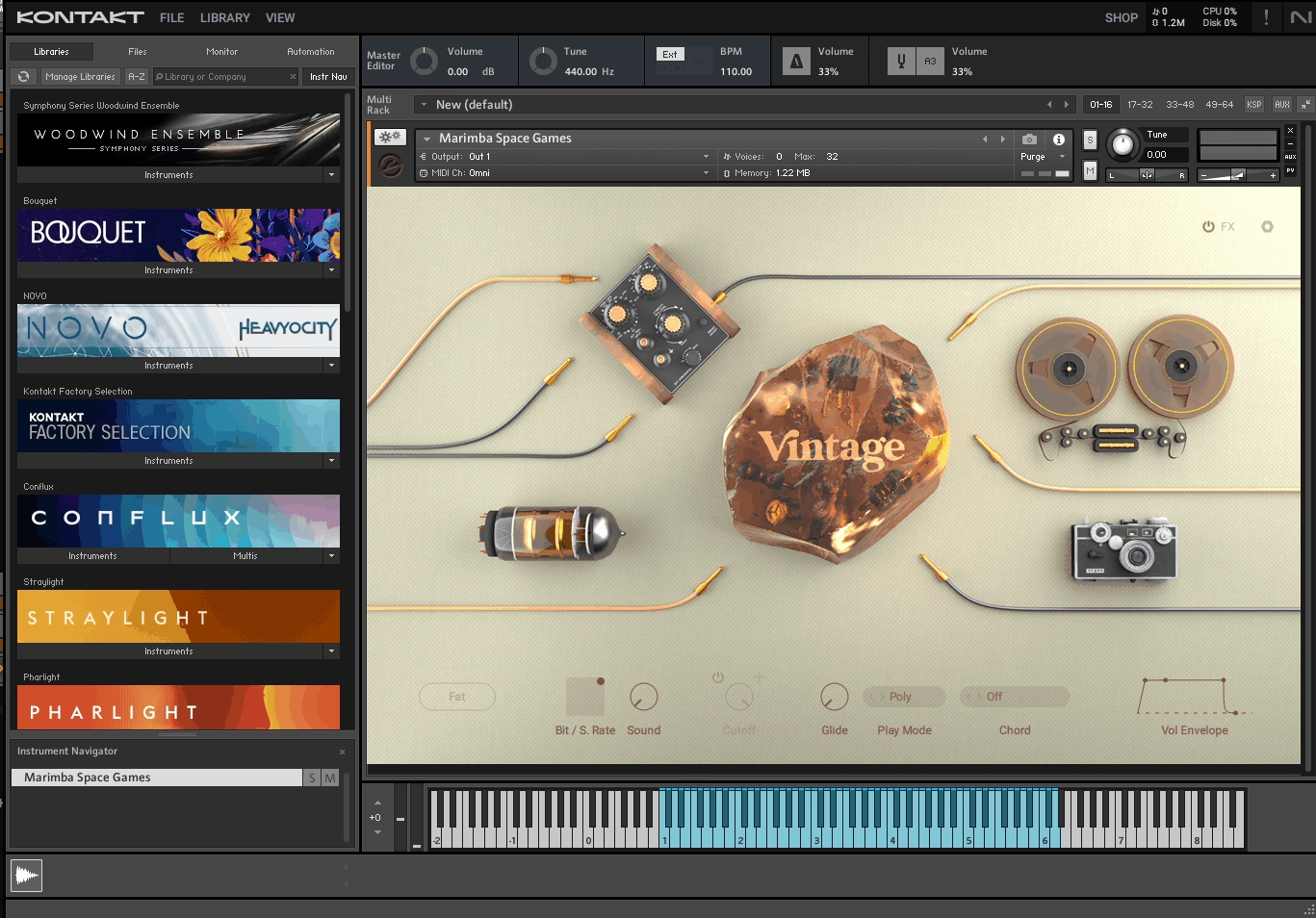
There’s no getting around the fact that Kontakt 8 is the most important sampler in the plugin world. The majority of third party sample libraries are built for Kontakt, and owning it unlocks a universe of instruments from hundreds of developers. Version 8 adds a redesigned browser, improved scripting capabilities, and performance optimizations that make it snappier to work with than previous versions.
What I appreciate about Kontakt 8 is that NI continues to include a substantial Factory Library that covers orchestral instruments, drums, pianos, guitars, basses, and world instruments. You don’t need to buy additional libraries to start making music. The Factory Library alone provides a solid foundation, and the quality has improved with each major version.
- Factory Library
The included Factory Library provides over 55 instruments covering orchestral sections, drums, synths, world instruments, keys, bass, and more. These aren’t afterthought demos. They’re genuinely usable instruments with multiple articulations, round robins, and dynamic layers that hold up in professional productions.
- Library Browser
The redesigned browser in Kontakt 8 makes navigating large collections faster, with improved search, tagging, and preview functionality. When you own dozens of third party libraries, being able to find the right sound quickly becomes a serious workflow consideration.
- Scripting Engine
The KSP scripting engine powers the custom interfaces and playback behavior of virtually every major Kontakt library. Version 8 expands the scripting capabilities, enabling library developers to create more sophisticated instruments. For users, this means newer libraries can do more complex things.
- Wavetable Module
A built in wavetable synthesis module allows library developers to incorporate wavetable oscillators alongside sampled content, blending synthesis and sampling in a single instrument. This hybrid approach opens up new sound design possibilities within the Kontakt framework.
- Creator Tools
Expanded Creator Tools give instrument builders better workflows for designing, testing, and packaging Kontakt libraries. If you’re interested in building your own instruments, the improved toolset makes the process more accessible than in previous versions.
- Performance Improvements
Reduced loading times and memory optimization make Kontakt 8 more responsive, particularly with large orchestral templates where dozens of instances are running simultaneously. The streaming engine handles disk based samples more efficiently than previous versions.
Available in VST, VST3, AU, AAX, and standalone formats.
3. Massive X
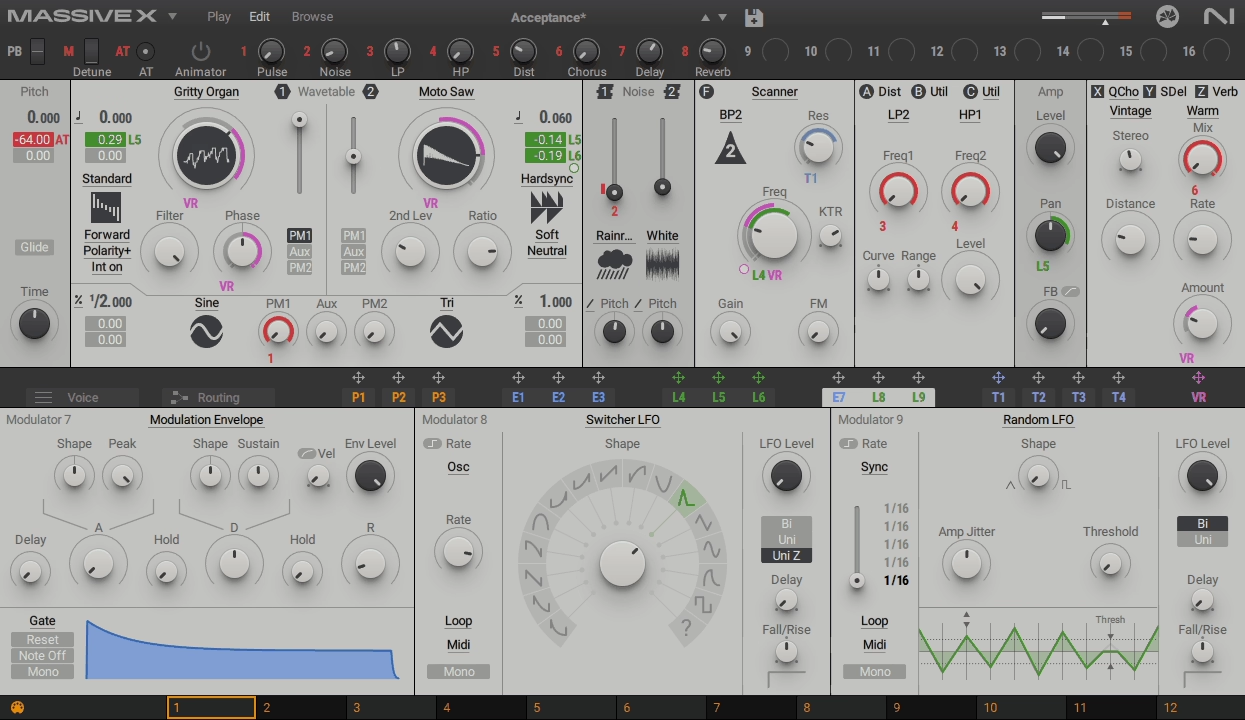
Massive X is NI’s flagship wavetable synthesizer and the successor to the original Massive that defined the sound of EDM and bass music for a decade. It offers a deeper, more complex synthesis architecture than its predecessor, with dual wavetable oscillators, an extensive modulation system, and a unique routing matrix that lets you configure the signal flow in ways that most synths don’t allow.
I should be honest that Massive X has a steeper learning curve than the original Massive or competitors like Serum. The interface is less immediately intuitive, and the routing flexibility that makes it powerful also makes it more complex to navigate. If you’re willing to invest the time, the sonic results are worth it. If you want something more approachable, Serum or Vital might serve you better.
- Routing Matrix
The configurable signal routing lets you rearrange oscillators, filters, inserts, and effects in custom orders rather than following a fixed signal path. This flexibility means you can create feedback loops, parallel processing chains, and routing configurations that aren’t possible in fixed architecture synths.
- Performer Sequencer
The Performer is a modulation sequencer that generates complex rhythmic patterns synchronized to your host tempo. It provides detailed control over shape, timing, and modulation depth, making it useful for creating rhythmic movement in pads, leads, and bass sounds without relying on external sequencing.
- Gorilla and Rift Oscillators
Beyond standard wavetable modes, Massive X includes specialized oscillator types like Gorilla (aggressive, harmonically rich) and Rift (spectrally complex, evolving) that produce sounds the standard wavetable engine can’t easily achieve.
Available in VST, VST3, AU, and AAX formats.
4. Choir: Omnia
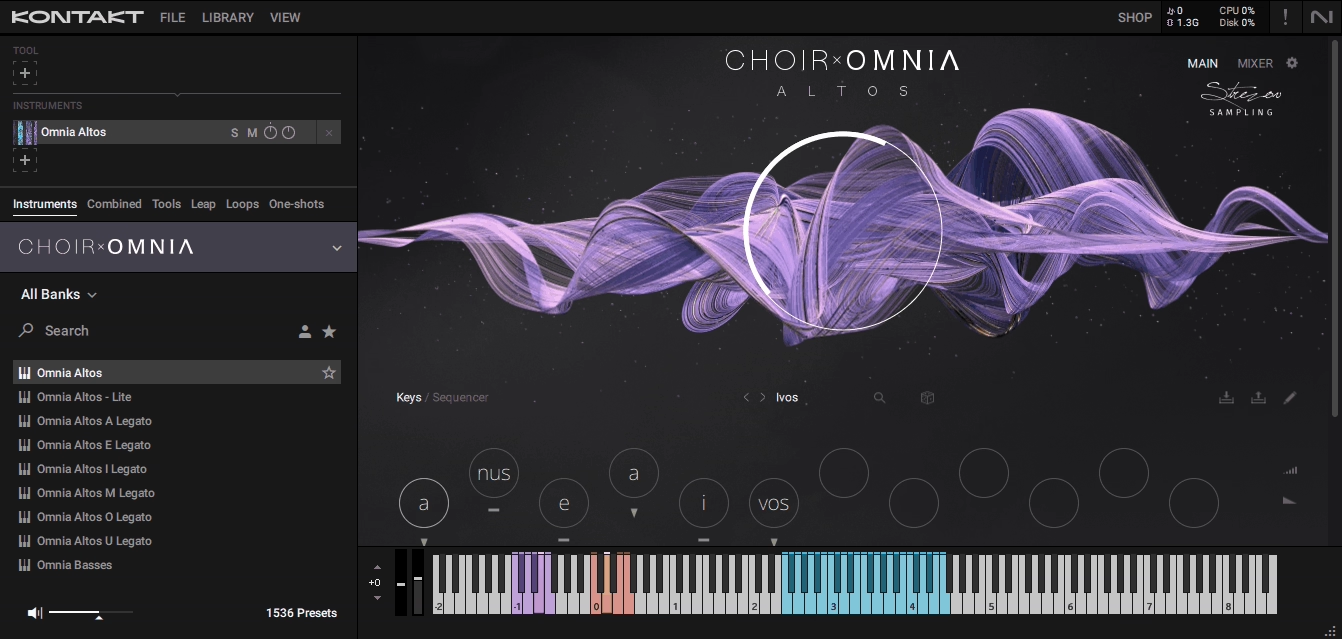
For producers and composers who need realistic choir sounds, Choir: Omnia is NI’s most comprehensive choral instrument. It captures a full SATB choir (soprano, alto, tenor, bass) with true legato vowel transitions, providing the kind of fluid, natural vocal movement that makes programmed choir parts sound convincing rather than robotic.
I find Choir: Omnia most useful for cinematic and orchestral work where the choir needs to carry a melody or provide sustained harmonic support. The vowel morphing system is what sets it apart from simpler choir patches. You can smoothly transition between vowel sounds within sustained notes, which is how real choirs actually sing and what makes static choir samples sound fake.
- Vowel Morphing
The real time vowel crossfading system lets you smoothly transition between vowel sounds (ah, eh, ih, oh, oo) within sustained notes. This produces the natural, fluid quality of a real choir performance rather than the static, frozen vowel character that most sampled choirs have.
- True Legato
Recorded legato transitions between notes capture the way real singers move between pitches, including the subtle portamento and breath characteristics that sampled choirs typically lack. The legato works across the full range of each voice section.
- Divisi Control
Section divisi settings let you determine how many singers are assigned to different notes within a chord, affecting the density and spread of the ensemble. This level of control over the internal voicing of the choir is uncommon in virtual choir libraries.
- Word Builder
A syllable and word building system lets you program specific text and phonemes for the choir to sing, moving beyond generic vowel sounds into actual lyrics and phrases. The system handles consonant transitions and word boundaries with reasonable naturalness.
Available as a Kontakt library.
5. Fables
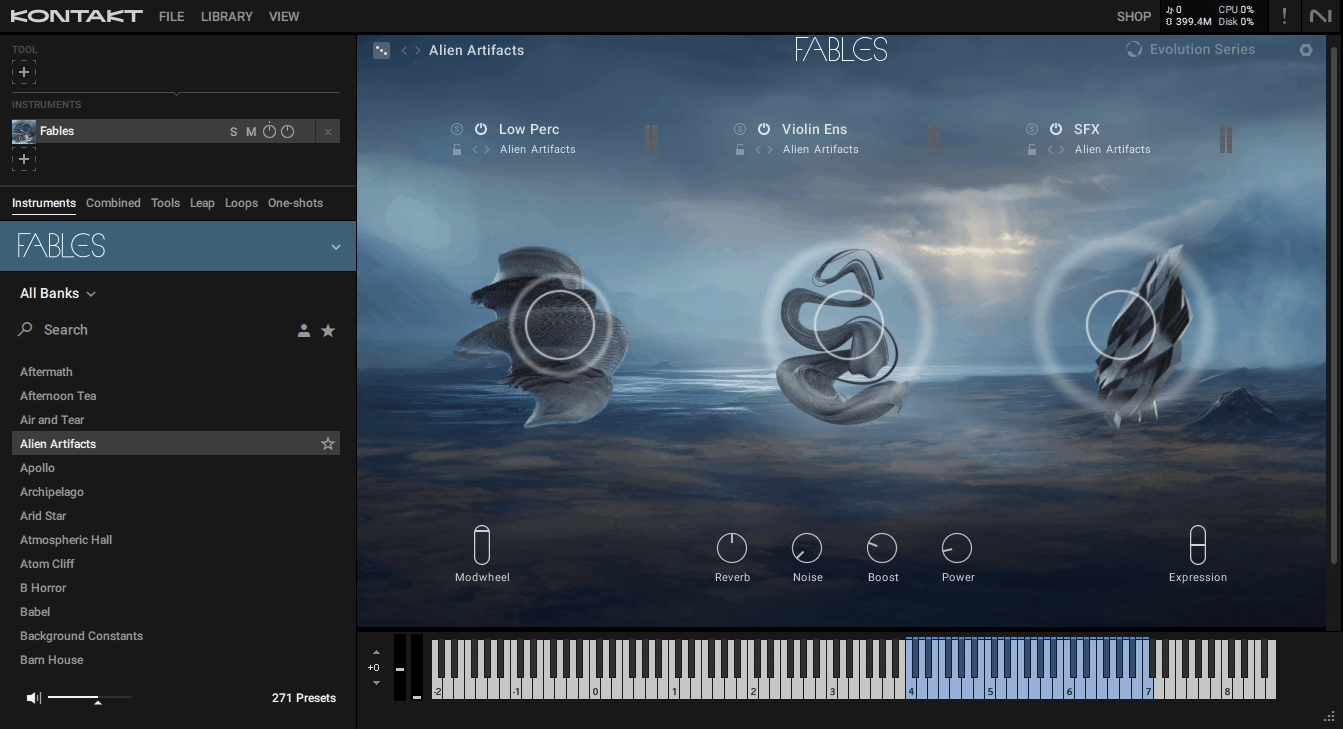
Fables is a cinematic sound design instrument built around the concept of layering and morphing between organic sound sources. It combines felt piano, prepared instruments, and processed acoustic textures into a playable instrument that’s designed for intimate, textural scoring rather than big orchestral gestures.
I reach for Fables when a project needs delicate, atmospheric underscore that suggests emotion without overwhelming the picture. It sits in the territory between traditional instruments and abstract sound design, producing sounds that feel organic and musical but aren’t easily identified as any specific instrument.
- Layer Morphing
The core interface lets you blend between multiple processed sound layers using a simple crossfade system, creating evolving textures that shift between different timbral characters as you hold a note or chord.
- Organic Sources
The sound sources are built from felt piano, prepared strings, bowed metal, and other acoustic recordings that have been processed and layered into playable patches. The acoustic origin of the samples gives the textures a warmth and realism that purely synthetic sounds don’t provide.
- Movement Engine
Built in rhythmic and tonal movement tools add pulse and evolution to sustained sounds, preventing patches from sounding static over long passages. The movement can be subtle or dramatic depending on the settings.
Available as a Kontakt library.
6. Playbox

Playbox is a creative sound design instrument that combines sampling, synthesis, and effects into a playful, experimental interface designed to encourage happy accidents and unexpected discoveries. Rather than presenting traditional synthesis controls, it uses a system of interconnected sound sources and processors that you can randomize and recombine to generate fresh sounds quickly.
I use Playbox specifically when I need to break out of sonic habits and find something unexpected. It’s not the tool I reach for when I know exactly what sound I need. It’s the tool I reach for when I need to be surprised. The randomization features genuinely produce useful results more often than you’d expect, which saves the time you’d otherwise spend manually tweaking parameters trying to stumble into something interesting.
- Sound Layers
Three independent sound layers, each drawing from a library of sampled and synthesized sources, can be mixed and processed independently. Each layer can be swapped, filtered, and modulated separately, giving you enormous variety from a small number of controls.
- FX Matrix
A configurable effects grid lets you route each layer through different combinations of effects in different orders. The effects are designed for creative sound mangling rather than subtle mixing, which fits the experimental character of the instrument.
- Randomization
Comprehensive randomization controls let you randomize individual layers, effects routing, or the entire patch at once. The randomization is weighted to produce musically useful results rather than pure noise, which makes it a practical creative tool rather than a gimmick.
- Macro Controls
Eight performance macros provide simplified access to the most important parameters across all layers, making it possible to perform dramatic sound transformations with a few knob movements even without understanding the underlying complexity.
- Snapshot Morphing
The ability to store and morph between snapshots of different parameter states creates evolving sounds that transition smoothly between contrasting timbres. This is useful for creating movement in pads, textures, and atmospheric sounds.
Available as a Kontakt/Komplete library.
7. Mysteria
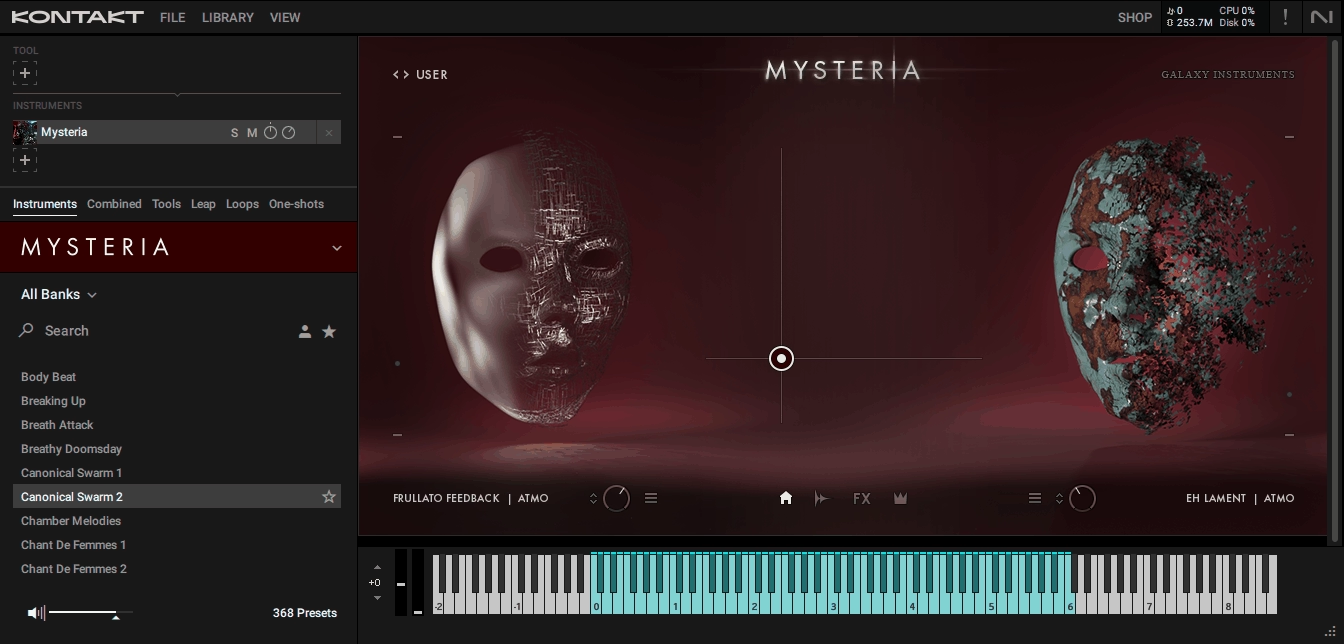
This library focuses specifically on vocal textures and choral sound design, providing processed vocal material as the basis for atmospheric, ethereal patches. Unlike Choir: Omnia which aims for realism, Mysteria treats the human voice as raw material for transformation into something otherworldly and abstract.
I find the distinction between Mysteria and Omnia important to understand before purchasing. Omnia is for when you need a recognizable choir. Mysteria is for when you need the suggestion of voices, the ghostly presence of vocal texture without the literal quality of people singing words. For horror, fantasy, and ambient scoring, this distinction makes Mysteria the more useful tool.
- Vocal Textures
The sound sources are built from processed choral and vocal recordings that have been stretched, granulated, and transformed into atmospheric textures. The vocal origin is audible as a quality rather than a literal voice, giving sounds an organic, human quality without being explicitly choral.
- Dual Layer System
Two independent layers can be blended and morphed, each drawing from different processed vocal sources. The interaction between layers creates complex evolving textures that shift between different timbral characters.
- Rhythmic Engine
A built in pulse and rhythm system adds motion to sustained textures, creating driving, pulsating vocal landscapes that work well under action sequences and dramatic scenes.
Available as a Kontakt library.
8. Thrill
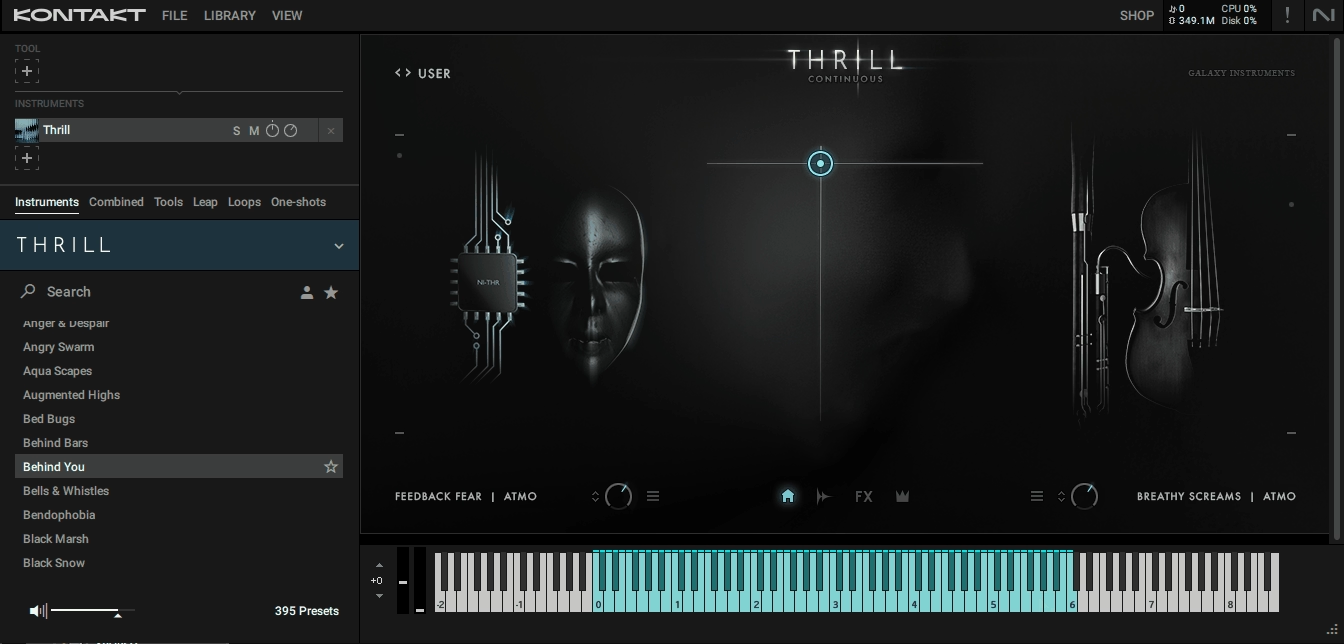
Scoring suspense and horror requires specific tools, and NI Thrill is NI’s dedicated instrument for creating tension, suspense, and horror textures in real time. Rather than relying on pre recorded risers and stingers that you trim to fit, Thrill generates tension dynamically based on your performance, giving you control over the intensity and character of the suspense in real time.
The key advantage of Thrill over generic sound design tools is the XY performance pad that maps intensity and timbral character to a two dimensional space. Moving around the pad in real time creates organic, evolving tension that follows the picture rather than feeling locked to a predetermined shape. For scoring to picture, this responsiveness is genuinely valuable.
- XY Performance Pad
The central XY pad controls tension intensity on one axis and timbral character on the other, letting you perform suspense cues in real time by moving through the two dimensional space. The result is dynamic tension that follows your movements rather than playing back a static recording.
- Tension Profiles
Multiple tension profiles provide different starting characters, from low frequency rumbles to high pitched metallic scrapes to dissonant string clusters. Each profile responds differently to the XY pad movement, giving you varied approaches to building and releasing tension.
- Layer Control
Individual control over the underlying sound layers lets you customize which elements contribute to the tension, adjusting the balance between tonal, atonal, percussive, and sustained components.
- Sync to Picture
The real time performance approach means you can score directly to picture without pre rendering effects or trimming samples to fit specific timings. The dynamic response to your XY pad movements creates natural sounding tension arcs that follow the visual action.
Available as a Kontakt library.
9. Pharlight
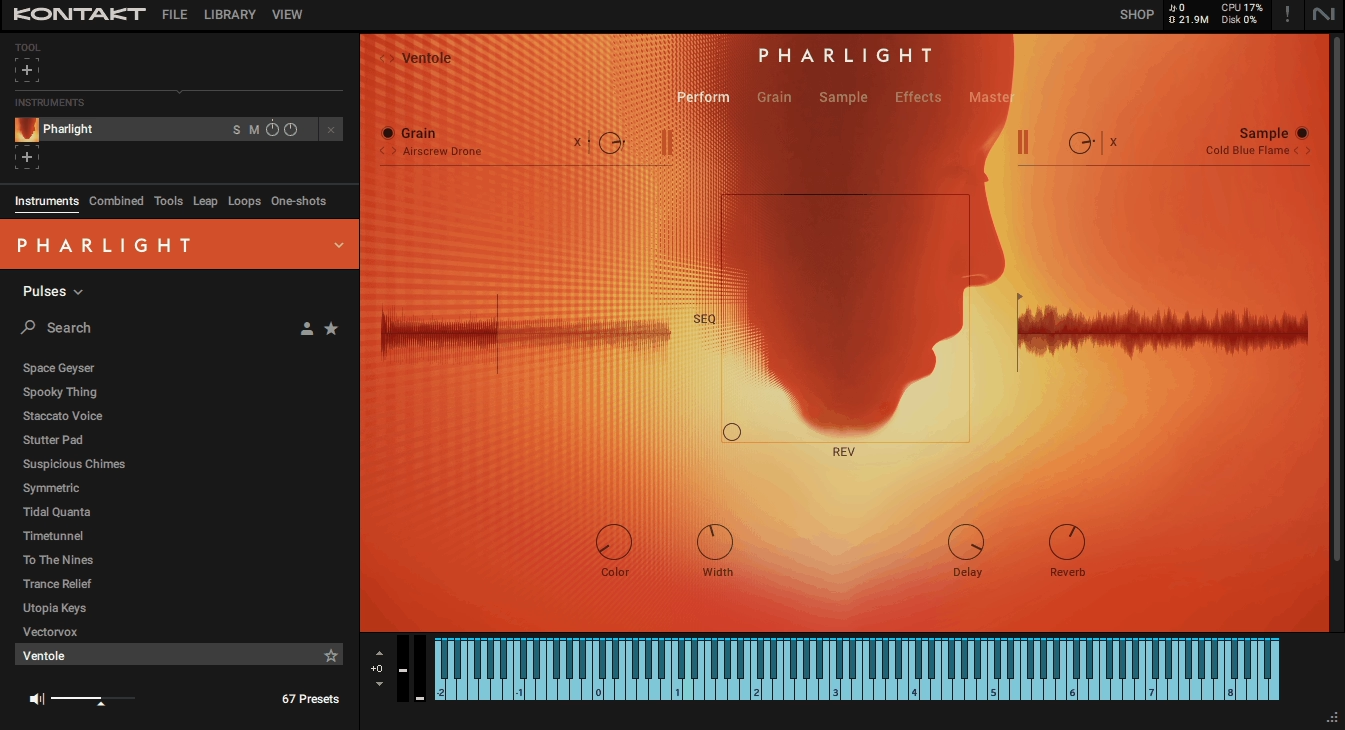
Pharlight is a vocal focused granular synthesizer that takes vocal recordings and transforms them into playable instruments using granular processing, spectral manipulation, and creative effects. It occupies a space between a sampler and a synthesizer, using human voice as the raw material for synthesis rather than conventional oscillators.
What makes NI Pharlight interesting to me is how it maintains a vocal quality in the processed output even when the original recording has been heavily manipulated. The sounds retain a human presence and organic breathiness that purely synthetic approaches don’t achieve. For cinematic textures, electronic music production, and experimental sound design, having voice derived sounds that feel alive is a genuine creative advantage.
- Granular Vocal Engine
The core engine applies granular processing to vocal recordings, breaking them into tiny grains that can be rearranged, stretched, and layered into new textures. The grain size, density, and playback position are all controllable, giving you precise control over how much of the original vocal character survives the processing.
- Spectral Processing
Spectral manipulation tools reshape the frequency content of the granular output, allowing you to shift formants, smear harmonics, and create effects that aren’t possible with conventional filtering. The spectral processing preserves the voice like quality while transforming the timbre.
- Performance Macros
Eight macro controls provide streamlined access to the most impactful parameters, making it possible to perform dramatic sound transformations in real time without navigating the full interface. The macros are pre mapped to produce musically useful results across the factory patches.
- Modulation System
A comprehensive modulation system with LFOs, envelopes, and step sequencers can be assigned to virtually any parameter, adding movement and evolution to the granular textures. The modulation depth is displayed visually on each parameter for clear feedback on what’s being modulated.
- Source Browser
A categorized source browser organizes the vocal recordings by character (airy, breathy, rhythmic, tonal), making it easy to find starting points that match the mood you’re going for. You can also import your own vocal recordings as source material.
Available as a Kontakt/Komplete library.
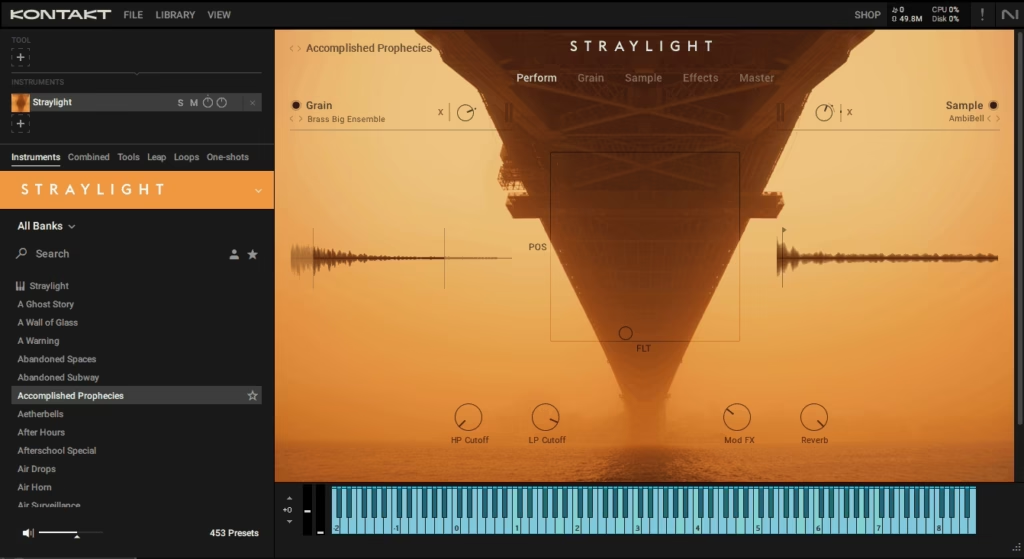
10. Straylight
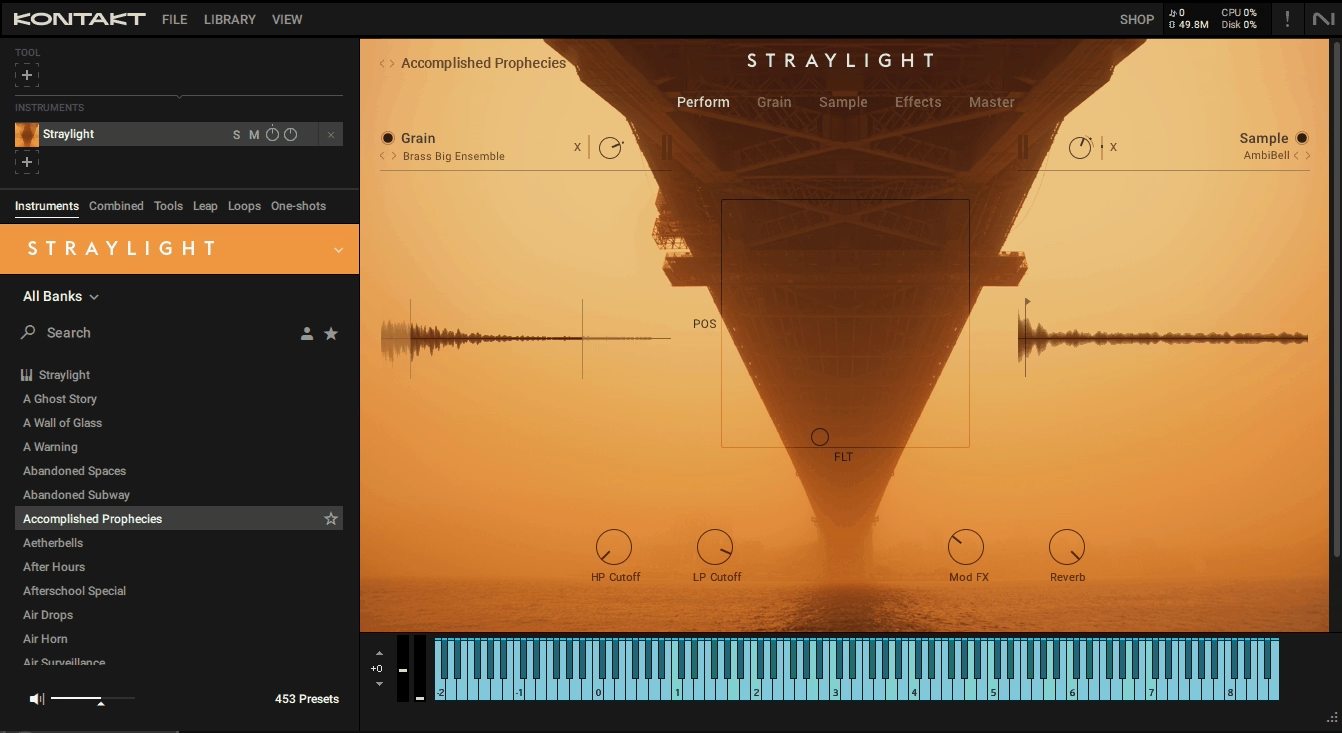
If Pharlight focuses on vocal granular processing, Straylight applies a similar approach to non vocal source material, creating playable instruments from processed recordings of strings, prepared piano, found sounds, and other acoustic sources. It’s designed for cinematic textures and atmospheric sound design where you need something organic but not identifiably any specific instrument.
I use Straylight frequently for underscore work where the music needs to support a scene without drawing attention to itself. The textures it produces are interesting enough to hold attention but ambiguous enough not to compete with dialogue or on screen action. It sits perfectly in that “emotional background” territory that film and TV scoring constantly demands.
- Dual Source Engine
Two independent sound sources can be blended and crossfaded, each drawing from different processed recordings. The interaction between sources creates complex, evolving textures that shift character over time. Each source has its own processing chain and modulation options.
- Granular and Spectral
The processing combines granular time stretching with spectral manipulation, giving you two different ways to transform the source material. The granular engine handles temporal manipulation while the spectral tools reshape the frequency content independently.
- Movement Sequencer
A built in rhythmic engine adds pulse, motion, and rhythmic variation to sustained textures. The sequencer can drive filter cutoff, amplitude, and other parameters to create driving, pulsating soundscapes from static source material.
- Macro Performance
Eight performance macros control the most impactful parameters across both sources, making real time sound transformation accessible during performance or scoring sessions.
Available as a Kontakt/Komplete library.
11. Session Strings Pro 2

For pop, R&B, soul, and contemporary scoring, Session Strings Pro 2 provides a focused string ensemble that’s designed to sound like a studio session rather than a concert hall orchestra. The playing style, recording perspective, and articulation set are all optimized for the kind of intimate, close miked string parts you hear on pop records and TV drama scores.
What I find useful about Pro 2 is that it fills a specific gap. Most orchestral string libraries sound too big and too classical for pop and contemporary scoring. This library is recorded closer, drier, and with a playing style that’s more suited to contemporary arrangements. It’s not the library for sweeping cinematic scores. It’s the library for the strings on an Adele record.
- Ensemble Engine
The built in Ensemble Engine automatically divides chords between different sections of the string ensemble, creating natural voicings without manual divisi programming. You play chords on your keyboard and the engine distributes notes across the sections intelligently.
- Animator Patterns
A pattern based Animator provides rhythmic and melodic string patterns that you trigger and control with MIDI. The patterns are performed by real players and respond to your chord changes, giving you convincing rhythmic string parts without programming individual notes.
- Close Mic Perspective
The default recording perspective is close and intimate rather than distant and reverberant, which suits contemporary production styles. Room and ambient mic options are available if you want more space.
- Articulation Set
The library includes articulations specifically chosen for contemporary string writing: sustained, staccato, spiccato, tremolo, pizzicato, and trills, all recorded with the tighter, more controlled playing style appropriate for pop and film scoring.
- Dynamic Control
Detailed velocity and dynamic switching provides smooth crossfades between playing intensities, from whisper quiet pianissimo to full bodied fortissimo. The dynamic response feels natural when controlled via modwheel or expression pedal.
Available as a Kontakt library.
12. Ashlight
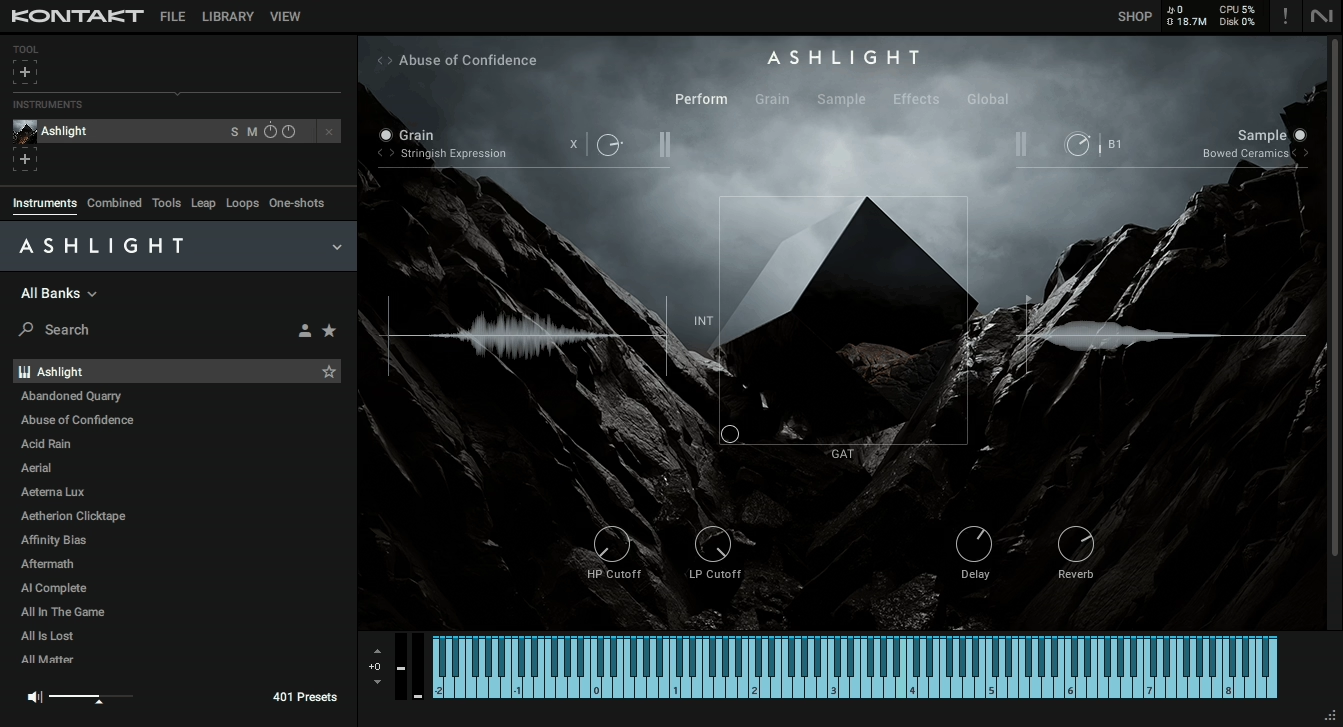
Ashlight is a textural instrument built from processed acoustic guitar recordings that have been granulated, stretched, and transformed into atmospheric pads and evolving soundscapes. The acoustic guitar origin gives the sounds a warmth and organic quality that’s different from synthesized textures.
I reach for Ashlight when I need warm, intimate textures for singer songwriter productions, indie film scores, or ambient music. The guitar DNA in the sound gives it a folksy, organic character that synth pads don’t have. It’s a niche tool, but within that niche it fills a gap that’s hard to fill any other way.
- Guitar Derived Textures
The sound sources are built from acoustic guitar recordings processed through granular and spectral engines. The guitar’s harmonic character and string resonance survive the processing, giving textures an organic warmth that synthetic sources lack.
- Dual Layer Morphing
Two independent layers can be crossfaded and morphed to create evolving sounds that shift between different timbral characters. The morphing is smooth and continuous, producing organic transitions.
- Rhythmic Motion
Built in pulse and rhythmic tools add movement to sustained sounds, preventing textures from sounding static. The rhythm engine can create gentle pulsing or more dramatic rhythmic patterns.
Available as a Kontakt/Komplete library.
13. Action Woodwinds
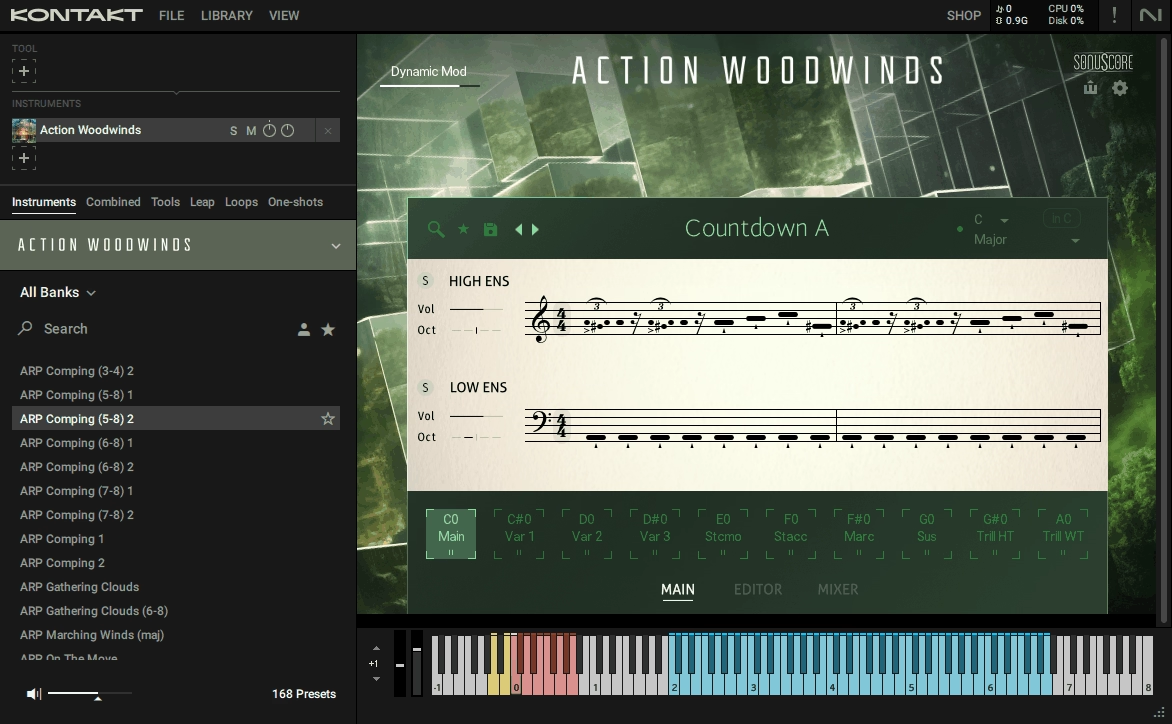
Action Woodwinds provides woodwind ensemble recordings captured specifically for action, adventure, and dramatic scoring. The playing styles, articulations, and dynamic range are designed for the kind of aggressive, rhythmic woodwind writing you hear in blockbuster film scores rather than the gentle, lyrical approach of traditional orchestral woodwind libraries.
I find Action Woodwinds fills a gap that general purpose orchestral libraries don’t cover well. Standard woodwind patches tend to sound too polite and refined for action scoring. This library captures the aggressive staccatos, fast runs, and forceful sustains that action cues demand.
- Action Articulations
The articulation set focuses on aggressive performance styles: fast staccato, marcato, accented sustains, runs, and cluster effects that are essential for action scoring but rarely included in standard orchestral woodwind libraries.
- Ensemble Patches
Pre mixed ensemble patches combine multiple woodwind sections into ready to play configurations that produce the full woodwind sound of a large orchestra without requiring separate tracks for each instrument.
- Rhythmic Patterns
Built in rhythmic pattern playback provides action style ostinato patterns that you trigger and transpose from your keyboard, giving you instant rhythmic woodwind material without programming individual notes.
- Dynamic Range
The recordings cover an extreme dynamic range from whisper quiet to full force, with smooth crossfading between layers. The louder dynamics capture the aggressive, forceful playing that action scoring demands.
Available as a Kontakt library.
14. Action Strings 2
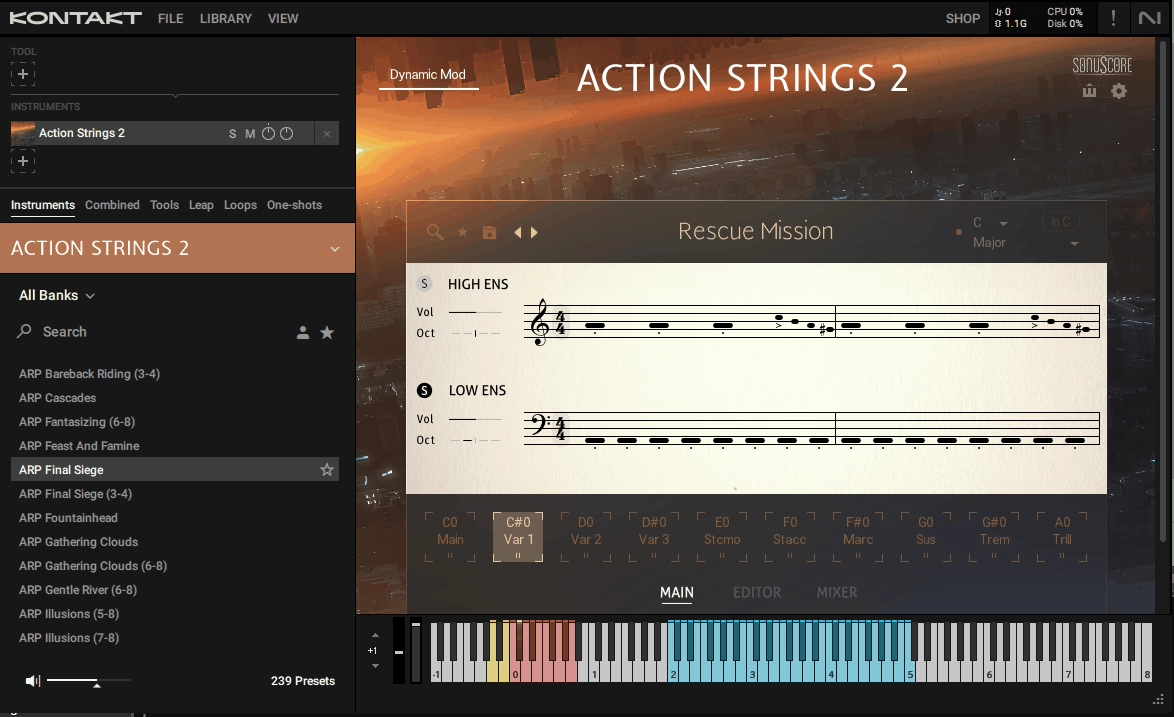
The string counterpart to Action Woodwinds, Action Strings 2 captures orchestral strings performing the aggressive, rhythmic articulations and dramatic gestures used in action, thriller, and adventure film scoring. Like Action Woodwinds, the focus is on high energy, rhythmic playing rather than lyrical, sustained passages.
Where Session Strings Pro 2 covers the intimate, contemporary side of string writing, Action Strings 2 handles the other extreme. Think driving ostinatos, aggressive spiccato runs, massive tremolo swells, and dramatic col legno effects. For trailer music, action cues, and dramatic underscores, this library delivers material that general purpose orchestral strings don’t capture convincingly.
- Pattern Engine
The rhythm and pattern engine provides pre performed action string patterns that respond to your chord input, generating driving ostinatos, rhythmic staccato patterns, and dramatic gestures without individual note programming. The patterns are performed by real players with authentic musical phrasing.
- Ensemble Builder
An ensemble configuration system lets you build custom string section combinations, adjusting the balance between violins, violas, cellos, and basses to suit the specific register and weight requirements of your cue.
- Dynamic Mapping
Detailed velocity and expression mapping provides smooth transitions between playing intensities, from controlled pianissimo to aggressive fortissimo. The dynamic layers include the physical effort and bow noise that make loud string playing sound authentic.
- Articulation Range
Specialized articulations include col legno, bartok pizzicato, sul ponticello, measured tremolo, and other extended techniques alongside standard staccato and sustain, covering the full range of dramatic string effects.
- Mix Presets
Pre configured mix settings provide instant starting points for different scoring contexts, from close and tight trailer music to wider, more cinematic perspectives.
Available as a Kontakt library.
15. Action Strikes

Percussion is the backbone of action scoring, and Action Strikes provides massive orchestral percussion ensembles recorded for maximum impact. We’re talking about the big, thunderous drum hits and ensemble patterns you hear under trailer music and climactic film score moments.
I should note that Action Strikes is specifically designed for the “epic percussion” sound. It doesn’t try to cover all percussion needs. It does the big, dramatic stuff well and leaves the subtler percussion work to other libraries. For trailer music producers and action score composers, having a dedicated tool for this specific job saves time compared to trying to coax the same impact from a general purpose percussion library.
- Pattern Performance
Built in pattern playback provides professionally performed percussion ensemble patterns that you trigger and layer from your keyboard. The patterns capture the coordinated playing of multiple percussionists hitting together, which is difficult to program convincingly from individual samples.
- Ensemble Layering
Multiple percussion instruments play simultaneously within each patch, creating the massive, layered sound of a full percussion section. Bass drums, taikos, toms, cymbals, and auxiliary percussion are pre mixed into cohesive ensembles.
- Dynamic Intensity
The performance patterns cover a full dynamic range from building tension at low intensity to full force impacts at maximum velocity. The transitions between intensity levels are smooth and musically natural.
Available as a Kontakt library.
16. Session Horns Pro

Session Horns Pro takes the same approach as Session Strings Pro but applies it to a brass and woodwind section suited for pop, funk, soul, R&B, and jazz arrangements. The ensemble includes trumpet, trombone, tenor sax, and baritone sax in various combinations, recorded with the tight, punchy character of a studio horn section.
What makes Session Horns Pro useful is the Animator system that generates idiomatic horn phrases and riffs from your chord input. Programming realistic horn section parts note by note is tedious and rarely convincing. The Animator provides musically appropriate patterns that respond to your harmonies, giving you convincing horn arrangements quickly.
- Animator Phrases
The Animator provides genre specific horn phrases that adapt to your chord voicings in real time. Patterns cover funk stabs, soul riffs, jazz comping, pop accents, and more, all performed by real players with authentic timing and phrasing.
- Section Combinations
Multiple ensemble configurations let you choose between full section, solo instruments, and various sub groups. Trumpet and sax duets, trombone section, full brass with reeds. Each combination has its own character and sits differently in an arrangement.
- Articulation Switching
Intelligent articulation selection automatically chooses appropriate playing styles based on note length and velocity, making the performance sound natural without manual keyswitch programming. Staccato, sustain, falls, doits, and shakes are all included.
- Close Recording
The close, studio style recording suits contemporary production where horns need to sound punchy and present rather than distant and reverberant. Additional room mic options are available if needed.
Available as a Kontakt library.
17. Piano Colors

Piano Colors takes acoustic piano recordings and transforms them into atmospheric, textural instruments through processing and layering. Rather than providing a straight piano sample library, it uses the piano as source material for sound design, creating sounds that retain the piano’s harmonic character while becoming something entirely different.
I use Piano Colors when a cue needs the emotional warmth of piano without the literal sound of a piano. The textures suggest piano. They have that resonant, hammered string quality. But they’ve been stretched, granulated, and processed into evolving pads and atmospheres that work as underscore rather than as a featured instrument.
- Processed Sources
The sounds are built from acoustic piano recordings that have been granulated, reversed, stretched, and layered into playable textures. The piano origin gives the sounds a warm, resonant quality that synthetic textures lack.
- Layer Blending
Multiple processed piano layers can be crossfaded and combined, creating complex evolving textures from different processed versions of the same source material.
- Movement Tools
Built in rhythmic and tonal modulation adds evolution and pulse to sustained sounds, preventing textures from becoming static over long passages.
Available as a Kontakt/Komplete library.
18. Vocal Colors
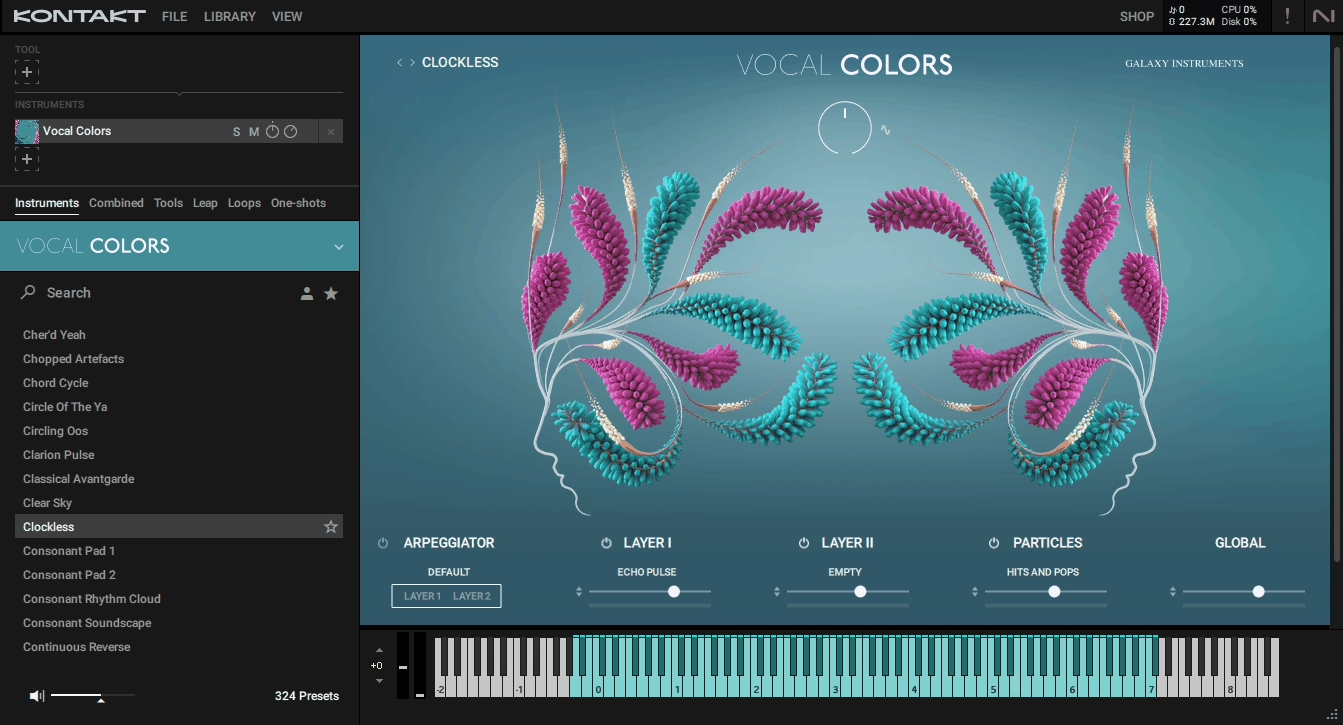
Applying the same concept as Piano Colors but to vocal source material, Vocal Colors transforms processed vocal recordings into atmospheric instruments. The human voice is the most emotionally evocative sound source available, and hearing it transformed into abstract textures adds an immediate emotional quality to underscore and ambient music.
The sounds in Vocal Colors occupy an interesting space where you can sense the human presence without identifying specific words or phrases. It’s atmospheric vocal content that communicates emotion through timbre rather than language, which makes it universally useful across different cultural and linguistic contexts.
- Vocal Textures
Processed vocal recordings form the basis of playable textural instruments that retain the emotional quality of the human voice while becoming abstract and atmospheric.
- Dual Layers
Two independent layers draw from different vocal processing treatments, enabling complex evolving sounds that shift between different timbral characters.
- Macro Performance
Simplified performance controls provide quick access to the most impactful parameters, making real time sound transformation accessible during performance.
- Rhythmic Engine
Built in motion and rhythm tools add pulse and evolution to sustained vocal textures, creating driving, atmospheric patterns.
Available as a Kontakt/Komplete library.
19. Symphony Series: Woodwind
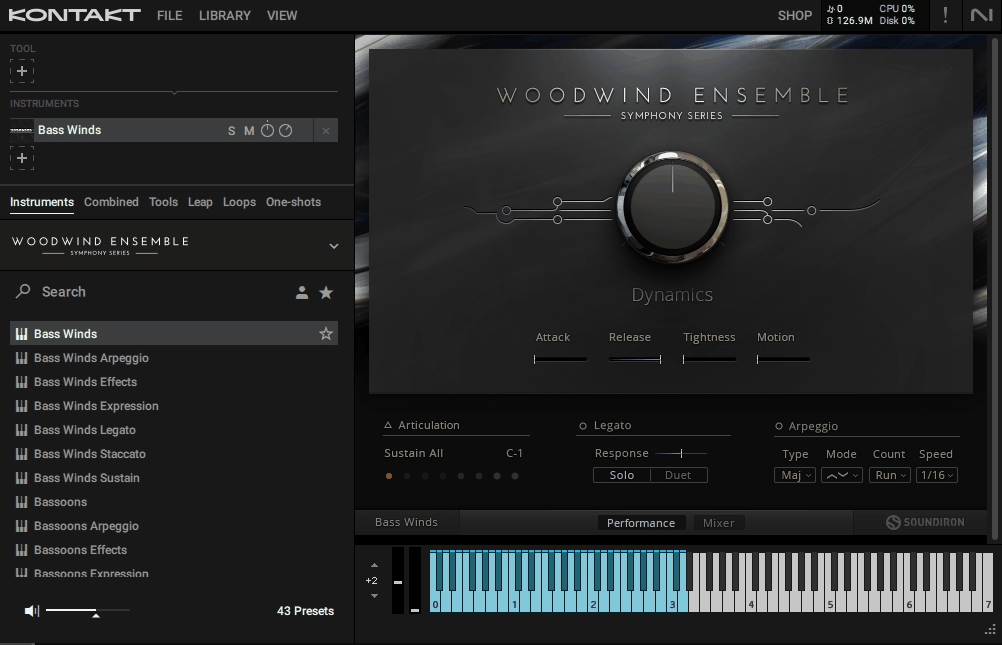
The first of four Symphony Series entries, Woodwind provides a comprehensive orchestral woodwind section recorded at the Teldex Studio in Berlin with the full range of standard orchestral articulations. Unlike Action Woodwinds which focuses on aggressive scoring, the Symphony Series captures the full dynamic and stylistic range of the woodwind section.
I find the Symphony Series: Woodwind most useful for traditional orchestral writing where you need the complete woodwind palette: solo flute, oboe, clarinet, bassoon, and their ensemble combinations across all standard articulations. The Teldex recording gives the library a spacious, concert hall quality that suits classical and cinematic scoring.
- Complete Section
Individual solo and ensemble patches for flute, oboe, clarinet, and bassoon, plus piccolo, English horn, bass clarinet, and contrabassoon. Each instrument includes sustain, legato, staccato, marcato, trills, and other standard articulations.
- True Legato
Recorded interval transitions provide natural legato between notes, capturing the breath and embouchure movements that make wind instrument legato sound authentic rather than crossfaded.
- Teldex Hall
The Teldex Studio Berlin recording provides a natural concert hall ambience with multiple mic positions (close, mid, far) that you blend to taste. The room sound is musical and well suited to orchestral contexts.
- Dynamic Layers
Multiple velocity and dynamic layers provide smooth transitions between playing intensities, from whisper quiet to full projection. The crossfading between layers is smooth enough to respond naturally to expression control.
- Ensemble Engine
A built in ensemble builder combines solo instruments into custom section configurations, letting you create specific woodwind ensembles without loading separate instances for each instrument.
Available as a Kontakt library.
20. Symphony Series: Percussion

Symphony Series: Percussion covers the full range of orchestral percussion instruments, from timpani and bass drum through snare drum, cymbals, glockenspiel, xylophone, marimba, vibraphone, chimes, and auxiliary percussion. The library is recorded in the same Teldex Studio environment as the rest of the Symphony Series, providing consistent acoustic character across the full orchestral palette.
What I value about this library is its comprehensiveness. Rather than needing separate libraries for timpani, mallet percussion, and auxiliary instruments, everything is in one collection with a consistent recording quality and room sound. For orchestral template building, having all your percussion from the same session and the same room simplifies the mixing process considerably.
- Full Percussion Range
The library covers timpani, snare, bass drum, cymbals, tam tams, glockenspiel, xylophone, marimba, vibraphone, tubular bells, triangle, and a wide range of auxiliary percussion. Each instrument is recorded with multiple dynamics, stick types, and playing positions.
- Round Robins
Extensive round robin sampling prevents the machine gun repetition that plagues percussion libraries with limited sample variation. Repeated notes trigger different recordings, maintaining a natural, varied sound across repetitive patterns.
- Consistent Acoustics
All instruments were recorded in the same Teldex Studio session, providing consistent room tone, perspective, and acoustic character across the entire percussion section. This consistency makes mixing and balancing different percussion instruments much easier.
- Multiple Mics
Close, mid, and far microphone positions for each instrument let you adjust the balance between direct attack and room ambience. For orchestral work, blending the positions creates a natural depth that a single mic position can’t provide.
Available as a Kontakt library.
21. Symphony Series: String Ensemble
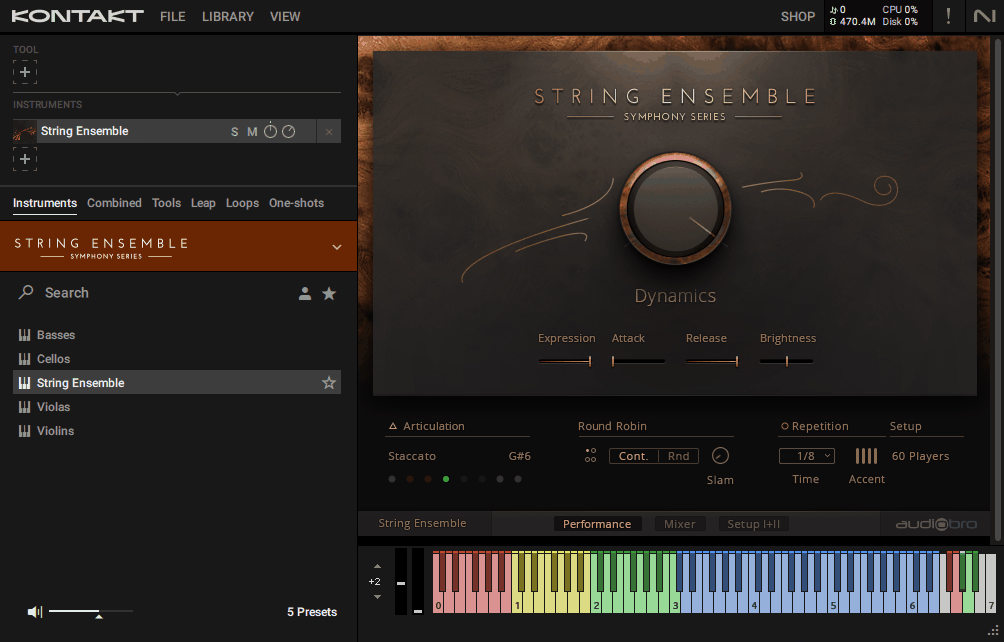
The string section is typically the foundation of any orchestral arrangement, and Symphony Series: String Ensemble provides first violins, second violins, violas, cellos, and double basses recorded as full sections at Teldex Studio Berlin. The library covers the complete range of standard orchestral string articulations with enough dynamic range to handle everything from delicate pianissimo to powerful fortissimo.
I find the String Ensemble works well as a workhorse string library for bread and butter orchestral writing. It’s not the most detailed or expressive string library available (libraries like Spitfire and CSS offer more nuanced legato and more mic positions), but it covers the essentials reliably and sounds good in the context of a full orchestral template built from the Symphony Series.
- Full String Sections
Five string sections (Violin I, Violin II, Viola, Cello, Double Bass) are recorded as full ensemble groups with the appropriate number of players for each section. Each section includes sustain, legato, staccato, spiccato, tremolo, pizzicato, and trills.
- Legato Transitions
Recorded legato intervals capture natural bow changes and string transitions, producing connected melodic lines without the obvious sample switching that non legato patches exhibit.
- Expression Mapping
Detailed dynamic crossfading responds to modwheel, velocity, and expression controller input, providing natural dynamic variation from pianissimo to fortissimo. The crossfading between layers is smooth enough for gradual dynamic swells.
Available as a Kontakt library.
22. Symphony Series: Brass
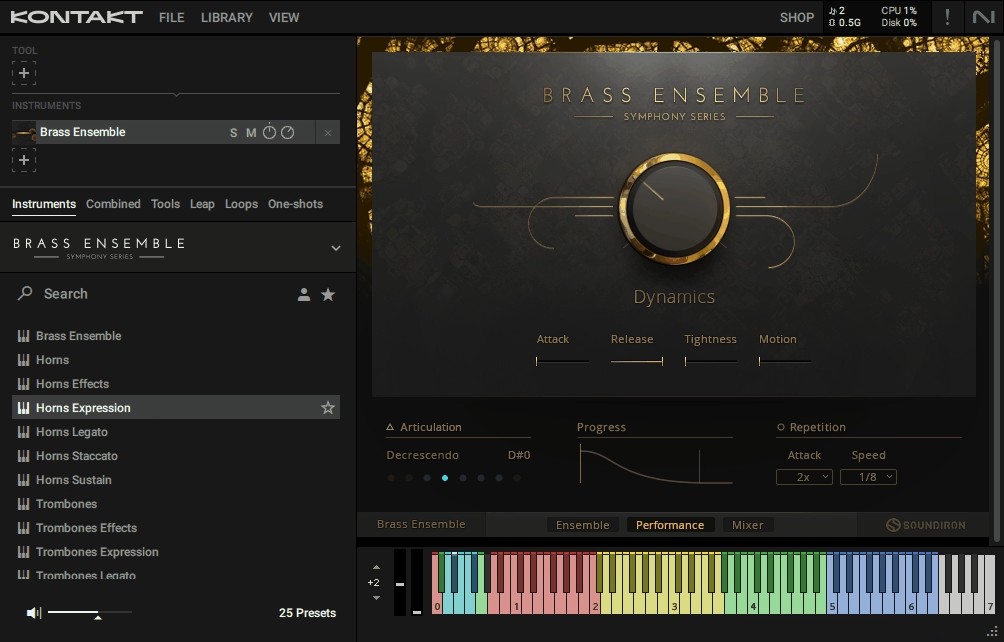
Rounding out the Symphony Series, the Brass library provides French horns, trumpets, trombones, and tubas recorded as both solo instruments and section ensembles at Teldex Studio. The brass section is arguably the most difficult orchestral family to sample convincingly due to the complex behavior of brass acoustics, and NI’s recordings handle the challenge respectably.
The Brass library is where I notice the biggest difference between the Symphony Series and more premium brass libraries. High end brass libraries capture more subtle dynamic transitions and provide more legato variants. That said, for producers who want a complete orchestral template from a single consistent source rather than mixing and matching libraries from different developers, the Symphony Series Brass provides a solid foundation that integrates seamlessly with the rest of the series.
- Solo and Ensemble
Both individual solo instruments and full section ensembles are included for each brass family. The solo patches provide more exposed, detailed performances. The ensemble patches deliver the power and weight of a full brass section.
- Articulation Set
Standard orchestral brass articulations include sustain, legato, staccato, marcato, sforzando, muted, and several others. The articulations cover the essential vocabulary of orchestral brass writing.
- Dynamic Range
From pianissimo to triple forte, the dynamic layers capture the full power range of the brass section, including the physical effort and brightness changes that occur at different playing intensities. Brass instruments change timbre dramatically with volume, and the layering captures this.
- Mute Options
Muted articulations for trumpet and trombone provide the softer, more distant quality of muted brass. Both straight and cup mute variants are included.
- Teldex Consistency
Recorded in the same Teldex Studio session as the rest of the Symphony Series, the brass library matches the acoustic character and perspective of the strings, woodwinds, and percussion, enabling a cohesive full orchestra sound without room tone conflicts.
Available as a Kontakt library.
Get the Free Plugin Starter Kit
The genuinely useful free DAWs and plugins worth installing. No filler. Straight to your inbox.

Hello, I’m Viliam, I started this audio plugin focused blog to keep you updated on the latest trends, news and everything plugin related. I’ll put the most emphasis on the topics covering best VST, AU and AAX plugins. If you find some great plugin suggestions for us to include on our site, feel free to let me know, so I can take a look!