
Programming bass used to be the weakest link in any home studio production. You’d lay down drums that sounded massive, guitars that sounded alive, and then drop in a bass part that immediately gave the whole thing away as fake. The low end would be stiff, the articulations would feel robotic, and no amount of mixing could hide the fact that a real player never touched a real instrument.
That’s changed dramatically. The current generation of bass guitar plugins can deliver performances that sit in a mix with the weight, movement, and feel of a tracked bass. Some use deep multisampling with thousands of recordings per instrument.
Others use physical modeling to generate sound in real time with no samples at all. A few even compose basslines for you based on your chord progressions and drum parts. This list covers 10 dedicated bass guitar plugins built for rock, metal, and general jamming.
From the Pluginerds Store
Before you get into the plugins on this list, something worth thinking about. The difference between programming drums with a mouse and triggering them live on velocity-sensitive pads is immediately noticeable in how the parts feel.


1. Solemn Tones MayoBass
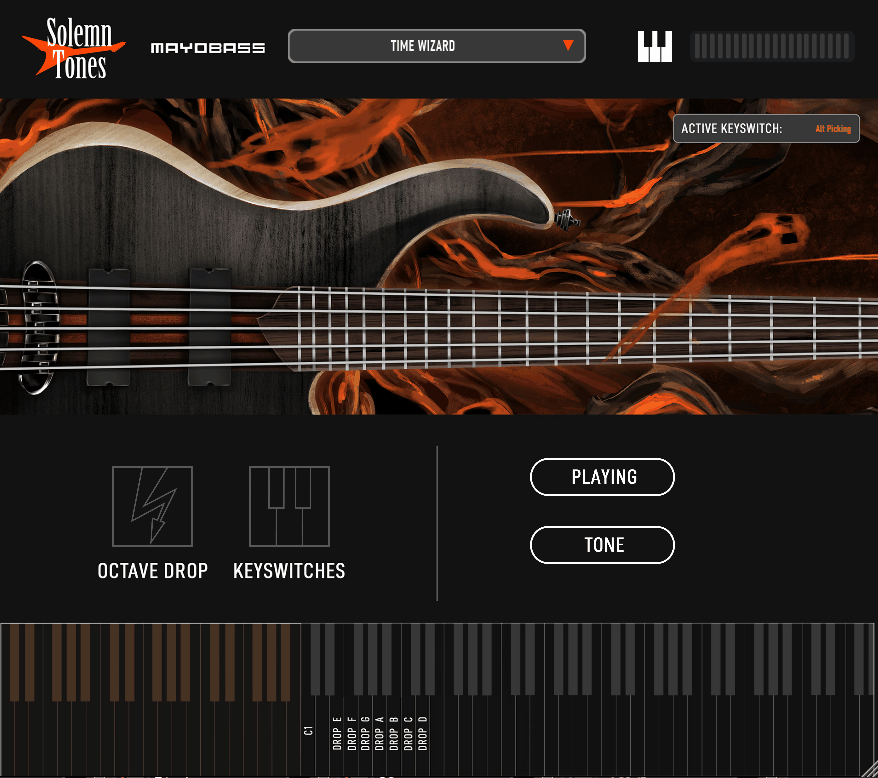
Solemn Tones has been a staple in the modern metal production community for years, with their guitar samplers showing up on metalcore and post-hardcore demos everywhere.
MayoBass is their dedicated bass instrument, built from samples of a Mayones Patriot Bass tracked through a professional recording chain. If you’ve used their Odin or Loki Bass plugins before, the workflow will feel familiar, but the engine and GUI have been significantly upgraded.
The plugin was designed with a singular focus: giving metal and rock producers a bass tone that’s ready to go the moment you load it. Five pre-built tones handle the heavy lifting, and the extended tuning range means you’re covered regardless of how low your band plays. Endorsements from members of Epica and Ice Nine Kills speak to where this plugin lives in the production world.
- Tuning range from E standard down to double drop C
This is MayoBass’s killer feature for heavy music. The bass was sampled down to drop F and then carefully retuned to reach double drop C, covering E standard, drop D, drop C, drop B, drop A, drop G, drop F, and everything in between.
Unlike pitch-shifted alternatives where low notes turn to mush, MayoBass retains clarity and tightness across the entire range because the core samples were captured at genuinely low pitches. No wobbly strings, no artifacts.
- 5 mix-ready tones
Each of the 5 included presets was built using Darkglass B7K and Parallax signal chains, which are the same processors you’ll find on actual metal records. A clean DI output is also available if you’d rather run your own amp sim or processing, but the presets are genuinely finished tones. Most users report never needing to reach for anything beyond what’s already loaded.
- 20 playable articulations
The articulation list goes well beyond sustains and palm mutes. You get down picking, up picking, alternate picking, finger picking, dead mute notes, harmonics, slaps, slides, bends, open plucks, dead plucks, left-handed mutes, and slides from and to specific notes. That breadth of performance vocabulary lets you program parts with real movement and dynamics instead of relying on a single sample type for everything.
- Human Error controls for realistic imperfection
The Human Error menu introduces subtle timing and performance inconsistencies that prevent programmed parts from sounding mechanical. When every other element in your production is also virtual, these small variations make a noticeable difference. It’s the kind of detail that separates a bass part people accept from one they actually believe.
- No sampler required
MayoBass runs as a standalone VST3, AU, and AAX plugin with native M1/M2 support. No Kontakt, no third-party player, no extra steps. The full library sits at around 4GB of disk space and requires just 2GB of available RAM, making it one of the lightest metal bass instruments you can install.
Get the Free Plugin Starter Kit
The genuinely useful free DAWs and plugins worth installing. No filler. Straight to your inbox.
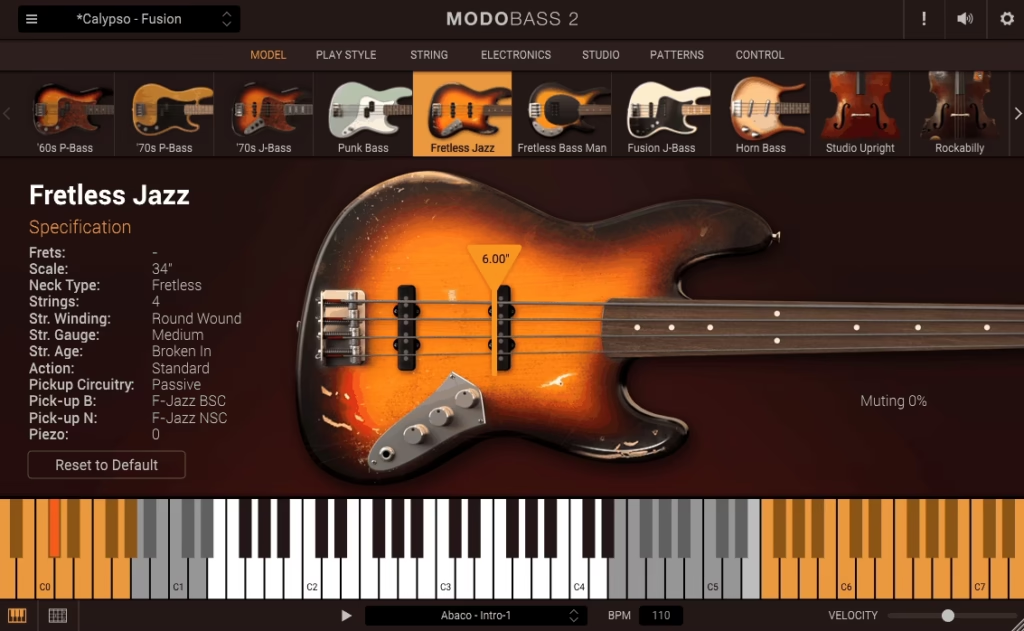
2. IK Multimedia MODO BASS 2

Every other plugin on this list relies on recorded samples. MODO BASS 2 doesn’t. It generates every sound from scratch using real-time modal synthesis, mathematically modeling the physics of vibrating strings, resonating bodies, and electromagnetic pickups.
IK Multimedia first released this technology in 2016 as the world’s first physically modeled electric bass, and version 2 expands it significantly with 22 bass models including new fretless and upright options.
The practical advantage is enormous. Because nothing is sample-based, the entire plugin installs at roughly 200MB, and you get continuous, non-stepped control over nearly every physical parameter. You’re not cycling through velocity layers or hoping round robins mask repetition. You’re shaping the actual physics of how the instrument generates sound, and every adjustment produces a musically meaningful result.
- Toggle any electric bass between fretted and fretless with one click
In the SE and full versions, every one of the 20 electric bass models can be switched to fretless instantly. The synthesis engine recalculates the entire string behavior to model how a fretless fingerboard responds, including the characteristic sliding intonation and organic whine. No sample library can replicate this because it would require re-recording every instrument twice.
- String age and physical customization controls
You can set how old the strings are, and it directly affects brightness, sustain, and harmonic content. Combine that with adjustable string gauge, body resonance, pickup type, pickup position, and pluck position along the string, and you have a depth of tonal sculpting that preset-based instruments simply can’t offer.
- MIDI bass patterns
The Patterns browser organizes over 1,500 grooves by genre, song section (verse, chorus, bridge), play style, length, key, and time signature. Each pattern shows a small pitch and dynamics visualization so you can preview its character before dragging it into your DAW.
Patterns play back at half or double speed with DAW sync, and they’re all fully editable MIDI you can customize to fit your track.
- Two amp models
A classic all-tube amplifier with 1×15 cab and a solid-state model with 4×10 cab handle the amplification side. Each has dedicated gain, EQ with sweepable mid, and graphic EQ for further shaping.
IK’s non-linear modeling means the effects interact with each other the way real hardware does, with components influencing each other across the chain. A global bypass lets you route signal into AmpliTube for even more options.
3. Toontrack EZbass
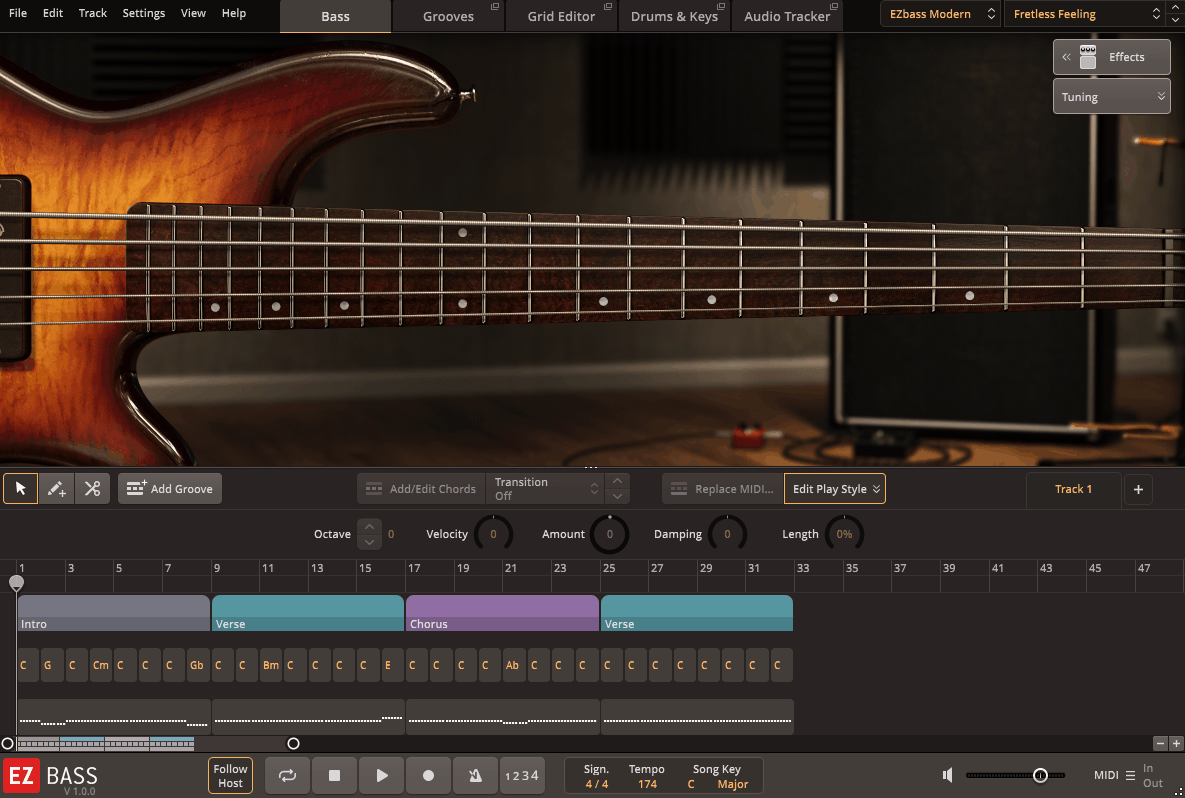
Toontrack turned drum programming from a chore into a creative tool with EZdrummer, and EZbass does the same thing for bass guitar. It’s not a traditional sampler.
It’s closer to a virtual session bassist that can learn your song’s chords, follow your drum parts, and generate musically appropriate basslines while you focus on writing. Sound On Sound called it brilliant and predicted it would sell in massive numbers.
Two multisampled instruments form the sonic foundation: a Vintage Fender Jazz Bass and a Modern Alembic, totaling around 2GB of samples. Both were captured with Toontrack’s signature attention to detail, with fingered and picked versions and a comprehensive set of keyswitch articulations. But the instruments are really just the starting point for what EZbass actually offers.
- Automatic bassline generation
Drop a drum MIDI file or keyboard chord progression onto the Drop Zone, and EZbass analyzes the rhythmic and harmonic content to generate a matching bassline.
The results are surprisingly musical, with the engine intelligently selecting articulations, fills, and patterns that actually fit the feel of your arrangement. It’s not flawless every time, but as a starting point it saves hours of manual note-by-note programming.
- Audio-to-MIDI conversion from Superior Drummer 3’s engine
Already recorded a rough bass part, even a messy one? EZbass can convert audio recordings directly to MIDI using the same tracking technology behind SD3.
The converted performance lands right inside EZbass where you can clean it up, swap articulations, and hear it played back through the high-quality sampled instruments. It’s a genuinely useful bridge between live recording and virtual production.
- Tap2Find groove matching
Tap out the rhythm you want on your keyboard, and EZbass searches its groove library to find patterns that match your feel. Results are ranked by how closely they match, and you can preview them instantly before committing.
Combined with the Drop Zone workflow, it means you can assemble complete bass parts without programming a single note from scratch.
- Multi-output routing
EZbass supports separate outputs for the DI signal (1/2), amped tone (3/4), and sub-bass (5/6). Processing each element independently in your DAW opens up serious mixing flexibility.
The Sub-bass control adds genuine low-frequency weight that anchors rock and metal mixes without muddying up the fundamental bass tone. MIDI Learn is available across all effect parameters for real-time control and automation.
4. Ample Sound Ample Bass P (ABP)
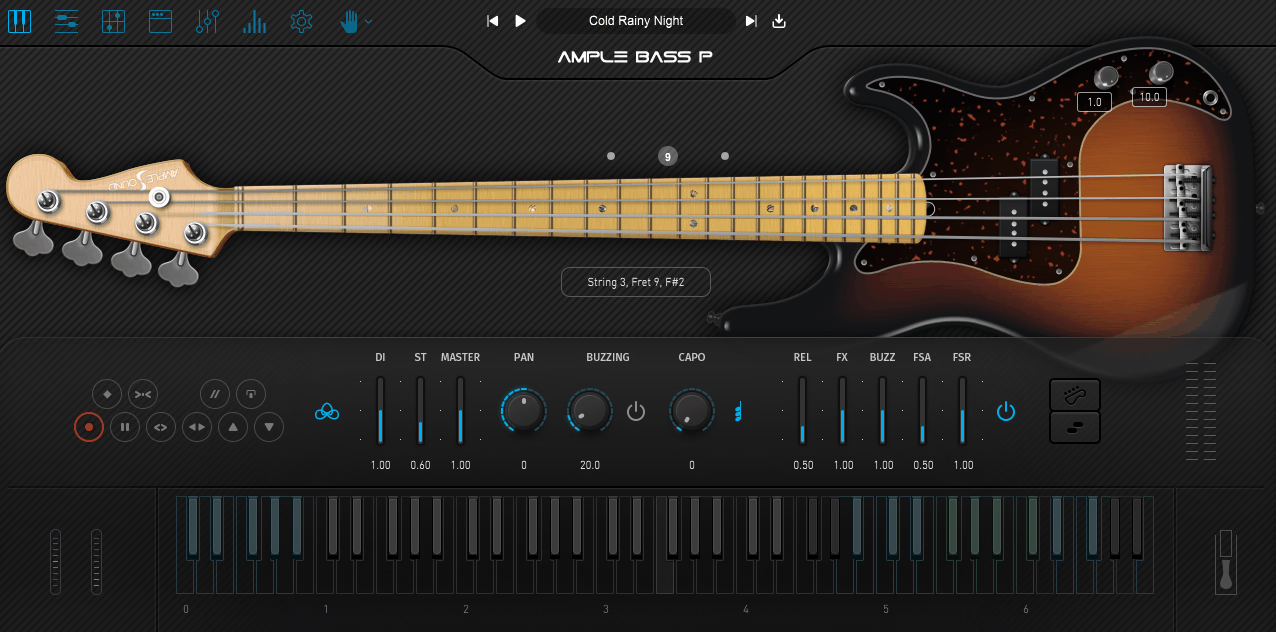
Ample Sound has been building one of the most detailed virtual guitar and bass catalogs available, and the Ample Bass P is their take on the most recorded bass in history: the Fender Precision.
The library holds 2,851 samples recorded at 44.1kHz / 24-bit with no destructive editing or dynamic processing applied to the raw recordings. That unprocessed approach preserves the full harmonic character and leaves maximum room for your own tone shaping.
Ample Sound’s sampling engine uses a system called Rhombic multisample selection, which ensures that even repeated notes at identical velocity never trigger the same sample twice.
Combined with adjustable fret noise, release sounds, and accentuation, programmed basslines take on a convincingly human quality without requiring you to micromanage every MIDI event.
- Riffer 4 with dual Piano Roll and Guitar Tab views
Riffer 4 is a MIDI editor built specifically for plucked string instruments, and it does something no other editor offers: seamless real-time switching between Piano Roll and Guitar Tab perspectives.
If you think in fret positions rather than note names, the Tab view changes everything about how you compose. The editor also includes hundreds of pre-built bass riffs and supports importing Guitar Pro files from GP3 through GP8 with full retention of fingering, articulations, and performance data.
- Built-in amp system
Three modeled bass amp heads are included: B15R (Vintage-15), BA500 (Bass-500), and SVT-Pro (Bass-Pro). Pair them with four cabinet choices (1×15, 2×10, 4×10, 8×10), each offering four virtual mics: U87, C414, MD421, and SM57.
That’s a staggering number of tonal combinations without loading a single external plugin. Built-in effects round out the chain with 8-band EQ, compressor, delay, and convolution reverb.
- Combined keyswitches for simultaneous articulation assignment
Beyond the standard 13 articulations (sustain, palm mute, harmonics, hammer-on/pull-off, legato slide, slap, pop, tap, and more), ABP lets you assign different articulations to specific strings at the same time.
Set slap on the G and D strings while pop triggers on the A and E strings, exactly how a real bass player would approach a slap part. This combined keyswitch system adds a layer of realism that single-articulation switching can’t replicate.
- Auto Buzz system with controllable parameters
Fret buzz is the subtle detail that separates programmed bass from played bass. ABP’s Auto Buzz lets you control the start position, duration, and amplitude of buzz noises, or let the engine handle randomization. You can also toggle buzz on and off mid-performance with a keyswitch, which is perfect for accenting specific notes in a phrase without applying it globally.
5. Ample Bass P Lite II (Free)
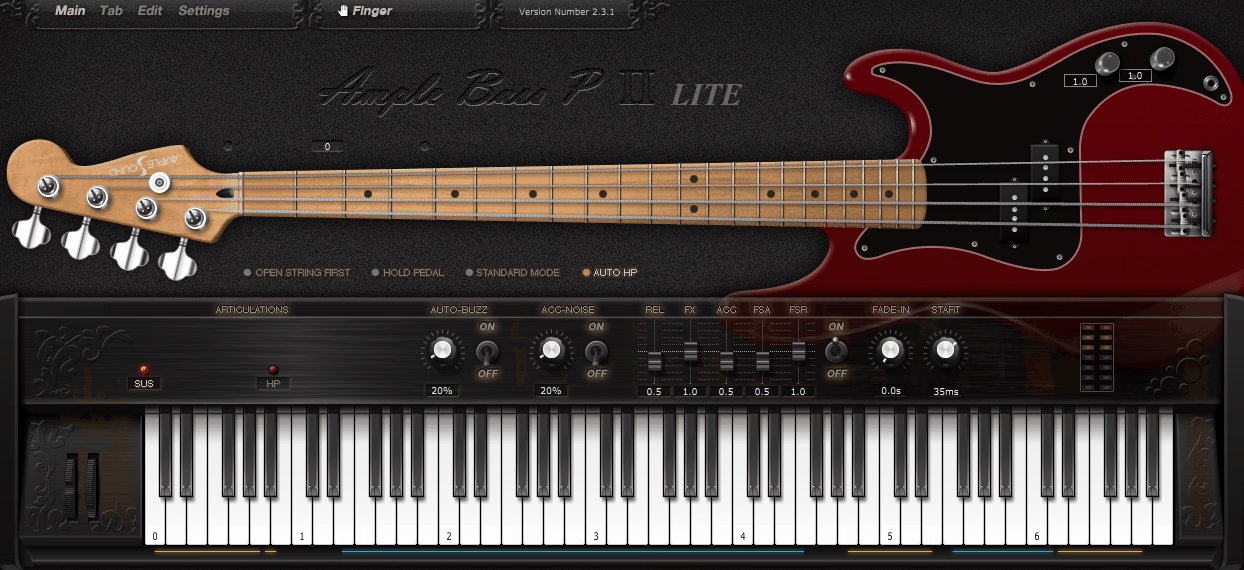
You don’t always need a full-featured bass workstation. Sometimes you need a reliable P-bass that sounds legitimate and costs absolutely nothing. Ample Bass P Lite II delivers exactly that.
It’s built on the same Fender Precision samples as the full ABP, running the same engine with the same sampling quality. KVR users have called it the best free electric bass plugin available, and it’s hard to argue with that assessment.
The Lite version strips things back to essentials, but those essentials still outclass many paid competitors.
You get fingerstyle sustain samples with proper poly legato and slide smoother technology, an Auto Buzz system, full CPC (Customized Parameters Control) for MIDI CC mapping, and the Tab Player. The only significant limitation is the playable range, which covers two octaves instead of the full version’s 3.5.
- Tab Player
Even in this free version, the Tab Player loads popular bass tablature formats and plays them through the Ample Sound engine. The smart part is that the player automatically adds appropriate articulations like string noise and fingering sounds where it thinks they belong, bringing flat tab files to life without manual intervention. It syncs with your DAW and can export tablature as audio files.
- Capo and Open String First
The virtual Capo transposes the entire instrument without modifying your MIDI data, which is invaluable for quickly auditioning parts in different keys.
Open String First changes the fretting algorithm to prioritize open string voicings, which dramatically alters the sustain character and tone of your parts. Both are features you’d expect in premium plugins, not a free download.
- Manual vibrato wheel tuned for bass string physics
Unlike a generic pitch bend, the vibrato wheel is specifically calibrated for the physical behavior of bass strings. The modulation feels natural and musical, responding to real-time controller input with the kind of organic movement that synth-style pitch wobble can’t reproduce. It’s a small detail that makes a big difference when programming expressive parts.
6. ujam Virtual Bassist SLAP
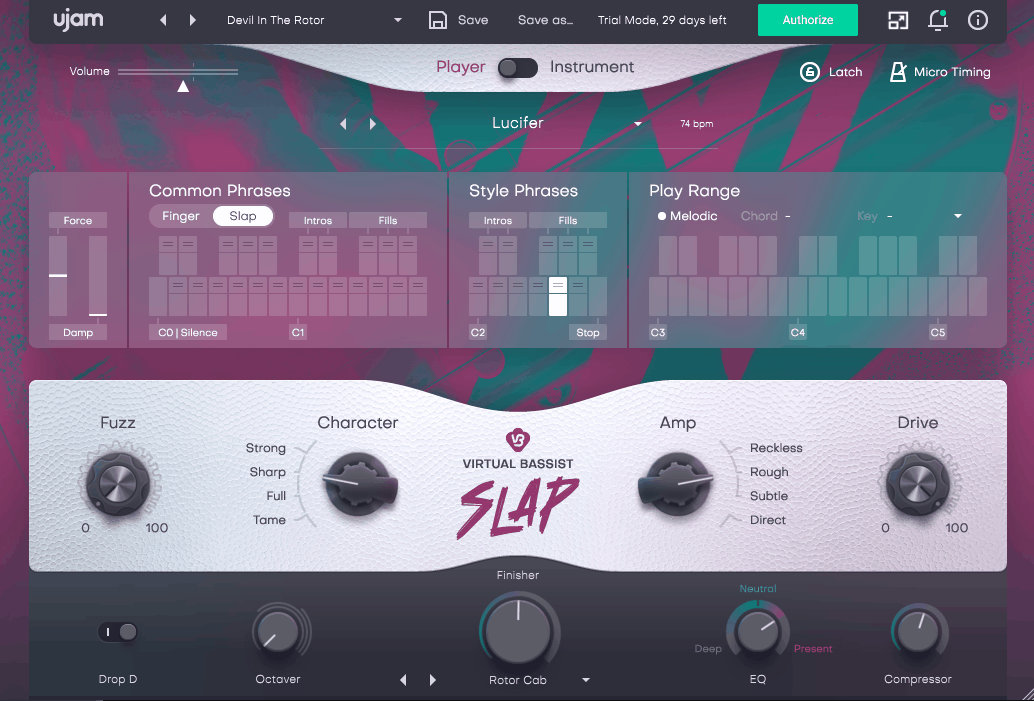
Most bass plugins assume you’re comfortable writing MIDI note by note. ujam Virtual Bassist SLAP assumes you might want the plugin to handle that part.
Recorded using a Stingray-style bass with an active pickup system, SLAP is built around the idea that producers and songwriters should be able to get professional bass parts down quickly, without needing to understand every nuance of bass guitar technique.
The plugin works in two modes. Player Mode gives you 30 styles spanning over 350 individually performed phrases that follow your chords and key automatically. Instrument Mode opens up full articulation access for custom performances via MIDI controller.
ujam’s client list includes BMW, Warner Bros, Sony, Universal, and Ubisoft, which tells you something about the production quality baked into the presets.
- Intelligent chord recognition
With Melodic Mode active in Player Mode, SLAP doesn’t just follow root notes. It analyzes the chords you play and generates melodic figures, licks, and fills that complement the harmonic context.
The engine selects different articulations and rhythmic patterns depending on the chord input, which creates performances that feel dynamically responsive rather than looped. This is also useful when feeding it MIDI from a Virtual Guitarist track.
- Finger/Slap toggle
A single switch flips between fingered and slapped playing technique, and you can combine both within a single performance.
The transition between styles sounds natural because both were recorded with equal detail, not because one was processed to approximate the other. Pairing finger and slap passages within a track adds the kind of dynamic contrast that makes bass parts feel performed rather than programmed.
- Custom Fuzz Box effect built for bass frequencies
ujam designed a dedicated Fuzz Box specifically for SLAP that delivers the kind of saturated, filthy low-end destruction that generic distortion plugins struggle with. When standard drive and overdrive aren’t dirty enough, this fills the gap with a character that was purpose-built to sound right on bass guitar.
Flanking the main tone controls are separate Fuzz and Drive knobs for fine-tuned grit levels.
- 30 Finisher multi-effect modes
The Finisher section adds 30 complex multi-effect combinations that go beyond basic EQ and compression. These range from subtle spatial treatments to dramatic tonal transformations, letting you turn a straightforward slap pattern into something completely unexpected.
Combined with the Character rotary (Strong, Sharp, Full, Tame) and Amp dial (Reckless, Rough, Subtle, plus a DI bypass), the tonal palette covers everything from pristine funk to aggressive rock.
7. Ample Sound Ample Bass J (ABJ)
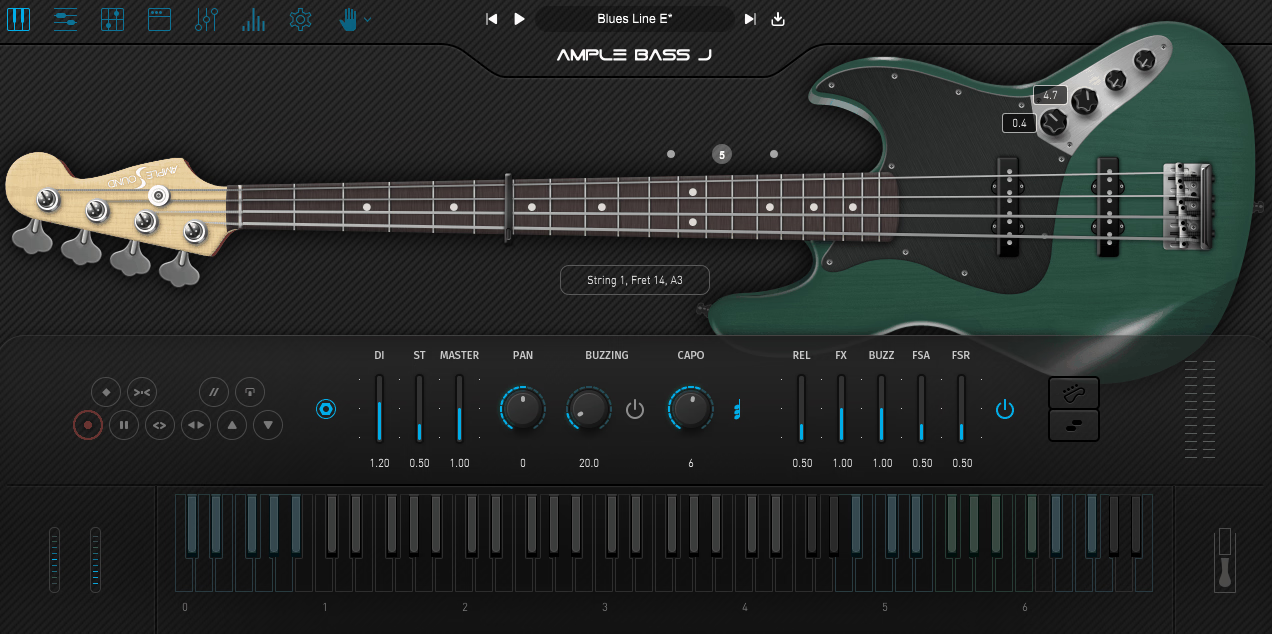
The Precision Bass gets most of the attention in rock, but the Fender Jazz Bass is often the more versatile choice. Its dual-pickup design produces a brightness and cut that pushes through dense arrangements where the P-bass sometimes gets lost.
Ample Sound’s ABJ captures a particularly special instrument: a John English Masterbuilt Jazz Bass, hand-crafted by one of Fender’s most respected custom shop builders before his death in 2007.
The 3.71GB library was recorded on every fret with no destructive editing, preserving the full string-to-string harmonic variation of the original instrument.
It ships with fingerstyle and pick sample sets covering 14 articulations from standard playing through to slap, pop, and tapping. Early Ample Sound forum posts describe the bass as sounding wide and deep, with both modern taste and Fender’s traditional character.
- Groovy single-note bassline engine
Repetitive one-note lines are a rock bass staple, and they’re notoriously difficult to make sound human with samples because identical notes in sequence create a machine-gun effect.
ABJ solves this with dedicated one-note loops recorded at every fret, delivering a groovy, rhythmic feel that maintains its character even as the tempo changes. These aren’t just retriggered samples with randomized velocity. They’re actual recorded performances of single-note patterns.
- String Roll Editor
The String Roll Editor goes beyond a standard piano roll by displaying fingering, articulation, expression, and playing noise in a clear visual layout.
You can see which string each note occupies, what fret position the engine selected, and exactly where articulation changes happen. For producers who spend a lot of time fine-tuning bass performances, this visual clarity saves significant editing time.
- Stereo DI with independent dual pickup blending
Where many bass plugins offer a single mono DI signal, ABJ captures the Jazz Bass’s dual-pickup character with a proper stereo output.
You can blend between neck and bridge pickups independently, recreating the classic Jazz Bass tone sweep from deep and warm to bright and nasal. The stereo imaging adds natural width that helps the bass occupy its own space in a mix without competing with centered elements.
- Auto Buzz with randomization and keyswitch control
The Automatic Buzz system handles fret noise with user-adjustable start position, duration, and amplitude parameters, plus a full randomization option for hands-off realism.
You can also buzz individual notes on demand using a dedicated keyswitch, which is useful for emphasizing specific moments in a bassline. The result is performances with the incidental mechanical noise that makes real bass playing sound alive.
8. Ample Sound Ample Bass TR6
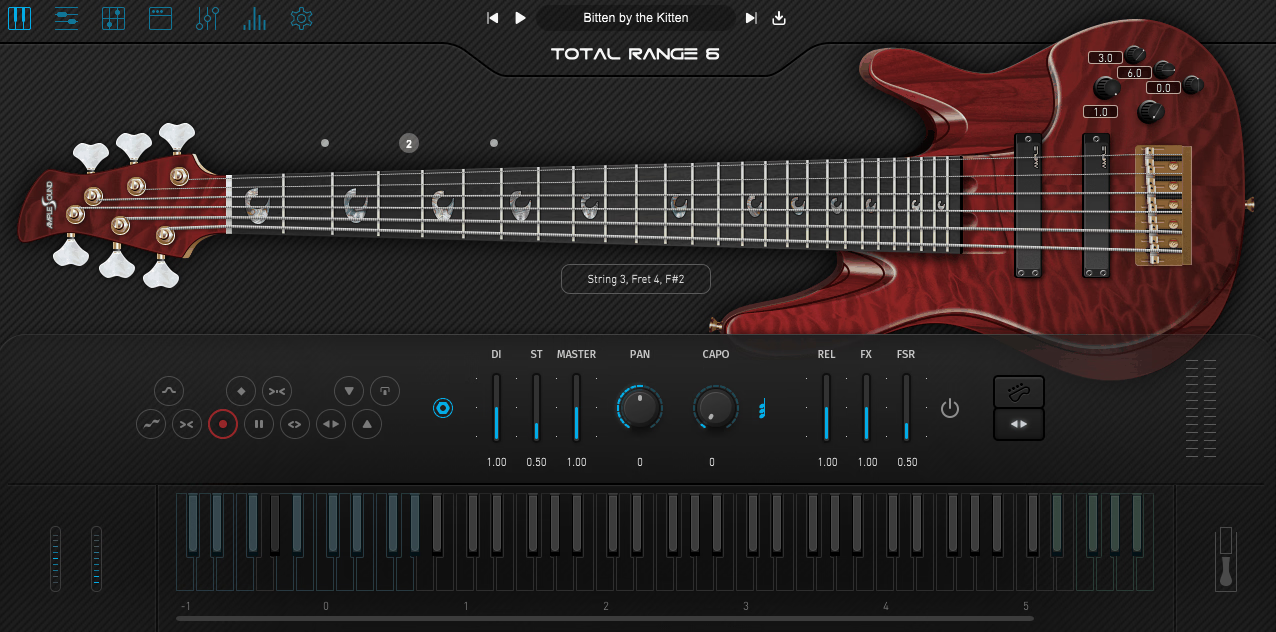
Most virtual bass guitars are modeled on 4- or 5-string instruments, which covers rock and metal well but leaves a gap for players who need extended upper range. Ample Bass TR6 fills that gap with a sampled Yamaha TRBJP2, the John Patitucci signature model 6-string bass. This is an instrument built for jazz, fusion, and pop contexts where melodic bass playing matters as much as rhythmic foundation.
The 7.5GB library captures the TRBJP2’s signature character: an articulate, dynamic tone with a broad frequency range that translates well across genres. With 14 articulations including mordent and arpeggio (techniques rarely found in other bass plugins), the TR6 can handle everything from fast fusion runs to gentle pop grooves. Gearspace users have described it as being capable of doing pretty much anything in any style.
- Extended 6-string range with lowest note at A0
The 6-string sampling extends the playable range significantly beyond standard 4- and 5-string libraries. Drop tuning support reaches down to A0, giving you access to territory that most bass plugins can’t touch without pitch-shifting artifacts. The high string extends well into melodic territory, making the TR6 equally comfortable playing chordal passages, solos, and harmonics as it is holding down root notes.
- 14 articulations
Beyond the standard sustain, palm mute, slap, pop, and slide techniques, the TR6 includes mordent (a rapid alternation between adjacent notes) and arpeggio articulations that are tailored for the kind of expressive, technical playing the TRBJP2 was designed for. These aren’t generic articulations mapped to a bass. They were captured specifically on this 6-string instrument, preserving the unique string spacing and tension characteristics.
- Multiple Capo Logics
The Capo Logic system goes beyond simple transposition. It provides multiple automatic fingering algorithms optimized for different performance types: solo passages, chordal accompaniment, and standard bass lines each use different logic for how the engine selects strings and fret positions.
Switching between them changes the character of your performance in ways that manual MIDI editing would take significantly longer to achieve.
- Stereo DI signal with tone and volume controls
Unlike earlier Ample Bass instruments, the TR6 includes working tone and volume controls that respond to MIDI input, allowing real-time tonal adjustments during playback.
The stereo DI signal captures the TRBJP2’s full frequency spectrum with natural width, and the built-in amp system (B15R, BA500, SVT-Pro with 4 cabs and 4 mic types per cab) provides the same comprehensive tone-shaping found across the Ample Sound bass lineup.
Get the Free Plugin Starter Kit
The genuinely useful free DAWs and plugins worth installing. No filler. Straight to your inbox.

Hello, I’m Viliam, I started this audio plugin focused blog to keep you updated on the latest trends, news and everything plugin related. I’ll put the most emphasis on the topics covering best VST, AU and AAX plugins. If you find some great plugin suggestions for us to include on our site, feel free to let me know, so I can take a look!