
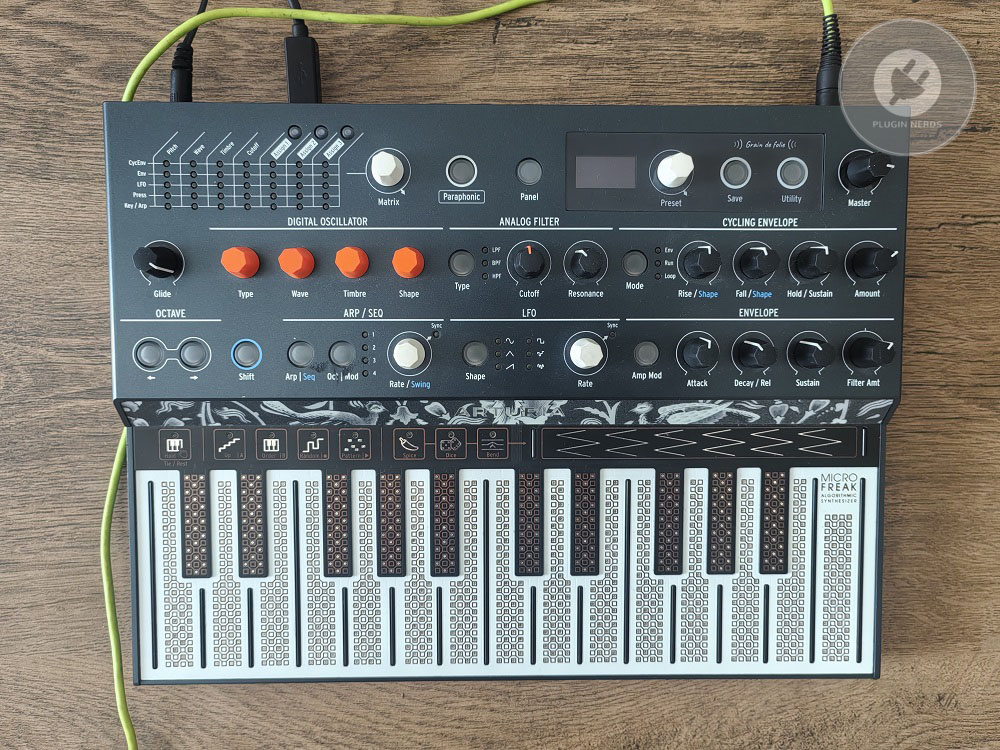
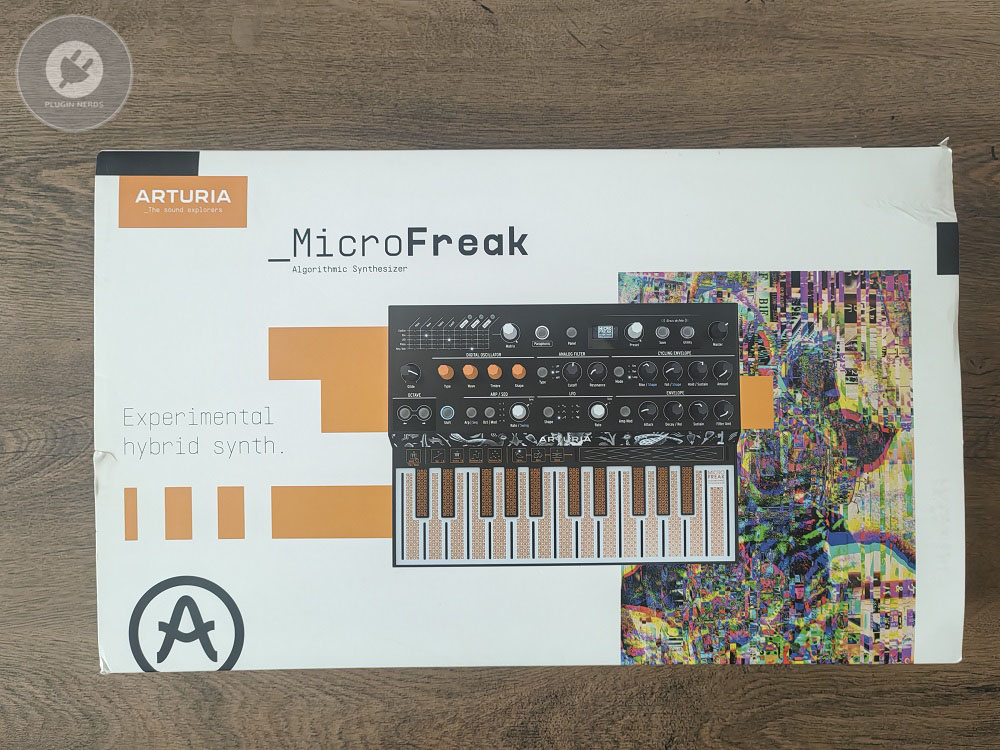
Most synthesizers come with a set list of features and eventually get overshadowed by newer models. The Arturia MicroFreak is different. Since its launch in 2019, it has become more powerful with every free firmware update and now offers more creative options than many synths that cost two or three times as much.
At its heart, the MicroFreak is a hybrid instrument. It combines a versatile digital oscillator engine with a warm, responsive analog filter inspired by the classic Oberheim SEM. This mix of digital flexibility and analog character gives the MicroFreak a wide range of sounds, from clear, glassy textures to thick, rich bass tones, even within the same preset.
What truly sets it apart from other budget synths is how many different types of synthesis it offers in one affordable package.
It includes virtual analog, wavetable, FM, physical modeling, granular processing, sample playback, vocoder, speech synthesis, and more, all controlled from the front panel. No other hardware synth at this price offers so much variety.
Is Arturia MicroFreak Worth It in 2026?
Definitely. With more than 20 oscillator engines, free firmware updates, an analog filter, polyphonic aftertouch, and USB power, the MicroFreak is still the most feature-packed synth under $350. Whether you produce ambient, techno, pop, or experimental music, it earns its spot.
Twenty-One Engines in One Compact Shell
The MicroFreak’s oscillator section stands out from traditional synthesizers. Rather than just one or two sound types, it gives you 21 unique oscillator modes. Each has its own character and can be shaped using three dedicated knobs: Wave, Timbre, and Shape.
Seven of these engines were developed by Arturia and include basic waveforms, superwave, harmonic oscillators, Karplus-Strong physical modeling, and wavetable playback. Another seven come from Mutable Instruments, using open-source code from their well-known Plaits Eurorack module. These add virtual analog, waveshaping, two-operator FM, formant synthesis, chord generation, speech synthesis, and modal resonance.
In addition, three more engines are from Noise Engineering, a boutique Eurorack maker known for bold, experimental sounds. These are Bass (west-coast style wavefolding), Harm (additive synthesis with wavefolding), and SawX (a supersaw with chorus and phase modulation).
And then there are the sample-based engines that arrived with firmware version 5.0, which added a sample playback mode and three granular engines (Scan Grain, Cloud Grain, and Hit Grain).
You can import your own WAV samples using Arturia’s MIDI Control Center software and shape them with granular techniques. This makes the MicroFreak much more experimental than its price suggests.
Because the oscillator section is so broad, the MicroFreak can do things that usually need several instruments. Switching between engines feels like exploring a collection of different synthesis styles, each giving you a new way to start building sounds.
The Analog Filter and Modulation Architecture
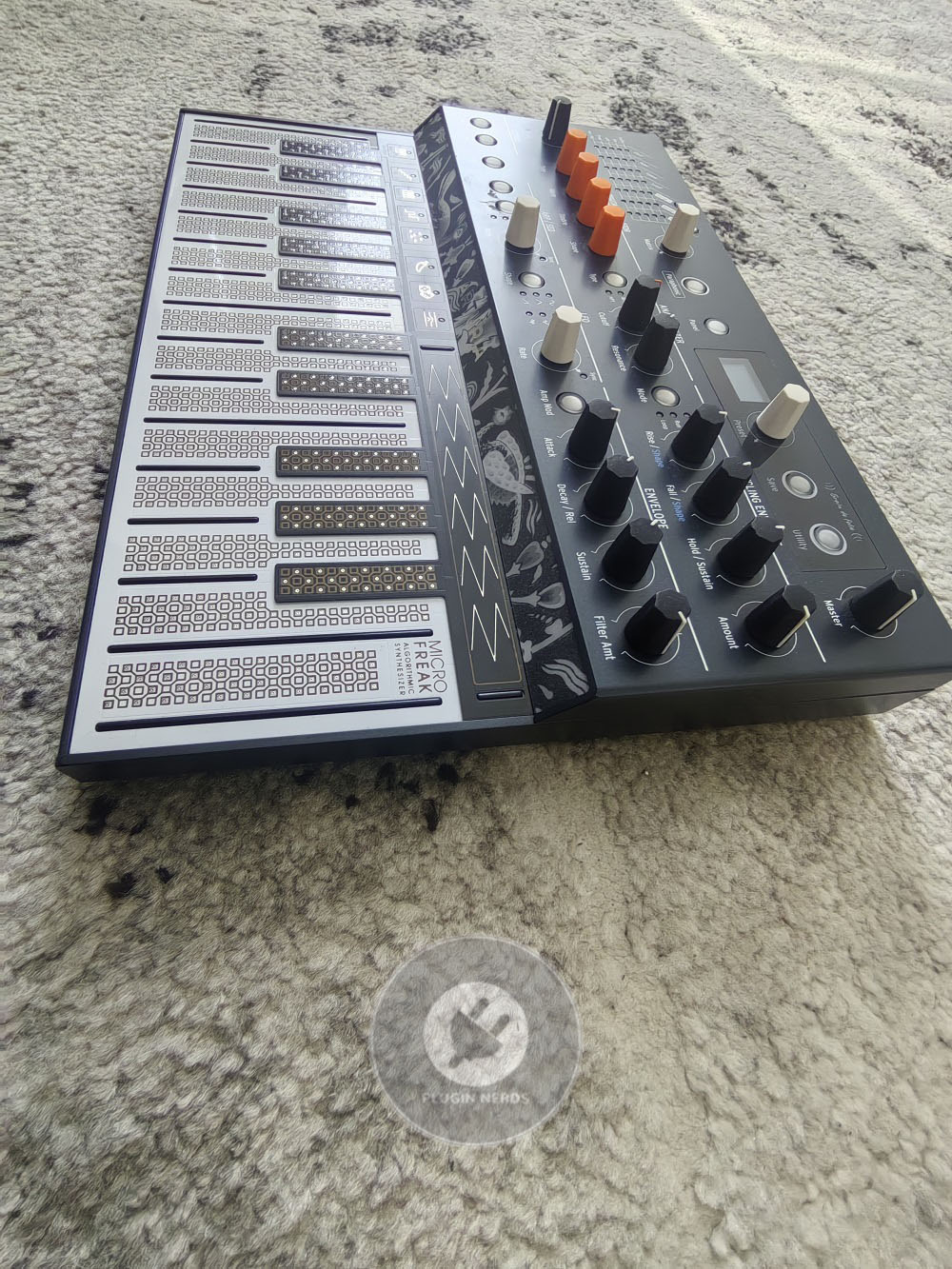
All the digital oscillator sounds go through a single analog state-variable filter, which gives the MicroFreak its warmth and depth. The filter has a 12dB-per-octave slope and offers low-pass, band-pass, and high-pass modes. It can even self-oscillate at high resonance for classic filter sweeps. This filter is gentler and smoother than those on the Arturia MiniBrute or Moog-style synths, but that helps it blend well with the rich digital oscillators instead of competing with them.
The modulation matrix is where things get really interesting. It has a 5-source by 7-destination grid, letting you assign envelope, LFO, keyboard pressure, keyboard pitch, and a random generator to control wave, timbre, shape, cutoff, resonance, LFO rate, and even the oscillator type.
You can actually use the LFO or keyboard pressure to change which oscillator engine is active, so the MicroFreak can shift between different synthesis methods within a single note or sequence.
This unique feature leads to creative surprises that most synths cannot offer.
The cycling envelope is worth highlighting because it works as both a standard envelope generator and a loopable LFO with adjustable rise and fall curves. It can also run at audio rates, allowing for FM-style sound shaping that goes beyond what a regular LFO can do.
Along with a dedicated LFO that offers sine, saw, and square waveforms with tempo sync, the modulation system lets you create patches that feel lively and always changing—even if you do not adjust any knobs while playing.
The Keyboard Nobody Expected to Like
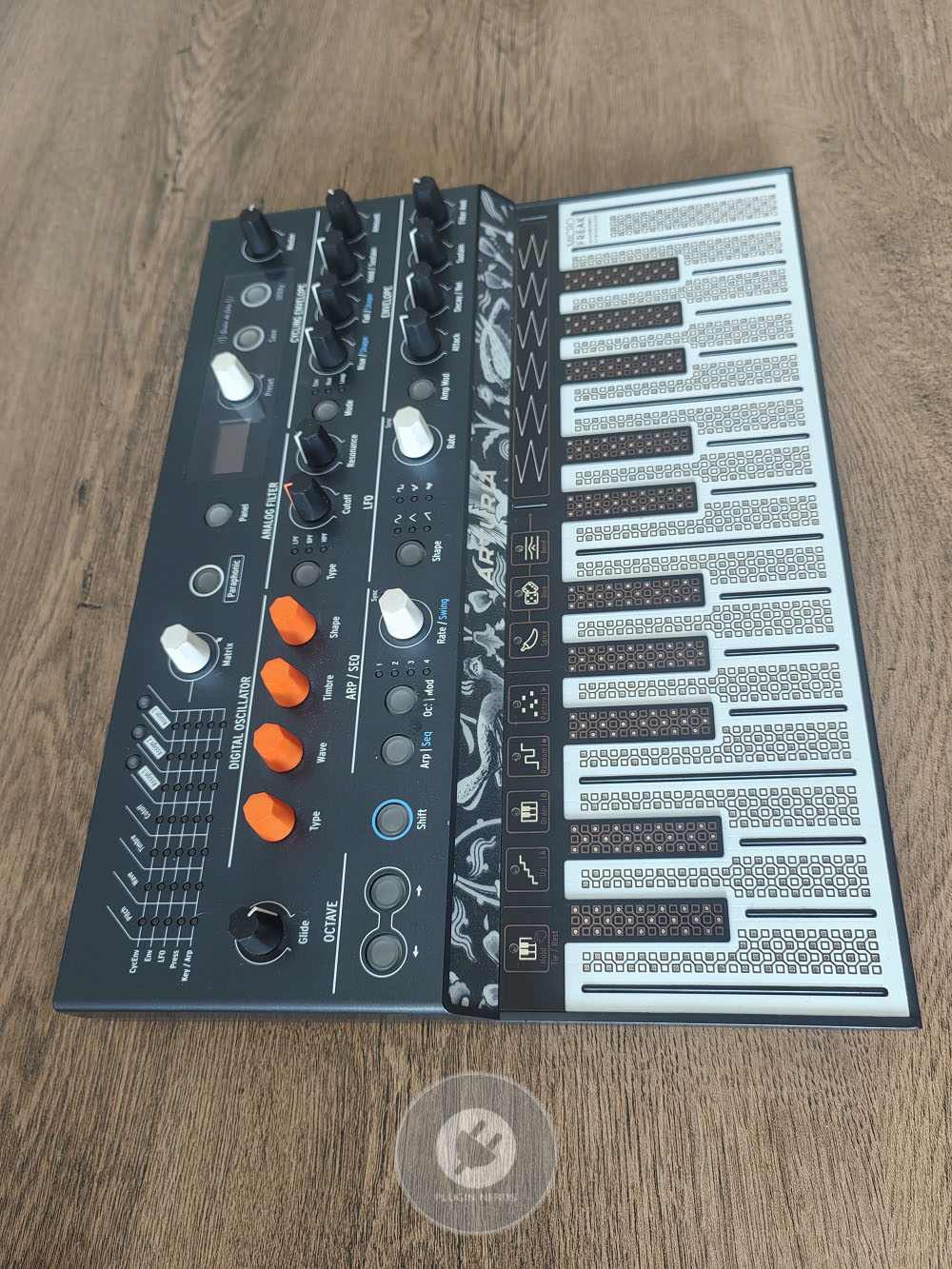
The MicroFreak’s 25-key capacitive touch keyboard is its most debated feature, so it is important to mention. There are no moving parts or springs. You simply place your fingers on flat, gold-traced strips, and the synth responds to your touch and pressure.
What makes this keyboard special is its true polyphonic aftertouch. Each finger in a chord can control modulation depth, filter movement, or any other parameter you assign in the mod matrix.
You usually only see this feature on synths costing over a thousand dollars. The downside is that playing it feels very different from a regular keyboard. There is no tactile feedback or key movement, so you cannot build the same muscle memory as with weighted keys. Some players find it expressive and freeing after getting used to it, while others never fully adjust.
If you prefer a traditional keyboard, you can use the MicroFreak as a desktop sound module with an external MIDI keyboard. The touch strips do not have to be a dealbreaker.
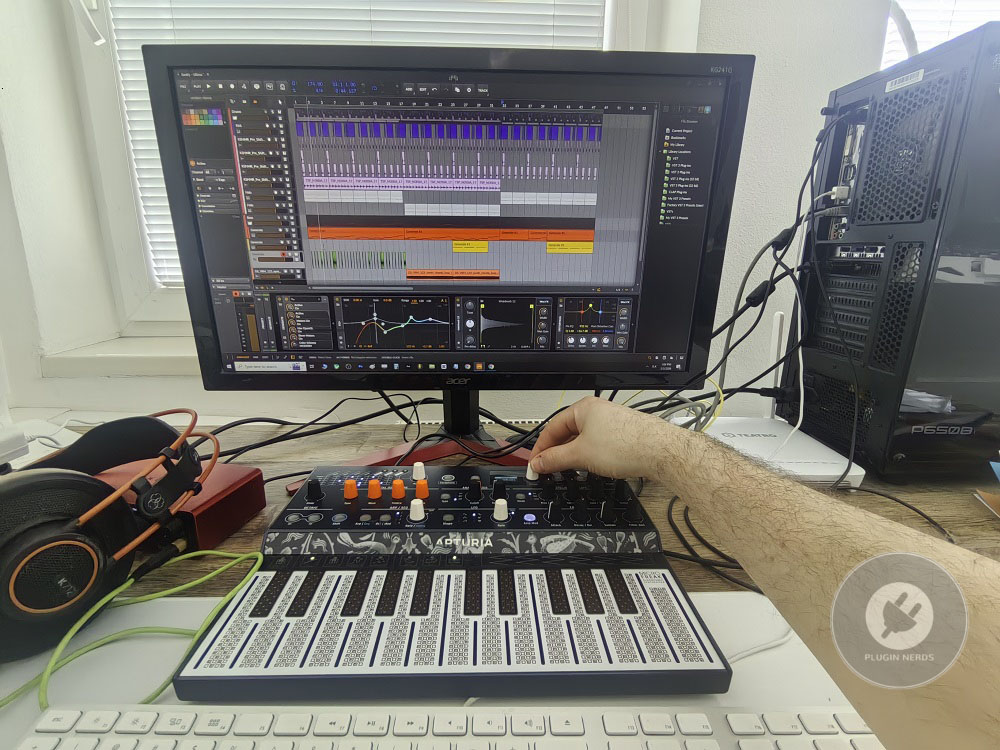
You can also use the built-in arpeggiator and sequencer to play the synth without using the keyboard. The sequencer is impressive for this price, offering 64 steps per pattern, multiple playback directions, and Arturia’s Spice and Dice randomization for creative variations. The synth works in four-voice paraphonic mode, so you can play up to four notes at once, but they share the same filter and envelope.
While it is not true polyphony, it works well for pads, chords, and layered sounds. Most of the time, you will not notice the limitation.
Where It Falls Short and Who Should Buy It
The biggest drawback is the lack of built-in effects. The MicroFreak’s output is completely dry, so you only hear the raw, unprocessed sound. In a studio, where you can use pedals, plugins, or a mixer with effects, this is fine and even gives you more control over your final sound.
For live shows or casual jams, not having built-in reverb or delay can be limiting. If that is important to you, the Arturia MiniFreak is a bigger option with built-in effects, a second oscillator, true six-voice polyphony, and a more traditional keyboard, but it costs about twice as much.
Build quality is another point of debate. The chassis is made of lightweight plastic, making the synth easy to carry, but it does not feel as sturdy as metal instruments. The knobs and encoders are rubberized and feel solid, and most long-term users say the build holds up well with regular use.
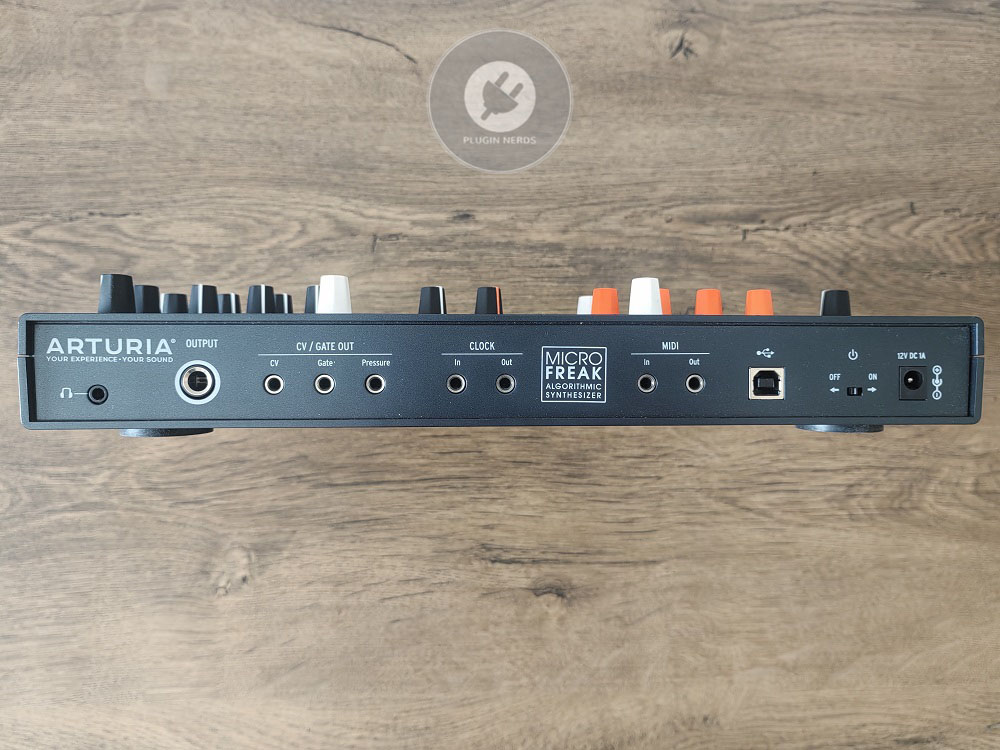
Another thing to note is the output level, which is quieter than some other synths according to reviewers and users. This is not an issue if you use a mixer or audio interface with enough gain, but it is something to keep in mind if you plan to connect directly to powered speakers. For its size, the MicroFreak offers a lot of connectivity: a 1/4-inch balanced main output, a 3.5mm headphone jack that also works as a microphone input for the vocoder, CV/Gate/Pressure outputs, clock in and out, 3.5mm MIDI in and out with breakout cables for standard 5-pin DIN, and USB for both MIDI and power.
It is also worth noting that the MicroFreak can run entirely on USB power. You can plug it into a laptop or USB battery pack and use it anywhere, no wall adapter needed.
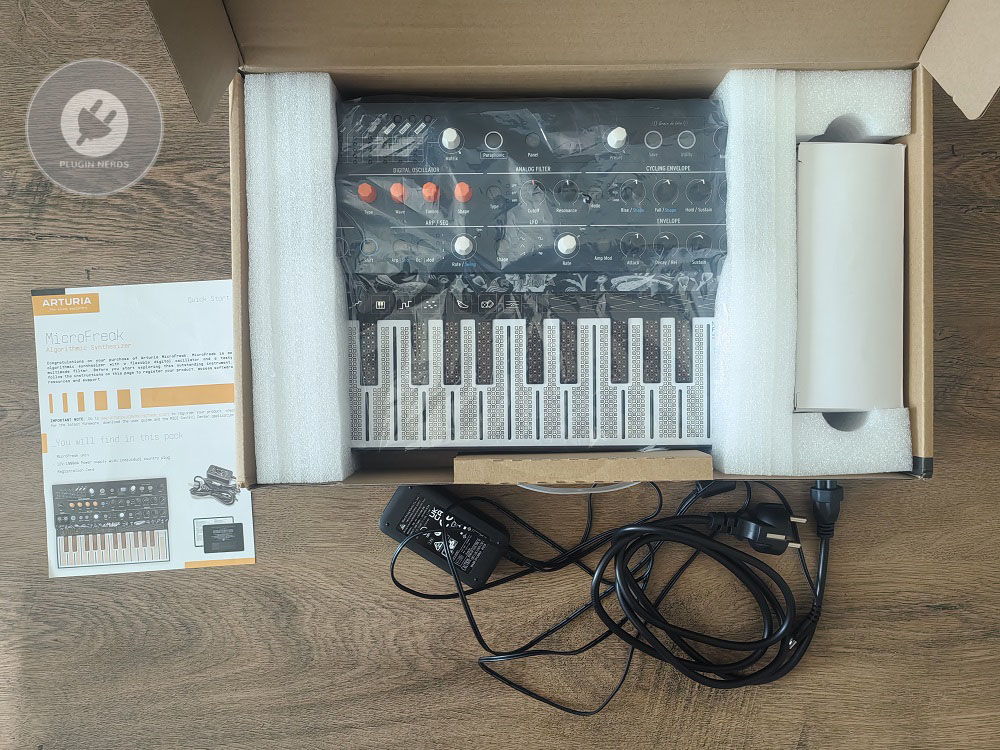
Arturia includes a dedicated power supply in the box for times when you need the most stable performance. This is especially helpful for the pressure-sensitive keyboard, which can sometimes act up when powered only by USB.
Arturia MicroFreak is a great choice if you value variety and creative experimentation more than pure analog sound. If you want a synth that does one thing with perfect accuracy, a dedicated analog monosynth might be a better fit.
But if you want a synth that keeps surprising you with new sounds, gets better with firmware updates, and is small enough to fit on a bookshelf, nothing else at this price compares.
It is a great first synth for anyone wanting to try different types of synthesis without being limited to one style. It is also a useful tool for experienced producers who want something small and unpredictable to inspire new ideas.

Hello, I’m Viliam, I started this audio plugin focused blog to keep you updated on the latest trends, news and everything plugin related. I’ll put the most emphasis on the topics covering best VST, AU and AAX plugins. If you find some great plugin suggestions for us to include on our site, feel free to let me know, so I can take a look!