
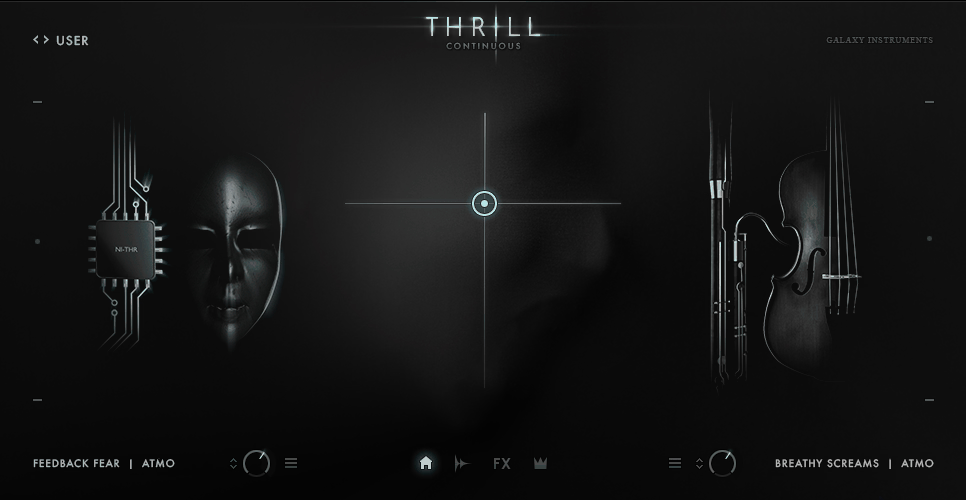
If you’ve ever been up late scoring a tense scene and searching for the right unsettling sound, you know how valuable dedicated dark cinematic libraries can be.
Native Instruments Thrill, made with Galaxy Instruments, is aimed squarely at horror, thriller, and suspense scoring, and I’ve used it on several projects, so I want to share what it really brings to the table beyond the marketing claims.
Thrill is not a one-size-fits-all library. In my experience, it’s built specifically for creating tension, dread, and psychological unease rather than for general cinematic scoring, which means if you want big melodic strings or bold brass, this isn’t the right tool.
But if you need to build suspense or score a nightmare scene, Thrill gives you focused sounds that get the job done quickly without a lot of searching or programming.
What you get
Get the Free Plugin Starter Kit
The genuinely useful free DAWs and plugins worth installing. No filler. Straight to your inbox.
Thrill has about 11GB of samples, all focused on dark, atmospheric, and rhythmic sounds that cover specific cinematic needs. The library is organized into four main types: Rises, Hits, Clusters, and Pulses, and these cover the basics you need to create cinematic tension and suspense across different dramatic contexts.
The Rises section does a great job building tension before big moments, and I think these are some of the best parts of the library because they deliver exactly what you need for escalating intensity. You get different sounds, from orchestral swells to electronic builds, and they react well to velocity and modulation for shaping how the rise develops. In my projects, these work especially well for trailers and scene transitions when you need that classic build-up to an impact point.
Hits and Stabs give you the impact sounds, and while they’re solid, they don’t really stand out from other impact libraries on the market. The orchestral hits have good weight and fit nicely in a mix without much extra work, but I often layer them with other libraries for bigger, more dramatic impacts that really sell the moment. There’s a decent range, from sharp staccato hits to deep braams, but if you already have impact libraries, you might notice some overlap in what Thrill offers.
The Clusters section really stands out for making unsettling atmospheres and dissonant textures that work particularly well in psychological horror contexts. These are long, sustained orchestral sounds with different playing styles and tonal variations, and I’ve used them a lot in horror and psychological thriller scenes when I want unease without a clear melody that would make the music too obvious. The small pitch changes and dynamic layers respond well to expression control, so they feel more playable than typical cluster samples that can sound static.
Pulses give you rhythmic patterns, from subtle repeating notes to strong, driving beats that maintain energy and forward motion. This is where Thrill shows it can do more than just horror, because the pulse engines have tempo-synced patterns that work for anything from tense ticking clock effects to energetic action scenes.
You can change the rhythm complexity, how busy it is, and the timbral character, making these useful for many dramatic situations beyond just pure horror applications.
The engine behind the sounds
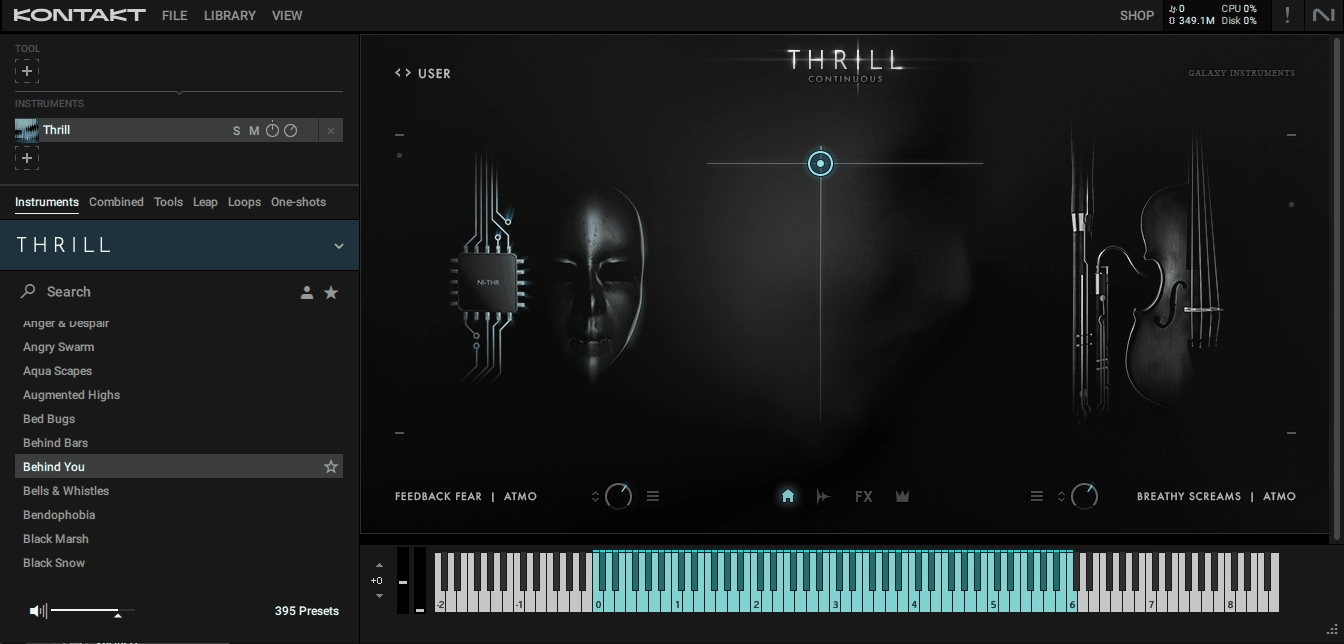
Thrill works with Kontakt or the free Kontakt Player, so you don’t need to buy the full version to use it, which I like because it makes the library more accessible for people who haven’t invested in the complete Kontakt ecosystem yet. The interface is simple and focused on helping you find sounds quickly without too many complicated options that slow down your workflow.
You’ll spend most of your time in the Performance view, which puts the most important controls front and center without burying essential features in submenus. You can easily adjust dynamics, expression, timing, and effects without digging through multiple pages, and from my experience, this design approach supports fast creative decisions when you’re working under deadline pressure.
Thrill includes built-in effects like reverb, delay, filtering, and distortion, so you can shape your sounds without leaving the instrument or loading external processors.
The effects sound good and do their job for getting quality results during composition, but I still use external reverb for final mixes when I want a specific spatial character that matches other elements. The built-in effects are usually enough during composing and keep things simple without requiring a complex signal chain.
The mod wheel and expression controls work smoothly with MIDI input, and the dynamic range feels right for cinematic music, from very soft pianissimo to very loud fortissimo that maintains musical integrity. Some libraries squash the dynamics too much, but Thrill keeps things realistic and musical, so you don’t have to keep adjusting automation constantly to get expressive performances.
How it sounds
U ust as the name suggests, Thrill’s overall sound is dark and cinematic, and I’ve found it works especially well for horror, psychological thriller, and suspense scenes where you want atmosphere and tension without a clear melody that would make the score too prominent.
The samples are professionally recorded and blend well with other top libraries in a mix without sounding out of place or cheap.
The orchestral sounds mix real recordings with processed and hybrid layers, giving you more variety than just orchestral or just synthetic approaches would provide. It seems Galaxy Instruments recorded real players and then processed some of the sounds to make them darker and more unsettling, and this mix works well because you get both the natural feel of real instruments and the edge that pure orchestral samples sometimes miss.
The low-end in Thrill is worth mentioning because it delivers strong sub-bass and impact that works well on different sound systems from headphones to theatrical playback. I’ve used the hits and clusters in theater mixes, and the bass holds up without sounding weak or thin, which honestly makes the low-end one of Thrill’s strengths compared to other libraries that can feel lightweight in the lower frequency range.
There’s a decent amount of variety in the sounds, but Thrill isn’t meant to cover everything you’ll ever need for dark scoring.
You get enough options to keep things from sounding repetitive over short durations, but if you’re scoring a full-length horror film, you’ll probably want to use other libraries too to maintain sonic interest across the entire runtime. For shorter projects like trailers, games, or TV episodes, the variety is more than enough to complete the project without obvious repetition.
Practical considerations
Loading times are pretty good for the amount of samples included, and I haven’t run into the long waits you get with some bigger orchestral libraries that can take minutes to initialize. Most patches load in under 10 seconds on a decent SSD, so you can keep working without losing creative momentum or sitting around waiting for samples to stream.
CPU use is moderate for most patches, though some of the more complex pulses with multiple layers can use more processing power when you’re running several simultaneously. I’ve run several instances in my templates without hitting CPU limits on a modern system, and the resource use feels fair for the sonic quality you get in return.
RAM use is reasonable, usually around 1-2GB per instrument depending on the patch you’ve loaded and if you’ve purged unused samples to optimize memory. Big orchestral templates can use a lot of memory across all instruments, but Thrill doesn’t add too much extra load that would push you over system limits unnecessarily.
The interface scales well enough on most screens, but I wish it adjusted better on very large or very small displays where the proportions can feel off. On a regular production monitor it looks fine and is easy to read, but on a 4K or laptop screen, better scaling options would improve usability significantly.
Where it fits
As mentioned before, Thrill is best for composers working in horror, thriller, and dark cinematic genres who need dedicated tools for tension and atmosphere that go beyond what general orchestral libraries provide. If you often score projects that need suspense or psychological unease, this library gives you focused sounds that deliver those moods quickly without extensive layering or processing.
For trailer composers, Thrill offers solid material for building intensity and hitting impact points, though honestly, the trailer market has moved toward even more aggressive hybrid sounds in recent years that push beyond what Thrill offers. You’ll get mileage from Thrill in trailers, but I’d suggest supplementing it with dedicated trailer libraries if that’s your primary focus and main source of income.
Game composers working on horror, survival, or thriller games will find Thrill useful for creating atmospheric backgrounds and tension cues that maintain mood without being too melodically obvious. The pulse engines are great for interactive music that needs to keep energy up without getting repetitive during extended gameplay sessions, and the clusters give you long-lasting tension that can loop or change as the game progresses.
Film and TV composers will get the most out of Thrill when working on projects that need its dark sonic palette for specific scenes or entire episodes. If you mostly score dramas, comedies, or lighter content, you probably won’t use it much because the sounds are too specialized, but for darker projects, it’s a reliable tool that gives you the right sounds fast without extensive searching through general libraries.
Some limitations
Thrill isn’t meant to be a full orchestral library, so don’t expect it to cover all your cinematic needs from romantic strings to triumphant brass. It’s a specialized tool for certain uses and doesn’t try to be more than that, which means you’ll need other libraries for melodies, traditional orchestration, or genres outside dark cinematic music.
There aren’t as many articulation options in each category as you’d find in more expensive dedicated libraries that offer dozens of variations. You get what you need for the main purpose, but if you want endless variations and articulation choices, this isn’t the library for that level of detail.
The focused approach works well for its niche, but you’ll reach its limits sooner than with bigger, more comprehensive libraries.
Customization is a bit limited by the interface design, and you can change the main settings, but you don’t get the deep editing and scripting options that some full Kontakt instruments have for power users. Most users won’t mind this limitation, but if you like to deeply tweak and reprogram everything, you might find Thrill’s editing options a bit basic for your preferences.
Last words
Native Instruments Thrill does what it promises: it’s a focused library for creating cinematic tension, suspense, and dark atmospheres without trying to be a comprehensive orchestral solution. The sound quality is professional, the interface is fast to use, and it gives you the main tools you need for building intensity in horror and thriller projects efficiently.
If you often work in genres that need Thrill’s dark sounds and specialized textures, it’s a solid tool that will fit well in your setup and earn its place in your template. But if you rarely do dark cinematic work, it might not be worth the investment because its uses are pretty specific to certain genre applications.
I keep using Thrill for the right projects because it gives me the sounds I need quickly, without a lot of extra programming, layering, or processing work.
The limitations are real but make sense for what it’s designed to do, so knowing what you’re getting helps avoid disappointment when you realize it won’t handle every scoring situation. It’s a solid, specialized tool that does its job well, which is better than tools that try to do everything but don’t excel at anything in particular.
Get the Free Plugin Starter Kit
The genuinely useful free DAWs and plugins worth installing. No filler. Straight to your inbox.

Hello, I’m Viliam, I started this audio plugin focused blog to keep you updated on the latest trends, news and everything plugin related. I’ll put the most emphasis on the topics covering best VST, AU and AAX plugins. If you find some great plugin suggestions for us to include on our site, feel free to let me know, so I can take a look!