I’ve tested quite a few piano Kontakt libraries recently, and the range is honestly pretty varied.
You’ve got traditional sampled grands that prioritize playability and mix-ready sound, experimental libraries built around prepared piano techniques and extended articulations, and character-driven options that lean into warmth or specific tonal signatures rather than neutral accuracy.
Some focus on low-end weight and presence for contemporary production, while others offer delicate, intimate tones for sparse arrangements.
The piano Kontakt libraries that work best in 2026 tend to be the ones that understand what modern producers actually need – instruments that sit well in mixes without heavy processing, respond naturally to velocity and dynamics, and bring some personality to the table.
Whether you’re working on film scores, beats, or pop tracks, there’s usually a library that fits the specific sound you’re after.
1. Native Instruments Piano Colors

Piano Colors doesn’t pretend to be a traditional sampled grand piano, and that’s exactly what makes it compelling for producers who’ve grown tired of the same polished concert hall sound.
This library starts with a real grand piano but immediately veers into unconventional territory by capturing extended playing techniques including brushing and striking strings with mallets, sticks, rubber, bolts, and EBows, plus plucking and bowing that reveals harmonic content you’d never get from standard piano recordings.
The core philosophy here is reimagining what piano can contribute to modern production across electronic, cinematic, and experimental contexts rather than faithfully replicating acoustic realism.
What really sets this apart is the robust processing and modulation engine that sculpts timbre and movement in real time.
The Tone controls including Color, Tonal Shift, and Dynamic let you morph the raw piano material into something darker, brighter, more unstable, or expressive without leaving the plugin – these aren’t simple EQ bands but parameters that interact with sample playback and expressive behavior.
What I like is that arpeggiator includes different modes and randomization controls that turn chord triggers into evolving sequences, which becomes a genuine source of inspiration when you’re experimenting with chord movement and ambient rhythmic material.
You’ll use this when you want something more than a standard piano part – where the piano contributes atmosphere, motion, and textural character rather than sounding like an upright in a concert hall.
Here if what you get:
- Extended Playing Techniques and Prepared Piano Sampling
The source material uses brushing and striking strings with mallets, sticks, rubber, bolts, and EBows, plus plucking and bowing techniques. These preparations create textural timbres and resonance characteristics you won’t get from clean piano sample libraries, giving you organic sound design built on piano that responds dynamically as you play.
- Advanced Tone Controls for Harmonic Morphing
Color, Tonal Shift, and Dynamic controls adjust core harmonic character, morphing raw piano material into darker, brighter, more unstable, or expressive results. These parameters interact with sample playback and expressive behavior rather than functioning as simple EQ bands, letting you sculpt timbre without external plugins.
- Motion Engine with Modulation Sources
LFOs and step sequencer patterns drive movement across filter behavior, dynamics, and timbre over time. You can create pads that breathe, arp-like harmonics, or evolving soundscapes that change with holding and release gestures.
The modulation depth goes beyond shallow effects to genuinely transform how sounds behave across sustained notes.
- Particles Generator for Interactive Complexity
Particles generates additional material on the fly, triggering new pitches or layered textures derived from your performance. This adds rhythmic and harmonic complexity without manual sequencing, extending the instrument beyond standard piano sampling into interactive generative territory. The feature works particularly well for creating evolving ambient material.
- Expression Knob for Real-Time Performance Control
The central Expression knob controls multiple layers of modulation and filter behavior simultaneously, and can be tied to velocity, automation lanes, or external controllers like mod wheels. This makes sounds evolve in response to how you play rather than relying on static envelope defaults, encouraging expressive real-time shaping.
- Creative Arpeggiator with Randomization
The arpeggiator includes different modes and randomization controls that turn chord triggers into evolving sequences. Rather than static pattern playback, it becomes a source of inspiration for chord movement and ambient rhythmic material without drawing long MIDI patterns manually.
2. Sonuscore Chroma: Grand Piano

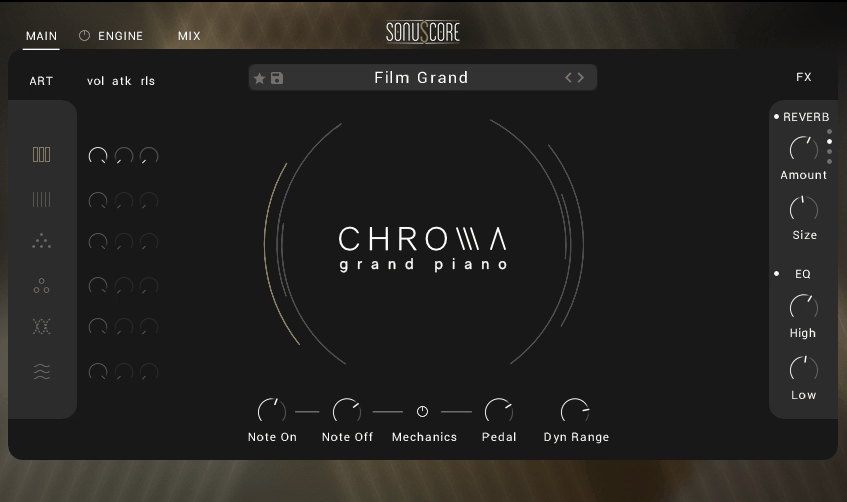
The thing about Chroma Grand Piano Kontakt library is how it refuses to pick a lane between being a serious acoustic piano and a creative sound design tool – instead, it confidently occupies both spaces simultaneously. At its foundation sits a meticulously sampled Yamaha C3 grand piano recorded with 23 velocity layers per note and multiple round robins for mechanical sounds, giving you the responsive touch and rich resonance this model is known for in real studios.
But Sonuscore didn’t stop at traditional sampling – they explored the instrument with extended techniques including brushes, palm mutes, mallets, e-bow, and chains, making all those articulations adjustable and mixable within the same interface.
This means you can lay down a basic acoustic chord progression and then layer percussive or resonant body tones beneath it in ways few traditional piano libraries allow.
What makes this library particularly useful is the core engine that blends sampled acoustic material with creative processing to morph the original piano timbre into ambient pads, evolving soundscapes, or granular-like textures – all from the same source without loading separate sound design patches.
The interface includes a mixer for four microphone positions (A/B, X/Y, ORTF, and dedicated sub mic) so you can tailor spatial balance from intimate close-miked detail to broader room sound, which helps you place the piano either up front or deeper in the mix without heavy external reverb.
I find the velocity curve adjustment particularly practical because you can tailor how gently or aggressively the instrument responds to your MIDI keyboard’s dynamics without relying on Kontakt’s global curve settings.
The mechanical noises – hammer clicks, pedal thumps, sympathetic resonances – aren’t afterthoughts here. You can mix them into the sound to give the piano tactile character in the low and mid range, adding realism that helps mitigate the dead-on-repeat issue plaguing many sampled pianos.
- Many Presets for Immediate Use
The library includes more than 90 presets ranging from straightforward acoustic piano tones to processed, layered presets designed for specific moods. These work well as starting points, and you can easily modify and save your own presets once you explore the engine’s capabilities.
- Deep Yamaha C3 Sampling with 23 Velocity Layers
The core piano was sampled with extensive dynamic range – 23 velocity layers per note plus multiple round robins for mechanical sounds. This depth helps the instrument respond naturally to expressive playing and mitigates repetition issues. The Yamaha C3 model brings the responsive touch and rich resonance it’s known for in professional studio environments.
- Extended Articulations for Creative Layering
Brushes, mallets, e-bow, palm mutes, and chains were recorded and made mixable within the interface. You can layer percussive or resonant body tones beneath acoustic chord progressions, adding textures that traditional piano libraries don’t offer. These articulations aren’t separate patches but integrated elements you blend in real time.
- Sound Design Engine for Hybrid Textures
The built-in processing engine morphs acoustic piano material into ambient pads, evolving soundscapes, or granular-like textures from the same source. You’re not loading separate sound design patches – you’re shaping these possibilities within the instrument itself, which is particularly useful for cinematic producers or those making lo-fi and ambient hip-hop.
3. Native Instruments Alicia’s Keys

I’ve always found Alicia’s Keys interesting because it completely rejects the idea of being a neutral, perfectly balanced grand piano – instead, it embraces a specific tonal identity built around Alicia Keys’ personal Yamaha C3 studio grand.
The library leans heavily toward warm, intimate, and slightly colored character shaped by real-world acoustic personality rather than chasing textbook accuracy.
This positioning sits halfway between a traditional piano instrument and a recorded studio piece of gear where the captured personality becomes part of the experience, which works brilliantly in soul, R&B, singer-songwriter, and ballad-leaning productions but might feel limiting if you need clinical clarity.
The core sampling comes from close, mid, and room microphones captured in a studio environment, giving you a playable, expressive instrument with presence that feels like a recorded studio sound rather than sterile acoustic simulation.
I really like how the tonal voice emphasizes warmth and rounded midrange presence with less emphasis on brittle highs or extreme low-end bloom, which helps the piano sit naturally under vocals and within crowded mixes.
Key Features:
- Studio-Captured Yamaha C3 with Character
The core sampling uses close, mid, and room microphones in a studio environment, giving you the voiced character of the instrument in a real space with subtle room coloration. This makes the piano feel like a recorded studio sound that cuts through tracks naturally in pop, hip-hop, and contemporary R&B contexts without extensive reverb processing.
- Warm, Vocal-Friendly Tonal Balance
The tonal identity leans toward warmth and rounded midrange presence with less emphasis on brittle highs or extreme low-end bloom. This helps the instrument sit naturally under vocals and within crowded mixes, especially in genres where sharp, pristine piano isn’t needed. The character works as a harmonic bed that doesn’t compete with other elements.
- Focused Interface for Quick Workflow
The controls include mixer for close and room mics, simple tone shaping, and basic dynamic response without overwhelming complexity. The emphasis is on playability and feel rather than maximum tweakability or deep mechanical editing, which keeps workflow moving when you want to lay down parts quickly.
- Musical Velocity Response
Velocity layers respond musically with a smooth, natural dynamic curve rather than extreme granularity at every layer. This works well for singer-songwriter or pop-leaning material where you want expressive playing without needing ultra-detailed mechanical modeling. The response feels integrated and musical rather than analytically precise.
- Natural Fit for Contemporary Production
The piano works particularly well under vocal-centric hip-hop or R&B tracks, providing warmth and presence without clashing with vocals. In pop arrangements it sits as a harmonic bed that doesn’t compete with synths or percussion. The characterful timbre benefits singer-songwriter demos and arrangements where emotional core matters more than analytical perfection.
4. Native Instruments Claire: Avant
Claire: Avant lives in territory most piano libraries don’t dare explore – it’s a radically redesigned Steinway Model B grand that functions both as a playable piano and as a generative sound source for grainy pads, prepared attacks, and spatially rich ambient beds.
Native Instruments went beyond conventional sampling by including extended techniques, string preparations, and deliberately captured resonances across an unusually rich mic array, giving you prepared piano techniques with mallets and objects on strings, extended resonances where sustained notes interact with sympathetic vibration, and string buzzes captured as musical layers.
The engine integrates multi-mic blending, interactive resonance control, and velocity mapping with dynamic character shaping that lets you pivot from intimate close piano to wide ambient room presence without leaving the instrument.
I admire how performance controls interact with sound behavior – the mod wheel controls ambient and prepared content, macros shape overall character in real time, and velocity mapping influences not just volume but the texture of resonance itself.
- Extended Sampling with Prepared Piano Techniques
The library captures prepared piano techniques using mallets and objects on strings, creating percussive and timbral edges beyond traditional key strikes. Extended resonances let sustained notes interact with sympathetic vibration, while string buzzes and mechanical artifacts are captured as musical layers.
In practice, a simple chord held lightly unfolds with subtle harmonics and resonances, while forceful playing unlocks characterful, almost string-ensemble-like textures that pure sampled pianos don’t offer.
- Multi-Mic Blending for Real-Time Spatial Control
You can pivot from intimate close piano to wide ambient room presence using the multi-mic array that adjusts spatial character in real time. This flexibility places the piano appropriately in your mix without heavy external reverb.
The mic positions capture everything from detailed hammer and string detail to broad room reflections, letting the piano lay nicely under vocals or push wider and more ambient for cinematic contexts.
- Interactive Resonance and Advanced Dynamic Shaping
Interactive resonance control adjusts how prepared or natural the strings behave, from conventional piano body to washed sustain. Velocity mapping influences texture of resonance – soft playing yields nuance and warmth while harder playing produces expressive, sometimes gritty tones.
The dynamic character shaping responds musically to playing intensity in ways that feel organic, rewarding thoughtful MIDI input with parts that feel alive rather than programmed.
- Real-Time Performance Controls with Hardware Mapping
Mod wheel controls ambient and prepared content while macros shape overall character in real time, and you can map these to external hardware like keyboard mod wheels or expression pedals.
Setting a macro to blend in more sympathetic resonance means you can have a bass-heavy beat suddenly open into a washed, evolving piano landscape while maintaining the same MIDI performance, which matters in genres where piano parts must shift mood without swapping presets.
- Timbral Range from Classic Grand to Experimental Textures
The instrument delivers warm, expressive grand piano on the traditional end but shines when exploring its experimental side with subtle string pads that evolve beneath performance, breathy ethereal sustained layers with gentle detune and modulation, prepared piano timbres that feel percussive and hybrid-like, and dense pad-like sonic beds with harmonic motion.
These alternative voices respond musically to playing dynamics, letting you start with a simple piano progression and gradually drift into ambient territory without switching instruments.
- Section-Based Workflow with Automation Capability
You can automate resonance and macro parameters over different track sections to make the same instrument behave differently across your arrangement. Verses stay in warmer, more direct piano voice while choruses open into ambient resonance with modulated room layers.
This workflow suits producers working in cinematic, ambient, or experimental pop where piano parts must shift emotional weight and spatial presence throughout a track without switching presets or breaking creative flow.
5. Native Instruments Noire
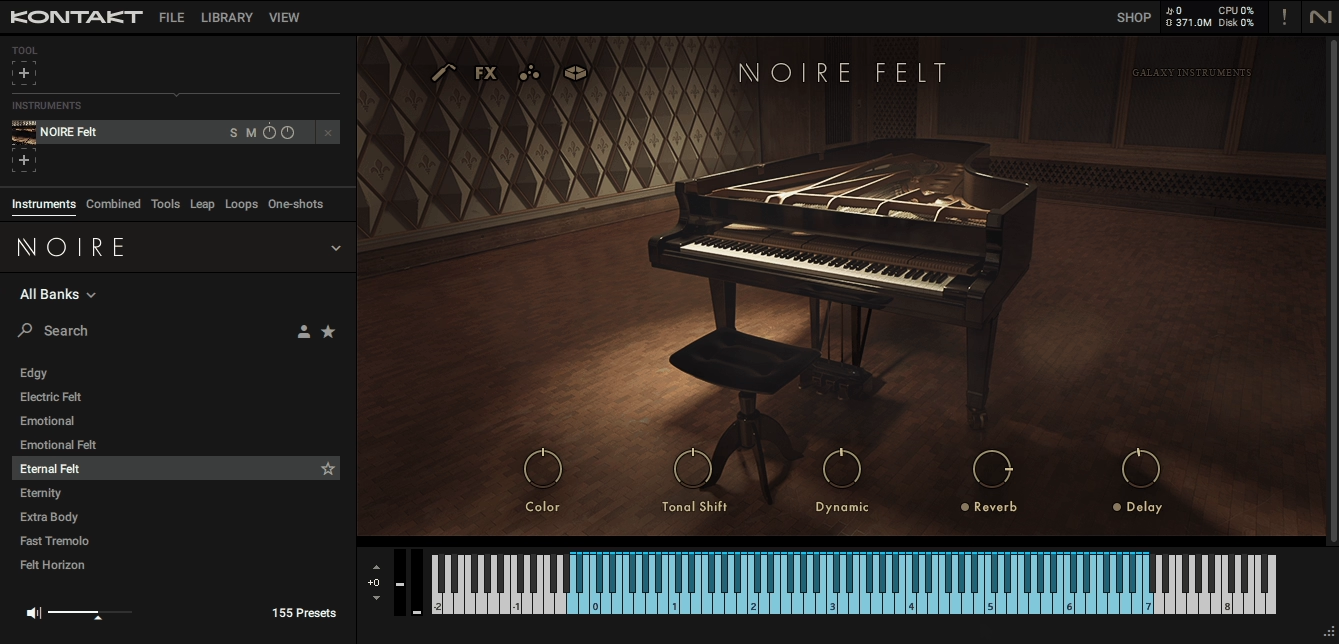
This library is a collaboration with pianist Nils Frahm that captures both the acoustic authenticity of a Fazioli F228 grand piano and the textural, ambient possibilities modern productions demand.
What separates Noire piano library from other Kontakt pianos is the Particles engine that layers ambient textures on top of the acoustic core to create evolving pads, rhythmic washes, or harmonic atmospheres that respond musically to what you play.
The acoustic foundation uses extensive velocity layers, multiple microphone perspectives, and detailed modeling of mechanical noises including pedal thuds, hammer strikes, and sympathetic string vibrations, making every note feel alive with tactile realism while giving you options to emphasize or suppress mechanical artifacts depending on your production needs.
I’ve found the acoustic tone is warm and slightly dark, favoring rich midrange and harmonic depth rather than bright, sparkly highs, which makes it particularly effective for contemporary and cinematic productions.
The instrument includes performance controls for dynamic response, pedal behavior with half-pedal simulation, microphone mixing to blend close/mid/room perspectives, and Particles control for adjusting intensity, rhythm, and tonal character.
- Fazioli F228 Grand with Extensive Velocity Layers
The core piano is sampled with extensive velocity layers, multiple microphone perspectives, and detailed mechanical noise modeling including pedal thuds, hammer strikes, and sympathetic string vibrations.
Soft passages reveal sympathetic string resonance and key release effects that add organic nuance, while louder passages retain clarity without harshness. The tonal balance is slightly warm, sitting naturally under vocals and instrumentation in pop, indie, ambient, and cinematic mixes.
- Particles Engine for Musical Texture Generation
The Particles system generates harmonic and rhythmic layers from the acoustic piano signal that respond musically to dynamics and note position. It can add subtle shimmer or harmonic wash beneath played notes, generate complex textures, or produce percussive, evolving layers for cinematic compositions.
Because Particles react to what you play rather than functioning as static pads, a single performance simultaneously provides melody and evolving texture, which is particularly creative for ambient, lo-fi, and cinematic contexts.
- Multiple Microphone Perspectives with Real-Time Mixing
Close, mid, and room microphone perspectives can be blended in real time to adjust spatial character from intimate detail to broader room sound. You can automate microphone balance across track sections to evolve between verse and chorus, creating emotional arcs without duplicating instruments.
This flexibility places the piano appropriately in your mix without heavy external reverb processing.
- Performance Controls for Expressive Playing
Dynamic response controls adjust velocity sensitivity to match your playing style or MIDI controller. Pedal behavior controls include half-pedal simulation for nuanced sustain. The instrument responds well to controller input including mod wheel and expression pedals, useful for live performance or expressive MIDI programming where you want parts to feel responsive and alive rather than mechanical.
- Integrated Sound Design Without External FX
The combination of acoustic core and Particles engine means you get both melodic piano and atmospheric layer generation within the same instrument. You can blend acoustic and Particles layers, tweak mic positions, or adjust velocity response without leaving Kontakt.
This eliminates the need for external FX chains when creating evolving textures or ambient washes, keeping workflow moving when you want inspiration without complex routing.
6. Native Instruments The Maverick

The Maverick piano Kontakt library prioritizes character and musical personality over clinical perfection – it’s built around a vintage Yamaha C7 grand shaped by age, voicing, and studio capture techniques rather than chasing neutral transparency.
The designers leaned into expressive coloration, mechanical detail, and warm midrange with slight grit and overtones that help it stand out in mixes, captured with natural room ambience that sits evenly without artificial reverb.
The sampling includes multiple velocity layers and round-robins capturing everything from delicate pianissimo to aggressive forte, plus mechanical sounds like hammer impact, pedal noises, string buzz, and sympathetic resonance that contribute to tactile realism.
- Vintage Yamaha C7 with Age-Shaped Character
The core piano preserves the texture, presence, and musical quirks of a real, well-played instrument rather than chasing clinical perfection. This makes the piano sound immediately musical when played, especially in pop, rock, R&B, hip-hop, and lo-fi where dry, sterile piano often feels out of place. The tonal identity sits comfortably in music productions without needing extensive processing to feel present.
- Multiple Velocity Layers with Round-Robin Variations
Recording captured everything from delicate pianissimo to aggressive forte with multiple takes per note. These variations make repeated phrases feel alive because slight differences and room character emphasize natural behavior rather than sanitized, repetitive sampling. Softer velocities yield warm, intimate tone that thrives under vocals while harder playing brings out more body and complexity without sounding brittle.
- Blendable Microphone Positions for Spatial Control
Close and ambient microphone captures can be blended inside Kontakt to tailor where the piano sits in the mix. You can pull close mics forward for articulated, upfront clarity or emphasize ambient mics for broader, atmospheric presence.
This lets you adapt the instrument to different production needs without external reverb chains that might smear the piano’s natural character, keeping it intimate for singer-songwriter productions or opening it up for cinematic contexts.
- Performance-Oriented Controls Without Deep Menus
Velocity curve, pedal behavior, and mechanical resonance level controls let you sculpt how the piano responds to playing nuances. Adjusting the velocity curve changes how the piano feels under your fingers – softer curves smooth out transitions while more linear curves encourage dynamic articulation.
Pedal controls let you emphasize or de-emphasize pedal resonance and sympathetic string behavior, useful when transitioning between tight mix parts and fuller, more ambient sections.
- Warm Tonal Identity with Forward Midrange
The tonal focus emphasizes warm midrange with slightly rounded high end and strong body that puts it forward in the mix without shouting or harshness. This inherent presence reduces the need for heavy EQ or layering just to make the piano audible under vocals or dense arrangements.
The natural room ambience helps it sit evenly, making it feel integrated in dense arrangements where emotion matters more than textbook acoustic detail.
- Minimal Processing Required for Mix Integration
The instrument already has natural body and character, so you often only need gentle EQ and a little space-oriented reverb to fit it in mixes. Gentle de-essing or midrange shelf boosts are often all you need to make the piano cut through without harshness, which speeds up workflow when moving from idea to finished track.
Producers describe it as musical right away, requiring minimal external treatment to feel glued into arrangements.
7. Native Instruments The Grandeur

Built around a full-sized grand piano captured with enough depth and nuance to feel alive, The Grandeur piano has been widely adopted across pop, R&B, hip-hop, indie, and cinematic styles because it sits in modern mixes with minimal tweaking.
The Grandeur stands out in NI’s piano lineup because it emphasizes musical usability over academic precision, offering a piano sound that’s big enough for arrangements but not so polished that it feels sterile or disconnected from a mix.
The tonal character leans toward rich midrange and rounded low end, coupled with clear but not over-bright top, which results in a piano that cuts through naturally among pads, rhythmic elements, and vocals without needing aggressive high-shelf boosts or artificial ambience.
- Rich Midrange with Natural Mix Presence
The tonal balance emphasizes rich midrange and rounded low end with clear but not over-bright top, making the piano cut through mixes naturally even among pads, rhythmic elements, and vocals. This means you don’t need aggressive high-shelf boosts or artificial ambience to make it audible in dense arrangements.
The piano anchors harmonically in tracks, though it feels slightly warm or mellow compared to concert-hall libraries where top-end sheen dominates, so you might dial a touch of high-mid lift if you want sparkle up front in ballads or pop hooks.
- Multiple Velocity Layers with Round-Robin Variations
Sampling uses multiple velocity layers and round-robin variations to reduce repetition, making repeated phrases feel organic rather than static. Mechanical sounds like hammer and pedal noises are present just enough to convey realism without dominating tone.
Softly played phrases sit gently in the mix with sympathetic string resonance, while more forceful performance brings out tonal richness and complexity without harsh artifacts, making it flexible across dynamic usage from quiet ballads to big percussive lines.
- Internal Mic Blending for Spatial Control
Multiple microphone perspectives – typically close mic and room ambience mic – can be mixed internally to change the instrument’s spatial footprint. You can pull back the room mic to keep clarity under vocals or sparse drums, or push up ambience for cinematic depth without layering external effects.
This internal control saves mixing steps while granting placement flexibility, particularly useful when developing arrangements at low latency or in CPU-limited setups where external reverb chains would add overhead.
- Performance-Oriented Controls Without Menu Diving
Controls include voltage between close and room mics for intimate or broad placement, pedal noise and sympathetic resonance controls to dial mechanical character in or out, and velocity curve shaping for matching your MIDI controller feel.
These parameters let you tailor the piano’s interaction with your performance style rather than forcing adjustments through external layers or DAW workarounds. The balance between depth and usability means you get responsive, expressive piano without endless page flipping.
- Versatile Genre Fit Across Modern Production
The piano supports chordal content in pop and R&B without heavy processing to sit in mixes. In hip-hop and lo-fi contexts, the warm, musical presence pairs well with atmospheric beats, looser drums, and sub bass, particularly when blending in room ambience for depth.
For indie and singer-songwriter tracks it delivers musical clarity while retaining expressiveness, and in cinematic arrangements the internal mic control and natural body provide solid foundation for layering pads, strings, or scored elements.
- Ready-to-Use with Minimal Processing
The tonal balance and mechanical nuance make it usable in wide range of productions without demanding heavy external processing. The piano feels like a real instrument in a real mix from the moment it plays rather than sitting far back or feeling thin in dense arrangements.
Producers describe it as a go-to general-purpose piano that doesn’t demand specialized mixing chains to feel present, which speeds workflow when moving from idea to finished track.
8. Native Instruments Una Corda

Another Native Instruments piano Kontakt library NI Una Corda departs completely from traditional grand piano sampling by using a custom-built, single-string grand piano that produces a delicate, intimate, and unconventionally soft piano sound.
The library is based on one string per key rather than the usual multiple strings, which gives it a thin, crystalline tone with less harmonic complexity than traditional grands – you get soft, delicate midrange, airy resonant high frequencies, and subdued low end that avoids overpowering other elements.
The piano’s sound is fragile and intimate, emphasizing clarity of individual notes rather than fullness of chordal body, and it naturally suits sparse arrangements, ambient textures, or cinematic underscore where heavier pianos might dominate.
- Single-String Design with Crystalline Tone
The custom-built piano uses one string per key rather than multiple strings, producing thin, crystalline tone with less harmonic complexity than traditional grands. You get soft, delicate midrange, airy resonant high frequencies, and subdued low end that avoids overpowering other elements in a mix.
The tonal signature naturally suits sparse arrangements, ambient textures, or cinematic underscore, adding sense of space and subtlety to compositions that heavier pianos might dominate.
- Fragile, Intimate Character with Mechanical Detail
The sound is fragile and intimate, emphasizing clarity of individual notes rather than fullness of chordal body. The instrument captures mechanical noises, pedal resonance, and sympathetic string vibrations in controlled and subtle ways, contributing to realism without being distracting.
Unlike conventional sampled pianos, Una Corda embraces these delicate artifacts as part of its characterful, humanized sound that makes performances feel alive.
- Nuanced Performance Response
Velocity layers and round-robins translate soft, expressive attacks naturally, while harder strikes retain clarity without harshness. Pedal and resonance controls let you adjust sympathetic resonance and pedal behavior for varying tonal textures.
Gentle fingerwork produces whispery, intimate tone ideal for minimalism or ambient tracks, while controlled dynamic peaks convey musical impact without breaking the delicate timbral character.
- Close and Ambient Mic Mixing
Microphone options allow subtle placement of intimacy or room presence in the mix. The restrained sound encourages creative arrangement choices rather than relying on heavy processing, and producers often combine Una Corda with subtle reverb or delay, though it can also sit dry because its tone already conveys intimacy and spatial depth.
This flexibility helps it blend well with pads, strings, and textures without competing.
- Lightweight CPU Efficiency
The minimalist sampling keeps it light on resources, which is ideal for bedroom producers and laptops. The CPU efficiency means you can layer it with other instruments, synths, or acoustic elements without session-clogging resource demands.
Because the sound is light and thin, it layers naturally with traditional pianos or other textures, making it useful as melodic accent or underlying element that’s instantly recognizable.
- Creative Textural Applications
The piano’s unique design encourages textural use rather than conventional grand piano roles. It works particularly well in ambient and cinematic scoring where airy tone blends with pads and strings, minimal and lo-fi production where delicate, slightly ethereal tone suits soft intros or sparse beats, and experimental or modern pop as melodic accent or underlying texture.
The soft low end means it can sit underneath other instruments naturally, though you may need EQ adjustments to bring out clarity in dense mixes.
9. Native Instruments The Giant

At its core is a purpose-built, oversized piano that doesn’t fit neatly into traditional upright or grand categories. The Giant piano Konakt library was captured in a large room to highlight resonance and scale, giving the lower registers a dense, physical weight that translates clearly in modern mixes.
It’s not a neutral, textbook piano but a piano with attitude and sonic identity, delivering a bold, expressive piano voice that’s equally useful in cinematic, hip-hop, pop, and electronic contexts where character matters as much as technical realism.
The tonal fingerprint emphasizes low-frequency weight and rich midrange – the low strings have noticeable depth you feel as much as hear, and even basic chord progressions carry organic heft that translates well into dense mix environments.
- Low-Frequency Weight with Rich Midrange
The tonal identity pushes body and presence with pronounced low fundamental that many piano libraries lack. The low strings have noticeable depth you feel as much as hear, and even basic chord progressions carry organic heft.
This makes it particularly practical for those who want a piano that cuts through drums and bass without sounding thin or lifeless – most of the time, you can load it and start building arrangements with minimal mixer adjustments.
- Musical Dynamic Behavior Across Velocities
You can play soft phrases that feel intimate or hit hard without the piano sounding sterile. The dynamic transition isn’t hyper-literally sampled like boutique classical tools, but it’s musical and smooth across velocity ranges.
Hammers, pedal noise, and sympathetic string resonance are part of the sound but not intrusive, adding tactile realism without sounding like artifacts. Round-robin variations help prevent the piano from feeling static when repeating common chord progressions.
- Multiple Microphone Positions for Spatial Control
Close and ambient microphone captures can be blended to control how room-present the piano sounds. Close mix yields direct, impactful piano part that sits up front, while ambient mix adds space and depth without heavy external reverb.
This matters because one piano patch in two contexts can act like two different instruments in workflow – in dense beats you might pull back ambient mic for clarity, while in sparse cinematic breakdowns you push it up for elevation and presence.
- Big Midrange with Natural Mix Presence
The piano is big, warm, and fat in the midrange with pronounced low fundamental, which is great when you want piano to carry emotional weight or serve as harmonic anchor in a track. In cluttered mixes with synths and dense percussion, The Giant often holds its own without needing drastic processing.
On smaller speakers, the low emphasis sometimes translates more as mid warmth than sub energy, which can be beneficial for mix translation – you hear it clearly without sub support.
- Music-Focused Controls for Quick Workflow
Velocity shaping allows you to tailor how the piano responds to your playing from gentle, intimate nuances to full, weighty chords. Pedal behavior controls let you dial sympathetic resonance and pedal noise for either cleaner performance or more acoustic atmosphere.
Mic blending lets you choose how much room character versus close body you want, which is practical for mixing. These controls shape musical behavior rather than exposing every mechanical detail for microscopic editing.
- Natural Fit for Contemporary Production
The piano provides solid harmonic foundation with emotional weight beneath vocals and pads in pop and R&B. The strong low midrange helps it sit with 808s and synths without being masked in hip-hop ballads and soulful beats.
Blended ambient mics give it natural depth without external layering in ambient and soundtrack production. The inherent body means it doesn’t feel like just another sample under synth textures in modern electronic contexts.

Hello, I’m Viliam, I started this audio plugin focused blog to keep you updated on the latest trends, news and everything plugin related. I’ll put the most emphasis on the topics covering best VST, AU and AAX plugins. If you find some great plugin suggestions for us to include on our site, feel free to let me know, so I can take a look!