Optical compressors serve one primary purpose: making dynamic sources feel stable and present without mechanical artifacts. The photoresistor circuit design responds to program material naturally, following performance energy rather than imposing rigid control.
This makes them particularly effective when transparency matters but complete consistency is required – lead vocals stay intelligible without sounding clamped, bass notes maintain even weight across arrangements, the compression disappears into musicality.
Here are some of the best opto compressor plugins I found that I want to recommend for mixing engineers and bedroom producers who need smooth, natural leveling on vocals and bass without the obvious compression artifacts that ruin performances.
This guide covers optical compressors that balance vintage leveling behavior with practical features for current mixing workflows. The selection includes Softube OPTO, NEOLD U2A, Tone Empire E-LUX, Shadow Hills OptoMax, and more including some of my free picks as well.
1. Softube OPTO Compressor
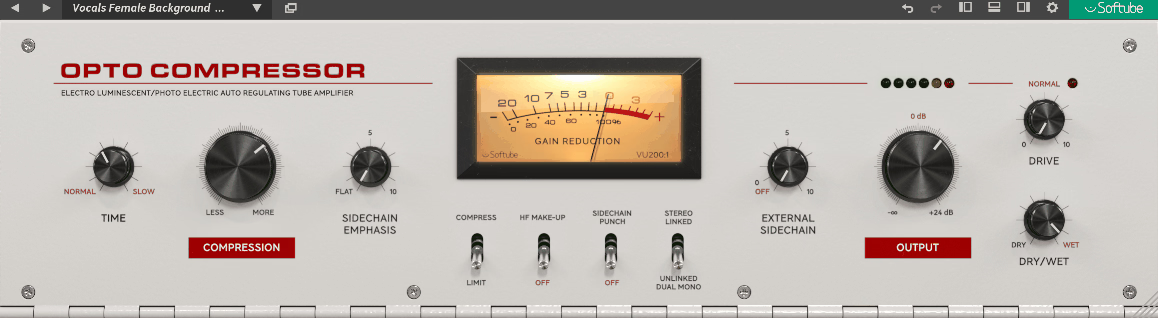
If your mixes are already good but still feel a little too jumpy, too pointy, or not quite finished, Softube OPTO Compressor is the kind of tool that fixes that without turning the track into a different song.
It’s an opto/tube style compressor built for the classic opto job: smooth leveling, natural thickness, and that subtle everything sits where it should feeling, especially on vocals, bass, guitars, and any source where you want control that doesn’t scream compression.
The practical appeal is that it’s not just a vintage vibe box. Softube added a handful of actually useful modern controls that solve the most common opto frustrations: low end triggering too much compression, high end feeling dulled when you compress, and the need to choose between gentle leveling and harder peak control without swapping plugins.
The main compression control is designed so that turning it up gives you more control and more leveling in a very predictable way. You can set how held together do I want this to feel? without getting stuck in tiny threshold/ratio decisions. It’s the kind of control that encourages me to mix by outcome, not settings. To me, this is why I can dial in compression quickly and move on instead of second guessing every parameter.
- Smooth leveling
The plugin is best when you want smoother dynamics without losing the performance. It’s great at bringing up the quieter parts of a vocal or instrument in a way that feels natural, so you get more intelligibility and consistency without having to over EQ or automate every line.
On bass, it gives you steadier sustain and a more reliable floor, which helps the low end translate across speakers without turning into a squashed block.
- Compress versus Limit behavior
Instead of pretending one opto behavior fits every situation, OPTO Compressor plugin gives you two distinct lanes. Compress is the smoother, gentler curve that’s perfect when you want a vocal or bass to feel more stable without sounding clamped.
Limit gives you a firmer, more stop the peaks behavior when the source is a little too wild. You can keep the same tone and workflow but choose the amount of authority you need.
- Sidechain shaping
The plugin includes sidechain controls that let you steer what the detector reacts to. Practically, this means you can keep the low end full and powerful while the compressor focuses more on the midrange and presence, where the too loud sometimes problem often lives.
- Drive
You can add tube style weight and harmonic thickness without relying on compress harder and hope it sounds nicer. This is useful in real sessions as you can get that subtle richness that makes vocals and bass feel more present without over leveling the performance.
- Stereo linking
When you are working on stereo material like buses, keys, overheads, or even mastering chains, you can choose linked behavior for a stable image or unlinked behavior when you want the stereo field to keep its depth and movement. You can say this gives you control over how locked the stereo picture feels, instead of accepting whatever the compressor does by default.
- Vocals that sit without sounding processed
On vocals, OPTO Compressor is the make it sit compressor. It’s ideal when the vocal is already recorded well but feels uneven between lines, or when choruses get a bit sharp and you want the performance to feel controlled without sounding processed. The HF Make Up is especially valuable here because it lets you compress more confidently without dulling the vocal’s intelligibility.
2. NEOLD U2A
Classic optical compression works beautifully for smooth leveling but locks you into one fixed behavior that might not suit every source or genre, forcing you to either accept the vintage limitations or abandon the optical approach entirely.
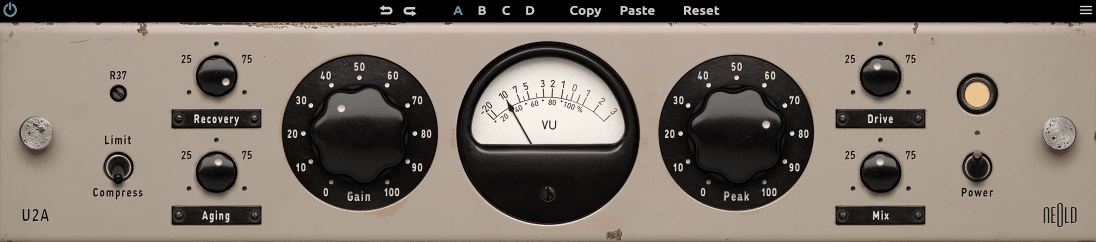
Modern productions need compression that adapts to different material while maintaining the musical quality that made optical leveling a studio standard in the first place. NEOLD U2A keeps the LA-2A style leveling personality which is smooth, weighty, and naturally musical but adds smart controls that let me decide how modern, how vintage, and how assertive the behavior should be on this track today.
In practice U2A is less about transparent control and more about making sources sit with confidence where you use it when vocals need to feel locked in without sounding clamped, when bass needs evenness without losing movement, or when a bus needs cohesion that doesn’t shave off the life.
- Era Blending for Character
U2A’s Aging control is a big deal because it lets you blend between a fresh calibrated feel and a more aged vibe heavy feel where you can keep the same familiar opto workflow while choosing whether you want the compression to feel polished and controlled or more colored and textured depending on the source and the genre. This flexibility prevents you from needing separate optical compressors for different character requirements.
- Recovery Control Fits Modern Arrangements
Classic opto leveling can sometimes feel too one speed when arrangements get dense or transients get aggressive where U2A’s Recovery control lets me shape how quickly the compressor lets go.
You can make it behave more like a gentle leveler or a tighter controller, and keep the opto smoothness while matching the groove of the track especially helpful on vocals with fast phrasing, bass with busy notes, and drum rooms that need movement without chaos.
- Frequency Emphasis Prevents Detector Problems
U2A’s R37 style frequency emphasis / sidechain weighting lets me steer what the compressor reacts to where I can stop low end from overpowering the compression or make the unit clamp down more on the presence region when that’s what’s poking out. In plain mix terms you get smoother results with less pumping and you can keep clarity without over EQ’ing.
- Bass Consistency That Still Moves
On bass it’s about consistency that still moves where you can level note to note differences and control boom without shaving off the life. The payoff is translation where bass stays readable across speakers without you constantly rebalancing the low end later in the mix.
- Drum Unity Without Aggressive Crushing
When it comes to drums especially rooms, overheads, and drum buses U2A is useful when the kit needs to feel more unified but I don’t usually want aggressive transient crushing. I can keep the sense of space and tail while making peaks behave, and steer what the compressor reacts to so cymbals don’t dominate the detector.
3. Tone Empire E-LUX Opto
Some opto compressor plugins are set it and forget it levelers. Others try to do everything and end up being mediocre at most of it.
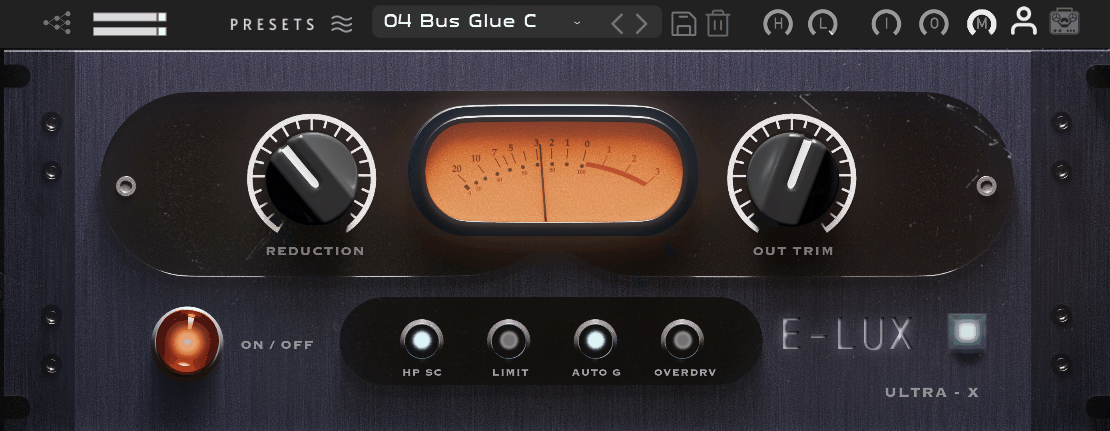
E-LUX opto compressor is more like set it and it instantly sounds like you spent more money, not because it’s magic, but because it’s tuned for the exact moments opto compression is supposed to shine: smooth control, polished tone, and that expensive sounding density that doesn’t smother detail.
It’s built for people who want an opto that can stay silky on vocals, steady on bass, and gluey on buses, without turning everything soft and sleepy.
Instead of dragging me into threshold/ratio math, the main Reduction control is essentially how much polish and control do I want? I turn it up until the part stops jumping around, then trim output to sit it back into the mix.
I would say this is why E-LUX is fast: you are dialing a result, not engineering a setup. To me, this workflow keeps me in the creative zone instead of getting stuck in technical decisions.
E-LUX isn’t stuck in always gentle mode. When you flip it into Limit, it becomes the opto that can hold a source in place when it’s a little too wild, vocals with sharp consonant spikes, bass notes that leap out, or a bus that gets unruly when the chorus hits.
- Overdrive mode
The Overdrive option is the reason E-LUX can be more than polite. It adds a heavier, more energetic tone, useful when a vocal is too clean, a bass is too sterile, or a drum bus needs weight without extra EQ.
I like that it’s tuned to stay musical, so you can add density and excitement without immediately turning the sound into fuzz. This is where it separates itself from traditional LA-2A clones that can’t really push into aggressive territory.
- Low end aware sidechain that prevents pumping
E-LUX includes a dedicated HP sidechain mode aimed around the low end, which is exactly what you want when the kick and bass are making compression feel like the whole track is breathing. With this engaged, you can keep the mix feeling cohesive while the foundation stays solid and un-dramatic.
I would say it’s a simple switch that saves me from great compression, ruined low end. This is one of those features that seems minor until you use it and realize how much cleaner your mixes stay.
- Vocals that feel steady and expensive
On vocals, E-LUX is for the steady and expensive move, level the performance, control the peaks, keep the presence intact. It’s especially helpful when you want the vocal forward but not aggressive, and when you’re tired of stacking multiple compressors to get smoothness plus clarity.
I would say the plugin makes level control feel like tone improvement. When you turn it up, the track doesn’t just get more compressed, it tends to get more finished, with peaks tucked in and the body presented more confidently.
- Bass with reliable foundation
On bass, it’s about turning inconsistent notes into a reliable foundation. You can smooth the level so the bass reads evenly through the arrangement, while the sidechain mode helps stop low end energy from making compression feel like pumping.
The result is bass that feels easy to place, less fader riding, fewer why did that note explode? moments. I like that I can set it once and the bass just behaves for the entire song.
- Mix bus cohesion that stays natural
On a mix bus, it’s not about heavy compression, it’s about gentle cohesion that doesn’t shrink the low end. When the mix already sounds good but feels a bit too separate, E-LUX can pull it together in a way that still feels natural and open. This is where the expensive sounding density really shows up, the mix feels more finished without sounding more compressed.
4. Shadow Hills OptoMax
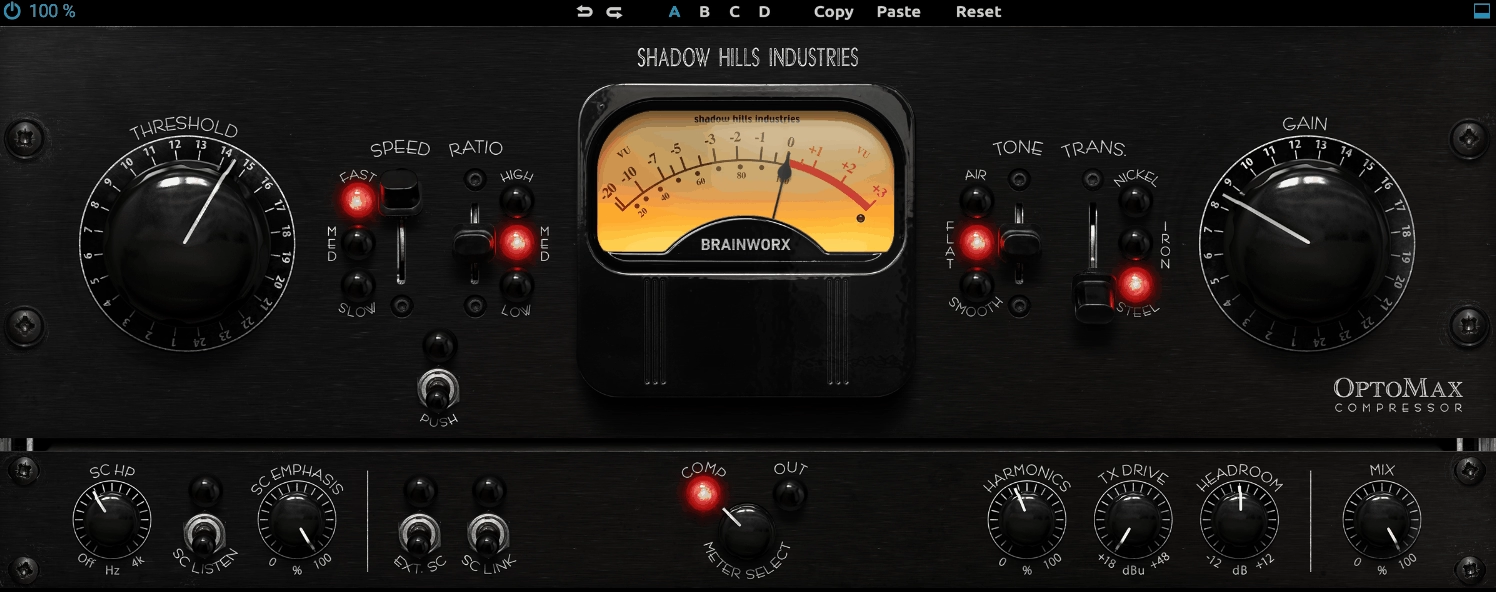
I love the UI design of this one. This isn’t the usual LA-2A flavored opto that only does gentle leveling. Most opto compressors lock you into one sweet character and that’s it.
OptoMax is what happens when you take the most loved part of the Shadow Hills Mastering Compressor, the optical section, and give it a wider range of attitudes, from silky control to modern, limiter like smack, without losing that expensive, confident Shadow Hills feel.
If you want one opto compressor that can sit vocals perfectly, stabilize bass, thicken guitars, and still be a serious bus glue option when you keep it gentle, or a harder clamp when need it, OptoMax is built for that exact one plugin, many jobs role.
- Transformer choices
OptoMax includes the signature Shadow Hills transformer flavors, Nickel, Iron, Steel, and they’re there for one reason: quickly shifting the track’s attitude. One option leans more open and clean, another feels thicker and more weighty, another can feel more forward and firm.
In practice, this saves you time because you can keep the same compression settings and simply pick the transformer character that makes the source click into the mix. I think this is one of those features that seems subtle until you use it and realize how much faster you’re making tonal decisions.
- Harmonic shaping
OptoMax gives you dedicated harmonic controls so you can add size, grit, and thickness without relying on just compress more. This is especially useful on vocals and bass where you want presence and solidity, but you don’t want to flatten dynamics to get it.
- Tone options
The tone section is built for the real mix problem: compression can make top end feel either too sharp or too tucked. OptoMax gives you quick ways to smooth brightness when cymbals or consonants get edgy, or add a little extra polish when something feels closed in.
I think this is one of those small control, big result parts of the plugin. You can tame harshness without losing air, which is crucial for modern vocal production.
- Sidechain shaping that keeps the detector focused
OptoMax’s sidechain filtering is there so the compressor reacts to what you actually care about. If the kick and sub are making the whole mix breathe, you can keep low end from dominating the detector. If the midrange is what’s poking out, you can focus the compressor there instead of flattening the entire spectrum.
The result is cleaner control and fewer why did my mix just shrink? moments. This is especially valuable on mix bus and drum bus applications.
5. Waves CLA-2A
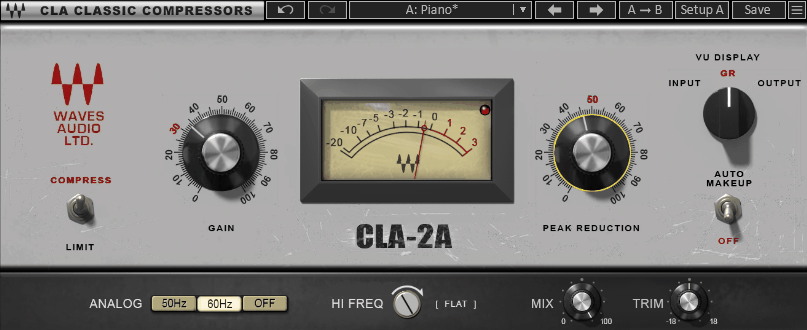
Waves CLA-2A isn’t the plugin you grab when you’re in the mood to tweak endlessly. You grab it when a track is already close, but still doing that annoying thing where it jumps forward on certain words or notes, then disappears when the arrangement gets dense.
It’s built for that classic opto job: make the performance feel steady, keep it musical, and add a bit of weight and glue while you’re at it. What makes it useful in modern sessions is how quickly it gets me to a yep, that sits result.
You get:
- Optional analog character for vintage vibe
CLA-2A includes an Analog option with 50 Hz/60 Hz hum and noise characteristics. Some people keep it off, but if you’re intentionally going for that slightly alive old school vibe on a sparse vocal or a vintage styled track, it’s there as a creative choice.
I would say this is more of a finishing touch than a core feature, but it can help digital recordings feel a bit more lived in and warm.
- Two personalities
The Comp/Limit switch is the difference between gentle leveling and more assertive control. In Comp, it’s the classic opto move: smooth and forgiving. In Limit, it tightens up and behaves more like don’t let those peaks run the session.
I think that means you can keep the same tonal vibe while choosing how much authority you need for the source. To me, this is why it’s so fast to dial in, you’re choosing a result, not building a compressor from scratch.
- Lead vocals that feel locked in
Lead vocals are the obvious win. CLA-2A is great when the vocal is expressive but inconsistent, quiet lines sink, loud phrases pop out. A moderate amount of gain reduction makes the vocal feel locked in so you can build the mix around it without constant automation.
The HiFreq control is especially handy when the vocal’s brightness is triggering unpleasant compression behavior. This is where it really earns its place because you get steady presence without the vocal feeling pinned or lifeless.
- Bass that stays even note to note
Bass is the second big one. It’s strong for leveling bass in a way that keeps the part musical while making it easier to place in the mix. The detector not getting bullied by the lows thing matters here too, especially if the low end is big and you don’t want compression to sound like pumping.
This makes bass feel stable and readable across different playback systems without turning it into a flat, unmusical line. I like that the compression responds to the body of the note rather than just the initial attack.
6. Tone Empire OptoRed
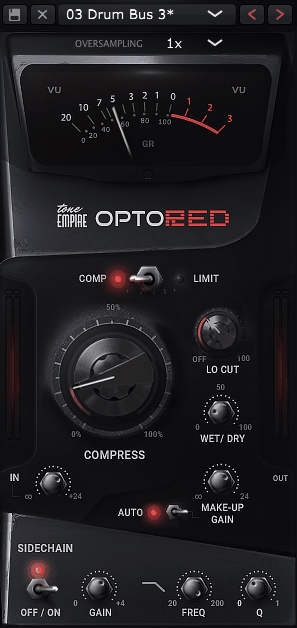
Opto compressors are usually the make it smooth choice, until the low end starts yanking the gain reduction around, or the track gets softer and darker the moment you lean on it. OptoRed VST plugin is built for people who like the LA-2A style leveling feel, but want it to stay usable on modern, bass heavy mixes and fast to judge without second guessing loudness.
I think of it as an opto that’s comfortable doing the classic jobs, vocals and bass, but doesn’t fall apart when you throw it on drums, synths, percussion, or busy buses.
- A detector you can steer to the right problem
OptoRed doesn’t force you into whatever triggers it triggers it. You can shape what the compressor listens to, which is huge in practice. When the kick and bass energy is making compression feel like the whole track is breathing, you can stop that from dominating the action.
When the midrange is the thing poking out like vocals, guitars, snare crack, you can aim the control there instead. I would say the result is smoother leveling with fewer side effects, which is exactly what separates this from traditional LA-2A clones.
- Choose your grip switch for different control needs
Sometimes you want opto compression to be a soft pillow and sometimes you need it to hold the source in place. OptoRed gives you that choice without changing the overall vibe, so you can keep the same tone but decide whether you’re doing polish or authority.
I think this is especially useful when a vocal gets aggressive in choruses or when a bass line has a few unruly notes that keep jumping out.
- Tone filter that smooths edge without dulling
It gives you a simple way to tame excess brightness in a compression friendly way. Instead of reaching for EQ and changing the entire top end, you can smooth what’s annoying while keeping the track’s character intact.
This especially works on vocals with sharp consonants, overheads with spitty cymbals, and bright synths that feel exciting until they start hurting. I like that it’s integrated into the compression workflow rather than requiring a separate processor.
- Synths and keys that stay present
Works well on pads, plucks, and layered synth stacks to keep them present and controlled without making them smaller. I think this is especially useful in dense electronic productions where multiple synths are competing for space.
You can use OptoRed to make each layer feel more stable without resorting to heavy automation or aggressive limiting that would destroy the movement.
- Buses with cohesion and stability
A strong choice on instrument buses when you want cohesion and stability without the grabby feel of faster compressor types. I can say this is where the smooth character really pays off, the compression glues elements together without creating that obvious pumping that ruins the groove.
Lastly, you can use this on guitar buses, synth buses, and music buses where you want everything to feel like it’s moving together as one piece.
7. Slate Digital Custom OPTO
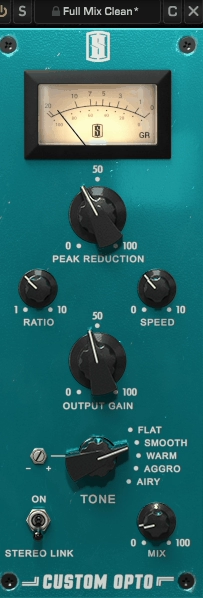
Custom OPTO is built for the the classic leveling amp feel, but with enough control to make it work on modern sessions where vocals are brighter, drums are punchier, and low end is heavier. You drop it on a track when the performance is right but the level is distracting, and you want it fixed without turning the sound into compressed audio.
- Tone modes for instant character decisions
The Tone selector is the killer workflow feature. It’s not there to impress you with options but it’s there so you can pick the direction instantly:
Airy is helpful when you want the source to stay open and present while leveling. When it comes to Smooth, it’s good to consider when top end is edgy and you want control without dullness. I would use Warm when the track needs thickness and weight to feel finished, then Aggro consider when you want more snap and forward energy. Lastly, Flat would come in handy when you want the compressor to stay out of the way tonally and just do the leveling job!
Well, I like this because I can change the character of the compression result in one move instead of stacking extra processors. I think this is why Custom OPTO is fast, you’re making creative decisions rather than technical adjustments.
- Built for Virtual Mix Rack workflow
Custom OPTO is designed to live inside VMR, which makes it practical as part of a repeatable go to chain workflow: preamp and EQ into opto leveling, then whatever else I need. If I like working in consistent, console style channel strips, this compressor fits that mindset well, especially because the Tone modes let me adapt the same chain to different sources quickly.
- Lead vocals that sit stable and upfront
Custom OPTO is a sit in the mix compressor. It pulls vocals forward without turning them spitty, keeps bass from popping on a few notes, and smooths instrument peaks so you stop riding faders every 20 seconds.
When you want the vocal stable and upfront without sounding pinned down, Speed and Ratio let you decide whether it’s purely smooth leveling or more firm chorus control, and Tone modes let you keep presence with Airy or calm edge with Smooth without rebuilding the chain.
- Backing vocals and vocal buses
Great for making stacks feel like one section instead of a pile of takes. Warm can add density and Smooth keep consonants from getting splashy as you level the group. I think this is useful when you have multiple vocalists or multiple takes that need to behave as a unified layer. I think this is where opto compression really proves its value, it glues without squashing.
- Bass that stays musical but controlled
It’s a useful when the bass line is musical but inconsistent. You can keep the opto roundness while choosing a firmer ratio when notes jump, and Warm often helps bass feel more solid without needing extra saturation. I would recommend this on electric bass, synth bass, and 808s where the low end can be wildly unpredictable.
8. Waves Renaissance Compressor (RComp)
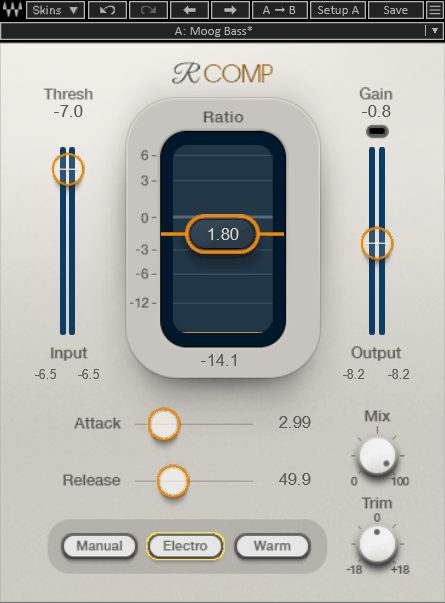
If you want one compressor that can live on dozens of tracks in a session and never feel like the wrong choice, RComp is that workhorse that still sounds like a decision. It’s not a vibe monster, not a surgical tool, not a trendy one trick box.
It’s the compressor I would reach for when you need control that stays musical and want to get there fast, especially on sources where the performance is good but the level consistency is not.
RComp’s real power is that it can shift its feel without changing my whole workflow: you can make it act more like a smooth leveler, more like a tighter modern compressor, or something in between, while keeping the same familiar controls and predictable results.
- Opto/Electro behavior for different personalities
RComp can lean more opto like, smoother and more forgiving, or more electro/solid state like, tighter and more immediate. In practical terms: one mode is great when you want leveling that feels invisible, the other is great when you want the track to behave with more firmness and rhythm.
- Warm/Smooth character for weight or transparency
This switch is about outcome: Warm leans into thickness, especially as gain reduction increases, while Smooth stays closer to the original tone. You can choose whether compression should also add a bit of body, useful on vocals, bass, and guitars, or whether you just want pure control without extra weight.
- Built in output safety for peak control
It includes an internal limiting stage so output peaks don’t jump into clipping when you’re pushing makeup gain. In real mixing, this makes it easier to stay focused on the sound and the groove instead of constantly babysitting overs and trimming after the fact. This is one of those features that seems minor until you use it and realize how much smoother your workflow becomes.
- Vocals that sit steady and upfront
Vocals stop leaning forward on certain words. I can get the vocal steady and upfront without sounding clamped. ARC plus opto style behavior is the easy lane for this.
I would recommend starting with Opto mode and ARC engaged, then dialing gain reduction until the vocal feels controlled but alive. To me, this is the fastest path to professional sounding vocals.
- Bass with even note to note level
On bass, electric, synth, or 808 style, you get even note to note level and a low end that stays reliable through the arrangement. Bass stops jumping out on a few notes and disappearing on others.
I think this is especially valuable on synth bass and 808s where the low end can be wildly inconsistent depending on the patch. RComp evens it out without making it feel lifeless or over compressed.
- Acoustic guitar with controlled transients
Great for controlling strums and picked transients so the part stays present without getting spiky. You can smooth out the dynamic jumps while keeping the natural resonance that makes acoustic guitar work.
I like using Electro mode here for a bit more grip on the transients, especially on aggressive strumming that needs to stay energetic but controlled.
- Drums that feel more together
On drum close mics like kick and snare, you can tighten peaks and make hits more consistent when the performance or samples are a bit uneven. On drum bus, when you want a kit to feel more together without aggressive pumping, electro style behavior helps when you need more grip. Drums feel more consistent without getting flattened into cardboard. This is the kind of compression that makes mixes feel more professional without sounding more processed.
- Keys and synths that support instead of dominate
For keeping pads and chords stable so they support the mix instead of occasionally taking over. I think this is especially useful on layered synth stacks where multiple parts are competing for attention.
RComp helps you make them behave as one supportive layer rather than individual elements fighting. I think it’s crucial in dense electronic productions where every frequency range is crowded.
9. Apogee Opto-3A
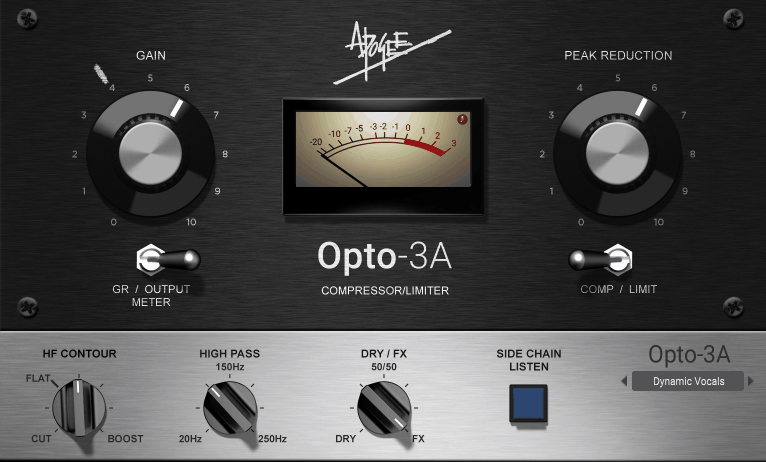
Some compressors are about more control. Opto-3A by Apogee is about more confidence. You can insert it when a track already sounds right, but it still feels a little too uneven, too pokey, or like it’s not sitting in the record the way it should.
The vibe is LA-3A style optical leveling, faster and more assertive than the typical LA-2A feel, so you get that classic smoothness, but with a slightly firmer grip that works great in modern mixes.
I like that it can handle modern, aggressive vocals and punchy drums without losing the opto character.
- Sidechain high pass that stops low end from steering
When the kick or bass fundamentals dominate the detector, compression can turn into pumping and the mix feels smaller. Opto-3A’s sidechain high pass filtering helps you keep the low end big and stable while the compressor focuses more on the range that actually needs control.
I can say that translates to steadier vocals, more consistent guitars, and bus control that doesn’t get bullied by subs. I would recommend this on any source where the low end is powerful but shouldn’t be controlling the compression behavior.
- Native workflow with optional DSP
If you use Apogee interfaces that support their DSP workflow, Opto-3A can be part of a setup where you keep sessions responsive by shifting processing off the computer when needed. If you don’t, it still runs natively like a normal plugin, so you’re not locked into special hardware to use it.
To me, this flexibility is valuable because you can choose the workflow that makes sense for my session without being forced into one approach.
- Keys and synths that support instead of dominate
Lastly, it’s useful on keys and synths when the part needs to stay stable in level so it supports the track instead of randomly taking over, Opto-3A works well. I can keep pads and chords at a consistent level without making them feel lifeless or static.
Where it’s especially handy is when you want optical smoothness but you don’t want the top end to collapse or the low end to start driving the detector in a dumb way. Opto-3A is built to help you keep clarity and punch while still getting that opto leveling feel.
Freebies:
1. Analog Obsession LALA
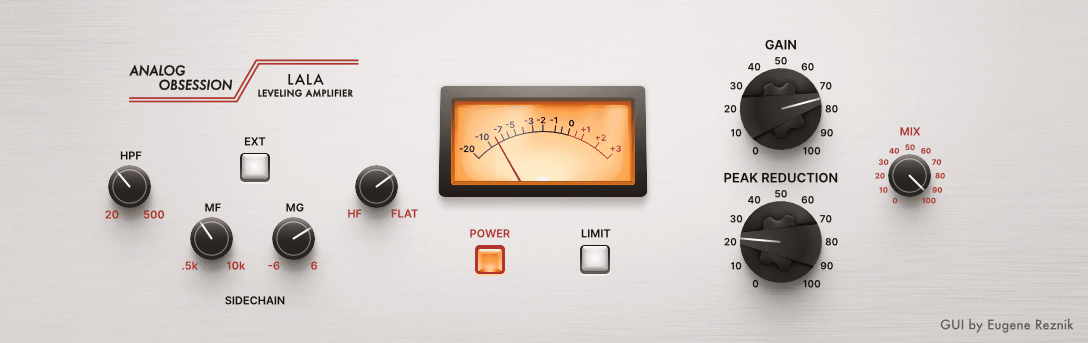
LALA is Analog Obsession‘s take on the classic LA-2A style opto compressor, and what makes it worth using is that it delivers that smooth, transparent leveling character without the complicated workflow that comes with more feature heavy compressors.
I would insert it when you need compression that doesn’t announce itself, where the optical circuit behavior responds to program material in a musical, forgiving way rather than aggressive and mechanical.
- HF sensitivity control for intelligent top end response
The HF sensitivity control is the real advantage here. If the vocal gets sharp on S/T/K sounds when you compress, I can make LALA react more intelligently to the top end so you keep presence and clarity without turning the vocal edgy or forcing a heavy de-esser chain.
I think this is especially valuable on vocals that are already bright but need control. Instead of dulling the vocal with EQ, I let LALA reduce the spikes dynamically, so the vocal stays open but stops hurting in choruses. To me, this is what separates it from basic LA-2A clones.
- Sidechain filtering that keeps bass powerful
The sidechain filtering matters because subs can easily dominate optical compression. With filtering, you can keep the low end big while the compressor focuses more on the range that creates perceived loudness and presence, so you get control without that the kick hit just made my bass shrink feeling.
It works on bass, synth bass, and 808s where the low end is powerful but shouldn’t be controlling the compression behavior. I can say this makes bass feel consistent and confident without needing extreme ratios or aggressive fast compression that kills the groove.
- Backing vocals and vocal bus cohesion
On stacks, it’s less about fixing one voice and more about making the group behave like one section. It smooths the little differences between singers, takes, and layers so harmonies don’t randomly poke out and distract from the lead.
This is also where LALA’s opto vibe shines, backing vocals can easily get harsh or phasey if I over process them. LALA tends to glue them without making them thin, and it can keep the stack stable while still letting the blend breathe.
- Drum bus and room mics for unified groove
It works really well on drum buses and room mics when the goal is unified and less spiky, not smashed. It can reduce the random loud hit problem and make the groove feel more stable, while still letting transients live.
2. ADHD Leveling Tool
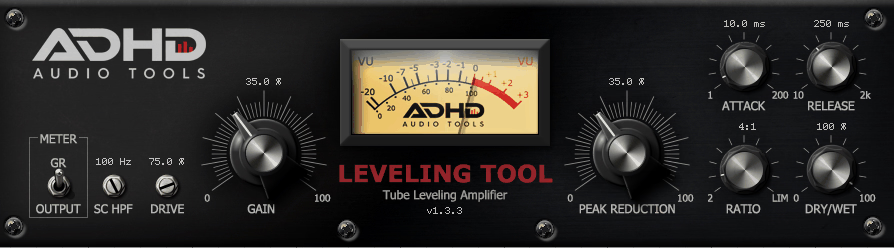
ADHD Leveling Tool is a tube style leveling compressor that’s clearly inspired by the classic LA-2A smooth it and move on approach, but it’s not trying to be a strict clone.
The reason people keep it around is simple: it gives you that easy opto leveling feel while also letting you steer the behavior more than I normally can with an LA-2A style compressor, so that you can make it work on more sources than just safe vocal leveling.
This plugin is for making audio feel stable and mix ready without sounding worked on. I would use it when a track is good but jumps around: a vocal that gets loud on certain words, a bass line with a few notes that leap out, guitars that spike on harder strums, or overheads that get splashy in choruses.
- LA-2A inspired with more control
Classic leveling amps are famously simple, but that simplicity can also mean take it or leave it. Here you get Peak Reduction plus Gain like you’d expect for fast leveling, but also get Ratio and Attack/Release controls, so you can push it toward gentle leveling, or tighten it up when you need a more controlled, modern response.
That’s the difference between vocal only tool and actually useful on lots of tracks. This flexibility means you are not constantly reaching for different compressors depending on the source.
- Gain stage paired with leveling workflow
Because leveling compression often drops the output as it works, the plugin’s Gain control makes it easy to get back to a sensible level while you dial Peak Reduction, so you can judge the change by tone and stability, not by louder sounds better.
To me, this keeps me honest about what the compression is actually doing. I’m hearing the real effect, not just a volume increase that tricks my ears.
- Ratio and timing controls for modern response
You can use Ratio and adjust Attack/Release until the track feels steady without sounding squashed. Faster Attack/Release settings compared to classic leveling amps can help keep a performance steady in a dense arrangement.
Honestly, I would recommend this when you need the opto smoothness but also need tighter control for modern, aggressive material. This is what makes it work on drums and percussion, not just vocals.
- Bass with note to note consistency
Leveling Tool is useful when bass has uneven notes that keep changing the whole mix balance. The sidechain HPF is the key here, I engage it so deep lows don’t dominate the detector, then compress for note to note consistency while keeping the foundation intact.
I think this works especially well on electric bass, synth bass, and 808s where the low end can be wildly unpredictable. To me, this is where the sidechain control really proves its value.
3. Analog Obsession COMPER
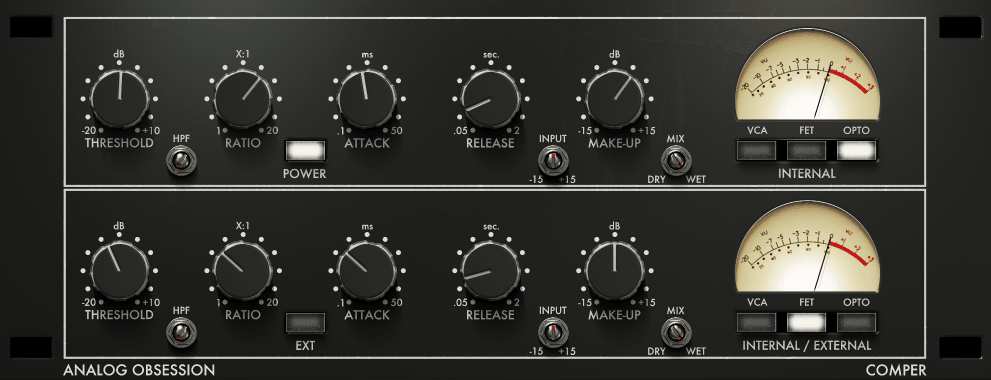
Lastly, this one is a serial dual compressor that keeps two stage workflow in one place and makes it flexible enough that you can use it as a tone shaper, a peak controller, or a bus glue chain depending on how I set the two sections.
What makes COMPER stand out even among a million compressors is that each stage can run VCA, FET, and OPTO behaviors, and I’m not locked into choosing only one. I can blend them, which is exactly what I’d do in real life by stacking different compressor types, except here it’s fast and consistent.
- Two compressors in series for separate jobs
Instead of forcing one compressor to do everything, COMPER lets you split the job. That means you can keep the sound alive and punchy while still getting control, because you’re not crushing the same stage trying to fix two different problems.
I think this is why it works so well on sources that need both feel and stability like vocals, bass, drum buses, and mix buses. To me, this is the kind of workflow that actually matches how you want to work, not how compressors traditionally force me to work.
- Blendable VCA/FET/OPTO behavior per stage
This is the killer feature. If I want VCA style firmness, FET style bite and urgency, and OPTO style smooth leveling, you don’t have to pick one and accept the downsides, you can combine them until the track behaves the way you want.
It’s a fast way to land on the right compression feel without swapping plugins or stacking a long chain. Also, I like that I can dial in the exact character I need by blending behaviors rather than being stuck with one compressor type.
- Oversampling for cleaner results when pushed
When you’re driving a compressor for tone, the top end is where grit shows up first. COMPER’s oversampling option helps keep the result smoother and less hashy when I’m pushing the stages harder, especially on bright sources like vocals, overheads, or synths.
I can say this is useful when you’re using the FET blend for bite and aggression, the oversampling keeps it from getting harsh or brittle.
- Instrument buses and mix buses for subtle control
Instrument buses and mix buses work when you keep the moves modest. The two stage layout makes it easier to add a little record frame stability while keeping the mix open, and the sidechain HPF helps keep the low end from steering the whole result.
I think it’s also excellent when you’re mixing quickly and want compression that’s easy to aim: a bit of leveling, a bit of peak control, and the track just sits better. To me, this is for producers and mixers who want one compressor that can cover a lot of real work without building a complicated chain.

Hello, I’m Viliam, I started this audio plugin focused blog to keep you updated on the latest trends, news and everything plugin related. I’ll put the most emphasis on the topics covering best VST, AU and AAX plugins. If you find some great plugin suggestions for us to include on our site, feel free to let me know, so I can take a look!