
Here’s my take on the best FET compressor plugins for musicians who need fast transient control and forward punch that just work.
When it comes to FET compressors, they grab transients faster than anything else, and that speed is exactly why they’ve stayed relevant for fifty years. When you need a snare to punch through a dense rock mix or want a vocal sitting aggressively forward without sounding polite, you can reach for FET compression first.
The problem is that most of FET compressors either chase vintage authenticity so hard they become impractical on modern buses, or they pile on features until the core character gets buried. What you actually need are tools that deliver that classic fast response and harmonic bite while functioning reliably across different sources without constant babysitting.
This article covers options worth considering, both commercial and free options, focusing on what separates usable tools from museum pieces. The goal isn’t finding which plugin measures closest to hardware nobody owns. It’s about identifying which ones solve real mixing problems when working fast and delivering results that hold up. So let’s get started, I tried my best with the selection, covering plugins from various brands:
1. Softube FET Compressor Mk II
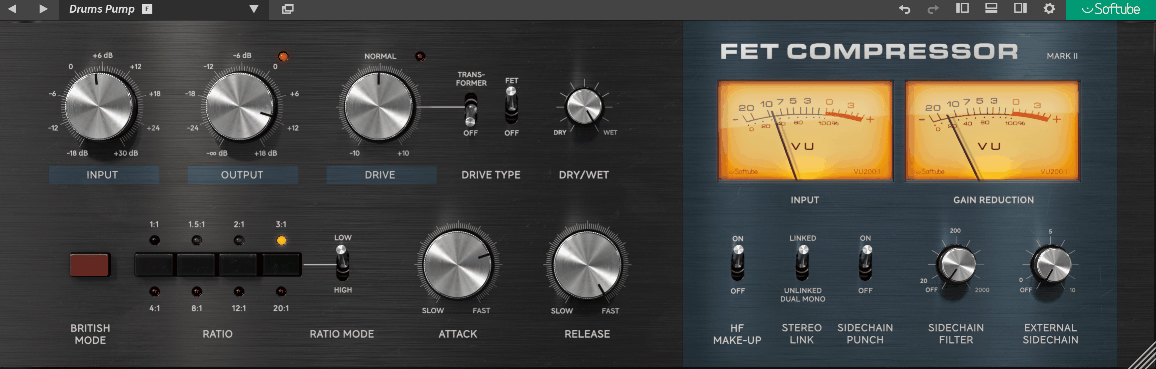
I reach for the Softube FET Compressor Mk II when I need that classic FET aggression but want more control than a simple vintage clone gives me. This thing is built around the hardware concept everyone knows, but Softube rebuilt it from scratch with workflow additions that actually matter when you’re working fast.
The sound is still pure FET: fast transient grab, forward impact, and harmonic bite when you push the input stages. I recommend it mostly on drums, vocals, guitars and bass where that immediate punch makes everything sit right in the mix. What makes this version different is that you can dial in subtlety or go full aggressive without fighting the plugin, and the input and output transformers modeled here give you authentic tone shaping beyond just turning knobs.
The original hardware was launched as the fastest compressor in the world, and Softube models that speed accurately with an attack range from roughly 20 microseconds to 800 microseconds. That’s why this compressor shapes transients differently than most general purpose tools.
The release goes from about 50 milliseconds to 1.1 seconds and behaves in a program dependent way like the real unit. When I need to catch a snare hit or tighten up a vocal without smearing the tail, these timing specs are exactly why this works where slower compressors don’t.
- Eight Ratio Options with Mode Switching
You get 8 preset ratios total, and there’s a dedicated Ratio Mode that switches between the original high ratio set and a newer low ratio set that includes 1:1. This matters because you can keep the FET timing and tone while backing off intensity when you don’t want obvious clamping.
I would use the low ratio mode on mix buses where I want the transformer color without heavy compression. The high ratios are still there when you need that classic all buttons in aggression on individual tracks.
- Dual Drive System
Softube gives you two separate drives: FET drive and transformer drive, and you can use them together or independently. This is the real tone control.
You can keep compression fairly controlled and still push the input stages for thickness, or stay cleaner and let gain reduction do the work. I find myself using just transformer drive on vocals sometimes to add weight without the full FET squeeze. On drums, you can stack both drives with moderate compression to get that forward urgency without overworking the gain reduction.
- Sidechain and Detector Filtering
The detector filtering and dedicated Sidechain section let you tune what drives the compression. You can use the high pass filter in the detector path to stop kick frequencies from pumping the whole mix when this is on a bus.
You can also feed an external sidechain signal to make the compression react to something other than the input source, which opens up creative ducking possibilities. This is what separates Mk II from strict vintage clones that only respond to their input signal.
- Stereo Link Modes and High Frequency Makeup
You get Stereo Linked and Unlinked Dual Mono behaviors, which matters on stereo material. Linked mode keeps your center image stable with consistent gain reduction across both channels. In addition, Dual Mono gives you more independent left right action when you want asymmetric punch.
The High Frequency Makeup isn’t a static shelf EQ. It reduces high frequency compression dynamically during gain reduction activity, so you keep perceived top end without manually boosting after the fact. This feature alone saves me from the dull overhead sound that happens when you compress drum buses hard.
2. Arturia FET-76
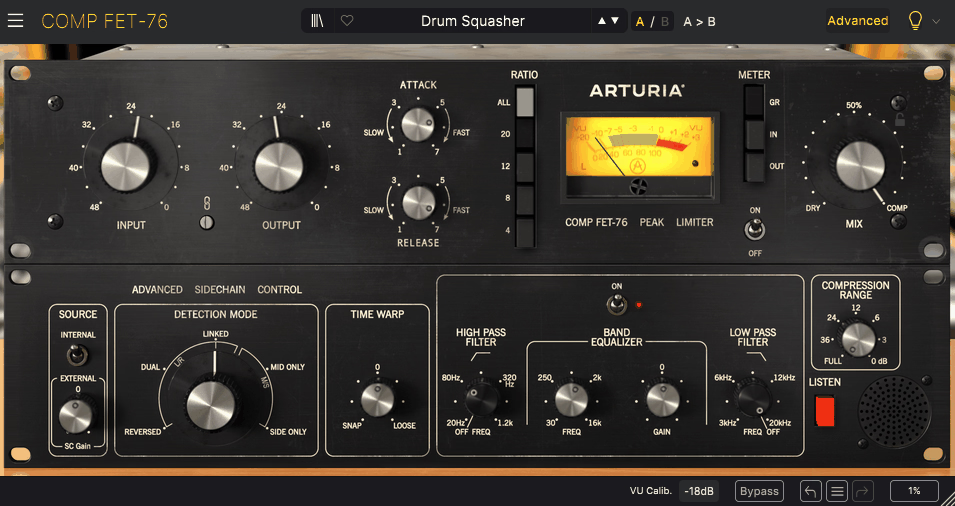
Arturia FET-76 keeps the fast and aggressive FET behavior you expect but expands it with modern controls that make sense in actual sessions. I use this when I want classic FET punch without being locked into one narrow vintage sound.
The core is still built around that fast FET topology with aggressive gain reduction and forward midrange character, but Arturia gives you range and adaptability instead of forcing historical accuracy. You get real flexibility mainly across drums, vocals, bass, and guitars and someo others without the plugin falling apart when you push past conservative settings.
- Five Compression Behaviors
This is the main feature – You get 4 ratio buttons matching the traditional stepped FET approach, plus the expected All Buttons mode. That gives you 5 compression behaviors before you even touch timing or input level.
The All Buttons mode delivers heavier saturation, stronger harmonic buildup, and a more unstable compression curve.You can use this when you want attitude on drums or aggressive vocal compression where controlled dynamics aren’t the goal. The standard ratio buttons cover everything else from subtle leveling to heavy clamping.
- Sidechain High Pass Filter
One of the most important additions here is the sidechain high pass filter. This lets you prevent low frequency energy from dominating compression behavior, which is critical on drum buses or fuller arrangements.
Without this, FET compressors tend to clamp too hard on kick and bass, pumping the entire mix. Arturia includes this as a standard control, making FET-76 far more flexible than older one-to-one emulations. In real sessions, this is the difference between a compressor you can safely leave on a bus and one you only use for sound design.
- Two Distortion Characters
Beyond compression itself, FET-76 includes a dedicated distortion stage that can be blended in. This is not subtle transformer modeling hidden in the background but an explicit tone control.
You can choose between 2 distortion characters, giving you 2 tonal flavors that sit on top of the compression behavior. This makes the plugin particularly useful when you want compression and tone shaping in a single step, especially on drums and vocals that need to cut without sounding brittle. I can imagine using the distortion more aggressively on parallel drum chains where you want density without worrying about transparency.
- Wide Timing Range
Attack is fast enough to aggressively reshape transients, while release spans from tight and punchy to slower, groove dependent behavior. Arturia doesn’t lock you into fixed values, which makes the compressor easier to tune across different sources.
The timing range is wide enough that the plugin works on single tracks, drum buses, and parallel chains, not just one narrow use case. This is why FET-76 functions as a general purpose FET compressor instead of a special effect tool. You’re not fighting the unit to make it work on bass after using it on snare.
- Input Driven Compression
Like a traditional FET design, compression intensity is largely driven by input level, with output used for level matching. Push the input and you get more compression plus more harmonic density. Pull it back and the unit stays tighter and more controlled.
What matters in practice is that the plugin responds smoothly across its input range. You can work with subtle 1 to 2 dB of gain reduction or push into aggressive territory without the compressor becoming unpredictable. The connection between input level and tone is direct, which gives you intuitive control once you understand how hard you’re hitting the circuit.
3. Pulsar Audio 1178

Pulsar Audio 1178 takes the dual mono heritage of the original hardware and turns it into a modern, flexible FET compressor plugin that handles both aggressive single track work and serious bus duties.Use this when you need FET speed and punch but want the plugin to work across stereo material without image problems.
The tone is firm and forward without being hyped, and harmonics build naturally as compression increases. Pulsar doesn’t pitch this as a museum grade emulation but as a versatile compressor for modern production, which is exactly how it performs in real sessions.
- True Dual Mono Engine with Linking
Unlike many FET plugins that treat stereo as an afterthought, Pulsar 1178 is built around a true dual mono engine with advanced linking behavior. Each channel has its own compression path, but the plugin allows controlled interaction between channels so you can keep the stereo image stable.
This matters because it makes the plugin usable on stereo drum buses, synth buses, and parallel compression chains, not just mono vocals or snare drums. The design gives you 2 channel paths that can operate independently or in a linked configuration. You can try this on drum overheads if you want fast FET response but need the center image to stay locked, and the linking keeps everything coherent without losing the character.
- Five Compression Behaviors
Pulsar 1178 follows the traditional stepped FET ratio concept, offering 4 classic ratios, plus the expected All Buttons mode, giving you 5 compression behaviors before touching timing or input.
All Buttons behaves aggressively as expected, but Pulsar tunes it to remain controllable rather than chaotic. The important part is that the plugin stays usable at lower ratios as well. You can sit comfortably at modest gain reduction for punch and density, or push into heavy clamp territory without the compressor becoming unstable.
- Sidechain High Pass Filter
One of the biggest practical upgrades is the inclusion of a sidechain high pass filter. This allows you to stop low frequency energy from dominating the detector, which is essential if you want to use a FET compressor on anything with real low end.
The sidechain filter makes the 1178 usable on drum buses, bass heavy synth stacks, and even full mix parallel chains, where a traditional FET compressor would often overreact. This single feature dramatically expands where the plugin fits in a modern mix. Without it, you’d be fighting kick pumping every time you tried to compress a full drum bus.
- Internal Oversampling
Pulsar 1178 includes internal oversampling, designed to keep harmonic generation clean when the compressor is driven hard. You don’t need to manage oversampling manually in day to day use because it’s integrated into the engine and tuned for the plugin’s processing style.
This keeps the top end from getting harsh when you push the input for saturation and density. The oversampling works in the background so you can focus on dialing in compression and tone without worrying about aliasing artifacts creeping into your transients.
- Input Driven Tone Control
Compression intensity is driven primarily by input level, staying true to classic FET workflows. As you push the input, you get more gain reduction and more harmonic density. Pull it back and the unit stays cleaner and more controlled.
The plugin avoids harsh upper mid artifacts that some FET emulations struggle with when driven hard. This balance is one of the reasons the plugin is often described as versatile rather than purely aggressive, and why I reach for it on vocals that need presence without brittleness.
4. Overloud Comp76 V2
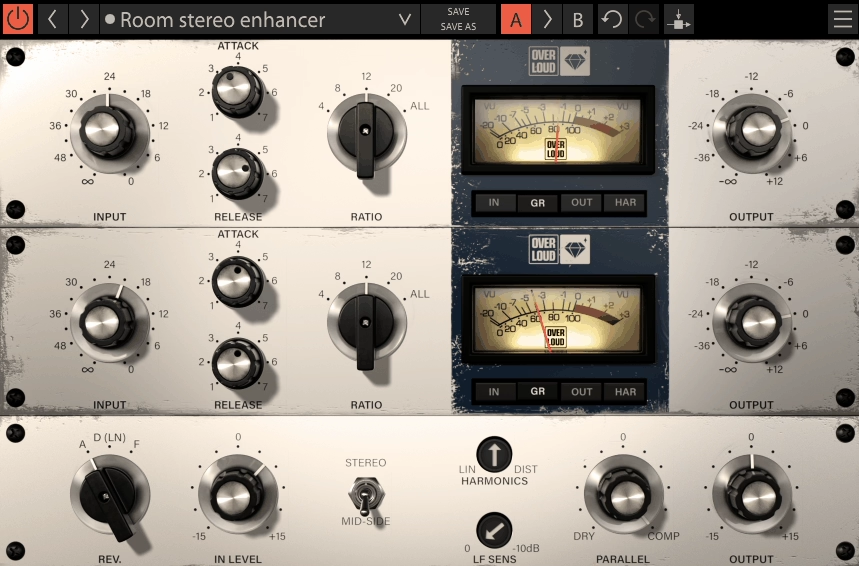
Part of Overloud’s GEM series, this plugin is built for engineers who want classic response, tone, and speed with just enough modern support to function smoothly in current DAWs. Overloud Comp76 V2 is a deliberately no nonsense FET compressor that focuses on authentic circuit behavior and workflow accuracy rather than piling on modern extras.
You can definitely try it out if you need FET workhorse that behaves predictably without extra decisions or distractions. The tonal character is firm and mid forward, with harmonics increasing naturally as gain reduction increases, and there’s no separate saturation section to manage.
- Input Driven Compression
Compression intensity is driven by input level, not by a threshold knob, which immediately puts it in the correct mindset for experienced users. Push the input and the unit grabs harder and adds density. Pull it back and it stays controlled and punchy.
I can say that this keeps the workflow simple and focused. If you want more bite, you push the compressor harder. If you want less color, you back off. There are no hidden tone stages or parallel coloration paths, so what you hear is directly tied to how hard you’re hitting the input stage. I find this approach faster than hunting through multiple saturation controls when I’m working quickly on vocals or drums.
- Five Compression Behaviors
Comp76 V2 includes the 4 traditional ratio buttons, along with the expected All Buttons mode, giving you 5 compression behaviors in total. The ratios behave as you would expect, with lower ratios providing controlled punch and higher ratios pushing the compressor into limiting territory.
The All Buttons mode is aggressive and dense, with clear harmonic buildup and a more unstable compression curve. Importantly, it stays usable rather than collapsing into distortion, which makes it practical for parallel compression on drums or room mics rather than just a special effect.
- Circuit Modeling Accuracy and V2 Improvements
Comp76 V2 represents a refinement over the original release, with improvements in circuit modeling accuracy and overall stability. Overloud emphasizes that the GEM series is built around detailed analog modeling, and Comp76 V2 reflects that focus.
Also I noticed that the modeling stays faithful to the original topology without exaggerating characteristics for effect. You get the response you expect from this type of compressor, which matters when you’re making fast decisions in a session.
- Predictable Fast Timing
When it comes to Attack and release, they are continuously variable and stay true to the fast FET response that makes this type of compressor useful. Attack is fast enough to aggressively reshape transients, while release ranges from tight and energetic to slower and more groove focused.
The key point here is that timing feels predictable. Comp76 V2 doesn’t exaggerate speed for effect but responds quickly in a controlled way, which is why it works well on material where consistency matters, like lead vocals and drum buses. I can only say when I set a fast attack, it reacts exactly how I expect without surprises.
- Solid Stereo Compression
Comp76 V2 supports stereo operation, and the channel linking behavior is tuned to preserve stability while still allowing the characteristic FET response. It doesn’t attempt advanced dual mono linking or complex stereo manipulation but focuses on solid, predictable stereo compression.
This is exactly what you want when using a FET compressor on buses or parallel chains. The image stays centered and stable, which becomes critical when you’re pushing gain reduction harder for density and don’t want the center to wander or the sides to pump independently.
5. Waves CLA 76
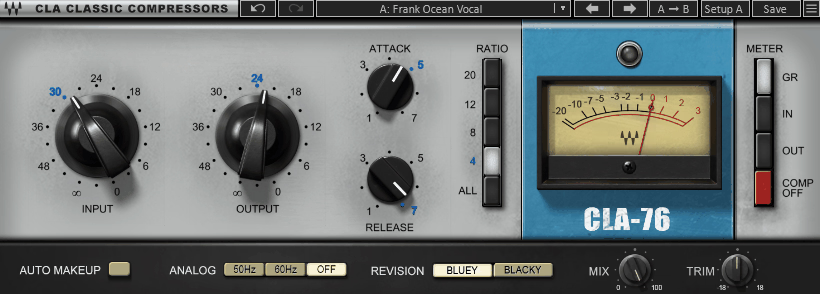
Waves CLA 76 is a long standing FET compressor plugin that focuses on speed, attitude, and recognizable tone rather than flexibility for its own sake. It’s modeled around classic FET limiter behavior and framed through the workflow preferences of Chris Lord-Alge, which means it’s unapologetically direct.
I recommend this when you want punch, density, and control quickly without navigating through modern extras. This plugin has been used in professional sessions for well over a decade, and the reason it’s still relevant is that it does one job extremely well without trying to be everything.
- Two Distinct Compressor Models
CLA 76 comes with 2 distinct compressor models, labeled Bluey and Blacky. These are not cosmetic differences but react differently in timing, tone, and how aggressively they clamp.
Bluey is faster and more aggressive, with a brighter, more forward midrange. It’s the one people reach for when they want transients controlled hard and fast, especially on vocals and drums. Blacky is slightly smoother and more controlled, with a firmer low end and less edge in the upper mids.
In practice, this gives you 2 usable FET personalities inside one plugin without needing extra controls. i would say you can try Bluey on lead vocals that need to cut through dense rock mixes, then switch to Blacky for bass or kick drums if you want firmness without brightness.
- Five Compression Behaviors
The ratio section follows the traditional stepped FET design with 4 ratio buttons, plus the well known All Buttons mode, giving you 5 compression behaviors. The ratios feel familiar and predictable, and the All Buttons mode delivers the expected aggressive, dense compression with harmonic buildup and a more unstable response.
Compression depth is driven entirely by input level, not threshold. This is important because it keeps the plugin aligned with real FET workflow. You drive it until it reacts the way you want, then match output. There’s no safety net here, which is part of why people either love or hate CLA 76.
- Fast Attack and Release
Attack and release controls are extremely fast and intentionally limited to a specific range. Attack is fast enough to reshape transients decisively, and release is quick enough to create energy and urgency in a signal.
This compressor is not designed for slow, invisible leveling but to grab and let go quickly, which is why it works so well on vocals that need to sit forward, drums that need snap, and guitars that need density without sounding polite. The limited range keeps you in the zone where FET compression makes sense, rather than trying to be a slow optical compressor.
- Light CPU Usage
CPU usage is light by modern standards, which is one reason this plugin still appears in large sessions. You can run many instances without concern, making it practical for multiple parallel compression chains or aggressive track processing across an entire mix.
This matters when you’re working in sessions with hundreds of tracks and need a compressor you can commit to without worrying about system performance. I’ve had sessions with 10+ instances of CLA 76 running simultaneously on drums, vocals, and parallel chains without any CPU issues.
- Aggressive Harmonic Character
CLA 76 is not subtle, even at moderate settings it adds a clear tonal imprint. Harmonics build quickly as gain reduction increases, especially in Bluey mode. The midrange becomes more focused and aggressive, and the top end can feel brighter depending on how hard you drive it.
There’s no separate saturation control, so tone comes directly from compression behavior and input drive. This keeps the plugin simple, but it also means you cannot decouple tone from dynamics. When you compress, you’re also shaping color, which is exactly the point of this plugin.
6. UAD 1176 Classic FET Compressor
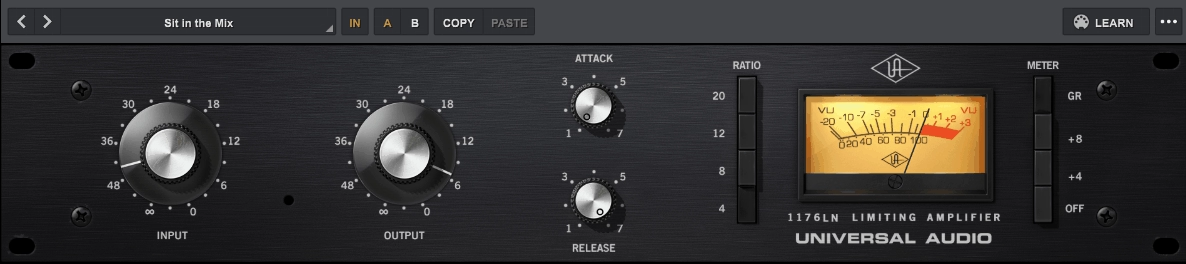
UA 1176 Classic FET Compressor is Universal Audio’s native take on one of the most referenced FET compression designs ever, delivered without DSP hardware requirements. The intent here is not flexibility or feature stacking but recognizable tone, speed, and behavior packaged in a way that fits modern native workflows.
This plugin stays close to the classic FET limiter concept with input driven compression that’s fast and intentionally unforgiving when pushed. I use this when I want a single, familiar sound without extra decisions, and it works best when used per track or in parallel where its fast response and strong tone add energy without destabilizing the mix.
- Five Compression Behaviors
The ratio section follows the traditional format with 4 stepped ratios, plus the famous All Buttons mode, giving you 5 compression behaviors in total. The lower ratios are usable for controlled punch and density, while higher ratios push the unit into obvious limiting territory.
All Buttons mode behaves aggressively, with strong harmonic buildup and a less predictable compression curve. It’s clearly meant for impact and attitude, not restraint. The important part is that the plugin doesn’t soften or modernize this behavior but stays raw and direct.
- Input Driven Tone and Dynamics
Tone comes entirely from how hard you drive the input and how much gain reduction you apply. As compression increases, harmonics build naturally, with a noticeable midrange focus and added density.
There’s no independent saturation control and no way to separate tone from compression. This keeps the workflow honest, but it also means every move has consequences. You cannot dial in color without affecting dynamics. I find this approach forces better gain staging decisions because you’re always balancing how much character you want against how much control you need.
- Extremely Fast Response
Attack and release controls operate over the expected FET ranges and feel extremely fast. Attack is quick enough to reshape transients decisively, while release can be set tight for energy or slower for slightly more sustain.
There’s no attempt to smooth or tame the response. This compressor grabs hard and lets go fast, which is why it works so well on vocals, drums, bass, and aggressive guitars. It’s not designed for slow, invisible dynamic control but for immediate impact.
- Light CPU Usage
CPU usage is light, especially compared to more complex modeled compressors, which makes it easy to use multiple instances across a session.
This matters when you’re working in native systems and need a compressor you can commit to on multiple tracks without worrying about performance. I’ve run this on 8 or more tracks simultaneously in large sessions without any strain, which is why it works well as a go to character compressor rather than a special occasion tool.
- Native Plugin with Practical Presets
The UA 1176 Classic FET Compressor is available as a native plugin, running in VST3, AU, and AAX formats on macOS and Windows. It’s sold independently and is also frequently included in UA native bundles and promotions, including limited time free releases.
UA includes a small but practical preset set, focused on common use cases like vocals, drums, bass, and aggressive compression. Expect around 20 to 30 presets, depending on version and platform. Presets are conservative and functional, designed to get you into a usable range quickly. Because the compressor is input driven, presets always require level adjustment to match the source.
IK Multimedia Black 76
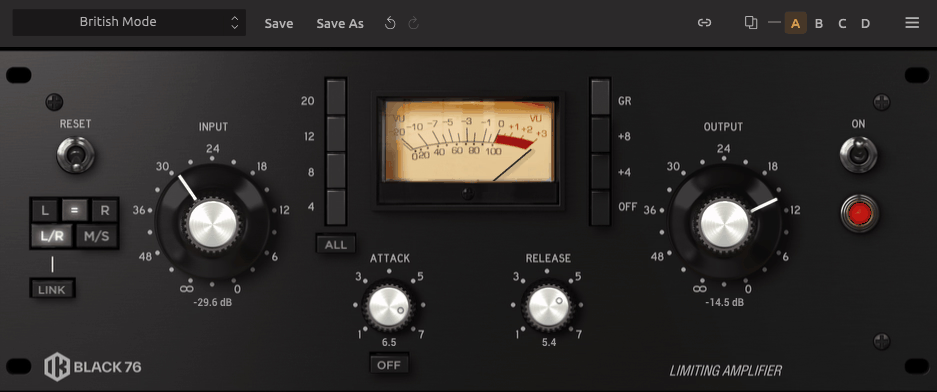
Built as part of the T-RackS ecosystem, this plugin delivers familiar speed and punch with classic FET limiting amplifier behavior. The goal is clear: dependable tone wrapped in a workflow that fits both individual tracks and bus level use when handled with intent.
IK Black 76 is fast, assertive, and mid forward FET compressor plugin with transients grabbed quickly and release behavior that’s energetic rather than polite. It works particularly well as a focused, traditional tool that doesn’t hide what it’s doing, especially for those already working inside the T-RackS environment.
- Five Compression Behaviors
The ratio section follows the expected format with 4 stepped ratios, plus the familiar All Buttons mode, giving you 5 compression behaviors in total. Lower ratios work well for punch and control, while higher ratios push the unit firmly into limiting territory.
All Buttons mode behaves aggressively, with obvious harmonic buildup and a more unstable compression curve. It’s useful for parallel compression, room mics, and dense vocal chains, but it’s not subtle. The plugin doesn’t smooth or tame this behavior, which is exactly what many engineers want from a Black style FET compressor.
- Input Driven Compression and Tone
Black 76 follows the traditional FET compressor architecture where input level drives compression, not a threshold control. The harder you push the input, the more aggressively the unit clamps and the more harmonic density you get.
Tone is directly tied to gain reduction, so as compression increases, harmonics build naturally, adding density and edge. There’s no separate saturation control, and there’s no way to isolate color from compression. This keeps the workflow honest because if you want more tone, you push harder, and if you want less, you back off. The plugin doesn’t offer shortcuts or workarounds.
- T-RackS Suite Integration
Because it’s part of the T-RackS suite, Black 76 integrates into IK Multimedia’s broader processing environment. If you already work inside T-RackS, this fits naturally into chains alongside EQs, limiters, and other dynamics processors.
This matters for recall and workflow consistency. You can build complete processing chains inside T-RackS and save them as presets, with Black 76 functioning as one component in a larger signal path.
- Fast Attack and Release Response
Attack and release controls are continuously variable and intentionally fast. Attack is capable of reshaping transients decisively, while release ranges from tight and pumping to slower and more controlled.
The timing response feels authentic rather than exaggerated, which makes it easier to predict how the compressor will behave across different sources. This is not a compressor designed for slow leveling but built to grab and move, and that character stays consistent across its range.
- Optimized for Mono and Parallel Chains
Black 76 supports stereo operation with fixed channel linking, but it works best on mono sources or parallel stereo chains where its aggressive response adds energy without destabilizing the image. On full buses, it requires careful input control because there are no advanced stereo controls, no mid side options, and no variable linking.
I use this mostly on individual drum elements, lead vocals, and parallel drum buses where I want the aggressive character without worrying about stereo image stability. When I need a FET compressor on a full stereo bus with complex material, I’ll reach for something with more advanced linking options.
8. Softube Drawmer 1973
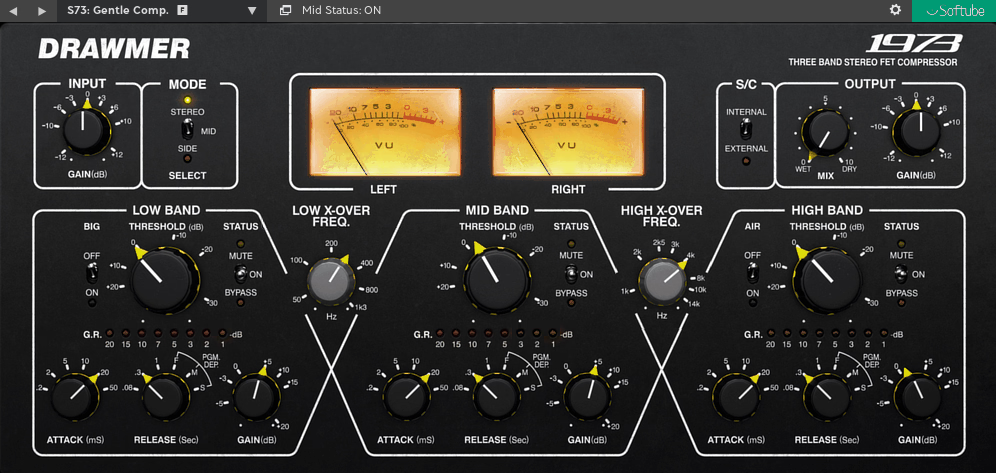
Softube Drawmer 1973 is not a typical FET and that’s exactly why it earns a place on this list. It’s a three band FET multiband compressor modeled on the original Drawmer hardware, and it targets a very specific use case: controlled punch and density across the spectrum without collapsing a mix.
I use this when I know broadband FET compression will fall apart on complex material and need something that solves that problem without turning into a surgical mastering tool. The compression feel is consistent across bands, keeping the result cohesive rather than creating audible band separation.
- Three Band Architecture
The defining feature of Drawmer 1973 is its three band architecture combined with FET based compression in each band. Instead of one detector reacting to the entire signal, the audio is split into Low, Mid, and High bands, each with its own compressor.
That alone changes how aggressive compression behaves, because low end hits no longer force the whole mix down, and high frequency transients can be controlled without dulling everything else. This is not multiband compression in the modern transparent sense but still very much about character and punch, just with better control over where that energy comes from. The result is a compressor that feels dense and controlled rather than smashed.
- Adjustable Crossover Points
The plugin uses two crossover points to define the three bands. The crossover frequencies are adjustable, which lets you decide how much of the low end stays isolated and how much of the midrange carries the weight of compression.
This matters in real mixes, because pushing FET compression into the mid band often gives you energy and presence without destroying sub or air. I would typically set the low crossover around 120-150 Hz to keep kick and bass from triggering midrange compression, then adjust the high crossover around 3-5 kHz depending on how bright the source is.
- Independent Controls Per Band
Each band has its own Threshold, Ratio, Attack, and Release, which means you’re effectively working with three independent FET compressors at once. That’s the main reason this plugin can handle buses and dense material more gracefully than single band FET designs.
The ratio range stays within sensible limits for musical compression rather than hard limiting. You get multiple ratio options per band, designed for punch and density instead of brickwall behavior. Attack and release are fast enough to preserve the FET character, but they’re tuned to stay stable when multiple bands are working at the same time.
- Stereo Image Stability for Bus Use
Drawmer 1973 is built for stereo use, with compression behavior linked in a way that preserves the stereo image while still allowing each band to react musically. It’s not dual mono and it doesn’t offer mid side processing but focuses on keeping the image solid while applying assertive compression.
This is one of the reasons it’s commonly used on drum buses, mix buses, and stems, where stereo movement needs to stay predictable even under heavy compression. I’ve used this on full drum buses with wide overheads and the image stays centered without pumping side to side.
- Console 1 Integration
The plugin integrates with Softube Console 1, which is a real advantage if you mix with hardware style control and want multiband dynamics available without breaking your workflow. This matters because managing three bands of compression with a mouse can get tedious, but having physical knobs makes balancing the bands feel more intuitive and musical.
Freebies:
1. Analog Obsession OSS
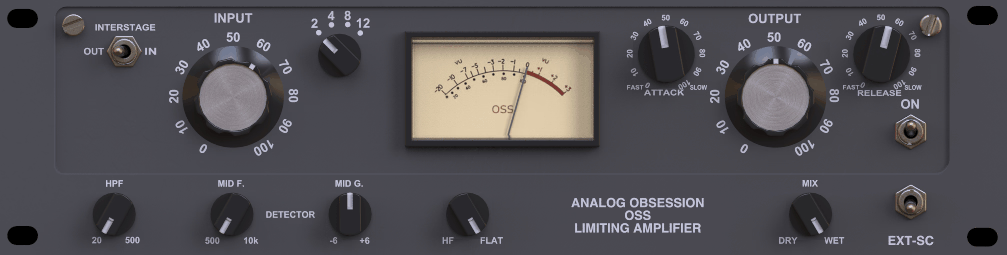
Designed around fast response, obvious tone, and practical control rather than feature overload, this straight-to-the-point FET style compressor delivers reliability without the extras. Like most releases from the developer, Analog Obsession OSS is offered free via Patreon and targets engineers who already know what they want from a FET compressor and just need something that delivers.
The response is fast and assertive, with the expected FET grab on transients. This works well when impact without distraction is the goal, shining on mono tracks, parallel chains, and aggressive subgroup compression where speed and tone add urgency without needing surgical control.
- Input Driven FET Compression
OSS follows a traditional input driven FET compression approach. There’s no threshold knob doing the thinking for you. You push the input, the compressor reacts harder, and the tone thickens as gain reduction increases.
That design choice defines the entire workflow. OSS is meant to be driven deliberately, not politely nudged. Tone comes directly from the compression circuit behavior, so as you drive OSS harder, harmonics build naturally and the midrange becomes more forward.
There’s no separate saturation or color knob because compression and tone are inseparable. This keeps the workflow honest, where if the sound gets too dense or aggressive, the fix is not another control but backing off input or adjusting timing.
- Five Compression Behaviors
OSS offers 4 stepped ratios, following the familiar FET layout, plus the expected All Buttons style behavior, giving you 5 compression behaviors in total. Lower ratios are usable for controlled punch, while higher ratios push the compressor into obvious limiting territory.
Attack and release are continuously variable and intentionally fast. Attack is quick enough to reshape transients decisively, while release ranges from tight and energetic to slower and more controlled. The timing doesn’t drift into experimental territory but stays predictable and musical, which is important when you’re compressing aggressively.
- Switchable 4x Oversampling
OSS includes 4x oversampling, switchable by clicking the Analog Obsession logo. This helps reduce aliasing when the compressor is driven hard, especially in high ratio or All Buttons style settings.
Oversampling increases CPU usage slightly, but it’s worth enabling when using OSS for heavy compression or parallel work.
2. Analog Obsession FETCB
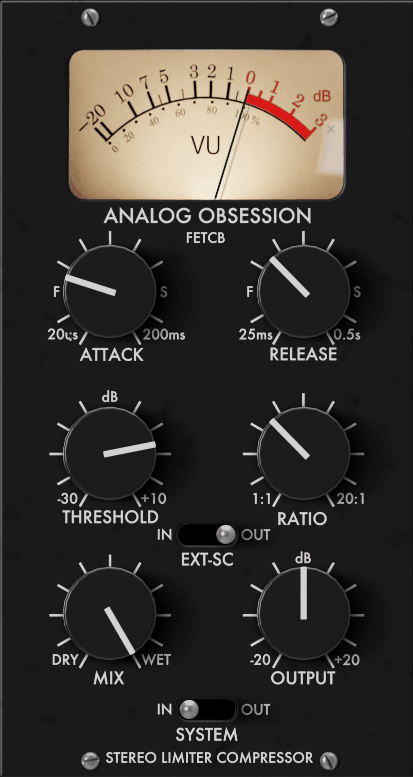
Inspired by a lesser known console era design, this focused FET compressor plugin sits somewhere between classic 1176 style aggression and more controlled bus capable behavior. Like most releases from the developer, it’s offered free via Patreon and clearly aimed at engineers who already understand fast compression and want a slightly different flavor.
What separates Analog Obsession FETCB from more obvious FET designs is its balance. It still reacts quickly, but it doesn’t feel as razor sharp or explosive as a pure 1176 style unit. This works well when traditional FET compressors feel too sharp or too obvious, particularly on drum buses, synth buses, and parallel compression where FET energy is needed without constant micro correction.
- Forgotten FET Topology with Smoother Response
FETCB is not presented as a nostalgia piece for famous hardware but revives a forgotten FET topology that sits between classic 1176 aggression and more controlled behavior. The compressor grabs transients decisively, but the response feels slightly rounder than ultra aggressive FET designs.
This makes it easier to use on sources where you want FET energy without fighting the plugin. The timing behavior is predictable, and you can push it hard without the sound falling apart, which is not always true with fast FET compressors. As with many other compressors in the list, you can use this on drum buses where you want forward punch but need the overheads to stay smooth, and FETCB delivers that balance better than sharper FET designs.
- Five Compression Behaviors
FETCB provides 4 stepped ratios, plus an All Buttons style mode, giving you 5 compression behaviors in total. Lower ratios are usable for controlled punch and presence, while higher ratios move into firm limiting territory.
Attack and release are continuously variable and cover the expected fast FET range. Release ranges from tight and energetic to slower and more stable, which helps when using the compressor on buses or layered sources.
- Integrated Tone and Compression
Tone is integrated into the compression circuit, not added as a separate stage. As gain reduction increases, harmonic density builds naturally, with a noticeable midrange presence and controlled high frequency edge.
FETCB doesn’t exaggerate saturation but adds weight and focus rather than grit. This makes it useful in chains where you want character but not overt distortion. I find this approach cleaner than plugins that stack compression and separate saturation controls, because you’re always hearing how the dynamics and tone interact together.
- Bus Capable Stereo Behavior
FETCB supports stereo operation with fixed linking, and the stereo behavior is stable enough for subgroup use when handled with care. It’s not dual mono and doesn’t include mid side processing, but it’s more forgiving on stereo material than many sharper FET designs.
In practice, it works well where the slightly restrained FET response keeps things glued without excessive pumping. This is one of the reasons I’ll choose FETCB over more aggressive FET compressors when working on full drum buses or synth buses where image stability matters as much as punch.
- Switchable 4x Oversampling
The plugin includes 4x oversampling, enabled by clicking the Analog Obsession logo. This is especially useful when running higher ratios or All Buttons mode, as it reduces aliasing when the compressor is driven hard.
CPU usage increases slightly with oversampling enabled, but it remains practical for multiple instances in a mix. You can keep it on by default when you are using FETCB for parallel compression or aggressive settings where you’re pushing the input hard.
3. Analog Obsession FETISH
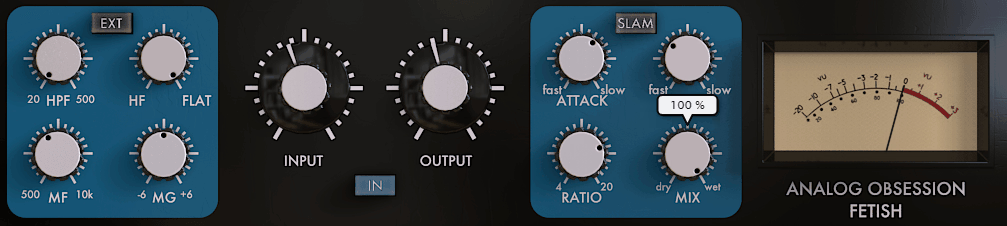
Analog Obsession FETISH is a part of AO Fet Bundle. It’s a classic FET compressor/limiter plugin that takes a familiar architecture and expands it with several controls that make it more flexible than the simplest 1176 style emulation. It comes from Analog Obsession’s free plugin lineup and is designed for engineers who want fast attack time, solid compression character, and practical sidechain shaping without paying for a premium commercial plugin.
At its heart, FETISH follows a classic FET limiting amplifier topology with input driven compression and quick response to transients. I recommend it when you need that FET speed but want more control over what frequencies trigger the compression, which makes it far more usable on buses and full mixes than basic FET clones.
- Extended Sidechain Control Section
A key aspect that separates FETISH from basic free compressors is its extended sidechain control section. There’s a HPF (high pass filter) from 20 to 500 Hz designed to keep low frequency energy like kick and sub bass from dominating the compression detector.
On top of that, there are mid frequency and mid gain controls that let you choose a mid band between 500 Hz and 10 kHz and adjust how strongly that band triggers compression. Boosting the mid gain yields more compression response in that band, while cutting it reduces sensitivity there.
There’s also a dedicated high frequency control that pushes more high end into the detector when needed or leaves it flat when you want natural top end behavior. These elements make the compressor much more usable on full mixes, buses, and stereo sources, because you can tune what part of the spectrum drives gain reduction instead of letting low end or high frequency energy dictate the response.
- SLAM Mode
FETISH includes SLAM mode, which is analogous to pressing all ratio buttons at once on vintage hardware, providing an ultra-fast and aggressive limiting behavior across any ratio setting.
SLAM can be a creative tool when you want extreme compression on transient rich material like snares, percussive loops, or special effect layers. The compression becomes much more dense and harmonically saturated, which works particularly well on parallel chains where you want maximum impact blended back with the dry signal.
- Four Selectable Ratios
FETISH provides four selectable ratio settings: 4:1, 8:1, 12:1, and 20:1, each with its own curve and compression onset characteristics. Lower ratios react sooner and are better for controlling dynamics with minimal coloration, while the higher settings behave more like limiting.
The higher ratios push density and harmonic engagement on drums and aggressive sources. These ratios give you distinct intensity behaviors depending on how you combine them with the attack and release settings.
- External Sidechain Input and Oversampling
FETISH supports external sidechain input, meaning you can feed a separate signal to drive the compressor if needed for creative ducking relationships or advanced dynamic control.
The plugin also supports oversampling, which can be engaged by clicking the Analog Obsession label on the interface. When engaged, oversampling turns red and helps reduce aliasing artifacts when the compressor is pushed hard.
4. Sender Spike SN01-G
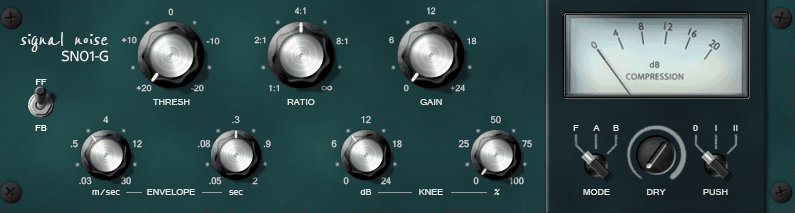
Sender Spike SN01-G is a focused FET style compressor built with a very specific mindset: fast transient control, minimal abstraction, and behavior that stays close to hardware logic. It comes from the Signal Noise plugin line and is released as a free compressor, but it’s clearly aimed at users who already understand compression mechanics and want something direct and tone aware.
The plugin doesn’t try to reinterpret the concept or modernize it with extra signal paths. It works as a disciplined compressor without extra color stacking up in dense mixes, and it works best on mono sources, layered instruments, and parallel compression paths where speed helps define transient shape.
- Extremely Fast Attack for Transient Control
Attack and release are the defining elements of SN01-G. The attack range is extremely fast and clearly designed for transient dominant material. It can clamp sharp peaks almost instantly, which makes it effective on drums, percussion, aggressive synths, and forward vocals.
Release covers a usable range from tight and energetic to slower and more stabilizing. The behavior stays predictable even when pushed, which is important because fast FET compressors can easily become erratic if poorly tuned. SN01-G avoids that by keeping the timing response disciplined rather than exaggerated. I find this reliability matters most on parallel drum chains where you are pushing settings aggressively but need the compression to stay musical.
- Four to Five Usable Compression Intensities
The compressor provides multiple ratio settings, designed to move from controlled compression into firm limiting behavior. While it doesn’t overload the interface with options, the ratios are well chosen and usable.
You can work at modest gain reduction for punch or push into heavier control without the sound collapsing. Including the most aggressive setting, you effectively get 4 to 5 usable compression intensities, depending on how hard you drive the input. Compression depth remains input driven in practice, even if the plugin presents a threshold style workflow.
- Tight Controlled Harmonic Response
SN01-G is not a saturation plugin, but it’s not neutral either. As gain reduction increases, harmonic density builds naturally, particularly in the midrange. The tone is tight, controlled, and slightly dry rather than thick or exaggerated.
- Very Low CPU Usage
Because it’s lightweight and straightforward, CPU usage is very low. You can use many instances without concern, which makes it practical in large sessions or parallel chains.

Hello, I’m Viliam, I started this audio plugin focused blog to keep you updated on the latest trends, news and everything plugin related. I’ll put the most emphasis on the topics covering best VST, AU and AAX plugins. If you find some great plugin suggestions for us to include on our site, feel free to let me know, so I can take a look!