Finding the best drum and percussion Kontakt libraries means navigating between heavily processed cinematic kits that sound impressive in isolation but don’t adapt to your mix, and pristine acoustic recordings that need hours of external processing before they’re usable.
Most libraries either lock you into rigid loops or hand you lifeless one-shots that sound programmed no matter how much you tweak velocities.
The libraries worth having solve actual workflow problems – whether you need phrase-based ensembles that understand interlocking rhythms, tempo-synced metallic textures that evolve naturally, or production-ready kits that balance character with flexibility.
1. Heavyocity Damage 2

Cinematic percussion in most libraries either sounds too polite to cut through dense trailer mixes or requires layering five different instances with external processing just to achieve impact. Damage 2 drum Kontakt library was built specifically to deliver percussion that dominates the mix and brings cinematic intensity immediately rather than handing you raw acoustic recordings that need extensive sound design.
What separates this from traditional orchestral percussion is the design philosophy – it combines acoustic drum recordings with industrial, synthetic, and processed layers where each kit is pre-mixed to deliver full-frequency impact, meaning a single MIDI hit produces a rich, multi-layered percussion strike.
The library expands on the original Damage engine by integrating playable kits, tempo-synced rhythmic content, and layered sound design in a performance-oriented workflow. You’re working with over 1,200 designed percussion hits and hybrid textures across 40+ ready-to-use kits that are already shaped for cinematic contexts.
The content spans 3.7 GB of core samples in compressed Kontakt format with 2-5 round-robin variations per articulation for natural dynamics, and you get 3 mic perspectives per kit – Close, Room, and Processed – designed to blend punch and space aggressively.
The rhythm engine isn’t static loops but dynamic patterns that follow your DAW tempo, respond to MIDI input, and allow real-time triggering with 60+ tempo-synced rhythmic patterns per kit ranging from simple punctuations to complex trailer-style grooves.
Here is what you get:
- Designed Acoustic + Hybrid Drum Ensembles
Each kit combines acoustic recordings with industrial, synthetic, and processed layers that are pre-mixed for full-frequency impact. This means a single MIDI hit can produce a rich, multi-layered percussion strike without manually layering samples or building complex effect chains.
This allows you to achieve big, cinematic drums even in untreated bedroom production spaces where you don’t have access to live recording or proper acoustics.
- Rhythmic Performance Engine with 60+ Patterns Per Kit
Rather than relying on static loops, the library features a dynamic rhythm engine that follows your DAW tempo and allows real-time triggering of patterns and accents. This is ideal for quickly adapting percussion to cue changes or tempo shifts in trailers or cinematic sequences, and you can trigger different patterns and variations without leaving Kontakt.
- Multiple Mic Perspectives for Control
Each kit comes with Close, Room, and Processed mic channels that you can blend inside Kontakt. In my opinion, this gives precise control over punch versus ambience, allowing the percussion to cut through dense mixes of synths, braams, and other hybrid instruments, and you can adjust the balance in real time rather than committing to one perspective.
- 6 Integrated Processing Modules
The library includes built-in distortion, transient shaping, compression, EQ, and stereo imaging that are fully automatable within Kontakt. I would say for producers with minimal plugin chains this reduces CPU load and ensures that all sound shaping is recallable within the instrument, and the effects are tailored specifically to enhance the cinematic aggression rather than being generic inserts.
- Designed Percussion Hits
The content spans over 1,200 designed percussion hits and hybrid textures organized across 40+ playable kits. Each kit includes 2-5 round-robin variations per articulation for natural dynamics, which prevents the mechanical repetition that plagues simpler sample libraries when you’re programming repeated hits or rolls.
2. Native Instruments Studio Drummer
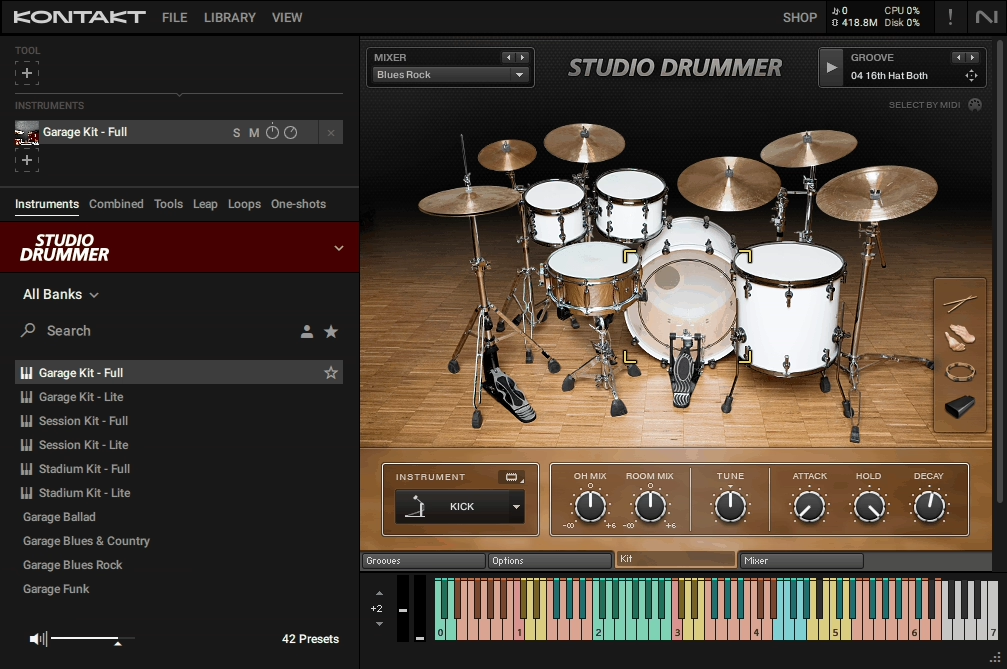
I’ve noticed that most drum libraries either give you rigid audio loops that don’t adapt to your playing or basic one-shots that sound lifeless no matter how you program them. You’re stuck choosing between pre-recorded grooves that limit creative control or samples that require extensive velocity mapping and layering just to sound remotely realistic.
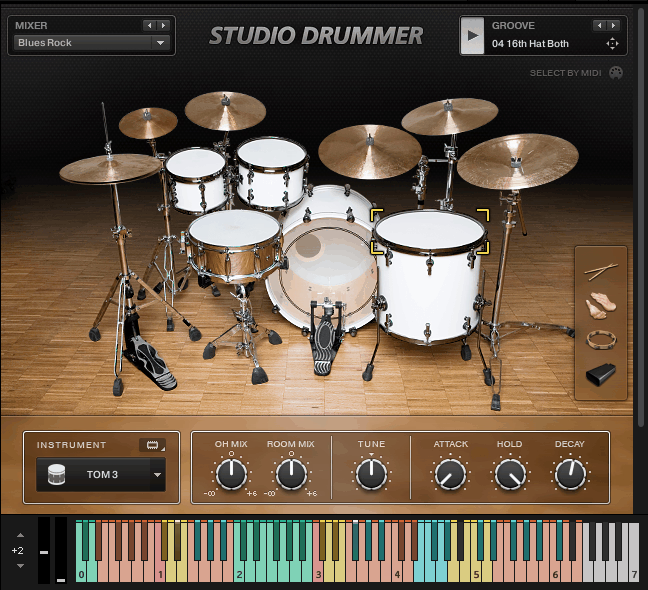
Studio Drummer approaches this differently by combining three fully sampled real drum kits with an extensive groove library and detailed mixer environment rather than forcing you to pick one workflow over another.
What makes this drum Kontakt library compelling to me is how it delivers over 35,000 individual audio samples representing nearly 17 GB of uncompressed drum material packaged into a 7.4 GB compressed Kontakt library that runs in either free Kontakt Player or full Kontakt.
The emphasis here is on natural dynamic response and expressive articulation – you get up to 25 velocity layers per kit piece with up to 6 sample variations per velocity for round-robin behavior.
I’ve found this depth of sampling is what gives it a responsive, organic feel where velocity changes truly matter rather than just triggering louder or quieter samples. The kits were recorded with up to 18 mics per kit covering close, overhead, mono overhead, and room captures, and I can’t help but think this gives you real control over how the drums sit in a mix compared to libraries with limited mic perspectives.
- Three Premium Drum Kits with Distinct Sonic Personalities
Stadium Kit (Pearl Masters Premium Maple) is a large, punchy kit tuned for rock and heavier styles. Session Kit (Yamaha Maple Custom Absolute) is balanced and versatile working across pop, R&B, and general studio use.
Garage Kit (Sonor SQ2 Drum System) is slightly more focused and raw sounding, ideal for indie and vintage-leaning tracks. I’d argue each kit includes full drum sets – kick, snares, rack toms, floor toms – plus cymbals from Paiste, Zildjian, Sabian, and Masterworks, and you get two snare options per kit offering tonal flexibility without needing external layering.
- Editable Grooves and Fills
The groove library contains over 3,300 grooves and fills all recorded live by a professional drummer and mapped to MIDI for flexible use. I’ve experienced how these grooves are organized across 11 musical styles including basic patterns, fills, variations, and transitional grooves with drag-and-drop MIDI export into your DAW.
I often find that rather than forcing you to program every beat by hand, you can audition feel and pocket quickly then either use them as-is or edit them into custom parts, and you get adjustable swing, tightness, rhythmic feel, and velocity parameters.
- Fully Integrated Mixer Built Into Kontakt
Every drum element has its own channel including close mics, stereo overheads, room ambience, snare top and bottom, and mono kit bus channels. You get full control over panning, level, bleed, and routing for each signal source.
I believe this gives far more mixing finesse than typical drum sample libraries, and I’m convinced it mirrors a real studio environment rather than just offering basic level controls.
- Studio-Grade Built-In Effects
The instrument bundles SOLID G-EQ for stable musical equalization, SOLID Bus Compressor for punch and glue, Transient Master for precise attack and sustain shaping, Tape Saturator for subtle warmth and analog character, and Convolution Reverb for realistic room space integration.
This makes it possible to shape and finalize drum sounds within Kontakt rather than juggling multiple effect plugins, and I tend to notice these effects are usable without feeling like generic inserts.
- Separate Right/Left Hand Sampling
The library captures separate right/left hand sampling for cymbals, snares, and hats which captures subtle articulation differences when played with different sticks or positions. I’ve realized this round-robin behavior prevents repetition and adds natural variability even on repeated hits, and this is part of what makes velocity changes feel musical rather than mechanical.
I can only say the interface feels utilitarian compared to newer drum instruments, and without layering or processing the drums can sound clean and neutral rather than punchy by default.
I’m not sure, but some users note velocity jumps or artifacts at extreme dynamics suggesting careful programming or layering helps smooth transitions, and kit swapping limitations mean mixing individual drums across kits isn’t as seamless as modern modular tools.
3. Native Instruments Symphony Series: Percussion

When you’re scoring film cues or building classical mockups, you need instruments that can execute smooth dynamic swells and respond musically rather than just hitting hard. Symphony Series: Percussion was recorded with a strict emphasis on realism, ensemble cohesion, and musicality in a classical orchestral context rather than prioritizing processed hits or cinematic impact.
I’m convinced what separates this from hybrid libraries is the ensemble-first approach where everything was captured in the same concert hall with consistent microphone setup, ensuring all instruments share a cohesive acoustic space.
I tend to notice that the percussion doesn’t need excessive EQ or compression to sit naturally in orchestral arrangements, which is ideal for bedroom producers working with limited mixing resources.
• 28 Traditional Orchestral Instruments with Deep Sampling
The library encompasses 4 timpani drums with multiple tunings sampled at 8 velocity layers per drum, 2 main snares each with 5 articulations (normal hit, rim shot, rim click, ghost, buzz roll) at 6-8 velocity layers per articulation, 2 bass drums up to 8 velocity layers, and complete cymbal coverage including crash, suspended, hi-hat, and ride each sampled with 6-12 dynamic layers.
Mallet percussion like glockenspiel, marimba, vibraphone, and xylophone each include up to 7 velocity layers and 3-5 round-robin samples per layer. When it comes to size, the library contains over 18,000 samples amounting to roughly 20 GB of uncompressed content packaged into 10 GB of Kontakt-compressed material!
- Main Stereo Pair, Close Mics, and Auxiliary Room Mics
The recording used spaced omnis for natural stage perspective as the main stereo pair, close mics providing detail on snares, timpani, and mallets, and auxiliary room mics adding depth and natural reverberation.
I’d argue this three-perspective approach gives you control over spatial positioning without needing external reverb plugins, and I often find you can blend signals to achieve appropriate distance and presence based on whether percussion needs to sit forward or back in the ensemble.
- Velocity-Responsive Roll Behavior
Mallet instruments and snare rolls evolve naturally across velocity with sampled upstroke/downstroke variations rather than looped or artificially stretched samples.
I’ve realized cross-fade transitions ensure smooth dynamic shifts for sustained passages, and I can see how this matters for long-form cues where you need timpani to execute musical crescendos or snare rolls that build tension gradually. I feel like this is where the library excels compared to one-shot percussion that sounds mechanical when programmed across multiple bars.
Articulation Keyswitches and Channel Controls
Within Kontakt you get assignable keyswitches for articulations and rolls, individual instrument channel controls for volume, pan, and mute, and convolution reverb to place percussion naturally within a mix.
I’m inclined to believe this keeps workflow efficient during composition because you’re not constantly switching between plugins or building external routing, and I imagine this is particularly valuable for producers without access to a mixing console who need everything contained within the instrument.
Rods, Brushes, and Specialty Stick Articulations
The library includes rods, brushes, and specialty sticks sampled at 4-6 dynamics giving natural articulation variety beyond standard playing techniques.
I’ve noticed these alternative articulations are particularly useful for jazz-influenced passages or softer underscore where traditional sticks would sound too aggressive, and I tend to find that having these options built in saves time compared to loading separate brush libraries or layering multiple instruments.
I can only say the conservative sound design lacks trailer-style epic hits or heavily processed hybrid percussion, which may feel understated in high-energy cinematic contexts where you need immediate aggressive impact.
I’ll admit the interface assumes familiarity with orchestral percussion layout creating a learning curve for producers unfamiliar with classical scoring conventions, and with all mic positions and velocity layers loaded full kits can require 6-8 GB of RAM which matters on systems with limited memory.
4. Native Instruments Spotlight Collection: West Africa
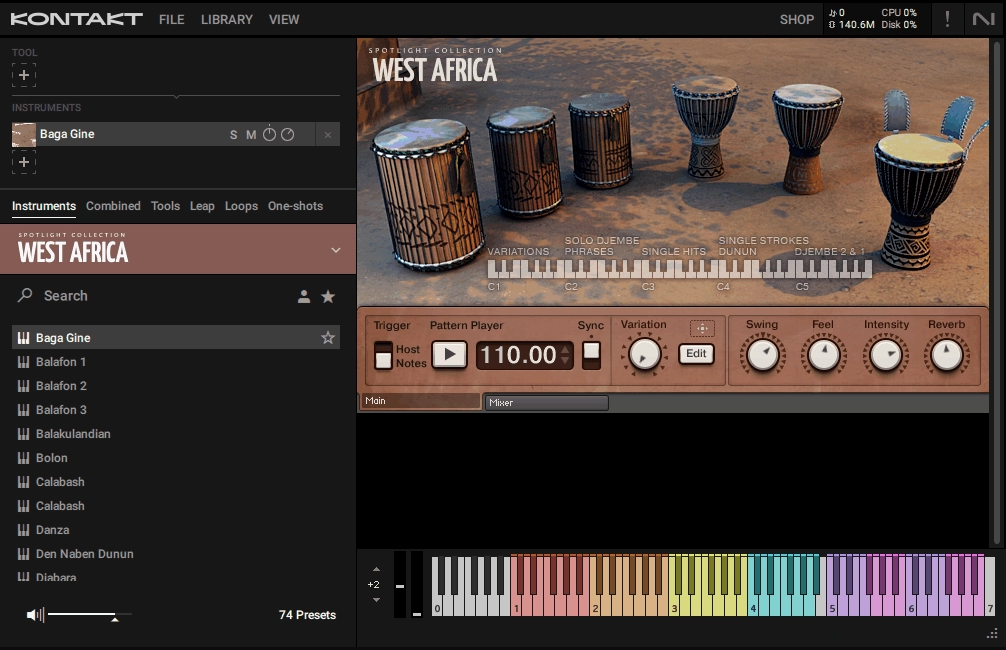
I remember spending hours trying to recreate Afrobeat grooves by layering individual drum samples, only to realize the timing relationships between foundation, embellishment, and accent layers require cultural knowledge I simply didn’t have.
NI West Africa solves this by focusing on phrase-based, tempo-adaptive instruments that behave as real ensemble voices rather than being a generic world percussion pack.
I’m convinced what makes this particularly valuable is the ensemble-aware design where every instrument uses pre-programmed phrases that adapt to DAW tempo and include interlocking rhythms for authentic polyrhythmic textures.
The library contains over 90 instruments and 300 presets with over 10,000 samples amounting to roughly 12 GB of Kontakt-compressed content, and I’ve noticed this ensemble organization makes it easier to build complete West African grooves without manually aligning individual patterns.
- 18 Different Drums with Deep Velocity Sampling
The drum section includes djembes, dunun (dununba, sangban, kenkeni), and talking drums. I’ve experienced how each drum has 6-12 velocity layers and 3-5 round-robin samples per layer allowing natural dynamic response.
I think the round-robin variations are crucial because they prevent mechanical repetition when you’re programming repeated hits across multiple bars, and I often find this depth is what separates authentic-sounding ensemble parts from obviously programmed patterns.
- Role-Based Instrument Organization
Each instrument is designated as foundation, embellishment, or accent giving structure to compositions and preventing cluttered rhythmic overlaps. I’d argue this role-based approach is what makes the library accessible to producers unfamiliar with West African music theory, and I can see how it guides you toward correct interlocking patterns without needing deep cultural knowledge.
- 15 Melodic Percussion Instruments with Tempo-Adaptive Playback
Balafon, xylophone, and marimba are included with 7 velocity layers and 3-4 round-robin variations to retain natural feel in rhythmic patterns. I’ve realized these melodic instruments respond to rhythmic timing and velocity integrating seamlessly with percussion without floating unnaturally over the groove.
This tempo-adaptive behavior is essential because melodic phrases automatically align with your DAW tempo from 60-140 BPM without manual warping.
- Kora with 8 Velocity Layers and Selectable Articulations
The kora (West African harp) includes 8 velocity layers with selectable articulations for plucked vs. damped notes. I tend to notice that having dedicated articulation control lets you create more expressive performances, and this is particularly useful for melodic hooks or harmonic beds where you need the instrument to respond musically rather than just triggering static samples.
- 5 Ensemble Vocals with 6-8 Rhythmic Variations
The library includes ensemble vocals covering chants and call-and-response snippets, each with 6-8 rhythmic variations mapped to keys for flexible performance.
I’ll be honest, I’ve found these vocal elements are what push ensemble arrangements from instrumental to culturally authentic, and I wonder if incorporating these snippets might be the difference between tracks that sound academic versus tracks that feel genuinely rooted in West African tradition.
- 12 Shakers and 10 Bells with Accent Clarity
Shakers and rattles include 12 instruments sampled with 4-6 dynamic layers, while bells and wood percussion total 10 instruments sampled at 4-8 velocities providing clear rhythmic accents.
I’ve thought about how these accent instruments are essential for defining groove pocket and adding textural detail, and I feel like they’re often overlooked in world percussion libraries that focus primarily on drums.
5. Native Instruments Kinetic Metal
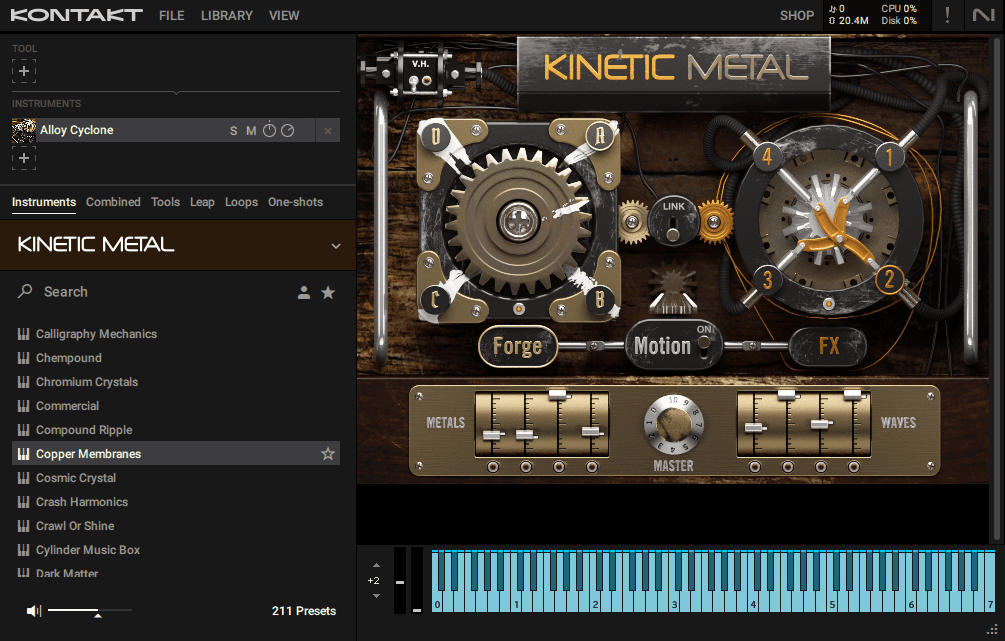
Kinetic Metal prioritizes tempo-aware patterns, performance-like control, and evolving motion through a dual-layer architecture where every patch uses both percussive and resonant layers.
The library contains hundreds of recorded metallic sources including steel sheets, pipes, beams, chains, debris, and tuned metals organized across 100+ factory patches with over 1,000 rhythmic variations when you consider modulations, layers, and phrase combinations, all spanning roughly 10-12 GB compressed at 24-bit/48 kHz recordings.
- Dual-Layer Architecture Per Patch
Every patch uses a percussive layer for sharp transients and rhythmic clarity, plus a resonant layer providing metallic tails, overtones, and evolving textures.
I’d argue this allows patches to serve multiple roles simultaneously as percussive elements for rhythm, textural elements for ambiance, and hybrid rhythmic instruments for cinematic or experimental tracks. I often find this means fewer instrument stacks and cleaner sessions because you’re not loading separate instances for transients versus sustains.
- Tempo-Synced Playback with Automatic Grid Alignment
The grid-aware rhythmic engine provides automatic DAW BPM sync for instant integration covering a 40-240 BPM practical range, adaptation to different time signatures, transient alignment for evolving patterns, and modulated rhythmic motion where patterns subtly shift rather than repeat mechanically.
I’ve experienced how this allows you to play or sequence evolving metallic grooves instead of manually stretching or aligning samples, and I can see how the engine supports both live performance and DAW-driven sequencing.
- 6-12 Velocity Layers with 3-5 Round-Robin Variations
Each key instrument includes 6-12 velocity layers providing dynamic realism, with 3-5 round-robin variations per velocity layer to avoid repetitive hits. I think the sources were captured to emphasize consistent transient response and resonant sustain timing allowing tight rhythmic precision without manual decay trimming.
I feel like this depth is what prevents the mechanical repetition plaguing simpler loop libraries when you’re programming extended sequences.
- Playable Mapping Across Keyboard
You can assign metallic sources across the keyboard and tune them to play rhythmic motifs as MIDI phrases, fit metallic patterns harmonically with other instruments, and prevent atonal clashes via intelligent mapping.
I’ve noticed each melodic/tuned patch includes 5-8 playable keys covering approximately two octaves with round-robin and velocity layers for musical expressiveness. I’m convinced this transforms metallic percussion from random noise into something you can actually compose with melodically.
- Internal Shaping Tools Without External Plugins
Integrated tools include filter controls for brightness and tonal focus, amplitude envelopes for attack/decay shaping, tonal emphasis for mid/high carve-out, and velocity-based dynamic variation. I’d say this reduces CPU and plugin load making Kinetic Metal feasible for laptop-based or bedroom production setups.
I imagine parameters like filter cutoff, amplitude, and tonal emphasis can modulate over time based on performance input where velocity influences attack and resonance, and I believe tempo-adaptive modulation keeps patterns evolving to avoid static repetition.
I can only say the sonic palette is niche and focused on metallic rhythm rather than traditional drums, which means it’s less suitable for pop, jazz, or acoustic-focused projects.
I’ll admit the modulation interface is limited compared to modern Kontakt engines, and there’s no internal sequencer requiring external DAW patterns for deep manipulation, so it’s best used as a complementary layer rather than a full rhythm solution.
6. Native Instruments Action Strikes

Building convincing orchestral percussion cues can be frustrating, as sequencing timpani, bass drum, snare, and cymbals individually often means hours of balancing levels and timing, yet the ensemble still lacks the cohesion and drive of a real performance.
Even carefully programmed velocity curves and articulation switches can’t replicate the natural interaction and shared timing of live percussion. Action Strikes uses pre-orchestrated ensemble phrases that respond to tempo, key input, and performance controls, letting you create realistic, dynamic percussion without programming every hit.
It comes with phrase-based ensemble design where you’re working with over 1,200 rhythmic phrases that are mapped across the keyboard so different keys trigger different rhythmic variations while staying locked to your DAW’s tempo.
The library sits at around 3.3 GB and is built specifically for modern film, trailer, and game scoring workflows where rhythmic energy and timing accuracy matter more than deep instrument-level realism.
- 1,200+ Pre-Orchestrated Rhythmic Phrases
The phrase system includes over 1,200 rhythmic phrases all pre-orchestrated for large percussion ensembles. These phrases are not simple loops but mapped across the keyboard so different keys trigger different rhythmic variations while staying tempo-synced.
I’d argue this allows rhythmic complexity that would normally require multiple MIDI tracks, velocity layers, and timing edits, and I often find you can build evolving percussion cues by switching phrases in real time which makes it especially practical for sketching and deadline-driven work.
- 65+ Ensemble Kits with Pre-Balanced Mix
The library is organized into 65+ ensemble kits where each represents a curated combination of orchestral percussion including low drums for weight and pulse, mid-range percussion for articulation, and high metallic or auxiliary elements for definition.
These kits are not meant to be deconstructed into individual drum parts but designed to function as cohesive rhythmic units. I can see how this prioritizes mix-ready balance where you’re not expected to manage mic positions or detailed orchestration choices, and I’ve realized the kits are pre-balanced to sit correctly in dense cinematic arrangements reducing setup time and decision fatigue.
- Performance Macros for Real-Time Variation
Rather than relying on deep MIDI editing, the library uses performance macros to introduce variation influencing dynamics, density, and articulation emphasis across the entire ensemble. I’d say this lets you reshape patterns while they play, which is particularly useful when a cue needs to evolve without sounding repetitive.
I believe small changes to intensity or articulation can create the impression of a developing arrangement even if the underlying phrase remains the same.
- Tempo-Locked Energy Across BPM Changes
Because phrases are tempo-synced, they scale cleanly across BPM changes without stretching artifacts. I imagine this is a major benefit when working on cues that shift pace or need last-minute tempo adjustments.
I’ve thought about how the phrase engine ensures tight timing across the ensemble which is difficult to achieve when programming large percussion setups manually, and I’m convinced this makes it especially effective for action and suspense cues, trailer builds and transitions, game combat music, and hybrid orchestral-electronic arrangements.
- Consolidated Workflow Reducing CPU Overhead
The preset structure lets you load a playable setup quickly and then shape it via performance controls rather than rebuilding from scratch. I tend to notice that instead of running multiple percussion tracks with separate processing chains, Action Strikes consolidates much of the work into a single Kontakt instance.
I’ll be honest, for producers working in smaller studios or on limited systems, this workflow reduces both CPU overhead and project complexity significantly.
I can only say you cannot easily isolate or replace individual instruments within a kit which limits deep customization, and if you want completely original rhythmic patterns you may feel constrained by the preset phrases.
I’ll admit the interface and modulation options feel dated compared to newer Kontakt instruments, and the library is geared toward modern action scoring making it less suitable for subtle, traditional orchestral writing where you need detailed articulation control over individual percussion voices.
7. Native Instruments Butch Vig Drums

Butch Vig Drums delivers heavily processed sounds that still have room for shaping rather than being locked into one sonic character. What’s remarkable here is how the legendary producer behind Nirvana’s “Nevermind,” Smashing Pumpkins’ “Siamese Dream,” and Green Day’s “21st Century Breakdown” captured 21 individual drum kits with 16 one-shots per kit and 16 preset MIDI patterns per kit totaling 468 sounds and 336 MIDI patterns in a surprisingly compact 174 MB footprint.
What separates this from typical drum libraries is the recording and processing chain – drums were tracked at United Recording’s iconic Studio A in Hollywood then ran through Butch’s personal collection of analog and digital preamps, compressors, and stompboxes at his home studio “GrungeIsDead.”
Key Features:
- 21 Kits with 16 One-Shots Each
This drum Kontakt library includes 21 individual drum kits where each kit contains 16 one-shots created using Butch Vig’s distinctive approach to percussive sound design. I’ve noticed these sounds are so thick that a little goes a long way when layering with other drums, and I often find the meaty, roomy kicks and snares are particularly noteworthy.
I think the heavy distortion and saturation processing gives weight without feeling overdone, and I’d argue there’s still plenty of room for adding even more character which is a testament to the quality of the source material.
- 336 MIDI Patterns Organized by Track Components
Each of the 21 kits includes 16 preset MIDI patterns totaling 336 patterns that can be triggered using a MIDI controller or edited within any DAW using drag and drop technology.
The patterns are set up as track components like verses, choruses, and fills providing a window into what Butch may have imagined when putting the kits together. I can see how this accelerates workflow because you’re getting usable grooves immediately rather than programming from scratch.
- Comprehensive Kit Page Customization
You can swap samples in and out while adjusting pitch, velocity, panning, and volume for each pad. Kit page gives you full control over every aspect of the drum sounds including choke groups and multiple output routing.
I’ve found you can re-pitch and tweak insert effects substantially, and I imagine assigning more parameters to the macros for MIDI control from your DAW pays off when you need dynamic variation across different song sections.
- 6 Macro Controls for Quick Parameter Access
The interface includes 6 macro controls offering quick access to a range of different sound and effects parameters allowing you to easily tweak each preset kit. I believe the macros provide solid starting points without needing to dive deep into menus, and I this is particularly useful when you’re sketching ideas and want immediate sonic changes without breaking creative flow.
- Incredibly Compact 174 MB File Size
Despite containing 21 kits with 468 sounds, the entire library weighs only 174 MB which is remarkably small. I’m convinced this compact footprint means Native Instruments found a way of getting big sounds without massive file sizes, and I wonder if this compression technology will influence future drum libraries. I tend to notice this makes it practical for laptop producers or systems with limited storage.
I can only say all the kits are heavily processed with distortion and saturation, so if you want clean, neutral drum sounds for jazz or acoustic contexts this isn’t designed for that purpose.
I’ll admit some users wish a more traditional sounding kit was included because while the NI effects allow sculpting, having less processed samples as starting points would provide more flexibility for producers who want to apply their own character from scratch.
8. Native Instruments Session Percussionist

I’ve thought about how most percussion libraries give you either static loops that don’t adapt to your arrangement or raw one-shots that require extensive velocity mapping and round-robin programming before they sound remotely human. Session Percussionist bringing you expressive, playable percussion into a single Kontakt Player instrument focused on realistic, session-style performance that replicates the nuance of a percussionist in a small ensemble.
I’d argue what makes this practical is how it emphasizes playability and workflow speed rather than cinematic depth or hybrid sound design. I’ve found the library includes over 1,800 high-quality samples spread across 6 distinct percussion instruments where each is sampled with multiple articulations, dynamic layers, and round-robin variations allowing natural expression while playing patterns directly in your DAW.
Key Features:
- 6 Fully Sampled Percussion Instruments
The library provides congas with 5 articulations, 3 round-robin variations, and 7 velocity layers, bongos with 4 articulations, 3 round-robins, and 6 velocity layers, shakers with 3 articulations, 2 round-robins, and 6 velocity layers, tambourine with 3 articulations, 3 round-robins, and 5 velocity layers, djembe with 6 articulations, 3 round-robins, and 8 velocity layers, and cajón with 5 articulations, 4 round-robins, and 7 velocity layers.
I think each instrument is carefully mapped across the Kontakt interface with articulations accessible via key switches allowing fast, live-style playing. I’ve noticed the velocity layers and round-robins prevent robotic repetition which means MIDI performance can feel organic without tedious manual programming.
- Over 200 Tempo-Synced MIDI Grooves
The library includes over 200 MIDI patterns ranging from pop and rock to Latin and electronic styles. I often find these grooves can be dragged into your DAW for further editing or used as templates for building custom patterns.
I’d say this combination of playable articulations and ready-to-use grooves allows you to experiment and iterate quickly whether building a live-sounding percussion track for a pop song or layering percussion for cinematic cues.
- Velocity-Responsive Dynamic Layers
Each instrument responds to velocity with nuance making softer hits rounder and louder hits more defined. This matters because you can perform crescendos and dynamic variations naturally from your MIDI keyboard without switching patches or drawing automation. I can see how the round-robin samples avoid mechanical repetition which is crucial for sustained patterns where the same note repeats frequently.
- Articulation Switching via Key Switches
You get rapid access to slaps, tones, and muted hits through key switch assignments. This enables performance-driven percussion tracks where you can switch between playing techniques in real time without loading multiple instances. I’m convinced this workflow speed is what separates Session Percussionist from libraries that require you to load separate patches for each articulation.
- Built-In Macro Controls for Quick Shaping
The interface includes macro controls for reverb, room ambience, transient shaping, and mix balance. I’ve experienced how these allow quick shaping without touching multiple instances or external plugins.
I tend to notice this keeps sessions organized because you’re not building complex effect chains just to get usable percussion sounds, and I feel like the macro approach is particularly useful when you’re sketching ideas and need immediate sonic adjustments.
I can only say the library is limited to 6 instruments compared to full percussion suites making it less ideal for highly orchestral or cinematic scoring where you need extensive percussion variety.
I’ll admit the grooves are style-specific with Latin or pop-focused MIDI that may require editing for non-standard time signatures, and it’s not highly processed so producers seeking extreme sound design or hybrid percussion textures will need additional external processing.

Hello, I’m Viliam, I started this audio plugin focused blog to keep you updated on the latest trends, news and everything plugin related. I’ll put the most emphasis on the topics covering best VST, AU and AAX plugins. If you find some great plugin suggestions for us to include on our site, feel free to let me know, so I can take a look!