
Here are the best wavetable VST synth plugins I found that consistently deliver great results whether you’re producing electronic music, scoring films, or just exploring sound design.
Wavetable synthesis gives you evolving, dynamic sounds that traditional analog modeling simply can’t match. It’s perfect for everything from cinematic pads to aggressive bass lines, and the technology has matured to where these synths are genuinely inspiring to work with rather than feeling like complicated math exercises.
But with so many options available, choosing the right one gets overwhelming fast. Every synth promises powerful features, but not all of them translate to actual workflow improvements or sounds you’ll actually use. Some have steep learning curves, while others look impressive but choke your CPU the moment you stack a few instances.
This guide cuts through the marketing speak and focuses on what actually matters: sound quality, modulation depth, interface design, and which would be best to suite your needs. Whether you’re starting out or upgrading your arsenal, you’ll find practical recommendations that match different needs and workflows. Let’s get started!
1. Xfer Serum 2

I’ve watched Serum dominate wavetable synthesis for nearly a decade, so when Serum 2 arrived I expected incremental improvements rather than substantial evolution. What I discovered was 2 main oscillators plus sub oscillator and noise generator totaling 4 sound layers per voice with 16 voice polyphony that actually expands on the original’s capabilities meaningfully.
In the big picture, Serum 2 comes with over 1500 factory presets covering ambient, cinematic, EDM, and experimental genres that demonstrate advanced routing techniques, and over 450 factory wavetables with support for unlimited custom wavetable imports, and the real time waveform displays for oscillators, LFOs, and envelopes show exactly how sound evolves as you adjust parameters.
Most synth updates add features without improving workflow, but Serum 2 refines the visual feedback making complex modulation feel inspiring rather than overwhelming. You can assign up to 16 simultaneous modulation routings per patch using 4 LFOs, 4 envelope generators, and 2 macro controllers giving you 10 primary modulation sources total!
The 12 filter types include standard options plus specialty designs like comb and formant filters, and the 10 effect modules can be routed in various configurations creating up to 16 effect routings in single patches.
- 4 Sound Layers Per Voice with Advanced Oscillator Architecture
The 2 main oscillators provide over 20 warp modes including bend, fold, and sync options while the sub oscillator adds low end reinforcement and noise generator contributes texture. I like how each oscillator morphs between classic analog shapes and high resolution wavetables with precision, and with 16 voice polyphony a single patch can contain 64 individual sound sources active simultaneously.
The oscillators can modulate each other through FM or ring modulation creating harmonically rich tones, and you can use phase modulation constantly for adding movement without obvious LFO wobble. The anti aliased waveform rendering keeps everything clean even when pushing into extreme territory.
- 10 Modulation Sources with Visual Routing Display
You get 4 LFOs, 4 envelopes, and 2 macro controllers assignable to virtually any parameter with up to 16 simultaneous routings per patch. I find the visual feedback shows modulation connections clearly making complex assignments understandable rather than abstract. The LFOs can sync to tempo, run freely, or function as step sequencers, and envelopes feature variable curves applicable to multiple destinations.
- 12 Filter Types with Flexible Routing Options
When it comes to filter section, it offers 12 types ranging from standard low pass, high pass, and band pass to comb, formant, and experimental designs. You can place filters pre or post effects in series or parallel configurations giving multiple sonic shaping possibilities. Each filter accepts independent modulation, and I would use this for creating subtle movement in pads or dramatic sweeps in leads. The filters maintain the oscillators’ clarity rather than muddying tone even under heavy resonance.
- 10 Effect Modules with Per Oscillator Assignment
In addition, Serum 2 includes distortion, compressor, chorus, flanger, phaser, delay, reverb, EQ, and more totaling 10 effect modules assignable per oscillator or globally. This means up to 16 effect routings per patch when you consider per oscillator processing plus global effects.
From what I see. I can say that the reverb adds natural space, distortion ranges from subtle saturation to aggressive edge, and modulation effects create movement beyond oscillator detuning. In fact, you can build complete mix ready sounds entirely within Serum 2 because the effects quality matches dedicated processors.
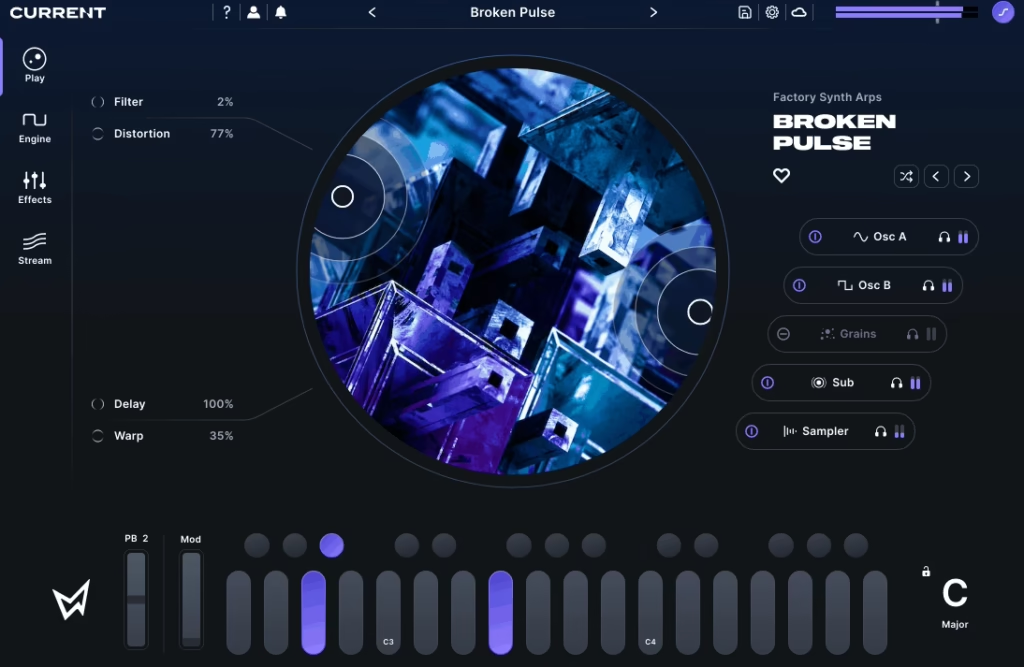
2. Minimal Audio Current 2

Minimal Audio Current 2 builds sound generation around motion and transformation rather than static waveforms you modify afterward.
I’ve found this synth pushes you toward experimental territory without feeling academic or disconnected from actual music production. The interface communicates in terms of flow where oscillators, modulators, and effects sit side by side in ways that feel organically connected rather than departmentalized into separate pages.
What sets Current 2 wavetable synth plugin apart is how modulation isn’t an afterthought but embedded into the fabric of how the oscillators and processing elements behave. You’re not adding modulation on top of sounds, you’re sculpting sounds that naturally evolve and breathe.
The visual feedback makes complex routing surprisingly intuitive because you see every modulation connection and parameter interaction in real time. I use this constantly when building cinematic textures where I need patches that develop over 30 seconds without sounding repetitive or static.
Key Features:
- Dynamic Oscillator System with Evolving Spectral Content
The oscillators generate wavetables and richly textured tones that feel alive rather than static, with motion built into the sound generation itself. I’ve discovered you’re not just selecting waveforms but working with sound engines capable of generating evolving harmonic landscapes that shift naturally over time.
The raw sound quality maintains both detail and presence, pushing forward in mixes without harshness. When building bass patches you can start with a simple waveform then use the built in spectral evolution to add movement that makes the bass feel less static and more engaging throughout the track.
- Architectural Modulation System
Rather than standard LFO assignments, Current 2 treats modulation sources as architectural elements you can route into almost anything with visual feedback showing every connection. The step sequencers and envelopes feel like sculpting tools that shape raw sonic material rather than add ons you apply after the fact.
It’s cool to see how you can see modulation relationships unfold on screen which makes understanding complex patches faster than parsing text based mod matrices. In one project I routed multiple modulators into filter cutoff with different rates creating this slowly evolving texture that never repeated the same movement pattern twice
- Integrated Effects as Sound Transformation Tools
You get effects that aren’t just convenience processors but integrated transformers you can place almost anywhere in the signal chain dramatically expanding sonic possibilities.
The granular and spectral effects fracture and reassemble audio in ways that feel musical rather than chaotic, and the saturated distortion breathes new life into harmonic content without becoming harsh. What surprised me was how routing effects before the filter versus after creates completely different characters from the same settings, giving you multiple sonic personalities from one effect section.
- Preset Library Designed for Learning
Patches feel like examples demonstrating particular techniques rather than finished sounds you use unchanged, which transforms preset browsing into education. I’ve noticed each preset contains ideas that spark new directions when you start tweaking because the visual interface makes it easy to reverse engineer how sounds get constructed.
Even presets I wouldn’t use directly teach me modulation approaches or routing strategies I hadn’t considered. The library feels thoughtfully curated to illuminate the synth’s architecture rather than just providing generic starting points across common categories.
3. Arturia Pigments 7

Wavetable synthesis used to mean choosing between clinical precision or overwhelming complexity, with most plugins leaning too far in one direction. Arturia Pigments 7 balances power with actual usability in ways that make complex sound design feel natural rather than like solving math problems.
You get wavetable, virtual analog, sample playback, and granular synthesis engines that can be layered across two oscillator slots per voice. I’ve discovered this architecture lets you combine digital precision with analog warmth in the same patch, like pairing a clean wavetable lead with a gritty analog sub-bass that fills out the low end.
The engines don’t just stack, they interact through the filter and modulation system creating unified sounds rather than obvious layers. For example you can build pad using the wavetable engine on Oscillator 1 and granular processing on Oscillator 2, then modulate their balance with an LFO creating this evolving texture that shifts between crystalline and organic character.
- Filter Types with Character and Drive
The filter section offers 17 different filter models ranging from transparent surgical cuts to aggressive resonant designs that add color and saturation. I like how the multimode filter can morph between low-pass, band-pass, and high-pass modes smoothly, which creates evolving timbral changes you can’t achieve with fixed filter types. The drive control pushes filters into saturation that stays musical rather than harsh even when cranked.
What surprised me was how the comb filter creates metallic resonances perfect for sci-fi effects and bell-like tones, something I hadn’t found useful in other synths until Pigments made it actually controllable.
- Comprehensive Modulation System with Visual Routing
You get 3 LFOs, 3 function generators, 3 envelopes, and multiple random sources all assignable through drag-and-drop modulation routing that shows connections visually on the interface.
I find this transforms modulation from abstract parameter automation into something you see and understand immediately. The function generators draw custom shapes frame-by-frame, letting you create precise modulation curves that traditional LFOs can’t match.
An advanced trick I learned is using the function generator to create rhythmic gate patterns that modulate filter cutoff in sync with tempo, turning static pads into pulsing rhythmic elements without external effects.
- Over 3900 Factory Presets with Intelligent Categorization
The plugin ships with more than 3900 presets organized by type, character, and musical context created by professional sound designers. I’ve noticed these presets work as educational templates because the visual interface makes it easy to see exactly how each sound gets constructed. The preset browser includes tagging, search, and favorites making it fast to find starting points even in such a large library..
- Sample Import and Granular Processing
Beyond synthesis, you can import your own samples and process them through the granular engine or use them as wavetable sources. I think this opens creative possibilities where you capture field recordings, vocal snippets, or instrument samples then transform them into completely new textures.
During sound design work I recorded acoustic guitar plucks, imported them into Pigments, then used granular processing to create pad sounds that retained organic character while feeling completely synthesized.
- Sequencer and Arpeggiator
The built-in step sequencer features up to 64 steps with independent lanes for pitch, velocity, gate, and multiple modulation destinations. The arpeggiator includes polyrhythmic modes and custom pattern creation rather than just standard up/down patterns.
- Efficient CPU Usage Despite Visual Complexity
Pigments 7 runs efficiently considering the visual feedback, multiple engines, and deep modulation it provides. I’ve noticed you can run multiple instances in projects without system strain, which proves crucial when building layered productions. The synth scales performance based on what you’re actually using rather than wasting resources on inactive features.
4. Native Instruments Massive X
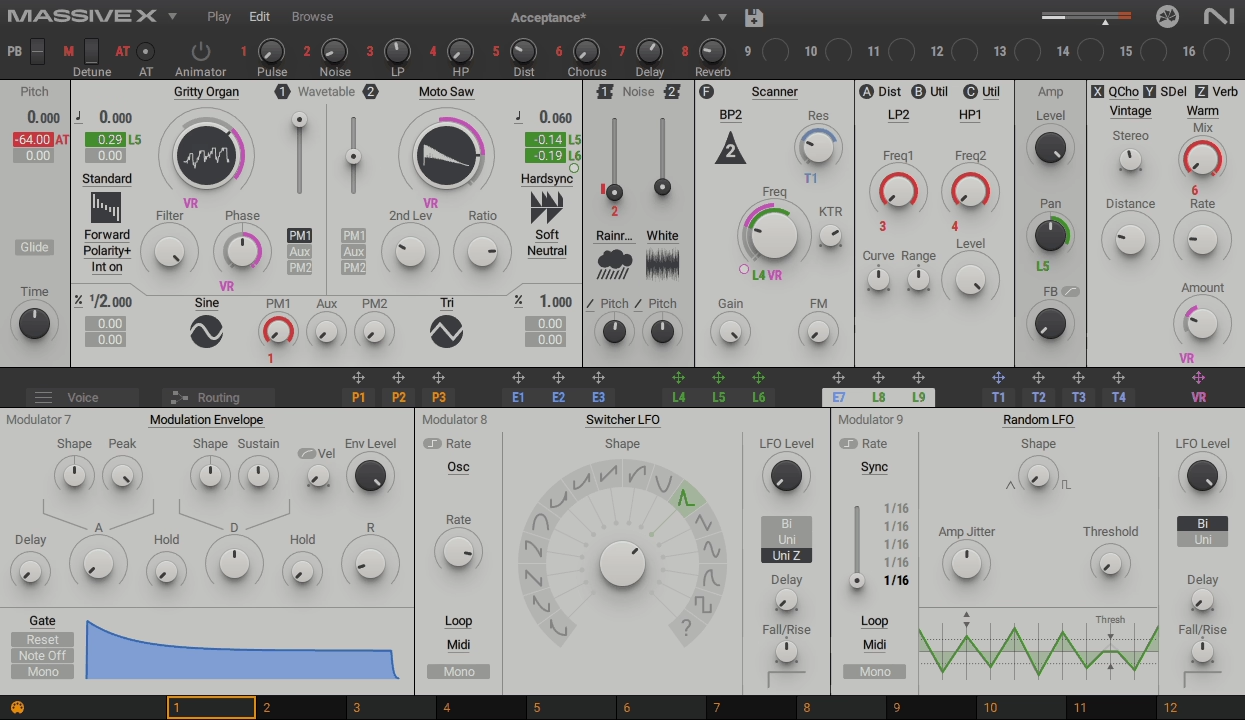
I’ll be honest, when Native Instruments announced Massive X as the successor to their legendary Massive, I expected an updated version of the original with better graphics and a few new features.
What I got instead was a completely redesigned synthesis architecture that throws out the familiar workflow and replaces it with something far more modular and network-based. The oscillators, filters, and modulation units function as independent elements you connect and route rather than following traditional signal paths, which felt confusing initially but became powerful once you understood the logic.
Massive X synth includes over 400 factory presets designed to showcase the engine’s capabilities and you can build sounds from the ground up using 170+ wavetables and routing them through signal paths you design yourself, which takes more effort but produces results that feel genuinely unique to you.
Key Features:
- Modular Routing Architecture Beyond Linear Signal Flow
Unlike traditional synths where signal flows oscillator to filter to amp in a fixed path, Massive X lets you route elements in network-like configurations where modulation sources can affect other modulators creating complex interdependencies.
I’ve discovered this means you can build feedback loops and parallel processing within the synth itself rather than needing external routing. The flexibility can intimidate you initially because there’s no single correct way to connect things, but once you grasp how routing works you can start creating evolving textures that would require multiple plugins in other synths.
- Performer Modulation System
You get performer lanes that function as drawable modulation sources where you create custom curves and shapes that play back in sync with your project tempo. I think this separates Massive X from synths limited to standard LFO shapes because you can draw precise automation that would take hours to program in your DAW.
The performers can be looped, one-shot, or triggered by MIDI notes giving you control over when modulation happens. I use this constantly for build-ups where I need filter cutoff and resonance to follow specific curves that resolve exactly on beat one of the drop, something traditional envelopes can’t achieve with the same precision.
- Dual Filter System with Routing Flexibility
The synth provides two filters per voice that can operate in series, parallel, or split configurations dramatically changing how they shape the sound. I appreciate how you’re not locked into one filter topology but can switch between 10 different filter types mid-patch to find the character that works.
When building lead sounds you can run filters in parallel with different cutoff frequencies, then blend them to create complex tonal shaping that single filters can’t produce. What surprises me is how the filter feedback control pushes resonance into self-oscillation that stays musical rather than turning into unusable screaming.
- 170+ Wavetables with Spectral Content
Massive X ships with over 170 wavetables organized by character and harmonic content, providing raw material that stays vibrant under heavy processing. I’ve noticed these wavetables contain rich spectral information that maintains presence in mixes without requiring excessive EQ or saturation.
You can scan through wavetables manually or assign modulation to create movement, and the synth includes wavetable morphing that blends between tables smoothly. What I learned is using velocity to control wavetable position so softer notes produce warm tones while harder hits create brighter aggressive character from the same oscillator.
5. Kilohearts Phase Plant

Most wavetable synths give you 2 or 3 oscillators following fixed signal paths from oscillator to filter to amp, but Kilohearts Phase Plant breaks this conventional structure by providing 32 generator lanes where you decide how everything connects.
The freedom initially confused me because there’s no default architecture telling you where to start, but this blank canvas approach means you’re building custom synthesizer configurations for each sound rather than tweaking predetermined signal flow.
What I really like about Phase Plant is that it supports 5 different synthesis engine types that can populate those 32 lanes in any combination you choose, and you’re not limited to one synthesis method per patch. The visual interface displays every connection with color coded routing lines showing how generators feed filters and effects, which makes the modular complexity manageable.
What separates Phase Plant from conventional wavetable synths is how nothing gets predetermined about your signal architecture, and this philosophical difference means the learning curve involves understanding synthesis routing concepts before you can work efficiently.
- Generator Lanes
You can load up to 32 generators per patch combining wavetable, analog modeling, granular, noise, and sample playback engines in whatever configuration makes sense. This massive lane count means you rarely hit limitations even when building extremely dense sounds. Each generator operates independently with dedicated level, pan, phase, and routing controls.
You can group multiple generators then process entire groups through shared filters or effects, and the flexibility lets you route some generators through heavy processing while others stay clean. The architecture supports stacking 10 wavetable generators for thick unison sounds or combining 5 granular engines with 3 sample players for hybrid timbres impossible in traditional synths.
- 16 Modulator Slots with Visual Connection Display
The synth provides 16 dedicated modulator slots that accept LFOs, envelopes, step sequencers, or Smart Random sources assignable to virtually any parameter. Having 16 slots means complex patches with extensive modulation rarely exhaust available modulators.
The visual routing uses color coded lines connecting sources to destinations making abstract modulation matrices concrete and understandable. You can assign one modulator to control another’s rate creating meta modulation, and the Smart Random generates musical variation that stays coherent rather than producing chaos.
The interface shows modulation amounts in real time as you adjust parameters.
- Complete Patch Architecture Visible on One Screen
Despite supporting 32 generators, 16 modulators, and 16 effects, the interface displays everything simultaneously without requiring page navigation. The visual layout shows your complete patch architecture with generators on the left, modulators in the middle, and effects on the right.
Real time updates display signal flow, modulation amounts, and processing chains with clear indicators. This transparency reduces confusion that often comes with modular architectures because you see exactly what’s happening rather than imagining abstract connections.
- Lots of presets
When it comes to presets, Phase Plant ships with more than 500 factory presets organized by category. I would say presets serve as educational templates revealing architectural approaches and routing strategies.
The library spans wide sonic territory from traditional subtractive sounds to complex evolving textures, and examining preset construction shows you techniques applicable to your own designs.
6. u-He Hive 2
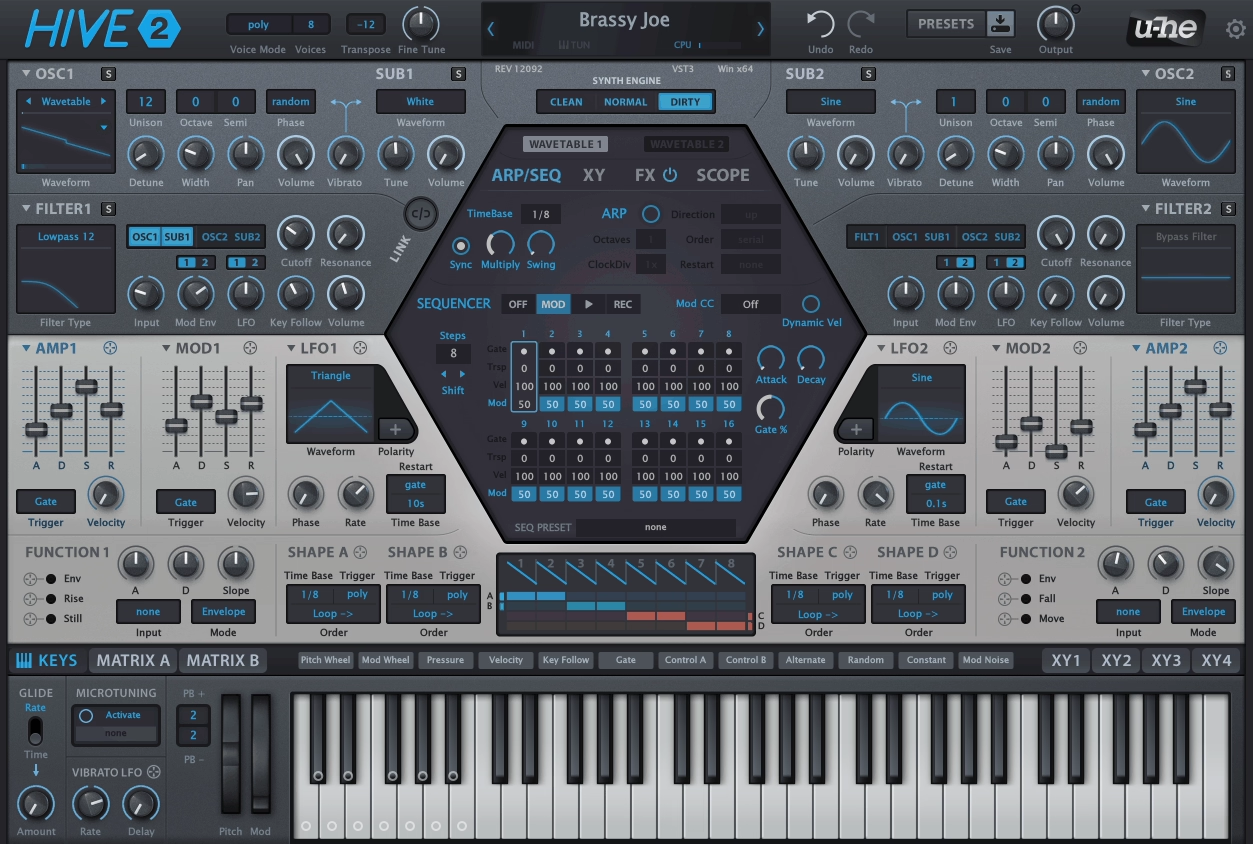
Hive 2 is another wavetable synth plugin that presents everything clearly without dumbing down the synthesis engine or hiding advanced features behind confusing menus. The workflow feels deliberate where you can load a preset and start tweaking immediately, but diving deeper reveals legitimate sound design depth that keeps me engaged months later. Hive 2’s interface communicates signal flow visually making it obvious how everything connects rather than forcing you to memorize abstract routing.
I never feel like I’m fighting the tool to achieve specific sounds, and the balance between accessibility and power means I recommend it equally to beginners wanting their first serious synth and experienced producers needing reliable workhorses. The sonic character leans toward warmth without sacrificing clarity, and patches maintain definition even in dense arrangements where cheaper synths turn muddy.
- 4 Sound Layers Per Voice with Hybrid Architecture
You get 2 main oscillators plus sub oscillator and noise generator totaling 4 sound layers per voice combining virtual analog warmth with wavetable flexibility. The oscillators access over 150 unique wavetables that morph smoothly, and I appreciate how you blend classic analog tones with sharper digital textures within the same patch.
Options like detuning, phase modulation, and sync provide expressive palette expansion, and the sub oscillator adds low end reinforcement tunable in octave intervals. With 16 voice polyphony you can stack detuned oscillators creating up to 64 individual oscillators active simultaneously in layered patches producing textures that feel spacious and alive.
- 4 Multimode Filters with Morphing Capabilities
The filter section provides 4 filters that morph smoothly between types including low pass, high pass, band pass, and notch giving you dynamic timbral shaping. I find each filter accepts independent modulation creating movement and character rather than static frequency cutting.
The filters respond musically to envelopes and LFOs making even subtle changes feel intentional, and you can route them in various configurations for serial or parallel processing. Resonance stays controlled across its range without becoming unstable, and driving the filters adds saturation that contributes warmth without obvious distortion artifacts.
- 11 Modulation Sources with Visual Feedback
Hive 2 offers 4 LFOs, 4 envelope generators, 2 macro controls, and a dedicated XY pad giving at least 11 assignable modulation sources per patch. I think the visual feedback showing modulation in real time separates this from synths where routing stays abstract and confusing.
You can freely route modulators to virtually any parameter from wavetable position to filter cutoff, oscillator pitch, or effect depth creating evolving textures and rhythmic movement. The LFOs include tempo sync and various shapes, envelopes feature adjustable curves, and the XY pad provides two dimensional control perfect for performance tweaking.
- 7 Effect Modules with Flexible Insertion Points
The synth includes 7 built in effects covering reverb, chorus, phaser, delay, EQ, distortion, and flanger insertable at multiple signal chain locations. I like to see how you can place effects pre or post filter or even in parallel giving flexibility for layering and sound shaping that matches dedicated effect chains.
Combined with modulation these effects help create patches that breathe and shimmer with depth. The reverb adds natural space, distortion provides everything from subtle warmth to aggressive edge, and modulation effects create movement beyond oscillator detuning alone.
- Over 900 Factory Presets with 8 Performance Macros
The factory library contains more than 900 presets spanning pads, leads, basses, arpeggios, and atmospheric textures demonstrating the synth’s range.
Lastly, the 8 assignable macro knobs provide real time control over multiple parameters simultaneously which you can use during live tweaking and automation recording. Examining preset construction through the visual interface teaches you modulation techniques and routing strategies applicable to custom sound design.
7. Universal Audio Opal Morphing Synthesizer

Universal Audio built their reputation on vintage hardware emulation, so when they released an original synthesizer I questioned whether they understood modern instrument design or were just leveraging their brand name.
Opal Morphing Synthesizer proved my skepticism wrong by delivering a hybrid instrument that feels cohesive rather than like disparate features bolted together. The morphing concept isn’t just marketing where you gradually blend between analog and digital character creating intermediate tones neither synthesis type produces alone, which fundamentally changes how you approach sound design.
What impressed me most wasn’t individual specifications but how everything integrates musically where the studio ready workflow means you can build complete production sounds without constantly reaching for external processing.
The interface organization reflects actual signal flow rather than arbitrary groupings, and I never feel like I’m hunting for controls or second guessing routing decisions. The tonal quality sits between vintage warmth and contemporary clarity naturally, and patches maintain definition in dense arrangements without the sterile quality purely digital synths often suffer from.
Key Features:
- 3 Morphing Oscillators with Dual Mode Operation
Each of the 3 oscillators operates in analog modeling or wavetable mode with continuous morphing between them rather than discrete switching. The engine includes over 100 factory wavetables plus the noise generator offering 5 noise types that blend subtly or prominently.
I like how morphing isn’t just crossfading but genuinely interpolates between synthesis characters creating tones unavailable from either mode independently. You can enable FM, AM, and oscillator sync providing 12 total oscillator related functions across the three oscillators, and I recommend using phase control constantly for adding movement without obvious modulation.
The morphing responds to modulation sources letting you automate the transition from warm analog to crystalline digital over note duration.
- 2 Multimode Morphing Filters
The filter section provides 2 filters that sweep continuously between low pass, band pass, and high pass modes rather than switching abruptly. I find this morphing capability means you’re not limited to discrete filter behaviors but can find sweet spots between them.
Each filter accepts modulation from the 4 available modulation sources which can target up to 8 parameters simultaneously creating evolving timbral changes. The filters respond musically to resonance without becoming unstable, and you can route them in various configurations for serial or parallel processing dramatically expanding sound shaping possibilities.
- Multi-Seg Modulators with Flexible Behavior
Opal includes Multi-Seg generators functioning as envelopes, LFOs, or step modulators depending on configuration giving you adaptable modulation beyond standard ADSR shapes. I think these separate Opal from synths limited to preset envelope curves because you draw precise modulation with multiple stages that loop, trigger once, or respond to velocity.
The modulators can run at audio rate for FM style timbral changes or slow rates for evolving textures, and you can use them for creating acceleration and deceleration effects that add organic feel to otherwise mechanical sequences. You can modulate the modulators themselves creating meta modulation where complexity builds naturally.
- Over 200 Factory Presets Demonstrating Morphing Techniques
The library contains more than 200 presets covering leads, pads, basses, and experimental textures organized by category. I find these presets demonstrate the morphing synthesis capabilities serving as both immediate starting points and educational resources.
Extra: BLEASS Megalit
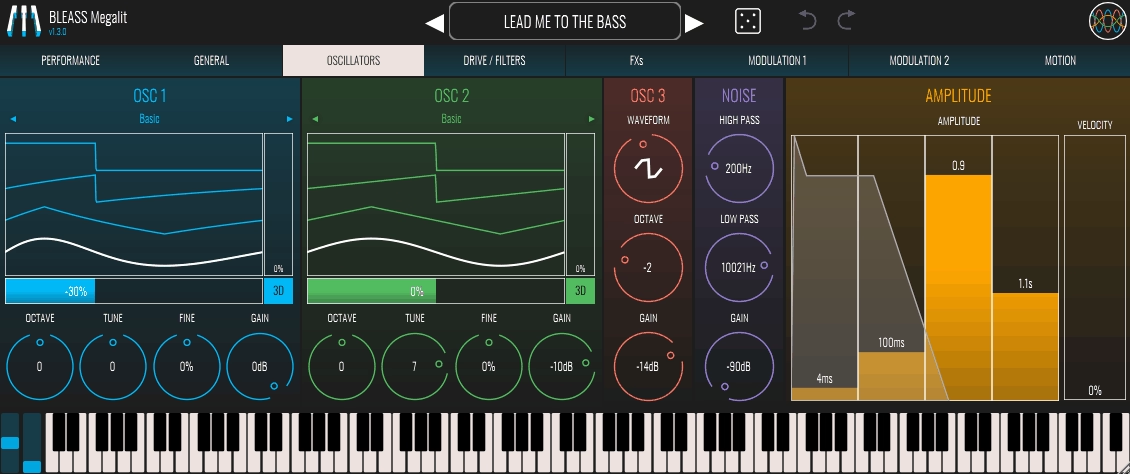
Wavetable synths at mid-tier pricing often sacrifice either sound quality or modulation depth to hit their price point, but BLEASS Megalit delivers 3 full oscillators plus a sub oscillator and noise generator totaling 5 sound sources per voice without the compromises typical at this level.
The synth offers 8 voice polyphony which handles typical production needs, and you get 20+ built in wavetables per oscillator that morph smoothly between shapes. What caught my attention was how the interface presents everything logically across 5 main sections without the cluttered feeling many feature packed synths suffer from.
Most wavetable synth plugins in this category feel like they’re choosing between power and usability, but Megalit provides 9 assignable modulation sources including 4 LFOs, 3 envelope generators, and 2 step sequencers which matches or exceeds what some more expensive commercial synths offer.
The 6 effect modules covering chorus, phaser, delay, reverb, distortion, and spatial processing mean you’re building complete production ready sounds without external plugins.
Key Features:
- 120+ Production Ready Presets Across Categories
The factory library contains over 120 presets organized by sound type demonstrating the synth’s range from traditional subtractive tones to complex evolving textures. The categorization makes finding relevant sounds quick, and examining preset construction reveals routing and modulation techniques applicable to custom designs.
- 5 Sound Sources Per Voice with Wavetable Morphing
Each patch combines 3 main oscillators, 1 sub oscillator, and 1 noise generator giving you substantial layering capability within a single voice. The oscillators morph between 20+ wavetables and 8 basic waveform shapes providing extensive tonal variety.
You can enable ring modulation, hard sync, and phase modulation adding harmonic complexity beyond straight wavetable playback. The sub oscillator adds low end weight tunable in octave intervals, and the noise generator contributes texture ranging from subtle air to aggressive grit. Having 5 distinct sound sources means you build complete timbres without stacking multiple synth instances.
- 9 Modulation Sources with 16 Assignment Slots
The modulation system provides 4 LFOs, 3 envelopes, and 2 step sequencers assignable to virtually any parameter through drag and drop routing. You can create up to 16 simultaneous modulation assignments per patch which covers complex evolving sounds without hitting limits.
- 6 Effect Modules Supporting 12 Processing Chains
Megalit includes chorus, phaser, delay, reverb, distortion, and spatial effects that can run simultaneously creating up to 12 effect chains per instance when you consider routing flexibility.
The effects integrate into the synthesis engine rather than feeling like afterthoughts, and you can modulate effect parameters from the same 9 sources controlling oscillators and filters. The reverb adds natural space, distortion provides everything from subtle saturation to aggressive edge, and modulation effects create movement beyond what oscillator detuning alone achieves.
Freebies:
1. SocaLabs Wavetable
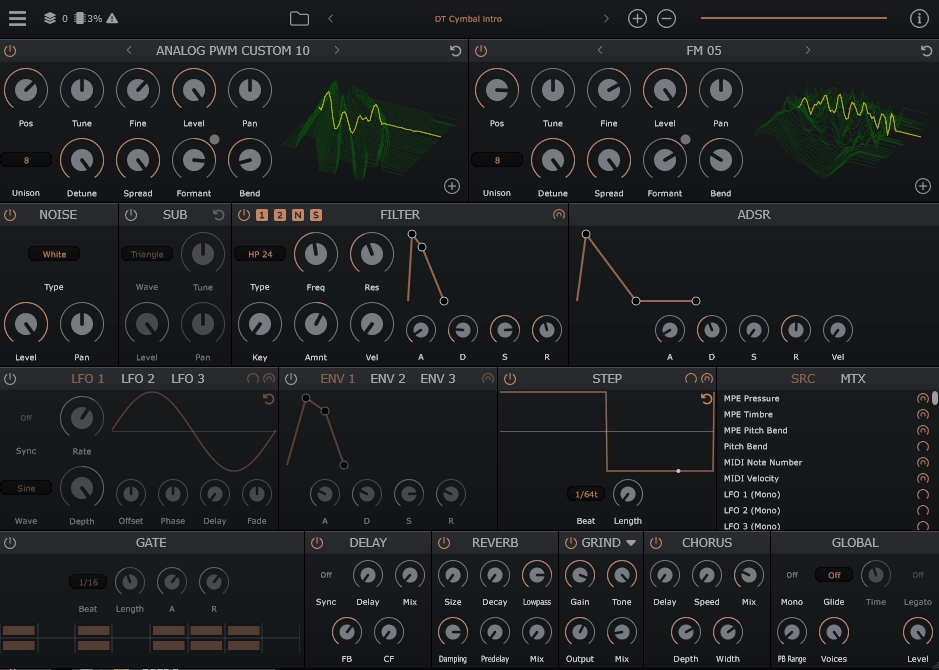
Free wavetable synths usually cut corners somewhere obvious whether that’s limiting you to 1 or 2 oscillators or providing bare minimum modulation, but SocaLabs Wavetable breaks expectations by offering 2 wavetable oscillators with legitimate sound design capabilities.
The synth runs on macOS, Windows, and Linux making it accessible across platforms many commercial plugins ignore entirely. What surprised me wasn’t just that it’s free but how the clean functional interface organizes oscillators, filters, modulation, and effects logically rather than feeling like a stripped down demo begging for upgrades.
Most freeware synths either oversimplify to the point of uselessness or overwhelm you with poorly organized complexity, but SocaLabs finds middle ground where the core wavetable synthesis tools feel genuinely usable.
You get envelopes and LFOs for modulation plus built in effects including reverb, delay, and saturation that add polish without requiring external plugins. The preset bank provides starting points demonstrating what the engine can do, and the efficiency means you can load multiple instances without system strain even on modest hardware.
Key Features:
- 2 Wavetable Oscillators with Smooth Scanning
The synth provides 2 oscillators centered around wavetable scanning that transitions smoothly between wave shapes without harsh digital artifacts. You can explore timbral changes through wavetable position modulation creating evolving pads, bright leads, and rhythmic textures.
The oscillators produce clean musical tones suitable for modern production, and having 2 oscillators means you layer and detune them for thickness without needing multiple plugin instances.
The wavetable library includes solid musical options showcasing how dynamic movement reshapes familiar timbres, and for newcomers to wavetable synthesis this provides an ideal learning environment where sonic changes stay clear and understandable.
- Filter Section with Musical Shaping
You get low pass and high pass filter options that shape sound musically without dozens of exotic modes cluttering the interface. The filters respond to envelope and LFO modulation letting you create evolving timbral changes, and pushing resonance adds character without becoming unstable or harsh.
The simplicity proves practical because you spend time creating rather than choosing between 20 filter types that all sound similar. Cutoff sweeps feel smooth across the range, and the filter can go from subtle tonal shaping to aggressive resonant peaks depending on your needs.
- Basic Envelopes and LFO for Modulation
The modulation system includes standard envelopes and an LFO that inject rhythmic or evolving motion into patches. You won’t find complex step sequencers or dozens of modulation sources, but what’s here works reliably for essential sound design.
The LFO can modulate wavetable position, filter cutoff, or amplitude creating movement that makes static waveforms feel alive. The simplicity actually helps because you focus on musical results rather than wrestling with routing matrices, and the modulation responds predictably making it easier to learn cause and effect relationships.
2. Matt Tytel Vital

Zero cost plugins typically mean zero quality or at least some obvious compromise that reminds you why professional tools cost money, but Matt Tytel’s Vital delivers 3 wavetable oscillators with legitimate production capabilities while charging absolutely nothing.
This brilliant free wavetable synth plugin includes over 1650 factory presets organized by category which exceeds what many paid alternatives provide, and you get 10 different filter types ranging from classic analog to more characterful digital designs.
What shocked me wasn’t finding one strong feature but discovering the entire instrument feels professionally finished from the visual drag and drop modulation system to the integrated 10 effect modules.
Free synths usually hide their limitations until you dig deeper then discover you can’t import custom content or the modulation barely functions, but Vital lets you import custom wavetables, draw waveforms from scratch, and assign modulation to virtually any parameter through intuitive visual routing.
The 4 LFOs, 4 envelopes, and 2 random modulators give you 10 modulation sources total, which matches expensive commercial synths. I keep comparing Vital to paid options because the gap between this and $200 wavetable synths feels negligible in actual production use, and the unlimited polyphony means you never hit voice limitations regardless of how dense your arrangements become.
Key Features:
- 3 Wavetable Oscillators with Custom Import and Drawing
You get 3 oscillators that scan through wavetables smoothly with capabilities for importing custom wavetables or drawing your own waveforms from scratch using the built in editor. The flexibility gives Vital expressive potential where sounds shift dramatically as they evolve through wavetable scanning.
The oscillators produce clean vibrant tones maintaining clarity even under heavy modulation, and you can enable features like unison with up to 16 voices per oscillator creating massive detuned sounds. Having custom wavetable import means you’re not limited to included content but can build signature sounds using spectral analysis from your own recordings.
- Visual Drag and Drop Modulation with Color Coding
Rather than routing through text based matrices, you drag modulation sources directly onto destination parameters and the interface shows connections with color coded lines and rings around every modulated control.
- 10 Filter Types with Analog and Digital Character
The filter section offers 10 different filter types including classic low pass, high pass, band pass, and more distinctive modes like formant and comb filters. You can run 2 filters in series or parallel dramatically expanding timbral shaping possibilities.
The filters respond musically to modulation where sweeps feel expressive rather than mechanical, and resonance adds character without becoming harsh or unstable. Drive controls push filters into saturation that ranges from subtle warmth to aggressive distortion, and the analog mode adds nonlinearities mimicking vintage hardware behavior.
- 10 Integrated Effect Modules
Vital includes 10 effect modules covering chorus, flanger, phaser, distortion, EQ, delay, reverb, compressor, filter, and stereo that sound professionally finished rather than like budget afterthoughts.
You can arrange effects in custom order and modulate effect parameters from the same sources controlling oscillators and filters creating rhythmic processing that evolves with your patches.
The reverb adds natural space without metallic artifacts, distortion provides everything from tube warmth to digital decimation, and the compressor helps sounds sit confidently in mixes. Having these effects integrated means you build complete production ready tones without external plugins.
3. Surge XT

I’ve downloaded countless free synths expecting toy instruments with obvious limitations, but Surge XT demolished those expectations by providing 3 oscillators per voice each capable of running in multiple synthesis modes including wavetable, FM, and classic analog without charging anything.
The synth offers over 2500 factory presets which exceeds most commercial alternatives, and you get 12 different filter types ranging from traditional designs to more experimental options.
What strikes me most is how the open source development model means the Surge Synth Team continuously improves the instrument through community contributions rather than holding features back for paid upgrades.
Key Features:
- 3 Oscillators with Multiple Synthesis Mode Options
As I said, each of the 3 oscillators operates in different synthesis modes including classic saw and square analog waveforms, advanced wavetables, and frequency modulation giving you range within single patches.
I appreciate how you can blend wavetable scanning with subtractive elements or use FM for complex timbres without needing separate plugin instances. The oscillators produce rich detailed tones with harmonic weight that holds up against premium synths, and you can layer all modes simultaneously for evolving pads that breathe and shift over time.
The flexibility means I’m not locked into one synthesis approach per patch but can combine methods that complement each other sonically.
- 12 Filter Types with Extensive Tonal Shaping
The filter section offers 12 different filter types ranging from classic low pass and high pass to more characterful shapes giving you nuanced timbral control. I find the filters feel smooth and musical capable of gentle shaping or aggressive resonance without sounding harsh or overtly digital.
You can route filters in various configurations, and they respond well to modulation where sweeps feel expressive rather than mechanical. The variety means I can match filter character to specific sounds rather than forcing everything through one generic design, and certain filter types add saturation and nonlinearities that contribute analog like warmth.
- Comprehensive Modulation System Beyond Basic Controls
You get multiple flexible modulators including envelopes, LFOs, step sequencers, and random sources assignable to virtually any parameter throughout the synthesis engine. I think what separates Surge XT from basic free synths is how modulation routing doesn’t feel limited or afterthought but genuinely enables complex sound design.
You can create evolving textures where sounds breathe with rhythmic complexity and respond musically to performance input. The step sequencers add rhythmic modulation possibilities, and random sources introduce controlled unpredictability that keeps patches interesting over time.
- Over 2500 Factory Presets Demonstrating Capabilities
The preset library contains more than 2500 sounds spanning genres and styles from punchy basslines and shimmering leads to rich pads and experimental textures. I find these presets demonstrate the synth’s flexibility serving as both immediate starting points and learning resources.

Hello, I’m Viliam, I started this audio plugin focused blog to keep you updated on the latest trends, news and everything plugin related. I’ll put the most emphasis on the topics covering best VST, AU and AAX plugins. If you find some great plugin suggestions for us to include on our site, feel free to let me know, so I can take a look!