
I think these are the best LA-2A style compressor plugins I tried and I would want to share with you for vocal and bass leveling when you need smooth, musical control without parameter hunting.
LA-2A optical compressors occupy a specific role in modern mixing. They’re not surgical peak controllers or creative character tools – they’re leveling compressors designed to make vocals and bass feel stable and present without obvious compression artifacts.
The core function is straightforward: optical circuits respond to program material in ways that naturally smooth dynamic inconsistencies while maintaining performance character. This makes them particularly effective on sources where transparency matters but complete consistency is required. For instance, lead vocals stay intelligible through dense choruses, bass notes maintain even weight across the arrangement and the compression follows the performance rather than imposing mechanical control.
Here’s what makes choosing the right optical compressor important: while the basic leveling behavior remains consistent across implementations, subtle differences in tone, timing response, and available controls determine whether a plugin solves your specific mixing problems or forces you to stack additional processors for compensation.
This guide covers implementations that balance classic optical leveling with practical features for contemporary mixing workflows. The selection includes premium options from Waves, Universal Audio, UVI, NEOLD, Overloud, Black Rooster Audio, and Antelope Audio, plus three capable free alternatives.
1. Antelope Audio Opto-2A
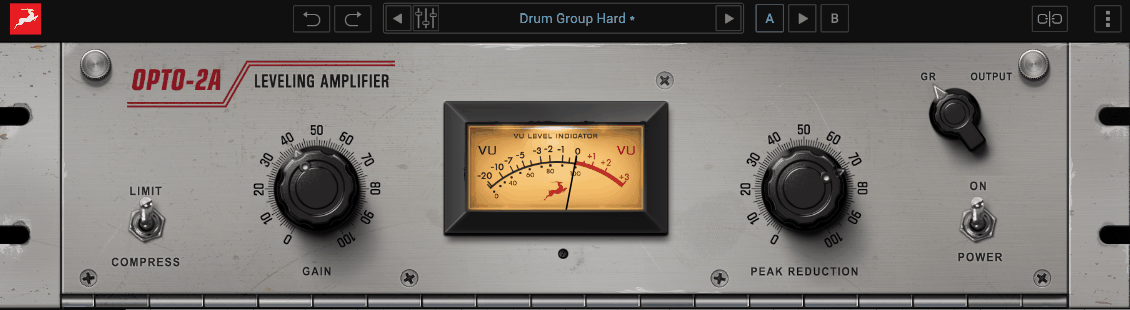
When a vocal needs to feel steady, warm, and already finished without sounding clamped, you’re not looking for surgical control or endless tweaking but natural leveling that keeps performances feeling human while removing the annoying level swings that make you ride faders constantly, and that’s exactly what Antelope Audio Opto-2A delivers as an LA-2A style optical leveler.
It sticks closely to the classic workflow that engineers like which is simple decisions, musical movement, and tone that helps a track sit. In addition, it’s designed to be a go to insert for vocals and bass, and it behaves best when you treat it as a leveling stage that supports the mix instead of dominating it.
- Consistent Vocal Distance
On lead vocals the main benefit is consistent distance where you get fewer moments where words jump forward and fewer moments where phrases sink behind the music.
Instead of hearing compression work you mostly hear the vocal become easier to place which is exactly what you want from an optical leveler, and it’s also the kind of compression that often makes singers feel more confident during tracking because the vocal in the headphones sounds more stable and record like.
The leveling feels natural enough that performers don’t fight against it or change their technique to compensate.
- Bass Body Support for Better Translation
On bass Opto-2A helps in a slightly different way where rather than only catching peaks it supports the body of the note so bass lines feel more even from note to note.
The practical result is better translation across speakers because the bass stays present through the sustain instead of only sounding loud at the beginning of each note, and I like how this solves the common problem where bass sounds perfect on studio monitors then completely disappears on earbuds or small speakers.
The note shape stays musical while consistency improves dramatically.
- Program Dependent Response That Follows Performance
Opto-2A is designed around the classic optical behavior where the compression response is program dependent meaning it naturally reacts differently depending on how hard and how long the source pushes into it.
The vocals can feel controlled without sounding mechanically flattened and bass can feel even without losing the musical shape of the line, and this is one of the reasons LA-2A style leveling remains a default choice for vocals and bass in modern mixing.
The compression adapts to the performance rather than imposing fixed behavior.
2. Waves CLA 2A Compressor
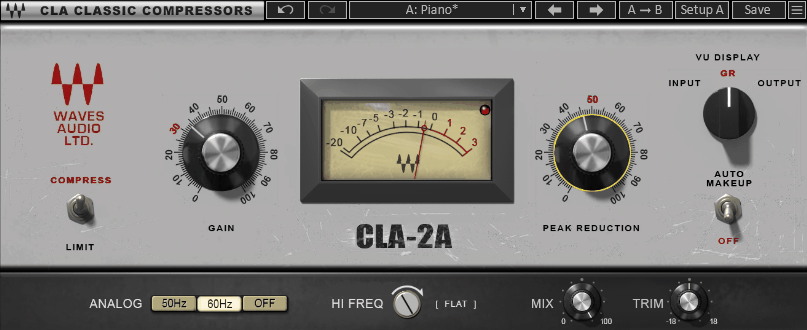
When it comes to LA-2A by Waves, it became studio standard because it does one thing exceptionally well, which is making vocals and bass feel like they lock in without sounding obviously compressed.
The Waves CLA 2A delivers classic opto thing fast where it smooths level changes, keeps the performance feeling natural, and adds that familiar finished density that helps a track sit in front of a mix without extra effort.
In practice, the plugin is less about tweaking and more about making a decision where you insert it, drive it until the vocal stops jumping around, and the track suddenly feels easier to balance. For me, that’s the real reason LA-2A style compressors stay popular because they remove work later in the mix by solving consistency problems upfront.
- Immediate Vocal Stability Without Obvious Artifacts
On lead vocals for instance, the benefit is immediate stability where instead of hearing obvious clamp and release movement, I hear the vocal get more continuous. Quieter phrases stop disappearing, louder phrases stop poking out, and the vocal feels closer to the listener without needing aggressive EQ boosts.
I find it especially effective for performances that are emotional and dynamic where you want control but don’t want to iron out the expression, and the compression feels musical rather than mechanical which preserves the human quality that makes vocal performances engaging.
- Bass Translation and Consistency
Next, on bass the compressor is a classic “make it sit” move where it helps bass notes feel more even so the low end stays consistent across the song. I like how bass stays readable on smaller speakers without needing to push the fader, and you usually don’t end up chasing random notes that jump out because the compression handles consistency automatically.
- Smooth Compression Versus Firm Limiting Behavior
Here, you can choose between smoother compression and firm limiting depending on what the source needs where when you want a vocal to feel controlled but still open and expressive you stay in the compressor behavior, and when you need a track kept on a tighter leash you can switch to the more assertive limiting behavior which proves useful on bass, aggressive vocals, or punchy instruments that have occasional spikes.
That said, the compressor behavior delivers the classic LA-2A vibe while the limiter behavior provides a much stronger safety net.
- Presets
There are few presets for electric guitar, piano, drum bus and vocals, and some others, but they work pretty well! Since there is minimum features, having more presets wold not be necessary.
3. UAD Teletronix LA-2A Tube Compressor
Most mixing decisions take time because you’re balancing multiple parameters trying to find the sweet spot, but the best tools remove that complexity by doing one thing so well you barely need to think.
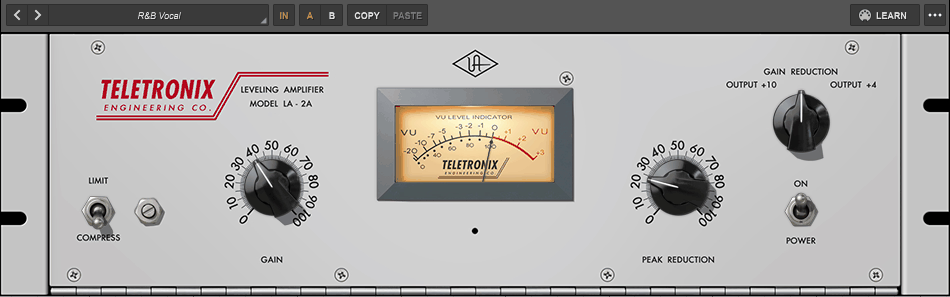
UAD Teletronix LA-2A is the make it sound like a record vocal compressor for people who don’t want to fight settings where the core benefit is simple – you can put it on a vocal or bass, turn it until the part stops jumping around, and the track immediately feels more finished.
It smooths level changes in a way that usually keeps emotion intact which is why LA-2A style compression remains a default choice for vocals, and I think what makes the UAD version a strong pick is that it consistently delivers that classic LA-2A behavior where the compression feels like it’s following the performance rather than flattening it. It’s not the fastest peak catcher and that’s the point – I recommend it when you want steady presence not surgical peak chopping.
- Vocal Sits Closer Without Sounding Hyped
On lead vocals the main win is that the vocal sits closer to the listener without sounding hyped where quieter lines stay intelligible, louder lines stop poking out, and the vocal stays in the same distance as the track gets denser.
If you are mixing pop, hip hop, rock, or singer songwriter material this is often the compressor that reduces how much I need to automate later, and a good practical target for most vocals is 2 to 5 dB of gain reduction on the louder phrases which usually gives the classic leveling effect without making the vocal feel small.
- Bass Consistency and Translation
On bass is consistency and translation where LA-2A style compression is famous for making bass lines feel even without losing the note shape. I appreciate how the compressor helps the bass stay present from note to note which makes the whole mix feel more stable, and a useful starting zone is 3 to 6 dB of gain reduction depending on how uneven the part is. This solves the problem where certain bass notes jump out while others disappear creating an unstable low end that fights the groove.
- Predictable Leveling with Minimal Tweaking
You get predictable leveling with minimal tweaking where LA-2A style compression works because it takes away the need to constantly chase attack and release settings.
You can deside how controlled you want the track to be then balancing it in the mix, and that makes it ideal for sessions where you need to move fast and keep decisions consistent across multiple songs. This workflow simplification means you spend more time on musical choices rather than parameter hunting.
4. UVI Opal
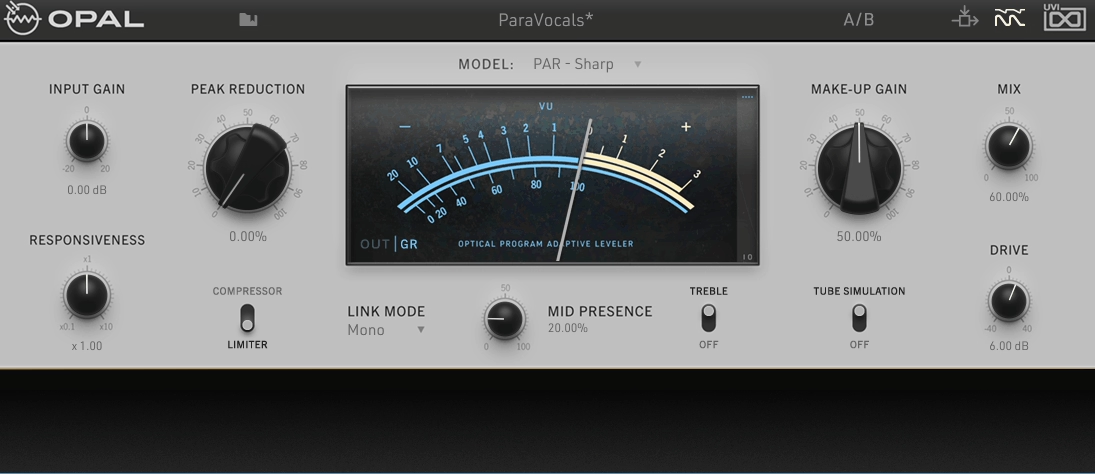
Traditional LA-2A style compressors lock you into one fixed behavior which works beautifully when that exact character matches your source but becomes limiting when it doesn’t quite fit and you’re forced to either accept the compromise or swap to a different compressor entirely.
Modern production demands flexibility without sacrificing the smooth optical leveling that made the LA-2A a studio standard, and finding that balance proves difficult when most plugins choose either strict vintage accuracy or complete departure from the classic sound.
UVI Opal LA-2A compressor plugin is an optical style leveler built for the same core job as an LA-2A type compressor which is making a source feel stable, finished, and easy to place in a mix without sounding like obvious compression, and I think the difference is that Opal is designed for modern sessions where you often need that smooth optical behavior but also need more control over how it reacts and how the result presents in the mix all without building a long chain.
If your goal is studio vocal leveling and mix translation, Opal fits because it focuses on the outcomes that matter which are consistent vocal distance, steady bass weight, and smoother instruments that don’t poke out randomly.
- Steady Vocal Presence Without Stiffness
On lead vocals the main benefit is steady presence without stiffness where it reduces the jumping effect where a few words suddenly feel louder while quieter phrases disappear when the chorus gets dense. I find the vocal ends up feeling like it stays in one place which usually means less automation later and a vocal that’s easier to balance against drums and music.
A practical target for many lead vocals is 2 to 5 dB of gain reduction on louder phrases because that’s enough to stabilize performance while keeping it natural, and if you are mixing modern pop where vocals need to stay consistently forward pushing 5 to 7 dB can work as long as you listen for the vocal staying open and expressive rather than getting smaller.
- Bass Note to Note Consistency
On bass Opal is useful because optical leveling tends to support the body of the note where you get a better note to note consistency without making the bass feel chopped or lifeless. I appreciate how instead of only shaving peaks it helps the bass stay present through the sustain which is a big part of why bass translates better on small speakers.
A realistic working zone is 3 to 6 dB depending on how uneven the part is, and the result is often more stable low end without having to over boost lows or low mids that make mixes muddy.
- Optical Leveling That Adapts to Different Sources
The first major advantage is optical leveling that stays smooth but is easier to fit to different sources where with many LA-2A style plugins you get one behavior and if it doesn’t match the track you I either fight it or replace it. I think Opal is built to let me keep that optical glue feeling while steering how it reacts which means it stays usable across more material, and the practical result is fewer compressor swaps mid mix.
This flexibility saves you time and maintains consistency across tracks that need similar compression character but different reaction speeds.
5. NEOLD U2A
Most LA-2A style compressors give you one sonic personality and expect every source to fit that exact character, which works perfectly until it doesn’t and then you’re stuck either accepting the compromise or building a chain of additional processors to compensate.
The classic optical leveling sound became a studio standard for good reasons but modern mixes often need adaptation that strict vintage emulations can’t provide without external help. You end up stacking saturation for thickness, EQ for brightness control, and multiple compressors to handle different dynamic ranges when ideally one tool should cover those needs cohesively.
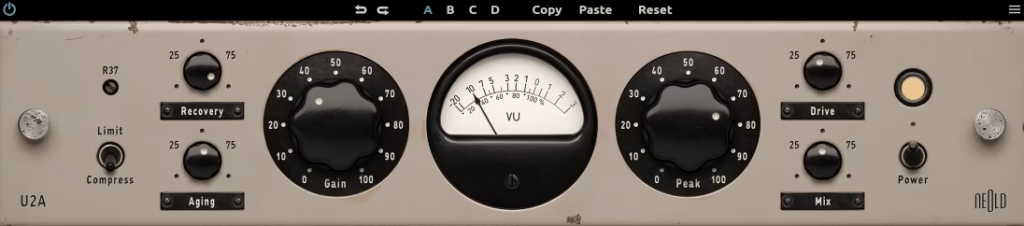
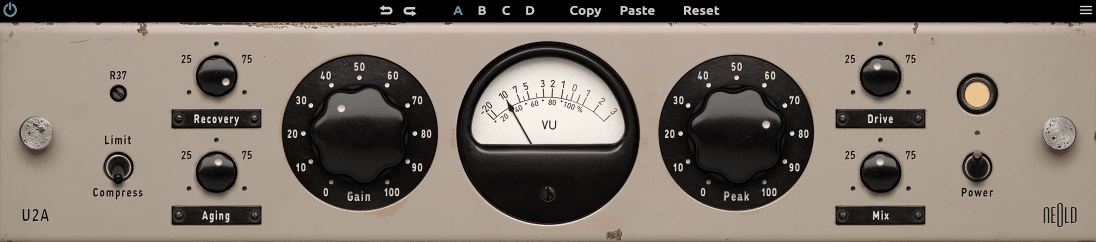
NEOLD U2A LA-2A VST plugin is an LA-2A style opto compressor built around a simple idea which is keep the classic leveling feel but give you a few genuinely useful ways to adapt it to modern mixes, and I think in real use it behaves like a trusted vocal and bass leveler first then opens up into a more flexible tone shaper when you need it.
The benefit is that I can get the familiar optical smoothing but I’m not locked into only one flavor of it.
This is the kind of plugin I would reach for when a track feels good but still moves around too much in level or when it sits in the mix one moment and disappears the next, and it does that finish the performance thing well on vocals, bass, and steady instruments while also being able to be pushed into more obvious control when you want the compression to become part of the vibe.
- Stable Vocal Presence Without Clamping
On lead vocals U2A delivers stable presence where it helps the vocal stay in one perceived position so quieter lines don’t drop out and louder phrases don’t jump out.
I find the result is usually a vocal that feels closer and more consistent without sounding like I clamped it with a fast compressor, and when a vocal is already tonally right but dynamically annoying U2A tends to solve the problem without creating a new one.
The compression feels like it’s following the performance rather than fighting against natural expression.
- Bass Weight Stays Even Across Notes
On bass the main win is even weight across notes where optical leveling is great because it can follow the energy of the line instead of just chopping transients. I appreciate how U2A helps bass stay readable through the song and keeps the low end from feeling random between sections, and that often reduces the temptation to over EQ the bass just to make it audible.
The note shape stays intact while consistency improves dramatically.
- Two Operating Behaviors for Different Control Needs
U2A gives you two operating behaviors that change what the plugin is good at where in compression mode is classic optical leveling that feels smooth and musical.
I think this is where it shines on vocals and bass where you want control that still feels like a performance, and in limiting mode is firmer control for tracks that need a tighter leash.
This proves useful when a vocal has occasional spikes that poke out, when a bass has uneven accents, or when an instrument needs to stay more contained in a dense arrangement.
6. Overloud Comp LA
Workflow efficiency in mixing comes from using fewer plugins that do more jobs rather than constantly swapping between specialized tools, and every plugin change breaks your momentum while you re-learn interface layouts and sonic behaviors.
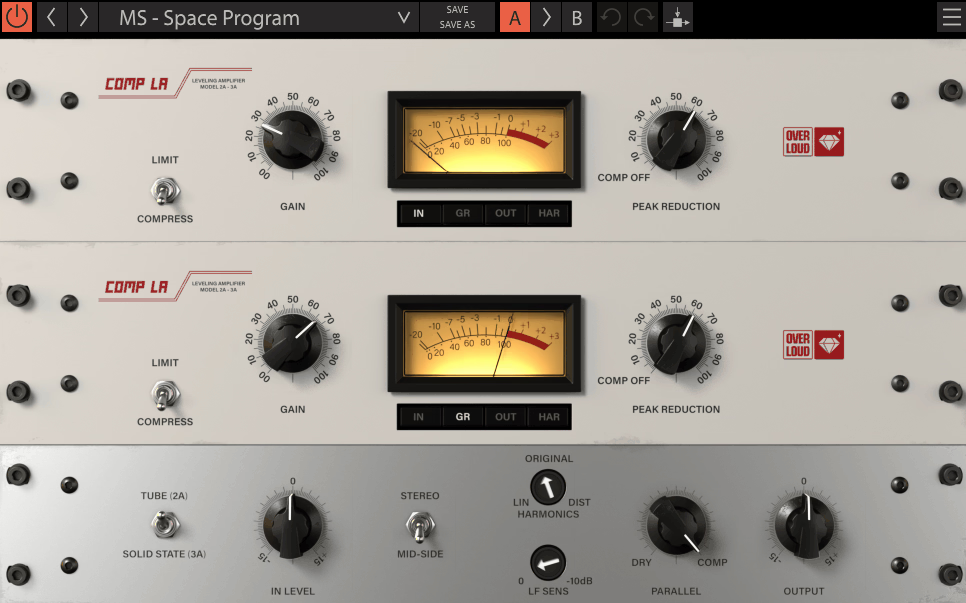
Overloud Gem Comp LA is an optical leveling compressor suite built to do the LA-2A job in a very practical way but without forcing me into only one personality, and I think the big advantage is that you can reach for it as your everyday vocal and bass leveler then switch its character when the track needs a different kind of presence or speed all while staying in the same familiar workflow.
This is the kind of plugin you use when you want a source to feel more in the record where not louder, not brighter, just more stable and more finished so it sits naturally even as the arrangement gets dense.
- Consistent Vocal Distance
On lead vocals Comp LA delivers consistent distance where the vocal stops moving forward and backward unpredictably so you hear the performance instead of the level changes. In practice that means less corrective automation, fewer moments where a word pops out, and fewer moments where a phrase disappears under guitars or synths, and it’s especially strong for vocals that already have the right tone but still feel dynamically unsettled.
The leveling feels natural rather than mechanical which preserves the emotional quality of performances.
- Bass Stays Steady Without Clamping
On bass the benefit is steady weight that doesn’t feel clamped where optical leveling is popular because it tends to smooth the line in a musical way.
I appreciate how I get a bass part that feels more even across notes which usually improves translation without pushing the fader, and the note shape stays intact while consistency improves which solves the problem where certain notes jump out while others feel weak.
This even bass presence stabilizes the entire low end foundation of the mix.
- Two Classic Opto Personalities
Comp LA gives you 2 models in one interface including a 2A style tube personality and a 3A style solid state personality where you can pick the behavior that matches the track instead of forcing one opto feel onto everything. 2A mode is what I’ll typically grab when I want a vocal to feel bigger, thicker, and more finished, and it’s a great default for lead vocals, slower melodic bass parts, and anything where I want the control to feel smooth and flattering.
3A mode is useful when you want the same leveling concept but with a more immediate grip where it’s often a better fit for energetic vocals, snappier bass, guitars that need taming, and sources where you want the leveling to feel more direct.
This musical timing keeps compression feeling natural rather than obviously processed.
7. Black Rooster Audio VLA-2A Mark II
Many tracks fail in mixes not because they’re recorded poorly or EQ’d wrong but because their dynamics jump around unpredictably making them impossible to balance properly regardless of fader position.
You can spend hours tweaking tone and placement but if a vocal phrase suddenly jumps 6 dB louder mid-sentence or bass notes vary wildly in level the mix never settles into stability no matter how much you adjust other parameters.
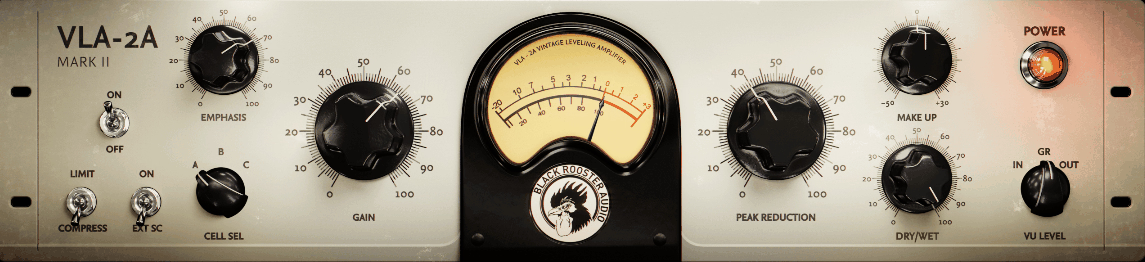
Black Rooster Audio VLA-2A Mark II is an LA-2A style optical leveler aimed at the mix jobs where you want stable loudness and record like density without turning a performance into a flat block, and I think the main reason it works in real sessions is that it gives you the familiar opto leveling feel then adds a few extra controls that help it behave better on modern material like bright vocals, heavy low end, and dense arrangements.
This is a plugin I would reach for when a track is already tonally right but it still moves around too much where instead of chasing words with automation or fixing everything with EQ I use VLA-2A Mark II to make the dynamics behave so the track stays in the right place naturally.
- Consistent Vocal Distance
On lead vocals you are getting consistent distance where loud phrases stop jumping forward, quiet phrases stop falling back, and the vocal feels like it stays attached to the mix even when the chorus hits.
Used sensibly it keeps the vocal sounding like a performance while still giving me that finished vocal stability that makes balancing easier, and I appreciate how this solves the problem without requiring detailed word-by-word automation that takes forever and sounds mechanical.
The compression follows the performance naturally rather than imposing artificial control.
- Even Bass Weight Across Notes
On bass the main win is even weight across notes where optical leveling is popular because it tends to smooth the body of the note in a musical way. I find the result is bass that stays readable and consistent across the song which usually improves translation without pushing volume, and the note shape stays intact while consistency improves dramatically.
This prevents the common problem where certain bass notes disappear while others dominate.
- Three Response Personalities for Source Matching
VLA-2A Mark II includes 3 optical cell options where the important point isn’t the circuit detail but you get three different response personalities that let you match the leveling feel to the source instead of forcing every track into one fixed behavior. In practice this saves time where if one setting feels slightly too slow and makes a vocal feel lazy you can switch the response to get a more appropriate grab, and if another option feels too eager and makes the track feel held back you can choose a smoother response that breathes more naturally.
This flexibility means one plugin handles various source behaviors rather than needing multiple compressors.
- Emphasis Control for Brightness Management
The plugin includes an Emphasis control designed to help me control how the leveling reacts to high frequency energy where your vocals can stay stable without getting spitty or over bright in an unpleasant way. If you mix modern vocals that are already bright this kind of control matters because it helps you get the stability you want while keeping the vocal’s top end feeling intentional, and bright instruments can be leveled without the compressor reacting in a way that makes them feel dull.
This targeted frequency response keeps compression musical rather than problematic.
- Low End Control for Bass Heavy Productions
Modern mixes often have kick and bass energy that can dominate optical leveling, and VLA-2A Mark II gives you tools to avoid that low end decides everything problem so the compressor doesn’t pull the whole track down in a way that feels like unwanted breathing.
The end result is a steadier control on bass heavy productions and a vocal that stays consistent even when the arrangement thickens, and I appreciate how this prevents the pumping that would otherwise ruin optical compression on modern material. The compression stays focused on what matters rather than being dictated by low end energy.
- Warm Tube Style Thickness
VLA-2A Mark II is voiced to deliver warm breathy leveling with a sense of tube style thickness where the you can often get the vocal or bass to feel more record ready without needing to stack extra saturation just to add density.
Freebies:
1. BPB Dirty LA
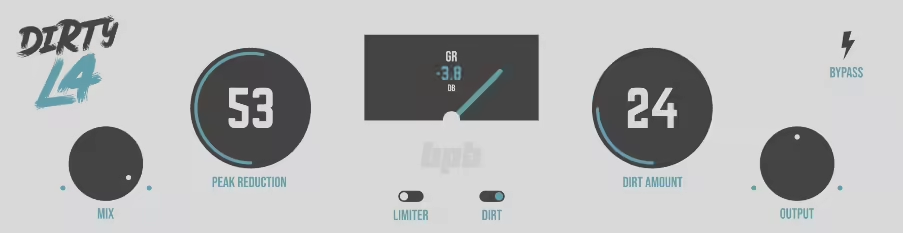
BPB Dirty LA is a free vintage style leveling compressor designed to do a very specific job which is make tracks feel more controlled and more finished with minimal setup while also giving me an optional path to extra grit and density when a source feels too clean, and it’s inspired by the workflow of classic limiting amplifiers in the LA family but it’s not trying to be a museum accurate clone (:D).
The practical result is a compressor you can drop on a vocal, bass, drum bus, or instrument group when you need smooth leveling plus a little attitude without building a long chain.
Because it’s free the real question isn’t is it perfect but does it solve real mix problems quickly, and Dirty LA does especially when my track needs more consistency, less spiky behavior, and occasionally more character.
- Built In Dirt Algorithm
A defining part of Dirty LA is its built in Dirt algorithm which you can use to add grit, thickness, and a bit of transient rounding where you can make a vocal feel more solid, make a bass feel more present, or make drums feel more aggressive without automatically stacking a separate saturation plugin.
- Consistent Vocal Distance
On vocals Dirty LA is most useful when the performance is good but the level keeps wandering where you get consistent vocal distance. Loud words stop jumping out, quieter phrases stop disappearing, and the vocal becomes easier to place without immediately reaching for heavy automation, and you end up doing fewer micro fixes later because the vocal sits in a more stable range by default.
The leveling feels natural enough that I’m not constantly hearing the compressor working.
- Bass Translation and Note Support
On bass the plugin is good at making the line feel more even without turning it into a flat block where optical inspired leveling tends to support the body of the note so the bass stays present longer through each note rather than only being loud at the front.
The benefit is better translation across speakers and a bass part that stays readable when the chorus gets dense, and this prevents the problem where bass sounds perfect on studio monitors then disappears on smaller playback systems.
The sustained note body helps bass feel consistent rather than just peak-focused.
2. Analog Obsession LALA
You can have perfect EQ and beautiful reverb but if your vocal or bass keeps jumping around in level the mix never settles regardless of how much you polish the other elements.
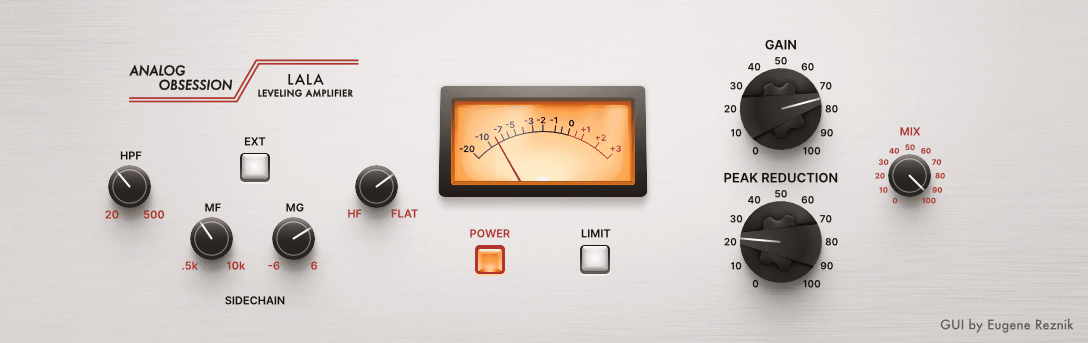
Analog Obsession LALA is a free LA-2A style optical leveler built for the most common mixing problem on vocals and bass which is the performance sounds good but the level doesn’t stay put, and I think the core benefit is speed where I can drop it on a track, pull the gain reduction until the part sits, and the mix immediately becomes easier to balance.
It’s not trying to cover every compressor job but is focused on the leveling role that LA-2A style compressors are known for with a bit of analog flavored thickness that helps tracks feel more finished.
LALA is popular because it gets me that classic outcome without demanding a complicated setup, and it’s a practical option if I want an optical style vocal compressor in a template especially when I want a free tool that still gives believable record style results.
- Consistent Vocal Distance
On lead vocals LALA helps the vocal feel consistent in distance where loud words stop jumping forward, softer phrases stop sinking back, and the vocal tends to sit in the track more naturally.
This proves especially useful when a vocal is well recorded but still has typical real performer dynamics that make the chorus feel uneven, and I appreciate how LALA can reduce how much vocal automation I need later because it handles the broad level shaping early.
The compression follows performance dynamics naturally rather than imposing mechanical control.
- Bass Translation Through Note Body Support
On bass LALA is useful because optical style leveling tends to support the body of the note where instead of only catching peaks it helps bass feel more even across the line.
The benefit is translation where bass stays present on smaller speakers without you pushing the fader or boosting low mids too hard, and this solves the problem where bass sounds perfect on studio monitors then vanishes on earbuds or car speakers. The sustained note body creates consistency that pure peak limiting can’t achieve.
- Simple LA-2A Style Workflow
The biggest advantage of LALA is that it gives you the LA-2A style workflow where you ‘re making a simple decision which is how controlled should this performance feel. That saves time because you ‘re not building timing behavior from scratch but instead you dial in stability then move on, and this simplified approach keeps you focused on musical results rather than parameter obsession.
The decision becomes about outcome rather than settings.
3. ADHD Leveling Tool
Free plugins often fail by either oversimplifying to the point of uselessness or overcomplicating to prove they can compete with paid alternatives, and finding the sweet spot between quick results and meaningful control separates genuinely useful free tools from cluttered experiments that waste more time than they save.
Classic LA-2A emulations lock you into one fixed behavior which works beautifully until your source doesn’t perfectly match that vintage character, while modern flexible compressors often bury you in parameters that don’t actually solve the core leveling problem any better.
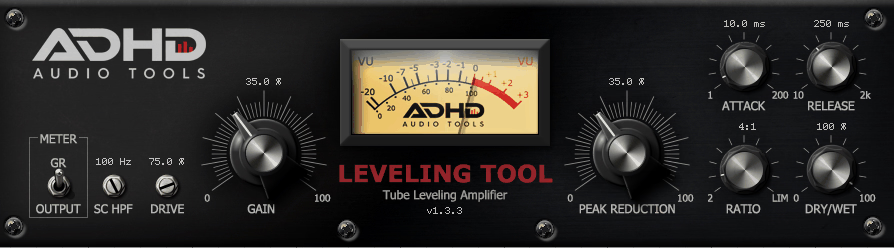
ADHD Leveling Tool is a free optical style leveling compressor aimed at the same everyday jobs people use an LA-2A for but with a more flexible modern utility angle where the main benefit is it can smooth vocals quickly, add a bit of tube style density, and keep a track’s dynamics from distracting me without turning the mix process into a settings hunt.
It proves especially useful when a performance already sounds right tonally but the level keeps wandering and you want the part to stay present and stable with minimal effort.
What makes it stand out in the free plugin space is that it’s not just a two knob leveling clone but keeps the leveling intent while adding a few controls that help you solve common real mix problems like low end driven pumping or vocals that need more character without stacking extra processors.
- Drive Control for Tube Style Thickness
The plugin includes a Drive control for added tube saturation where you can add thickness and a slightly more forward feel when a track is too clean or too polite without immediately reaching for a separate saturation plugin.
This proves a practical way to make vocals feel more finished before you start doing detailed EQ moves, and the integrated character processing keeps your chain simpler while still achieving complete results.
- Consistent Vocal Distance
On lead vocals the big win is consistent distance where the vocal stops jumping forward on louder syllables and stops dropping away on softer phrases. Instead of hearing the compressor work you mostly hear the performance become easier to place in the track which usually means less automation later and fewer moments where you fight the vocal in the chorus, and this stability transforms vocals from constantly demanding attention to sitting naturally in the arrangement.
The compression disappears into musicality rather than announcing itself.
- Smoother Bass Note to Note Weight
On bass the benefit is smoother note to note weight where a leveling style compressor tends to support the body of the note so the bass stays present through sustain rather than only sounding loud on the initial attack.
In a dense mix that’s often the difference between bass that reads and bass that disappears when the arrangement fills up, and you appreciate how this sustained presence helps bass translate across different playback systems without volume compensation.
The note shape stays complete rather than becoming all attack and no body.

Hello, I’m Viliam, I started this audio plugin focused blog to keep you updated on the latest trends, news and everything plugin related. I’ll put the most emphasis on the topics covering best VST, AU and AAX plugins. If you find some great plugin suggestions for us to include on our site, feel free to let me know, so I can take a look!