
Few pieces of audio hardware carry as much cultural weight in a recording studio as the 1176 Peak Limiter. Designed by Bill Putnam Sr. and introduced in 1967 as the first solid-state FET compressor alternative to the tube-based units that dominated that era, it went on to appear on virtually everything worth listening to across the last five decades.
Led Zeppelin drums. Thriller. Dark Side of the Moon. Modern pop vocals. Hip-hop drums. Metal guitars.. The 1176’s fingerprint is everywhere, and its particular combination of speed, color, and musical character is still something that engineers reach for on instinct rather than calculation.
The good news is that you don’t need a hardware unit racked up in a facility anymore.
The plugin emulations of this circuit have gotten remarkably good, and there are meaningful differences between them that are worth understanding before you spend money. Here are seven worth knowing about!
1. UAD LA-6176 Signature Channel Strip
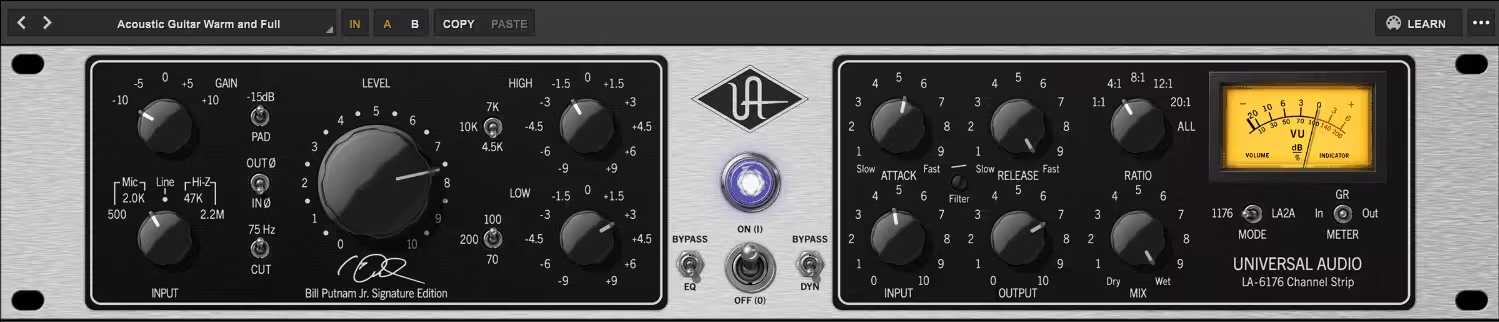
If the question is which 1176 plugin does the most work in the least amount of time, the answer might well be the LA-6176 Signature Channel Strip from Universal Audio. This is technically a full channel strip, not just a standalone compressor, and that distinction matters: it combines the UA 610-B tube preamp, the 1176LN FET compressor, and the LA-2A optical compressor in a single plugin.
The original 6176 hardware has been a staple of professional vocal chains since 2004, used on records by Coldplay, Adele, and Pharrell, and the plugin version was developed for UA’s 20th anniversary of that hardware.
- Switchable 1176 and LA-2A:
What makes this genuinely novel among 1176 plugins is the ability to flip between FET and optical compression at the touch of a switch, something the original hardware couldn’t do. In 1176 mode you get the fast, punchy FET character.
Switching to LA-2A mode gives you the slower, smoother optical response. Using both in series on a vocal chain traditionally required two pieces of hardware and two plugin instances. Here it’s one knob flip, and I found the combination genuinely transformative on vocals.
- UA 610-B Tube Preamp:
The preamp section models the contemporary 610-B circuit with high and low EQ dials, three selectable bands, a pad switch, and high pass filter, giving you the tube harmonic richness and selectable input modes before the compression hits.
- Unison Technology for Apollo Users:
If you own a UA Apollo interface, the LA-6176 is Unison-enabled, meaning it precisely matches the impedance and gain staging of the original hardware 610 tube preamp at the input stage of your interface before anything reaches the DAW.
- Filter on the Detection Circuit:
A digital-only enhancement not possible on any hardware version is a filter switch for the 1176 detection circuit, which lets you high-pass the sidechain signal so the compressor’s gain reduction isn’t being pulled down by low-frequency energy. This is a practical mix tool that many engineers would otherwise have to route around externally.
2. Waves CLA-76
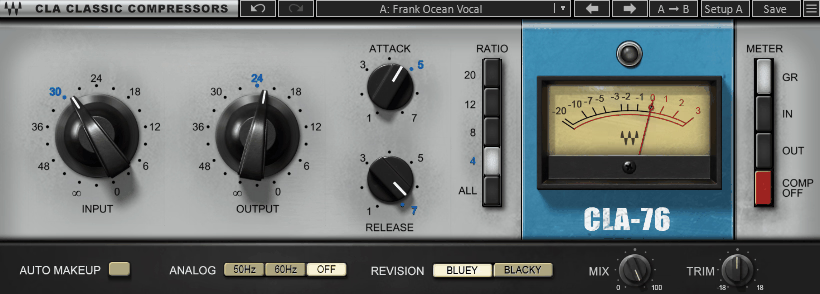
The CLA-76 by Waves has been around long enough that its presence on mixing sessions worldwide is less a recommendation than a statement of fact.
Developed with Grammy-winning mixer Chris Lord-Alge and modeled from two of his personally maintained hardware units, one silver-face “Bluey” and one black-panel “Blacky,” this is one of the oldest 1176 emulations in the market and one that still earns its place on tracks every day.
I want to be honest with you: the CLA-76 has a character of its own that doesn’t perfectly mirror the hardware in every measurable way, and some engineers with access to real 1176s will tell you that.
What it does do is add that compressed FET energy and brightness in a way that consistently makes things sound more present, which is often exactly what you want.
- Two Hardware Models (Bluey and Blacky):
The plugin gives you Bluey, based on the silver-face blue-stripe revision B, and Blacky, the LN low-noise black-panel version, each with subtly different tonal characteristics. The blue-stripe model tends to sit slightly nicer on bright acoustic guitars and female vocals, while the black-panel feels more assertive and focused. The differences are subtle but real, and having both in one plugin for no extra routing work is a genuine convenience.
- All Buttons In (ALL Mode):
The “ALL” setting replicates the hardware’s famous four-ratios-simultaneously mode, engaging extreme compression with the characteristic explosive attack behavior, lag in transient grabbing, and heavy tonal change that engineers have used to crush drum rooms and vocals for decades.
- Modeled Pre-Amp Distortion:
Beyond the compression behavior, the CLA-76 also models the harmonic character of the hardware’s pre-amp stage, meaning the plugin imparts some FET saturation and tonal coloring even at lower gain reduction settings. I’ve used it at unity compression just for the texture it adds to bass guitar direct signals, and it does something real.
3. Antelope Audio FET-A76
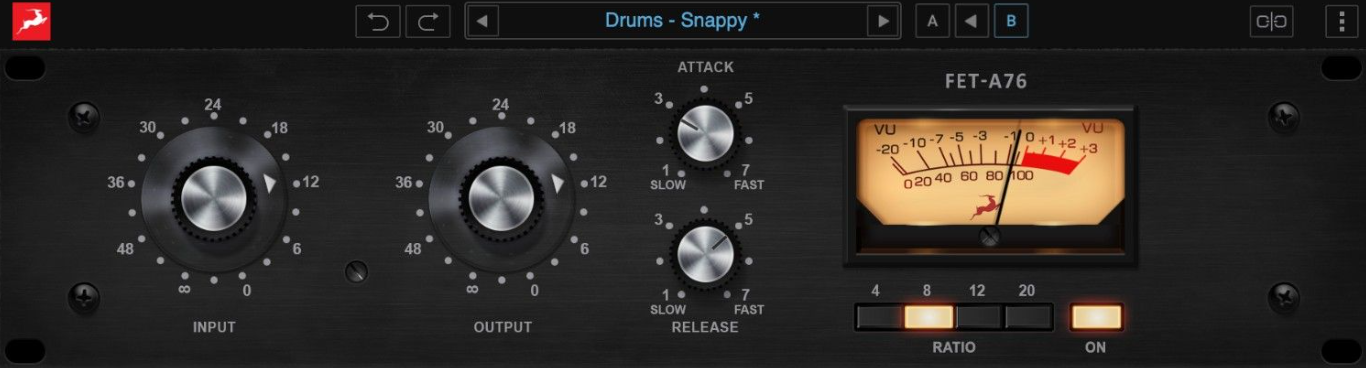
For engineers working in the Antelope Audio ecosystem, the FET-A76 has an advantage that no other plugin on this list can offer: it runs at near-zero latency via Antelope’s proprietary FPGA hardware, processing the audio in real time on the interface itself rather than in your DAW’s CPU chain.
For tracking sessions where you’re monitoring through compression, the difference between even a low-latency plugin and something with genuinely imperceptible delay is meaningful in how a performer responds to what they’re hearing. The FET-A76 is now also available as a standard native plugin for Mac and Windows without any Antelope hardware required, which expands who can access it considerably.
- FPGA Real-Time Processing:
When running through compatible Antelope Synergy Core interfaces, all processing happens on the hardware’s FPGA chip rather than your computer’s CPU, which eliminates perceptible latency during tracking and means you can stack instances across multiple channels without any DAW performance impact.
I think this is the most practically significant advantage of the FET-A76 for people who track regularly, and it’s something the other plugins here simply can’t replicate.
- Lightning Fast Attack:
The FET-A76 models the original circuit’s attack time that reaches down to 20 microseconds, which is what gives FET compressors their ability to catch sharp transients that tube or optical units would let through. The result on drums is a forward, assertive sound where attack shapes are precisely controlled, and on vocals it adds the kind of energetic forwardness that makes a performance push through a dense mix.
- All Buttons Mode:
Like the hardware, pressing all four ratio buttons simultaneously triggers the British mode with increased harmonic distortion and an explosive character that the standard ratio settings can’t approach. The Antelope implementation captures the bias voltage changes that occur in the circuit during this mode, which is the detail that determines whether the result is authentic or just loud.
4. IK Multimedia Black 76 Limiting Amplifier
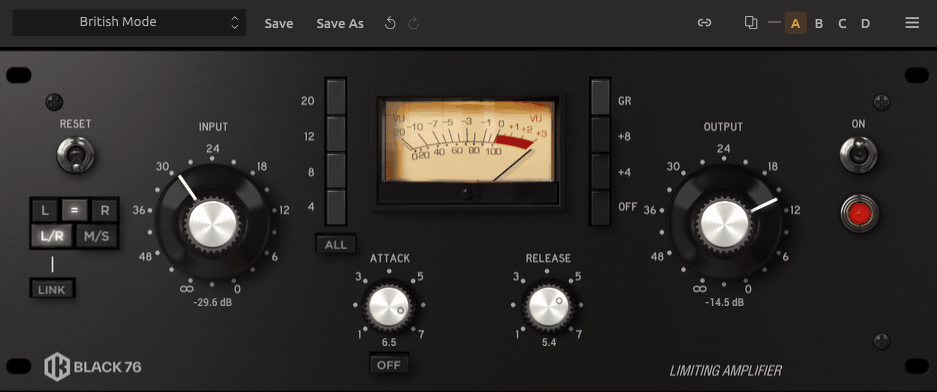
What IK Multimedia chose to focus on with the Black 76 is arguably the most important decision in building an 1176 emulation: which version to model.
While many plugins target the original or the anniversary edition, the Black 76 specifically models the 1176LN revision E, the low-noise black-panel version whose input transformer and Class A output stage are considered by many engineers to have the most musically useful character of any 1176 variant.
- Revision E Specificity:
IK’s decision to build the Black 76 around one specific revision rather than offering multiple models means the character is focused and consistent.
The Rev E’s input transformer behavior and Class A output stage give it a particular midrange presence and forward quality that the Rev A and anniversary editions don’t have in exactly the same way. I find this to be a more confident design choice than some emulations that offer too many versions without a clear sense of which sounds best.
- Compressor-Off Mode:
In keeping with the original hardware’s quirk, turning the attack control to its leftmost position bypasses compression while leaving the amplifier circuit active, giving you what amounts to a light FET preamp coloring without any gain reduction. IK implemented this faithfully, and it’s useful for adding subtle transformer character and Class A output stage texture to sources that don’t need compression but could benefit from some analog-style weight.
- M/S and L/R Stereo Modes:
Within the T-RackS shell, the Black 76 offers Mid/Side and Left/Right processing modes with independent channel controls, which goes beyond what any hardware 1176 can do natively. This makes it a more flexible mastering-context tool than the hardware, and I found the M/S mode particularly useful for adding 1176 character to mid channel content while leaving the stereo sides untouched.
5. Universal Audio 1176 Collection
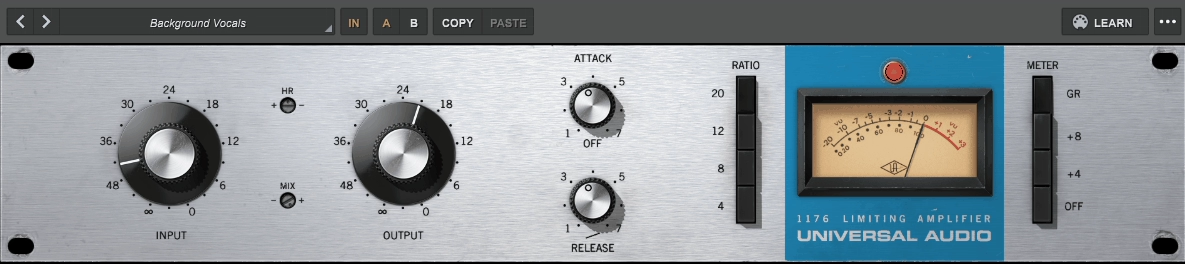
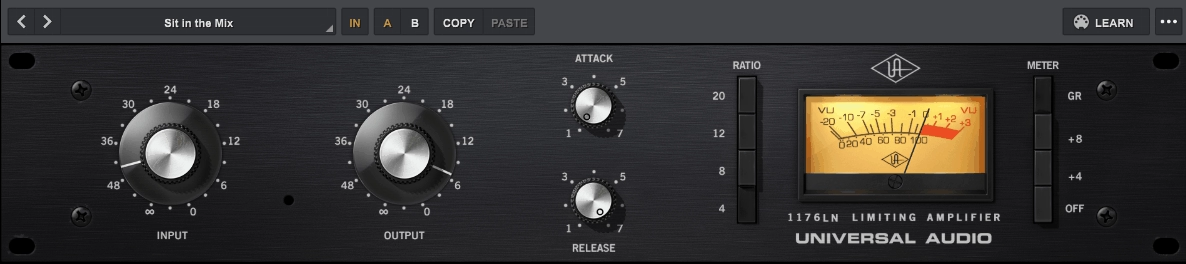
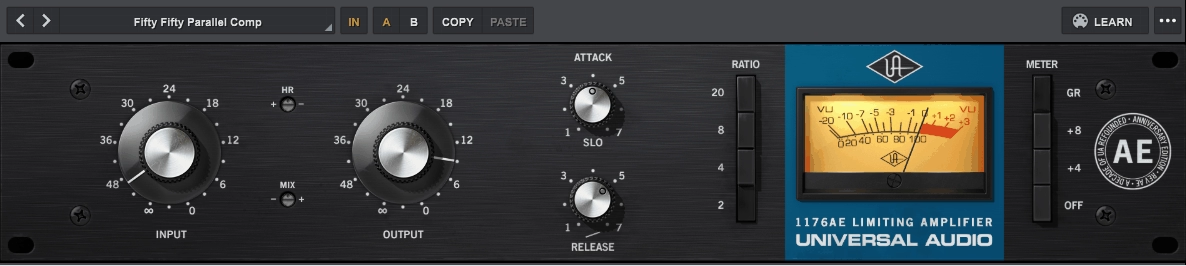
If you want the most comprehensive collection of 1176 revisions from the company that actually makes the hardware, UAD’s 1176 collection is the obvious answer. Universal Audio has modeled three versions: the Rev A, Rev E, and Anniversary Edition, each capturing a specific point in the hardware’s evolution with meaningful sonic differences that matter when you know what you’re listening for.
The Rev A is warmer and looser, the Rev E has that assertive low-noise character, and the AE sits between them with specific tonal choices that make it a go-to for certain engineers. I’ve found the UAD 1176 collection to be the standard against which most other emulations are quietly measured, even when they’re not directly compared.
- Three Revisions:
The collection covers Rev A, Rev E, and Anniversary Edition, which are not just cosmetically different but tonally distinct. The Rev A’s softer, rounder character suits certain vocal performances and bass lines in ways the sharper Rev E doesn’t, and having all three available means you’re choosing the character rather than settling for a compromise.
- Component-Level Modeling:
UA’s approach to modeling their own hardware involves access to the original circuit designs and component tolerances rather than just measuring an external unit’s input-output response. The result is behavior that responds to input level and gain setting changes in ways that correlate with what the hardware does, including the way the attack character shifts at different gain reduction depths.
- All-Buttons-In Behavior:
The UAD 1176 captures what happens in the circuit across all three revisions when all ratios are engaged simultaneously, with the bias voltage changes and harmonic distortion behavior that are specific to each revision’s circuit topology.
The Rev A in all-buttons mode sounds different from the Rev E in the same mode, which is accurate to the hardware and gives you another dimension of tonal variation.
6. Arturia Comp FET-76
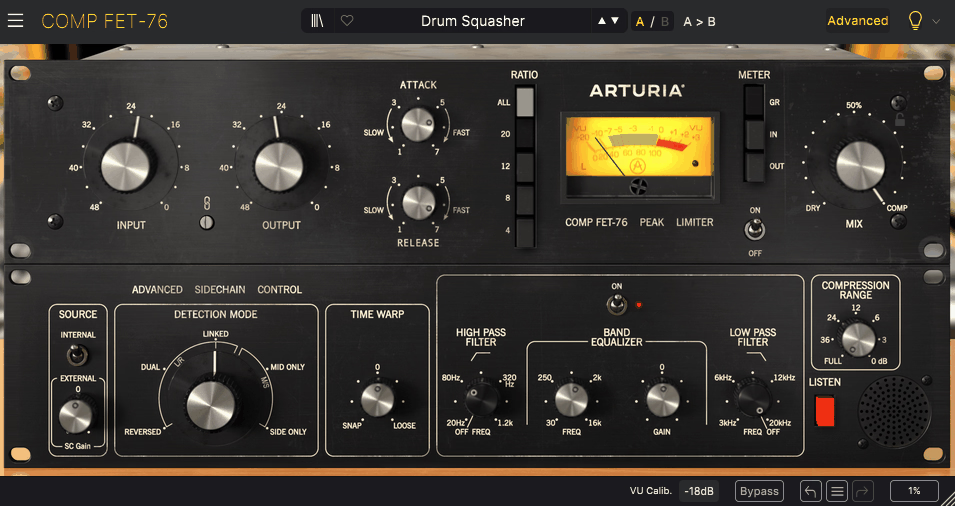
When Arturia built the Comp FET-76, their stated goal was to accurately model the sound and then go further, adding features that the original hardware’s physical constraints made impossible.
The result is the most feature-rich 1176 emulation on this list by a significant margin, and it was apparently developed in collaboration with the same audio engineers at Pulsar Audio who built the Pulsar Smasher.
The base emulation targets the 1176 Rev D/E model, and the standard interface faithfully reproduces the original controls. Where it becomes its own thing is the expanded lower panel that most 1176 plugins don’t attempt.
- Advanced Sidechain Panel:
The lower panel reveals a sidechain EQ with high-pass, low-pass, and single-band parametric controls, plus a Listen function to audition just the detection circuit.
This lets you high-pass the sidechain so low frequencies don’t drive excessive gain reduction, which is a fundamental mixing technique that normally requires external routing. The Listen mode for identifying what’s triggering the compressor is something I find practically invaluable for dialing in the right behavior on complex sources.
- Time Warp Function:
Time Warp is a look-ahead pre-delay function added to the sidechain path. It adds a small delay before the detection circuit responds, which effectively shifts where the compression envelope begins relative to the audio transient.
This gives you control over how the attack phase shapes the initial transient in a way that no hardware 1176 can achieve, and it opens up uses on drums and guitars that the original circuit can’t access.
- Compression Range Control:
A Range knob limits the maximum amount of gain reduction the compressor can apply, which lets you push the input aggressively for more FET saturation and character while keeping the dynamic control within bounds. It’s a subtle but genuinely useful tool for getting more circuit color with less compression.
7. Pulsar Smasher
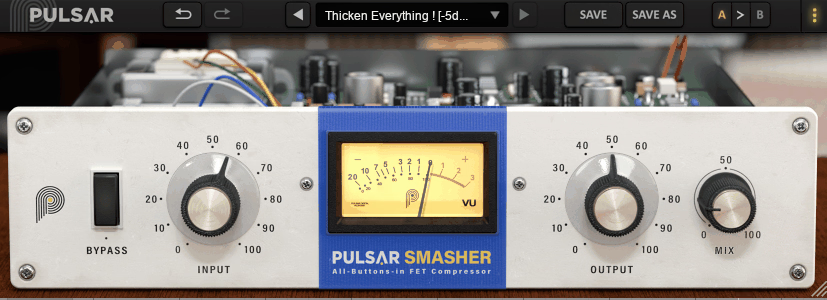
The last entry on this list is the most focused and the least versatile, and I’d argue both of those things are virtues. Pulsar Audio is known for their Mu compressor, which is one of the most respected Vari-Mu emulations available, and Pulsar Smasher exists specifically to model one thing: the 1176 in British mode, all buttons in, with a custom circuit modification Pulsar discovered while tuning their own algorithms.
The result is something that describes itself as sitting between a compressor and a saturation effect rather than a conventional dynamics processor. For drum buses, bass, and anything that needs to be pushed forward with attitude, it’s one of the fastest ways to get there.
- British Mode Only:
Smasher doesn’t give you the standard ratios or regular 1176 operation.
It is purpose-built around the all-buttons-in British mode, with Pulsar’s modifications to the circuit that add definition to the transients and make the whole tone more aggressive than stock British mode produces. If you need the full range of 1176 operation, look elsewhere. If you need something that lives permanently in that aggressive, explosive territory, this is the tool.
- Topology Preservation Technology:
Pulsar’s proprietary modeling approach captures the circuit behavior down to the saturation of magnetic flux in the inductors and the precise transistor response, including the bias voltage changes that occur specifically when all four ratio buttons are engaged simultaneously.
This level of specificity is what produces the characteristic “delayed transient squashing” that drum engineers have chased for decades in British mode operation.

Hello, I’m Viliam, I started this audio plugin focused blog to keep you updated on the latest trends, news and everything plugin related. I’ll put the most emphasis on the topics covering best VST, AU and AAX plugins. If you find some great plugin suggestions for us to include on our site, feel free to let me know, so I can take a look!