
Reverb might be the single most personal choice you make in a mix. Two engineers can build radically different spaces around the same dry vocal and both be completely right.
The reason comes down to what type of reverb you reach for: a room reverb puts the listener in a physical space with natural early reflections, a plate reverb creates a dense, smooth bloom from a suspended sheet of metal, and a chamber reverb captures the unpredictable character of a real acoustical space with speakers and microphones.
Each of those three types has a fundamentally different sound and a different relationship to the source material. This list covers 14 plugins that represent the best of all three categories, from $50 workhorses to high-end chamber emulations that recreate rooms you’d need a plane ticket to otherwise access.
1. Valhalla Room
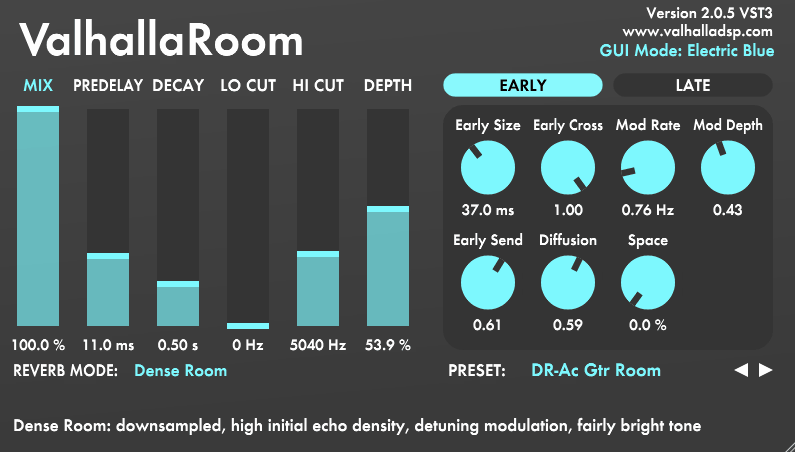
Every serious reverb conversation eventually arrives at Valhalla Room. Sean Costello’s $50 algorithmic room reverb has been on enough hit records, in enough professional studio setups, and on enough award-winning mixes that its reputation is no longer a matter of opinion. Noisia called it their favorite reverb plugin.
ValhallaRoom ships with twelve distinct reverb algorithms, including Large Room, Bright Room, Dense Room, the Nostromo and Narcissus dark modes, Sulaco, and LV-426, among others. These are genuinely different in character, not just presets of the same algorithm with tweaked parameters. Nostromo has sparse early echo density and wide spatial image.
Narcissus is the lightest CPU mode with a more intimate character. Sulaco cuts everything above roughly a quarter of the sample rate, producing a dark, modulated effect that sounds unlike anything else in the plugin.
- Early and Late Reverb Sections:
One of the structural advantages that sets Room apart from most reverb plugins is the ability to control the Early and Late reverb sections independently, each with its own Size, Modulation, and Level controls. The Early section can produce short bursts and gated effects up to one second long. The Late section handles natural decays from 0.1 seconds to 100 seconds. The Depth control blends between them, meaning you can dial in a reverb that’s mostly early reflections for a close, immediate character, or mostly late decay for an ambient wash, or anything in between.
- Space and Lo Cut (v2.0):
The 2.0 update added a Space control in the Early section and a Lo Cut control on the output. Adjusting Space gradually transforms early reflections into standalone reverb elements at higher settings, while Lo Cut attenuates bass frequencies to prevent muddiness in dense mixes.
- Mix Lock:
Clicking the MIX label locks the wet/dry ratio when browsing presets, which is a small workflow detail that matters considerably in practice. When you’re searching through algorithms looking for the right space, you don’t want the mix level jumping around as you audition. Mix Lock keeps you at a fixed blend so the comparisons are meaningful.
2. UAD Capitol Chambers
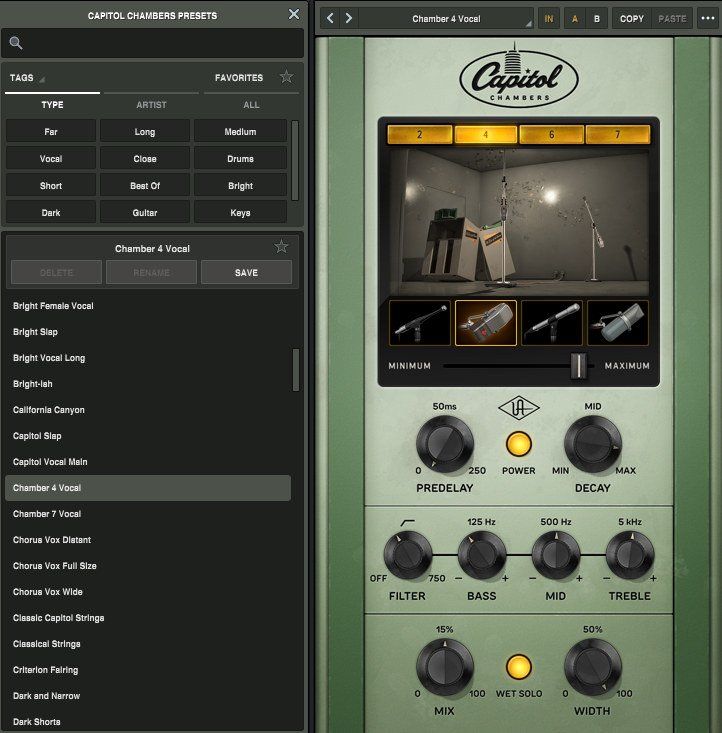
Under the parking lot of the Capitol Records Tower in Hollywood, 30 feet below street level, are eight trapezoidal echo chambers that have been in continuous use since 1956. Frank Sinatra used them. Ray Charles built his sound in them. Beck and Muse recorded in them.
Capitol has never allowed impulse responses to be taken of these rooms, which means the only way to access their sound has historically been to book time at Capitol Studios and be in Los Angeles.
Capitol Chambers from UAD changed that, giving producers access to four of the eight chambers for the first time in plugin form.
- Four Chambers
The plugin emulates Chambers 2, 4, 6, and 7, each of which has a distinct character determined by its dimensions, wall angles, and surface treatment.
For each chamber, you can select from four microphone configurations including the vintage Altec 21D omnidirectional tube condensers used in the original hit-making positions and the modern Shure SM80 option. Speaker types include the Altec Voice of the Theatre A7 and the BGW-powered Tannoy setups, all modeled from original technical diagrams sourced from Capitol’s archives.
- Dynamic Room Modeling:
UAD’s Dynamic Room Modeling technology is what separates Capitol Chambers from a standard convolution reverb. Rather than capturing a static impulse response of a room at one moment in time, DRM combines sampled impulses with algorithmic processing to allow ongoing parameter changes.
The result is that the Position slider can reposition the virtual microphones in real time, giving you everything from maximum distance for the most diffuse chamber tail to close mic positioning for early reflection prominence and proximity character.
- Sweepable High-Pass Filter
The input has a sweepable high-pass filter from 80 to 750 Hz for reducing low-frequency energy before it enters the chamber, preventing the muddiness that low frequencies naturally cause when running through a highly reflective physical space. A three-band EQ adds Bass, Treble, and a proportional-Q Mid band for shaping the chamber’s output.
- Artist Presets
Capitol Chambers ships with presets designed by Al Schmitt (who passed away in 2021), Mark Linett, Frank Filipetti, and others who actually used these rooms on landmark recordings. These presets are not novelty items. They represent the working mic and speaker configurations that those engineers used on real sessions and demonstrate the plugin’s practical range far faster than starting from scratch.
3. Arturia REV Plate-140
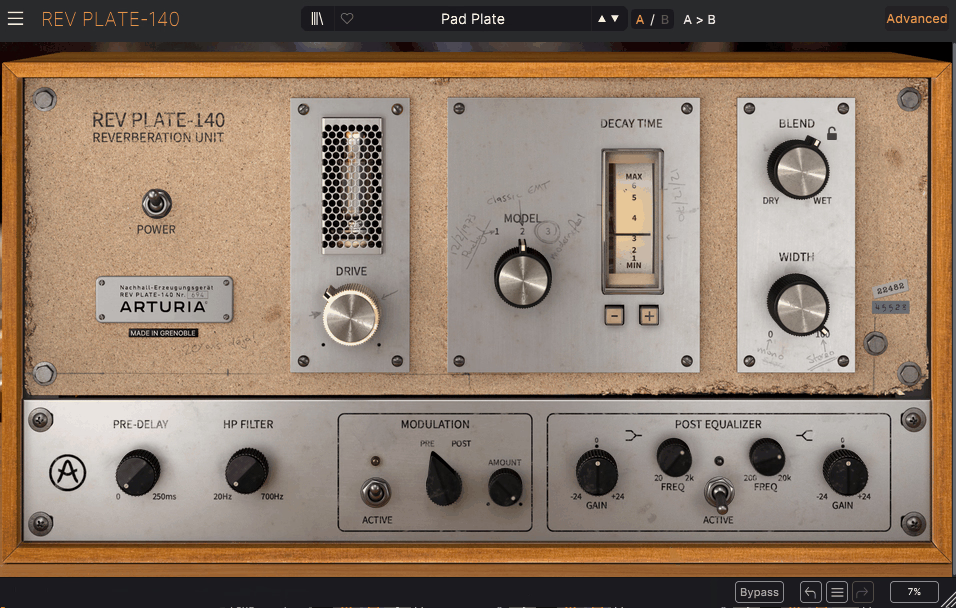
The EMT 140, introduced in 1957, was the first commercial plate reverb, and for years it was one of the most expensive pieces of studio equipment a studio could own, costing roughly as much as a house. REV Plate-140 from Arturia uses their TAE (True Analog Emulation) and Phi physical modeling technology to bring that hardware into the DAW with circuit-accurate accuracy.
Arturia hunted down an original 140 in perfect condition, modeled it as the Classic EMT setting, then added two more plates they encountered during that process for the Punchy and Modern modes. Sweetwater’s description is accurate: Punchy is tight and percussive, Classic EMT is lush and vocal-ready, and the third mode bridges those extremes.
I love how the pre-filter and post-EQ let you carve the reverb before and after it processes, which is something most plate emulations don’t offer.
- Three Plate Models
The plugin offers three physically modeled plate modes: Punchy (tight, percussive, drum-ready), Classic EMT (the benchmark plate sound, warm and full), and a third for modern applications.
The vacuum tube preamp model is based on the original tube circuitry of the EMT hardware, adding harmonic color and warmth when driven. Sweetwater recommends the Punchy mode specifically for drums, and I’d agree it has the right attack for snare and room processing without washing out the transient.
- Pre-Filter and Chorus:
A high-pass pre-filter carves the input signal before it hits the plate, removing low-frequency mud that would otherwise accumulate in the reverb tail. An integrated chorus with pre or post placement adds modulation to the reverb itself, going from subtle widening to full-on shimmer. This is genuinely useful because chorus applied to reverb rather than to the dry signal produces a different and often more mix-friendly result.
- Post-Reverb Three-Band EQ:
A three-band EQ operates on the reverb output, with low and high shelving plus a parametric mid band. This means you can sculpt exactly what comes out of the plate into the mix, removing resonances or boosting air, without affecting the dry signal.
4. Waves Abbey Road Chambers Reverb Plugin
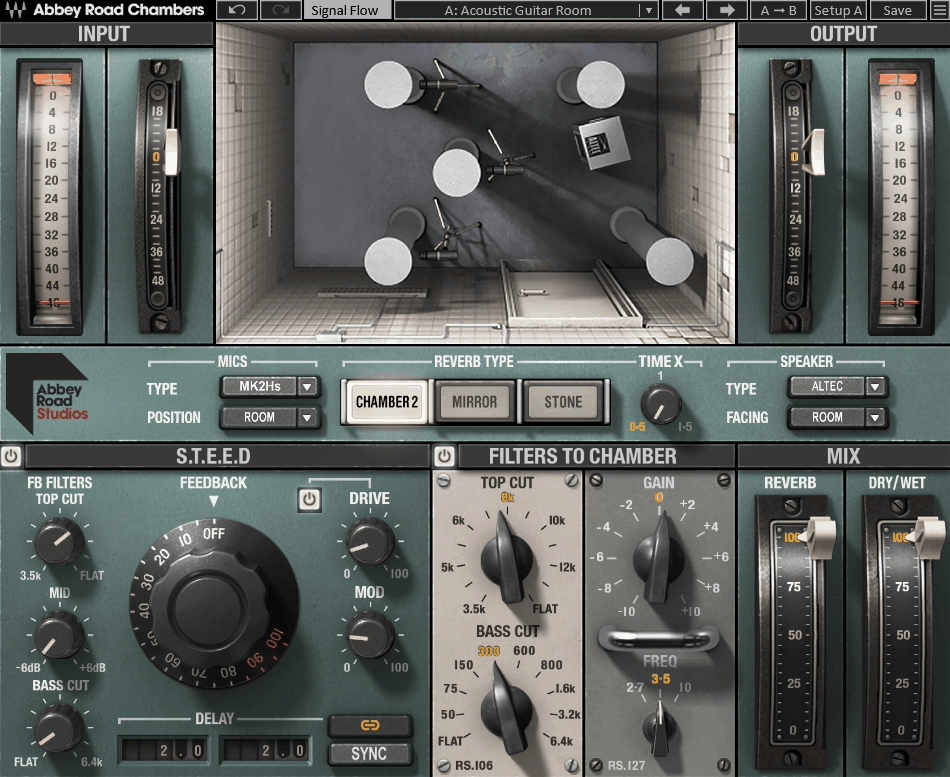
Abbey Road’s Studio Two echo chamber is the space you hear on Paul McCartney’s piano on “Birthday,” on George Harrison’s voice on “Everybody’s Trying to Be My Baby,” and in the pauses of “Paperback Writer.” What made Abbey Road’s Chambers particularly interesting wasn’t just the room itself but the S.T.E.E.D. setup that engineers developed there: Send, Tape, Echo, Echo, Delay, a feedback loop from the studio console through a tape delay through RS106 and RS127 EQs and back into the chamber.
- Three Rooms Including Mirror Room and Olympic Stone Room:
The main Chamber Two is the primary reverb, but the plugin also includes Abbey Road’s Mirror Room and the Stone Room from Olympic Studios in London. The Mirror Room is brighter and more reflective, while the Stone Room has a grittier, earthier character.
- S.T.E.E.D. Tape Delay System:
The STEED tape delay runs up to 500ms and can be used before, with, or entirely without the chamber reverb. It has its own EQ section with top-cut, bass-cut, and midrange boost/cut controls that apply within the feedback loop.
A Drive and Mod control affect the tape delay character. The feedback loop can extend the chamber’s natural decay time or create independent tape echo effects, which is how The Beatles’ engineers originally used it. You can isolate just the STEED effect, just the chamber, or use both together.
- Vintage and Modern Mic and Speaker Selection:
Chamber Two offers the original Altec 605 speaker and Neumann KM53 tube microphones from the 1960s sessions, plus a Bowers & Wilkins 800D speaker option and Schoeps MKH-2 modern microphone alternative.
The speaker choice has a dramatic effect on frequency character, with the Altec giving reduced low end for a more focused vintage sound and the B&W providing a more full-range hi-fi reverb character.
Both the mic and speaker positions are adjustable within the chamber.
- EMI RS106 and RS127 Preamp EQs:
Abbey Road engineers always ran signal through EMI’s RS106 high/low pass filter and RS127 Presence EQ before it reached the chamber, a technique that shaped how the reverb interacted with the source material.
The plugin models both these EQs in the signal path, letting you apply the same frequency shaping before the chamber that the original engineers used on hit recordings.
5. Eventide SP2016
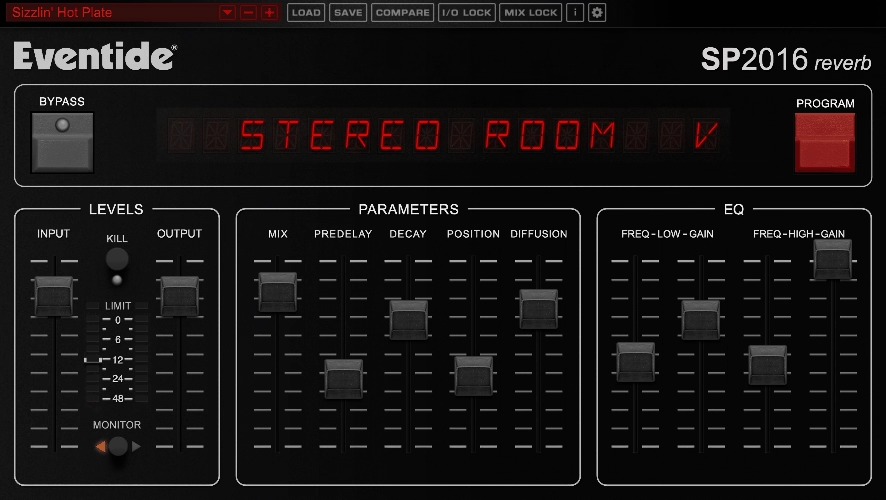
In 1982, the SP2016 became the world’s first programmable effects processor and introduced the concept of the hardware plug-in, cards that expanded its capability. It also happened to produce three reverb algorithms, Room, Stereo Room, and Hi-Density Plate, that music engineers have reached for on everything from Talking Heads to Mariah Carey to Eminem for over four decades. Eventide SP2016 packages all three algorithms in both Vintage and Modern versions, giving you six reverbs total.
- Three Algorithms in Vintage and Modern Versions:
The six available reverbs are Room (mono in, stereo out), Stereo Room (fully stereo), and Hi-Density Plate, each in Vintage and Modern variants. The Vintage versions faithfully replicate the original hardware including its lower bit-depth, which produces a warmer, more character-laden tail. The Modern versions are brighter, more diffuse, and run at higher bit-depth for a cleaner, more contemporary sound.
- Position Control:
The Position slider is the SP2016’s defining mixing tool. It adjusts the balance between early and late reflections, simulating moving a listening position from the front to the back of the virtual room.
- Kill Button:
A dedicated Kill button mutes the input signal while the reverb tail plays out, letting you audition just the reverb decay without the dry signal. This is a practical mix tool that most reverb plugins don’t include. It lets you assess the reverb tail’s quality in isolation, check for metallic artifacts, and evaluate density without the source material obscuring what you’re hearing.
- Artist Presets from Mick Guzauski and Dave Pensado:
The plugin includes presets designed by Dave Pensado, Richard Devine, Joe Chiccarelli, George Massenburg, and Mick Guzauski, among others. These are engineers and producers who used the hardware SP2016 on landmark recordings and know exactly what the plugin should do in real session contexts. They represent a practical shortcut to settings that work rather than generic preset names.
- Low CPU:
The SP2016 is notably lightweight on CPU, which means you can run multiple instances simultaneously without significant performance impact.
6. SoundToys SuperPlate
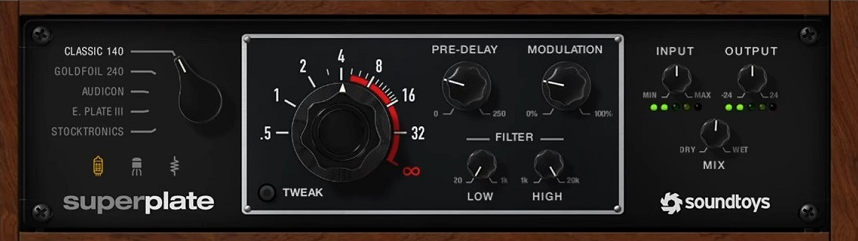
For over five years after releasing Little Plate, Soundtoys made their user base wait for the full version. When SuperPlate finally arrived in 2023, it was worth the wait. Five historical plate reverb models, three preamp flavors, a four-band EQ, an Auto-Decay system, and infinite decay capability, all packaged in Soundtoys’ characteristically considered interface design.
- Five Plate Models:
SuperPlate models the EMT 140 (the most famous plate reverb, the benchmark for the entire category), the EMT 240 (which used stretched 24-karat gold foil instead of steel, producing a darker and tighter sound), the Audicon (the Nashville standard), the EcoPlate III (bright and spacious), and the Stocktronics RX4000 (a rare Swedish unit with pronounced high-frequency response). Each was measured from actual hardware and produces genuinely distinct tonal characteristics.
- Three Preamp Flavors:
SuperPlate models the EMT V54 tube preamp (the original preamp in early EMT 140 units, adding harmonic saturation), the EMT 162 solid-state preamp (later versions, which also include a built-in compressor for taming transients on the way into the plate), and a Clean mode that bypasses preamp coloration entirely for a neutral reverb character.
These can be mixed with any of the five plate models, giving you 15 base combinations before you adjust a single other parameter.
- Auto-Decay:
The Auto-Decay feature automatically shortens the reverb tail when the input signal exceeds an adjustable threshold. A Target decay time and a Recovery control determine how short the tail gets and how quickly it returns to the original Decay setting when the signal drops again.
- Infinite Decay and Extended Size:
Unlike physical plate reverbs, which have maximum decay times determined by the plate’s physical properties, SuperPlate extends to infinite decay and the Size control can be pushed to 200% of nominal plate size, taking the reverb into territory that no real plate could produce. This is how SuperPlate becomes useful for ambient music and experimental applications far beyond conventional plate reverb duties.
7. Softube Atlantis Dual Chambers
If Capitol Chambers represents Hollywood and Hitsville represents Detroit, Atlantis represents Stockholm, and it has an equally remarkable client list. ABBA recorded at Atlantis Studios.
So did Roxette, The Hives, The Cardigans, Ghost, Robyn, Max Martin, Green Day, Quincy Jones, and Lenny Kravitz.
The two chambers at Atlantis are what makes the studio acoustically unusual: they were originally built when the space was converted from a cinema, and their angled enclosures and unusually hard walls produce bright, airy echoes with long decay times, a distinct character that’s brighter and more modern-sounding than most vintage chambers.
- Two Independently Configurable Chambers:
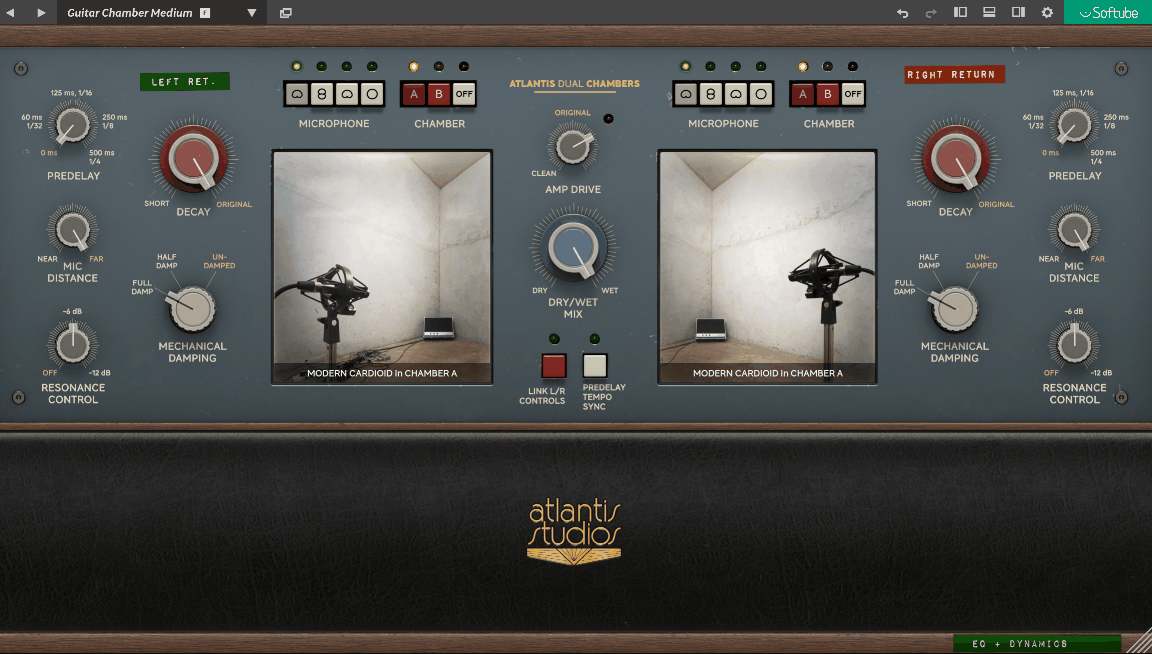
The plugin provides Chamber A and Chamber B, each usable independently or simultaneously, with completely different microphone and speaker settings possible per chamber.
- Four Microphones with Distinct Polar Patterns:
The plugin includes four microphone choices: the Swedish Line Audio CM2 modern cardioid, the vintage RCA 77 DX ribbon in figure-eight mode, a Neumann U47 vintage tube cardioid, and an Electro-Voice RE55 omnidirectional dynamic. Each has a different polar pattern and frequency character. The four mics were captured in their original Atlantis positions. Softube’s documentation notes that the CM2 is the Atlantis crew’s preferred choice for its balanced frequency response, while the ribbon brings a different spatial quality.
- Mechanical and Algorithmic Decay Control:
Softube captured the chambers with progressively more acoustic damping material placed inside, recording each stage separately. This means reducing the decay time isn’t just algorithmic processing. It’s a real acoustic change with corresponding changes to the room’s top end and character.
An additional algorithmic decay control further shortens the response while maintaining the chamber’s brightness. Bobby Owsinski’s review highlighted this as making any needed sound or decay time achievable without compromising the room’s essential character.
- Dynamics Section with Compression, Ducking, and Gate:
A full Dynamics section lets you compress, duck, or gate the reverb signal, with adjustable Amount (threshold) and Release controls. This is a built-in tool that eliminates the need for an external compressor or gate plugin on the reverb return. Ducking keeps the reverb from washing over the dry signal during dense passages. Gating creates rhythmic reverb effects. Compression evens out the reverb’s dynamic envelope.
- Resonance Control:
A Resonance control tames room resonances that certain source materials excite in the chambers. Real physical rooms have frequencies they respond to more strongly, and those can become distracting when processing material that hits those resonant frequencies. The Resonance control reduces these without altering the fundamental chamber character.
- Gold Settings for Original Atlantis Configurations:
A set of Gold Settings markers on the controls indicate the exact parameter positions used at Atlantis Studios in actual sessions. This gives you an immediate reference point for historically accurate chamber use before you begin any creative modifications.
8. UAD Hitsville Reverb Chambers
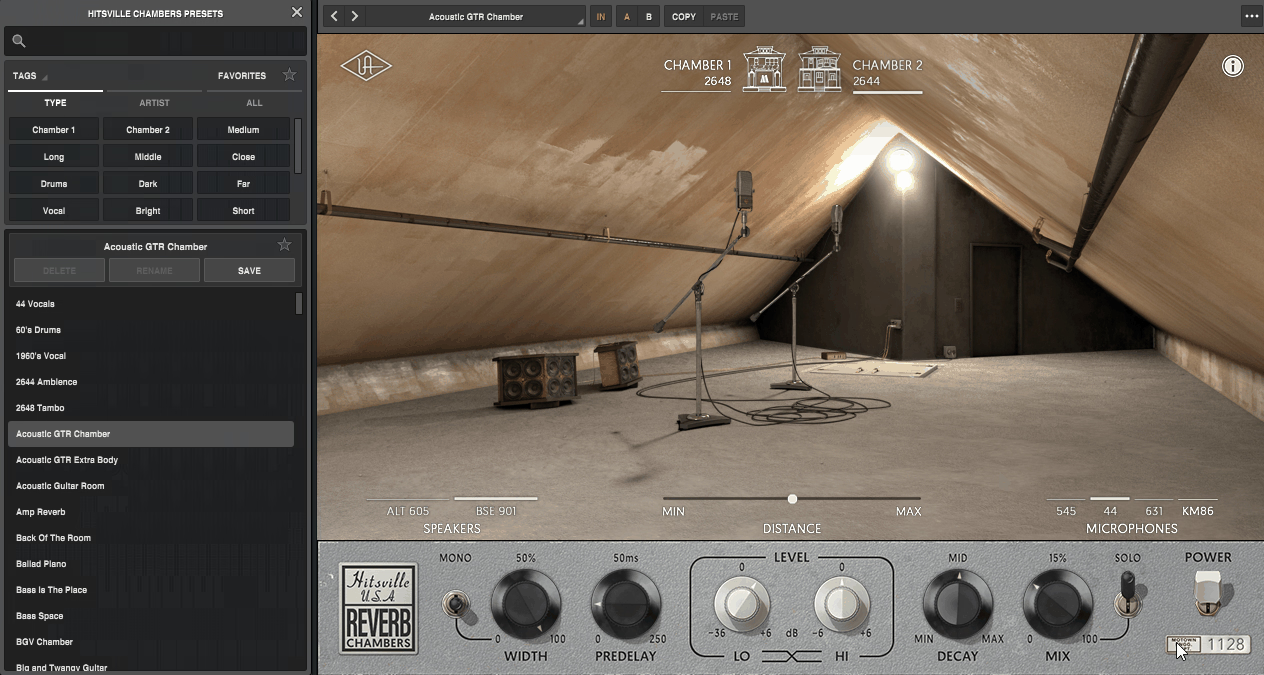
In 1959, Berry Gordy converted the attic of the Hitsville USA building in Detroit into a reverb chamber. It wasn’t a sophisticated operation: a concrete slab floor, plastered walls sealed with shellac, speakers placed directly on the floor aimed at corners, and microphones positioned behind them. But something about those rooms worked.
The Motown Sound that defined R&B and soul for decades was shaped in those two attic chambers. Hitsville Reverb Chambers from Universal Audio captures both rooms, officially licensed by the Motown Museum, and built in collaboration with John Windt, who actually constructed the original chambers and the later second chamber at 2644 West Grand.
- Two Distinct Chambers:
The plugin emulates Chamber 1 at 2648 West Grand (the original attic chamber with its rougher, more idiosyncratic construction) and Chamber 2 at 2644 West Grand (the more sophisticated later design with non-parallel surfaces, thicker walls, and harder plaster).
These two rooms have different characters that are audible even without detailed analysis. UA’s documentation notes that Hitsville was specifically designed to blend into recordings rather than be heard as obvious reverb, which is reflected in how the plugin behaves in a mix.
- Four Microphone Pairs
Each chamber offers four stereo microphone pairs and a choice of Bozak 8000 or JBL 2482 speakers (with Altec and Bose driver options for specific frequency characteristics).
The Hi and Lo controls function as a tilt-style EQ tied to the speaker modeling, adjusting the gain of low and high frequency components through the speaker model rather than a standard EQ. This means EQ adjustments affect the reverb’s tonal character in the way a real speaker swap would.
- Dynamic Room Modeling for Real-Time Mic Repositioning:
UA’s Dynamic Room Modeling enables real-time microphone repositioning within the chambers. Moving the virtual microphones changes proximity character, early reflection density, and overall reverb length without the static limitation of a fixed impulse response.
9. Analog Obsession Room041 (Free)
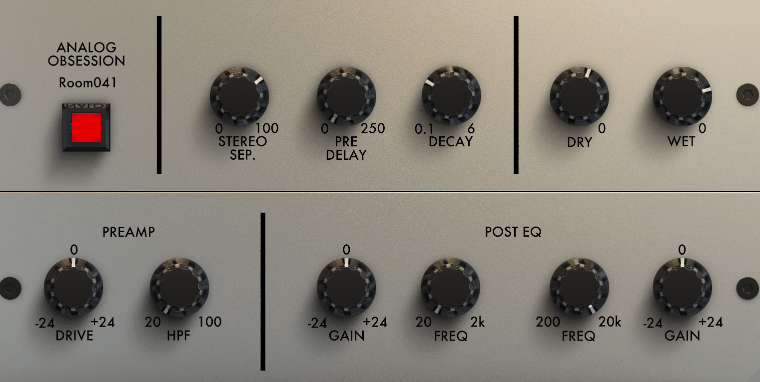
Most free reverb plugins exist to demonstrate what you’re missing in the paid version. Room041 from Analog Obsession exists because Analog Obsession makes their plugins free on Patreon. The quality is not free-tier quality.
- Tube-Based Input Drive (+/-24dB):
The Preamp section’s Drive knob adds +/-24dB of tube-modeled saturation before the reverb, going from clean and transparent at -24 to genuinely dirty and colored at high positive values. This is an unusual feature in a reverb plugin and it changes the harmonic character of what enters the reverb algorithm, not just the output level.
- Pre-Filter and Two-Band Post-EQ:
An HPF pre-filter sweeps from 20 to 100Hz to remove sub frequencies before they enter the reverb. The Post EQ section has Low and High bands with +/-24dB of gain and sweepable frequencies (20Hz to 2kHz for Low, 200Hz to 20kHz for High), giving you substantial tonal control over what the reverb outputs. The combination of pre-filter and post-EQ means you can cut the mud going in and shape the tone coming out, which is proper reverb signal chain practice.
- Stereo Separation
Stereo Separation controls the mono to stereo width of the reverb return, and Pre-Delay extends from 0 to 250ms, covering the useful range for both tight ambience and rhythmically placed reverb tails. The plugin is resizable from 50% to 200%, and a gain-compensated Drive was added in version 1.1 following user feedback about level inconsistency at different Drive settings.
10. IK Multimedia CSR Plate
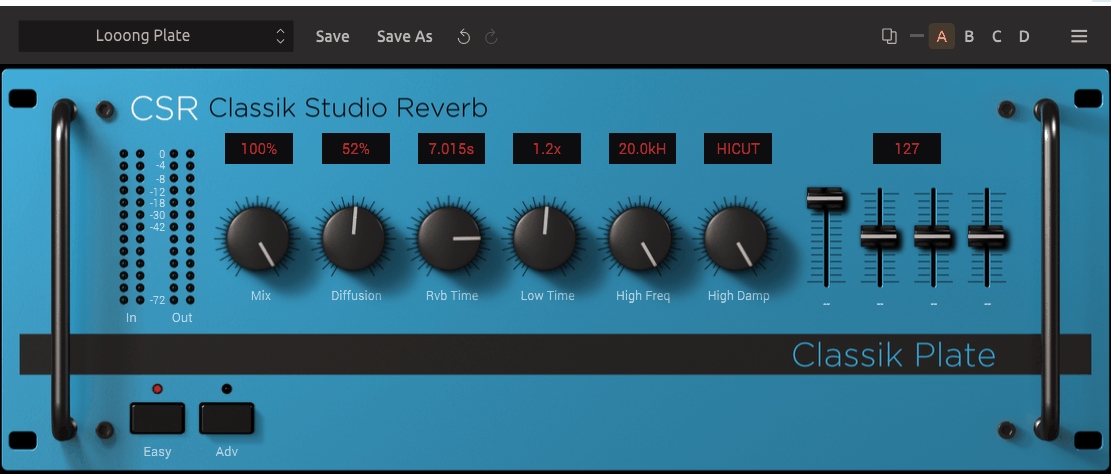
Before Valhalla Plate, before SuperPlate, before most of the modern plate reverb plugins that dominate conversations today, there was the IK Multimedia CSR Plate. It’s been in production for over a decade and engineers who discovered it early still reach for it.
The developer used a physical model approach, simulating the actual electromechanical behavior of a piezoelectric plate reverb including the metal sheet dimensions, damping characteristics, and pickup position.
- Physical Model of Electromechanical Plate:
Unlike IR-based plate emulations, CSR Plate uses a physical model that simulates the actual behavior of a suspended metal plate, including the interaction between the electromagnetic driver, the plate material, the piezoelectric pickups, and the acoustic damping system. B&H Photo’s description notes you can adjust the plate’s “length, thickness, dampening factor, and the position of the Piezo pickup,” which are real parameters of the original hardware’s behavior rather than abstract reverb controls.
- Easy and Advanced Modes:
The plugin offers two operating modes: Easy mode shows only the most critical parameters (Mix, Diffusion, Reverb Time, Low Time, High Freq, High Damp) for fast session use, and Advanced mode exposes more than 50 reverb parameters including a flexible modulation matrix, two internal LFOs, two envelope generators, and configurable Macro controls.
- Macro Controls:
The Macro system lets you assign up to eight parameters to a single slider, so you can set up global controls that simultaneously adjust multiple related settings. For example, a single Macro could control Reverb Time, High Damp, and Modulation Rate together so that “shorter and darker” is one fader pull rather than three separate adjustments. This is a workflow feature that makes complex reverb relationships practical to manage in a real session.
- Low CPU and Native Compatibility
11. Eventide Tverb
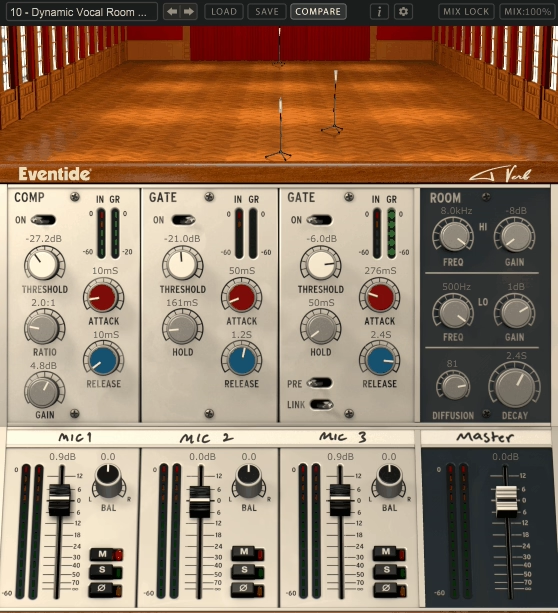
The David Bowie “Heroes” vocal setup is one of the most discussed and imitated studio techniques in rock history. Tony Visconti placed three microphones in the Meistersaal at Berlin’s Hansa Studios: a close mic with compression, and two more mics at increasing distances into the room with gates set to open progressively as Bowie’s performance intensity built. Only the close mic captured the quieter verses. All three opened on the biggest emotional peaks of the song.
Tverb models the Meistersaal algorithmically and recreates the full three-mic setup with full control over the position and dynamics of each virtual microphone.
- Hansa Meistersaal Room Model:
Tverb algorithmically models the Meistersaal at Hansa Studios in Berlin, the orchestral concert hall where Bowie’s “Heroes” vocal was recorded.
- Three Moveable Virtual Microphones:
The plugin includes one fixed close mic and two room mics that can be repositioned in real time within the virtual Meistersaal graphic. Moving the room mics changes their pre-delay, early reflection character, and the amount of room reverb they capture.
- Compressor on Mic 1 and Gates on Mics 2 and 3:
The close mic has a VCA-style compressor with switchable polar pattern (omni, cardioid, figure-8). The two room mics each have independently adjustable gates with Threshold, Attack, Release, and Hold controls, which can also be linked together or keyed from Mic 1’s signal level. This is the heart of Visconti’s technique: the gates restrict room reverb to only the loudest moments of the performance, creating a dynamic reverb that grows with the intensity of the source.
12. Waves Abbey Road Reverb Plates Plugin
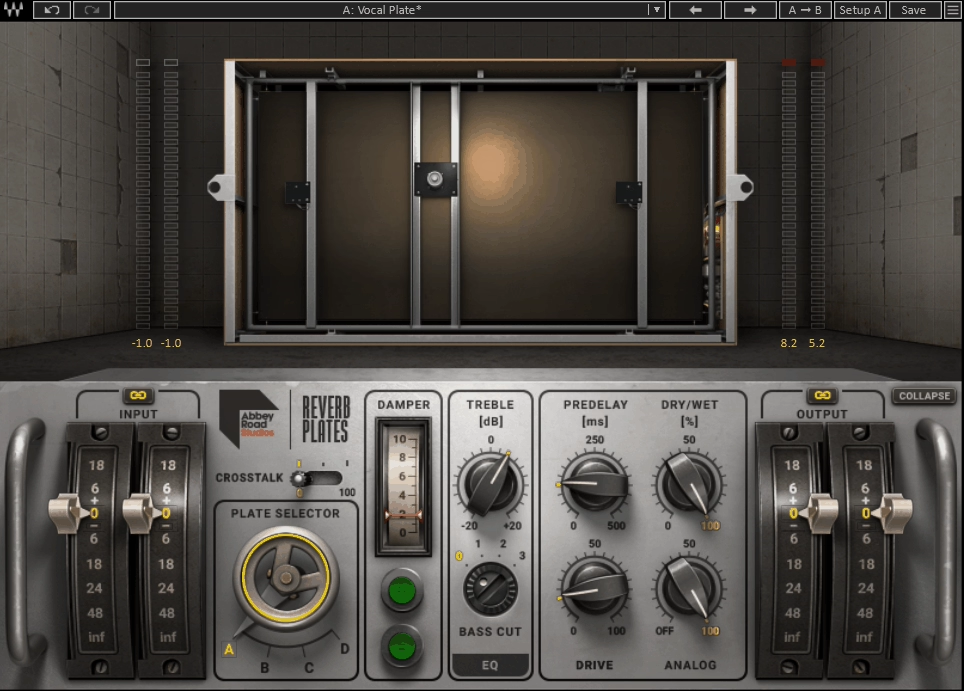
Four EMT 140 plates have been in service at Abbey Road Studios since 1957. Three of them were modified by EMI’s Central Research Laboratories with custom hybrid solid-state drive amps to reduce noise. The fourth is fully tube-powered with a warmer, more colored character.
Reverb Plates models all four in a single plugin, including the specific harmonic distortion of each unit’s electronics and the acoustic behavior of each individual plate.
- Four Individual Abbey Road EMT Plates:
The plugin models Plates A, B, C, and D from Abbey Road’s collection, each with different sonic character. Plate A is large and expansive. Plate B is brighter and tighter. Plate C moves further still toward brightness and definition. Plate D, the tube-powered unit, has a warmer, richer character with more low-midrange depth. A plate selector switches between them.
- Damper Position with 11 Settings:
Real EMT 140 plates used a mechanical damping system: a fiberglass panel hung parallel to the plate that reduced reverb time by restricting plate vibration. Waves models this with 11 damper positions that change the reverb decay time from approximately 1 to 5.4 seconds depending on the plate selected, matching the behavior of the original mechanical damping adjustment that engineers used to set reverb time on real sessions.
- Drive and Analog Controls:
The Drive control models the harmonic distortion of the input and output amplifiers and the plate’s own transducer behavior at higher signal levels. Increasing Drive adds analog warmth and saturation that reflects how the original electronics behaved when pushed. The Analog control adds hum and hiss characteristic of the hardware, from undetectable amounts to clearly audible vintage noise floor.
- Bass Cut and Treble Controls:
A Bass Cut operates on the drive circuit to reduce low-frequency energy before it enters the plate modeling, modeled from the EMT’s own bass reduction circuitry. The Treble control is a high-shelf filter derived from the classic EMI console design, allowing brightness adjustments that match how Abbey Road engineers used the console EQ in conjunction with the plates. Production Expert’s review highlighted these as tools that make the reverb “very easy to use” in practical sessions.
- Pre-Delay with Up to 500ms:
A Pre-Delay control extends up to 500ms, well beyond what a physical plate could achieve (since a real plate had effectively zero pre-delay, the reverb starting immediately when signal entered). This modern addition is what makes the plugin practical for mixing situations where a pre-delay rhythmically positions the reverb tail relative to the beat.
13. IK Multimedia CSR Room Reverb
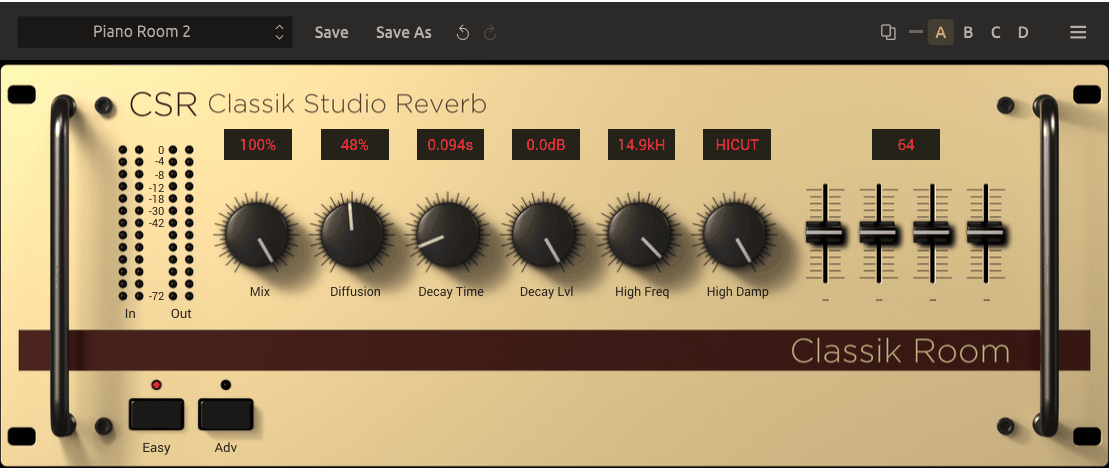
Algorithmic room reverbs are harder to do convincingly than plates or halls. A room is defined by its early reflections, and early reflections are specific, complex, and revealing of bad modeling in a way that diffuse reverb tails are not.
IK describes its purpose precisely: to “dress a dry, close-mic recorded source in a natural ambience that won’t make it sound like an artificial reverb, but as it was actually recorded in a real room.” This is a specific and genuinely difficult goal, and the CSR Room achieves it in a way that earns its reputation with engineers who’ve been using it for more than a decade.
- Early Reflections Focused Algorithm:
The CSR Room’s algorithm prioritizes early reflection accuracy, which is the hardest part of room reverb modeling to get right.
- Easy and Advanced Mode with Macro Controls:
Like the CSR Plate, Room offers Easy mode for quick session use and Advanced mode with over 50 accessible parameters including High and Low frequency decay times, diffusion, early reflection level, and a Macro system that maps multiple parameters to single faders.
- Low CPU Overhead
- Suitable for Acoustic Instruments and Percussion:
IK specifically names acoustic guitar and percussion as the primary use cases for CSR Room, and both work particularly well because the plugin excels at short-to-medium decay times with convincing early reflections.
14. Valhalla Plate
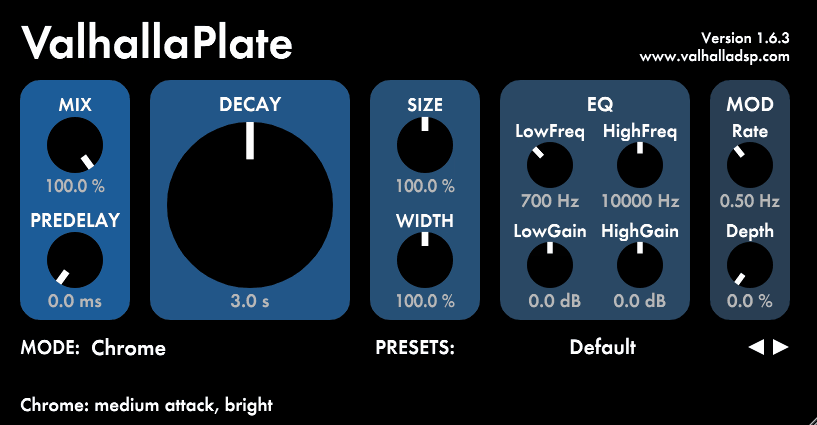
Valhalla Plate is Sean Costello’s take on the plate reverb family, and it’s characteristically excellent and characteristically affordable at $50. Twelve algorithms provide different plate “flavors” including Chrome, Steel, Brass, Titanium, Osmium, Radium, Aluminum, and the fictional Unobtanium, each named after a metal and each with a genuinely different attack character, tonal color, and density.
- Twelve Mode Algorithms:
The twelve modes span the range from Chrome (neutral, fairly bright, good starting point) to Steel (similar but darker), Brass (sharp attack, unusual punchy character), Osmium (picks up snare body beautifully), Radium (wonderfully unobtrusive, sits back in the mix), Aluminum (high modal density that can sound chamber-like at large size settings), and Unobtanium (bright and wide, excellent for synths). Valhalla’s own documentation notes that some modes are inspired by specific real-world plates including an EMT 140 measured at Avast Recording in Seattle.
- Size Control Beyond Physical Limits:
The Size control ranges from 0% to 200%, with 100% being the default physical plate size. Below 100% the reverb becomes smaller and tighter. Above 100% it exceeds what any real plate could produce, moving the reverb into chamber-like territory at large settings.
- Extended Decay and Predelay:
Decay spans from 0.5 to 30 seconds, far beyond the physical limits of real plate reverbs, and Predelay extends to 500ms. This means Valhalla Plate can function as a long ambient reverb using plate character as the tonal basis, rather than being constrained to the relatively short decays that real plates produce.

Hello, I’m Viliam, I started this audio plugin focused blog to keep you updated on the latest trends, news and everything plugin related. I’ll put the most emphasis on the topics covering best VST, AU and AAX plugins. If you find some great plugin suggestions for us to include on our site, feel free to let me know, so I can take a look!