Kontakt libraries either help you solve real production problems or just end up taking space on your hard drive. What really matters is whether a library speeds up your workflow, offers unique sounds, or helps you finish tracks without making you dig through menus or deal with complicated interfaces.
I’ve tested Kontakt libraries in different production situations to see which ones really deliver, not just those with lots of samples or flashy marketing. What counts isn’t the biggest file size or the longest list of features. It’s about whether the library gives you playable instruments, useful presets, and tools that fit smoothly into your creative process without slowing you down.
The best Kontakt libraries aren’t always the most popular ones. The right choice depends on your production needs, like building cinematic textures, programming realistic drums, layering ethnic instruments, or making evolving soundscapes without using a bunch of plugins. Some libraries focus on performance and articulation, while others are all about sound design and atmosphere. A few stand out by offering ready-to-use patterns and phrases that sound musical right away.
This list includes libraries like Heavyocity Gravity 2, Native Instruments Ashlight, Studio Drummer, Noire, and others, each designed for different production challenges. Some are great for cinematic scoring, while others are better for orchestral work, bass, guitar, piano, or hybrid sound design. I’m not trying to pick a single ‘best’ library, since the right choice depends on what you’re making and how you like to work.
Over the past few days, I loaded these libraries into real sessions to see which ones handle sound design, performance, and workflow smoothly, without extra complexity or heavy CPU use. Here’s what I found:
| Plugin Name | Best For | Engine Type | Key Strength | Verdict | Pros | Cons |
|---|---|---|---|---|---|---|
| 1. Heavyocity Gravity 2 | Cinematic textures, hybrid sound design, rhythmic beds | Designer & Menu Engines, Multi-Layer Mixer | Layered sound sculpting, tempo-synced transitions, integrated FX chain | Best All in One Scoring tool | Extensive sound library, real-time macro modulation, minimal plugin juggling | Steep learning curve, can crowd mix if unmanaged |
| 2. Kithara (Native Instruments & Audio Imperia) | Expressive cinematic guitars, hybrid textures | Four-Layer Sound Engine, Fragments Granular Motion | Granular layering, independent control, performance nuance | Best Hybrid guitar textures with expressive layering | Velocity-sensitive layers, curated FX, over 21 GB of playable samples | Not optimized for realistic single-note rock guitar, large sample footprint |
| 3. Native Instruments Ashlight | Evolving granular atmospheres, cinematic soundscapes | Granular & Sample Layer Engine, Arpeggiator, FX Section | Real-time granular manipulation, dual-layer textures, self-contained FX | Deep, Dark & immersive cinematic textures | Flexible sample import, granular modulation, live texture evolution | Complex interface, can dominate mixes without careful EQ |
| 4. Native Instruments Studio Drummer | Realistic acoustic drum programming, live grooves | Multi-Kit Sampler with Integrated Mixer | Velocity layers, articulations, detailed mic control | Best acoustic drums | Extensive groove library, detailed kit control, realistic dynamics | Less suited for experimental electronic styles, MIDI patterns may need adjustment |
| 5. Native Instruments Noire | Concert & felt piano, cinematic and experimental textures | Dual Instrument (Pure/Felt), Particles Engine, Built-in FX | Dual tonal character, evolving textures, expressive control | Best Expressive Piano | Extensive articulation control, motion-sensitive particle textures, self-contained FX | Particles engine can be busy in dense mixes, high learning curve |
| 6. Native Instruments Schema: DARK | Dark cinematic pulses, evolving rhythmic textures | Four-Layer 16-Step Sequencer, Loop Variants, FX | Layered rhythmic motion, tempo-synced playback, step-level control | Best evolving cinematic rhythms | Randomization, multiple loop variants, full sound design integration | Primarily cinematic focus, less suited for standard drum/EDM patterns |
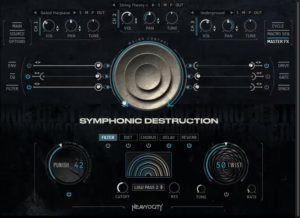
| 7. Heavyocity Symphonic Destruction | Hybrid orchestral, high-impact cinematic scoring | SD Designer Engine, Layered Braams & Pedals, Tempo-Synced Loops | Dynamic layering, hybrid orchestral manipulation, integrated sound design | Best Hybrid orchestral tool | Layered orchestral and hybrid content, tempo-synced rhythmic motifs, playable presets | Aggressive style not ideal for subtle orchestration, complex engine |
| 8. Native Instruments Session Strings 2 Pro | Expressive pop, R&B, cinematic strings | Ensemble Engine, Smart Voice Split & Chord, Phrase & Rhythm Animator | Dynamic articulations, realistic legato, customizable ensembles | Production-ready, responsive string ensembles | Flexible section control, extensive articulations, tempo-synced phrases | CPU-heavy with full ensemble, requires careful polyphony management |
| 9. Native Instruments Spotlight Collection: East Asia | Authentic ethnic instruments, cinematic/world music textures | Kontakt Multi-Instrument Engine with Key Switch Mapping | Tempo-synced percussion, expressive melodic instruments, ensemble layering | Best Ethnic Asia Instrument | Playable presets, layered ensembles, KOMPLETE KONTROL integration | Some instruments have limited range, may require processing for modern pop/EDM |
| 10. Native Instruments Lores | Rare ethnic instruments, evolving cinematic soundscapes | Kontakt Layering & Blending Engine, Multi-Mic Recording | Performance articulations, layered textures, spatial realism | Playable cinematic textures | Multi-mic depth, over 300 articulations per instrument, built-in FX | Large 72.3 GB library, requires high RAM and storage |
| 11. Native Instruments Session Bassist: Jam Bass | Electric bass performance, multi-genre grooves | Dual Pickup Sample Engine, Pattern & Solo Modes | Articulated bass patterns, dynamic phrases, tonal blending | Studio-ready, playable electric bass | Pattern versatility, expressive articulations, integration with Guitar Rig 7 | Limited to four-string bass, complex layering may increase CPU load |
| 12. Native Instruments Session Guitarist: Electric Mint | Vintage electric guitar, strummed & picked patterns | Kontakt Multi-Pattern Engine, Dual Performance Mode | Pickup blending, comprehensive articulations, built-in effects | Expressive, versatile electric guitar library | Pattern library, song presets, integrated amp/effects, dual mode for live/midi | Single guitar model, less suitable for other electric guitar tones |
| 13. Native Instruments Session Horns Pro | Playable contemporary horn arrangements, pop, jazz, cinematic | Multi-Instrument Engine with Animator & Mixer | Realistic articulation, pre-arranged riffs, section flexibility | Workflow-optimized horn library | Smart voice-splitting, built-in mixer/effects, Animator for complex phrases | Less suited for classical orchestration, requires learning curve for hybrid textures |
1. Heavyocity Gravity 2 – Best All in One Scoring tool
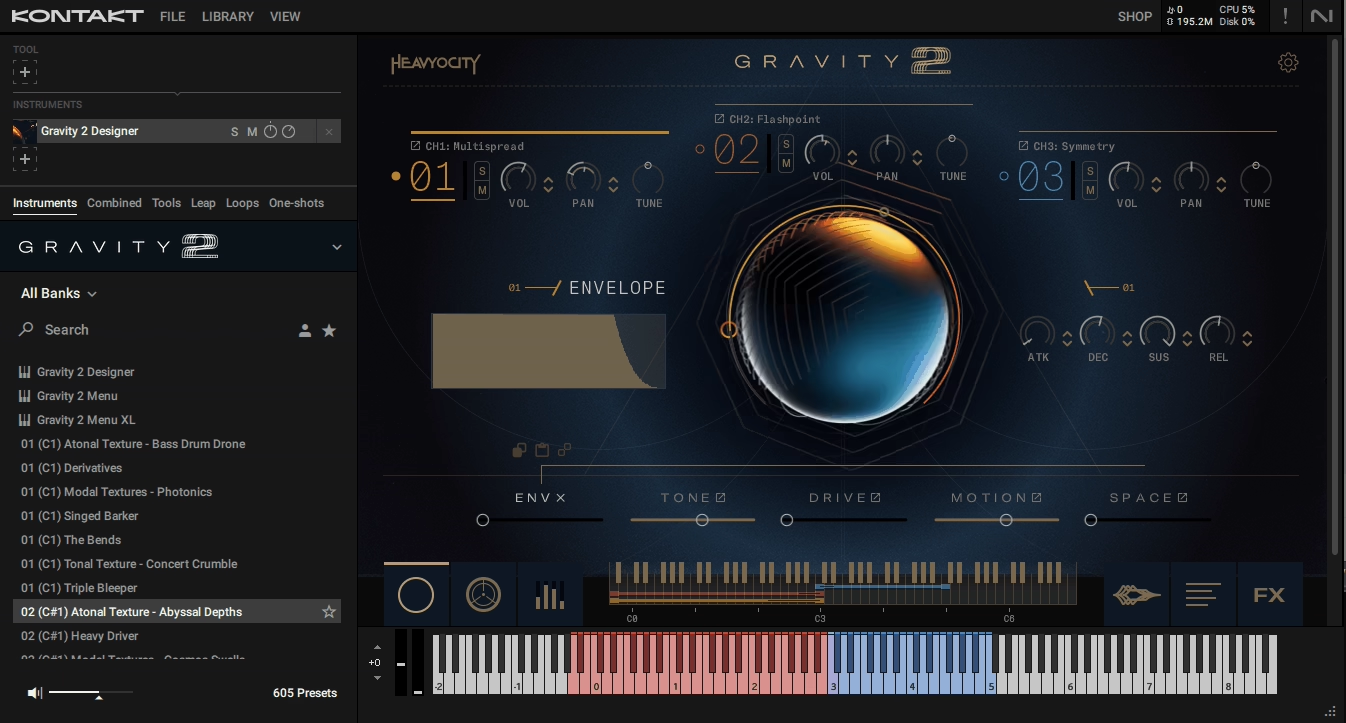
Creating cinematic music usually means using lots of plugins, effects, and spending hours layering sounds to get a dynamic texture or rhythm. Most Kontakt libraries just give you presets and expect you to handle sound design separately, which can interrupt your creative flow when you want to build tension or unique textures. Gravity 2 is a cinematic scoring engine made for producers who want to create layered textures, rhythmic beds, and dynamic elements without needing a bunch of different plugins.
What makes this tool practical is its workflow. Instead of putting everything into one interface, it offers different engines for different creative needs. The Designer engine is for detailed sound shaping, while the Menu engines focus on speed and easy browsing when you need quick results.
This is important because cinematic work often needs both options. Sometimes you want to build something from scratch with full control, and other times you just need quick inspiration.
The library focuses on hybrid sound design instead of traditional melodic instruments. This means you get material that sits between music and pure sound design.
Here is what you get:
- More than 1,000 sound sources in five categories
The library offers 144 multisampled rhythmic pedals with both straight and triplet feels that sync to your project tempo. There are 137 textures covering tonal, atonal, and modal sounds, from harmonic pads to eerie atmospheres. You also get 252 stings for single hits and hybrid noises, 324 tempo-synced transitions like rises, swells, and reverses, and 144 impacts with full, sub, mid, and tail layers.
These are not just random loops. They are carefully organized building blocks, and you also get over 600 custom presets to use as starting points.
- Menu and Menu XL: Preset-Driven Workflow
Menu lets you load 36 sound sources, and Menu XL increases that to 72. You can quickly try out, browse, and trigger complex combinations without building them from scratch. Both versions let you spread a sound across the keyboard so it can be played melodically, which is helpful when you want a texture to work as a pad or drone.
This setup is great when you need quick hits or accents. Mapping textures across the keyboard makes them feel like playable ambient pads, and you don’t need extra programming.
- Designer Engine: Build Layered Sounds
You can load three different sound sources into sub, mid, and tail slots, treating them like layers in a hybrid synth. Each channel has its own controls for envelope, filter, distortion, motion, and space, including reverb and delay.
A Macro knob lets you control several parameters at once, and the built-in mixer allows you to automate volume, panning, and even randomization. This is a powerful way to shape a sound from scratch, letting you create textures that change or react over time without needing extra effects.
- Integrated Mixer and Master FX Chain
The three-channel mixer offers automation, Drift for subtle changes, and Scatter for random textures. There’s also a master effects section with EQ, compression, modulation, delay, reverb, and Punish distortion. This lets you shape your final sound without needing your DAW’s effects, so you use fewer plugins and keep your sessions organized and efficient.
- Tempo-Sync Integration Throughout
Transitions and pedal loops automatically match your song’s tempo, so you don’t have to adjust them by hand. The rhythmic pedals can be used as evolving beds or pulse elements that stay in sync with your project’s BPM.
This saves you a lot of time since you don’t need to stretch or warp samples to fit your arrangement. The transitions are made to blend smoothly, so building tension feels natural.
2. Kithara by Native Instruments & Audio Imperia – Best Hybrid guitar

Most guitar libraries either let you play realistic single notes for rock and pop, or they offer static loops that don’t respond to your playing.
What’s missing is a tool made for cinematic and hybrid production, where guitars and plucked instruments become evolving textures, atmospheric backgrounds, and expressive layers instead of just strumming patterns.
The Kithara Kontakt library fills this gap. Developed with Audio Imperia, it captures instruments like classical and flamenco guitars, balalaika, cuatro, ronroco, mandolin, and other folk instruments, then reimagines them as playable, multi-layered sounds for modern production.
What sets this library apart is its workflow. Instead of making you piece together several instrument instances and external effects to get depth and motion, the engine handles layering, granular movement, and atmospheric processing for you.
This matters because cinematic music needs textures that evolve naturally, not just static sounds. Traditionally, you’d have to stack plugins and automate many parameters to achieve this.
The main practical benefit is speed. You can create everything from delicate plucks to immersive pads and complex hybrid layers without leaving Kontakt, so your creative flow isn’t interrupted. The library includes over 21 GB of samples.
- Four-Layer Sound Architecture with Independent Control
The Attack layer captures sharp, percussive plucks and marcato hits. Two Sustain layers add body and movement with textural loops, strummed beds, e-bow drones, or pad-like harmonies.
The Release layer activates as notes fade, adding natural string resonance or designed tails that connect phrases. You can assign each layer from over 350 sound sources, so you can create detailed hybrids or keep the sound simple.
- Fragments Engine for Granular Motion
This feature creates granular, fluttering ghost-note layers that float above the main sound. Instead of just layering static samples, Fragments adds random note movement and subtle harmonic changes, so textures evolve naturally. You can control velocity, pitch range, grain density, and motion shape, allowing for anything from gentle shimmer to active rhythmic movement.
- Character FX Tailored to Timbral Characteristics
The library includes effects made for Kithara’s unique sound. Degrade adds vintage warmth and subtle saturation like tape or lo-fi gear. Shatter brings distortion and edge for sharper hits or gritty textures. Diffuse creates soft, blurry pads and washed-out soundscapes.
These are not generic effects. They are designed for the instrument’s character, letting you turn organic sounds into atmospheric textures without leaving Kontakt.
- True Mapping and Flexible Modulation System
Dynamic mapping changes how layers respond across the keyboard, with modulation for velocity, aftertouch, panning, tuning, and a Tightness control for timing accuracy. This goes beyond fixed key mappings and adds real performance nuance, so the instrument feels expressive and you can shape sounds in real time.
- Over 300 Curated Presets with Smart Categorization
The library comes with over 300 curated presets, organized by style (bowed, plucked, textural, rhythmic), instrument type, and mood. This lets you start creating right away without having to build patches from scratch. The presets offer balanced layers and useful modulation as starting points for your own sound design.
3. Native Instruments Ashlight – Best Dark Textures
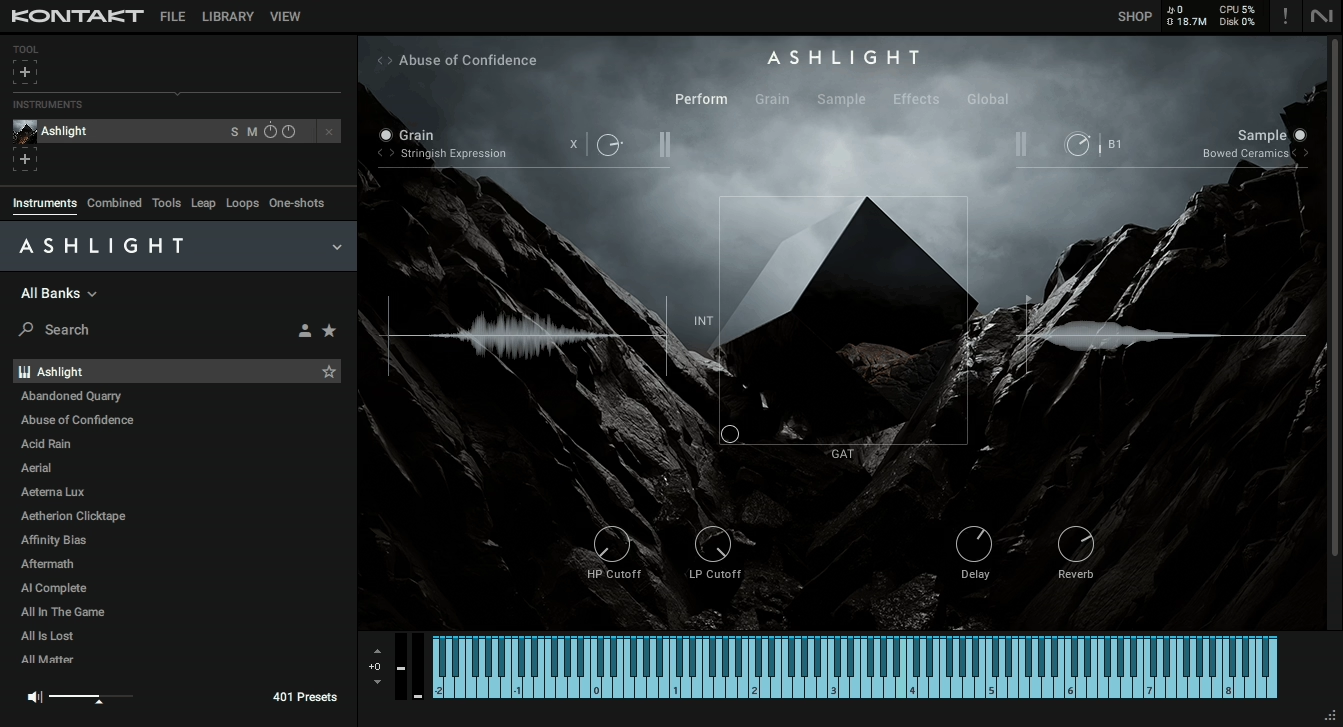
Ashlight is the last release in Native Instruments’ “Light Trilogy.” It stands out by blending granular synthesis with samples from unusual sources, creating dark, immersive textures you can play and shape in real time.
What makes this practical is how the engine handles both granular manipulation and sample layering internally rather than forcing you to build textures from scratch in your DAW, focusing specifically on cinematic atmospheres, tension, and hybrid soundscapes.
- Over 500 Unique Samples from Unusual Sources
Ashlight comes with samples recorded from bowed carbon, metal containers, waterphones, feedback cycles, cymbals, synth pulses, and field recordings. Each sample goes through a granular engine, letting you adjust grain size, density, pitch, and randomness to uncover new textures. I think this approach gives you material with real character, not just basic waveforms.
- Granular and Sample Layer Combination
The engine lets you layer grains and samples in real time, with control over attack, sustain, and release. The sample layer includes keys, glockenspiel, and synth pulses, which you can arpeggiate or combine with the granular engine for movement. I find this dual-layer setup lets you add harmony or melody while keeping the evolving textures below.
- Built-In Arpeggiator and FX Section
The arpeggiator adds rhythmic or melodic movement without needing extra MIDI programming. The FX section offers subtle modulation, reverb, and diffusion to add depth, so you don’t need outside processing. This keeps everything self-contained, letting you shape textures without leaving Kontakt or building complex effect chains.
- Sample Import for Custom Sound Creation
You can import your own samples, which the granular engine treats identically to built-in content. This enables you to transform any recording into cinematic texture, letting you repurpose field recordings or existing synth lines in unexpected ways. The flexibility means you’re not limited to the included library once you understand the engine.
- Real-Time Manipulation for Evolving Textures
Because the granular engine manipulates pitch, density, and texture in real-time, you can produce subtle motion or dramatic build-ups without programming multiple layers manually. You can automate grain density or pitch over a cue to create tension or motion, making the instrument feel alive and responsive rather than static.
4. Native Instruments Studio Drummer – Best acoustic drums
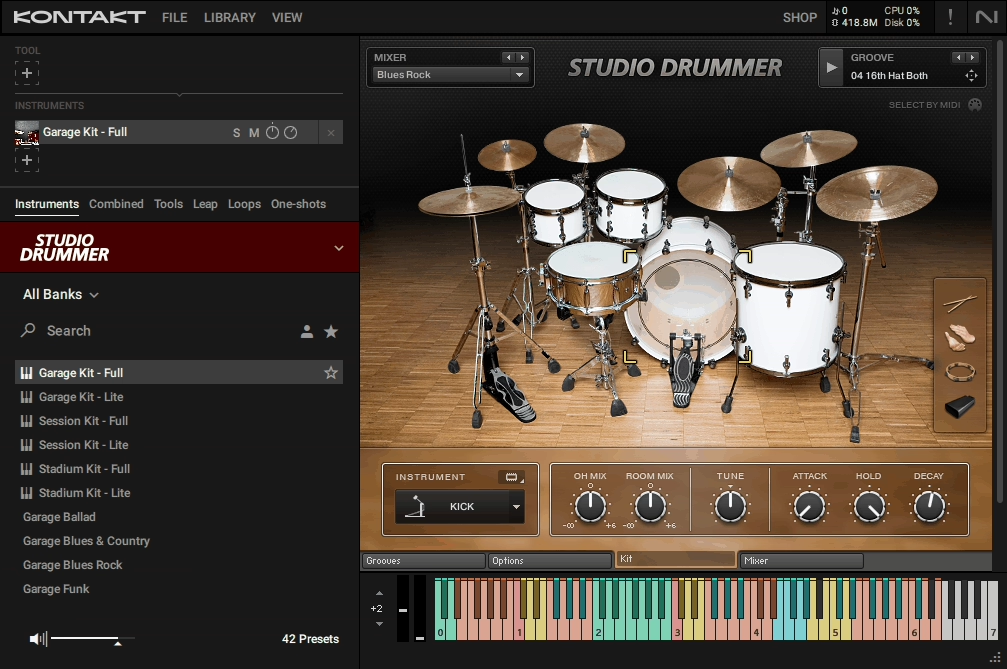
The team recorded at Teldex Studios in Berlin using top-quality microphones and equipment. This produced more than 17 GB of 24-bit samples, with up to 25 velocity layers for each drum and six different articulations for every element.
Studio Drummer drum library delivers a middle path by combining meticulously recorded kits with a deep groove library and a fully integrated mixing environment, all within Kontakt. I think what makes this practical is its emphasis on both authenticity and flexibility.
- Three Premium Drum Kits with Multiple Cymbals and Snares
The library includes Pearl Masters Premium Maple, Yamaha Maple Custom Absolute, and Sonor SQ2 drum kits. Each kit features a handpicked selection of cymbals from Paiste, Zildjian, Sabian, and Masterworks, along with snares from Sonor, Mapex, Ludwig, and Masshoff.
This setup gives you a wide range of tones and lets you explore different genres or sounds without needing to buy more gear. Extra percussion like tambourines, sticks, handclaps, and cowbells adds even more options.
- Live-Recorded Patterns and Fills
The groove library includes over 3,500 live-recorded patterns and fills in a variety of styles. Each groove was played by a professional drummer, so you get natural timing, dynamics, and subtle details that programming can’t match. This is really useful for quickly sketching or finishing tracks, since you can drag and drop MIDI patterns right into any DAW.
- Studio Mixer Environment with Mic Control
The mixer gives you detailed control over each drum, including close mics, room sound, stereo overheads, and a mono kit bus mic. You can adjust snare bleed and use high-quality effects like convolution reverb, tape saturation, SOLID G-EQ, SOLID Bus Compressor, and Transient Master to shape the sound.
- Up to 25 Velocity Layers with Six Articulations
The many velocity layers and articulations for each drum give you fine control over dynamics, so programming feels more natural and expressive. You can map articulation switching to pads or key switches for even more expression.
5. Native Instruments Noire – Best Expressive Piano
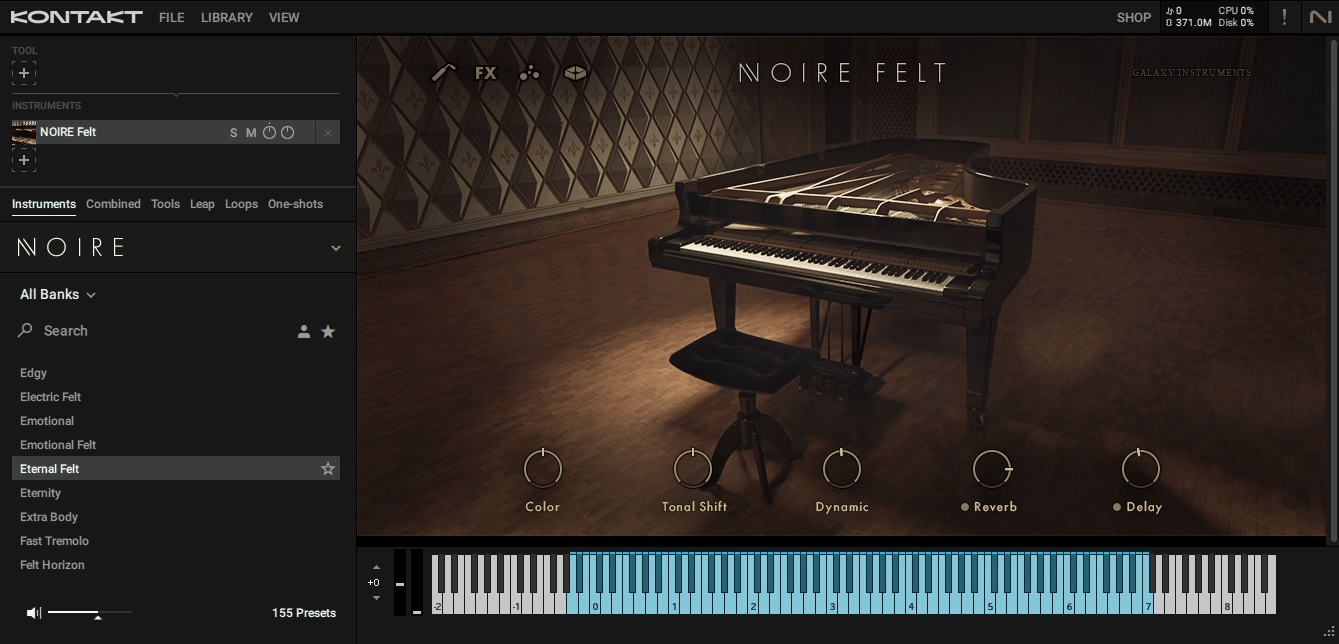
Most piano libraries offer just one main sound, so you have to use extra effects to change it. That works until you need both clear concert grand tones and soft, felt-muted textures in one project.
NI Noire was created with pianist Nils Frahm to capture his Yamaha CFX 9′ grand piano for Kontakt. Instead of just using different mic positions, it records the piano in two completely different ways.
I like that it works as both a performance instrument and a creative sound design tool, all in one. You don’t need to load extra versions or add outside plugins.
They recorded it in the famous Saal 3 at Funkhaus Berlin with vintage microphones and preamps. This setup keeps the room’s natural sound, making the piano feel both close and big—great for solo playing, film scores, or modern music.
- Pure and Felt Dual Instruments
Pure gives you the natural grand piano sound, from soft to loud, with all its overtones, sustain, and resonance. Felt adds a layer of felt between the hammers and strings, making the sound softer and more muted, perfect for minimal, ambient, or cinematic music.
This two-in-one setup lets you get very different sounds from the same piano.
- Particles Engine for Evolving Textures
The main feature creates clouds of moving harmonics that react to how you play, adding movement and depth. These sounds change with your playing, so you get evolving textures without extra programming.
You can adjust things like how many particles there are and how wide they spread, which makes it easy to experiment and improvise, as the instrument creates gentle harmonic layers for you.
- Extensive Articulation Control
Both versions let you shape the attack, release, resonance, overtones, and velocity curve, and you can fine-tune the temperament. You can also mix in mechanical noises for realism or filter them out for a cleaner sound.
These options make it easy to shape the piano to fit your needs, whether you use it solo, in a group, or as part of a film score.
- Recorded in Natural Acoustic Space with Vintage Gear
Recording at Saal 3 with vintage gear keeps the sound deep, clear, and real, so the piano feels alive in your mix.
The room’s natural resonance adds character you won’t find in dry studio recordings, giving the piano real space and depth without needing fake reverb.
- Built-In Effects and Sound Design Capabilities
Integration includes subtle mechanical noises, adjustable sub-bass reinforcement, and creative tone-shifting directly within Kontakt. The effects section provides EQ, compression, reverb, and delay for mix-ready control without external plugins. This keeps everything self-contained so you can shape the piano’s presence in a project without building complex effect chains in your DAW.
6. Native Instruments Schema: DARK – Best evolving cinematic rhythms

Creating cinematic music often requires building complex, evolving rhythms. Usually, this means stacking several loop players, sequencers, and effects, which can quickly overload your computer. Schema: DARK Kontakt library addresses this by offering a cinematic pulse engine that blends step sequencing and deep sound design in one Kontakt instrument.
In my experience, this tool is made for composers who want to create tension, energy, and dark moods without having to piece together separate loops or program detailed rhythms by hand. It focuses on dark, evolving rhythmic textures instead of standard drum patterns.
- Sequencer
The core of the engine is a four-layer, 16-step sequencer. Each layer can hold a different loop chosen from 1,732 professionally processed recordings. You can adjust each step’s pitch, decay, volume, and filter cutoff, giving you complete control over rhythm and tone.
I find that this layer-based setup makes it easy to try out polyrhythms and evolving textures, all without needing to dive into complicated MIDI editing.
- Four Loop Variants Per Source (A-D)
Each loop is available in four versions, from clean recordings to heavily processed ones using distortion, modular setups, and boutique compressors. This lets you layer sounds subtly or create wild, chaotic textures. The loops cover orchestral hits, synth pulses, bass lines, sound effects, and percussion, all processed with analog and modular gear.
- Six Studio-Grade Effects with Send Slots
The interface offers six studio-quality effects you can assign as needed, along with two send slots for parallel processing. You can also pan each layer and route outputs separately for detailed control over where sounds sit in the mix.
- Randomization and Tempo-Sync
You can randomize steps or whole loops to create new patterns, which is great for instant inspiration and adding unpredictability to tension or suspense cues. Since playback is tempo-synced, everything fits smoothly into your DAW projects. These randomization tools are especially helpful for keeping your cinematic scores from sounding repetitive.
- Lots of Presets
The library comes with 343 presets, all professionally designed.
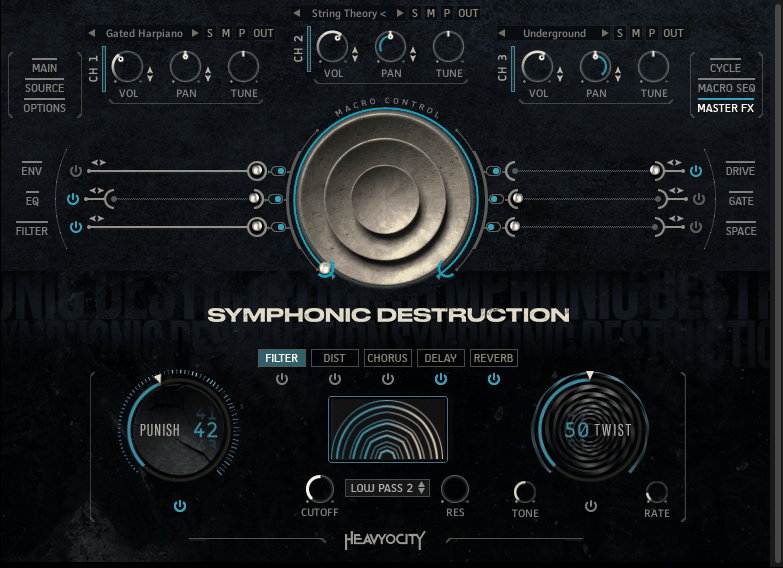
7. Heavyocity Symphonic Destruction – Best Hybrid orchestral tool
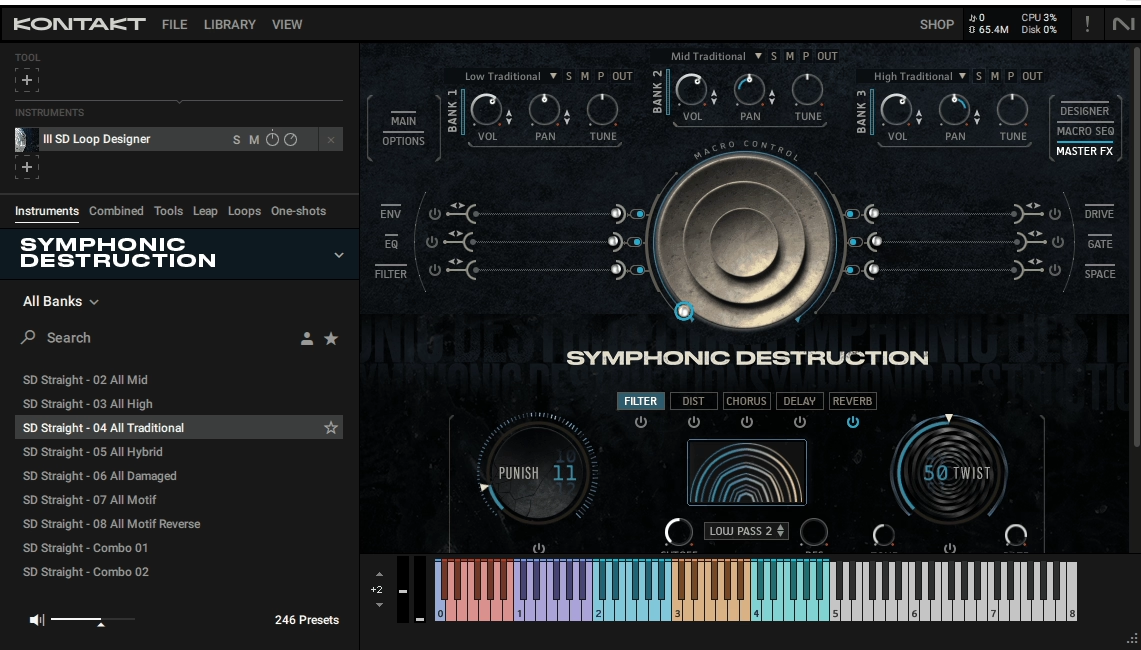
Traditional orchestral libraries are great at capturing the sound of classical instruments, but Symphonic Destruction highlights their limitations when you want a more aggressive, hybrid, or cinematic feel.
It reshapes the orchestra for modern cinematic contexts, fusing conventional orchestral tones with bold hybrid textures, powerful sound design, and driving rhythmic elements. What sets it apart is that it goes beyond merely offering sampled instruments; it rebuilds and intensifies orchestral elements to create high-impact scoring.
This makes it a great fit for trailers, cinematic scores, and hybrid projects where dramatic energy matters more than subtlety.
- SD Designer for Layering and Shaping
The main engine lets you layer and shape orchestral, hybrid, and sound design elements. You can adjust things like velocity, articulation, layering, and output in real time. This gives you flexible control and makes it easy to experiment with different articulations, rhythms, and sounds.
- Deconstructed Braams with Element Control
Braams are powerful low-frequency sounds that have been broken down into separate parts, so you can control their tone, attack, and layering. This means you can create your own Braams instead of relying on presets, and you can automate their intensity to add tension to your music.
- Nearly 100 Tempo-Synced Rhythmic Pedals
Rhythmic Pedals offer almost 100 tempo-synced loops, from gentle ostinatos to intense hybrid patterns. You can build complex, driving rhythms without having to program every note, and the tempo-sync keeps everything in time with your DAW.
- Melodic Motifs as Harmonic Layers
Pre-made loops and sequences can be used as harmonic or thematic layers in your music. They save time and still give you a polished cinematic sound, which is especially helpful if you’re working with tight deadlines.
- Full Orchestral Ensembles Plus Hybrid Content
The library includes full orchestral ensembles, hybrid synths, heavy guitars, percussive textures, and cinematic effects. With this variety, you can mix strings, processed impacts, and synth textures to build tension and energy, all without needing several different plugins.
- Built-In Effects for Sound Design
Kontakt patches come with built-in convolution reverb, distortion, and modulation, so you can shape your sound in detail without extra plugins. You can tweak effects for space, impact, and tone, all within Kontakt, which helps keep your sessions organized.
- Hundreds of Presets Mapped Across Keys
The library contains hundreds of presets offering instant inspiration and playable cues for trailer scoring or hybrid orchestration. Presets are mapped across keys making them immediately playable, and you can build custom patches by layering orchestral sections, Braams, pedals, and motifs.
Read our full review of Symphonic Destruction here.
8. Native Instruments Session Strings 2 Pro – Best Expressive Cinematic Strings

This library is designed as a Kontakt-based string instrument built around a modern 22-piece ensemble. It works well for full arrangements in pop, R&B, modern orchestral cues, hybrid cinematic styles, and layered string writing. Session Strings 2 Pro stands out because it sits between simple sketch libraries and huge symphonic collections, giving you expressive and practical sounds without extra complexity.
The main idea behind this library is to make it easy to play and ready for production, instead of trying to perfectly copy a traditional orchestra. This matters because you can create realistic, expressive, and dynamic string parts without needing expert orchestration skills or a powerful computer.
The ensemble includes eight violins, six violas, four celli, and four double basses. This setup creates a full, warm, and intimate string sound that fits well in a mix. It avoids sounding too thin or too big, which is great for pop, cinematic, and modern scoring.
- 26 Articulations with True Legato
The library offers 26 articulations, not just basic sustains and pizzicatos. You also get legato, portamento, glissando, crescendi, trills, scoops, falls, and expressive dynamic transitions, all ready to use in your performances.
True Legato lets you move between notes with realistic transitions. The newly recorded glissando and portamento help you create expressive phrases that would otherwise require extensive MIDI editing. This level of detail lets you make string lines that feel lively without heavy mixing.
- Smart Voice Split and Smart Chord
Smart Voice Split automatically assigns chord notes to the right orchestral sections, similar to what a real arranger would do. When you play a three-note chord, the system spreads the notes across violins, violas, and cellos in a natural way, avoiding awkward or muddy sounds. Smart Chord lets you create full, orchestrated chords from just one or two keys. These features make it easier to get good results without advanced MIDI or orchestration skills.
- Rhythm Animator and Phrase Animator
The Rhythm Animator works like an advanced arpeggiator for strings. You can play a chord and turn it into rhythmic phrases, with different articulations for each step, tempo syncing, and creative variations.
The Phrase Animator gives you ready-made melodic and rhythmic patterns that respond to the harmony you play. Instead of programming lots of MIDI notes by hand, you can use these patterns as a starting point and adjust them to fit your track.
- Customizable Ensemble Configuration
You can change the number of players in each section, choose between traditional or modern seating, and set the stereo spread and balance. This control lets you switch from a tight, close sound to a bigger ensemble feel, working well in both simple and full arrangements. You can make smaller groups for pop tracks or use full sections for dramatic moments.
- Built-In Mixer with Color Control
A section-based mixer lets you control tuning, volume, panning, and seating for violins, violas, cellos, and basses with detailed adjustments.
Insert and send effects include dynamics, EQ, delay, and convolution reverb, enabling you to place the ensemble in a virtual space without external plugins. The Color control is a powerful multi-effect that transforms overall string timbre with a single knob, and presets range from subtle vintage warmth to more dramatic modulation effects.
9. Native Instruments Spotlight Collection: East Asia – Best Ethnic Asia Instrument
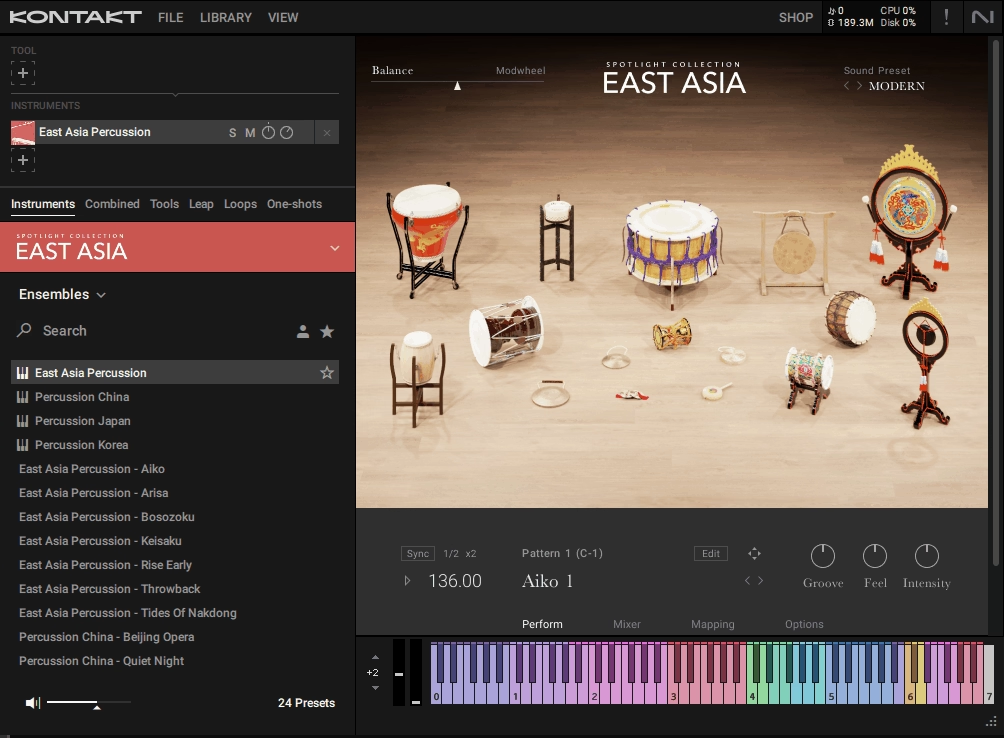
It can be tough to find ethnic instrument sounds that feel real, since many ‘world music’ libraries treat these instruments as an afterthought. Spotlight Collection: East Asia stands out by offering high-quality recordings of traditional techniques from China, Japan, and Korea. The focus is on capturing regional tunings, articulations, and expression, not just generic ethnic sounds.
What makes this library practical is its design for producers who want instruments that are ready to play and sound authentic, while fitting easily into modern DAW workflows. You get both individual instruments and ensemble presets, which work well for cinematic, world music, and hybrid projects.
Features:
- 42 Kontakt Instruments Across Melodic and Percussive
The library offers 14 melodic instruments, such as guqin, koto, yangqin, shō, and dizi, plus 24 percussive instruments like gongs, drums, cymbals, and woodblocks. Each one keeps traditional playing techniques like finger slides, plucks, vibrato, hammer-ons, glissandi, and grace notes, so you can create realistic performances in different musical settings.
- Tempo-Synced Percussion Patterns
The percussion instruments come with pre-programmed, tempo-synced patterns where you can adjust the groove and intensity. This lets you add realistic backing layers without having to program every note yourself. You can play each percussion sound on its own or use the patterns, adjusting dynamics and velocity for a natural feel.
- Key Switch Mapping and Scale Selection
The interface lets you map articulations with key switches, choose scales, edit phrases, and use a mixer for routing, panning, and effects like reverb and compression. The scale feature helps keep your music harmonically accurate, which is useful if you want to write quickly or don’t know much about East Asian music theory.
- Ensemble Building Flexibility
You can use the instruments on their own or layer them to build full ensembles. Combining melodic and percussion instruments lets you create ensemble sounds right away. For cinematic music, layering melodies with percussion helps you make detailed textures that stay true to the culture, without needing several libraries or complicated setups.
- KOMPLETE KONTROL Integration
Light Guide support helps you quickly find playable zones, so it’s easier to access different articulations and melodic ranges. This integration shows you which notes you can play and highlights articulation zones, making it simpler to perform, especially with instruments that have unique techniques or limited ranges.
10. Native Instruments Lores – Best Playable cinematic textures
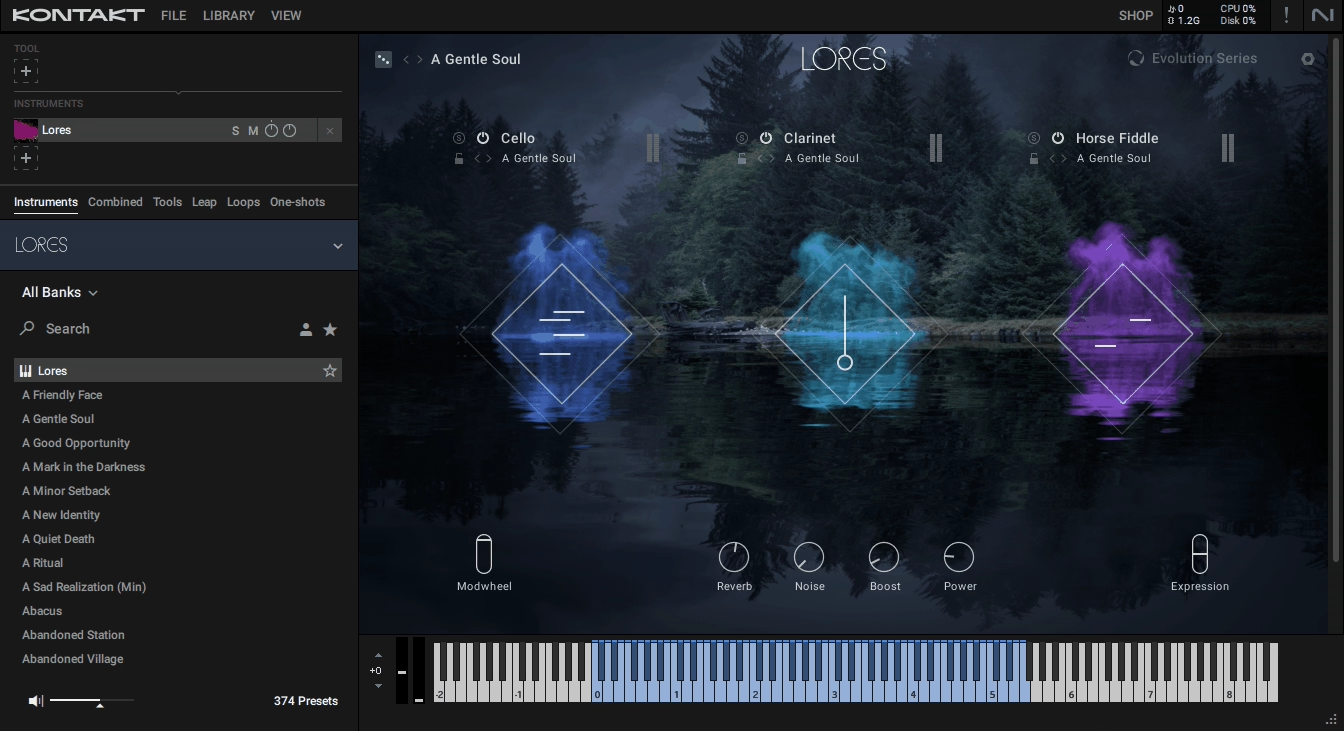
In cinematic production, you often need to layer different ethnic instruments, vocal samples, and rare string textures to build evolving soundscapes. This usually means managing many tracks and adding complexity by hand.
The Lores cinematic Kontakt library makes this process easier. It is a Kontakt-based instrument designed to blend traditional, rare, and vocal instruments into evolving, expressive soundscapes, instead of just providing static samples.
I find this library compelling because it is made for composers who want instruments that are playable and expressive, with natural movement. It focuses on organic textures and a sense of narrative that feels alive. The library lets instruments interact naturally, creating layered atmospheres that change over time, without needing lots of extra sampling or sound design.
- 16 Primary Instruments from Rare and Eclectic Sources
The library includes instruments recorded from traditional, rare, and eclectic sources including shakuhachi, hurdy-gurdy, Mongolian horse fiddle, woodwinds, and solo vocals.
These instruments are recorded with multiple microphones, which gives them spatial depth and realistic resonance. I think this approach gives you sounds that already feel cinematic, so you do not need to add a lot of processing to get a strong narrative character.
- Articulations with Performance Variations
Each instrument offers over 300 articulations, including swells, tremolos, stray harmonics, and other performance variations to create lifelike textures. These natural variations, like random swells and harmonics, make repeated notes sound dynamic and alive. I think this is important because you get real movement and expression, not just static samples.
- Blending Interface for Layered Soundscapes
The interface lets you blend instruments, adjust dynamics, and use real-time effects like reverb, EQ, and modulation right in Kontakt. You can layer medieval pipes with Middle Eastern strings or mix vocals with ethnic woodwinds to create cinematic textures. The blending interface helps you build complex layers quickly, without needing lots of extra sampling or sound design.
- Multi-Mic Recordings with Spatial Positioning
Multi-mic recordings and spatial positioning add instant depth and realism, so you do not need to spend much time mixing. This recording method gives instruments a sense of space and character without needing a lot of extra reverb or effects.
- KOMPLETE KONTROL Integration
Full integration lets you assign instruments and articulations to keys, use Light Guide zones, and perform expressively in real time. You can map instruments across the keyboard for easy live performance or MIDI sequencing. I think this makes it easier to work with unfamiliar ethnic instruments because you can see which zones and articulations are available.
11. Native Instruments Session Bassist: Jam Bass – Best Electric Bass

Session Bassist: Jam Bass gives you the sound and feel of a classic four-string offset electric bass in a format that’s easy to play and ready for the studio.
This instrument is practical because it blends live, expressive performances with detailed pattern and effects controls. You can quickly create realistic basslines without programming every note. It’s made for producers who want expressive bass parts that fit any genre, from jazz and funk to rock and cinematic music.
- USA-Made Offset Bass with Dual Pickup Blending
The library features samples from a high-quality, USA-made offset bass guitar with dual passive single-coil pickups. You can blend the warm, rounded sound of the neck pickup with the punchy clarity of the bridge pickup, giving you a wide range of tones for different genres. This pickup blending is important because you can shape the bass tone from warm and vintage to punchy and modern just by adjusting the balance, all within the instrument, no need for extra EQ.
- Patterns and Phrases
The library offers over 280 patterns and phrases played by professional bassists. These cover fingerstyle, pick, slap, and pop techniques, with variations in 16th notes, 8th notes, triplets, and dynamic crescendos. These pre-recorded phrases help speed up your workflow.
- Dual Performance Modes for Patterns and Solo Playing
Two distinct performance modes exist – one dedicated to pattern playback for grooves and one for solo playing where you can perform custom melodies and riffs. For patterns, you can select grooves via the pattern browser and drag MIDI into the DAW or trigger them via keys, adjusting swing, humanization, and accents to match your track.
For solo playing, you can assign articulations like fingerstyle, slap, or pop to key switches and play freely. This dual approach lets you move between structured grooves and improvisational playing within the same instrument, so you’re not limited to just loops or manual performance.
- Guitar Rig 7 Pro Integration
The instrument integrates with Guitar Rig 7 Pro, allowing routing through amps, cabinets, compressors, distortions, and studio effects to sculpt the sound from clean and warm to gritty and overdriven. This integration means you can achieve both classic and modern electric bass sounds without loading external amp simulators or building complex effect chains in your DAW.
- Preset Tones
The library includes 54 preset tones that combine DI signals with premium ribbon mic captures. I would say this gives you immediate starting points for different production contexts, and the combination of DI and ribbon mic blending provides both the direct clarity needed for modern production and the warmth and character from the ribbon mic capture.
- Comprehensive Articulation Coverage
Multiple articulations include fingerstyle, pick, slap, and pop techniques with natural transitions and humanization controls that maintain rhythmic feel. Articulation switching can be mapped to key switches, enabling expressive performance in real time. KOMPLETE KONTROL integration highlights key ranges, articulations, and slides, making it easier to navigate the instrument during live performance or MIDI sequencing.
12. Native Instruments Session Guitarist: Electric Mint – Best Vintage Electric guitar

Electric Mint by NI is an electric guitar library for Kontakt that captures the unique sound of a 1960s American solid-body guitar. It focuses on making performances playable and expressive, not just providing static samples.
What I really like is the combination of 222 strummed and picked patterns plus 53 complete song presets covering various genres, rhythmic feels, and chord progressions, which means you can create realistic electric guitar parts quickly without live recording or detailed MIDI programming.
- Three Single-Coil Pickups You Can Combine
The library includes three single-coil pickups, giving you a wide range of tones from warm neck sounds to bright, punchy bridge tones. You can blend the pickups to shape your sound, from clean and jazzy to more aggressive, all within the instrument itself. This vintage pickup setup really delivers that classic 60s solid-body feel.
- Comprehensive Articulation Coverage
You get a lot of playing styles, like fingerstyle, picking, hammer-ons, pull-offs, slides, legato, tremolo bar, and finger vibrato. These let you create realistic performances, from subtle rhythm parts to expressive lead lines. With KOMPLETE KONTROL, the Light Guide shows you key ranges and playing styles, so it’s easy to switch techniques while you play.
- Built-In Effects
The interface includes stomp boxes, amp and cabinet models, studio-quality effects, convolution reverbs, and the SUPERCHARGER GT compressor. This gives you a wide range of sounds, from clean and jazzy to gritty and overdriven, all without needing extra plugins or complicated setups.
- Dual Mode for Patterns and Melody
You can pick pattern mode to browse genres and song presets, or switch to melody mode to play articulations in real time with fingerstyle, picking, or hammer-ons. This way, you’re not stuck with fixed loops or only manual playing.
13. Native Instruments Session Horns Pro – Best Horns

Usually, if you want horn sections in your music, you either have to hire live brass players or use MIDI with samples that often sound flat. Session Horns Pro is designed to fix this by offering a Kontakt-based instrument for realistic, modern horn arrangements.
You can use individual instruments or full six-piece sections, focusing on realistic performance, ready-made phrases, and easy articulation control. This helps you quickly create polished horn parts for pop, jazz, funk, R&B, cinematic, and hybrid tracks without spending hours programming.
- 10 Instruments with 34 Articulations Each
The library features three saxophones, three trumpets, two trombones, a tuba, and a flugelhorn. Each one has up to four velocity layers and four round robins, plus 34 articulations like staccato, legato, swells, falls, vibrato, and glissando for realistic expression.
The round-robin sampling and velocity layers make the sound feel natural and human, even when you repeat notes. You can also combine instruments into sections of up to six, and the smart voice-splitting makes sure each note goes to the right instrument.
- Animator
The Animator gives you over 200 pre-made riffs and patterns that you can trigger with key switches. You can layer several riffs at once and they stay in harmony. This saves time since you don’t have to program every note, and it’s especially helpful for funk, jazz, or R&B where horn riffs are key to the groove.
- Section and Solo Flexibility
You can use the instruments solo for detailed writing or layer them for a full ensemble sound. The library has section presets for popular genres, and you can pick single instruments for solos or create your own six-piece sections.
- Built-In Mixer and Effects
You get per-instrument controls for volume, pan, compression, EQ, reverb, delay, and even a ‘twang’ amp simulation. These built-in tools make it easy to fit the horns into your mix without extra plugins, giving you quick control over their sound and space.

Hello, I’m Viliam, I started this audio plugin focused blog to keep you updated on the latest trends, news and everything plugin related. I’ll put the most emphasis on the topics covering best VST, AU and AAX plugins. If you find some great plugin suggestions for us to include on our site, feel free to let me know, so I can take a look!