
A good channel strip plugin can fundamentally change how fast you work. Instead of loading five or six separate plugins on every track, auditioning different combinations, and dealing with the gain staging between each one, a well designed channel strip puts everything you need in a single window with components that were built to work together.
The difference between a great channel strip and a mediocre one usually comes down to how the individual sections interact.
Anyone can bundle an EQ and a compressor into one interface, but the plugins that feel genuinely satisfying to use are the ones where the preamp coloration feeds naturally into the dynamics processing, and the EQ responds musically at every setting without fighting the compressor for dominance.
That invisible cohesion is what separates a channel strip from a collection of effects that just happen to share a window.
This list covers 13 channel strips that each bring something genuinely different to the table. Some recreate specific vintage hardware with obsessive accuracy. Others take a more modern approach, offering flexibility and module options that no single piece of hardware could provide.
I’ve tried to cover a range of price points and use cases, from strips built specifically for guitar or drum processing to all purpose tools you could happily use on every track in a session. Not every channel strip suits every workflow, and knowing which ones excel at what should help you spend less time searching and more time actually mixing.
1. Brainworx bx_console SSL 4000 E
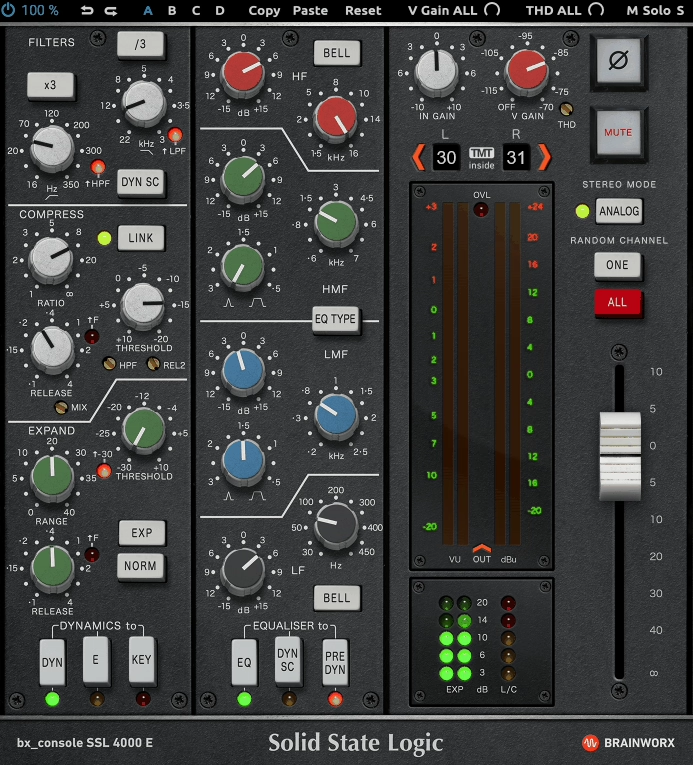
The SSL 4000 E is one of those consoles that defined how an entire generation of records sound, and Brainworx clearly understood the weight of that legacy when they built this emulation. Working with official endorsement from Solid State Logic, the German developers didn’t just model a single idealized channel from the desk.
They went deeper, capturing the component level differences that make real analog hardware feel alive and unpredictable in ways that typical emulations miss entirely.
If you’ve ever sat behind a real large format console and noticed that one position sounds slightly different from the next, that’s exactly the phenomenon Brainworx set out to recreate.
The approach treats the entire desk as a living instrument with its own personality, which is a fundamentally different philosophy from most channel strip plugins that give you one perfect version of the hardware and leave it at that. At current street pricing, you’re getting what amounts to a virtual console experience rather than a single strip.
- Tolerance Modeling Technology with 72 Channel Variations
Brainworx’s patented TMT (Tolerance Modeling Technology, US Patent No. 10,725,727) is the defining feature that separates this plugin from every other SSL emulation on the market.
Each of the 72 channel variations exhibits subtle differences in frequency response, harmonic distortion, and dynamic behavior, modeled after the natural component tolerances found in real analog hardware where no two capacitors, resistors, or transistors measure identically.
Assigning a different TMT channel to each track in your session creates the same depth and dimensional quality that engineers describe when mixing on a real large format desk, where the slight imperfections between channels contribute to a wider, more three dimensional stereo image.
The continuously variable THD (Total Harmonic Distortion) control lets you dial in additional saturation independently of your gain staging, adding colorful harmonic content without pushing levels.
A complementary V Gain (Virtual Gain) control introduces simulated analog noise for added realism. Both controls can be adjusted globally or per instance, meaning you can run some channels completely clean while pushing others into warmer territory.
- Switchable Brown/Black Knob EQ Modes with Dynamics Toggle
The EQ section recreates two distinct versions of the original 4000 E equalizer. The brown knob version delivers a gentler, more musical filter slope that’s particularly effective for broad tonal shaping where you want musical results without surgical precision.
The black knob version offers a sharper, more focused filter response suited to corrective work and precise frequency carving. Switching between these two modes on the fly lets you adapt the EQ character to each track without reaching for a different plugin.
The 4 band parametric EQ covers the full frequency spectrum with the characteristic SSL response curves that engineers have relied on for decades, with switchable shelf/bell modes on the high and low bands.
Below the EQ, a complete dynamics section is switchable between E and G series characteristics, giving you access to the punchier, darker compression of the E series and the tighter, more refined response of the G series from the same plugin. The gate/expander offers full hysteresis control in gate mode alongside range and threshold adjustment.
- Full Signal Path with Parallel Processing and Scalable Interface
Beyond the headline EQ and dynamics sections, the plugin faithfully recreates the entire signal path of the original console, including the assertive preamp stage, variable high pass and low pass input filters, and a large format fader with detailed level metering.
A mix knob enables parallel compression directly within the plugin, letting you blend dry signal with the compressed output for New York style dynamics processing without additional routing in your DAW.
The interface features a scalable UI that adapts to different screen sizes and resolutions, and the plugin ships with a comprehensive preset library organized by instrument and application.
External sidechain support allows the dynamics section to respond to signals from other tracks. Available in VST2, VST3, AU, and AAX formats for both Windows and macOS, the plugin is CPU efficient enough to run on every channel of a large session.
2. Waves Scheps Omni Channel 2
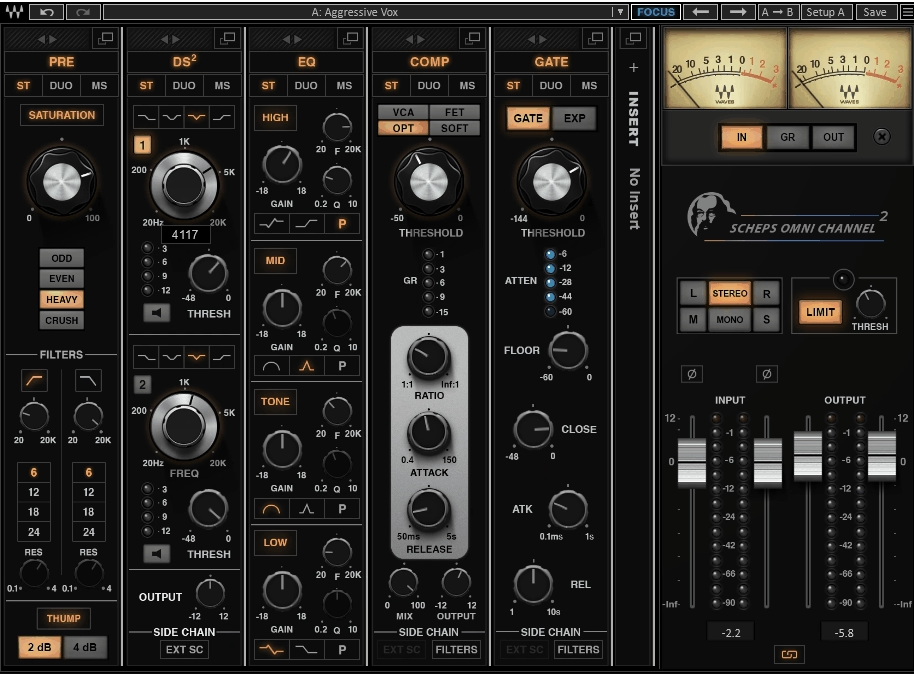
Grammy winning mixer Andrew Scheps has a mixing resume that stretches from Metallica to Adele, and the Omni Channel 2 is essentially his entire workflow distilled into a single plugin window. This isn’t a hardware emulation chasing the sound of a specific desk.
It’s something more personal: a collection of the processor types and tonal flavors that Scheps reaches for on every session, designed to work together the way he actually uses them.
What makes this channel strip feel different from the typical hardware recreation is that it’s built around flexibility and personal taste rather than historical accuracy. You aren’t locked into a fixed signal chain or a single sonic identity.
The whole point is to give you options within a cohesive framework, which is why Scheps used it as his primary mixing tool for years before deciding version 2 needed even more creative possibilities.
- Five Reorderable Modules with Four Saturation and Four Compression Types
The Omni Channel 2 is structured around five independent processing modules: Pre (saturation and filtering), Compression, EQ (4 band parametric), DS2 (dual de esser), and Gate. Every module can be dragged into any signal chain order you prefer, and any module not in use is completely bypassed to conserve CPU.
The Pre module offers four distinct analog saturation flavors: odd harmonic, even harmonic, heavy saturation, and the new Crush mode added in version 2, which pushes into aggressive distortion territory far beyond what the original could achieve.
The compression section provides four circuit types: VCA for clean, controlled dynamics, FET for fast, aggressive response with added harmonics, Opto for smooth, program dependent behavior, and the new Soft Knee option that delivers gentler compression onset.
Each compression type can be instantly A/B/C/D compared by clicking between them, which is invaluable for quickly determining which character suits the material. The DS2 dual de esser uses two independent de essing filters with adjustable bandwidth and shape, going well beyond conventional sibilance control.
- Third Party VST3 Hosting in the Insert Point
Version 2’s most significant workflow addition is the ability to host any third party VST3 plugin directly within the Omni Channel’s insert point. The original version limited this insert to Waves plugins only, but version 2 opens it to reverbs, delays, compressors, or any other effect from any manufacturer.
This transforms the Omni Channel from a closed system into an open framework where you can slot in your favorite specialized tools without leaving the channel strip environment.
The entire signal chain including the inserted third party plugin can be saved as a user preset, making it possible to build and recall complete custom channel configurations.
Focus presets designed by Andrew Scheps add a blue glow around the parameters he considers most important for a given application, serving as a guided starting point for less experienced engineers. Presets from engineers like Tony Visconti and Jacquire King are also included.
- Zero Latency Operation with Stereo/Mid Side Processing
Every module in the Omni Channel 2 supports stereo, mid/side, and dual mono processing modes, opening up possibilities like compressing only the mid channel while leaving the sides untouched, or applying different EQ curves to the mid and side signals independently.
The plugin operates with zero additional latency, making it suitable for live mixing applications and real time monitoring. Version 2 added 24dB per octave filters with a resonance control to the input section, joining the existing 6, 12, and 18dB slopes for more dramatic filtering effects.
Adjustable stereo linked VU meters can be calibrated to your preferred range and set to display input, output, or gain reduction. A global brick wall limiter catches peaks at the output.
Available as VST, VST3, AU, and AAX for Windows and macOS, the plugin is frequently discounted from its $149 list price.
3. Plugin Alliance Swivel Audio HitStrip
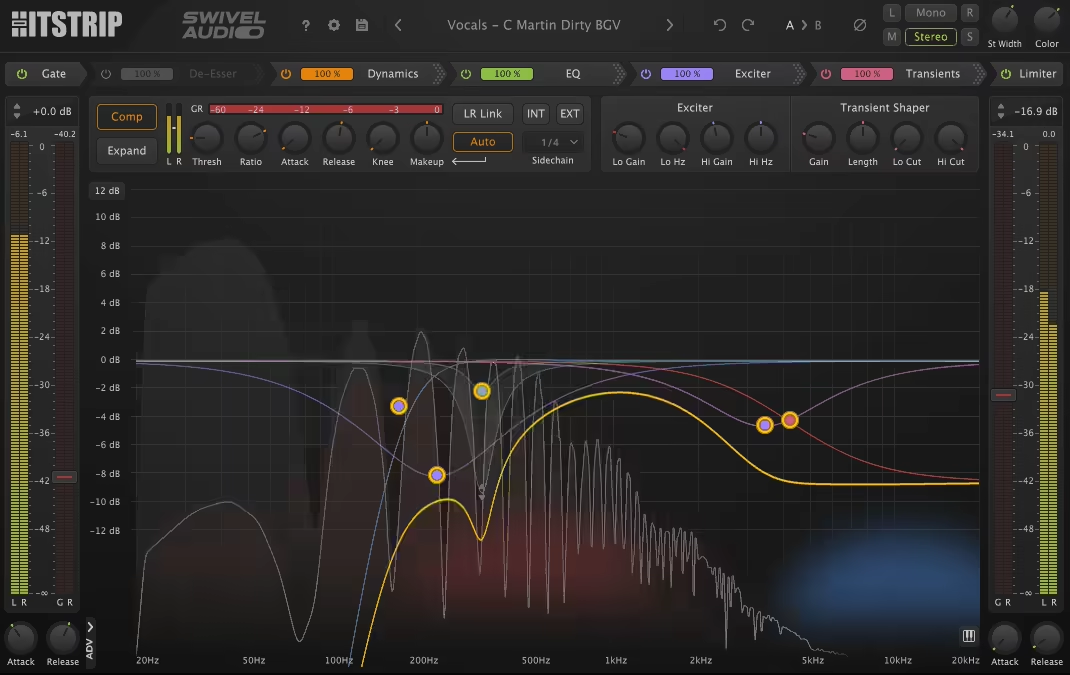
DJ Swivel built his reputation engineering and producing for artists like Beyonce, BTS, and The Chainsmokers, and HitStrip reflects the practical demands of working at that level. Three years of development went into creating a channel strip that could handle the sheer volume of tracks in a modern pop session without slowing down the DAW or requiring the engineer to navigate through multiple pages and submenus.
The design philosophy here is ruthless efficiency. Everything lives on a single page, every module is immediately accessible, and the CPU footprint is low enough to run across dozens of simultaneous instances. I think HitStrip represents a very specific vision of what a modern channel strip should be: less about vintage character and more about getting professional results as fast as physically possible.
- Three EQ Modes: Dynamic, Transient, and Tonal
HitStrip’s most distinctive feature is offering three completely different EQ engines within the same plugin. The Dynamic EQ reacts to incoming signal level, applying gain changes only when the signal crosses a threshold in specific frequency bands.
The Transient EQ focuses specifically on the attack portion of sounds, letting you shape the initial impact of drums or plucked instruments without altering the sustained body. The Tonal EQ operates as a traditional parametric equalizer for standard frequency shaping.
All three EQ modes include spectrum grab for visually identifying problem frequencies, note select for tuning EQ bands to specific musical pitches, and stereo placement for applying different EQ settings to the left and right channels independently.
Switching between modes is instant, and the display adapts to show relevant parameters for each type. This triple EQ approach means you can handle corrective, dynamic, and creative equalization without leaving the plugin.
- Nine Effect Modules with Over 61,000 Strip Combinations
Beyond the EQ, HitStrip includes a compressor/expander with internal timed sidechain, tape saturation, a gate, de esser, limiter, transient shaper, and stereo imaging. The signal path can be reordered to create custom routing, and each module has its own independent mix control for parallel processing per effect stage.
The mathematical result of all possible routing and module configurations produces over 61,000 unique strip combinations.
The compressor uses an internally timed sidechain that responds musically to program material rather than requiring external routing.
The tape saturation module is controlled through a simple Color knob that emulates the warm harmonic characteristics of analog tape without complex parameters. HitStrip ships with presets recreated from chart topping hit records, each designed by Swivel to capture the processing chains used on specific commercially released tracks.
4. UAD API Vision Channel Strip
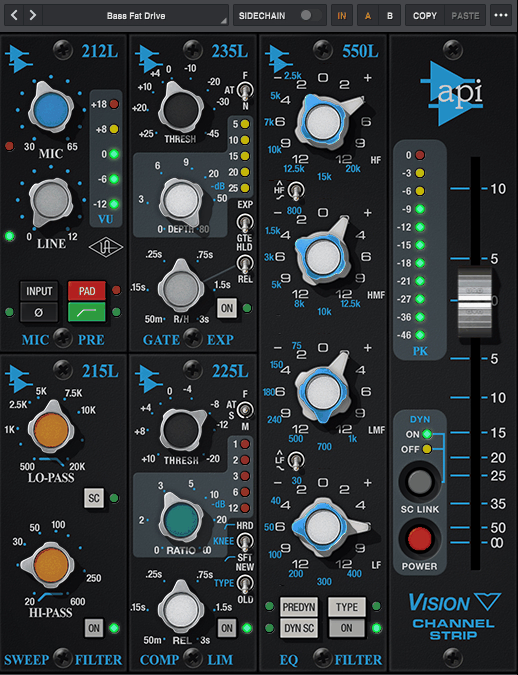
Universal Audio’s approach to the API Vision is what you’d expect from a company that has spent decades perfecting hardware emulation: they modeled the actual console, not an approximation of it. The API Vision is a modern large format desk, and UAD’s emulation captures the specific combination of API circuits that made it a favorite in Nashville, New York, and Los Angeles for tracking and mixing rock, country, and pop.
I think the API character is fundamentally different from the SSL sound that dominates most channel strip conversations. Where SSL strips tend toward clarity and clinical control, the API sound has a midrange presence and harmonic weight that immediately makes things sound more forward and aggressive.
If your mixes tend to feel polite or recessed, the Vision channel strip is one of the most effective corrective tools available.
- 212L Preamp, 215L Sweep Filters, and 235L Gate/Compressor
The plugin faithfully emulates the specific API circuit models found in the Vision console. The 212L preamp delivers the characteristic API transformer coloration with adjustable input gain. The 215L sweep filters provide tunable high pass and low pass filters with variable frequency points for cleaning up the signal before it hits the EQ and dynamics stages.
The 235L gate and compressor module includes API’s proprietary dynamics circuit with its punchy, musical response.
The compressor section uses the same 2500 style VCA topology that made the API bus compressor a mixing standard, but optimized for individual channel use.
Thrust sidechain filtering borrows from the API 2500, tilting the sidechain response to reduce low frequency pumping while maintaining punchy transient control. The gate offers adjustable threshold, range, and timing controls for cleaning up live recordings.
- 550A 3 Band and 550B 4 Band EQ Options
Two different API equalizer models are available within the strip: the 550A 3 band with its proportional Q behavior that automatically narrows the bandwidth as you increase boost or cut, and the 550B 4 band that adds an additional midrange band for more detailed frequency sculpting. Both EQs use the stepped gain structure characteristic of API hardware, where each frequency band has fixed boost/cut values that correspond to the actual hardware positions.
The proportional Q design means that gentle adjustments produce broad, musical curves while aggressive moves create tighter, more focused bands, which is why API EQs have a reputation for being almost impossible to make sound bad. The output section includes level control with metering. Available for UAD 2 hardware, UADx, and Apollo platforms in VST, AU, and AAX formats.
5. SSL Native Channel Strip 2
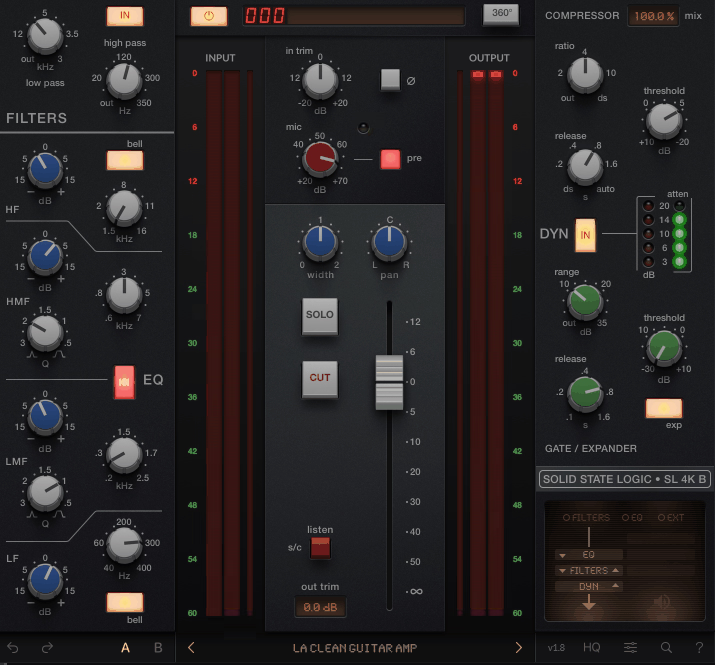
There’s a particular irony in evaluating third party SSL emulations when you can get a channel strip built by SSL themselves.
The Native Channel Strip 2 comes directly from the company that designed and manufactured the original hardware, which means the engineers writing the DSP code had access to original schematics, component measurements, and reference units that no outside developer can match.
This is not the cheapest SSL strip option, but it carries an authenticity that’s difficult to argue with. When SSL says they’ve modeled their own console, there’s an inherent credibility there that third party developers have to earn through blind tests and user consensus.
The practical result is a strip that feels immediately familiar to anyone who’s worked on an SSL desk and translates those instincts directly into the DAW environment.
- 4000 E and G Series EQ and Dynamics with Integrated Filters
The Channel Strip 2 includes the complete 4000 E Series EQ with its four parametric bands and the option to switch to G Series EQ characteristics for a different tonal response.
The dynamics section provides the classic SSL channel compressor alongside the gate/expander with full threshold, range, attack, hold, and release controls. The variable high pass and low pass filters sit at the input stage for frequency cleanup before the signal enters the processing chain.
Each EQ band features continuously variable frequency, gain, and Q controls that reproduce the exact response curves of the original hardware. The shelf/bell switching on the outer bands and the overall EQ bypass allow quick comparison between processed and unprocessed signals. SSL’s DSP team used original hardware measurements as the modeling reference, ensuring the curves match the actual console output.
- Mix Knob for Parallel Processing and Low CPU Operation
A wet/dry mix control built directly into the plugin enables parallel dynamics processing without requiring additional DAW routing. The compressor’s character blended with the dry signal produces the thick, punchy parallel compression sound that has been a staple of professional mixing for decades. The plugin operates with minimal CPU overhead, designed to run comfortably across an entire session.
The preset library includes settings organized by instrument type and processing scenario, and the interface follows the familiar SSL layout that engineers have used for decades. Available in VST, VST3, AU, and AAX formats for Windows and macOS, with iLok based authorization.
6. Lindell Audio 50 Series
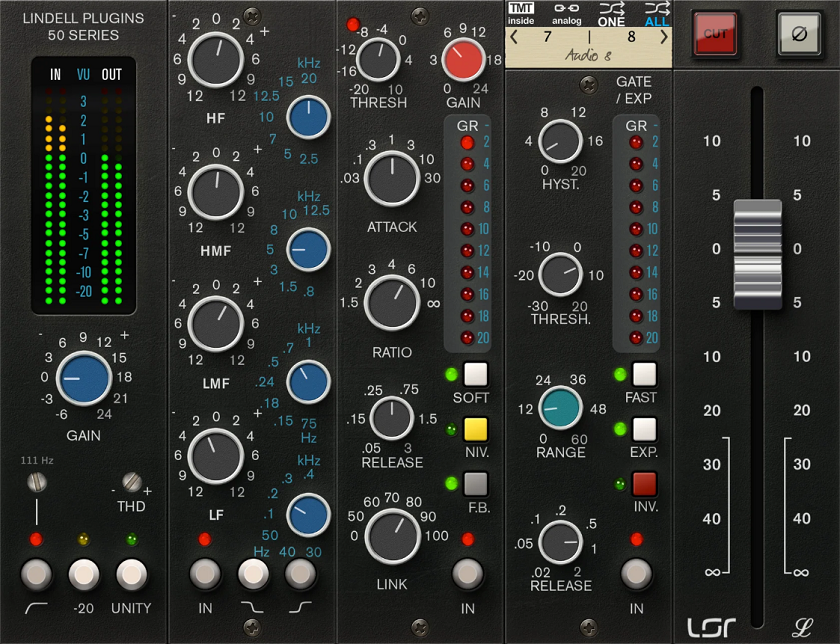
Lindell Audio’s 50 Series occupies an interesting space in the channel strip market because it draws its character from the American console tradition rather than the British sound that dominates most strip emulations. Developed in collaboration with Plugin Alliance, this strip is modeled after classic American all discrete console designs known for their forward, punchy character and rich harmonic coloration.
The 50 Series feels muscular in a way that SSL and Neve style strips don’t quite replicate. There’s a density and aggression to the midrange that pushes instruments forward in a mix, which makes it an obvious choice for rock, pop, and hip hop production where you want tracks to hit hard rather than sit politely behind the speakers.
- All Discrete Preamp with Stepped Gain and EQ Section
The preamp stage models a transformer coupled, all discrete circuit that introduces the characteristic harmonic richness of vintage American console designs. The stepped gain control provides repeatable settings, and the saturation behavior changes naturally as you drive the input harder. Low input levels remain relatively clean with subtle coloration. Higher levels push the transformer into saturation, adding warmth and harmonic density.
The EQ section features classic American equalization curves with the forward, presence heavy character associated with rock and pop mixing. Variable high pass and low pass filters provide input cleanup, while the parametric bands cover the full frequency spectrum with musical response across the gain range. The proportional Q behavior typical of these console designs ensures that gentle moves produce broad, musical results.
- VCA Compressor with Sidechain Filtering and Mix Control
The dynamics section provides a VCA style compressor with adjustable threshold, ratio, attack, and release controls. A sidechain high pass filter prevents low frequency content from triggering excessive gain reduction, which is essential for maintaining punch on bass heavy material. The mix knob enables parallel compression directly within the strip.
The plugin runs with TMT style channel variations through Plugin Alliance’s console modeling technology, providing subtle sonic differences between instances. Available in VST, VST3, AU, and AAX formats through Plugin Alliance, with low CPU requirements suitable for large sessions.
7. Softube Chandler Limited Zener Bender
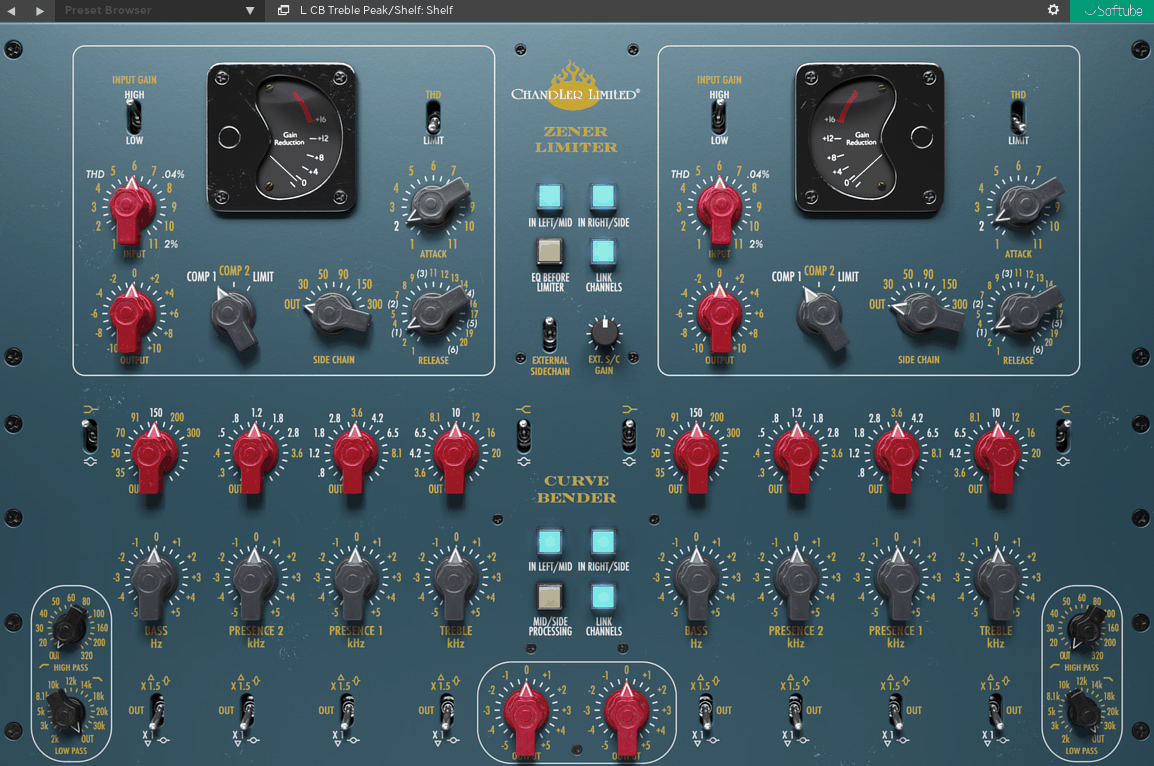
Softube’s collaboration with Chandler Limited produced something that doesn’t sound like anything else in this list. The Zener Bender is modeled after the Chandler Limited Zener Limiter combined with a Curve Bender EQ, both designed by Wade Goeke based on classic EMI/Abbey Road circuits.
The resulting character is distinctly British but in a different way from the SSL sound. It’s darker, thicker, more overtly colored.
This is a channel strip for people who want their processing to be heard. The Zener Bender doesn’t pretend to be transparent and doesn’t apologize for changing the character of your signal. When you run drums through it, they come out sounding like they were recorded at Abbey Road in the 1970s, and that very specific quality is exactly why producers seek it out.
- Zener Diode Limiting with Variable Bias and Sidechain
The limiting section uses zener diode technology that produces a warm, thick compression character distinct from VCA or optical designs. The Bias control adjusts the operating point of the limiter circuit, allowing you to shift between faster, more aggressive limiting and slower, more rounded behavior. This single control fundamentally changes how the dynamics section responds to transients, making it remarkably versatile despite the simple control set.
A sidechain high pass filter lets you prevent bass frequencies from triggering the limiter, and the wet/dry mix enables parallel processing. The zener limiting sound is particularly effective on drums, where it adds weight and sustain without squashing the transient impact.
- Curve Bender EQ with Stepped Vintage Frequencies
The EQ section models the Chandler Limited Curve Bender, which is itself based on the classic EMI TG12345 desk EQ from Abbey Road Studios. The stepped frequency selection uses the same historically significant frequency points chosen by EMI engineers, which happen to land on musically useful intervals rather than arbitrary round numbers. Each band offers switched boost/cut values and multiple Q settings.
The overall tonal character of the EQ is warm, rich, and harmonically dense, adding coloration even at unity gain. This isn’t an EQ for surgical correction. It’s for character and attitude, and it excels at giving instruments a weight and presence that modern, cleaner EQs simply can’t replicate. Available through Softube’s platform for Console 1 integration as well as standard VST, AU, and AAX formats.
8. Softube American Class A
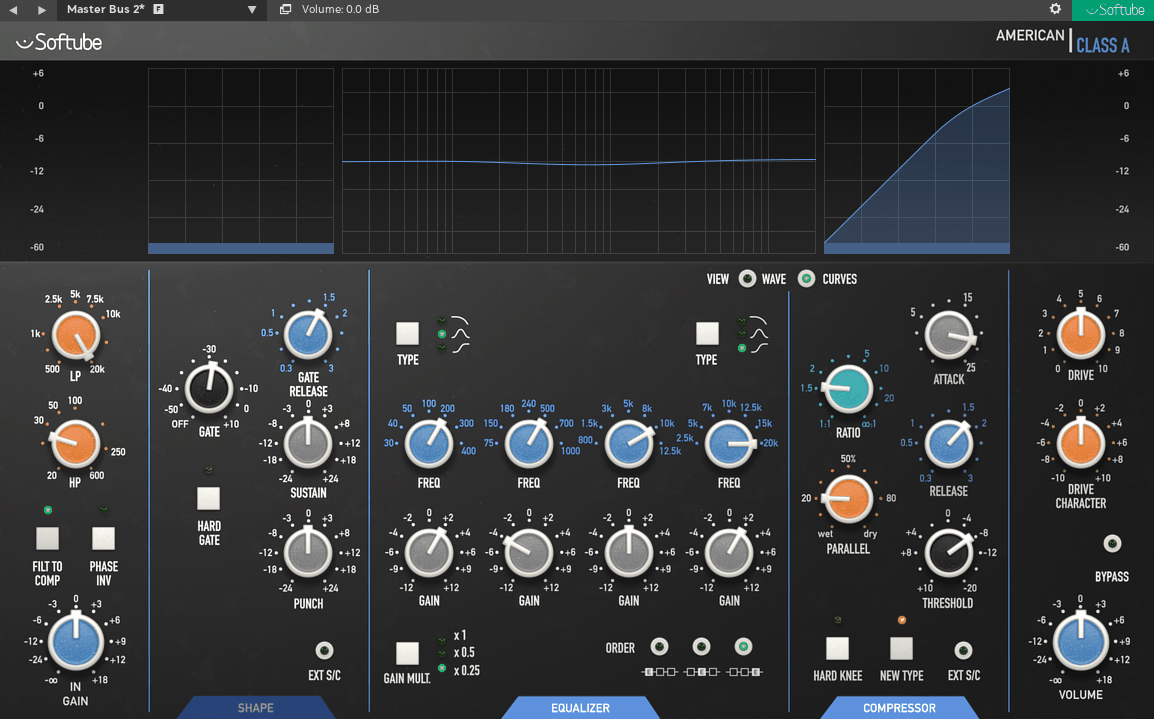
Softube designed the American Class A as their interpretation of the classic all discrete American console sound, and it sits alongside their British Class A and Trident A Range strips as part of their console modeling collection. The character here is immediate, forward, and punchy, with the kind of harmonic richness that makes individual tracks jump out of a busy mix.
I find the American Class A particularly useful on sources that need presence and energy without complex processing. Drums, guitars, and vocals all respond well to the American style coloration, which adds bite and definition to the midrange while keeping the low end solid and controlled. It’s a strip that makes things sound more exciting with relatively simple adjustments.
- All Discrete Circuit Modeling with Drive Control
The preamp and EQ sections model a Class A, all discrete signal path that naturally introduces musical harmonic content as gain increases. A dedicated Drive control lets you push the circuit into more aggressive saturation independently of the output level, so you can add the grit and fatness of a driven preamp without clipping your DAW channel. The saturation character emphasizes pleasing even order harmonics at moderate settings, transitioning to more complex odd order content at higher drive levels.
The EQ is voiced with the forward midrange character typical of American console designs. It sounds muscular and present, excelling at cutting through dense arrangements. Variable filters provide standard input frequency management. The overall processing introduces the characteristic weight and aggression associated with all discrete American circuitry.
- Console 1 Integration with Low CPU Overhead
Designed as part of Softube’s Console system, the American Class A integrates seamlessly with the Console 1 hardware controller, mapping every parameter to physical knobs and faders for a hands on mixing experience. The plugin can also be used independently as a standard insert in any DAW. CPU usage is minimal, supporting large track counts without performance issues.
The strip includes gate, compressor, and EQ sections organized in a practical layout with clear visual feedback. Available in VST, AU, and AAX formats through Softube, with optional Console 1 hardware integration.
9. United Plugins UniChannel
UniChannel approaches the channel strip concept from a perspective of combinatorial variety rather than faithful recreation of any single piece of hardware.
Developed by SounDevice Digital under the United Plugins banner, it was born from designer Boris Carloff’s two decades of collecting and maintaining vintage gear, and his frustration with aging components, rare parts, and the impossibility of using fragile one of a kind units on every channel simultaneously.
The practical philosophy here is refreshing: instead of modeling one famous console and calling it done, Carloff wanted a tool that could adapt its character to whatever each individual track demands. The result isn’t an emulation of anything specific.
It’s more like having a curated collection of vintage processors from different eras and design schools, all maintained in perfect working condition and available at every track position in your session.
- 27 Channel Strip Combinations from Three National Voicings
UniChannel offers three processing stages, each with three selectable models representing different national traditions of audio equipment design. The British channel delivers fat transformer coloration ideal for aggressive bass, kick drums, and rock attitude.
The US channel features an eighties style op amp preamp and EQ with forward midrange punch, paired with a fifties era tube compressor. The German channel combines a fifties tube preamp, a rare sixties style EQ, and a vari mu compressor.
Each combination produces a distinct sonic character because the component interactions change with each selection. Running the British preamp into the German EQ and US compressor sounds completely different from the full British chain or the full German setup.
The preamp section on all three models includes adjustable input and output gain from minus 24 to plus 24dB, plus a Mojo control that introduces varying proportions of harmonic distortion specific to each preamp model. Each model’s Mojo produces different ratios of odd and even harmonics, giving you three distinct flavors of analog coloration.
- VARM II Analog Randomness Modeling
Similar in concept to Brainworx’s TMT but using a different technological approach, United Plugins’ VARM II (Variance Modeling) technology introduces controlled randomness into each plugin instance.
Every time you load a new instance of UniChannel, it exhibits slightly different sonic behavior based on modeled variations in component values, just as two channels on a real console would measure and sound slightly different from each other due to manufacturing tolerances.
The VARM II processing affects dynamics and harmonic behavior rather than just static EQ variations, adding a sense of analog unpredictability that contributes to wider, more dimensional mixes when UniChannel is used across multiple tracks.
The plugin uses 64 bit internal processing with zero latency and extremely low CPU usage (approximately 0.3% with all modules active). Available in VST, VST3, AU, and AAX formats with no iLok or dongle required.
10. Melda Production MDrumStrip
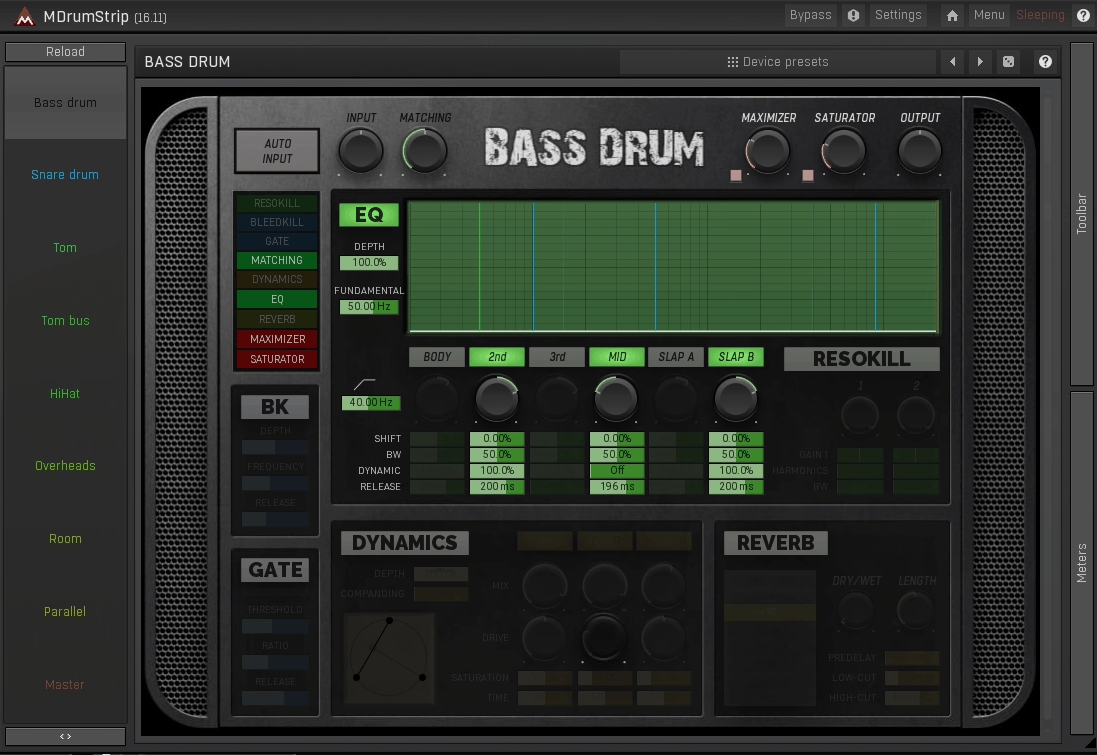
Most channel strips try to be everything to everyone, but Melda took the opposite approach with MDrumStrip: build a strip that is exclusively optimized for drum processing and doesn’t pretend to do anything else.
Every module, parameter range, control layout, and preset in this plugin was designed around the specific challenges of shaping drum sounds, from individual hits to full kit busses.
The Melda approach to plugin design is always about depth and flexibility, sometimes to a fault. MDrumStrip carries that philosophy forward with more drum specific processing options than most producers will ever need, but the benefit is that if you can imagine a drum processing scenario, MDrumStrip almost certainly has a tool for it.
The learning curve is steeper than simpler strips, but the payoff in drum specific capability is substantial.
- Dedicated Transient Shaping, Saturation, and Drum Specific EQ
MDrumStrip includes a transient designer specifically tuned for percussive material, with attack and sustain controls that respond to the fast dynamics of drum hits without the artifacts that general purpose transient shapers sometimes introduce on extremely fast material.
The saturation module offers multiple distortion algorithms ranging from subtle analog warmth to aggressive clipping, each voiced to complement percussive content rather than smear transient detail.
The EQ section uses frequency ranges and Q curves specifically chosen for common drum processing tasks. Where a general purpose EQ might let you boost anywhere from 20Hz to 20kHz with any bandwidth, MDrumStrip focuses its ranges on the frequencies that actually matter for kicks, snares, toms, and overheads, making it faster to find the right adjustments without hunting through irrelevant frequency ranges.
- Advanced Dynamics with Multiband Capability and Customization
The dynamics processing in MDrumStrip includes compressor and gate modules with parameters tuned for percussive timing, meaning the attack and release ranges are optimized for the fast transients and short sustain typical of drum material.
Multiband processing is available for more surgical dynamic control, letting you compress the body of a kick drum independently from its beater click, for example.
Melda’s characteristic deep customization is present throughout, including the ability to modify nearly every aspect of each module’s behavior.
The plugin supports extensive preset management with categorized drum specific presets, and the interface allows resizing and layout customization to fit different screen sizes and workflows. Available in VST, VST3, AU, and AAX formats for Windows and macOS.
11. SSL Guitarstrip
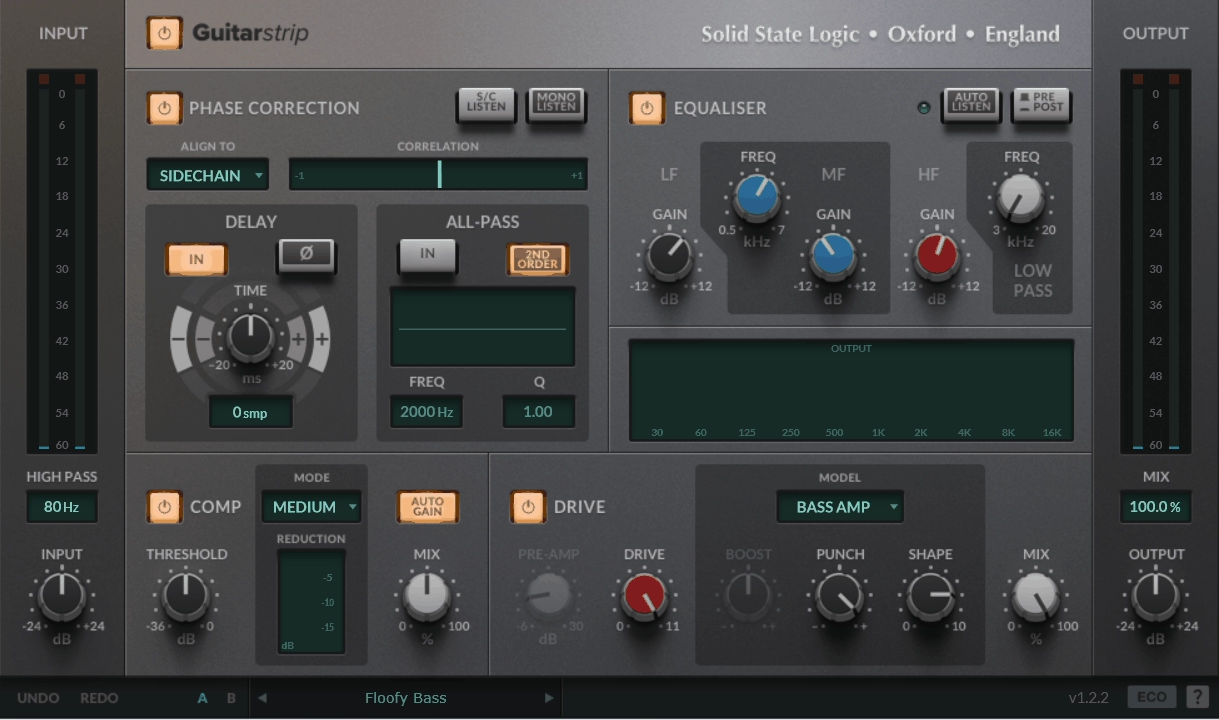
SSL taking the time to build a channel strip specifically for guitar processing says something about how important instrument specific optimization really is.
Guitarstrip isn’t a repurposed console strip with “guitar” presets bolted on. It’s a purpose built processing chain designed from the ground up around the frequency ranges, dynamics, and tonal characteristics specific to acoustic and electric guitar.
The practical benefit is immediate: you don’t have to spend time figuring out which compressor settings work for guitar, which EQ ranges to focus on, or how to tame harsh pick transients without killing the life of the performance.
SSL’s engineers already made those decisions, and the controls are voiced and ranged accordingly. For guitarists who record at home and producers who work with guitar heavy material, this level of specialization saves significant time.
- Guitar Voiced EQ with Compressor and Noise Gate
The EQ section is voiced specifically for guitar frequency ranges, with band centers, Q curves, and gain ranges chosen to address the most common guitar mixing needs. Low frequency controls handle muddiness and body. Midrange bands cover the presence and bite regions where guitars either shine or become harsh. High frequency controls manage pick attack, string brightness, and air.
The compressor uses timing constants optimized for guitar dynamics, which differ significantly from vocal or drum dynamics. Guitars have a slower, more sustained envelope than drums but faster transients than most vocals, and the compressor’s attack and release behavior is tuned to handle this specific dynamic profile musically.
The gate cleans up noise between phrases, which is especially valuable for high gain electric guitar recordings where amp noise becomes intrusive during pauses.
- Vintage Drive Module and Tuned Signal Path
A dedicated drive/saturation module adds harmonic warmth and edge to guitar tones, emulating the pleasant breakup characteristics of overdriven analog circuits. This isn’t a guitar amp simulator. It’s a subtle saturation stage that enhances the recorded tone rather than replacing it.
The saturation is tuned to complement guitar harmonics specifically, adding warmth in the low mids and presence in the upper mids without introducing harshness.
The entire signal path flows in a guitar optimized order from input filtering through dynamics, EQ, and drive, with each stage’s output characteristics matched to the next stage’s input expectations. Available as VST, VST3, AU, and AAX from SSL, with the same authorization system used across their Native plugin range.
12. Plugin Alliance Lindell Audio 69 Channel
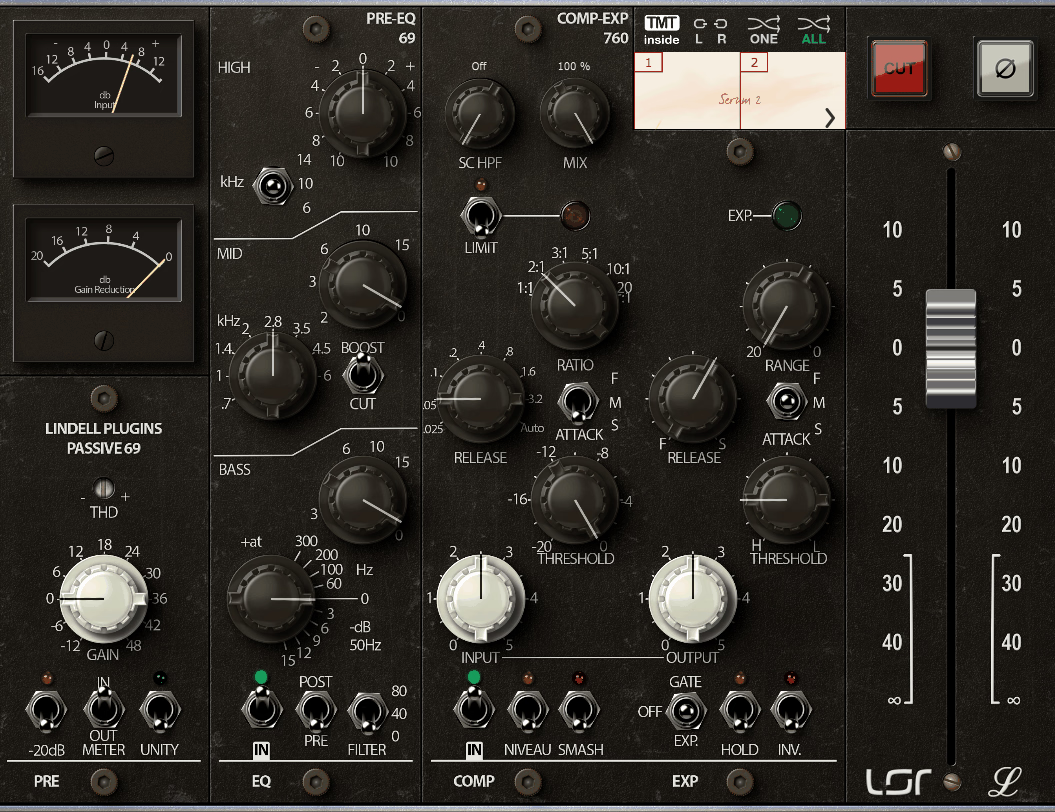
The Lindell Audio 69 Series models a channel strip from one of the most revered consoles in recording history: the Helios desk that was used at Olympic Studios in London and later at Island Studios, where artists like Led Zeppelin, The Rolling Stones, and Bob Marley recorded some of their most iconic work.
The Helios sound is warmer, grittier, and more colored than the clinical precision of an SSL, with a harmonic richness that immediately evokes classic rock and roll.
Tobias Lindell built his reputation on creating accessible emulations of legendary hardware, and the 69 Series continues that tradition. The plugin captures the specific nonlinearities and saturation behavior of the original Helios circuits, which were known for adding a flattering musicality to everything that passed through them.
This is a character strip in the truest sense. You load it because you want what it does to your sound, not because you need transparent processing.
- Helios Type 69 EQ with Inductor Based Tone Shaping
The EQ section models the inductor based equalization that gave the original Helios desks their distinctive warm, musical character. Inductor EQs behave differently from modern operational amplifier designs, producing gentle, naturally resonant curves that add harmonic content while boosting or cutting frequencies.
The frequency selection uses the original stepped values from the hardware, landing on musically useful points that were chosen by the console’s designers for practical studio work.
The high frequency band provides the crisp, airy top end that Helios consoles are famous for, while the low frequency band adds weight without muddiness. A midrange section allows more focused tonal shaping. The overall EQ character introduces subtle harmonic saturation even at moderate settings, which is a fundamental part of the Helios sound that engineers love.
- Preamp Coloration and Dynamics Processing
The preamp stage reproduces the transformer coupled input circuitry of the original console, introducing the warm, slightly compressed quality that Helios preamps are known for.
As input gain increases, the preamp transitions smoothly from clean coloration into richer saturation, mimicking the behavior of the original discrete transistor circuits. The dynamics section includes compression and gating with controls suited to the musical applications the original console was designed for.
Plugin Alliance’s platform provides TMT style variations for additional realism across multiple instances. The plugin is designed to be CPU efficient for use across entire sessions and includes a preset library with instrument specific starting points. Available in VST, VST3, AU, and AAX formats for Windows and macOS.
13. Eventide UltraChannel
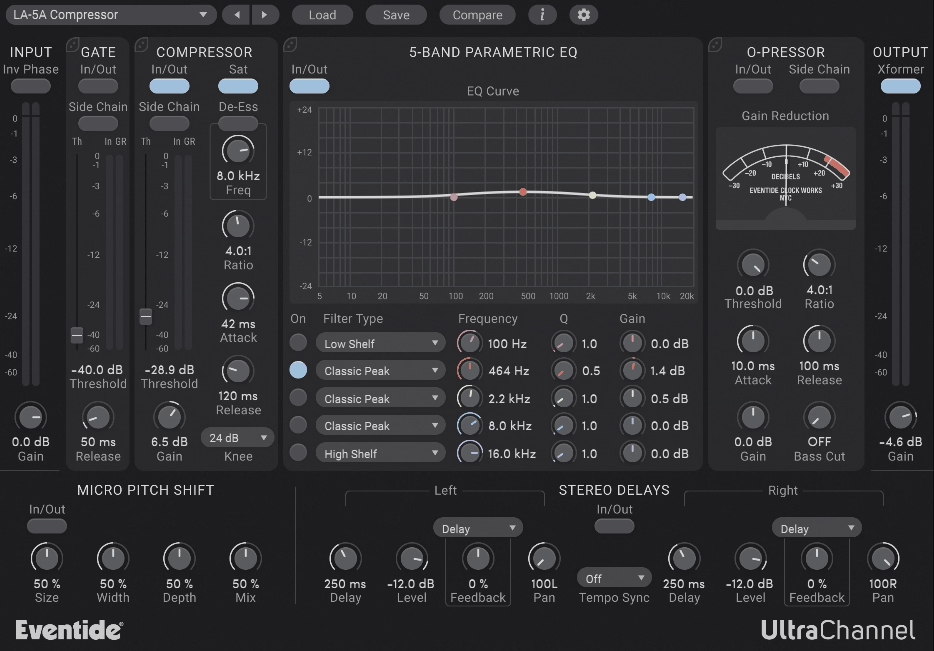
Eventide’s approach to channel strip design reflects their heritage as a company built on creative effects processing. The UltraChannel isn’t trying to sound like a vintage console.
It’s a modern, flexible processing toolkit that combines traditional channel strip functions with capabilities you wouldn’t find on any analog desk, drawing on Eventide’s decades of experience building studio processors and effects units.
What sets UltraChannel apart from the vintage recreation crowd is its willingness to include processing options that have nothing to do with historical accuracy.
Micro pitch shifting for width, an O Pressor dynamics module with unique compression characteristics, and flexible signal routing options all point to a plugin designed for engineers who value creative problem solving over nostalgic tone chasing.
- O Pressor Dynamics with Micro Pitch Shifting for Stereo Width
The O Pressor is Eventide’s proprietary compressor design that operates differently from traditional VCA, FET, or optical circuits. Its compression character includes a unique combination of level dependent behavior and harmonic generation that produces a sound distinct from any hardware emulation.
The Micro Pitch Shift module applies subtle pitch differences between the left and right channels to create the perception of enhanced stereo width without introducing phase problems or comb filtering artifacts.
This width enhancement technique is borrowed from Eventide’s legendary H3000 Harmonizer, and having it built directly into a channel strip means you can add spatial dimension to any source as part of your standard channel processing. The effect is subtle enough for vocals and guitars, where a slight widening makes tracks feel larger without sounding obviously processed.
- Flexible EQ Section with Gate and Routing Options
The 5 band parametric EQ includes both standard bell and shelf shapes with broad frequency coverage. A dedicated gate/expander with adjustable threshold, range, and timing handles noise cleanup. The signal routing allows reordering of processing modules for custom signal flow configurations.
Eventide includes a comprehensive preset library organized by instrument and application, with settings that demonstrate both conventional and creative uses of the strip’s capabilities.
The interface provides detailed visual feedback for all processing stages. Available in VST, AU, and AAX formats for Windows and macOS, compatible with both native and select Eventide hardware configurations.

Hello, I’m Viliam, I started this audio plugin focused blog to keep you updated on the latest trends, news and everything plugin related. I’ll put the most emphasis on the topics covering best VST, AU and AAX plugins. If you find some great plugin suggestions for us to include on our site, feel free to let me know, so I can take a look!