
I’ve compiled this guide to the 12 best API VST plugins that actually deliver professional results, plus some impressive free alternatives that prove you don’t need a massive budget to get analog warmth in your mixes. Whether you’re looking to add punch to your drum buses, glue your mix together with VCA compression, or shape tone with that signature API midrange presence, these plugins will help you achieve that coveted analog sound without compromising your workflow or bank account.
Digital production tools are incredibly powerful, but they often lack the harmonic richness and three-dimensional character that made classic records feel so alive. That’s where these plugins come in, bringing the punchy, forward energy of legendary analog hardware straight into your DAW.
API’s vintage compressors, EQs, and channel strips have shaped countless hit records since the 1970s. Their distinctive sound, characterized by aggressive transient response, musical compression curves, and warm transformer saturation, became the backbone of rock, pop, and hip-hop productions.
But with hardware units costing thousands of dollars and requiring dedicated rack space, most producers turned to software emulations that promise similar results at a fraction of the cost.
The challenge? Not all emulations are created equal. Some faithfully recreate the circuit behavior and tonal character of the originals, while others simply dress up generic digital processing with vintage-style interfaces. In this guide, you’ll find carefully selected compressors, EQs, and channel strips from developers like Waves, IK Multimedia, Universal Audio, Lindel Audio, and others who’ve invested serious effort into authentic analog modeling. Each plugin has been tested in real mixing scenarios to ensure it delivers the musical response and harmonic complexity that makes API gear so sought after. Let’s get started:
1. Pulsar IPA 25
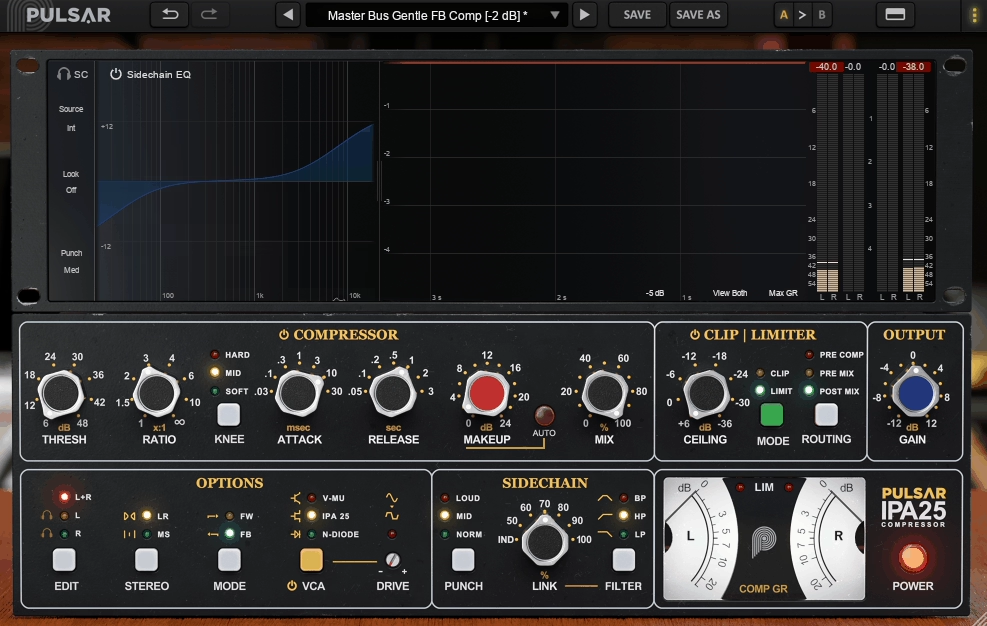
Pulsar IPA 25 does something most digital compressors can’t quite nail: it brings real multi-stage VCA compression into your DAW with genuine analog-style warmth. This isn’t just another plugin claiming to sound vintage.
The IPA 25 uses a sophisticated architecture where multiple compression stages can work independently or linked together, giving you surgical control over how your tracks breathe and respond. What I love most is how it adds body and presence to everything from drum buses to vocals without that lifeless squashed feel you get from basic digital dynamics processors.
The way it responds to musical content rather than just following rigid amplitude rules makes your mixes feel more alive and dynamic, especially when you’re working with transient-heavy material that needs careful shaping.
What IPA 25 offers:
- Factory Presets and Flexible Routing
The plugin includes over 50 factory presets covering everything from subtle mix bus glue to aggressive drum compression, and you can switch between series or parallel routing configurations for each stage. This routing flexibility means you can blend compressed and uncompressed signals at the stage level, giving you built-in parallel compression without needing to set up auxiliary sends in your DAW.
- Multi-Stage VCA Architecture
The plugin gives you up to 3 independent compression stages that you can operate separately or link together, which means you have incredible flexibility in shaping transients and dynamics. When you are working on drums, use one stage to catch fast peaks while another stage adds body and glue. It will create a layered response that feels much more natural than single-stage compression.
This approach works wonders on percussion-heavy tracks where you need punch without losing the groove, and it’s particularly effective on complex arrangements where different elements need different amounts of dynamic control.
- Independent Stage Control with Precise Parameters
Each compression stage comes with its own threshold, ratio (ranging from 1.5:1 to 20:1), attack, and release parameters. You can dial in completely different settings for each stage, letting you tackle multiple dynamic issues simultaneously without needing to stack multiple plugins and create latency problems in your session.
The attack times range from 0.1ms to 100ms, giving you the speed needed for transient shaping or slower responses for program material.
- Analog-Style Harmonic Coloration
Beyond just controlling dynamics, the IPA 25 introduces subtle harmonic enrichment through modeled transformer saturation that makes your tracks feel fuller and more engaging.
This coloration isn’t overwhelming or artificial; it’s the kind of warmth that helps digital recordings sit better in a mix and adds that missing depth you notice when comparing purely digital mixes to hybrid productions. Even gentle settings bring a perceivable lift in body and presence without any harshness.
- Real-Time Visual Metering and Gain Reduction Display
The interface shows you dual metering for input/output levels plus dedicated gain reduction meters for each stage simultaneously, which helps you understand exactly what’s happening to your signal as you make adjustments. Useul when learning how different stage combinations affect the overall sound.
Lastly, The multi-stage interface can feel overwhelming for beginners who aren’t familiar with layered compression concepts. It also leans toward character over transparency, so if you need completely colorless dynamics control for mastering work, you might want something more clinical.
2. Waves API 2500 Compressor
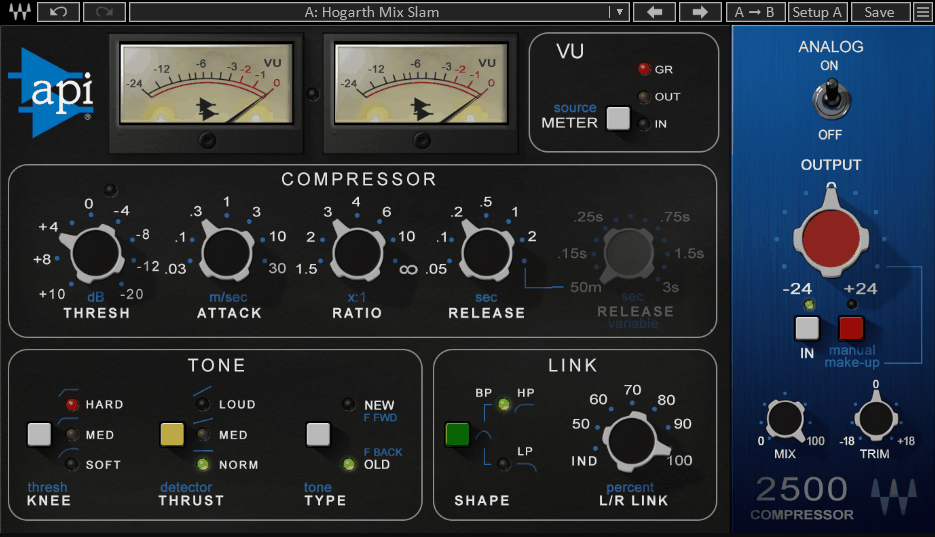
The Waves API 2500 has become one of those plugins I keep coming back to when my mix needs that specific kind of energy that only vintage bus compression can deliver.
It’s a digital recreation of the legendary API 2500 hardware unit, and what makes it special is how it captures that punchy, forward character without turning your dynamics into mush.
You get both feed-forward and feedback compression topologies built into one plugin, which gives you the flexibility to switch between modern aggressive response and classic smooth leveling depending on what your track demands.
The Thrust high-pass detector circuit is where things get interesting because it changes how the compressor reacts to your low frequencies, letting you maintain tight bottom end while still getting that glued-together feel across your entire mix.
Features:
- Dual Compression Topologies
You can toggle between feed-forward and feedback compression modes, and this completely changes the compressor’s behavior. Feed-forward gives you that modern, assertive dynamic control that’s perfect when you need your drums to really drive forward in the mix.
Feedback mode delivers smoother, more vintage-style compression that works beautifully on vocal buses or when you want gentle cohesion without aggressive pumping.
- Thrust High-Pass Detector with Multiple Modes
The plugin includes three different Thrust settings that determine how the sidechain filter responds to bass content.
When you are working on bass-heavy electronic tracks, you can engage Thrust to prevent the compressor from overreacting to kick drum hits, which keeps your low end punchy instead of letting it trigger excessive gain reduction that would kill the groove.
- Factory Preset Library
Waves includes a solid collection of starting points covering common mixing scenarios, though the exact number varies by version. These presets range from subtle mix bus glue to aggressive drum smashing, giving you useful templates that you can tweak to fit your specific material rather than starting from scratch every time.
3. Universal Audio API Vision Channel Strip
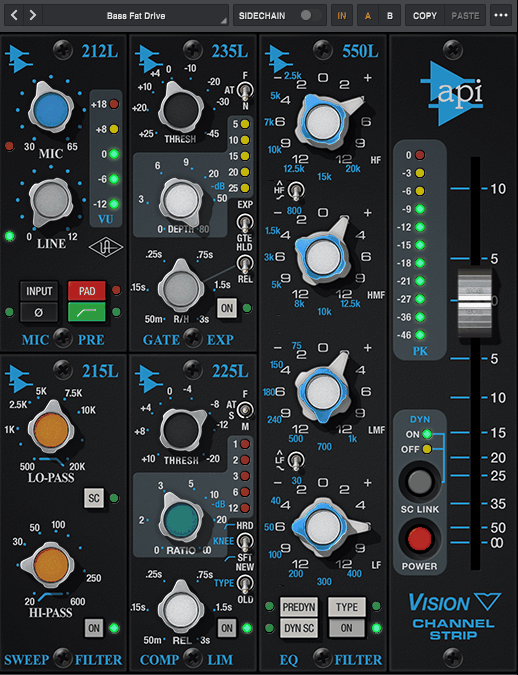
There’s something special about running your tracks through a proper channel strip instead of patching together separate plugins for every processing stage.
This plugin recreates the entire signal path of API’s legendary Vision console, giving you preamp modeling, filtering, dynamics, and dual EQ options all in one integrated package.
What really sets Vision Channel Strip API plugin apart is how the modules interact with each other, creating that cohesive analog behavior you can’t quite get from individual plugins scattered across your insert slots.
The 212L preamp section with its modeled 2520 op-amp adds harmonic richness before your signal even hits the dynamics or EQ stages, which means you’re building tone the same way engineers did on actual API consoles.
- Modeled 212L Preamp with 2520 Op-Amp
The preamp stage gives you that forward, punchy API character right from the start, and when you drive it harder you get subtle harmonic saturation that adds body without sounding distorted.
This is particularly effective on vocals and guitars where you want presence and clarity without harshness. The modeling captures how the original transformer and op-amp circuitry responds to different input levels, so you can treat it like actual hardware and push it when you need more color or back off when you want it cleaner.
- Dual EQ Options: 550L Parametric and 560L Graphic
You get to choose between two completely different EQ designs depending on what your track needs. The 550L four-band parametric lets you surgically shape specific frequencies with adjustable Q and gain, perfect for problem-solving or detailed tone sculpting.
The 560L ten-band graphic EQ offers faster, more intuitive tonal adjustments with a musical curve that naturally complements most sources, which I find incredibly useful when I just need to quickly brighten up a dull recording or add weight to thin tracks.
- 225L Compressor/Limiter with Multiple Characteristics
The dynamics section includes both compression and limiting with selectable response characteristics that change how aggressively it treats transients. You can go gentle for transparent level control or push it harder for more obvious dynamic shaping that adds excitement to rhythmic material.
4. Lindell Audio SBC
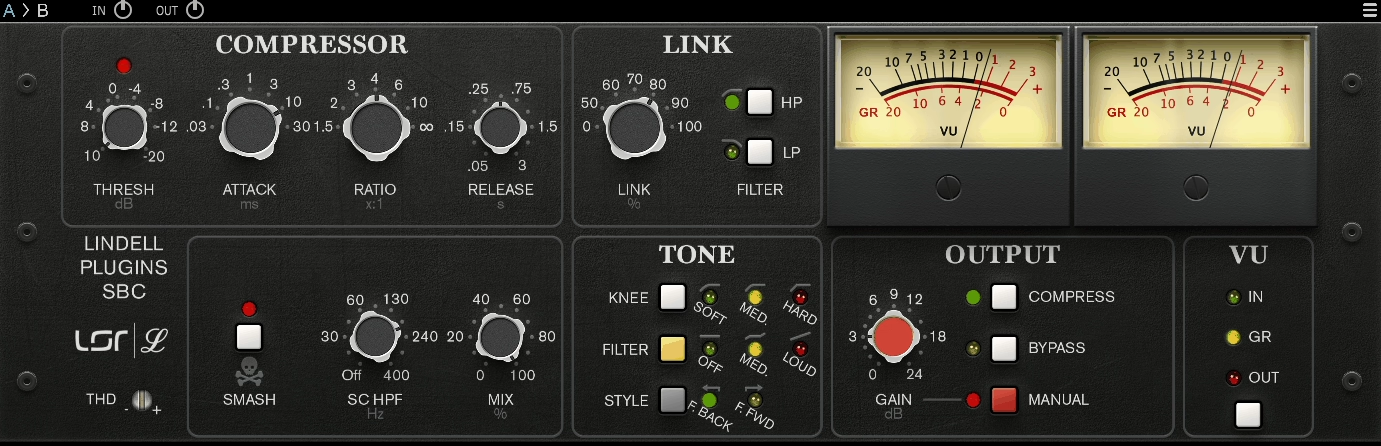
The Lindell Audio SBC from Plugin Alliance is a stereo bus compressor that emulates the classic API 2500-style compression circuit, and honestly, you should definitely try it on drum buses if you need aggressive glue!
This plugin gives you that punchy, forward compression that makes rock and pop mixes feel locked in, plus it includes a unique SMASH mode that pushes the compression into more extreme territory when you want attitude over subtlety.
You get both feed-forward and feedback compression modes along with a smart sidechain filter circuit that applies low cut and high boost to the detector, which means the compressor responds more to midrange transients while leaving your low end intact. I find this particularly useful on drum buses where you want the snare and toms to trigger compression without the kick drum causing excessive pumping.
- SMASH Mode for Aggressive Compression
This is where the SBC gets interesting because it’s not just a straight hardware emulation. When you engage SMASH mode, the compressor becomes noticeably more aggressive, tightening everything up and adding that in-your-face energy that works perfectly on rock drums or parallel compression buses.
It’s honestly more extreme than what you’d typically get from the actual hardware, which gives you creative options beyond just vintage-accurate compression.
- Intelligent Sidechain Filter Circuit
The plugin includes a built-in sidechain filter that applies a low cut and high boost to the detection circuit, changing how the compressor “hears” your signal. This means you can have heavy kick drums in your mix without them triggering constant gain reduction that would kill your groove.
The filter lets the compressor focus on the frequency ranges that actually need dynamic control while leaving other areas alone.
- Variable Stereo Linking
Instead of just offering linked or unlinked operation, you get continuous control over how much the left and right channels influence each other. When I’m compressing drum overheads or stereo synth pads, I’ll often use partial linking around 60-70% to maintain some stereo movement while still getting cohesive compression across both channels.
5. UAD API 2500 Bus Compressor
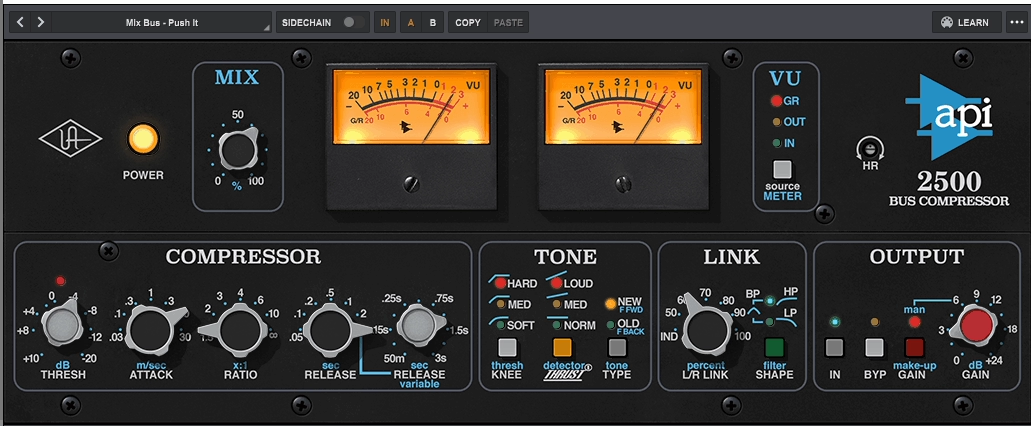
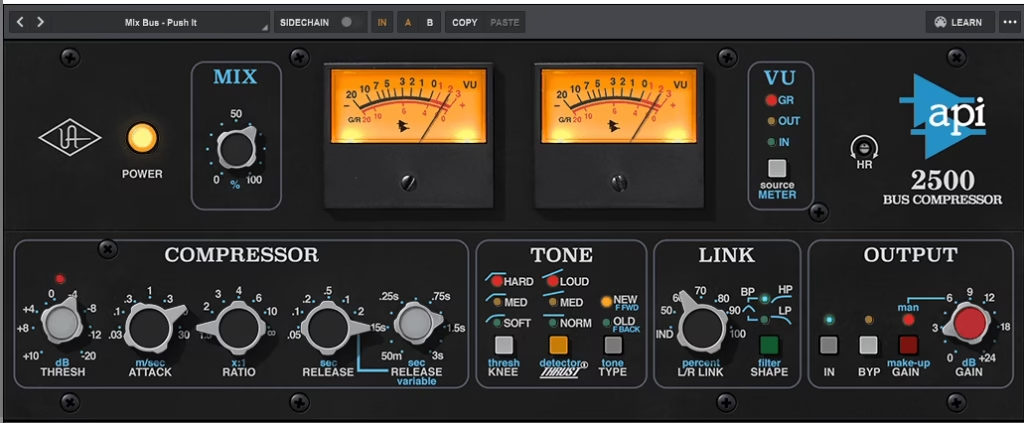
Universal Audio went deep with their circuit modeling on this one. The UAD API 2500 Bus Compressor is their emulation of the legendary hardware unit designed by API engineer Paul Wolff.
What makes this version special is how UA had direct access to API’s proprietary schematics, letting them model not just the compression behavior but also the transformer saturation, op-amp characteristics, and the famous Thrust sidechain filtering that gives the 2500 its musical response.
You get both “Old” feedback and “New” feed-forward compression types plus 3 different knee settings, which means you can dial in anything from gentle mix bus glue to aggressive drum smashing depending on what your track needs.
Key Features:
- Patented Thrust Sidechain Circuit
The Thrust filter is what separates this compressor from standard bus compressors because it applies tailored frequency balancing to the detector circuit. This means low and high frequencies influence the compression more evenly, preventing your kick drum from dominating the gain reduction while still letting the compressor respond to the entire frequency spectrum.
I’ve found this particularly useful on full mixes where you want cohesive compression without the low end constantly triggering pumping that kills your groove.
- Dual Compression Types: Old and New
Switching between feedback (“Old”) and feed-forward (“New”) compression modes completely changes how the plugin responds to transients. Old mode gives you smoother, more characterful compression with that vintage vibe where the compressor feels like it’s reacting slightly behind the signal.
New mode delivers aggressive, forward-driven compression that catches transients faster, perfect when you need drums to really punch through dense arrangements.
- Digital-Only Mix Control
The plugin includes a wet/dry mix knob that wasn’t on the original hardware, making parallel compression incredibly simple without needing to set up auxiliary sends and routing in your DAW. You can slam the compressor hard with aggressive settings and then blend in just enough of that crushed sound to add energy without losing the natural dynamics of your original signal.
6. LSR Audio VLB525
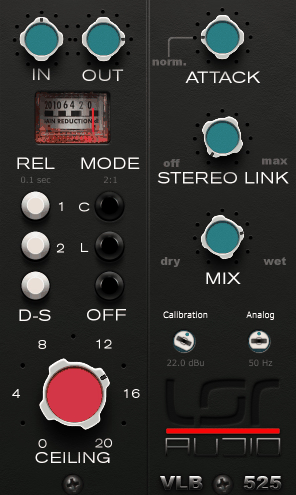
I’ll be straight with you about this one. Some plugins try to be polite and transparent, giving you clean compression that sits quietly in your mix. The LSR Audio VLB525 is not one of those plugins.
This is an emulation of the classic API 525 FET compressor from the 1970s, and it’s aggressive, punchy, and full of character in ways that can either make your tracks come alive or completely mess them up if you’re not careful.
What I appreciate most is how it models the non-linear components like transformers, discrete op-amps, and FET circuits, which means you’re getting real analog-style coloration that goes way beyond simple dynamic control.
Key Features:
- Unique Ceiling Control
Instead of separate threshold and makeup gain controls, the VLB525 uses a “ceiling” parameter that blends both functions together. This takes some getting used to because it works differently than most compressors you’ve probably used.
I found that once I stopped thinking in traditional threshold/ratio terms and just listened to how the ceiling affected my sound, it became much easier to dial in settings that worked. The ceiling approach maintains more consistent output levels while you’re sculpting compression depth, which actually speeds up the workflow once you understand it.
- Four Selectable Release Times
You get four fixed release options instead of continuous control, which mirrors the original hardware’s design philosophy. These release times are specifically voiced to work with different material types, and I’ve found the faster settings work great on drums where you want aggressive punch, while slower releases suit bass and vocal material better.
The fixed options actually help you make decisions faster rather than endlessly tweaking a continuous knob.
- Built-In De-Esser Mode
This API plugin includes a de-esser function that works more like a tonal softening tool than a surgical frequency reducer. Honestly, I don’t use it much for actual de-essing because it’s not precise enough for problem sibilance, but it does add an interesting top-end smoothness that can tame harsh recordings without making them sound dull.
- Character-Rich Transformer and Op-Amp Modeling
Beyond the compression itself, the VLB525 models the harmonic distortion from transformers and discrete op-amps that were part of the original 525 circuit. Even in “Off” mode where compression is bypassed, the circuit modeling still colors your signal with analog warmth.
7. Overloud Gem EQ550
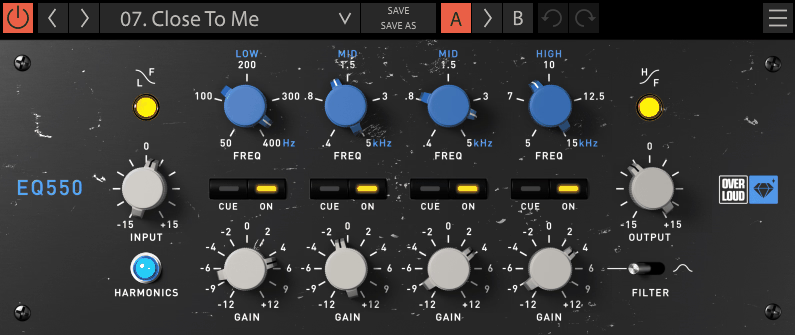
If you’re looking for surgical precision and clinical transparency, this probably isn’t the EQ for you. The Overloud Gem EQ550 is modeled after the classic Neve/Amek 550-series equalizers, and it’s designed to add analog character rather than provide neutral frequency correction. I reach for this when I want to shape tone in a musical way rather than just fix problems.
The plugin models the non-linear behaviors and transformer coloration of the original hardware, which means you’re getting saturation and harmonic interaction between bands when you push it. This works well on sources like vocals and guitars where you want body and presence, though it’s not ideal for every mixing situation.
Key Features:
- Four-Band EQ with Analog-Modeled Curves
The EQ provides low, low-mid, high-mid, and high frequency bands with fixed bandwidths that match the original hardware’s behavior. Each band has its own character, with the low end offering fullness without boxiness and the midrange adding presence without harshness. I find the curves are broader and more musical than typical parametric EQs, which means your adjustments blend into the mix more naturally rather than sounding like obvious EQ moves.
- Harmonic Saturation and Transformer Modeling
When you drive the input or make aggressive boosts, the plugin introduces pleasing harmonic distortion that mimics how the original analog circuit would respond. This isn’t just adding generic distortion; it’s modeling how the specific components interact when pushed. On vocals, this can add warmth and dimension that helps performances sit better in dense arrangements without needing excessive volume.
- Interactive Band Behavior
Unlike digital parametric EQs where each band operates independently, the EQ550’s bands interact with each other similar to analog hardware. When you boost multiple frequencies simultaneously, you get subtle phase relationships and harmonic interplay that creates a more cohesive tonal character. This makes it good for broad tonal shaping but less suitable for precise corrective work where you need bands to behave predictably.
- Vintage-Style Interface with Real-Time Metering
The interface mirrors classic analog console layouts with frequency selection and gain controls arranged in a straightforward manner.
- Low CPU Usage for Analog Modeling
Compared to some other analog-modeled EQs, the Gem EQ550 is relatively efficient on system resources. You can run multiple instances across a session without bringing your computer to its knees, which makes it practical for actual mixing work rather than just using it sparingly on a few key tracks.
8. Lindell Audio MBC
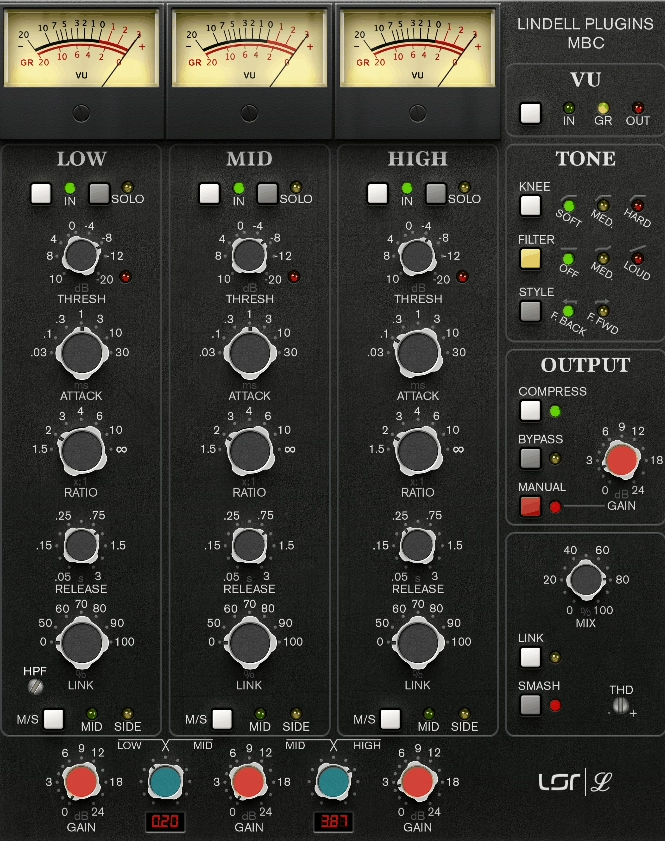
Multiband compression is one of those tools that can either save your mix or completely destroy it if you don’t know what you’re doing. I’ve had sessions where I spent way too long trying to tame problematic frequency ranges with regular compressors stacked on EQs.
The Lindell Audio MBC from Plugin Alliance takes their single-band SBC compressor and expands it into a three-band multiband design that lets you compress lows, mids, and highs independently.
This gives you way more control than just slamming compression across your entire signal. You can tighten up boomy kick drums without affecting your snare snap, or control harsh cymbals without dulling your midrange.
The plugin models a VCA-style compressor similar to the API 2500, which means each band has that punchy, musical character rather than cold digital compression.
Key Features:
- Independent Three-Band Compression
You get separate compressors for low, mid, and high frequency ranges with adjustable crossover points that determine where each band starts and ends. I use this constantly on drum buses where the kick needs tight control but the snare and toms need different treatment. Each band has its own threshold, ratio, attack, and release controls, giving you surgical precision over how different parts of your frequency spectrum respond to compression.
- Adjustable Crossover Section
The crossover controls let you set the exact frequency points where low becomes mid and mid becomes high, typically ranging from around 100Hz to 10kHz. This flexibility means you can tailor the bands to match your specific source material rather than being stuck with fixed frequency divisions.
On bass-heavy electronic music, I would recommend setting the low crossover higher around 150Hz, while on rock mixes around 80Hz to capture more of the kick’s fundamental.
- NUKE Mode for Aggressive Processing
When you engage NUKE mode, the compressor becomes significantly more aggressive across all bands.
This isn’t subtle mix bus glue anymore; it’s for when you want obvious, in-your-face compression that adds energy and attitude. I wouldn’t use it on master bus, but it’s perfect for parallel drum compression or when you’re deliberately going for that crushed, pumping effect on electronic productions!
- Sidechain Filtering Per Band
Each band includes its own sidechain filter that changes how the compressor responds to specific frequencies within that band. This prevents low-end energy from triggering excessive compression in your low band, or stops high-frequency transients from causing unwanted pumping.
The sidechain filter makes the compression feel more intelligent and musical rather than just reacting blindly to whatever’s loudest.
The plugin’s character still leans toward color and vibe rather than transparent processing, which may not suit every mixing situation where you need clinical precision.
9. Waves API 560
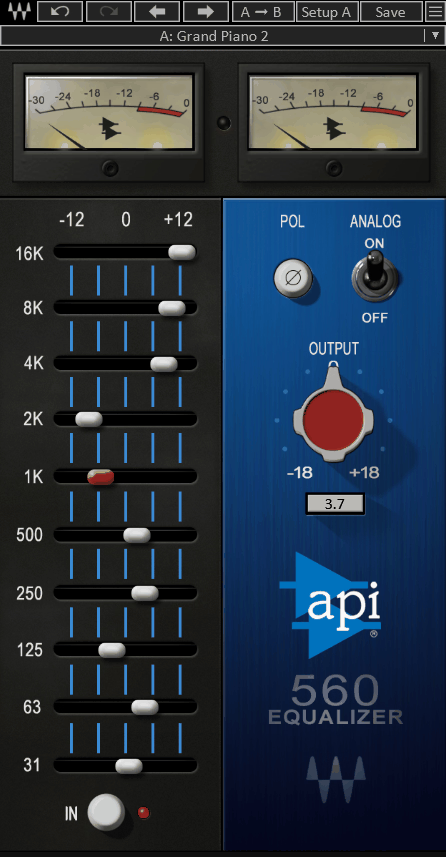
Instead of giving you infinite frequency control, Waves API 560 gives you 10 fixed frequency bands spaced one octave apart from 31Hz to 16kHz, which sounds limiting until you realize how much faster you can make tonal decisions with this layout. What makes this interesting is the Proportional Q design where the bandwidth automatically narrows as you boost or cut more, preventing harsh resonances that plague most graphic EQs.
The plugin includes an Analog modeling switch that adds subtle harmonic coloration and transformer saturation when engaged. This isn’t just a gimmick; it genuinely adds warmth and helps tracks sit better in dense mixes without needing additional saturation plugins..
- Proportional Q Filter Design
As you increase the boost or cut at any band, the Q automatically narrows to give you more focused adjustment without introducing phase issues or harsh artifacts. This means gentle boosts stay broad and musical, while aggressive cuts become more surgical without needing manual Q adjustments.
I find this particularly useful on vocals where subtle 3-4dB boosts in the presence range add clarity without sounding artificially EQ’d.
- 10 Fixed Frequency Bands
The EQ provides 10 octave-spaced bands at 31Hz, 63Hz, 125Hz, 250Hz, 500Hz, 1kHz, 2kHz, 4kHz, 8kHz, and 16kHz, giving you broad tonal control across the entire spectrum. While you can’t target exact frequencies like a parametric EQ, these musical spacing intervals work well for most mixing tasks. On drum overheads, boosting the 8kHz band adds cymbal sparkle without needing to hunt for the perfect frequency.
- Analog Modeling Switch with Harmonic Saturation
When you engage the Analog switch, the plugin introduces subtle harmonic distortion that emulates the original hardware’s transformer and circuit behavior. I would recommend this when you want to add warmth and body to the signal, making digital recordings feel more organic.
The effect is more noticeable when you’re making larger boosts, where the saturation helps prevent the harsh digital character that unmodeled EQs produce.
10. Lindell Audio 50 Series
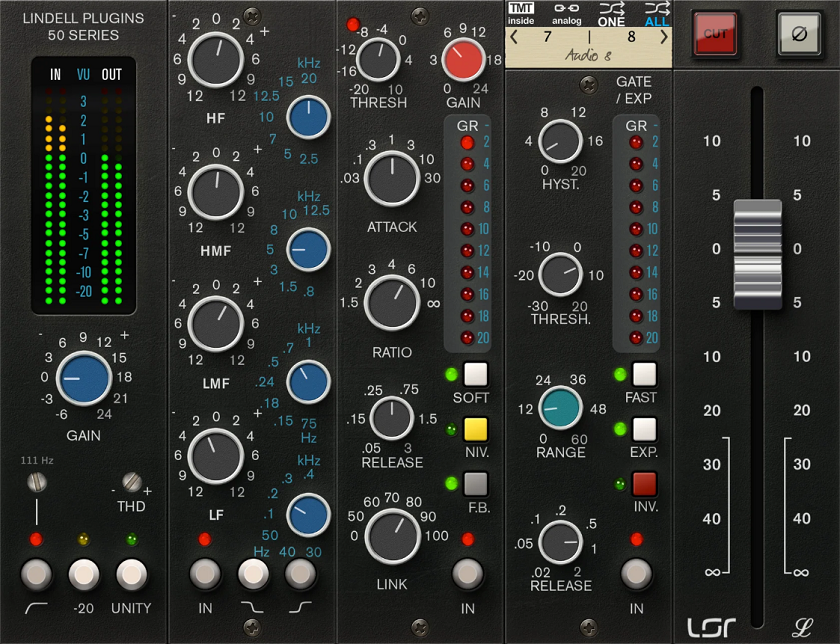
Channel strips can either simplify your workflow or just become another bloated plugin taking up screen space. The Lindell Audio 50 Series from Plugin Alliance is one of those rare cases where having everything in one place actually makes sense.
This API plugin is a complete channel strip that models the classic American console sound inspired by API 500-series hardware, giving you integrated preamp, filters, EQ, and dynamics all working together like they would on an actual console. What I appreciate most is how the stages interact with each other naturally, where driving the preamp changes how the EQ responds and affects the compressor behavior.
Key Features:
- Integrated Preamp Section with Saturation
The preamp stage adds gentle musical saturation that thickens sources without making them sound obviously distorted. When I’m working on thin vocal recordings, I’ll drive the preamp input to add body and presence before the signal even hits the EQ section. This saturation isn’t just adding generic harmonic content; it’s modeling how the specific console circuitry colors the sound, which means you get that American console character where everything feels more present and forward in the mix.
- API-Style EQ with Musical Curves
The EQ section provides broad, musical frequency adjustments rather than surgical parametric control. You get shelving and bell curves that are specifically voiced to emphasize tonal character over precision, which works perfectly when you want to add presence to vocals or clear mud from guitars.
I find the midrange bands particularly useful because they add forwardness without the harsh digital character that unmodeled EQs produce when you boost aggressively.
- Dynamics Processing with Gain Reduction Metering
The compressor section gives you threshold, ratio, attack, and release controls with real-time gain reduction metering that shows exactly how hard you’re compressing. As with many plugins in the list, the dynamics respond musically to program material rather than just following rigid mathematical rules, which means you can get that glued-together feel without obvious pumping
- Signal Flow Design
The interface arranges controls in the logical order that audio passes through them: preamp first, then filters, EQ, and finally dynamics. This makes it much easier to think about gain staging and how each stage affects the next, which is how actual console channels work. You’re not jumping around the interface randomly adjusting parameters; you’re following a natural path from input to output.
11. IK Multimedia EQ-PG
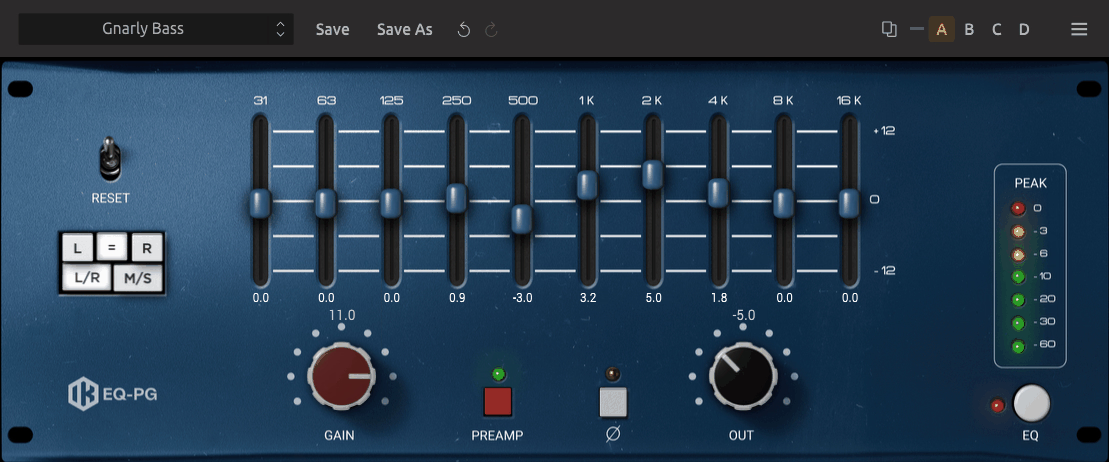
The IK Multimedia EQ-PG from the T-RackS suite actually captures how classic analog EQs behave, where frequency bands interact with each other rather than operating in isolation.
This plugin combines both graphic and parametric elements in one interface, giving you broad tonal shaping plus finer control when you need it. What makes this different from clinical digital EQs is how the bands influence each other musically, just like real analog circuitry where adjusting one frequency affects neighboring areas.
Key Features:
- Hybrid Graphic/Parametric Design
You get the visual simplicity of a graphic EQ combined with parametric flexibility for frequency selection and bandwidth control. I find this approach faster than hunting through endless parametric bands while still giving you enough precision for detailed work.
The interface lets you see your entire EQ curve at once, making broad tonal decisions more intuitive than plugins where you’re tweaking one band at a time without seeing the whole picture.
- Harmonic Richness and Saturation
Beyond just frequency adjustment, the EQ-PG introduces subtle harmonic coloration that mirrors how vintage hardware units colored the signal. Even gentle boosts bring out harmonic depth that makes tracks feel fuller and more present in the mix. When you are working on thin digital recordings, this character can help them sit better alongside analog-recorded material without needing separate saturation plugins.
- Analog-Modeled Frequency Interaction
Unlike digital parametric EQs where each band operates independently, the EQ-PG models how analog filter circuits naturally interact with adjacent frequencies.
When you boost a midrange band, it doesn’t just create an isolated peak; it subtly affects the surrounding frequency response in ways that sound more cohesive and musical. This behavior is particularly noticeable on vocals where midrange lifts add presence without that harsh digital character you get from unmodeled EQs.
- Multiple Band Types and Curves
The EQ provides different filter types including shelving, bell, and notch curves with musical slopes that feel natural rather than overly steep. You can use broad shelving for gentle tonal balance or tighter bell curves for more focused adjustments, and everything responds smoothly without introducing phase issues or harsh artifacts.
12. Tone Empire Model 5000
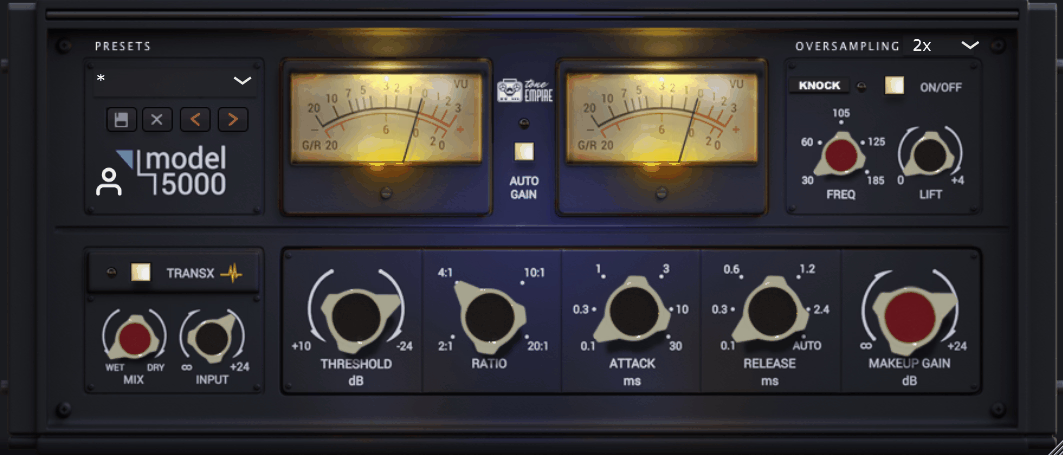
This is a VCA compressor that merges the low-end thrust of American hardware with the timing characteristics of British console compressors, giving you something genuinely different rather than just another API or SSL clone.
What makes Model 5000 VST compressor worth attention is the “Knock” sidechain circuit that emphasizes lower frequencies in the detector path, letting you maintain bass weight while still getting cohesive compression. I would say it’s good to use on drum buses where you need the kick to stay powerful without triggering excessive gain reduction that would kill the groove.
Key Features:
- Knock Circuit for Low-End Preservation
The Knock section functions as specialized sidechain EQ that changes how the compressor responds to bass-heavy material. When you engage Knock on a drum bus, the kick drum maintains its weight and power while the compressor still controls the overall dynamics of the kit.
This prevents that common problem where bass frequencies trigger too much compression and make everything feel weak and lifeless, which is useful on genres like hip-hop or EDM where low-end impact is critical.
- TransX Transformer Saturation
The plugin includes TransX transformer emulation that introduces analog-style harmonic saturation when engaged. This isn’t just generic distortion added on top; it actually interacts with your input level and dynamics to add pleasing harmonic richness.
I find this particularly effective on mix buses where subtle saturation helps glue elements together and adds that analog warmth that makes digital recordings feel more organic and three-dimensional.
- Up to 8x Oversampling
You get oversampling options up to 8x which helps minimize digital artifacts and improves frequency response when you’re driving the compressor hard. On mastering chains where subtle harmonic detail matters, this higher oversampling makes a noticeable difference in how smooth the compression sounds.
- Hybrid Attack and Release Timing
The compressor uses attack and release characteristics derived from British console designs, giving you timing options that work for both tight, aggressive compression and smoother musical bus compression.
The attack times are fast enough to catch transients when you need punch on drums, while the release options provide musical breathing that doesn’t sound overly pumpy on sustained material like vocals or pads.
Freebies:
1. Analog Obsession Poortec
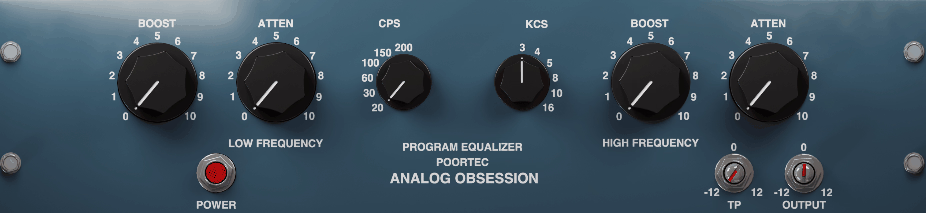
The classic Pultec EQP-1A has shaped countless hit records since the 1950s, but owning the hardware will cost you several thousand dollars. The Analog Obsession Poortec is a free plugin inspired by that legendary design, though it takes a simpler approach rather than attempting to replicate every circuit detail. What caught my attention is how it combines a passive EQ section with a Fairchild-style line amp, which gives it a unique sonic signature compared to other Pultec emulations.
I’ve been using this on bass guitars and kick drums where the classic “Pultec low-end trick” of simultaneously boosting and cutting creates that full, controlled bottom end without muddiness. The two-band structure keeps things simple, but that simplicity is actually what makes it so musical and fast to use.
Key Features:
- Two-Band Passive EQ Design
The plugin uses a passive EQ topology for both low and high frequency bands, which means boosts and cuts interact with your signal in more organic, harmonic-rich ways compared to digital parametric filters.
When I boost the low band around 60-100Hz on kick drums, it adds weight and fullness that feels three-dimensional rather than just louder. The passive design naturally introduces pleasing resonances that make the EQ feel alive rather than sterile.
- Classic Pultec Low-End Trick
You can engage in the famous simultaneous boost and cut technique where you boost and attenuate around the same low-frequency region to create a full yet controlled bass response. This works incredibly well on bass guitars where I want impact without boominess, giving you tight low end that sits perfectly in the mix without eating up headroom or causing mud.
- Fairchild-Style Line Amp Stage
After the passive EQ circuit, there’s a Fairchild-inspired line amplifier that adds pleasing harmonic texture and enhances transients. This amplification stage isn’t just makeup gain; it models how the signal would behave passing through tube-style amplification, adding richness and cohesion to the boosted frequencies.
I notice this especially on vocals where the line amp adds subtle warmth that helps them sit better in dense arrangements.
- Trimpot Drive Control
The plugin includes a trimpot (TP) control that lets you push the amplification stage harder for natural-sounding saturation. When I increase the trimpot, it thickens the tone and adds character without obvious distortion, which is useful for adding analog-style warmth to thin digital recordings. This drive is subtle but effective, adding body without making things sound obviously processed.
2. Analog Obsession BLENDEQ
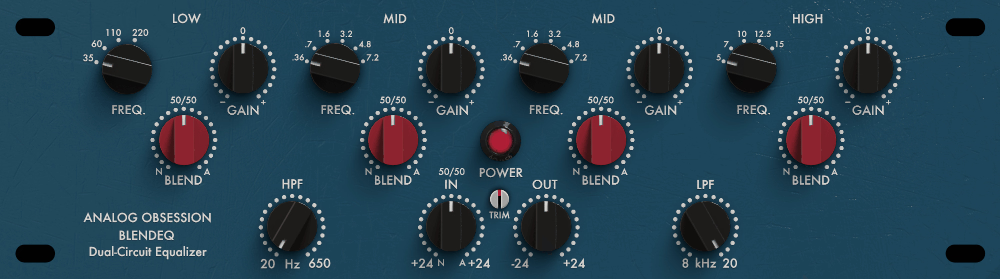
Here’s something you don’t see often: a free plugin that actually competes with paid alternatives in terms of character and musicality. The Analog Obsession BLENDEQ is an equalizer that blends two distinct analog EQ circuits into one interface, creating tonal interactions you won’t get from standard digital parametric EQs.
It adds harmonic richness and presence without sounding obviously processed which is cool. In addition, what makes this different is how the bands interact with each other rather than operating independently, which mirrors how real analog hardware components affect each other through circuit interactions.
Key Features:
- Dual-Circuit Analog Architecture
The plugin combines two separate analog-inspired EQ circuits that work together to create complex harmonic interactions. When I boost a midrange frequency, it doesn’t just create an isolated peak; the dual circuits interact to affect how neighboring frequencies respond, adding subtle coloration and depth.
- Interactive Frequency Band Behavior
Unlike typical digital parametric EQs where bands are completely independent, BLENDEQ’s bands “speak to each other” through circuit modeling. Lifting a midrange band can subtly change how the highs resonate, and cutting low mids might affect perceived warmth in the bottom end.
I notice this particularly on guitars where midrange boosts add body that extends into the high frequencies naturally, creating a more cohesive tonal character.
- Musical Curves Over Surgical Precision
The EQ provides broad, musical frequency adjustments rather than ultra-precise parametric control. This makes it excellent for broad tonal shaping and character enhancement, though less suitable for surgical corrective work.
When you need to add air to vocals or warmth to acoustic guitars, the curves respond in ways that feel natural and pleasing rather than creating obvious digital artifacts.
3. Analog Obsession SSQ
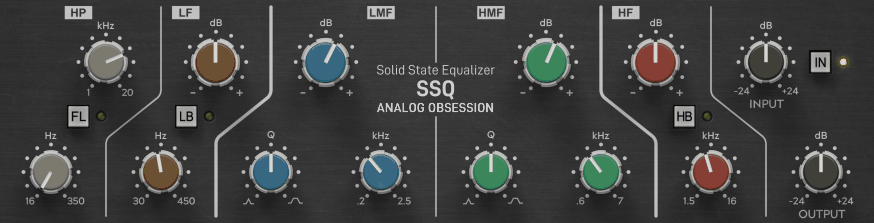
SSL console EQs have been shaping hit records since the 1980s, and getting that sound used to mean spending thousands on hardware or premium plugins. The Analog Obsession SSQ is a free equalizer that models the classic SSL 4000-series console EQ, and I’ve been genuinely impressed by how much character it brings considering it costs nothing.
This isn’t just a basic parametric EQ with some curve shaping. You get fully parametric midbands with up to ±15dB of gain per band, plus the distinctive Brown knob LF section from early SSL desks that adds warmth without muddiness.
What makes this work in real mixing situations is how the bands interact musically rather than behaving like isolated digital filters.
Key Features:
- Brown Knob LF Section
The low-frequency section uses the “Brown knob” design from early 1980s SSL consoles, which has a specific curve and behavior that adds fullness to the low end without creating muddiness.
When I boost around 100Hz on kick drums with this section, it adds weight and power that feels more three-dimensional than standard digital shelf filters. This particular LF implementation is one of the most distinctive sonic characteristics of early SSL boards.
- Switchable Bell and Shelf Filters
The low and high bands can switch between bell (parametric) and shelf modes, giving you flexibility in how you shape the extreme frequency ranges. I would use bell mode when I need focused adjustments on specific frequencies, and shelf mode for broader tonal shaping. On mix buses, high shelves around 10-12kHz add air and openness without the harsh digital character you get from transparent EQs.
- Oversampling Mode
Click the Analog Obsession logo and it turns red, engaging oversampling that reduces digital artifacts especially when pushing gain or using aggressive settings. This is particularly helpful on master buses where subtle harmonic distortion needs to remain clean and musical. The CPU hit is minimal, so I typically leave oversampling engaged on important channels.
- Integrated High-Pass and Low-Pass Filters
Beyond the main EQ bands, you get dedicated HP and LP filters for removing unwanted rumble or taming excessive highs. These filters have gentle slopes that sound natural rather than overly steep, making them useful for cleaning up tracks without creating obvious filtering artifacts.
4. Analog Obsession FRANK 2
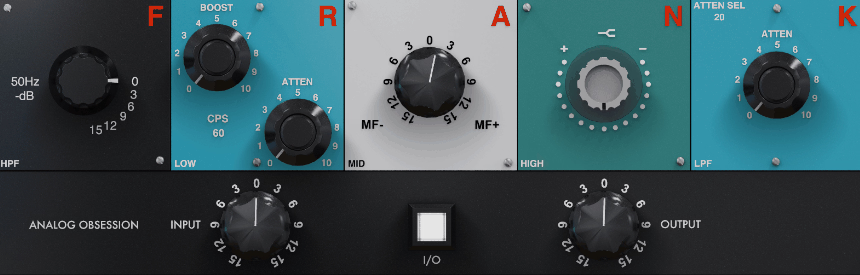
Most EQ plugins either copy one specific piece of hardware or try to be everything to everyone and fail at both. I’ve tested dozens of free EQs over the years, and most of them sound thin or lifeless.
The Analog Obsession FRANK 2 takes a different approach by combining the best frequency bands from multiple classic analog designs including Helios, Pultec, API, and Neve into one hybrid equalizer.
What makes this interesting is that each band is specifically chosen for its tonal character rather than just covering the frequency spectrum generically. You get a Helios-style high-pass at 50Hz, a Pultec-type bell at 60Hz, an API-inspired band at 1.6kHz, and Neve/Pultec-style high-frequency shelving that work together musically.
Key Features:
- Helios High-Pass Filter
The plugin includes a Helios-style high-pass filter centered around 50Hz that gently removes sub-bass rumble while retaining the foundation of your low end.
You can use it to clean up unnecessary low-frequency content that eats up headroom and muddies the mix. Unlike steep digital filters that can sound hollow, this high-pass has a gentle slope that maintains the natural weight of instruments.
- Pultec Bell at 60Hz
You get a Pultec-type bell curve at 60Hz that delivers that characteristic low-end shaping the original hardware is famous for. When I boost this on kick drums or bass, it adds fullness and warmth without creating boominess. The curve is specifically voiced to enhance low-end presence in a musical way rather than just adding generic bass boost.
- API-Style Midrange Band
The midrange section features an API-inspired band centered at 1.6kHz, which is a sweet spot for clarity and presence in most mixes. This frequency range is where vocals and lead instruments need definition to cut through dense arrangements. I find this band particularly useful for adding forward energy to mix elements without introducing harshness.
- Custom Line Amp
After the EQ circuit, there’s a custom line amp stage with compensated gain that adds subtle harmonic coloration and maintains energy as you shape tone. This isn’t just makeup gain; it’s modeling how the signal would pass through an output stage in real analog hardware, adding cohesion and analog-style saturation.

Hello, I’m Viliam, I started this audio plugin focused blog to keep you updated on the latest trends, news and everything plugin related. I’ll put the most emphasis on the topics covering best VST, AU and AAX plugins. If you find some great plugin suggestions for us to include on our site, feel free to let me know, so I can take a look!