Finding Kontakt libraries that actually work in R&B and pop production is harder than it should be. Most libraries either give you overly pristine acoustic recordings that clash with modern beats, or heavily processed presets that sound generic the moment you load them.
What I’ve noticed after testing various libraries is that the useful ones share something in common – they’re designed with actual production workflows in mind rather than just technical specs. The libraries worth having understand that you need sounds that sit naturally in mixes without hours of tweaking, but still give you enough control to make them fit your specific track.
These are the Kontakt libraries that I think would work best for R&B and Pop music:
1. Alicia’s Electric Keys

Electric piano libraries typically obsess over recreating specific vintage models with forensic accuracy, which sounds impressive until you realize most modern tracks don’t need a museum-accurate Rhodes clone.
What they need is an electric piano that feels alive, responds to dynamics naturally, and sits in a mix without demanding endless tweaking. Alicia’s Electric Keys is an ideal Pop Kontakt library as it’s built around the concept of expressive realism over technical fetishism – it’s not trying to be a historically accurate vintage recreation but rather captures the character and musical usefulness of electric pianos as they’re actually used in modern records.
I think what makes this particularly practical is how the instrument prioritizes playability, emotional response, and mix-ready tone shaped by Alicia Keys’ songwriting style where keys function as emotional backbone rather than flashy lead.
The philosophy here is about musical connection – the instrument is designed to feel alive under your fingers and support songwriting without pulling you into endless technical tweaking.
What this library offers:
- Deeply Sampled with Multiple Velocity Layers
The instrument is built from deeply sampled electric piano recordings captured with careful attention to dynamic behavior, mechanical detail, and tonal consistency across the keyboard. Multiple velocity layers ensure transitions between soft and hard playing feel smooth and believable, avoiding abrupt timbral jumps common in cheaper libraries.
The sampling captures subtle hammer and key noise adding tactile realism, natural decay behavior rather than artificially looped tails, pedal interactions and sympathetic resonance contributing to depth, and room character giving the instrument a sense of physical space.
- Velocity Response Tuned for Musical Phrasing
The velocity response curve feels deliberately tuned for musical phrasing rather than raw impact. Soft velocities produce rounded, velvety tones that feel intimate and restrained, ideal for ballads, verses, and emotional chord progressions.
As velocity increases, harmonic complexity and brightness grow gradually maintaining smoothness instead of snapping into harshness. I think this makes it especially suitable for expressive chord voicings, gospel-influenced harmony, neo-soul progressions, and rhythm parts that rely on touch rather than attack.
- Warm, Mid-Focused Tonal Balance
Tonally, the instrument sits in a warm, mid-focused space with smooth high end and controlled low register. It avoids the overly bell-like brightness associated with some classic Rhodes emulations, instead favoring a more rounded, polished tone that blends easily with vocals and layered instrumentation.
In my opinion, the low mids are full without becoming muddy which is crucial for R&B and pop mixes where bass, kick, and vocal fundamentals already compete for space, and the highs are present but never piercing.
- Purpose-Built Effects and Processing
Rather than relying on generic effects chains, the instrument includes purpose-built processing tuned specifically for electric piano material. Compression is gentle and musical helping notes sit evenly without squashing dynamics.
Saturation adds harmonic richness without grit unless deliberately pushed. Spatial effects are subtle and tasteful enhancing depth without washing out articulation. I would say this built-in processing is why the instrument is often described as mix-ready – in many cases it can be dropped into a track and left largely untouched.
- Streamlined Musician-Centric Interface
The interface is intentionally streamlined focusing on controls that matter in real musical situations rather than overwhelming you with technical parameters.
Key sound-shaping options include velocity and dynamics control for tailoring responsiveness to your keyboard and playing style, tone and character adjustments subtly reshaping brightness and body, and room and ambience controls letting you move from dry and intimate to more spacious textures.
- Workflow for Songwriting Speed
The instrument is designed to support songwriting speed and creative flow. Because the sound is already shaped for modern contexts, you can focus on composition and arrangement rather than sound design.
It’s particularly effective for sketching song ideas quickly, building chord progressions before layering other instruments, supporting topline writing sessions, and creating demos that already feel close to finished.
2. Glaze 2

Where Glaze 2 becomes particularly useful is that it’s built around processed vocal and choral textures that have been captured and manipulated to yield tuned melodic layers rather than realistic singing performances. These aren’t phrases of lyrics or sung performances meant to mimic a vocalist’s articulation but timbral building blocks that sit comfortably as melodic content.
The presets are crafted to fulfill specific musical roles – you can browse through patches and hear usable sounds immediately without lengthy editing before they sit in a track. The library works particularly well as harmonic support under vocals, melodic hooks that feel vocal-esque even without lyrics, and textural layers in bridges and choruses that add depth to transitions.
- Vocal-Derived Source Material for Organic Character
The core samples use processed vocal and choral textures as foundation, giving presets the humanity and richness of voice with the predictability and control of a synth. This makes them stand out in pop and R&B mixes without feeling like generic pads or sterile digital waveforms.
- Formant-Rich Spectral Identity
Because the underlying samples are vocal in origin, tones retain spectral identity of human voice even when pitched. I would say this makes them complementary to lead vocals, creating harmonic support that feels connected to the human element rather than synthetic, which matters in vocal-centric production where parts need to blend with singing.
- Warmth with Breathing Quality
Even static pads have a subtle breathing quality that helps them sit in R&B and pop arrangements without sounding flat. The natural warmth and movement come from the vocal source material rather than artificial modulation, giving parts an emotional weight that typical synth pads often lack.
- Performance-Ready Behavior
The mapping of controls to expressive response makes it playable without resorting to deep programming or complex modulation matrixes. In my opinion, this is ideal for producers who sketch ideas fast or want a sonic palette that feels complete and musically oriented without hours of sound design work.
- Versatile Role in Arrangements
The library functions as atmospheric support, melodic lead, or harmonic layering tool rather than single-purpose pad instrument. I think it bridges the gap between synth and voice in downtempo and alternative pop, helping unify instrumental and vocal motifs in ways classic synths sometimes fail to achieve.
3. Playbox

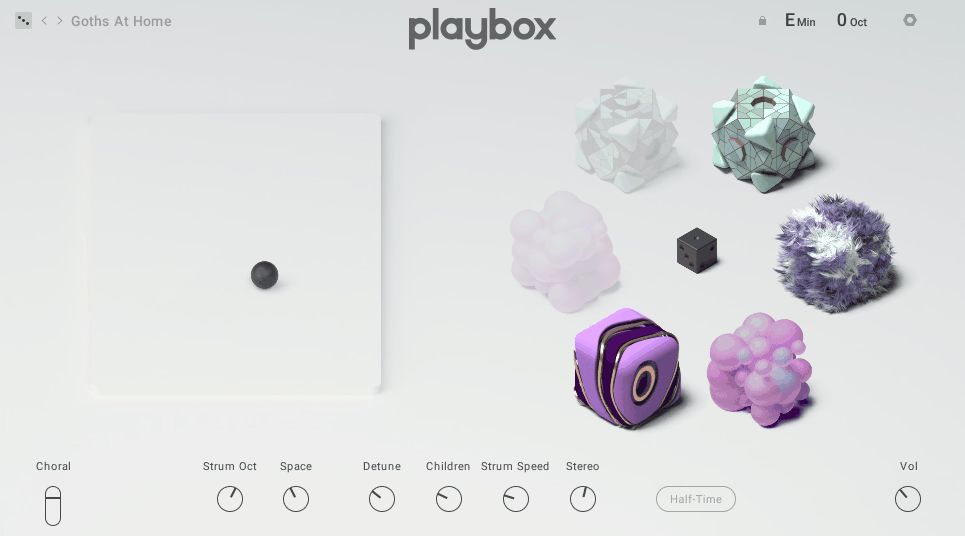
Writers’ block hits differently when you’re staring at an empty MIDI piano roll trying to come up with chord progressions from scratch. Instead of handing you static sampled instruments, Playbox functions as a creative chord and melodic idea engine that responds to your input and fills in musical decisions in a way that feels more like co-composition than preset playback.
When you play notes or chords on your keyboard, Playbox uses an internal logic engine to interpret your input and produce harmonically related chord voicings, melodic phrases and counter-melodies, and textural or rhythmic layers that match tempo.
I think what makes this particularly useful is how the behavior is controlled through parameters that let you influence randomness, pattern variation, harmonic tension, and velocity weighting.
For producers who write melodies by ear, this means the instrument can generate harmonic material faster than manual programming and often in directions you might not initially think of. I would say it’s musical suggestion and performance rather than just a box of samples.
The workflow is designed for quick ideation – you load it in Kontakt, set your tempo, play a note or chord (even a single note can trigger harmonically related material), adjust variation and randomization parameters to shape how adventurous or stable you want the progression, and drag generated patterns into your DAW for editing if needed.
Things to mention:
- Interactive Performance Model with Chord Interpretation
The instrument doesn’t simply trigger samples when you play notes – it interprets your input and generates related harmonies rather than replaying the same sample. You can influence how dense or sparse the resulting harmony is, which means minimal input can produce richly voiced progressions that you then edit or expand on rather than building chords from scratch every time.
- Pattern Generation with Tempo Sync
The engine creates rhythmic or melodic patterns that adapt to the input you provide and your DAW’s tempo. I think this matters in sessions where you’re sketching ideas quickly because it lets you lock in a harmonic direction early and build around it, which is valuable when crafting catchy, emotional pop or R&B progressions under time pressure.
- Randomization and Variation Controls
You can dial in how predictable or exploratory the generated material should be, from stable chord voicings to evolving, unexpected melodic movement. In my opinion, this helps dismantle writers’ block by turning minimal input into fully voiced ideas, and the variation tools produce harmonically coherent material that works well in R&B and pop where vocal melodies rely on strong progressions.
- Curated Sample Material with Production-Ready Character
The foundation uses a wide variety of sample material including organic instruments, synth voices, and hybrid textures that have been processed and organized around musical usefulness rather than academic capture detail.
The samples can be combined across layers without conflicts and retain enough sonic identity to avoid sounding generic, which reduces the need for heavy external sound design before parts feel useful in a track.
- Performance Responsiveness for Musical Gestures
The instrument responds to playing dynamics and input in a way that feels musical rather than robotic. You might play a root note and have Playbox generate a complementary chordal stack that suits your key and mood, then shift how that chord evolves over time or how much rhythmic motion is applied with variation controls, making it feel like a musical collaborator.
4. 40’s Very Own Drums
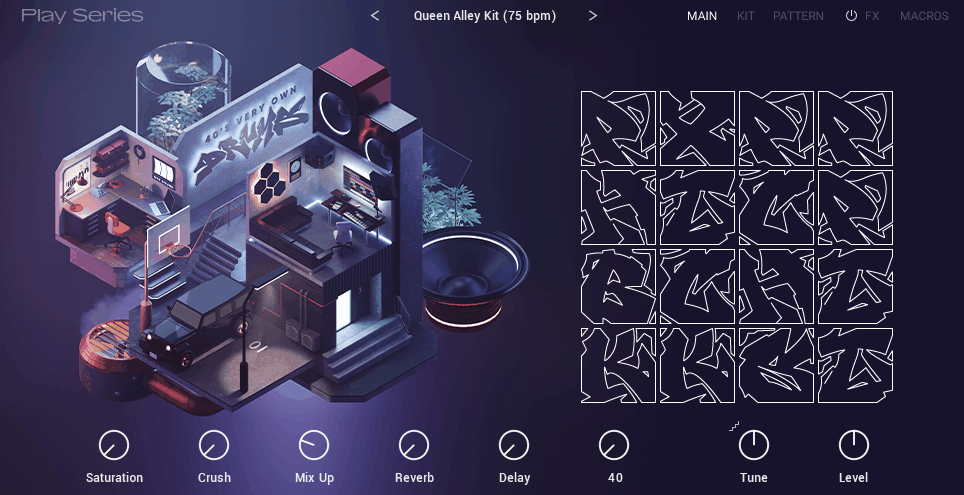
Many drum libraries hand you raw one-shots and expect you to shape them extensively with processing chains before they feel usable in a mix. 40’s Very Own Drums flips that concept by providing 15 complete drum kits with production-ready sounds where the mixing, character, and vibe are already baked in – kicks, claps, hats, and percussion that sit comfortably in modern production environments without needing heavy external treatment.
I think what makes this collaboration with Grammy-winning producer Noah “40” Shebib particularly useful is how it delivers drums with a specific sonic identity rooted in 40’s minimalistic, atmospheric approach to hip-hop and R&B beats rather than being a generic sample pack.
The library includes over 200 individual sounds in total organized across the 15 kits, with each kit containing 16 one-shot drum sounds and 16 MIDI groove patterns that you can drag into your DAW for immediate arrangement editing.
I would say the kits represent a blend of live instrumentation, processed percussion, and electronic elements that align with 40’s working style – sparse yet emotive beats with atmospheric low end and crisp, filtered high-end transient elements.
The user interface stays clean and performance-oriented with six assignable macro knobs on the main page plus tabs for Kit, FX, Pattern, and Macro controls, making it straightforward to experiment without menu diving.
- Signature “40” Macro Control
A single knob designed to instantly impart Shebib’s signature vibe through a tailored combination of low-pass filtering, saturation, compression, and sample rate reduction.
This gives you that “underwater” ambient drum quality associated with 40’s production aesthetic – a sound that has defined much of modern R&B and certain strains of hip-hop, letting you dial in subdued, laid-back feel for verses or add atmospheric weight beneath vocals.
- Pre-Mixed Drum Sounds with Character
The sounds are curated and processed to sit well in mix context without extensive external treatment. This means you often don’t need heavy processing – light EQ, subtle compression, and maybe reverb or delay are usually enough to fit them into R&B, soul, and contemporary pop contexts, which saves time especially early in the creative process when ideas matter more than perfect micro-editing.
- Sample Swapping and Customization Options
You can swap samples inside kits, adjust pitch, velocity response, and tweak insert effects per sound. I think this flexibility means you aren’t locked into static sounds but can edit and personalize material while still benefiting from the curated starting point that already has vibe and character built in.
- Lightweight
The CPU efficiency means you can layer multiple instances or use it alongside other instruments without session-clogging resource demands, which matters for producers working in compact setups.
5. 40’s Very Own Keys

Keyboard libraries often try to be everything to everyone, offering pristine acoustic captures or neutral synth presets that require extensive shaping to fit a specific vibe. 40’s Very Own Keys takes the opposite approach by delivering around 150 presets that embrace a tonal identity – the palette leans toward underwater warmth, gated resonance, bottom-heavy sub layers, and dreamy harmonic beds rather than trying to be clinical or transparent.
I think what sets this apart is how these sounds were captured and crafted from Noah “40” Shebib’s personal collection of instruments – including his synths, keyboards, and outboard gear – recorded in his famed SOTA Studios in Toronto.
The presets span electric piano, grand piano, classic synth textures, pads, and atmospheric layers, emphasizing lush harmonic pads that sit well beneath vocals, warm bottom-oriented bass keys, dreamy synth leads and atmospheric textures, and electric-leaning keyboard tones that are softer and mood-oriented rather than percussive or bright.
The library is designed to support vocals and fill mood space rather than cut through like a classical piano or bright synth lead, which makes it particularly suited to modern R&B and pop.
The Play Series interface centers on layer selection and preset browsing for quickly switching tones, macro controls for shaping texture and depth, and real-time effects like reverb, delay, phaser, and width, letting you play with a MIDI keyboard and immediately get expressive results without huge macro programming.
- Signature “40” Macro Control
A composite set of effects that emulates Shebib’s classic production chain, combining low-pass filtering, saturation, frequency removal, and sample rate manipulation.
This produces that iconic “underwater” filtered effect appearing on many Drake productions, letting you quickly dial in mellow, subdued textures for verse sections, deeper enveloping pad tones for hooks, or filtered low-frequency emphasis that creates space under vocal parts.
- Bottom-Heavy Bass Keys and Sub Layers
The presets include warm, bottom-oriented keys that serve as sub or low melodic content. In my opinion, this helps keys sit well under lead vocals and layered instrumentation, giving you depth without harsh top-end glare, which fits the subtle, less intrusive keyboard roles common in modern urban and pop mixes.
- 150 Presets from Personal Studio Collection
The library spans electric piano, grand piano, classic synth textures, pads, and atmospheric layers captured from Shebib’s personal instruments and outboard gear. I think this provides wide creative options within a stylistically defined library, offering flexibility for melodic roles without being a generic sample pack.
- Production-Ready Character Out of the Box
Many presets are already shaped with effects and tonal balance that fit well in R&B and pop mixes without heavy post-processing. I would say this is particularly helpful for producers who want that Shebib-style vibe at the press of a knob, achieving production-ready sound without extensive external processing chains.
- Fast Workflow with Real-Time Controls
The Play Series design means quick loading, intuitive control, and less time fiddling with unrelated menus. The interface favors fast workflow and real-time control over deep synthesis menus, which is especially useful in beat-making and arrangement sessions where you want to stay in creative flow rather than diving into complex parameter editing.
6. Session Guitarist: Electric Ruby Deluxe

Guitar loop libraries often trap you in rigid audio files that don’t adapt to your chord progressions or song structure, while complex guitar modeling plugins demand deep knowledge to get usable results.
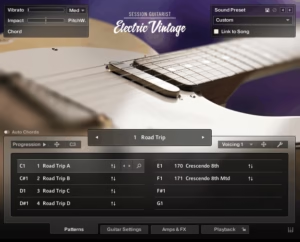
Session Guitarist: Electric Ruby Deluxe occupies the middle ground by using MIDI-triggered patterns and underlying performance samples that respond to your input rather than offering static audio loops.
I think what makes this particularly practical is the dual-mode architecture – you can either trigger pre-recorded musical patterns organized into rhythmic categories or play individual notes and riffs with natural articulation for lead parts and hooks.
The instrument is built around a high-quality sampled hollowbody electric guitar captured with close mic positions and direct feeds. The integrated signal chain includes amp models, cabinet emulations, modulation effects, delays and reverbs giving you flexibility to create tones from clean and warm to slightly overdriven textures without external plugins.
The patterns are tempo-syncable to your DAW and you can drag MIDI directly from the instrument to edit or rearrange like any MIDI part.
- Pattern Mode with Hundreds of Musical Grooves
The library contains hundreds of patterns spread across many styles, from mellow laid-back R&B grooves to driving pop and indie parts. Patterns are musically coherent, feeling like played parts rather than robotic loops, and they respond to your chord voicings to ensure harmonic consistency. This lets you produce natural guitar rhythm parts without deep guitar programming knowledge.
- Playable Melodic Guitar Instrument
The Deluxe version includes a fully playable melodic guitar instrument that transitions from pattern-only tool into genuinely playable instrument. You can play individual notes and riffs with natural articulation, access muted and open articulations, and trigger harmonics, slides, or expressive details via velocity or key switches, which is useful for hooks, fills, licks, and lead parts.
- Natural Guitar Articulations for Realistic Performance
The instrument captures muted notes for rhythm comping, harmonics for melodic color, slides and pitch nuance, and dynamic velocity curves responding to playing intensity.
- Multiple Pickup Signals and Microphone Blend
The instrument includes multiple pickup signals and microphone blend allowing you to shape the guitar’s character from intimate and close to broader and more ambient. This means you can dial the tone to fit whether you need upfront presence or spacious background texture without external processing.
- MIDI Export and DAW Integration
Patterns can be dragged straight into your DAW as MIDI data, becoming starting points for detailed arrangement editing once they’re in piano roll view. The instrument offers NKS support meaning you can browse and load patches via Komplete Kontrol keyboards and Maschine hardware, and assign performance controls directly to hardware knobs for real-time tweaking.
- Integrated Tone Shaping Without External Plugins
The built-in signal chain creates studio-ready, mix-friendly tones without external plugins. You can craft clean and warm tones for R&B ballads, slightly overdriven textures for indie and soul grooves, or ambient modulated sounds for atmospheric pop, with presets ranging from natural and subtle to enhanced and contemporary via effects chains.
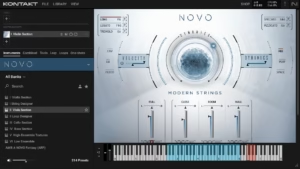
7. Session Strings Pro 2

String libraries often force you to choose between simplistic preset loops that lack expression or deep orchestral engines that demand extensive programming knowledge to sound musical. Session Strings Pro 2 bridges this gap as a successor to the original Session Strings with significantly expanded articulations, better legato crossfades, richer samples, dynamic layering, and more performance-driven control overall.
I think what makes this widely adopted by composers across genres is how it delivers strings that feel emotional and organic without demanding deep string writing knowledge or endless sequencing tweaks.
The workflow emphasizes quick results – producers can sketch string parts that feel alive and natural even when using MIDI keyboard performance instead of detailed orchestral programming.
I would say the preset organization is intuitive with drag-and-drop articulation MIDI patterns that help speed up string arrangements without manual editing, and community users report drafting string parts in minutes rather than hours. The library runs in Kontakt Player and full Kontakt engine with NKS support for hardware integration.
Features:
- Deeply Sampled Ensemble String Sections
The foundation uses multiple violins, violas, cellos, and sometimes double bass layers recorded with musical intention rather than purely technical precision.
The instrument captures bow attack variations, natural vibrato, ensemble width, and section interplay with multiple velocity layers and rich round-robins so repeated notes don’t feel machine-like, often reacting musically to performance with subtle dynamic changes and swells occurring naturally.
- Performance-Oriented Articulation System
The library integrates multiple musical articulations into single instrument patches including sustains and swells for pads, legato lines for expressive melodic motion, staccatos and short attacks for rhythmic motifs, spiccatos for bounce in grooves, and vibrato or non-vibrato options.
These articulations are mapped to performance controls via key switches or MIDI CC assignments so you can switch or blend them in real time rather than drawing every detail.
- Musically Intelligent Legato Transitions
Legato control transitions smoothly between notes preserving expression without audible artifacts. In my opinion, this makes it feel much more playable than older string patches that simply trigger separate samples per articulation without smooth blending, which is essential for expressive melodic motion in ballads where strings need to flow naturally.
- Warm Cinematic Character for Vocal Support
Tonally, the library leans into warm, cinematic string body making it at home in lush pop ballads and dramatic R&B hooks. I would say the natural ensemble body and smooth dynamic control mean strings can sit under vocals without overpowering them, enhancing vocal performance without drawing focus, which is particularly useful where strings serve emotional and harmonic roles rather than feature solos.
- Dynamic and Expression Mapping
You can shape crescendos, decrescendos, and overall emotive performance from MIDI velocity and CC input. The instrument reacts to subtle dynamic changes with ensemble thickening occurring naturally across the keyboard range, helping it avoid the static sample-on-off feel many entry-level string patches suffer from.
- Rhythmic Versatility for Contemporary Production
Staccatos and spiccato layers can be used in rhythmic syncopation with drum grooves, which is a common pop and R&B arrangement technique. You can use sustained swells in choruses to give lift and emotional weight, then switch to short articulations in verses or bridges for rhythmic interplay with percussion.
8. Una Corda

Una Corda captures a completely custom-built piano with only one string per key, originally built by pianist and designer David Klavins in collaboration with Nils Frahm who also added fabric preparations to manipulate how the hammers strike the strings during recording.
I think this radical departure from standard pianos yields sound that is pure and resonant with freer overtones and less thickness, delicate and expressive like a hybrid between piano, harp, and mallet instrument, and highly textured by preparation where different materials under the hammer affect both attack and decay.
Unca Corda includes 100 snapshot presets making it easy to explore a wide range of sounds quickly, and the tone is described as lusciously detailed and responsive, highly tunable from acoustic to ambient or pad-like via convolution and effects.
I would say the library runs in free Kontakt Player or full Kontakt integrating smoothly into almost any DAW workflow, and hardware controllers with MIDI CC can map many parameters for expressive play.
- Three Distinct Sound Banks with Character Variation
Pure offers the unaltered one-string sound with high resonance and clean tone, closest to how the instrument naturally speaks and ideal for melodic lines or textural backgrounds.
Felt adds material between hammers and strings softening the attack and creating gentle mellow timbre resembling a soft electric piano or ethereal keys layer.
Cotton produces more percussive, slightly gritty attack with additional overtones adding punch and character for rhythm-driven or experimental contexts.
- Workbench for Advanced Sound Sculpting
The Workbench section lets you add harmonics to enrich or produce overtone complexity, fold in reverse sample layers creating reverse tonal reactions or textures, control tonal depth between natural and resonant sound, add additional fabric layers like curtain, silk, or leather beyond the original cotton and felt, and dial in ambient room noise, mechanical texture, pedal noises, and even piano player noises. This treats Una Corda as both musical instrument and sound-design engine.
- Response Section for Articulation Control
The Response section shapes attack onset speed for percussive versus pad-like behavior, adds sympathetic string resonance and sustained character, configures velocity curves and pedal modes for how your MIDI controller influences dynamics and sustain behavior, and adjusts tuning and temperament to choose how notes resonate together or slightly detune for expressive tones.
In my opinion, this fundamentally changes how the instrument responds rather than just tweaking parameters.
- Finish Section with Effects and Mixing Tools
The Finish section provides three-band equalization for shaping body, presence, and brilliance, transient and compression adjustment to sit the instrument in a mix, vintage saturation and tape for warmth or grit, stereo imaging to widen or focus presence, convolution reverb and space presets creating anything from close intimate rooms to huge hall ambience, and over 20 style effects presets with complex chains that alter timbre or add modulation.
- Fast Controls for Quick Sound Shaping
The front page includes Color control to shift between softer and harder timbre, Dynamics adjustment for how the instrument responds to velocity from compressed even response to more expressive dynamics, and Space control to blend in convolution reverb and ambience. I think these simple macros let you shape the core feel quickly when sketching ideas.
- Versatile Application Across Genres
The prepared tones and reverbs turn Una Corda into ethereal pads and textured harmonic beds for ambient and cinematic music, the felt or cotton variants work as lush harmony layers under vocals in pop and R&B, mixed with effects the samples can be warped into rich synth pads for electronic producers, and the unpredictable overtone behavior provides emotional coloring for film and game scoring.
9. Session Guitarist: Electric Sunburst Deluxe

Electric Sunburst Deluxe addresses the challenge of getting realistic guitar parts without booking studio time, hiring session musicians, or deep guitar programming knowledge – most sample libraries either give you locked audio loops or require extensive knowledge to sound convincing.
Deluxe edition expands significantly on the original Electric Sunburst with more content, greater control, and deeper tonal flexibility. I think what makes this particularly useful is the dual-mode architecture that lets you work with pre-programmed musical patterns or freely play custom melodic lines within the same instrument.
The library is built to be usable in pop, R&B, soul, funk, indie, and contemporary rock arrangements where electric guitar parts add groove, texture, or melodic interest. I would say the instrument uses Kontakt Player or full Kontakt with full NKS/KOMPLETE KONTROL support meaning you can browse with NI hardware, and the tone occupies sonic space that blends naturally with vocals, keys, and programmed drums without extensive editing.
- Patterns with Dynamic Search
The library contains 237 patterns and 51 song presets, significantly more than the original which had 154 patterns. Patterns trigger musical guitar parts in tempo with your DAW by simply playing a chord, generating strums, arpeggios, rhythmic riffs, or intervals. I think the dynamic pattern search that lets you filter by time signature, playing style, and rhythmic feel makes it easier to find parts that fit specific genres.
- Playable Melodic Instrument with Articulations
Unlike the original Sunburst which was pattern-only, Deluxe’s Melody instrument lets you craft custom electric guitar lines using your MIDI keyboard. You can access articulations like muted notes, gentle harmonics, slides, and tremolo, giving more realistic feel and phrasing to lead parts.
In my opinion, this is a significant improvement making it more than just a pattern generator.
- Multiple Pickup and Mic Captures
The samples include separate bridge and neck pickup captures giving you control over tonal balance between brightness and body, plus a condenser mic feed above the strings for extra detail and presence. Articulations were recorded with pick and fingers for realistic performance nuance, and additional noises and fretboard nuances enhance realism.
- Comprehensive Signal Chain and Effects
The built-in tone shaping includes five amp models and ten cabinet emulations for foundational tone shaping, new modulation pedals (Chorus, Flanger, Phaser), REPLIKA Delay, algorithmic reverb, tape emulation, high-quality EQ, and vintage compressor models. I would say this kind of in-instrument tone control is particularly useful for pop and R&B producers who want to slot guitar parts right into a mix without extensive post-processing.
- MIDI Export and Workflow Tools
MIDI drag-and-drop lets you pull pattern MIDI directly into your DAW for further editing. Autochord and voicing presets help non-guitarist producers generate realistic chord voicings from simple inputs. Humanization and feel controls reduce mechanical stiffness and add slight timing or velocity variations for a more live feel.
10. Ignition Keys

Most producers waste hours tweaking generic synth presets or programming patches from scratch just to get keyboard sounds that fit modern R&B and pop tracks. The alternative is using preset packs that sound overused and dated within months, which doesn’t solve the problem either.
Ignition Keys is built as a “next-gen hitmaker keys” designed specifically for producers who need to quickly sketch memorable chord parts, vocal-like pads, glistening leads, and ambient harmonic elements without spending time on deep synthesis programming.
What separates this from typical preset libraries is the intentional focus on contemporary pop and urban sonics rather than trying to be everything to everyone. The workflow is designed for producers who want to move fast – load a preset, adjust a few parameters for vibe, and lock it into the track. I would say the presets are already processed and styled so you often don’t need heavy external FX chains, just light EQ and compression to sit it in the mix.
The instrument functions as a primary or secondary keyboard layer in typical production sessions, whether as a lead pad during verse and chorus sections, harmonic bed beneath vocals, textural fill for bridges, or interactive sound source via automation over sections.
- Over 150 Presets from 106 Sound Sources
The library includes over 150 presets spanning 10 preset categories built from 106 sound sources. The sound palette centers on warm modern pianos with pop and urban sensibility, vintage-styled organs and keys with character, resonant synth leads that cut through mixes, hybrid pads and vocal-inspired texture layers, and metallic plucks and ethereal effects that add depth and hook quality.
- Layered Sound Editor with A/B Mixing
Each preset typically has two layers (A/B) per patch. You can independently adjust tuning, filter settings, panning, and ADSR envelopes for each layer, letting you blend tones to create everything from bright leads to mellow, textural beds. In my opinion, this layer control gives you flexibility to customize presets beyond just effect tweaking.
- Effects Editor with Drag-and-Drop Chain
The instrument lets you customize the effects chain per preset with the ability to swap effects in and out or reorder them via drag-and-drop. Common effects include tape wobble adding tape-like modulation, lo-fi bitcrusher for gritty textured distortion, resonant filters, delays, and reverbs. I think this helps make keyboard tones feel current and polished without external plugins.
- Six Assignable Macros for Real-Time Control
Macros let you control multiple parameters at once and assign them to hardware controllers like knobs on a keyboard or Maschine pads. Typical macro targets include filter, distortion, reverb amount, modulation depth, and other expressive parameters that can be tweaked in real time. I would say this is particularly useful for automation over sections to make the same preset evolve throughout a track.
- 16-Step Sequencer for Motion
The built-in sequencer isn’t a full pattern generator but lets you quickly craft rhythmic or melodic sequences inside the instrument. This is useful when sketching ideas or adding motion under chords without leaving the plugin to program MIDI patterns in your DAW.
- Kontakt Player Compatibility with Hardware Integration
The instrument runs in Kontakt Player (free) or full Kontakt engine with integration for DAWs, NI Komplete Kontrol keyboards, Maschine hardware, and Akai MPC hardware with tailored interface support for standalone MPC workflow. Settings and customization page lets you adjust velocity curves, key ranges, and other performance behavior to match your playing style.
11. Analog Dreams (FREE)

Analog Dreams is a free synth-based instrument rooted in classic analog hardware aesthetics but with modern processing and sequencing tools to make those sounds relevant in contemporary contexts. It prioritizes play-ready presets with intuitive sound shaping rather than exposing you to deep synthesis programming.
The library is often used for retro pads, basses, leads, and plucked textures that give tracks a nostalgic emotional edge or broad harmonic foundation.
I would say the overall tonal signature leans toward retro warmth, rich harmonics, and analog-like character rather than pristine digital clarity, which is especially effective when you want moody, expressive synth textures rather than sterile generic digital pads.
What you get:
- Dual-Layer Architecture for Sound Blending
As with other instruments in this list, it’s built around two sound layers (Layer A and Layer B) that you can blend or swap at will. Each layer draws from a library of vintage-style synth sources and feeds into a shared interface. In my opinion, this dual-layer approach gives you substantial depth and evolving textures without needing to load multiple instances or external synths.
- 16-Step Built-In Sequencer with Modulation
The sequencer lets you create rhythmic or melodic patterns directly inside the instrument that sync with your DAW’s tempo. You can modulate pitch, velocity, and macro assignments via sequencer lanes, which adds expressive movement to otherwise static pad or lead patches.
I think having macro modulation tied into sequencing lets you build sounds that change shape over time without automating dozens of controls in your DAW.
- Six Assignable Macros for Real-Time Shaping
Six macros sit front and center in the UI, letting you shape key aspects of the sound such as filters, modulation, and texture on the fly. This makes it easy to tailor presets for intros, verses, choruses, or dynamic sections without deep programming. I would say this is particularly useful for making the same preset evolve throughout different song sections.
- Comprehensive FX Editor with Internal Chain
The FX Editor gives you a full effects chain per patch including filters, delays, reverbs, and lo-fi tools that can push a vintage synth patch into modern production territory. This internal FX chain lets you mix and match processing without external plugins, which keeps your session organized and CPU efficient.
- Snapshot System for Preset Management
Presets are designed around snapshots – the Play Series term for preset states that include source selection plus macro and sequencer settings. You can randomize snapshots to discover new variations or create and save your own, giving you a flexible starting point for custom sound design without starting from scratch.
- Non-Competing Mix Role
Unlike piano or acoustic instruments, the synth doesn’t compete with vocals but instead enhances mood or harmonic depth. In my opinion, this makes it particularly effective as atmospheric pad beds that sit under vocals or hooks with warmth and motion, textural backgrounds to add sonic weight to sparse arrangements, and sequencer-driven rhythmic synth motifs that provide tension and groove.
Extra: The Grandeur

Concert grand pianos in virtual form often feel like they’re designed for classical performance rather than modern production, with either too much pristine detail that clashes with beats and synths or too little character to sit meaningfully in R&B and pop mixes.
The Grandeur piano library is part of NI’s “Definitive Piano Collection” and is engineered to offer realistic acoustic piano timbre with extensive tweakability that works across everything from pop and R&B to cinematic and jazz arrangements. It balances sample richness with expressive control and mix-ready flexibility rather than forcing you to choose between academic accuracy and production usability.
The instrument was captured with careful attention to detail by NI in collaboration with experienced acoustic engineers, giving it an inherently balanced and clear sonic profile.
I would say the tone is typically described as clear, balanced, and rich in resonance which lends itself well to pop and ballads where piano needs to occupy a harmonic foundation without harsh highs, R&B and modern singer-songwriter tracks where the instrument must be present but not dominating, and cinematic or ambient production when paired with spatial reverb and nuanced dynamic shaping.
The instrument runs in Kontakt Player (free) or full Kontakt compatible with most DAWs via VST, AU, or AAX.
Features to mention:
- Many Samples & Velocity Layers
The library includes over 2,500 individual samples mapped across 18 velocity layers per key, plus 9 velocity layers for key release noises. This substantial dataset helps capture a wide dynamic range and nuanced tonal variation as you play from soft to loud dynamics. This depth means repeated notes in quick succession don’t sound static or robotic but have variation that mimics actual grand piano behavior.
- Separate Overtone and Resonance Samples
The instrument incorporates separate overtone and resonance samples meaning that sympathetic vibrations and string resonances aren’t just approximated by filters or effects but are sampled elements. When you release a note or sustain chord clusters, this resonance helps create a fuller, more organic decay than simple looped samples would provide.
- Comprehensive Tone Control Parameters
Color control adjusts the tonal balance and perceived brightness, bringing out more attack and shimmer when turned up or emphasizing warmth and body at lower settings.
Dynamic control modifies how velocity affects timbre, letting you expand or compress the expressive range. Lid control mimics the effect of a piano lid being open or closed for more presence and airiness or intimate contained tone. These parameters influence actual sample playback behavior rather than being cosmetic EQ.
- Independent Mechanical Sound Levels
Pedal, damper, string, and hammer sound levels can be shaped independently, offering more granular control than many sampled pianos provide. It lets you dial in how much mechanical character you want present in your performance without it being locked into the samples.
- Built-In Effects Chain
The interface includes EQ and compression for basic tonal shaping and mix fit, reverb and spatial effects to simulate different acoustic environments, and low-key controls that help control bloom and muddiness in lower registers. This means you can go from raw sampled piano to polished performance instrument within the plugin itself without relying on external effect chains.
- Flexible Workflow Integration
You can layer The Grandeur with synths or strings for hybrid textures, automate parameter controls like Color and Lid across sections of your arrangement, and record nuanced performances that reflect your keyboard velocity and dynamic intent. The flexibility makes it appealing for composers who want hands-on control without resorting to multiple plugins.

Hello, I’m Viliam, I started this audio plugin focused blog to keep you updated on the latest trends, news and everything plugin related. I’ll put the most emphasis on the topics covering best VST, AU and AAX plugins. If you find some great plugin suggestions for us to include on our site, feel free to let me know, so I can take a look!