
The best spring reverb plugins are not just about vintage tone, but about how they behave in a real session. I checked out a various spring reverb VSTs with the same question in mind: does this actually help me place a sound in a mix, or does it just sound interesting on its own?
What I found is that workflow matters as much as character. Some plugins feel great but take too long to dial in, while others get you there fast but lack depth. I like having both options available, depending on whether I am mixing or designing sounds.
Plugins from brands like Pulsar Audio, Eventide or Arturia stand out because they react to dynamics in a way that feels natural. I can only say that this makes a big difference once the reverb sits next to real instruments.
I would recommend choosing a spring reverb based on how it responds to your input, not just how it sounds in isolation. Here are my picks:
1. Klanghelm TENS
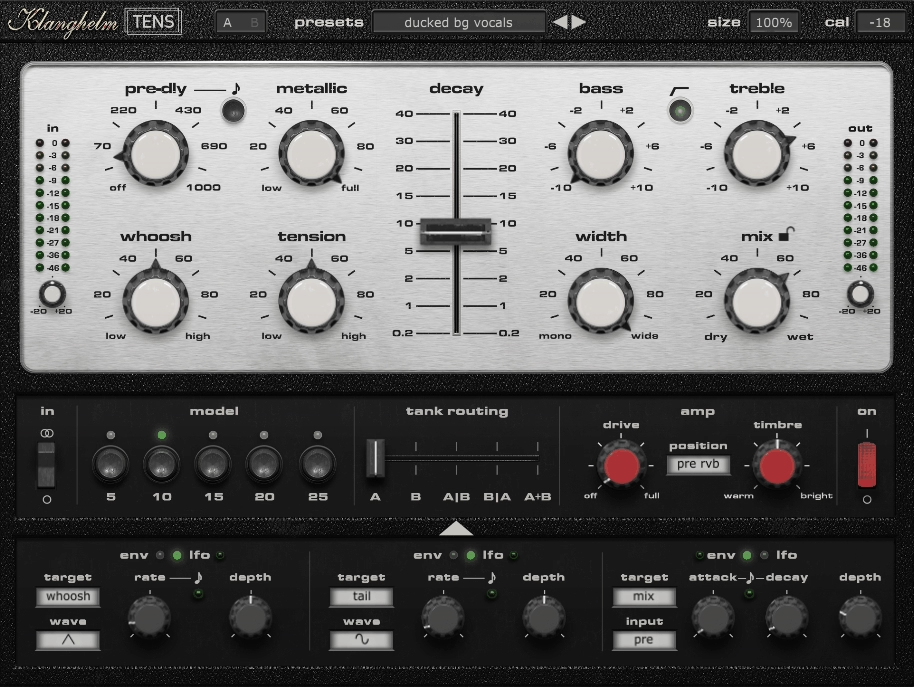
What makes TENS spring VST reverb practical is how deeply you can sculpt the reverb texture beyond basic decay and mix controls. The plugin responds to performance dynamics in ways that feel organic, and the stereo imaging gives it a three dimensional quality that works well in mixes.
I find the workflow encourages exploration because even small adjustments to the character controls produce noticeable sonic shifts. You can introduce saturation anywhere in the signal chain, which changes the character significantly depending on placement.
The modulation system integrates directly with the reverb parameters, allowing textures to evolve dynamically rather than staying static. What caught my attention was how the extended decay range makes this plugin versatile enough for both traditional spring applications and more experimental sound design work.
The plugin handles everything from subtle ambience to lush cinematic tails without losing its spring character. I appreciate how the stereo output from each model creates width that sits naturally in arrangements rather than sounding artificially widened.
- Spring Models
The plugin provides 5 distinct spring models, each bringing its own tonal identity based on different AKG tank designs. Each model outputs stereo rather than mono, and you can select between multiple tank routing configurations for spacious imaging.
This creates a three dimensional feel that works across various sources from vocals to ambient textures. The reflections feel organic and rich in harmonic detail rather than mechanical, which separates TENS from cheaper spring emulations that sound fixed and boingy.
- Character Controls: Tension, Whoosh, and Metallic
You get Tension, Whoosh, and Metallic controls that reshape the internal response of the virtual springs rather than just applying EQ. Increasing Tension pushes toward brighter, snappier resonance, while lowering it softens the response and creates darker, more diffused reflections. Whoosh brings air and motion into the tail for that classic surf and space echo vibe without overwhelming the input signal.
Metallic adds high frequency shimmer and can bring an almost plate like sheen to the reverb. These adjustments feel musical rather than technical, letting you dial in anything from subtle texture to wild otherworldly ambience.
- 3 Modulation Slots with LFO and Envelope Follower
The plugin includes 3 modulation slots assignable to any continuous parameter in the plugin. Each slot can use an LFO or envelope follower that reacts to reverb input, reverb output, or external sidechain signal. This opens up creative possibilities like dynamic ducking, pumping reverbs, or tails that respond to rhythm and dynamics.
2. Pulsar Audio Primavera

When it comes to Pulsar Audio Primavera delivers spring reverb that responds to how you play rather than sounding fixed and static. The plugin captures the lively bounce and shimmer of vintage spring tanks while giving you control over character and tone. What you hear are tails that feel organic, whether you’re adding subtle depth to a vocal or creating expansive textures on a synth pad.
The workflow focuses on shaping the spring behavior to fit your mix. You can dial in tight reflections for rhythmic material or stretch the decay into ambient territory depending on what the track needs. I’ve found it particularly effective on guitars where that classic twangy character comes through without sounding artificially processed.
What makes Primavera practical is how the springs react to input dynamics. Louder signals excite the springs more, creating tails that evolve naturally with the performance. The preamp section adds warmth when you need the reverb to blend better into dense mixes. You get enough tonal shaping options to make the plugin work across different genres and production styles without requiring extensive tweaking.
- Spring Models
Primavera provides 6 distinct spring models built using physical modeling instead of impulse responses. This means the springs respond dynamically to your input rather than playing back static recordings.
Each model captures different vintage spring tank behaviors, from tight punchy springs to thick resonant ones that bloom naturally. The physical modeling approach makes the plugin react to performance dynamics, where louder hits excite the springs more and create tails that breathe with your playing.
- Tension and Excitation Controls Shape Spring Behavior
The Tension and Excitation controls change how the virtual springs physically respond to audio. Tension adjusts the stiffness of the springs, shifting from dark smooth tails to bright metallic shimmer.
Excitation determines how much energy hits the springs, adding resonance and character that makes the reverb feel alive and reactive. These controls go beyond basic EQ by actually reshaping the spring simulation itself.
- Preamp Section with Harmonic Saturation
The preamp section introduces harmonic color and saturation directly into the reverb path. You can add warmth that helps the effect blend naturally into mixes, or push it harder for grittier character. This saturation ties the reverb to your dry signal organically, particularly useful in dense arrangements where pure digital reverb can sound thin or disconnected.
3. Eventide Spring
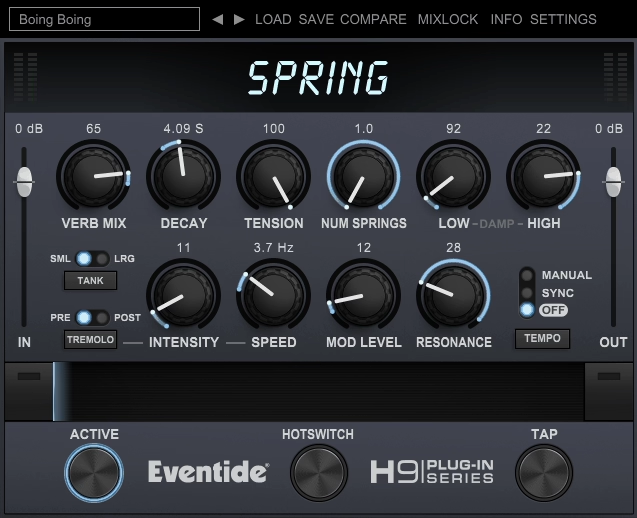
This plugin feels like a spring reverb that was designed with real use in mind, not just tone chasing. When you use it, you immediately notice how the reverb reacts to dynamics, where harder hits create more splash and lighter parts stay controlled. That makes the effect feel connected to the performance instead of sounding pasted on.
I also like that Eventide Spring does not force a single vintage flavor. You can keep it subtle and supportive, or let it become a noticeable part of the sound. From my perspective, that flexibility makes it easy to reach for in modern sessions, which aligns well with what I expect from Eventide.
-
Three Independent Spring Models
Eventide Spring is built around 3 independent spring models, and that design choice really defines how it sounds. Each spring behaves slightly differently, so when they interact, the reverb tail becomes uneven in a musical way. I find this especially noticeable on guitars and percussive sources, where you can hear subtle movement instead of a smooth digital decay.
-
Preamp Drive and Dynamic Response
The plugin includes a dedicated preamp drive section that models the gain stage found in classic spring hardware. As I increase the drive, harmonic content becomes more present and the reverb gains weight.
What I appreciate is how input level affects the response. Louder signals push the springs harder, while quieter material stays cleaner. You can shape tone and behavior in one place, which saves you time during mixing.
-
Shake Control for Mechanical Behavior
The Shake control simulates physical movement inside a spring tank. At low settings, you can use it to add subtle instability that makes the reverb feel more realistic. At higher values, it becomes a creative effect that introduces splashes and sudden movement.
This can be a sound design tool rather than just a realism feature, especially for transitions or accents.
-
Over 50 Usable Presets
Eventide Spring includes 50 plus factory presets, and most of them feel thoughtfully designed. I see them as starting points rather than finished sounds. You can load a preset, make small adjustments, and quickly fit it into a track. This helps maintain creative flow when time is limited.
-
Stereo Operation and Placement Control
The plugin supports mono and stereo configurations, which makes it easy to integrate into different signal chains. I often notice how the stereo image stays controlled even when the reverb is pushed. You can keep a source focused in the center or create width without smearing the mix. In the end, it means fewer compromises when placing reverbs spatially.
-
Wide Tonal Control Range
Eventide Spring offers enough tonal control to move between bright, splashy spring sounds and darker, restrained ambiences. Small parameter changes make a clear difference, which I find rewarding when fine tuning. You are not locked into one character, and the plugin responds best when you shape it gradually rather than making extreme moves.
The interface can feel dense if you only want a quick one knob spring sound. I also think the interaction between the 3 spring models takes some time to fully understand, which may slow things down at first.
4. Fuse Audio Labs VREV-305
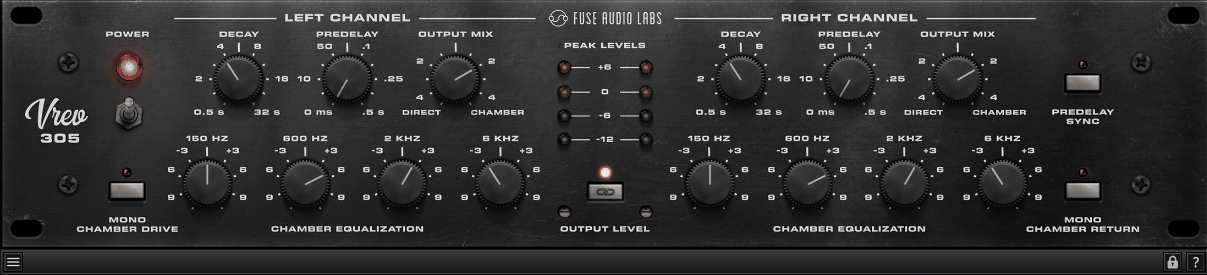
VREV-305 is a spring reverb plugin modeled after a twelve spring studio reverb system that was originally used in broadcast and post production environments. When you use it, it behaves more like a physical space than a typical guitar spring, which makes it useful in mixes where you want depth without obvious reverb artifacts.
I would recommend reaching out for it when you want something organic that reacts to the signal rather than smoothing everything out. I also like that there are zero presets, because it pushes you to listen and adjust instead of clicking through options.
-
Twelve spring reverb architecture
VREV-305 is built around 12 individual springs running simultaneously, and that structure is the main reason it sounds different from smaller spring designs. Each spring introduces slightly different resonances and decay behavior, which creates a tail that feels uneven in a natural way.
When I place it on vocals or sustained synths, the reverb evolves over time instead of fading evenly. For you, this means less metallic ringing and more depth that stays interesting even at longer decay settings.
-
Analog modeled input stage
The plugin includes a modeled input amplifier with a dedicated gain control, and this stage strongly influences the final tone. I often spend time here before touching decay or mix because the drive level changes how aggressively the springs respond. Lower input levels keep the sound clean and controlled.
When you push it harder, the reverb gains density and mild saturation, which can help sounds feel closer and more connected to the space.
-
Extended decay control
The decay parameter offers a wide working range, covering short, tight reflections and long spring tails that linger naturally. I usually keep decay shorter for drums so the groove stays defined. When you extend it on guitars or pads, the reverb becomes more atmospheric without turning muddy. Small movements make clear differences, which helps you fine tune space instead of guessing.
-
Tone shaping filters
The plugin provides high and low frequency shaping, allowing you to control where the reverb sits in the spectrum. You can roll off low frequencies to prevent buildup, especially when you use longer decay times. You can also soften the top end so the tail stays smooth and avoids splashiness. This is useful when you layer multiple reverbs or want the space to support the mix rather than dominate it.
-
Mono and stereo processing
VREV-305 supports mono and stereo operation, which makes it flexible across different sources. I often choose mono on guitars and bass adjacent elements to keep them focused. When you switch to stereo on vocals, keys, or effects returns, the reverb spreads naturally without feeling artificial.
5. U-he Twangström
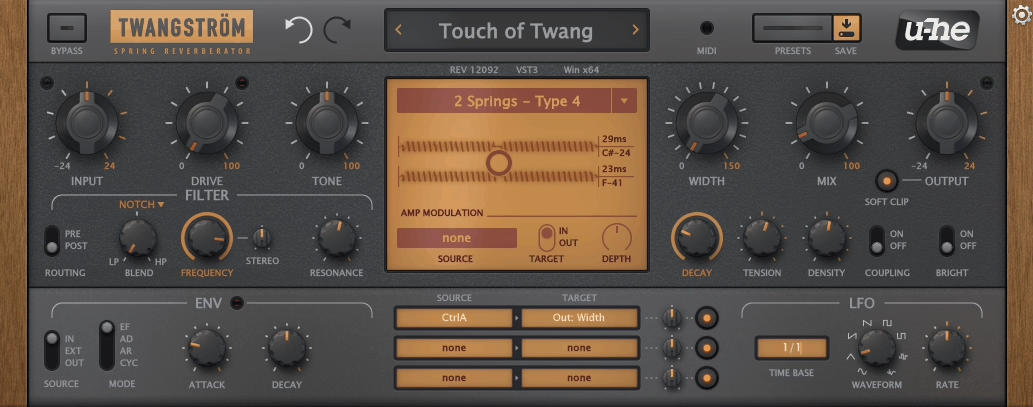
When I first tried it, I noticed that it behaves more like a modular spring environment than a single hardware emulation. You get two independent spring tanks, and that already changes how you approach space in a mix.
I would recommend Twangström VST when you want movement and control rather than realism alone. You can keep it subtle, but you can also push it into unstable and animated territory very quickly. There are around 120 factory presets, which makes it easier for you to explore the range before shaping your own sounds.
-
Dual spring tank design
Twangström is built around 2 separate spring tanks, and each tank can be configured independently. I like this because you can treat them almost like layers, one short and tight while the other is longer and more diffuse. When you blend both tanks, the reverb feels wider and more complex than a single spring design.
-
Multiple spring models per tank
Each tank lets you choose between 2 different spring models, which results in 4 possible spring combinations across the plugin.
I find this useful when I want contrast between left and right or between early and late reflections. Some combinations sound tighter and more focused, while others feel loose and unstable. You can also quickly tailor the response depending on whether you are working with vocals, guitars, or synths.
-
Modulation and movement controls
Twangström includes dedicated modulation parameters that affect pitch and timing behavior inside the springs. I often use subtle modulation so the tail never feels static. When you increase it further, the reverb starts to wobble and drift in a way that feels very alive. This is especially effective on pads and sound design elements where you want motion rather than realism.
-
Drive and dynamics shaping
There is a built in drive stage that lets you push the reverb into saturation. I usually apply small amounts, just enough to thicken the tail. When you drive it harder, the springs react aggressively and the sound becomes gritty. This makes it easy for you to add character without relying on extra distortion plugins.
6. Arturia Rev SPRING-636
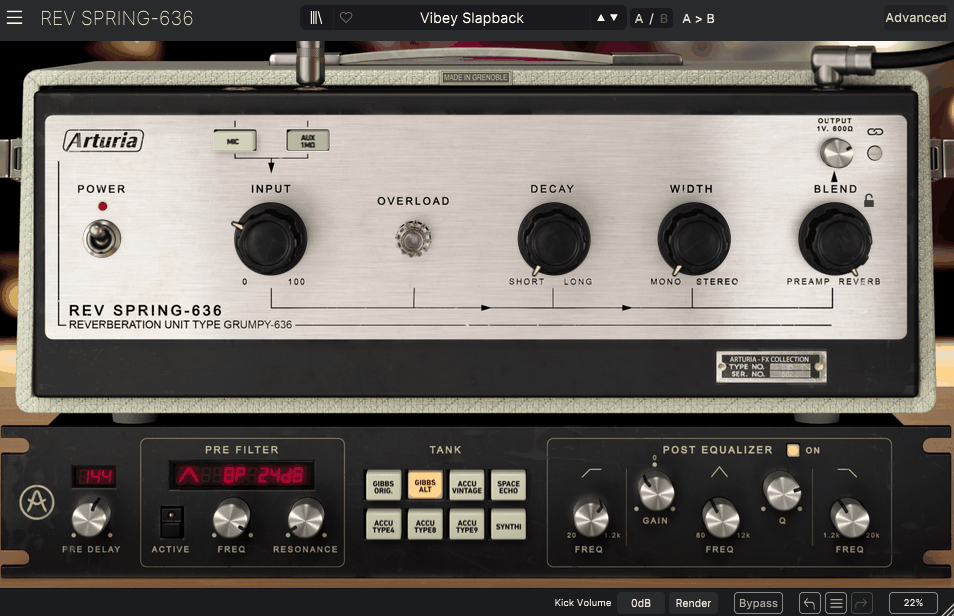
This one is modeled after a 1960s tube driven spring reverb unit that was commonly used in studios and guitar rigs. When I work with it, the sound feels direct and character focused rather than wide or polished. You can tell it is designed to recreate a specific circuit instead of offering multiple interpretations of spring reverb.
I would reach for Arturia Rev SPRING-636 when I want a clear, forward spring sound that becomes part of the tone instead of sitting behind it.
-
Three spring tank modes
Rev SPRING-636 offers 3 distinct spring tank modes, and each one affects how the reverb reacts to transients and decay length. I notice the difference when switching modes while a track is playing. One mode feels tighter and more controlled, another introduces a slightly longer and looser tail, while the third feels more open and resonant.
You can change the overall character without touching decay or mix, which makes it easier for you to match the reverb to different sources quickly. I often audition all three before committing because the response varies depending on input material.
-
Tube based input stage
The plugin models a tube driven input circuit, and this becomes important once you start adjusting the input level. You can set the input so it sits just below audible saturation, which adds thickness to the reverb without distortion. When you push it further, the reverb gains harmonic weight and feels more aggressive.
This behavior allows you to shape character before the reverb even decays, making it useful when you want the effect to feel like part of the instrument rather than an added layer.
-
Decay and wet dry balance
There is a single decay control paired with a wet dry mix knob, and this limited setup keeps decisions focused. I like how the decay range stays musical across the entire knob travel. Short settings give you a tight spring slap, while longer settings create a sustained tail without turning muddy. Also, you can quickly balance how present the reverb is without juggling multiple parameters, which helps you move faster during mixing.
-
Brightness tone control
Rev SPRING-636 includes a brightness parameter that adjusts the high frequency content of the spring response. You can reduce it slightly so the tail remains smooth on vocals and keys. When you increase brightness, the reverb becomes more noticeable and cuts through dense arrangements. This control saves you time because you can shape tone directly inside the plugin instead of reaching for an EQ.
-
Mono signal path
The plugin runs through a mono spring reverb path, staying faithful to the original hardware design.
7. Waves Magma Springs
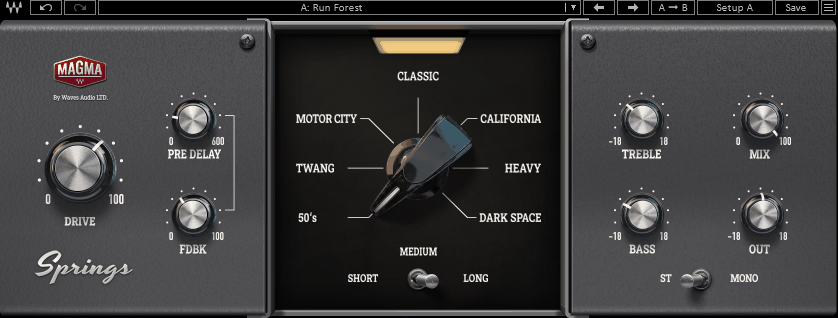
Waves Magma Springs is a spring reverb plugin that takes a modern approach while still leaning on vintage inspiration. It feels more like a sound design tool than a traditional utility reverb as it does not try to behave like a single fixed hardware unit, and you can hear that immediately once you start moving the controls.
There are over 250 presets, which gives you a clear sense of how wide the range is before you start tweaking. I like that you can stay subtle if you want, but you can also push it into unstable and animated territory when you need something more expressive. You will notice that it works well on synths, guitars, vocals, and even drums when you want reverb that becomes part of the sound.
-
Multiple spring types and structures
Magma Springs includes 5 different spring types, each modeled with its own response and behavior. I find this useful because switching spring types changes the reverb character instantly without touching other parameters. Some springs feel tighter and more controlled, while others sound loose and almost chaotic.
When you explore them, you can quickly decide whether you want something clean or something that reacts aggressively to transients. For you, this means less setup time and more creative decision making.
-
Extensive modulation engine
One of the main reasons I keep coming back to Magma Springs is the deep modulatio n section. You get multiple modulation sources that can affect pitch, movement, and instability inside the springs. When you push modulation further, the reverb starts to wobble and drift in a way that feels intentional rather than broken. This makes it especially useful for pads, textures, and evolving sound design elements.
-
Drive and saturation stages
The plugin includes several drive and saturation controls placed at different points in the signal path. I usually start with low drive values and increase them slowly, since small changes go a long way. When you push the drive harder, the reverb becomes dense and gritty without collapsing. With that said, you can use this to make the reverb feel like an extension of the source instead of a layer behind it.
8. PSP SpringBox
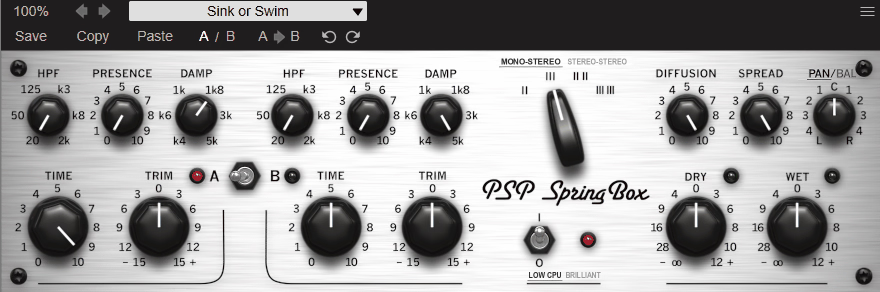
PSP Audioware SpringBox is designed to give you control beyond a single fixed hardware sound. The overall concept feels closer to a configurable spring system than a strict emulation. It lets you shape space in a practical way without losing the recognizable spring character that many productions rely on.
I tend to reach for it when you want flexibility but still want the reverb to feel grounded and familiar. The plugin comes with over 150 factory presets, which gives you a solid overview of what it can do before you start building sounds from scratch. You can apply it to guitars and keys easily, but it also fits vocals and drums when you want movement that stays controlled.
-
Dual spring tank structure
SpringBox is built around 2 independent spring tanks, and this is where much of its flexibility comes from. You can blend both tanks together or let one dominate the sound, depending on what the track needs. I often keep one tank subtle and use the second to add depth and complexity. For you, this approach means you can create layered spring textures without stacking multiple reverbs.
-
Three spring models per tank
Each tank offers 3 different spring types, giving you 9 possible spring combinations in total. The differences between these models are easy to hear, especially in how the decay reacts to transients. Some options sound tighter and more controlled, while others introduce looser resonances.
-
Large preset library
SpringBox includes 150 plus presets, covering everything from light ambience to more pronounced spring effects
-
Tone shaping and damping controls
The plugin provides dedicated tone and damping parameters, allowing you to manage low and high frequency behavior directly. I usually reduce low end to keep the reverb from interfering with bass elements. You can also soften the top end so the spring tail stays smooth instead of sharp. This gives you better placement without relying on external EQ.
-
Stereo width and balance options
SpringBox includes stereo width and balance controls, letting you decide how wide the reverb should sit. I sometimes keep it narrow on guitars so they remain focused, then open it up for keys or effects.
You can position the reverb precisely in the stereo field, which helps maintain clarity in dense arrangements..
9. AudioThing Springs
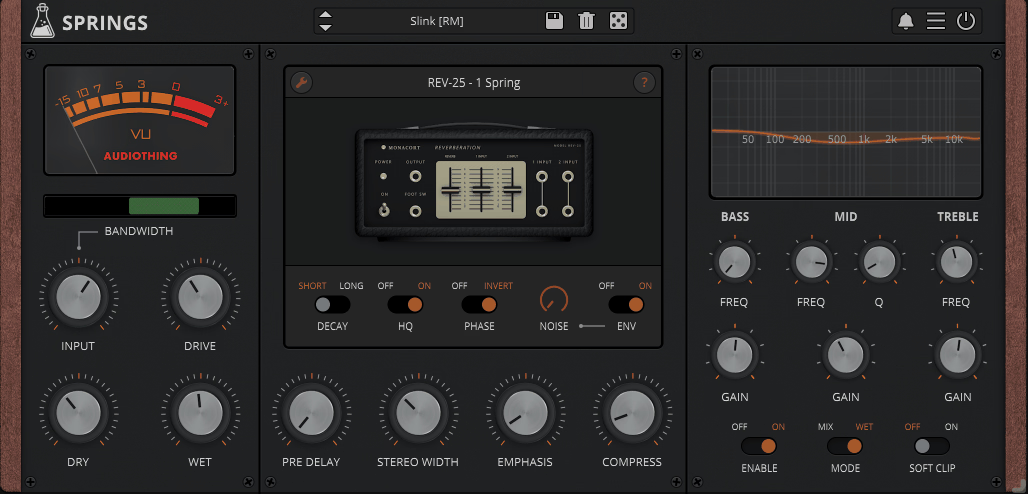
AudioThing brings together multiple classic spring units into one flexible tool. It includes 8 different spring reverb models, each sampled and modeled from real hardware units.
Also, you get more than 120 factory presets, which makes it easy for you to find a starting point for guitars, drums, synths, or even vocals. AudioThing Springs runs on Windows, macOS, and Linux, supports VST, AU, AAX, and LV2, and I find it stable even when stacking multiple instances across a session. It feels like a creative tool rather than just a utility reverb.
-
Eight distinct spring reverb models
At the core of Springs are 8 different spring units, each with its own decay behavior, tone, and response. Some models sound tight and metallic, while others feel longer and more washed out. I often switch between 2 or 3 models before settling on the right one, because each reacts differently to transients. For you, this means you are not stuck with a single flavor, and you can match the reverb to the source instead of forcing it to work.
-
Extensive preset library
Springs includes over 120 presets, covering guitars, drums, keyboards, vocals, and sound design. I find the presets genuinely useful, especially when you want quick inspiration or need something that already sits well in a mix.
You can load a preset, tweak 1 or 2 parameters, and you are usually very close.
-
Tone shaping and built in effects
Beyond the reverb itself, Springs gives you multiple tone shaping tools, including high pass and low pass filters, drive, and modulation controls. There are 2 filters that let you trim low end rumble or soften harsh highs, which I use a lot on guitars. The drive stage adds subtle saturation, and when pushed, it gives the reverb tail more density. That means the reverb can be shaped to fit the mix instead of sitting on top of it.
-
Modulation and movement controls
Springs includes 1 dedicated modulation section that adds movement to the reverb tail. I like using small amounts of modulation to avoid static sounding tails, especially on sustained synths or pads. You can go from barely noticeable movement to more obvious wobble, depending on the model.
10. Softube Spring Reverb
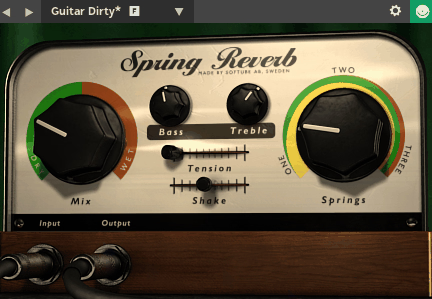
Softube Spring Reverb is a focused spring reverb plugin based on real hardware behavior rather than modern reverb design. It is clearly built to deliver the uneven, slightly unpredictable sound people expect from spring units. When it comes to interface, it stays compact and practical, with 3 spring models, a dedicated drive stage, and basic tone shaping.
I like that nothing feels overdesigned, and you can dial in usable sounds quickly without digging through menus. For you, this means it fits easily into a working session without slowing decisions or pulling attention away from the mix.
-
Drive and preamp interaction
The built in analog style preamp plays a big role in how the reverb behaves. When I push the Drive control past around 50 percent, the reverb tail starts to thicken and compress slightly, adding density rather than just loudness.
This works well on drums and bass, where the reverb needs presence without sounding detached. You will notice that higher drive levels bring the spring texture forward instead of smoothing it out.
- Light on CPU
- Three spring models with clear differences
Softube includes 3 separate spring models, and each one responds differently to the same source. One stays tighter and controlled, making it useful for subtle guitar ambience. Another emphasizes midrange splash that helps parts cut through a mix.
The third model produces longer, less stable decays that work well on snares, effects, and synths. I find switching between them faster than tweaking parameters, which helps you settle on a direction quickly.
- Straightforward tone shaping
Tone control is handled with 2 simple bands, keeping the workflow direct. Cutting low end helps prevent buildup on kicks and bass heavy material, while adding high end brings out the metallic edge of the springs. You get enough control to place the reverb properly in a mix without turning it into something it is not.
Freebies:
1. BPB Dirty Spring
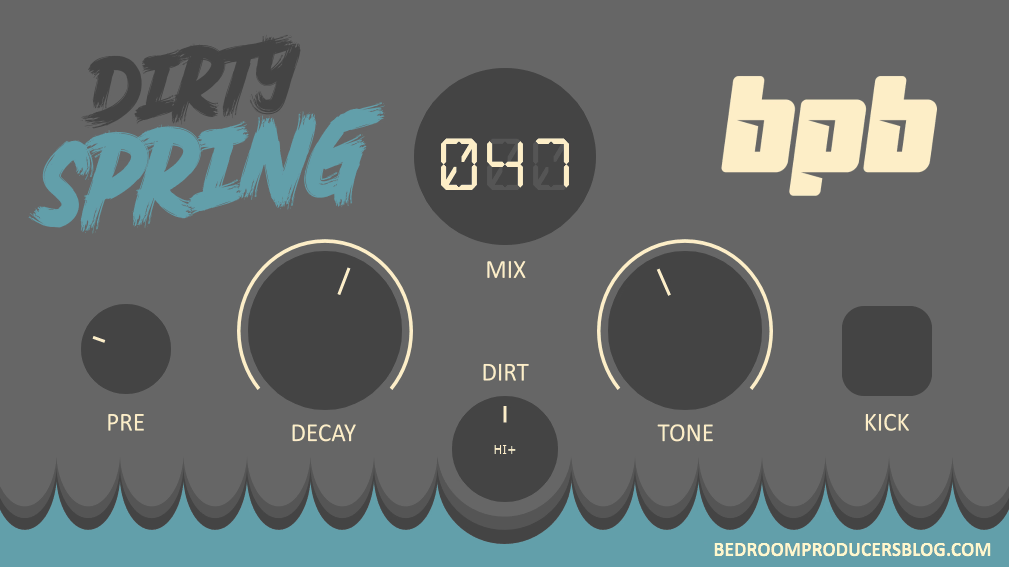
Under the hood, it uses 2 spring models, a drive stage, and built in filtering that shapes the reverb response. This keeps the workflow fast, especially if you like experimenting and committing sounds early instead of endlessly tweaking.
When going further, Dirty Spring by Bedroom Producers Blog focuses on rough character rather than accuracy. It is intentionally limited and slightly unstable, which is exactly the point. You are getting a spring style reverb that feels raw and imperfect, closer to abused hardware than a studio unit.
-
Aggressive drive behavior
The built in Drive control is a big part of the plugin’s personality. As you increase it, the reverb tail becomes thicker, more compressed, and noticeably distorted. Past the halfway point, the effect becomes obvious and intentionally rough. This works well on drums, lo fi synths, and sound design where cleanliness is not the goal.
-
Input sensitive spring response
Dirty Spring reacts strongly to input level, which makes it feel alive even with simple material. Louder hits push the springs harder, resulting in longer and more chaotic decays. Softer signals stay relatively contained. I like this behavior on percussion and plucked instruments, where dynamics naturally shape the reverb without automation.
2. Klanghelm TENS Jr
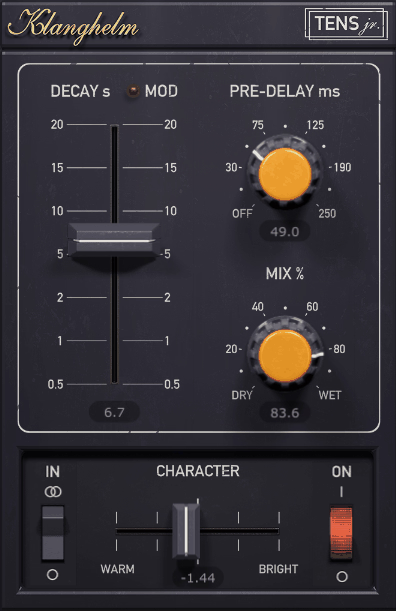
I like how TENS Jr feels honest and direct. As usual with spring reverb vst plugins, you can drop it on vocals, or drums where it finds its place. It supports VST, AU, and AAX formats, runs on Windows and macOS, and stays very light on CPU even if you use 10 or more instances. This makes it a practical everyday tool rather than something you only pull out occasionally.
You get 4 main controls, threshold, ratio, attack, and release, and each one behaves in a predictable way.
-
Program dependent response
Even though the interface looks simple, there is 1 program dependent behavior working behind the scenes.
-
Saturation and tone shaping
TENS Jr is not only about gain reduction. It adds a subtle harmonic character layer that becomes more noticeable as you push the input. I like using this on bass or drum buses where you want a bit of density without adding another saturation plugin.
3. Fuse Audio Labs VREV-666
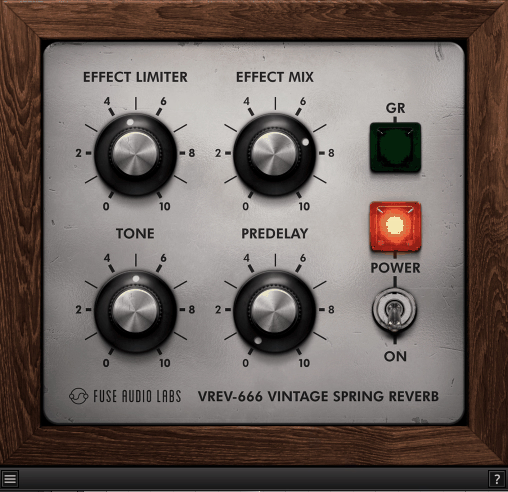
Fuse Audio Labs VREV-666 is a free spring reverb plugin inspired by the Grampian 666 hardware unit, developed by Fuse Audio Labs.
It is not about pristine space or long tails, but about character and movement. You are working with 1 spring based reverb model, designed to sound slightly unpredictable and alive.
You get no presets at all, which keeps things simple and encourages you to adjust settings by ear, but since there are only few options it’s not ovewherlming even for beginners to make tweaks on their own.
In addition, the plugin runs on Windows and macOS, supports VST, AU, and AAX, and I find it easy to use across guitars, synths, and even drums when you want a vintage flavored ambience that sits inside the mix instead of floating on top of it.
-
Authentic spring reverb model
VREV-666 is based on 1 classic spring reverb circuit, and it really leans into that sound. The reverb has a slightly metallic decay and a natural wobble that feels familiar if you have worked with hardware springs before.
-
Drive and input interaction
One of the most important parts of this plugin is how the input level affects the sound. You get 1 dedicated drive stage, and pushing it changes both the reverb tone and the response. I like driving it harder on mono sources because it adds a bit of grit along with the reverb tail. You can stay subtle or push it into a more aggressive texture, which gives you more tonal range than a typical clean reverb.

Hello, I’m Viliam, I started this audio plugin focused blog to keep you updated on the latest trends, news and everything plugin related. I’ll put the most emphasis on the topics covering best VST, AU and AAX plugins. If you find some great plugin suggestions for us to include on our site, feel free to let me know, so I can take a look!